Today In Charleston History: September 24

1789

The Judiciary Act of 1789 was passed by Congress and signed by President George Washington, establishing the Supreme Court of the United States. That day, President Washington nominated John Jay to preside as chief justice, and John Rutledge (Charleston), William Cushing, John Blair, Robert Harrison, and James Wilson to be associate justices. On September 26, two days later, all six appointments were confirmed by the U.S. Senate.

1796 – Slavery

Noel, a “french negro” was convicted of theft and sentenced “to Receive thirty & nine Lashes on the Bare back at the Lower Market.” The same day a slave named Silvan was also whipped for theft.

Today In Charleston History: September 23

1745 – Births.

Issac Hayne was born at Pon Pon Plantation. He later became a martyr to the Patriot cause when he was hanged by British authorities. 

1761 – French and Indian War

A treaty with the Cherokee was signed by Lt. Gov. William Bull at Ashley Ferry Town. The treaty provided:

  • for the Cherokee to surrender all English property
  • the right for the English to build forts anywhere
  • the exclusion of all Frenchmen
  • prompt execution of murderers of white men
  • the restoration of trade between the English and the Cherokee
 2012

Gershwins-Porgy-Bess

The Gershwins’ Porgy and Bess closed on Broadway after 322 performances, making it the longest production of Porgy and Bess ever staged. This production starring four-time Tony-award winner Audra MacDonald, but, like most productions of Porgy and Bess, it was not without controversy. The producers changed some of the story and music to make it more appealing to modern audiences. The operatic-styled recitatives were replaced by spoken dialogue. Eight-time Tony winner, Stephen Sondheim, also complained that the new title completely ignored Dubose Heyward’s significant contribution to the work.

The production was nominated for ten Tony Awards in 2012 and won the Best Musical Revival. MacDonald won a fifth Tony-award for her performance as Bess.

Today In Charleston History: September 22    

1766 – Religion

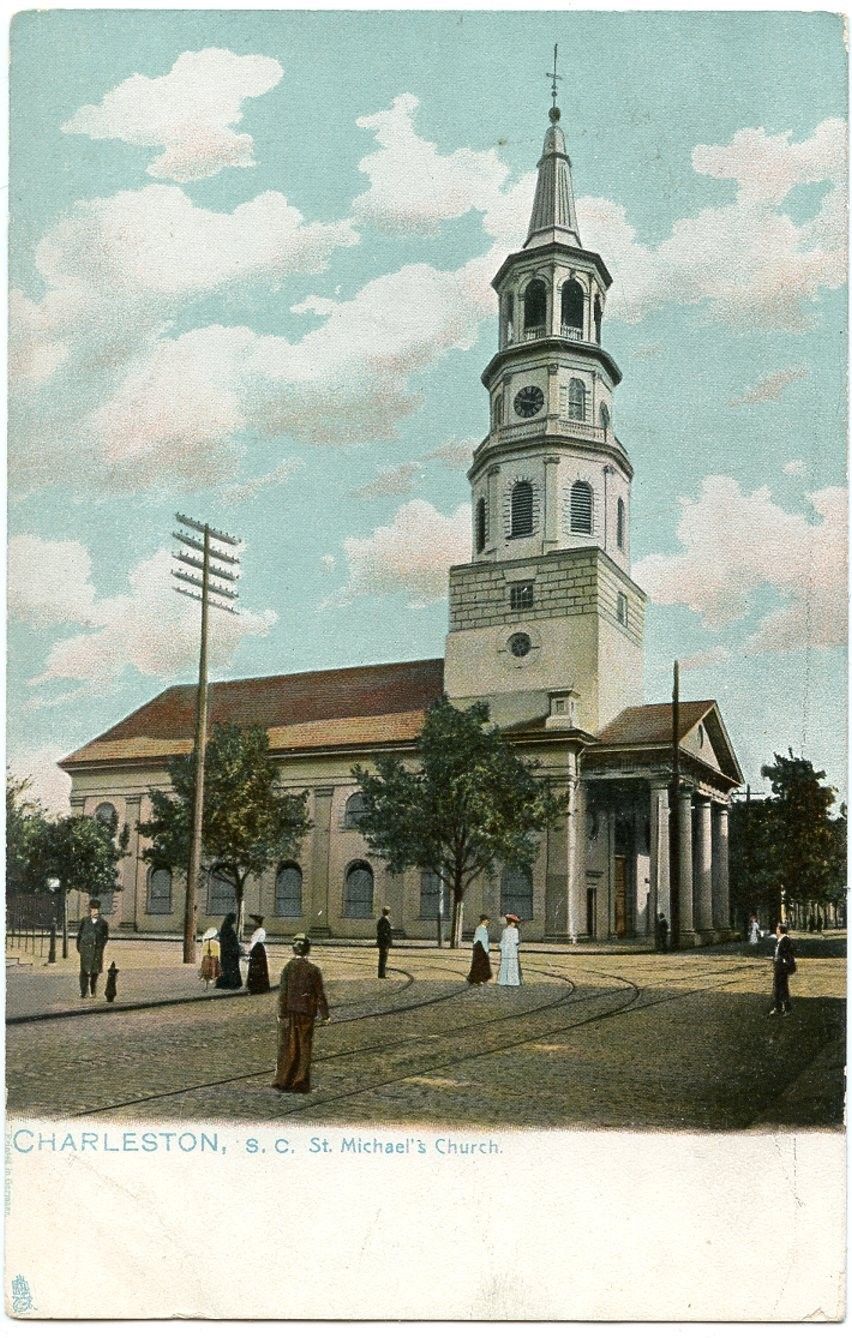
st. michael's - postcardThe bells of St. Michael’s Church were tolled for the first time during the funeral of Mrs. Martha Grimke.

1782 – British Occupation

Colonel Charles Pinckney died. His cousin, Cotesworth, wrote his sister Harriott saying, “Give vent to your tears for he was a man of worth.”

Ignorant of his father’s death, Charles Pinckney in Philadelphia, was making plans to travel to Europe and “sowing wild oats.” When he received word of his father’s death, he planned to return to Charlestown.

Today In Charleston History: September 21

1820

John England was consecrated as the first Roman Catholic Bishop of South Carolina in St. Finbar’s Cathedral in Cork, Ireland.

St-Finbarre's-Cathedral

St. Fin Barre’s Cathedral, Cork, Ireland

1914

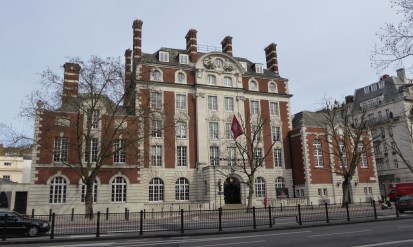
Edmund Jenkins, whose father Rev. Daniel Jenkins ran the Jenkins Orphanage, enrolled in London’s Royal Academy of Music. Ironically, the campus site had once been an orphanage. His enrollment fee was £14 ($75) which covered only his piano and composition studies. He listed his home address as 20 Franklin Street, Charleston, S.C., U.S.A.  He was enrolled to study composition under the direction of Francis Corder, one of the world’s leading experts on Wagnerian opera.

Royal-Academy-of-Music-Marylebone-Road

Royal Academy of Music, Marylebone Road, London

1989

Hurricane Hugo was a Category 4 hurricane at landfall which brought strong winds to many areas of South Carolina. Extensive property damage was reported in several counties, especially in the Lowcountry and the Grand Strand. More than 227,800 residences experienced power outages. In the Francis Marion National Forest, about 8,800 square miles of trees were downed, enough timber to build 660,000 homes.Total losses in the Lowcountry reached $1 billion.

1989hugo0422The storm surge and rough tides caused extensive damage in Charleston County. The highest storm surge observation was 20.2 feet (6.2 m) at Seewee Bay near McClellanville. Prior to the storm, residents of McClellanville took shelter in the cafeteria at Lincoln High School. However, storm surge flooded the room, with some people climbing up to the rafters for safety. A portion of the Ben Sawyer Bridge – linking Mount Pleasant to Sullivan’s Island – collapsed due to strong winds and storm surge. On Sullivan’s Island, water destroyed two or three rows of beach houses in some areas. At Isle of Palms, boats harbored at the marina were washed ashore and piled into a large heap. Losses at Sullivan’s Island and Isle of Palms reached nearly $270 million.

  • Total fatalities: 61
  • Highest winds: 162 mph
  • Lowest pressure: 918 mb

Today In Charleston History: September 20

1708

Reverend Gideon Johnston was not impressed at what he found in Charles Town. He wrote:

The people here, generally speaking, are the vilest race of men upon earth. They have neither honor, nor honesty, nor religion enough to entitle them to any tolerable character, being a perfect Medley of hotch-potch made up of bankrupt pirates, decayed libertines … who have transported themselves hither from Bermudas, Jamaica, Barbados, Montserat, Antego, Nevio, New England, Pennsylvania … Most of those that pretend to be churchmen are strongly crippled in their goings…

The population of Carolina was 9580 souls which included:

  • 2260 free men and women
  • 120 white servant males and females
  • 1700 white free children
  • 2900 Negro men and women slaves
  • 1100 Indian men and women slaves
  • 1200 Negro children slaves
  • 300 Indian children slaves

Today In Charleston History: September 19

1721

 A new election law was passed, dividing the representation of Carolina into parishes. It remained that way until the Revolutionary period.

1802

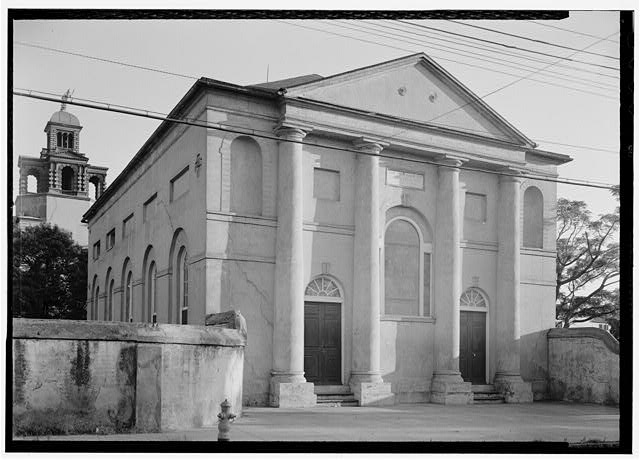
The chapel at the Charleston Orphan House opened. Designed and constructed by Gabriel Manigault, the Gentleman Architect, it was completed in less than one year. Baptist minister, Rev. Richard Furman, preached the dedication sermon.

Charleston Orphan House Chapel, 13 Vanderhorst Street

Charleston Orphan House Chapel, 13 Vanderhorst Street

1835

A letter by Angelina Grimke, decrying the mob violence against abolitionist literature, was published by William Lloyd Garrison in his paper, The Liberator.

I can hardly express to thee the deep and solemn interest with which I have viewed the violent proceedings of the last weeks. The ground upon which you stand is holy ground: never – never surrender it. If you surrender it, the hope of the slave is extinguished. If persecution is the means by which God has ordained for the accomplishment of this great end, EMANCIPATION; then … I feel as if I could say, LET IT COME, for it is my deep, solemn deliberate conviction, that this is a cause worth dying for.

Understanding that the publication of this letter had burned all her Southern bridges, Angelina later wrote in her diary:

To have the name of Grimke associated with that of the despised Garrison seemed like bringing disgrace upon my family, not myself alone … I cannot describe the anguish of my soul. Nevertheless I could not blame the publication of the letter, nor would I have recalled it if I could.

Today In Charleston History: September 18

1787

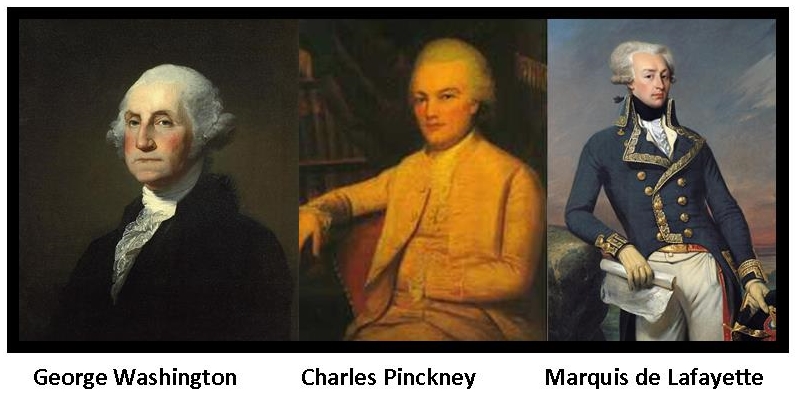
George Washington wrote a letter of introduction for Charles Pinckney for the Marquis de Lafayette. Pinckney was planning to finally fulfill his dream to travel to Europe, delayed first by the Revolution and then his father’s death. However, he delayed the trip to return to South Carolina to campaign for the ratification of the Constitution of the United States. 

washington-pinckney-lafayette

Today In Charleston History: September 17

1669

The three ships of the Carolina expedition – the Carolina, the Albermarle and the Port Royal – left Ireland for the trans-Atlantic crossing. Mr. Joseph West was appointed Governor and Commander-in-chief of the Carolina expedition until its arrival at Barbados, or until another Governor was appointed. 

1739 – Births

j. rutledgeJohn Rutledge, son of Dr. John and Sarah Rutledge was born. He would become the most prominent lawyer in Charles Town, the first governor of South Carolina and a signer of the U.S. Constitution.  

1787 -Constitutional Convention.

South Carolina delegates John Rutledge, Charles Cotesworth Pinckney, Charles Pinckney and Pierce Butler signed the new Constitution of the United States.

Scene_at_the_Signing_of_the_Constitution_of_the_United_States

Howard Christy’s “Scene at the Signing of the Constitution of the United States.” The South Carolina delegation is pictured in the lower left hand corner.

Today In Charleston History: September 16

1706 – Queen Anne’s War.

A joint French and Spanish attack upon Charles Town during Queen Anne’s War was repulsed when Colonial forces capture a French vessel and it crew. Governor Nathaniel Johnson and Lieutenant Colonel William Rhett lead the successful defense of Charles Town against a combined force of Spanish, French, and Native American combatants who sailed into Charleston harbor from St. Augustine.

1781 – Slavery. Denmark Vesey.

Capt. Joseph Vesey of Charles Town purchased 390 slaves in St. Domingue. One of the slaves he purchased was a young boy “about 14 years old” named Telemaque. Vesey also noted the boy had a “beauty, alertness and intelligence.”  Instead of keeping the boy chained below decks Vesey”adopted the boy as the “ship’s pet and plaything.” Vesey gave the boy a new set of clothes and used him as his cabin boy.

vesey statue copyWhen the ship arrived at Cap Francois, Haiti, Vesey decided he “had no use of the boy” and turned him over to the slave agents Lory, Plomard and Compagnie. Little did he know that young boy would become a constant feature of his life for the next 30 years, and ultimately … for the next 200 years. 


Today In Charleston History: September 15

1707

Judge Trott wrote in defense of the Church Act: “The reason why we passed the Act to exclude them (Dissenters) from being chosen was because they never did any good there nor never do any.”

1718 – Piracy

Col. William Rhett’s expedition left searching for Charles Vane. Information indicated that the pirates had sailed up the Edisto River. However, the search was in vain. Rhett found no trace of the pirates and sailed north to Cape Fear to continue his patrol.

1767

The Commissioners of Fortification reported they had “viewed the fortifications on White Point and find the whole in ruinous condition and some parts broke through by the sea …”

1775 – American Revolution. Charleston First
WilliamCampbell

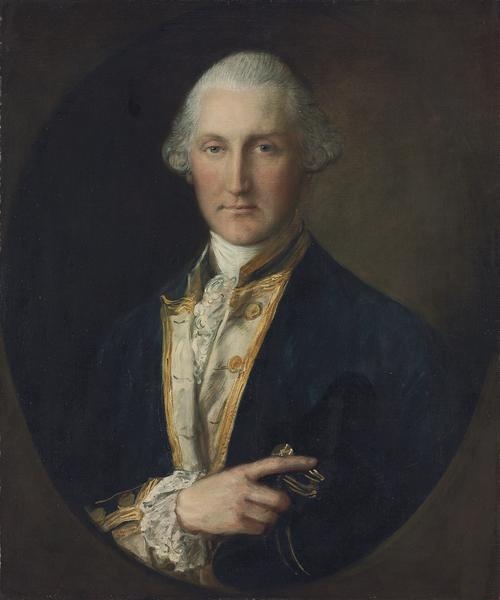
Lord William Campbell was injured on June 28, 1776 during the battle of Sullivan’s Island on board the HMS Bristol. He later died of his wounds.

Lord William Campbell discovered that Patriot leaders learned of his coordinating with back country Loyalists. Fearing attack from Revolutionaries in Charlestown, Campbell fled his house on Meeting Street in the early morning hours to HMS Tamar. This effectively ended British rule in South Carolina.

Almost immediately, Colonel William Moultrie led a local militia unit with Captain Francis Marion, seized Fort Johnson and its twenty-one guns, with no resistance from the British. Lord William Campbell, on board the Tamar, considered this action an overt act of war. The fact that this was done in plain view of two British warships, practically under Campbell’s nose, made it particularly insulting.

Moultrie was then directed by the Council of Safety to devise a flag. He chose the blue of the 1st and 2nd Regiments and the silver crescent which adorned their hats. This flag was raised over Ft. Johnson – the first American flag to replace the Union Jack. 

1832 – Nullification Crisis

 The Union and Nullifier Parties signed a formal agreement to prohibit late night meetings and abolish free liquor to all supporters. They set a 10:00 p.m. curfew for all meetings to end. This was an attempt to limit the number of drunken brawls and shootings that had plagued the city during the run-up to the election.

1857
Wreck_of_the_Central_America

Wreck of the Central America

The S.S. Central America sank in a hurricane off the Charleston coast. It was a 278-foot steamer sailing from Panama to New York City carrying 30,000 pounds of California Gold Rush-era coins and ingots – giving rise to the name Ship of Gold. Four hundred and twenty-five passengers and crew were lost. At the time of its sinking, Central America carried gold then valued at approximately $2 million. The loss shook public confidence in the economy, and contributed to the Panic of 1857.

On September 11, 1988. The ship was located by the use a remotely operated vehicle (ROV). The total value of the recovered gold was estimated at $100–150 million. A recovered gold ingot weighing 80 lb sold for a record $8 million and was recognized as the most valuable piece of currency in the world at that time. Currently only “5 per cent of the ship has been excavated. 

Read an August 2014 story from Newsweek about the excavation.