Today In Charleston History: February 5

1698 – Arrivals.  
trott-n-lg

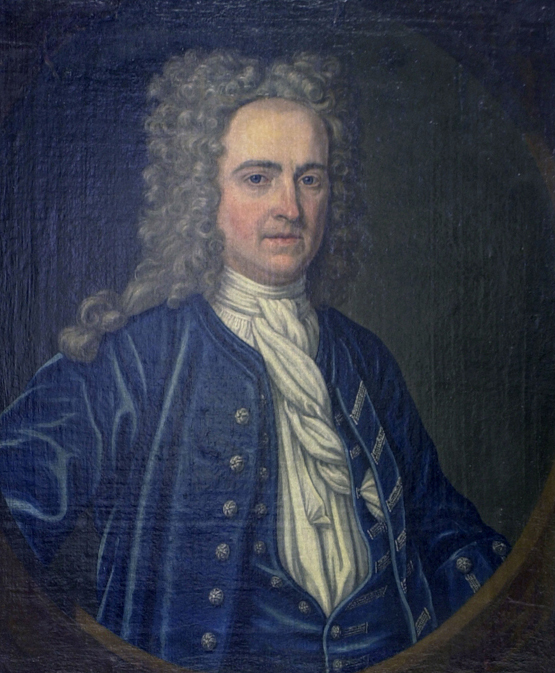
Nicholas Trott

Nicholas Trott was appointed Attorney General of Carolina. Trott had served the same post in Bermuda. He was the first Carolina official who was trained at the Inns of Court – a professional association for barristers. His uncle, Sir Nicholas Trott, had been governor of the Bahamas and was accused of harboring pirates for personal profit. Edmund Bohun was appointed Chief Justice.

Disasters

The first recorded earthquake shook the lowcountry.

1755- Walled City

The South Carolina Assembly agreed to hire German-born engineer William De Brahm to build new fortifications under the direction of the Assembly-appointed Commissioners of Fortifications. They decided to concentrate on building up the southeastern seaward side of the peninsula.

1763

gadsdenChristopher Gadsden defended the Assembly’s decision to cease all business until a disputed election issue was settled. It was an early declaration of the “natural rights” philosophy which would soon sweep the American colonies during the opposition against British policies. Gadsden called their action: 

Absolutely necessary, and the only step that a free assembly, freely representing a free people, that have any regard for the preservation of the happy constitution handed down to them by their ancestors, their own most essential welfare, and that of their posterity, could freely take. ‘Tis a joke to talk of individual liberty of free men, unless a collective body, freely chosen from amongst themselves are empowered to watch and guard it.

1779

John Rutledge was elected Governor of South Carolina, replacing Lowndes as chief executive.

Today In Charleston History: January 17

1711

The town of Beaufort was chartered on the Port Royal Sound, making it the second oldest town in South Carolina. It was named after Henry Somerset, the 2nd Duke of Beaufort and a Lord Proprietor from 1700-14. The Beaufort settlement made the Yemassee Indians unhappy, as it usurped a large part of their territory.  It was one of the factors that led to the Yemassee War, 1715-17.

1781 – British Occupation

The Knights Terrible Society was organized at Mr. Holliday’s Tavern, for the purpose of drinking once a week during the British occupation. They disbanded after the British evacuated the city.

1782 – American Revolution

Gov. John Rutledge and the South Carolina House convened in Jacksonboro, thirty miles from Charleston, near the site of the Stono Slave Rebellion on the Edisto River. Only persons loyal to South Carolina were allowed to vote. Christopher Gadsden was elected governor, but declined due to his health, which had suffered during his imprisonment in St. Augustine. John Mathews was chosen as governor, “a younger and more even-tempered individual.” 

Laws were quickly passed for raising Continental troops and for punishing “conspicuous Tories.” Called the “Act for Disposing of Certain Estates and Banishing Certain Persons” it banished Loyalists and provided for the confiscation and sale of their estates. The list of confiscation contained more than 700 individuals.

gadsden and rutledge

Today In Charleston History: January 5

1758
j. rutledge

John Rutledge

John Rutledge sailed to England to study law at the Middle Temple at the Inns of Court. While in London he spent considerable time at the Carolina Coffee House on Birchen Lane, “dining, drinking and fellowship.”

The Coffee House was the center for Carolinians in London or Englishmen with business connections to the colony. Sixty years before the Coffee House was the location where the Lords Proprietors met potential colonists. Many ship captains sailing to and from Carolina frequented the Coffee House so it was the best place to send and receive mail get news from home or book passage.

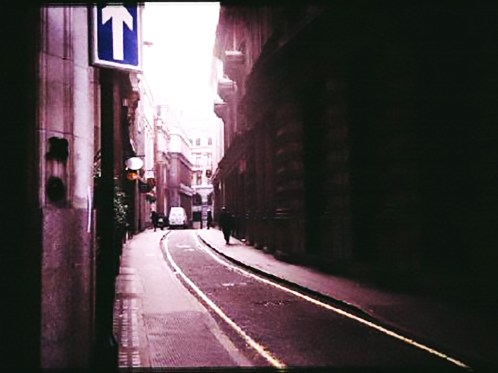
birlane

Birchen Lane, London, modern view.

1776

Capt. Joseph Vesey, a privateer of an “armed pilot boat,” Hawke, captured a British brigantine off the Carolina coast and dragged the prize up the Stono River. He was then ordered to sail to Philadelphia to pick up Christopher Gadsden and the rest of the South Carolina delegates to the Continental Congress. 

1861

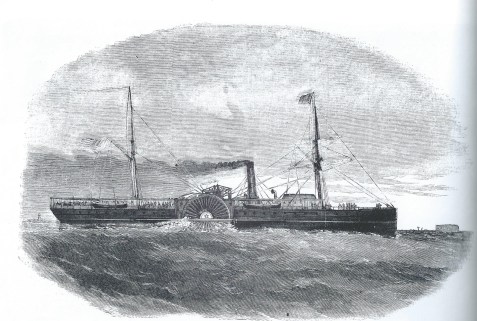
The merchant vessel, Star of the West, left New York, captained by John McGowan. It was a 1,172-ton steamship built for Cornelius Vanderbilt in 1852, 228.3 feet in length and 32.7 feet in beam, with a wooden hullside, paddle wheels and two masts. For several years she was in service making regular runs between New York, Havana, and New Orleans until she was chartered by the U.S. War Department. On board the Star supplies for the Sumter garrison and 250 new recruits.

star of the west

Star of the West Courtesy Library of Congress

Known for its speed, Gen. Scott thought the ship would be able to slip past the newly constructed Morris Island Battery. The drawback however, was that it was not reinforced to sustain cannon fire.

Assistant Adjutant General Thomas wrote to Major Anderson:

I yesterday chartered the steamship Star of the West to re-enforce your small garrison with two hundred well-instructed recruits from Fort Columbus … likewise, three months’ subsistence for the detachment.

Should a fire … be opened upon any vessel bringing re-enforcements or supplies, or upon tow boats with reach of your guns, they may be employed to silence such fire. You are warned to be upon your guard against all telegrams, as false ones many be attempted to be passed to you.

Late in the day Gen. Scott realized that news of the mission to resupply Fort Sumter was already known in Charleston. Upon learning that the Star of the West had already departed New York. Scott ordered Captain Farragut to take the Brooklyn and intercept the civilian vessel. However, the Star was too fast, and the Brooklyn had no success of catching it.

Today In Charleston History: October 7

1765 – Stamp Act

The Stamp Act Congress convened in New York City. South Carolina was the only southern colony to send representatives:

  • Christopher Gadsden  a wealthy Charleston merchant and plantation owner. He was an important figure in South Carolina’s Sons of Liberty and later served in the Continental Army
  • Thomas Lynch  – a major South Carolina plantation owner and a friend of co-delegate Christopher Gadsden, he later actively supported independence.
  • John Rutledge – at 26, Rutledge was the youngest delegate in attendance. He was the provincial attorney general at the time and later served in a variety of pro-independence roles in South Carolina. He was briefly appointed Chief Justice of the United States by George Washington in 1795.

For the first time, the South Carolina men learned of the violent August protests in Boston in which the stamp officer, Andrew Oliver, was hanged in effigy and Sheriff Greenleaf and Lt. Gov. Hutchinson were stoned when they tried to intervene. 

gadsden and rutledge

Today In Charleston History: October 6

1780 -American Revolution

Gov. Rutledge commissioned Thomas Sumter as Brigadier-General in command of all state militia. His instructions to Sumter were to inspire the public, enroll as many men as possible, and be prepared to “co-operate with the Continental forces.”

Rutledge, in order to escape capture by the British, was living in the field, moving from Hillsborough, North Carolina, to Salisbury, to Charlotte, to Cheraw, South Carolina.

1780 – American Revolution – England

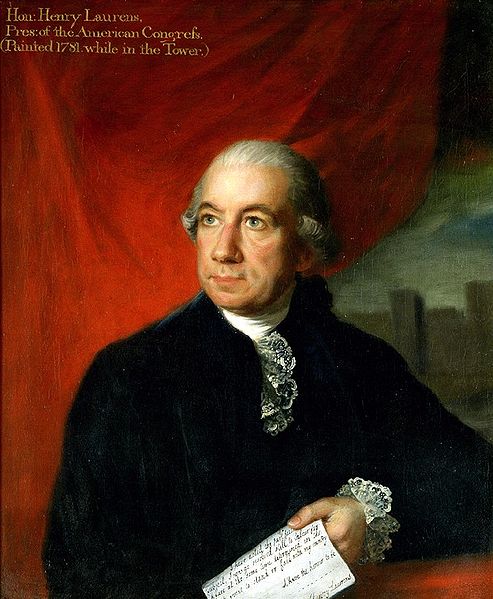
Henry_laurensHenry Laurens, was sentenced to the Tower of London for “suspicion of high treason.” His imprisonment was protested by the Americans. Laurens was captured by the British navy while acting as an envoy for the Continental Congress, negotiating treaties with European countries to support the American cause against the British. During his imprisonment, Laurens was assisted by Richard Oswald, his former business partner and the principal owner of Bunce Island. Oswald argued on Laurens’ behalf to the British government.

He was the first American to be imprisoned in the Tower. 

laurens, tower

L: Tower of London. R: Henry Laurens’ room in the Tower. Photos by Mark R. Jones

Today In Charleston History: September 17

1669

The three ships of the Carolina expedition – the Carolina, the Albermarle and the Port Royal – left Ireland for the trans-Atlantic crossing. Mr. Joseph West was appointed Governor and Commander-in-chief of the Carolina expedition until its arrival at Barbados, or until another Governor was appointed. 

1739 – Births

j. rutledgeJohn Rutledge, son of Dr. John and Sarah Rutledge was born. He would become the most prominent lawyer in Charles Town, the first governor of South Carolina and a signer of the U.S. Constitution.  

1787 -Constitutional Convention.

South Carolina delegates John Rutledge, Charles Cotesworth Pinckney, Charles Pinckney and Pierce Butler signed the new Constitution of the United States.

Scene_at_the_Signing_of_the_Constitution_of_the_United_States

Howard Christy’s “Scene at the Signing of the Constitution of the United States.” The South Carolina delegation is pictured in the lower left hand corner.