THE FORSAKEN: A Review

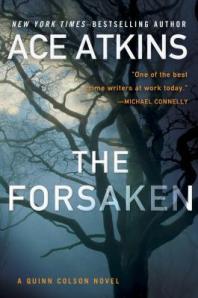
Thirty-six years ago, a nameless black man wandered into Jericho, Mississippi, with nothing but the clothes forsakenon his back and a pair of paratrooper boots. Less than two days later, he was accused of rape and murder, hunted down by a self-appointed posse, and lynched.

Now evidence has surfaced of his innocence, and county sheriff Quinn Colson sets out not only to identify the stranger’s remains, but to charge those responsible for the lynching. As he starts to uncover old lies and dirty secrets, though, he runs up against fierce opposition from those with the most to lose—and they can play dirty themselves.

Even though this is the 4th book in the Colson series, this is the first one I have read and most likely the last.  I found it more than a little cliqued … another Southern redemption story about past wrongs … ALWAYS racial. Plowing the same ground that Greg Ilies is tilling in his most recent novels.  Found the characters little more than stage dressing … Colson the white knight, stoic ex-military sheriff; his tough, lesbian (of course) deputy; a local strip club owner who is a misunderstood businessman and politician, etc … etc …

Pretty tiring . 

2 palmettos

Today In Charleston History: August 14

1743-Slavery. Executions

 A Mr. Snowden was set on fire by a Negro man, who was convicted and publicly burned to death.

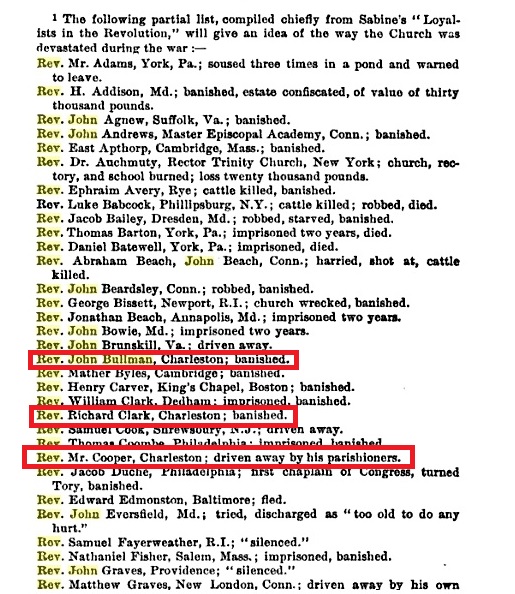
clergy banished1774

 The Sunday morning departure of Christopher Gadsden and Thomas Lynch to Philadelphia to attend the Continental Congress created a stir in Charlestown. Most of the clergy were on the side of the Revolutionaries. However, Rev. John Bullman, assistant minister at St. Michael’s Church, boldly preached a sermon titled “The Christian Duty of Peaceableness.” In a thinly veiled reference to the Boston Tea Party, he stated it was not the place of “a silly clown or illiterate mechanic (Sam Adams) to meddle in the affairs of princes and governors.” He called Gadsden and Lynch both “traitors.” Unfortunately for Bullman, many Charlestonians were sympathetic to the Boston resistance. The vestry voted 42-33 and dismissed him from the pulpit.

1863 

The Commission for the Removal of Non-Combatants submitted a list of “Camp-Grounds” prepared to receive refugees around South Carolina, which included: Summerville, Ridgeville, Branchville and St. Matthews.

ttd16-31901

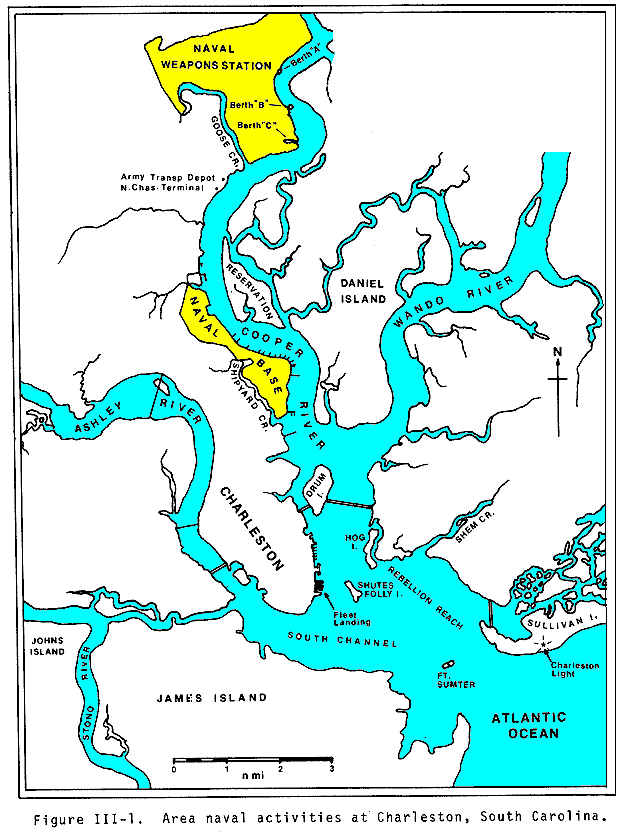
 Charleston sold 170 acres of land along the Cooper River to the United States for $200 per acre for the construction of a naval facility.

Today In Charleston History: August 13

1783-City Incorporated

 Edward Rutledge, Thomas Heyward and Thomas Bee, proposed a bill of incorporation for Charlestown. An elected intendant (mayor) and thirteen wardens would have the power to govern the city, whose name was changed to Charleston.


1864 – Civil War
Clubhouse of the race course where Federal officers were imprisoned.

Clubhouse of the race course where Federal officers were imprisoned.

By this time there were 6000 Federal prisoners within the city limits. Many of them were housed in the City Jail at the corner of Franklin and Magazine Streets. Others were housed around the corner in Roper Hospital at the corner of Queen and Logan Streets. The majority were held at the Charleston racecourse. Most of the Federal prisoners considered their imprisonment in Charleston to be a life-saving change, away from the hellish conditions of Andersonville. Lt. Benjamin Calef wrote:

We reached Charleston on the morning of August 13, and were kept waiting a long time in the Street, when I procured some fresh figs, bread and milk, and seated on the curb-stone, made an excellent breakfast … I should not omit to speak of the long piazza at the front [of Roper Hospital], on which I have spent so many hours with my pipe for my companion.

charleston-prison

Charleston Jail and prison.

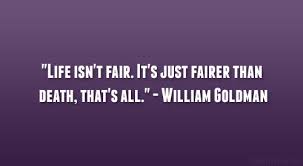
Happy Birthday, William Goldman

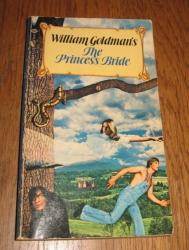
William-GoldmanMr. Goldman, you were my first favorite author. In 1974 I was 14 years old and I purchased a paperback novel titled The Princess Bride and I never looked at fiction ever the same again.

I remember walking around saying “Hello, my name is Inigo Montoya, you killed my father. Prepare to die!’ And everyone looked at me like I was an idiot. But I didn’t care. After I read the book three times in a row, I went and found paperback copies of everything you had written up to then. The Temple of Gold (1957); Your Turn To Curtsy; My Turn To Bow (1958); Soldier In The Rain (1960); Boys and Girls Together (1964); No Way To Treat A LadyI (1964); The Thing Of It Is … (1967). I was hooked! 

princesspb

First edition copy of The Princess Bride, 1974.

And then I discovered you had also written one of the coolest movies ever – Butch Cassidy and the Sundance Kid, and won an Academy Award for Best Screenplay. Then came the novels (and screenplays) for Marathon Man (“Is it safe?”)and Magic (a perfectly creepy book and a disturbing movie with Anthony Hopkins.)   

All told, 16 novels, 9 books of non-fiction, 38 screenplays and two Academy Awards (Butch and All The President’s Men). And  of course, the best book about Hollywood, Adventures in the Screen Trade, hands down the funniest book every written, in which you shared Hollywood’s greatest unspoken secret (until then)  … goldman, nobody knows anything

And of course, your heroic effort to get The Princess Bride made into a movie that reflected what your readers expected of that special book may be your greatest contribution to cinematic history. When it was released in 1987, I was suddenly confronted with everyone walking around saying “Hello, my name is Inigo Montoya, you killed my father. Prepare to die!'”  All I could do was smile, happy that millions more people (who would never read a book) had finally
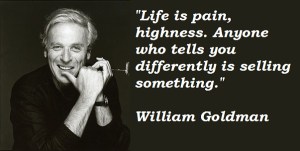
discovered the quirky joys of Bride.William-Goldman-Quotes-1

Mr. Goldman, you have been a major part of my life for 40 years, and even though I would have appreciated a few more novels …  I cannot say “thank you”  enough.

download

The Gold Coast & The Gate House: A Review

Okay, so I know how much other critics love these two books. I am also a Demille fan. The
Charm School, Word of Honor, The General’s Daughter
and Plum Island are all good books. Exciting thrillers and well written. So I know Demille is capable of writing good books. 

I read The Gold Coast when it was first published in 1990, and remember not being impressed at all. FAST FORWARD to 2009 – with great hype, Demille’s sequel to Gold Coast was published  and I was v-e-r-y  disinterested.

However, recently, I decided to give the books a second chance and re-read the first book before I read the new one. Halfway through Gold Coast for the second time I found myself very impatient. One question kept popping up in my head: Who the f*@k cares? I found nothing about any of the three main characters sympathetic.

In fact, by page 350 I was hoping everyone would die. Alas, only the so-called “bad guy” Frank Bellarosa gets it in the end. Frank’s crime was being an Italian and daring to move into the cloistered white-bread preppy culture of snobs and shallow people along the Gold Coast – and tempting his ultra uptight neighbors John and Susan Sutter. According to the book’s description, John’s narrative voice is “sardonic – often hilarious.” Someone at the publishers has a different definition of hilarious than most of us.

I was thankful when it was finished, and pissed that John and Susan were still breathing valuble oxygen. So it was with trepidation that moved on to The Gate House. Ten years after his wife Susan killed Mob boss Frank Bellarosa, John Sutter returns to the cloistered life on the Gold Coast. John spends pages and pages ruminating about how terrible life is at the country club, on his yacht and in his mansion. Most of his problems are due to the fact that he is too much of a wienie to actually say “screw it” and leave the so-called good life behind. His annoying wife Susan is still annoying. She has a six-figure income from a family trust fund and is a spoiled bratty bitch. What John sees in her – other than her money and taste for kinky sex – is beyond me. So, if you enjoy reading about spoiled, self-important people clinging to an out-dated lifestyle I can recommend several books about Charleston in the 1860s. Stay away from this piece of boring crap.

HINT: next time have the editor actually EDIT and cut out the boring $h!t -75% of these books.

2 palmettos

Today In Charleston History: August 11

1735 – SLAVERY.

Abraham, a Negro man owned by Mr. Samuel Jones, was baptized by Rev. Nathan Bassett of the Independent Church.

1847 – BORN TODAY

Ben Tillman was born near Trenton, South Carolina. Tillman rose to power as a representative of poor white residents of the state. He was elected governor of South Carolina in 1890 and began instituting populist reforms, including Jim Crow laws. He was elected to the United States Senate in 1894, serving until his death.

He was forced to leave school at the age of 16 in order to join the Confederate Army. He was stricken with a bacterial infection in his left eye before he could enlist. The eye was subsequently removed. He joined a paramilitary effort to overthrow Republican rule in South Carolina, taking part in the “Hamburg Massacre” of 1876, in which armed citizens overwhelmed the federal militia. Tillman’s leadership in this event established him as a leading white supremacist and launched his political career.

tillmanTillman was elected governor of South Carolina in 1890, serving for a single term. During this time, he established an agricultural school that would become Clemson University.

As governor he tirelessly promoted a culture of race-based discrimination and violence. Tillman’s supporters dubbed him the “Champion of White Men’s Rule and Woman’s Virtue” for his support of lynching as a punishment for alleged sexual misconduct by African Americans. The decade of the 1890s saw a spike in mob violence, particularly lynching, that was tolerated and even encouraged by Tillman and his allies.

Tillman was elected to the United States Senate in 1894. He held the office until his death in 1918. In Washington, Tillman developed a reputation as a hot-head. He threatened to stab President Cleveland with a pitchfork, earning the nickname “Pitchfork Ben,” received a formal censure for assaulting another senator and was barred from entering the White House.

Tillman died on July 3, 1918, in Washington, D.C. A statue of Tillman was erected outside the South Carolina State House in 1940 and stands to this day.

Today In Charleston History: August 10

1664 

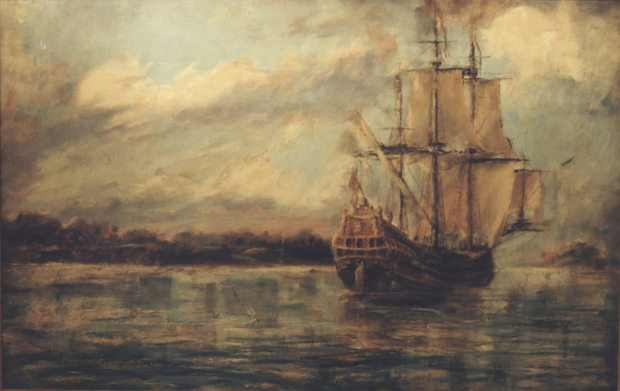
Capt. William Hilton sailed from Barbados to find a location in Carolina for settlement. He sailed into Port Royal Sound and claimed the island that protected the mouth of the harbor in his name – Hilton Head..

adventure

The Adventure, Captain William Hilton’s merchant ship, painted in 1963 by long time Hilton Head Island resident Walter Greer – is currently on display at Coastal Discovery Museum at Honey Horn.

In 1662 at the request of a group of merchants in Boston, Captain William Hilton set sail from Charlestown, Massachusetts aboard the ship Adventure to explore the Carolina coast. After investigating the area around Cape Fear (North Carolina), Hilton returned to Massachusetts with enough information to have a detailed map made of the area.

The next year a group of businessmen from New England, London and Barbados commissioned Hilton for a second voyage to explore the Carolina coast. Hilton, once again commanding Adventure, set sail, from Barbados on August 10, 1663. During this voyage he explored the entrance to Port Royal Sound and noted, just inside the entrance to the sound, the existence of a headland —a high point of land used as a reference point by mariners. Later this headland would be called Hilton’s Head and soon the island on which it was located would be called Hilton Head Island.

Nineteen Eighty-Four to 2014: A Brave New World (Essentials)

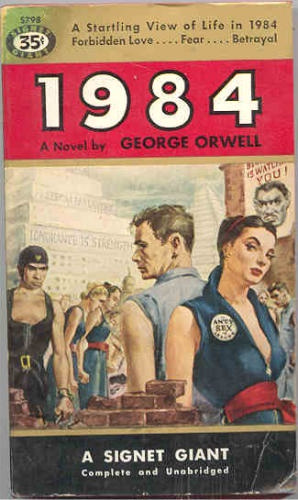
Sixty-five years ago one of the most famous and influential novels was published, Nineteen Eighty-Four. George Orwell’s dystopian novel introduced terms and concepts that have entered everyday use: Big Brother, doubl1984ethink, thoughtcrime, Newspeak and memory hole.

I first read the novel in 1977 in Mrs. Mazursky’s Advanced Composition class at Barnwell High School (S.C.) And here we are in 2014, living in the world Orwell warned us about. For those of you who have never read 1984 a quick summary:

The Oceanian province of Airstrip One is a world of perpetual war, omnipresent government surveillance, and public mind control, dictated by a political system euphemistically named English Socialism (Ingsoc) under the control of a privileged Inner Party elite that persecutes all individualism and independent thinking as thoughtcrimes. Their tyranny is headed by Big Brother, the quasi-divine Party leader who enjoys an intense cult of personality, but who may not even exist. Big Brother and the Party justify their rule in the name of a supposed greater good.

Winston Smith is a low-ranking member of the Outer Party who works for the Ministry of Truth (Minitrue), which is responsible for propaganda and historical revisionism. Smith’s job is to re-write past newspaper articles so that the historical record always supports the current party line. Smith is a diligent and skillful worker, but he secretly hates the Party and dreams of rebellion against Big Brother.

Everywhere Winston goes, even his home, the Party watches him through telescreens; everywhere he looks he sees the face of the Party’s seemingly omniscient leader, Big Brother. The Party controls everything in Oceania, even the people’s history and language. Currently, the Party is forcing the implementation of an invented language called Newspeak, which attempts to prevent political rebellion by eliminating all words related to it. Even thinking rebellious thoughts is illegal. Such thoughtcrime is, in fact, the worst of all crimes.

If you have a pulse and are reasonably aware of the world around you, everything in the previous paragraph should sound familiar. A few comparisons between the novel 1984 and our world should make it clear:

1984: Newspeak. NOW: Politically Correct speech

1984: Telescreens in every room. Programming runs 24 hours a day. Proles have no way to turn off their screens. NOW: Telescreens in almost every room. In everyone’s hands. Programming runs 24 hours a day. Proles rarely turn off their screens.

1984: Telescreens in all public and private places, so the populace can be watched to prevent thoughtcrime. NOW: Surveillance cameras in most buildings and public streets to prevent crime. People carrying tracking devices called cell phones. 

1984: Helicopters silently watch over the masses to keep people from creating thoughtcrime, reinforcing the fear that you are “always being watched.” NOW: Helicopters and drones silently watch over the masses to keep people from breaking traffic laws, reinforcing the fear that you are “always being watched.”

1984: Lotteries with very few winners. Held to collect income for the state, and to give hope to the masses. NOW: Lotteries with very few winners. Held to collect income for the state, and to give hope to the masses.

1984: History is rewritten to conform with modern beliefs. All references to oldthink are removed. NOW: History is rewritten to conform with modern beliefs. Example: In the 2013 history textbooks, the 9/11 attacks are described as being committed by “terrorists.” No description of their Islamic extremism and hatred for Western beliefs. However, in the same book, Timothy McVeigh is described as a “radical right-wing terrorist.” There are too many examples to list here. You’ve probably already come up with 3 or 4 in your head. 

1984: People are steered away from consuming goods such as chocolate, steak, sugar, coffee, cigarettes and alcohol by rationing. NOW: People are steered away from consuming certain foods by warnings that these items are bad for your health. Cigarette smokers are portrayed as a criminal class. In New York City, Mayor Bloomberg did his best Big Brother imitation by banning sugary drinks more than 16 ounces. Other states and cities have levied heavy taxes on food items that the state has deemed “not good for the public.” 

1984: There is always a war, always an enemy always a crisis. If peace is made with one country, war is started somewhere else. When one “crises” is solved, another is discovered. NOW: There is always a war, always an enemy always a crisis. If peace is made with one country, war is started somewhere else. When one “crises” is solved, another is discovered. “War on Poverty.” War on Drugs.” Etc … 

1984: Songs are created by machines. No one can write a song not in line with Big Brother. No creativity is needed. NOW: Songs are created by synthesizers and digital samples.The creativity of past musicians are “sampled” by “artists” and re-mixed into a collage of mechanized sound.

1984: Telescreen is full of confessions of “Thought criminals.” They confess their crimes and perversions. NOW: Daytime talk shows are filled with people who enjoy sharing the low-rent, thuggish lifestyles with the rest of the world.

Over the past two years we have learned that the U.S. government directed the IRS to target conservative Tea Party groups merely because of their opposition to the expansion of federal government programs. We also learned that the government has been listening to the private conversations of EVERY Verizon cell phone customer since 2007. Through a program called PRISM, the government has also had access to the date of everyone on the internet who has logged on to FaceBook, Yahoo, Google, YouTube, Apple and Skype. The government’s response to all of this is: “We have done nothing wrong. We have done nothing illegal.” Various criminal operations and counties are hacking into digital date of corportations, political groups etc … 

So, if you have never read 1984, it would make a great (yet uncomfortable) summer read to discover what Mr. Orwell warned us about sixty-five years ago. And for the government bureaucrat whose job is to read this column, I hope you enjoyed it. I encourage you to purchase my books and read them also!

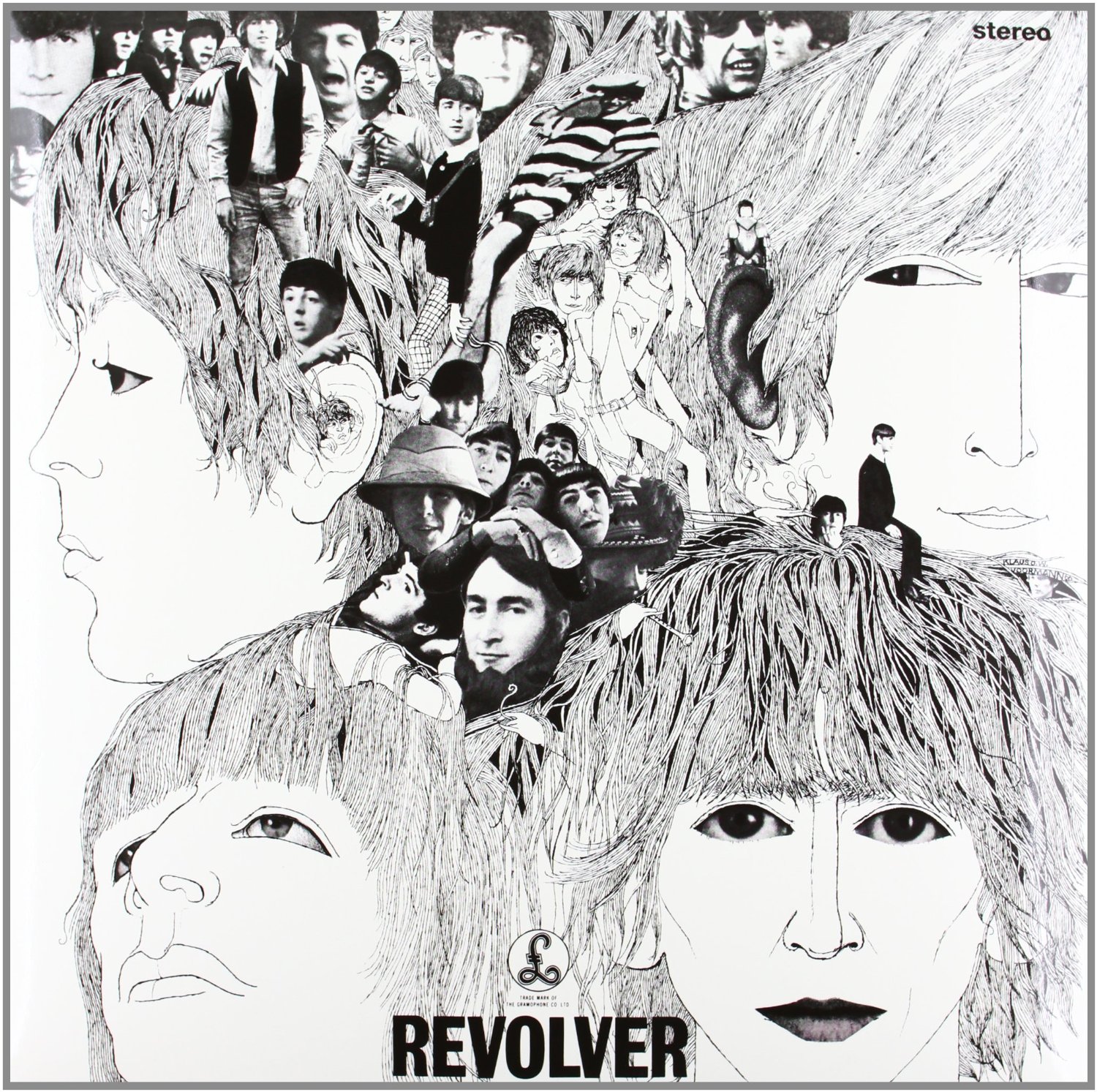
1966: Beatles Release “Revolver” LP in America (Essentials)

Revolver announced to the world that a new Beatles had replaced the fresh-faced  pop stars. Performing live concerts was a thing in the past. The loveable moptops had grown up and were now free to explore and push musical boundaries from within the studio. They were artists, not just performers.

revolverRevolver was the first step toward the extensive experimentation on “Strawberry Fields Forever,” “I Am The Walrus” and Sgt Pepper’s Lonely Hearts Club Band. Despite Pepper’s lofty status as the greatest rock and roll record of all time, Revolver  is better. It shows all four members of The Beatles working together, equally for the first time, at their creative peak. It is also the record in which George steps up and produces songs that stand equal with those of Lennon and McCartney. 

McCartney noted about the recording process:

This album has taken longer than the others because, normally, we go into the studios with, say, eight numbers of our own and some old numbers, like Mr Moonlight or some numbers we used to know, which we just do up a bit. This time, we had all our own numbers, including three of George’s, and so we had to work them all out. We haven’t had a basis to work on, just one guitar melody and a few chords and so we’ve really had to work on them. I think it’ll be our best album yet. They’ll never be able to copy this!

The Beatles’ previous album, Rubber Soul, had also been a change – exploring R&B and folk stylings (“Nowhere Man,” “Norwegian Wood”),  Revolver took the experimentation further, bringing in influences such as Motown, classical Indian music, children’s songs and full orchestration. George Harrison once commented:

 I don’t see too much different between Rubber Soul and Revolver. To me, they could be Volume One and Volume Two.
revolver back cover

Revolver – back cover LP

The LP showed remarkable songwriting leaps by McCartney, Lennon and Harrison. Harrison, with “Taxman,” “I Want to Tell You” and “Love You To” challenged Lennon and McCartney.  Paul responded with “Eleanor Rigby,” “Tell No One,” “Here, There, and Everywhere” and “Got To Get You Into My Life.” 

But, of course, it was Lennon who was the most innovative with “I’m Only Sleeping,” “She Said, She Said” and the remarkable “Tomorrow Never Knows.” Attempting to distill an LSD trip into a three-minute song, Lennon borrowed lyrics from Timothy Leary’s version of The Tibetan Book of the Dead, and recorded his vocal to sound like “the Dalai Lama singing from the highest mountaintop.”
Revolver was the Beatles’ artistic high-water mark, and unlike Sgt. Pepper, it was the product of a collaborative effort, the group fully vested in creating “Beatle music. Revolver announced to the pop world (and the world at large) that the 1960s had arrived and everything that followed was going to be different.


Side one  
No. Title Lead vocals Length  
1. “Taxman”   Harrison 2:39
2. “Eleanor Rigby”   McCartney 2:08
3. “I’m Only Sleeping”   Lennon 3:02
4. “Love You To”   Harrison 3:01
5. “Here, There and Everywhere”   McCartney 2:26
6. “Yellow Submarine”   Starr 2:40
7. “She Said She Said”   Lennon 2:37
Side two  
No. Title Lead vocals Length  
8. “Good Day Sunshine”   McCartney 2:10
9. “And Your Bird Can Sing”   Lennon 2:02
10. “For No One”   McCartney 2:01
11. “Doctor Robert”   Lennon 2:15
12. “I Want to Tell You”   Harrison 2:30
13. “Got to Get You into My Life”   McCartney 2:31
14. “Tomorrow Never Knows”   Lennon 2:57


Today In Charleston History: August 8

AUGUST 8

1781 – The Royal Gazette [Charlestown] wrote: 

Mr. Issac Hayne, who since the capitulation of Charlestown, had taken protection, and acknowledged himself a subject of his Majesty’s Government, having notwithstanding been taken in arms, and at the head of a Rebel Regiment of Militia, was therefore on Saturday morning last, executed as a Traitor.

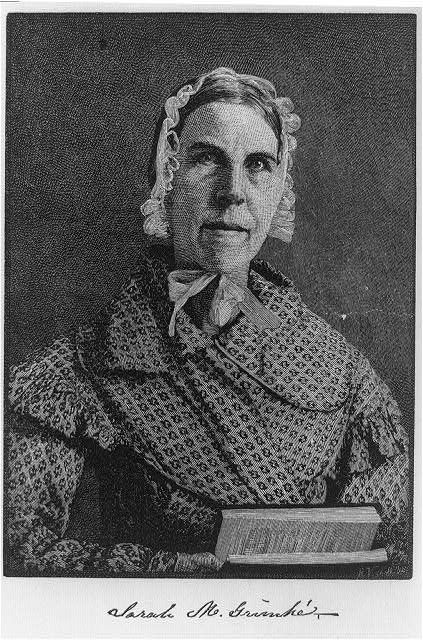
1819 – Judge John Grimke died. Judge John Grimke fell seriously ill in March. His Charleston doctors advised him to seek treatment with the foremost surgeon in American, Dr. Phillip Synge Physick of Philadelphia. Sarah Grimke accompanied her father. Physick, a Quaker, found lodgings for Sarah in a Quaker boardinghouse.

grimke, sarahFor the first time, Sarah  was surrounded by people who were NOT southern and held social views that were more in line with Sarah. It was the beginning of a life-altering change for Sarah, and ultimately, her younger sister, Angelina. The sisters became two of the most famous abolitionists within 20 years.