Today In Charleston History: December 18

1775 – American Revolution. Slavery.  

The South Carolina General Gazette reported that:

the Company of Foot Rangers…made a descent on that Island [Sullivan’s] burnt the House in which the Banditti were often lodged brought off four Negroes killed three or four & also took White prisoners four Men three Women & three Children destroyed many things which had been useful to those wretches.

1797 – Slavery.

Two slaves – Jean Louis and Figaro – and a free black were hanged, accused of planning “to set fire to the city as they had formerly done in St. Domingo.” They were “led to the place of execution at the bottom of Tradd Street facing the Lower Market between the Hours of Twelve and One o’Clock and hanged by the Neck.”

1860, December 18. Delegates Arrive.

In the late morning hours, the exhausted, red-eyed delegates arrived at the Charleston rail depot, greeted by the sound of drums, and a fifteen-gun salute from the Washington Light Infantry. They were led down Meeting Street into town by a military escort. Crowds lined the street, “ladies wore white cotton ‘secession bonnets’ with streamers decorated by … palmetto trees and a lone gold star.” The Palmetto Flag flew from almost every house and business. They marched past the Secession Pole in front of the Charleston Hotel. A “Secession Gun” had already been erected on East Bay, “to be fired on ratification of the ordinance. The gunpowder had been stored by a Charleston lady since the nullification crisis three decades before.”

Word passed through the city that the convention would reconvene at 4:00 p.m at Institute Hall, now being called by the locals as “Secession Hall.”

Institute-hall-secession

South Carolina Institute Hall, street view, (Harper’s Weekly)

With this festive atmosphere as the background, Rhett, Jr. paid a call to the British consul Robert Bunch to discuss how the English government would treat a Southern Confederacy. Bunch wondered if the confederacy would reopen the African slave trade which, he claimed, the English government “views with horror.” Rhett, Jr., filled with the powerful excitement of the moment, replied:

No Southern State or Confederacy will ever be brought to negotiate upon such a subject. To prohibit the Slave Trade would be virtually to admit the institution of slavery is an evil and a wrong, instead of, as the South believes, a blessing of the African Race and a system of labor appointed by God.

At 4:00 p.m., Rev. Richard Furman re-opened the convention with a prayer. The only business conducted that afternoon was a motion by Barnwell Rhett that “a committee be formed to prepare an address to the people of the Southern States.” The delegates, however, felt the hall was “too commodious … to debate intelligently.” The presence of several thousand rowdy spectators obviously changed the atmosphere of the hall from solemnity to celebratory. They decided to meet the next morning, delegates only, at St. Andrews Hall on Broad Street.  

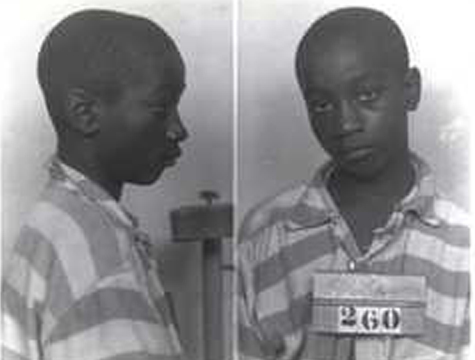
Too Young To Die—The Execution of George Stinney Jr. (1944)

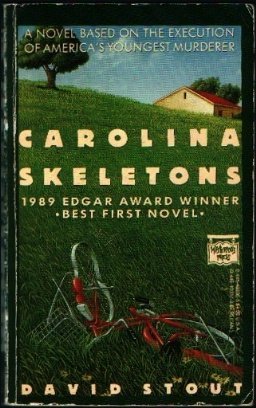
This is the sad saga of the youngest person ever executed in the United States. It was the inspiration for the 1989 Edgar Award–winning book for Best First Novel, Carolina Skeletons, by David Stout. The book became the basis for the 1992 movie of the same name starring Lou Gossett Jr. and Bruce Dern.

Recently a judge vacated Stinney’s conviction – 70 years too late. For those unfamiliar with the story, here is my version from my 2007 book, South Carolina Killers: Crimes of Passion. 

1944 

Clarendon County, South Carolina can claim to be the home of some notable Americans. Althea Gibson, the first African American woman to play tennis at Wimbledon, Peggy Parish, author of the famous Amelia Bedelia children’s books, and the birthplace to five South Carolina governors. It was also the location of the small town of Alcolu where most of the residents, black and white, worked at the Alderman Lumber Company Mill,  were farmers or both.

In 1944, most people in the tiny mill town were just trying to get by and hoping the few local boys who were serving in the war would make it back home. The most recent American casualty totals for World War II had just recently been released—19,499 killed, 45,545 wounded, 26,339 missing and 26,754 captured. Every day the newspaper was filled with death tolls and descriptions of war horrors, and though no one knew it, the worst was yet to come. The D-Day invasion of Normandy was two and a half months away.

March 24, 1944.

Betty June Binnicker, age eleven, and Mary Emma Thames, age eight, went to pick flowers that afternoon. Betty June asked permission to take a pair of scissors and then told her family, “We’ll be back in about thirty minutes.” The girls rode off together on one bicycle. No one was concerned. The girls often played on this side of town, and several people saw the familiar scene of the two girls riding double. They passed by the Stinney house. Even though the Stinneys were black, both girls knew the Stinney kids. Katherine Stinney and her older brother, George Jr., were in the front yard. “We’re looking for maypops,” Betty June said. “Do you know where they are?”

   Katherine told them no, and the two girls rode off on their bikes.

   When the two girls didn’t return by dark, the Binnicker family was panicked. Soon a town-wide search was launched, with hundreds of volunteers. They searched through the entire night. About 7:30 a.m. the next morning, some men found several small footprints in the soft ground and followed the footprints along a narrow path on the edge of town, where they found the pair of scissors lying in the grass nearby. Following the path with more urgency, the searchers discovered a large ditch filled with muddy water. They could see the outline of a bicycle beneath the murky surface. Scott Lowden jumped into the water, and the bodies of the two girls were dragged out. Both girls had severe head wounds—Mary Emma’s skull was fractured in five different places and the back of Betty June’s skull was smashed.

   Within a few hours, local sheriff’s deputies arrested George Stinney Jr. His youngest sister, Katherine Stinney Robinson, later recalled, “And all I remember is the people coming to our house and taking my brother. And no police officers with hats or anything—these were men in suits or whatever that came. I don’t know how they knew to come to that house and pick up my brother.”

   George was taken to the sheriff’s office, where he was interrogated. In 1944, there were no Miranda rights to be read to the accused. George was locked in a room with several white officers. Neither of George’s parents were allowed to see him. Within an hour, Deputy H.S. Newman announced that Stinney had confessed to the murders. Stinney told police that he wanted to have sex with Betty June, but the only way to get her alone was to get rid of Mary Emma. But Betty June fought him, so he killed her too. Stinney then led the police to the scene, where they found a fourteen-inch-long railroad spike. Deputy Newman wrote a statement on March 26, 1944, and described the events.
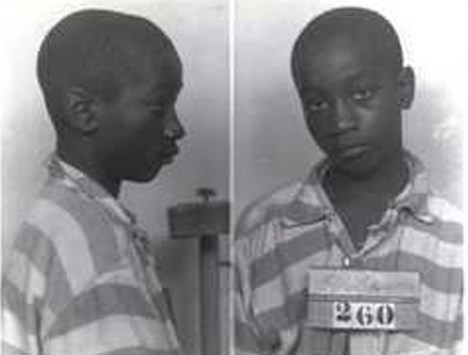
 George_Stinney_1944

I was notified that the bodies had been found. I went down to where the bodies were at. I found Mary Emma she was rite [sic] at the edge of the ditch with four or five wounds on her head, on the other side of the ditch the Binnicker girl, were [sic] laying there with 4 or 5 wounds in her head, the bicycle which the little girls had were beside of the little Binnicker girl. By information I received I arrested a boy by the name of George Stinney, he then made a confession and told me where a piece of iron about 15 inches long were, he said he put it in a ditch about 6 feet from the bicycle which was lying in the ditch.

   The town was horrified by the crime and overwhelmed with grief. Both girls’ parents worked at the Alderman Lumber Mill, as did Mr. George Stinney Sr. Within a few hours, the grief among the millworkers had quickly transformed into a seething anger.

March 26, 1944.

About forty angry white men headed for the Clarendon County Jail and demanded mob justice, but sheriff’s deputies were one step ahead of the folks. They had moved Stinney fifty miles away to Columbia.

   B.G. Alderman, owner of Alderman’s Lumber Mill, fired George’s father. The Stinney family lived in such fear for their lives that they moved from town in the middle of the night, abandoning their son to his fate.

   George Stinney Jr. was fourteen years, five months old when he went on trial. The first recorded execution of a juvenile in America was Thomas Graungery, age sixteen, of Plymouth Rock, Massachusetts, who was hanged for bestiality. On March 14, 1794, two young slave girls, “Bett, age 12” and “Dean, age 14,” were executed for starting a fire that burned down a portion of Albany, New York. In 1988, the U.S. Supreme Court passed a ruling that “prohibits the death penalty for juvenile offenders whose crimes were committed before they were 16.” Prior to 1988, there was no age limit for executions.

   Lorraine Binniker Bailey was Betty June’s older sister. She recalled that “everybody knew that he done it—even before they had the trial they knew he done it. But, I don’t think they had too much of a trial.”

   Katherine Stinney Robinson later recalled, “I remember my mother cried so. She cried her little eyes all swollen. I would hear her praying. She said, ‘I just want you to change the minds of men. Because my son didn’t do this.’ But it wasn’t long after that that they just did it. He was gone.”

   The court appointed thirty-year-old Charles Plowden as George’s attorney. Plowden had political aspirations, and the trial was a high-wire act for him. His dilemma was how to provide enough defense so that he could not be accused of incompetence, but not be so passionate that he would anger the local whites who may one day vote for him.

April 24, 1944.

More than 1,500 people crammed into the Clarendon County Courthouse. Jury selection began at 10:00 a.m. and was finished just after noon. The jury contained twelve white men. Due to the nature of the crime and the passion of the community, it certainly would have been in George Stinney’s favor to have a change in venue. But defense attorney Plowden made no motion.

   After a lunch break, the case was heard before Judge Stoll. Plowden did not cross-examine any of the prosecuting witnesses. His defense consisted of claiming that Stinney was too young to be held responsible for the crimes by law. In response, the prosecution presented Stinney’s birth certificate stating that he was born on October 21, 1959, which made him fourteen years and five months old. Under South Carolina law in 1944, an adult was anyone over the age of fourteen.

   The case had begun at 2:30 p.m. and closing arguments were finished by 4:30. The jury retired just before 5:00 p.m. and deliberated for ten minutes. They returned with the verdict “guilty, with no recommendation for mercy.” The case took less than three hours to decide. Judge Stoll sentenced Stinney to die in the electric chair at the Central Correctional Institute in Columbia.

   When asked about an appeal, Defense Attorney Plowden stated that there was nothing to appeal and the Stinney family had no money to pay for a continuance of the case.

   Several local churches, in conjunction with the NAACCP, appealed to Governor Olin D. Johnston to stop the execution. The governor’s office received letters for mercy. Most cited Stinney’s age as the mitigating factor why the execution should be dropped. One message was as direct as could be in 1944 by stating “child execution is only for Hitler.” The Tobacco Worker’s Union, the National Maritime Union and the White and Negro Ministerial Unions of Charleston asked Governor Johnston to commute the sentence to life imprisonment.

   However, there were just as many, if not more, in favor of the execution who encouraged the governor to be strong. One of the more blunt letters to the governor stated, “Sure glad to hear of your decision regarding the nigger Stinney.”

   The governor decided to do nothing. He let the execution proceed.

June 16, 1944.

At 7:30 p.m., George Stinney Jr. was fitted into the electric chair. It had been designed for grown men, not children. He was five feet, one inch tall and weighed ninety pounds. The guards had a hard time strapping him into the seat. The mask over his face did not fit properly. When the switch was thrown, the force of the electricity jerked the too-large mask from his face, and for the final four minutes of his life, the spectators in the gallery had a full view of Stinney’s horrified face as he was executed.

   Stinney’s sister, Katherine Stinney Robinson, was interviewed on the fiftieth anniversary of her brother’s execution and said

He was like my idol, you know. He was very smart in school, very artistic. He could draw all kinds of things. We had a good family. Small house, but there was a lot of love. It took my mother a long time to get over it. And maybe she never got over it.

   The time span of the entire episode, from the girls’ death to Stinney’s execution, was eighty-one days.
2730688

Novel based on the Stinney case.
 

Today In Charleston History: December 17

1677

The Grand Council voted that Charles Town should move to Oyster Point.

1679
Joel Gascoyne map 1682

Joel Gascoyne map 1682

Governor West and the Grand Council wrote the Proprietors:

We are informed that this Oyster Point is not only a more convenient place to build a town on than that formerly pitched on by the first settlers, but that the people’s inclinations turn thither; we let you know that Oyster Point is the place we do appoint for the port town of which you are to take notice and call it Charles Town.

1765 – SLAVERY.

A possible slave revolt was suspected when slaves were heard on the streets shouting “Liberty!” Henry Laurens thought the threat was exaggerated. In his opinion he believed the slaves merely “had mimck’d their betters by crying out ‘Liberty!’”

Lt. Gov. Bull ordered 100 militia out “to guard the city” and for sailors to stand nightly sentinel duty on the wharves during the holiday season. Whether the slave revolt threat was real or not, it did act as a calming influence on Gadsden and Timothy, as leaders of the mob actions. As Henry Laurens wrote, the hotheads:

did not slacken in their opposition to the introduction of Stamps, but except for a little Private cruising along the Waterside at Nights to see if anything is moving among the Shipping they are pretty quiet & I have been assur’d that more than a few of their Brethren declare their repentance …

1803 – SLAVERY.

Foreign trade was reopened; more than 40,000 slaves would be imported into South Carolina during the next four years.

1817

Moultrieville on Sullivan’s Island was incorporated.

1831

The Medical College of South Carolina was chartered.

1860,  Secession Convention Opens. And Adjourns.  

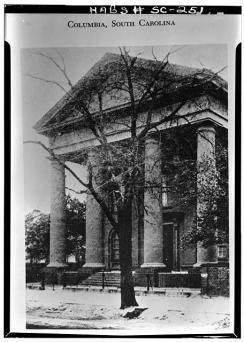
At noon, 169 delegates gathered at the First Baptist Church in the South Carolina capital, Columbia. Included among the delegates were four former governors, four former U.S. Senators, judges, and more than 100 planters.

first baptist columbia

First Baptist Church, Columbia. Library of Congress

To the disappointment of Barnwell Rhett, David J. Jamison was chosen chairman of the convention. Jamison, a planter of 2,000 acres and seventy slaves opened the convention by quoting Georges-Jacques Danton, leader of the French Revolution, urging the delegates “To dare! And dare again! And without end dare!” The fact that Danton was beheaded for his radical leadership went unacknowledged by the delegates.

A resolution was agreed upon that “South Carolina should forthwith secede” and an ordinance be drafted “to accomplish this purpose” was passed. After that, the members began to clamor for adjournment and move the convention to Charleston. Historically, the reason given has always been of a small pox outbreak in Columbia. However, many of the delegates complained about the “meager accommodations in Columbia.” Charleston, however, offered luxurious hotels and the opulent homes of friends. As John A. Inglis, a delegate from Chesterfield County exclaimed, “Is there any spot in South Carolina more fit for political agitation?”

John Archer Elmore, the Alabama Secession Commissioner, told the crowd:

There should be no hesitation – no faltering and no delay upon the part of this Convention. [South Carolina’s] Ordinance of Secession should take effect at once! … [giving] strength not only to Alabama, but in other states united with her in sentiment.

Charles Hooker, Mississippi’s Commissioner followed Elmore to the podium and declared that South Carolina should:

Snatch her star from the galaxy in which it has hitherto mingled and plant her flag earliest in the breech of battle, sustaining revolution by the bold hearts and willing arms of her people.

While the argument about moving the convention was being held, Charleston delegates had already wired home, and given orders to secure Institute Hall, and as many rooms at the Mills House that could be procured. William Porcher Miles, however, thought that moving after a day was a mistake. He told the delegates, “We would be sneered at. It would be asked … is this chivalry of South Carolina? They are prepared to face the world, but they run away from the smallpox.”

However, the delegates voted to adjourn and make the seven-and-one-half hour train trip to Charleston together. The Columbia-based newspaper, South Carolinian, the next day published this story:

Charleston Police Look Out!

By a letter from New York, there is reason to apprehend that the Lincoln men have been gathering up all the rags they can find from the small-pox hospital, and intend an incursion in the South, to chase the secession conventions and legislature from place to place until they are made powerless.   

1919

The Coterie of Friends at the London Academy of Music performed a concert at Wigmore Hall in London. The publication West Africa described the concert as a tribute to the greatest musical composer of the African race, Samuel Coleridge-Taylor.

Mr. Edmund T. Jenkins will be the first coloured conductor, other than Coleridge-Taylor himself, to render his work before a British audience. Miss Coleridge-Taylor, the late composer’s daughter, will contribute a musical monologue, set to music by her father.

Edmund Thorton Jenkins

Edmund Thorton Jenkins

Edmund Jenkins was the son of Rev. Daniel Jenkins, founder of the Jenkins Orphanage in Charleston. Jenks (as Edmund was called) had grown up playing with the Jenkins Band and attended Morehouse College in Atlanta to study music. He had traveled to London in 1914 with the Jenkins Band to perform at the Anglo-American Expo. When the Expo was shut down by the events that led to World War I, Jenks convinced his father to allow him to remain in England and enroll in the Royal Academy.


Today In Charleston History: December 16

1762

The Assembly voted 24-6 to suspend all other business until Governor Thomas Boone apologized for violating the rights and privilege of the House. They also sent a full account to London, asking British officials to decide the issue. They also suspended the governor’s salary. From now on, the Assembly would become more assertive in their relationship with British officials.

1891

Rev. Daniel Jenkins founded the Orphan Aid Society for black children in Charleston. 

1901

WashRaceCourse1864_650x650The first horse race was held at the South Carolina West Indian Exposition. A smaller (half mile), private track had been built on the former Washington Race Course. A stable for more than 500 horses were constructed. Races were offered daily. An admission price was levied so that “undesirable characters may be discouraged from entering.” However, a “blind tiger” (illegal saloon) operated near the race course. Ultimately, the race course failed, and by the end of the Exposition it was closed.

Today In Charleston History: December 15

1730

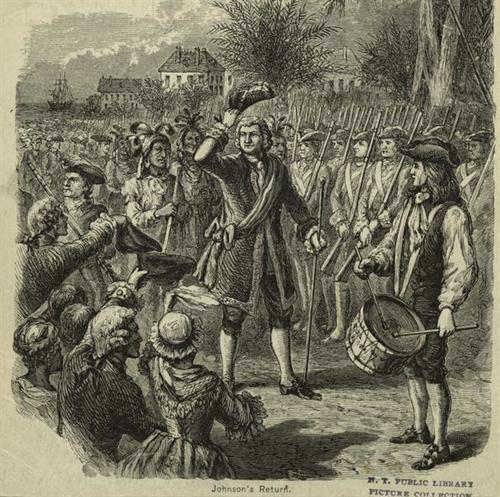
Robert Johnson arrived and took office as the Royal Governor of South Carolina.  Also on board his ship were the six Cherokee chiefs who had negotiated the treaty with the king.

Gov. Johnson's Return.

Gov. Johnson’s return with Cherokee Indian chiefs.

Johnson had also served as the last Proprietary governor of South Carolina from 1717–1719. The most important event of his first administration was the suppression of the pirates who were preying upon the commerce of South Carolina and neighboring colonies. Fitting out an expedition, he personally commanded a victorious engagement with them off the bar of Charleston, and carried on the campaign until they were exterminated and their leader. Stede Bonnet was captured.

During his second term, Governor Johnson aided General Oglethorpe and the first settlers of Georgia by giving them food and escort, and during his term the settlement of Purrysburgh, by the Swiss under Colonel Peter Purry, was made. The Commons House of Assembly erected a monument to his memory in St. Philip’s church, Charles Town.

1860, Pickens Becomes Governor.
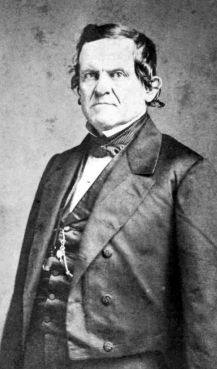
Francis_Wilkinson_Pickens

Francis Pickens

Francis Pickens became South Carolina governor, replacing William Henry Gist. Robert Barnwell Rhett was third on the first ballot. By the fifth ballot, Rhett was off the ballot altogether. It was a fatal blow to his political aspirations to lead a Southern Confederacy.

 Pickens, the former U.S. Ambassador to Russia, managed to win over the Charleston radicals by pledging a “secession now” platform.

Today In Charleston History: December 14

1743

George Lucas was named Lt. Royal Governor of Antigua. He realized that he would never live in Carolina again. He sent his oldest son, George, to Carolina to bring his family back to the island. His daughter, Eliza, who was running her father’s plantation in his absence wrote to a friend, “We expect my brother George very shortly … His arrival will, I suppose, determine how long we shall continue here.”

Eliza was horrified about leaving Carolina. She had built a successful life and did not want to leave.

1782 – British Occupation.

The British Army evacuated Charlestown.

Wholesale looting by British troops began weeks before the withdrawal, private property from houses. More than 5000 slaves were taken by enterprising British officers, who contracted transport to the West Indies where the slaves were re-sold. Major Traile of the Royal Artillery, took down the church bells of St. Michael’s and carried them away as being British property.

As significant as the material losses were, perhaps the loss of people was more devastating in the long run. Approximately, 3800 whites and 5300 blacks joined the British exodus, resettling in Jamaica, Bermuda, England and St. Lucia. However, hundreds of British soldiers deserted and remained in South Carolina.

The Continental Army entered the city that afternoon. At Gov. Rutledge’s invitation, Gen. Green made his headquarters on Rutledge’s house on Broad Street. The thirty-month nightmare occupation was over, with bitterness lingering between both sides.

british evacuate

British evacuate Charlestown

1830

The Best Friend locomotive pulled two fourteen-foot coaches with forty men at twenty miles per hour.

Best Friend of Charleston

Best Friend of Charleston

1839 – Births.

Angelina Grimke Weld gave birth to a son, Charles Stuart.

Today In Charleston History: December 13

1770 – American Revolution – Foundations.

Henry Laurens and Charles Pinckney, Junior presided over a meeting at the Liberty Tree in which the continuation of the Association was discussed. Thomas Lynch: “rode fifty miles to Charles Town and exerted all his eloquence and even the trope of Rhetorical Tears for the expiring liberties of his dear country, which the Merchants would sell like any other merchandise.” They then voted to discontinue the boycott on all items except tea, and “send a bitter letter to the northern colonies” about their conduct in breaking the Association.

The non-importation crisis had a severe economic impact on the American colonies, with a dramatic drop in imports from 1768 to 1769.

  • New York: £490, 673 to £75,930
  • Philadelphia: £441,829 to £204,978
  • New England (Boston and Rhode Island): £430,806 to £223,694
  • Carolina: £306,600 to £146,273

The stage was now set for Charlestown, and the rest of the American colonies, to shrug off their ties with the British motherland.

1891

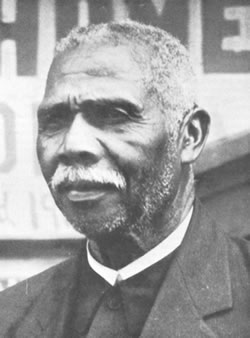
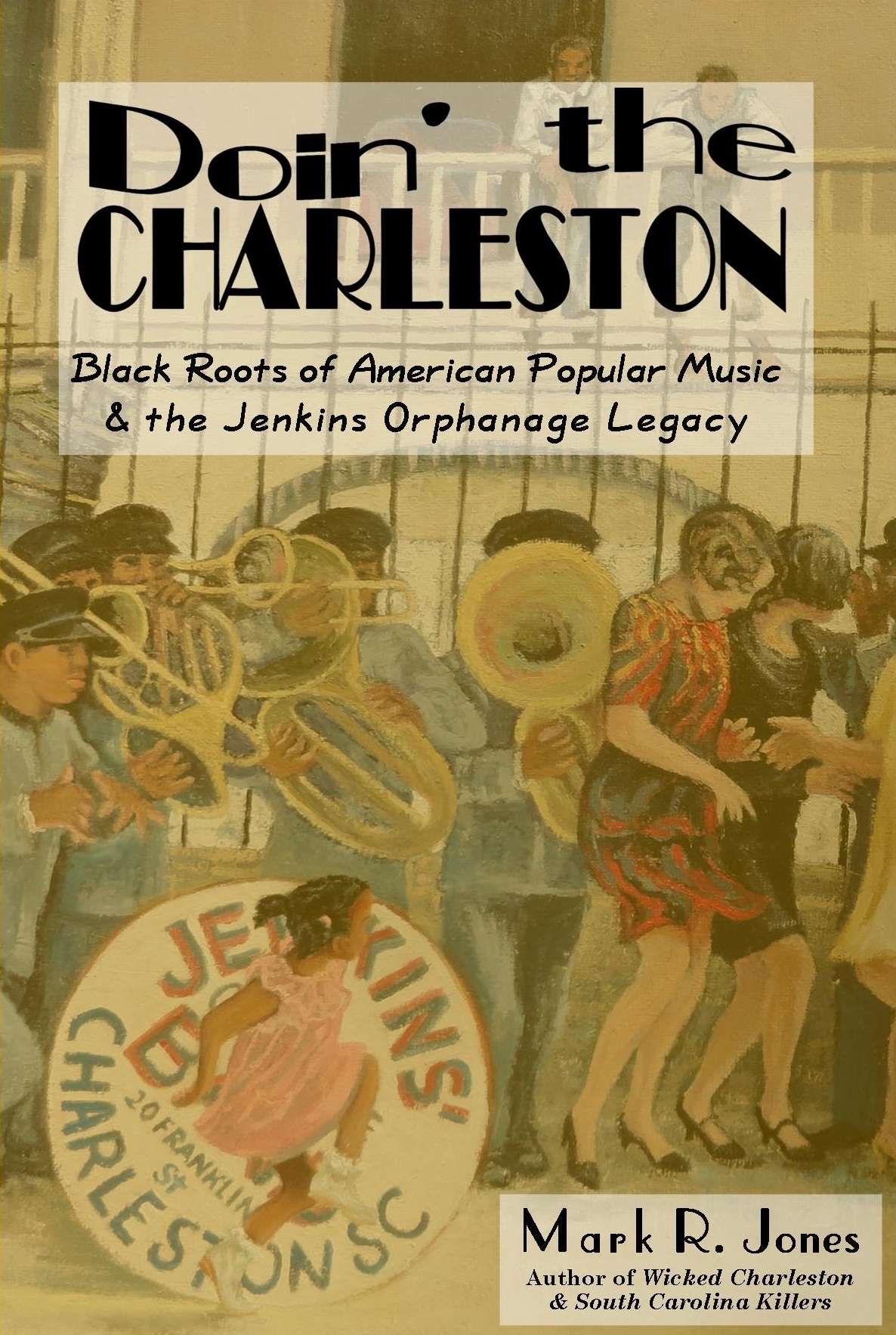
daniel_jenkinsDaniel Jenkins discovered four small black children huddled in a railroad box car. Despite the fact that he lived in a two-room house, with his wife and four children, Jenkins brought the orphaned children to his small home. This was the incident that led to the formation of the Orphan Aid Society of Charleston, the founding of the Jenkins Orphanage, the establishment of the Jenkins Orphanage Band. Within ten years, the Jenkins Band had performed in Europe and for Pres. Teddy Roosevelt’s inauguration. They later appeared on Broadway in Uncle Tom’s Cabin, and Porgy, performed for Pres. William Howard Taft and at the Anglo-American Expo in London. They also had a hand in introducing jazz music to small towns up and down the east coast and helping to popularize a dance that became known as “the Charleston.” 

1. doin book cover (create space) official - frontFor the entire story, read my 2013 book, Doin the Charleston.

The Twelve Viewings of Christmas

Here is a diverse and fun viewing list of 12 movies and TV shows to watch during the TWELVE DAYS OF CHRISTMAS. The traditional 12 DAYS start on Christmas day and runs to Jan. 5 – Christmas to Epiphany. But, choose your own time frame, and for twelve consecutive nights here is your viewing list.

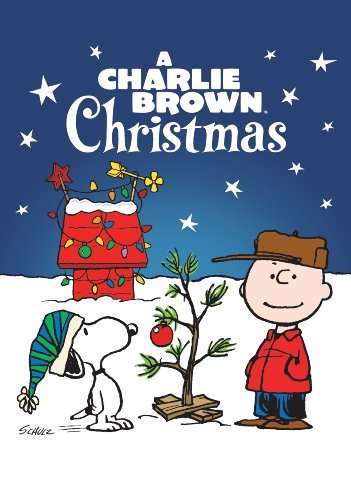
Day One: A CHARLIE BROWN CHRISTMAS

charlie brown xmasThis never gets old and never fails to charm. Just listening to the music of the great Vince Guaraldi makes it feel like Christmas.

Day Two: A MIDNIGHT CLEAR

a midnight clearAn obscure film, which should be a holiday tradition. Set in 1944 France, an American Intelligence squad locates a German Platoon in the Ardennes wishing to surrender rather than die in Germany’s final war offensive. The two groups of men, isolated from the war at present, put aside their differences and spend Christmas together before the surrender plan turns bad and both sides are forced to fight each other. Sad, but powerful.

Day Three: RUDOLPH THE RED-NOSED REINDEER

rudolphCome on, we all love it. The Snowman (Burl Ives) sings one of the greatest Christmas songs of all time “Have a Holly Jolly Christmas” in a show based on one of the greatest Christmas songs of all time.

Day Four: THE SANTA CLAUSE

To me, one of the better modern Christmas movies. Funny and sweet. Tim Allen is wonderful as the befuddled new Santa. 

shop around the cornerDay Five: THE SHOP AROUND THE CORNER

The great pairing of Jimmy Stewart and Margaret Sullavan in a quirky romantic comedy set in Budapest during Christmas season. This was the basis of the Tom Hanks / Meg Ryan remake You’ve Got Mail, which is an excellent update. If you’ve never seen it, you’ve missed one of the great Jimmy Stewart performances.

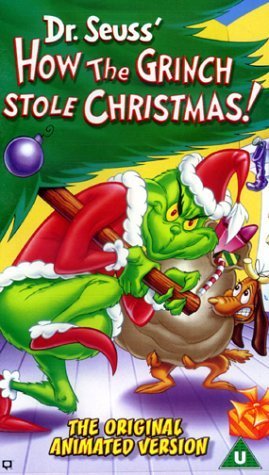
Day Six: HOW THE GRINCH STOLE CHRISTMAS

how the grinchNOT the Jim Carrey / Ron Howard-directed disaster, but the REAL Grinch narrated by Boris Karloff.

Day Seven: HOW THE GHOSTS STOLE CHRISTMAS, X-Files Episode

x-files season 6Mulder and Scully visit a rumored haunted house on Christmas Eve and get more than they bargained for. One of the all-time great episodes of a great TV show. Funny, scary and romantic at the same time.

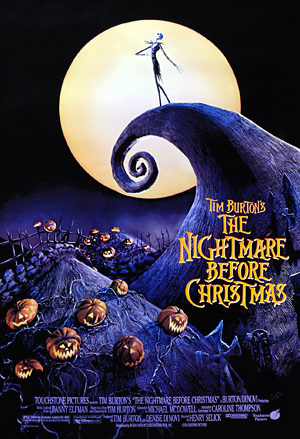
Day Eight: THE NIGHTMARE BEFORE CHRISTMAS

nightmare_before_christmas_posterTim Burton’s ingeniously dark romantic view of the Yuletide.

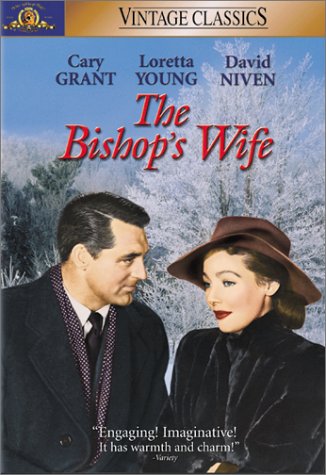
Day Nine: THE BISHOP’S WIFE

bishops wifeNOT the Whitney Houston remake, but the original 1947 Cary Grant classic. Funny and irreverent while being very mainstream traditional. Grant is sparkling!

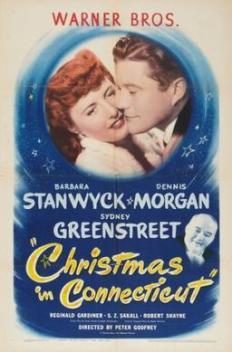
Day Ten: CHRISTMAS IN CONNECTICUT (1945)

ChristmasInConnecticutBarbara Stanwyck stars as Elizabeth Lane, a single New Yorker, employed as a food writer. Her articles about her fictitious Connecticut farm, husband, and baby are admired by housewives across the country. Her publisher, Alexander Yardley, is unaware of the charade and insists that Elizabeth host a Christmas dinner for returning war hero Jefferson Jones, who read all of her recipes while in the hospital and is so fond of her that his nurse, Mary Lee, wrote a letter to the publisher. Facing a career-ending scandal, not only for herself but for her editor,  Lane is forced to comply. In desperation, Elizabeth agrees to marry her friend, John Sloan, who has a farm in Connecticut. She also enlists the help of her uncle, chef Felix Bassenak, who has been providing her with the recipes for her articles. And of course, Lane falls in the love with the returning soldier, and comic chaos ensues! 

Day Eleven: LOVE ACTUALLY (2003)

love_actuallyRichard Curtis’ character-rich, sexy and romantic R-rated ensemble rom-com divided critics when it first arrived in theaters. But it was a huge hit with audiences from the outset, grossing about five times its budget on its way to becoming a modern classic. So many great little storylines: Colin Frissell so desperate for love he leaves London for Wisconsin; The Prime Minister falling immediately and hopelessly in love with his “chubby” staff member, Natalie;  John and “Just Judy” falling in love while filming a porn movie; Jamie and Aurelia’s non-verbal romance; and of course, Billy Mack’s quest to have the #1 Christmas song in England. 
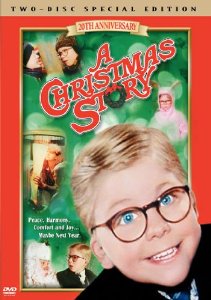
Day Twelve: A CHRISTMAS STORY

christmas storyTHE Christmas movie. The story of a young boy’s epic quest to get his hands on a Red Ryder BB gun provides the hilarious backdrop for a timeless tale rife with family hijinks, frozen tongues and, of course, sex-oozing leg lamps.

Today In Charleston History: December 12

NATIONAL POINSETTIA DAY

1851

Joel Roberts Poinsett died, a Master Mason of Solomon’s Lodge, Charleston.

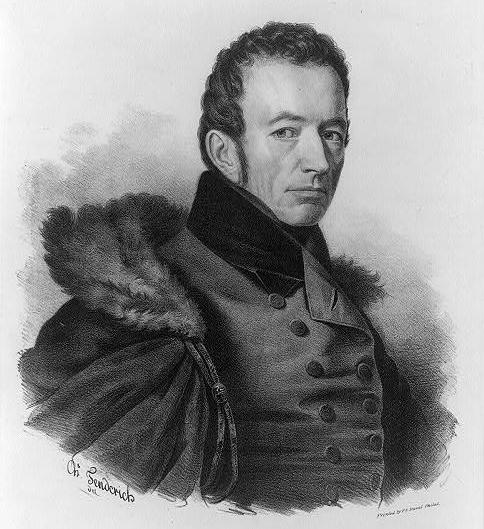
poinsettPoinsett was one of the most interesting men in South Carolina history. Born in Charleston in 1779, he studied law under Henry William DeSaussure. Poinsett, however, was not interested in becoming a lawyer, and convinced his parents to allow him to go on an extended tour of Europe in 1801.  For the next several years, Poinsett traveled the European continent, from France to Italy traveling through the Alps and Switzerland. He hiked up Mount Etna on the island of Sicily.

In October 1803, Poinsett left Switzerland for Vienna, Austria, and from there journeyed to Munich. In December he received word that his father was dead, and that his sister, Susan, was seriously ill. He immediately secured passage back to Charleston. Poinsett arrived in Charleston early in 1804, months after his father had been laid to rest. Hoping to save his sister’s life, Poinsett took her on a voyage to New York, remembering how his earlier voyage to Lisbon had intensified his recovery. Yet, upon arriving in New York City, Susan Poinsett died. As the sole remaining heir, Poinsett inherited a small fortune in town houses and lots, plantations, bank stock, and “English funds.” The entire Poinsett estate was valued at a hundred thousand dollars or more.

Poinsett traveled to the Russian capital of St. Petersburg in November 1806. Levett Harris, consul of the United States at St. Petersburg, and the highest American official in the country, hoped to introduce Poinsett at court to Czar Alexander. Learning that Poinsett was from South Carolina, the Empress asked him if he would inspect the cotton factories under her patronage. Poinsett and Consul Harris traveled by sleigh to Cronstadt to see the factories. Poinsett made some suggestions on improvement, which the Dowager Empress accepted.

In January, 1807, Czar Alexander and Poinsett dined at the Palace. Czar Alexander attempted to entice Poinsett into the Russian civil or military service. Poinsett was hesitant, which prompted Alexander to advise him to “see the Empire, acquire the language, study the people”, and then decide. Always interested in travel, Poinsett accepted the invitation and left St. Petersburg in March 1807 on a journey through southern Russia. He was accompanied by his English friend Lord Royston and eight others.

JRP-SoW,_SPoinsett and Royston were among the last westerners to see Moscow before its burning in October 1812 by Napoleon’s forces. Poinsett’s company traveled to Baku on the Caspian Sea. He noted that because of the petroleum pits in the region, it had long been a spot of pilgrimage for fire-worshipers. He became one of the earliest U.S. travelers to the Middle East, where, in 1806, the Persian khan showed him a pool of petroleum, which he speculated might someday be used for fuel.

Upon his return to Moscow, a year later, Czar Alexander’s discussed the details of Poinsett’s trip with him and offered him a position as colonel in the Russian Army. However, news had reached Russia of the attack of the H.M.S. Leopard upon the Chesapeake, and war between the United States and Great Britain seemed certain. Poinsett eagerly sought to return to the United States.

Before leaving Russia, Poinsett met one last time with Czar Alexander, who expressed his approval of the energetic measures by the Congress of the United States to resist the maritime pretensions of Britain. The Czar declared that Russia and the United States should maintain the same policy of respect. Poinsett again met with Foreign Minister Count Romanzoff where the Russian disclosed to Poinsett that the Czar ardently desired to have a minister from the United States at the Russian Court.

 In 1809  Pres. James Madison appointed Poinsett as Consul in General to Chile and Argentina. Poinsett was to investigate the prospects of the revolutionists, in their struggle for independence from Spain. He returned to Charleston on May 28, 1815.

poinsettia

In 1820, Poinsett won a seat in the United States House of Representatives for the Charleston district. As a congressman, Poinsett continued to call for internal improvements, but he also advocated the maintenance of a strong army and navy. He was appointed the first American minister to Mexico in 1825, and became embroiled in the country’s political turmoil until his recall in 1830. It was during this time that he visited the area south of Mexico City around Taxco del Alarcon, where he was introduced to a Mexican plant  called “Flor de Noche Buena” (Christmas Eve flower).  Poinsett, an avid amateur botanist, sent samples of the plant home to the States and by 1836 the plant was most widely known as the “poinsettia.”

In 1830, Poinsett returned to South Carolina  to again serve in the South Carolina state legislature, from 1830 to 1831. An avowed strong Unionist, his correspondence with Pres. Andrew Jackson during the Nullification Crisis kept the president abreast of the evolving situation in their home state, helping Jackson to craft policy. In 1833, Poinsett married the widow Mary Izard Pringle (1780-1857), daughter of Ralph and Elizabeth (Stead) Izard.

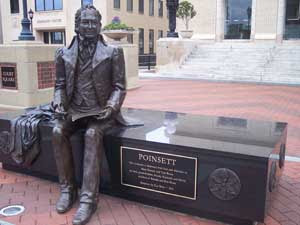
Poinsett-statue

Poinsett statue in Greenville, SC

Poinsett served as Secretary of War from March 7, 1837 to March 5, 1841 and presided over the continuing removal of Indians west of the Mississippi and over the Seminole War; reduced the fragmentation of the Army by concentrating elements at central locations; equipped the light batteries of artillery regiments as authorized by the 1821 army organization act.

In 1840 he a co-founder of the National Institute for the Promotion of Science and the Useful Arts in 1840, a group of politicians advocating for the use of the “Smithson bequest” for a national museum that would showcase relics of the country and its leaders, celebrate American technology and document the national resources of North America. The group was defeated in its efforts, as other groups wanted scientists, rather than political leaders, guiding the fortunes of what would become the Smithsonian Institution.

In 1841 he retired to his plantation at Georgetown died of tuberculosis, hastened by an attack of pneumonia, in Stateburg, South Carolina in 1851, and is buried at the Church of the Holy Cross Episcopal Cemetery.

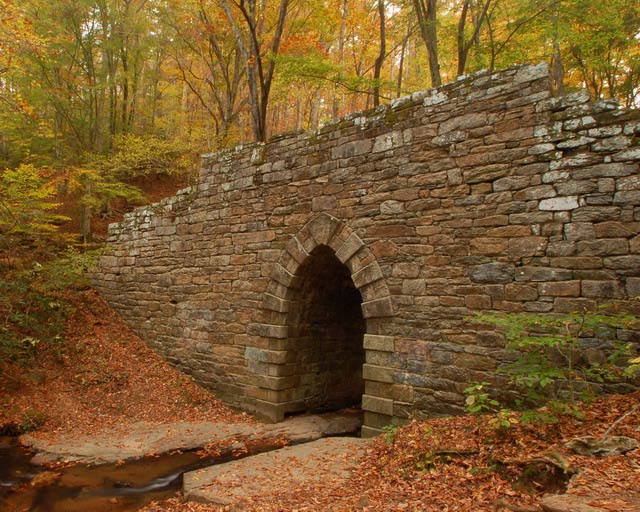
Poinsett Bridge in Traveler's Rest, SC

Poinsett Bridge in Traveler’s Rest, SC


Today In Charleston History: December 11

1861 – GREAT FIRE.

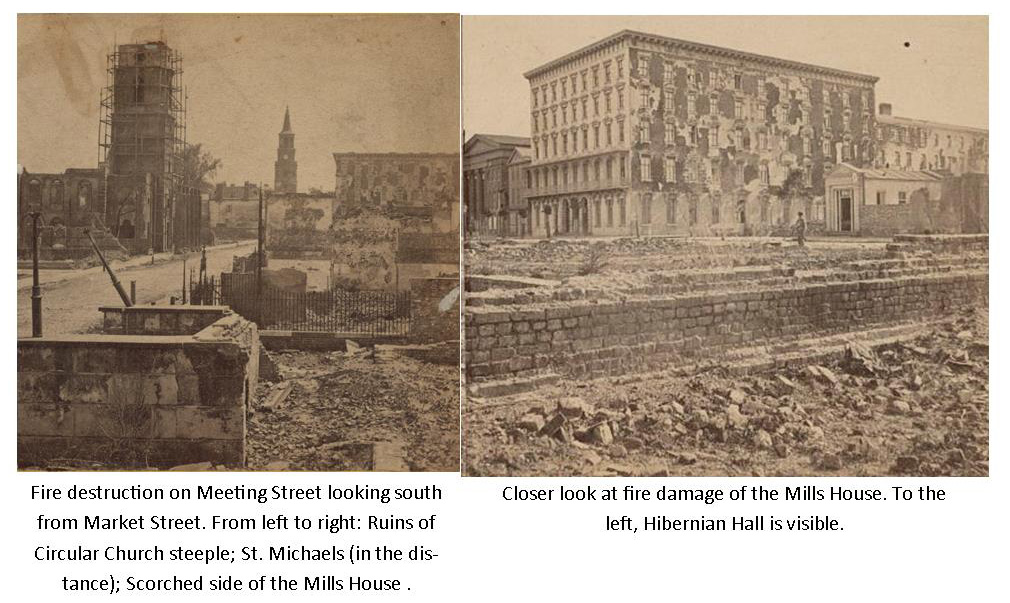
A fire started at Russell and Co.’s sash factory at the foot of Hasell Street and East Bay (present-day location of Harris Teeter). It crossed to the south side of Hasell Street and spread to Cameron and Co.’s machine shop. The fire spread quickly, fueled by a windy Nor’easter and an endless supply of wooden buildings. Another factor in the devastation was that most of the men who would have been available to fight the fire had signed up for Confederate military service and were not living in the city. Many people were able to save some of their belongings, but few could stop the fire from destroying their homes.

It left the city of Charleston in shambles and it remained in ruins for the remainder of the War.  Business was suspended and planters sent produce into town for the needy. “Soup houses” were opened to feed those left homeless and relief committees were established to house the homeless and to raise money for the victims. The effects of the fire were long lasting and rebuilding was slow during the economic depression in the decades following the War. The damage caused by the fire became associated with damages from the war.  Photographs of the burned city were often misrepresented as damage caused by Union guns. The Great Fire of 1861 did more damage to Charleston in one night than the Federal blockade and bombardment did over the next four years.

1861 fire path map. From the Post and Courier.

1861 fire path map. From the Post and Courier.

Emma Holmes, 23 –year old described the fire in her diary:

The flames swept on with inconceivable rapidity & fierceness, notwithstanding the almost superhuman efforts of the firemen … Through that awful night, we watched the weary hours at the windows and still the flames leaped madly on with demonic fury … At five a.m. the city was wrapped in a living wall of fire from the Cooper to the Ashley without a single gap t break its dread uniformity. It seemed as if the day would never dawn … when the sun rose, the fire was still raging so fiercely that its glare almost overpowered that of the sun … The wind circled in eddies, driving the flames in every direction & carrying showers of flakes to an immense distance …

1861 fire

Harper’s Weekly reported the fire, including the rampant speculation that the fire may have been started by rebellious slaves.

IT matters little, in effect, whether the burning of the city of Charleston was the fruit of accident or of negro incendiarism. The rebels are sure to ascribe the disaster to the latter cause. Secret terrors are the price of despotism : in slave countries, every noise, every cry, every unusual movement of a slave, carries apprehension to the heart of his master. At the time of the John Brown affair, Governor Wise told us that Virginia matrons living miles and miles away were beside themselves with terror. We know that so terrible was the alarm created by that trumpery attempt, that down on the Gulf shore negroes whose behavior had attracted attention were imprisoned, whipped, and even shot by scores. In the language of Southern members of Congress who talked secession in those days, life was not worth having, if accompanied by the agonies which such events implanted in every Southern breast.
It is by the light of these memories that we must read the tale of the burning of Charleston. The burning of 600 houses, including every public building in the city, and property valued at $7,000,000, is an astounding event. Whatever the politicians and the papers may say, the Southern people from Norfolk to Galveston are sure to conclude that the negroes did the dread deed, and each man and woman is now quaking in terror lest his or her house should be the next to go. Nor is this opinion likely to be confined to the whites. The slaves, too, will hear of the fire, and will hear simultaneously—for we know that news does spread among the slaves, hard as their masters try to keep them in ignorance—that between eight and ten thousand slaves, till lately the overworked laborers on Carolina cotton plantations, are now free men, getting eight and ten dollars a month. It will not exceed the negro’s power of combination to connect the two events together. When he does, beware the result.

Fire path, from Frank Leslie's Illutrated

Fire path, from Frank Leslie’s Illustrated

Meeting Street damage, Harper's Weekly

Meeting Street damage, Harper’s Weekly. Looking east from the roof of the Mills House. Circular Church ruins to the left … St. Philips to the right. Harper’s Weekly.

1900
At a public gathering, ground was broken for the construction of the South Carolina West Indian Exposition. Mayor Smythe and Gov. M.B. McSweeney spoke at ceremony. More than seven thousand people attended, arriving on trolleys, carriages and bicycles.