Today In Charleston History: December 28

1698

Affra Harleston’s will, divided her estate between her nephew, John Harleston, and her husband’s half-nephew, Elias Ball.

1722 – Births

Elizabeth Lucas (known as “Eliza) was born in Antigua, West Indies at Cabbage Tree Plantation. It was customary for elite colonists to send boys to England for their education. Her father, Lieut.-Colonel George Lucas, recognized Eliza’s intelligence and against the custom of the time, sent her to boarding school in London at age eight. Her favorite subject was botany.  She wrote to her father that she felt her “education, which I esteem a more valuable fortune than any you could have given me, will make me happy through my future.”

1748

The Charlestown Library Society was organized by seventeen young gentlemen of various trades and professions who wished to avail themselves of the latest publications from Great Britain. At first, the elected librarians safeguarded the Library’s materials in their homes. From 1765 until 1778, it resided in the upstairs of Gabriel Manigault’s liquor warehouse.

In 1792, the collection was transferred to the upper floor of the Statehouse, currently the County Courthouse at Broad and Meeting. From 1835 until its 1914 move to the current King Street location, the Charleston Library Society occupied the Bank of South Carolina building at the corner of Church and Broad Streets. That building was paid for with “Brick” memberships, a permanent membership for a one-time lump sum: several of these memberships are still in use, generations later, by Charleston families.

1773

Surveyor for the Southern District of North America, William Gerard de Brahm, sent a report to his Majesty which said:

The city of Charlestown is in every respect the most eminent and by far the richest city in the Southern District of North America; it contains about 1500, and most of them big houses, arrayed by straight, broad and regular streets; the principal of them is seventy-two feet wide call’d Broad Street, is decorated, besides many fine houses, with a State house near the centre of said street, constructed to contain two rooms, one of the Governor and Council, th’ other for the Representative of the people, the Secretary’s office, and a Court room; opposite the state House is the Armory-house, item St. Michael’s Church, whose steeple is 192 foot high, and seen by vessels at sea before they make any land; also with a new Exchange on the east end of said street upon the bay; all four buildings have been rais’d since the year 1752, an no expense spared to make them solide, convenient and elegant.

The city is inhabited by above 12,000 souls, more than half are Negroes and Mulattoes; the city is divided in two parishes, has two churches, St. Michaels and St. Philips, and six meeting-houses, vid, an Independent, a Presbyterian, a French, a German and two Baptists. There is also an assembly for Quakers, and another for Jews, all which are composed of several nations.

Charleston, circa 1780

Charleston, circa 1780

1832 – Nullification Crisis

John C. Calhoun resigned as Vice President to take Sen. Robert Hayne’s vacated seat in the U.S. Senate. It was a coordinated political move as a response to the Nullification Crisis and perceived heavy Federal hand of Pres. Andrew Jackson. 

1864 – Civil War    

Gen Henry Halleck, Army chief of staff wrote to Gen. William Sherman, who was in Savannah after burning through Georgia:

 … should you capture Charleston, I hope by some accident that the place be destroyed, and if a little salt should be sown on the site it may prevent the future growth of nullification and secession.

Today In Charleston History: December 27

1771 – Births  

William Johnson was born in Charleston. He would later serve as an associate justice of the U.S. Supreme Court.

WilliamJohnson

William Johnson

His father, William Johnson, was a revolutionary, and deported by Sir Henry Clinton to St. Augustine with other distinguished South Carolina patriots. [His mother, Sarah Johnson, née Nightingale, was also a revolutionary. During the siege of Charleston, she quilted her petticoats with cartridges, which she thus conveyed to her husband in the trenches. 

The younger Johnson studied law at Princeton and graduated  in 1790. He read law in the office of Charles Cotesworth Pinckney before passing the bar in 1793. Johnson was nominated to the U.S. Supreme Court by Thomas Jefferson on March 22, 1804, to a seat vacated by Alfred Moore. He was the first of Jefferson’s three appointments to the court, and is considered to have been selected for sharing many of Jefferson’s beliefs about the Constitution. Johnson was the first member of the U.S. Supreme Court that was not a member of the Federalist Party.

Johnsons-row-charleston-sc1

Johnson’s Row, 22-28 Queen Street, Charleston. Photo by Brian Stansberry. 

Johnson’s Row in Charleston on Queen Street, is named after him.

1773

Lord Dartmouth, Secretary of State for the Colonies, congratulated Lt. Gov. Bull on his handling of the tea situation, saying the events in Charlestown:

altho not equal in criminality to the Proceedings in other Colonies, can yet be considered in no other light than that of a most unwarrantable insult to the authority of this Kingdom.

1773

The Douglass Company opened the last theatrical season until after the Revolution in a newly constructed theater on Church Street (the Dock Street Theater had been destroyed in the 1740 fire). The Company performed seventy-seven plays and farces.

1860

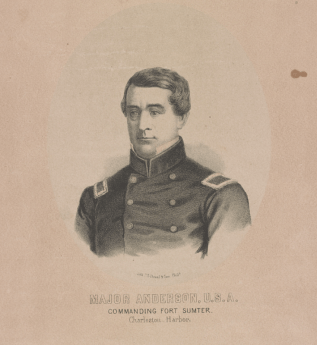
Governor Pickens, and South Carolina’s delegates in Washington, were shocked to discover that Major Anderson had broken the armistice and reinforced Fort Sumter during the night. They demanded federal troops be withdrawn immediately. 

President Buchanan’s Secretary of War was notified that Major Anderson has violated the standing armistice, abandoned Fort Moultrie, and reenforced the previously abandoned Fort Sumter. (Act of War) Sec. J. B. Floyd asks for conformation of the violation directly from Major Anderson, and Anderson replied as follows:

CHARLESTON, December 27, 1860.

Hon. J. B. FLOYD, Secretary of War:

The telegram is correct. I abandoned Fort Moultrie because I was certain that if attacked my men must have been sacrificed, and the command of the harbor lost. I spiked the guns and destroyed the carriages to keep the guns from being used against us.

If attacked, the garrison would never have surrendered without a fight.

ROBERT ANDERSON, Major, First Artillery

anderson - 1861

Today In Charleston History: December 26

1771

Henry Laurens, in a letter to Thomas Franklin, wrote:

I have always disliked those stupid Garnishings of No. 45, Wilkes and Liberty and drinking 45 Toasts to the Cause of true Liberty 450 Times unnecessarily.

1779 – The Seige of Charlestown.
Sirhenryclinton2

Sir Henry Clinton

Sir Henry Clinton, British commander, left New York City with a fleet of over 100 ships to transport 8700 men, horses and other supplies to attack Charlestown. Second in command of the force was Lt. General Charles Cornwallis.

1860 – Civil War 

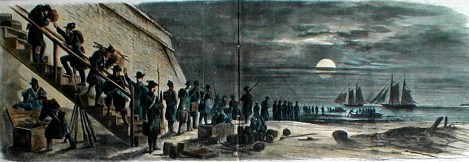
At sundown, December 26, 1860, Major Anderson of the First U.S.  Artillery Regiment, in command of the U.S. garrison at Fort Moultrie in Charleston harbor, ordered his men to pack everything and prepare to move to Fort Sumter within half an hour. The 55-year-old Anderson had assumed command the previous month of two companies of the First Artillery and the regimental band, a total of 84 officers and men.

anderson moves to sumter - frank leslie

anderson-enters-fort-sumter - harpers weekly

Anderson enters Fort Sumter under cover of darkness. Harper’s Weekly illustrations, courtesy of Library of Congress.

 Three miles away in Charleston, Christmas celebrations were still taking place in many of the homes. Over the next hour, taking advantage of the holiday laxness and the cover of darkness, the entire garrison relocated from Ft. Moultrie across the narrow channel to Fort Sumter.

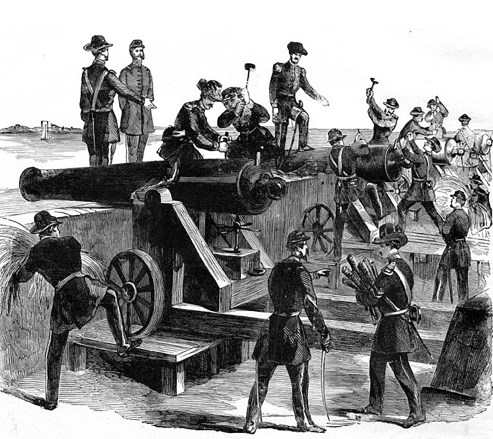
As they were leaving, a small detachment spiked the cannons, burned the gun carriages that faced Fort Sumter and cut down the flagstaff.   

spiking the guns

Spiking the guns at Fort Moultrie. Harper’s Weekly illustration, courtesy of Library of Congress.

.

Today In Charleston History: December 25

1830

SouthCarolinaRR_Schedule1841The first regularly scheduled passenger train in America pulled away from the Line Street station, Charleston, South Carolina at 8:00 a.m. Nicholas W. Darrell operated the locomotive as engineer for the 10-mile round trip from Charleston to San Souci and back. The trip was described a writer, Jockey of York.

Away we flew on the wings of the wind at the speed of 15 to 25 miles per hour, annihilating time and space … leaving all the world behind. It was nine minutes, five and one fourth seconds since we started and we have discovered ourselves beyond the forks of the State and Dorchester Roads … We came to San Souci in quick time. Here we stopped to take up a recruiting party, darted forth like a live rocket, scattering sparks and flames on either side, passed over three saltwater creeks, hop, step and jump and landed us all at the Lines before any of us had time to determine whether or not it was prudent to be scared.

More than 140 passengers took the first trip, riding in two cars. During the first day, the Best Friend carried more than 500 people. Truly, it was one of the most wondrous Christmases in Charleston history.

Best_Friend_of_Charleston_1831

Best Friend of Charleston

1908

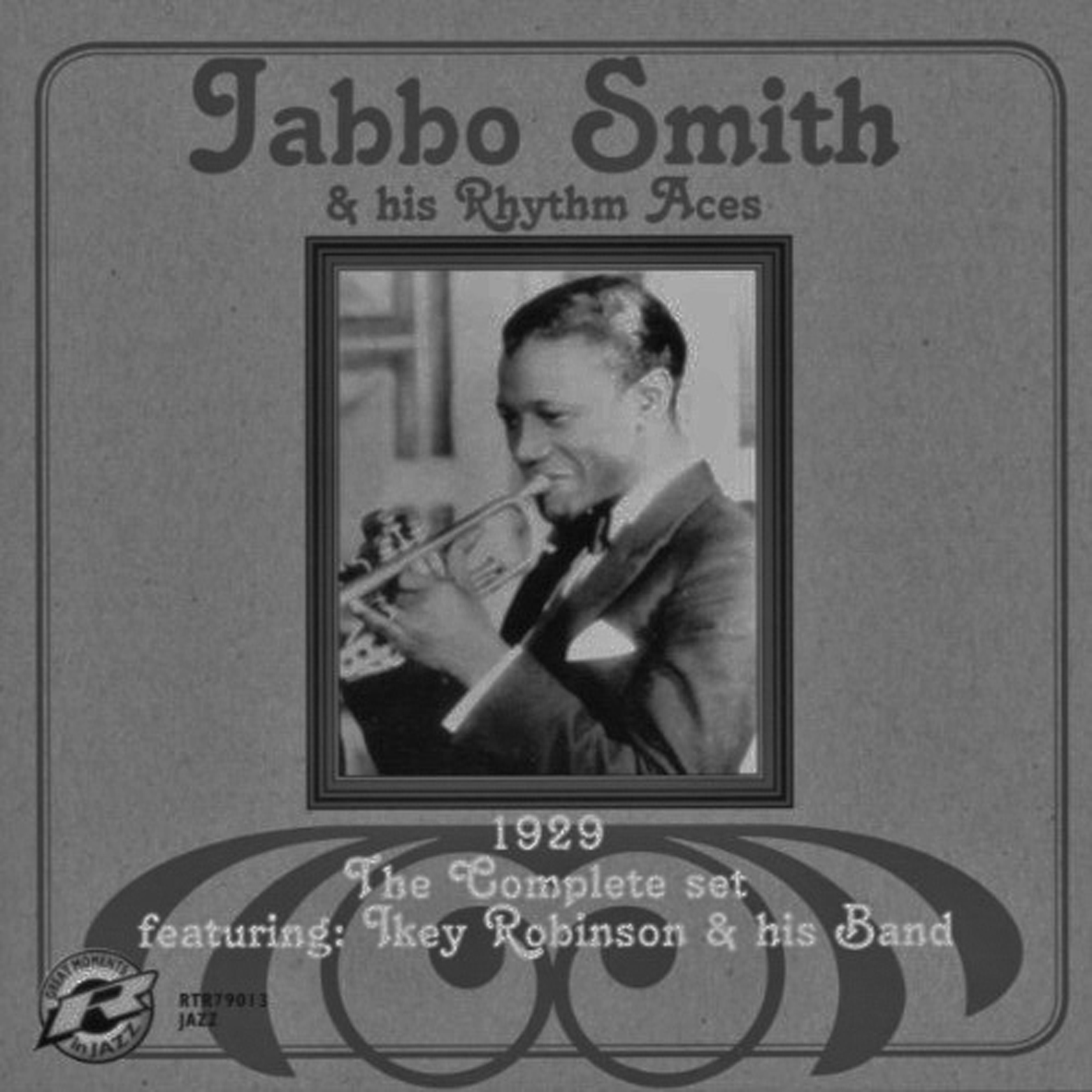
19a. jabbo smith (author's collection)Jabbo Smith was born in Pembroke, Georgia. He grew up at the Jenkins Orphanage in Charleston and became one of the major figures in the Jenkins Band. By age 17 he was playing with the Paradise Orchestra at Smalls Paradise and being called “the hottest trumpet player in New York.”  Due to excessive living, his career burned out by the time he was thirty, but to this day, his 1920 / 30s recordings are considered ground-breaking jazz music. 

Today In Charleston History: December 24

1737 – Religion
John Wesley

John Wesley

John Wesley left Charlestown for England, ending his ministry in Georgia.

1825 – Fire

A fire destroyed parts of King Street with damages estimated to be at least $80,000. Authorities determined it was the work of arsonists. Over the next several weeks, more fires were set nightly. With the Denmark Vesey slave conspiracy still fresh in resident’s mind, it was thought the arsonists were slaves.

1830

The Charleston Courier reported:

The public are respectfully informed that the Rail Road Company has purchased from Mr. E.L. Miller his locomotive steam engine and that it will hereafter be constantly employed in the transportation of passengers. The time of leaving the station in Line Street will be 8 o’clock, at 10 a.m. at 1 and half past three o’ clock p.m.. Great punctuality will be observed in the time of starting.

Best Friend of Charleston

Best Friend of Charleston

1854 – Slavery

Robert Smalls, a slave harbor pilot married hotel maid Hannah Jones.

1860

South Carolina legislature published The Declaration of the Immediate Causes Which Induce and Justify the Secession of South Carolina from the Federal Union, also known as the South Carolina Declaration of Secession. Written mainly by Christopher Gustav Memminger, it explained the reasons for South Carolina’s secession from the Union. Memminger later served as first Secretary of Treasury for the Confederate Government.

FOR full text of the “Declaration”, CLICK HERE. 

Christopher G. Memminger

Today In Charleston History: December 23

1719 – Bloodless Revolution.

The Assembly pronounced it was convened as “a convention of the people,” seeking to become a royal colony. The legislature denounced the rule of the Lords Proprietors and officially petitioned King George I to purchase the Carolina colony from the Proprietors.

The Assembly voted unanimously for a new provisional government until his Majesty assumed control of the colony. The officers chosen were:

  • James Moore, Jr. (son of a former governor), Governor
  • Richard Allein, Chief Justice (Nicholas Trott was removed)
  • Francis Yonge, Surveyor General of the Province
  • William Rhett, Receiver of the Province
  • John Barnwell, Agent of the Province.

They sent Barnwell to England with instructions and a Declaration of Causes to present to the King which, in part, read:

Whereas the Proprietors of this province of late assumed to themselves an arbitrary and illegal power of repealing such laws as the General Assembly of the settlement have thought fit …and acted in many other things contrary to the laws of England and the charter to them and us freeman granted.

Whereby we are deprived for those measures we have taken for the defence of the settlement, being the south west frontier of his Majesty’s territories in America …

We therefore … the Representatives and delegates of this Majesty’s liege people and free born subjects of the said settlement now met in convention at Charles Town … do hereby declare … James Moore his Majesty’s Governor of this settlement, invested with all the powers and authorities belonging and appertaining to any of his Majesty’s governor in America till his Majesty’s pleasure herein shall be further known.

For all practical purposes, the citizens of South Carolina had overthrown the Proprietary government, America’s first Revolution. They had proven that, if need be, the citizens were willing to take matters into their own hands.

1765 – Stamp Act.

British Secretary of State Henry Seymour Conway informed Lt. Gov. Bull that further violence was “not suitable for either the safety or Dignity of the British Empire.” He instructed Bull to call upon British General Thomas Gage to combat the violence of the mobs.

In addition to the mobs, Bull was also concerned about the 1400 unemployed sailors who were stranded in Charlestown due to the closure of the port. The sailors spent most of their time in taverns and were increasingly disorderly. 

1824 -Religion.
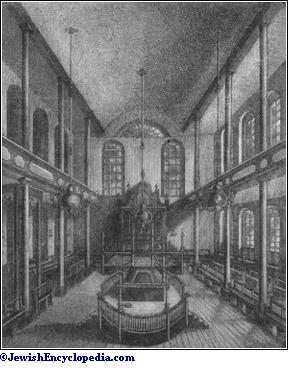
view of old synagogue

Interior of the Old Synagogue at Charleston, S. C., Destroyed by Fire April. 27, 1838. (From a drawing by Solomon N. Carvalho ).

A group of a dozen Jewish men, “A Convention of Israelites,” submitted a petition to the president of the congregation of Beth Elohim, urging reform of their worship services, including the introduction of English. They wrote they had “witnessed with deep regret, the apathy and neglect which have been manifested towards our holy religion.”

This was the beginning of the Reformed movement in America.


Today In Charleston History: December 22

1747 – Religion

Solomon DeCosta, a Jewish merchant who seems to be in partnership with James Peyne, attended a meeting of the Commissioners for Trade and Plantations in London for “the settlement of several of their poor in South Carolina.”

1773 – American Revolution – Foundations

In the pre-dawn hours, British custom officials off loaded the 257 chests of tea and stored them in the basement of the Exchange. They informed the public that the tea would remain locked away and any attempt to remove it would be met by force. 

Exchange1823_650x650

1775

Continental Congress creates a Continental Navy, naming Esek Hopkins, Esq., as commander in chief of the fleet. Christopher Gadsden of South Carolina designed Hopkins’ personal standard, which flew from the first navy fleet. The yellow flag bore the image of a coiled snake and the Patriot motto, Don’t Tread on Me.

Gadsden, famously skeptical of any government involvement in business affairs, once stated, in the aftermath of the Jay Treaty, “Better to send a virgin to a brothel than a man to England to sign a treaty.”

900px-Gadsden_flag.svg

1812   

From Georgetown, South Carolina, Dr. Greene wrote Aaron Burr:

I have engaged passage to New-York for your daughter[Theodosia Burr Alston] in a pilot-boat that has been out privateering, but has come in here, and is refitting merely to get to New-York. My only fears are that Governor Alston may think the mode of conveyance too undignified, and object to it; but Mrs. Alston is fully bent on going.

The ship Patriot was a private vessel authorized for military service. It had been fitted with less than five cannon and attacked several British merchant ships. It was being refitted in Georgetown, her guns dismounted and hidden below decks.

1822 – Slavery

In response to the Denmark Vesey slave plot, South Carolina legislature passed the Negro Seamen Acts. Any free Negro that came into the state on a vessel would be lodged in the jail during the stay of the vessel in port. If the captain would not pay for the cost of board and lodging, the Negro would be sold into slavery.

Today In Charleston History: December 21

1800 – Birth.

Robert Barnwell Smith (Rhett) was born. 

Rhett2-246x300After entering public life Robert Smith changed his last name for that of his prominent colonial ancestor Colonel William Rhett.  He studied law and became a member of the South Carolina legislature in 1826 and also served as South Carolina attorney general (1832), U.S. representative (1837–1849), and U.S. senator (1850–1852). He was pro-Southern extremist he split (1844) and one of the leading fire-eaters at the Nashville Convention of 1850, which failed to endorse his aim of secession for the whole South.

One of the original “Fire-Eaters” Rhett was was dubbed the ‘Father of Secession’ and called the ‘Lone Star of Disunion’ by his enemies in the Whig Party. In her famous diary, Mary Chesnut called Rhett “the greatest of seceders.”  During the War Rhett continued to express his radical views  through editorials in the Charleston Mercury newspaper, edited by his son. After the other Southern secession in 1861, Rhett was considered one of the leading candidates for President of the Confederate States. bit In the end, he was viewed as too radical for the position and the more conservative Jefferson Davis was selected as chief executive. 

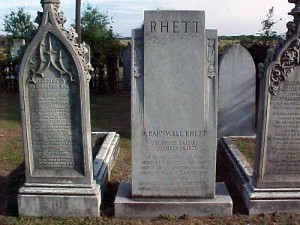
Robert-Barnwell-Rhetts-grave-300x225Rhett was critical of the Confederate Government for many reasons, including government intervention in the economy. He had previously envisioned a Confederacy that also included the Caribbean and even Brazil, but the Confederate States didn’t live up to Rhett’s dream and criticized Jefferson Davis’ adminstration as strongly as he had once criticized Washington, DC. After the War Rhett refused to apply for a Federal pardon. He died of cancer in 1876 and is buried in Magnolia Cemetery in Charleston.

1842

The Citadel, a military college, was founded in response to the Denmark Vesey rebellion. Charleston City Council established a “municipal force of 150 men … for an arsenal, or a ‘Citadel’ to protect the preserve the public property and safety.” 

1860. Day After Secession.

     The celebrations continued through the night until the sun was rising over Charleston harbor. That evening another parade of brass bands and militia units marched through the street. They stopped in front of the Mills House, where Gov. Pickens addressed the crowd:

Allow me to say to you that I hope and trust I am in possession of information that, perhaps, there may be no appeal to force on the part of the Federal authorities. If I am mistaken in this, at least as far as I am concerned, we are prepared to meet any and every issue. 

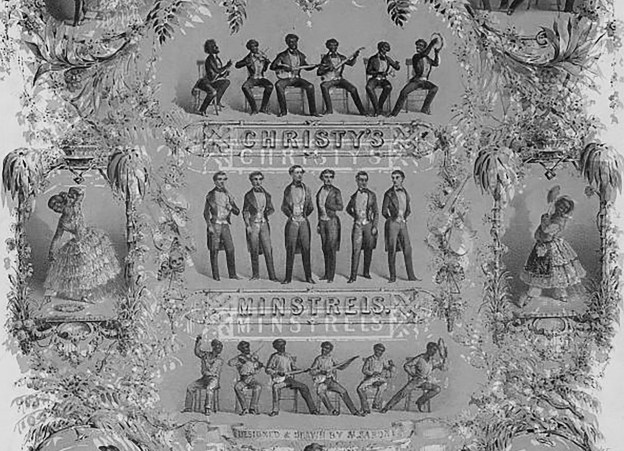
         Christy’s Minstrels, in town from New York for a series of performances at Institute Hall, entertained the crowd with their famous blackface version of “Dixie,” followed by a rousing version of the La Marseillaise.

christy minstels

1891  – Jenkins Orphanage  

Daniel Jenkins preached a sermon at the New Tabernacle Fourth Baptist Church titled “The Harvest is Great by the Laborers Are Few.” It was an appeal to the congregation to “to help these and other unfortunate children.” The congregation was just a poor as Jenkins. The donated money did not last long; it paid for some food and clothing and the rental of a small shack at 660 King Street.

Today In Charleston History: December 20

1752

King George II confirmed the charter of the Two-Bit Club at the Court of St. James. Soon afterward, the name was changed to the South Carolina Society and began including non-French members.

1782 – Slavery

Capt. Joseph Vesey returned to Charlestown with his wife, Kezia, their son John and Vesey’s personal servant / cabin boy, sixteen year-old Telemaque.

1783

The first theatrical performance in Charleston after the British evacuation was held in the Exchange Building.

1800 – Slavery

 A law was passed making it more difficult to emancipate slaves. Also passed was “An Act Respecting Slaves, Free Negroes, Mulattoes and Mestizoes” which permitted blacks to gather for religious worship only after the “rising of the sun and before the going down of the same … a majority [of the congregation] shall be white persons.”

Perhaps thinking that the “Christianization [sic] of the city’s black labor force would have a stabilizing effect,”  the white authorities ignored late night church meetings among all black congregations for many years.

1826

The South Carolina Jockey Club was formed.

1860 – Secession

On this day, a secession convention meeting in Charleston, South Carolina, unanimously adopted an ordinance dissolving the connection between South Carolina and the United States of America.

Click here to read the Charleston Mercury’s account of secession. 

Nina Glover, in Charleston, wrote to her daughter, Mrs. C. J. Bowen, “The Union is being dissolved in tears. The feeling exhibited was intense; each man, through the day, as he met his neighbor, anxiously asked if the Ordinance had yet passed.”

By mid-morning a large crowd of thousands had gathered on Broad Street in front of St. Andrew’s Hall. The Charleston police guard stood in front of the closed and locked doors. 

st andrews hall - ext

The ordinance, written by Christopher Memminger, was a simple but direct statement. John Ingliss claimed that it meant: “in the fewest and simplest words possible to be uses … all that is necessary to effect the end proposed and no more.”

 The call of the roll started at 1:07 P.M. and ended at 1:15, with every delegate voting “yea,” a unanimous vote – eight minutes to vote to “dissolve” the Union. From a window at St. Andrew’s a signal was flashed to the crowd. Then, according to Rev. Anthony Toomer Porter:

 A mighty shout arose. It rose higher and higher until it was the roar of a tempest. It spread from end to end of the city, for all were of one mind. No man living could have stood the excitement.

The Mercury had received a draft copy of the ordinance, by 1:20 P.M., five minutes after the vote concluded, the “extra” was on the streets. During the day, tens of thousands of copies of the “extra” were printed.  Perry O’Bryan’s telegraph office wired the news to the rest of the nation.

dissolved

Upon the signing of the Ordinance, all the church bells in the city began to ring. James Petigru asked a passerby, “Where’s the fire?” The man responded, “Mr. Petigru, there is no fire; those are the joy bells in honor of the passage of the Ordinance of Secession.”

 Petigru responded, “I tell you there is a fire. They have this day set a blazing torch to the temple of constitutional liberty, and please God, we shall have no more peace forever.”    

Across the city, celebrations continued through the day. Elderly men donned the uniforms of their volunteer units and marched, shouting the news to all the neighborhoods. A man in a golden helmet trotted a horse around the city, a copy of the ordinance held aloft. Men gathered around Calhoun’s grave and vowed to “devote their lives, their fortunes, and their sacred honor, to the cause of South Carolina independence.”

The text of the Ordinance:

The State of South Carolina

At a Convention of the People of the State of South Carolina, begun and holden at Columbia on the Seventeenth day of December in the year or our Lord one thousand eight hundred and sixty and thence continued by adjournment to Charleston, and there by divers adjournments to the Twentieth day of December in the same year –

An Ordinance To dissolve the Union between the State of South Carolina and other States united with her under the compact entitled “The Constitution of the United States of America.”

We, the People of the State of South Carolina, in Convention assembled do declare and ordain, and it is hereby declared and ordained, That the Ordinance adopted by us in Convention, on the twenty-third day of May in the year of our Lord One Thousand Seven hundred and eight-eight, whereby the Constitution of the United State of America was ratified, and also all Acts and parts of Acts of the General Assembly of this State, ratifying amendment of the said Constitution, are here by repealed; and that the union now subsisting between South Carolina and other States, under the name of “The United States of America,” is hereby dissolved.

Done at Charleston, the twentieth day of December, in the year of our Lord one thousand eight hundred and sixty.

Jacob Shirmer, a Union man like Petigru, prophetically wrote in his diary:

This is the commencement of the dissolution of the Union that has been the pride and glory of the whole world, and after a few years, we will find the beautiful structure broke up into as many pieces as there are now States, and jealously and discord will be all over the land.

Robert Gourdin wrote to John W. Ellis, governor of North Carolina:

Before the sun sets this day, South Carolina will have assumed the powers delegated to the federal government and taken her place among the nations as an independent power. God save the State.

We may, if possible, avoid collision with the general government, while we negotiate the dissolution of our situation with the Union. I apologize for the brevity of this … It is written at the dinner table amid conversation, wine and rejoicing.     

At 6:30 p.m. the secession delegates lined up on Broad Street in front of St. Andrew’s Hall, and through the gas lamp glow, marched east to Meeting Street, turned left and marched past Hibernian Hall, the Mills House and arrived at the front doors of Institute (Secession) Hall. The delegates entered the hall, to the roar of applause and cheers from more than 3,000 Charlestonians, packed into the building.  One of the attendants was eighteen-year old Augustine Smythe, the son of Presbyterian minister, Rev. Thomas Smythe, who was crammed into the corner of the upper gallery. Also in the gallery was Virginian Edmund Ruffin and British consul Robert Bunch.
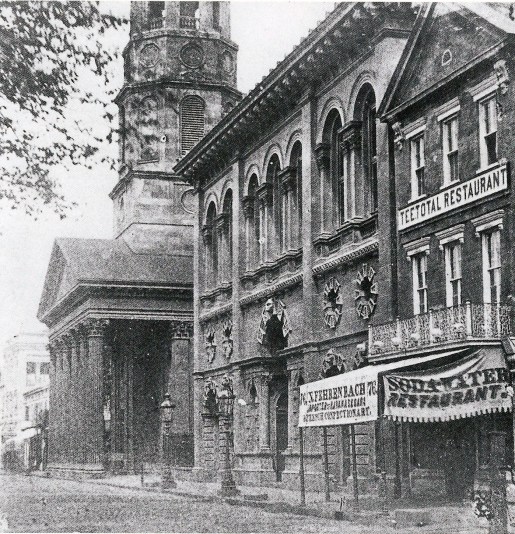
circular church - teetotal

Photo of Meeting Street with 1806 version of Circular Church steeple and portico and SC Institute Hall, c 1860.

 On the stage was a lone table, flanked by two potted palmetto trees. A banner on the stage read “Built from The Ruins.” After the delegates were seated, Rev. John Bachman offered a prayer where he asked God for “wisdom on high for the leaders … forced by fanaticism, injustice, and oppression” to secede. Then a copy of the ordinance, or, as the Mercury called it, “the consecrated parchment,” was read aloud and, as the Mercury breathlessly reported:

On the last word – “dissolved” – those assembled could contain themselves no longer, and a shout that shook the very building, reverberating, long-continued, rose to Heaven, and ceased on with the loss of breath.

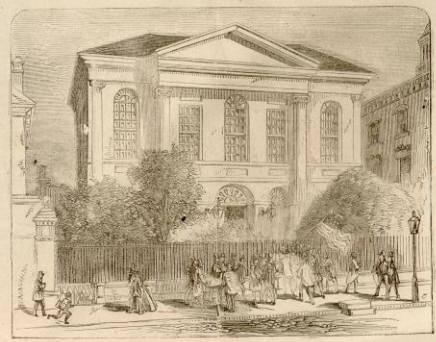
Institute-hall-secession

South Carolina Institute Hall, street view, (Harper’s Weekly)

Upon the signing of the Ordinance of Secession, all the church bells in Charleston began to ring. James Petigru asked a passerby, “Where’s the fire?” The man responded, “Mr. Petigru, there is no fire; those are the joy bells in honor of the passage of the Ordinance of Secession.”

 Petigru responded, “I tell you there is a fire. They have this day set a blazing torch to the temple of constitutional liberty, and please God, we shall have no more peace forever.” Late in the day, Petigru was again asked about secession and famously remarked, “South Carolina is too small for a republic and too large for an insane asylum.”
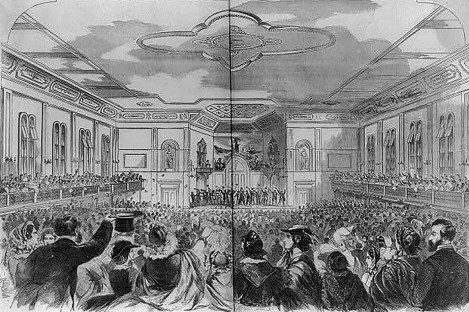
secession

Inside South Carolina Institute (Secession) Hall. From Frank Leslie’s Newspaper. Courtesy of the Library of Congress

The ordinance was then placed on the stage table, and one-by-one, the delegates stepped forward to sign. Over the next two hours the delegates signed the Ordinance of Secession, and as politicians are apt to do, offered a few remarks on the “monumental occasion.” Ruffin wrote, “no one was weary, and no one left.”

After the last signature, Chairmen Jamison held the document above his head and exclaimed, “I proclaim the State of South Carolina an Independent Com-monwealth!” At that, the crowd rushed the stage, and frantically removed souvenir fronds from the palmetto trees. Augustine Smythe, slid down a pillar to the main floor, joined the scrum. He managed to not only get a palmetto frond souvenir, but also removed the pen and blotter used to sign the document. These items today are in the collection at the Confederate Museum, housed in Market Hall on Meeting Street.

The raucous celebration spilled into the Charleston streets, with men whooping and shooting pistols in the air. Bonfires in tar barrels, were lit on street corners across the city. Edmund Ruffin wrote, “The bands played on and on, as if there were no thought of ceasing.”

A teenager named Augustus Smythe procured a seat in the balcony of Charleston’s South Carolina Institute Hall on the night of December 20, 1860.  Over the next three hours Smythe watched the members of the South Carolina legislature sign the Ordinance of Secession, officially removing the state of South Carolina from the Union and establishing an independent republic, ultimately called the Confederate States of America. The raucous celebration after that historic event spilled into the Charleston streets, with men whooping, drinking whiskey and shooting pistols in the air. Smythe had the calm foresight to make his way through the crowd to the stage and remove the inkwell and pen which had been used to sign the Ordinance. These items today are in the collection at the Confederate Museum, housed in Market Hall on Meeting Street.

secssion, mills house

Rally on Meeting Street, in front of Mills House, 1861. From Frank Leslie’s Newspaper. Courtesy of the Library of Congress

Today In Charleston History: December 19

1774

During the elections Francis Salvador was elected to the First Provincial Congress from the Ninety-six district – the first Jew elected to office in the American colonies.

1801

The legislature chartered South Carolina College, now the University of South Carolina.

1827

The Charleston & Hamburg Rail Road was chartered by Alexander Black and William Aiken. Black proposed to build and operate a railed road from Charleston to Hamburg Columbia and Camden.

Map of route for the Charleston & Hamburg line.

Map of route for the Charleston & Hamburg line.

Charleston’s economy heavily depending on the shipping of three staples: cotton to England, rice to southern Europe and lumber to the West Indies. The development of steamers that sailed the Savannah River that brought Georgia and South Carolina crops and goods from August to the port of Savannah, severely cutting into Charleston’s trade.

The proposed railed road from Hamburg (on the Savannah River across from Augusta) was considered the best solution – goods could be transported by rail 136 miles to Charleston. 

1828 – Nullification Crisis. State’s Rights.
John_C_Calhoun_by_Mathew_Brady,_1849

John C. Calhoun (by Matthew Brady, 1849)

The South Carolina legislature adopted the Exposition and Protest (secretly written by Vice-President John C. Calhoun) which argued about the unconstitutionality of the Tariff of Abominations because it favored manufacturing over commerce and agriculture. Calhoun believed the tariff power could only be used to generate revenue, not to provide protection from foreign competition for American industries. He believed that the people of a state or acting in a democratically elected convention, had the retained power to veto any act of the federal government which violated the Constitution.

1860 – Second Day of Secession Convention

The Mercury’s front page exclaimed:

The excitement here is a deep, calm feeling … [the city] may be said to swarm with armed men [but] we are not a mobocracy here, and believe in law, order, and obedience to authority, civil and military.          

     Issac W. Hayne, the state’s attorney general, called for secession commissioners to be sent to other states, to urge them to join South Carolina. He called for each commissioner to carry a copy of South Carolina’s Ordinance of Secession, before it was even approved.

  While the whites were celebrating, among the free blacks in Charleston, the exodus, which had started in September, continued. James D. Johnson, on Coming Street, was preparing his two houses for sale. He wrote, “I only want to beautify the exterior so as to attract Capitalists.” His son wrote, “It is now a fixed fact that we must go.”

At 11:00 a.m. the delegates met at St Andrew’s Hall. A delegate proposed that should “sit with closed doors,” and James Chesnut protested. He claimed that “a popular body should sit with the eyes of the people upon them.” He then suggested they move back to Institute Hall. John Richardson argued to Chesnut: “I protest. If there is one sentiment predominant over all others, and truly the mind of the people of Charleston, it is that this Convention should proceed!” 

st-andrews-hall-1

St. Andrews Hall, 118 Broad Street. Courtesy of Library of Congress
The doors were shut, locked and guarded by Charleston police. All the citizens could do was wait with the patience of a child on Christmas eve. An afternoon parade by the Vigilant Rifles and the Washington Light Infantry occupied some of the afternoon. They stopped in front of South Carolina Society Hall on Meeting Street, where Mayor Charles Macbeth presented a flag to Captain S. Y. Tipper “sewn by a number of the fair daughters of Carolina.” Capt. Tipper toasted Fort Moultrie:

It is ours by inheritance. It stands upon the sacred soil of Carolina, and the spirit of our patriotic fathers hover about it. Infamy to the mercenaries [Federal troops] that fire the first gun against the children of its revolutionary defenders. 

     The day ended, and no news from the convention. No ordinance yet.