Gov. Glen asked London for three companies of British regulars who “would give heart to our … people [and] prove usefull in preventing or suppressing any Insurrections of our Negroes.” Many citizens were growing concerned over the “great numbers of Negroes … playing Dice and other Games.”
1788-First Golf Club
On May 28, 1788, an advertisement in the Charleston City Gazette requested that members of the South Carolina Golf Club meet on “Harleston’s Green, this day, the 28th.” After which they adjourned to “Williams’ Coffee House.” Also in 1788 there was an announcement of the formation of the South Carolina Golf Club was also listed in The Southern States Emphemris: The North and South Carolina and Georgia Almanac. Read the entire story here …
1818-Births
Pierre Gustave Toutant Beauregard was born at the “Contreras” sugar-cane plantation in St. Bernard Parish, Louisiana, about 20 miles outside New Orleans.
1823-Slavery
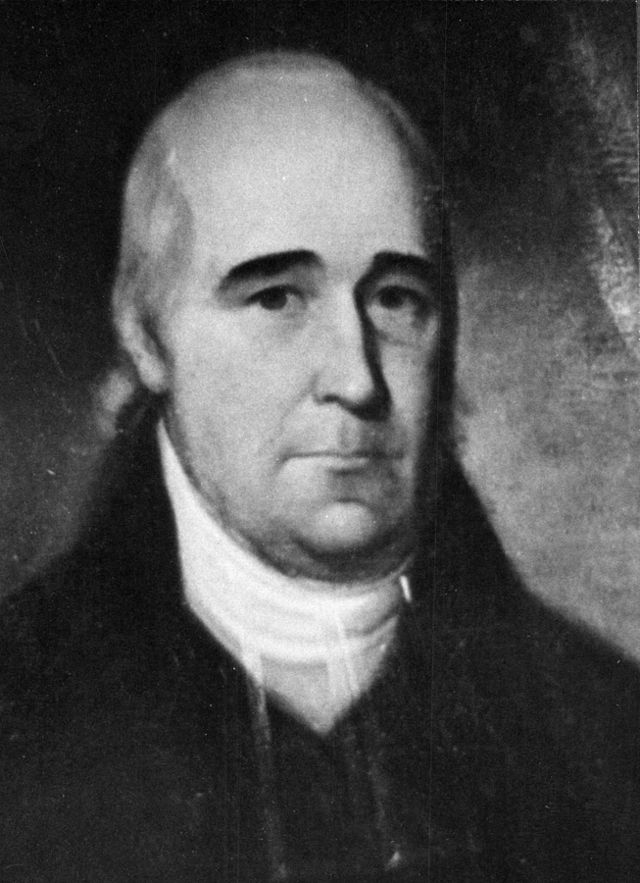
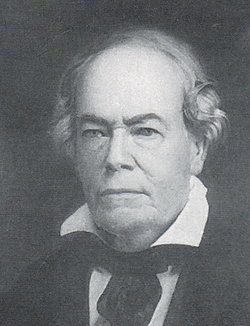
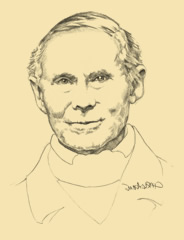
Rev. Richard Furman
Motivated by the Denmark Vesey rebellion, Rev. Dr. Richard Furman of Charleston’s First Baptist Church published his “Exposition of the Views of the Baptists Relative to the Coloured Population in the United States” – a biblical defense of slavery that southerners would use to defend slavery until the 13th US constitutional amendment (1865) finally put an end to slavery in the United States. In the “Exposition” Furman claimed that:
the holding of slaves is justifiable by the doctrine and example contained in Holy writ; and is; therefore consistent with Christian uprightness, both in sentiment and conduct … That slavery, when tempered with humanity and justice, is a state of tolerable happiness; equal, if not superior, to that which many poor enjoy in countries reputed free. That a master has a scriptural right to govern his slaves so as to keep it in subjection; to demand and receive from them a reasonable service; and to correct them for the neglect of duty, for their vices and transgressions; but that to impose on them unreasonable, rigorous services, or to inflict on them cruel punishment, he has neither a scriptural nor a moral right. At the same time it must be remembered, that, while he is receiving from them their uniform and best services, he is required by the Divine Law, to afford them protection, and such necessaries and conveniencies of life as are proper to their condition as servants … That it is the positive duty of servants to reverence their master, to be obedient, industrious, faithful to him, and careful of his interests; and without being so, they can neither be the faithful servants of God, nor be held as regular members of the Christian Church.
1862-Slavery
Robert Smalls met Abraham Lincoln and gave the President his personal account of the events of his escape to freedom.
Six weeks after the colonists’ arrival, the ship Carolina, now commanded by Captain Henry Braine, sailed to Virginia for supplies. The sloop, Three Brothers, sailed to Bermuda for more settlers and supplies.
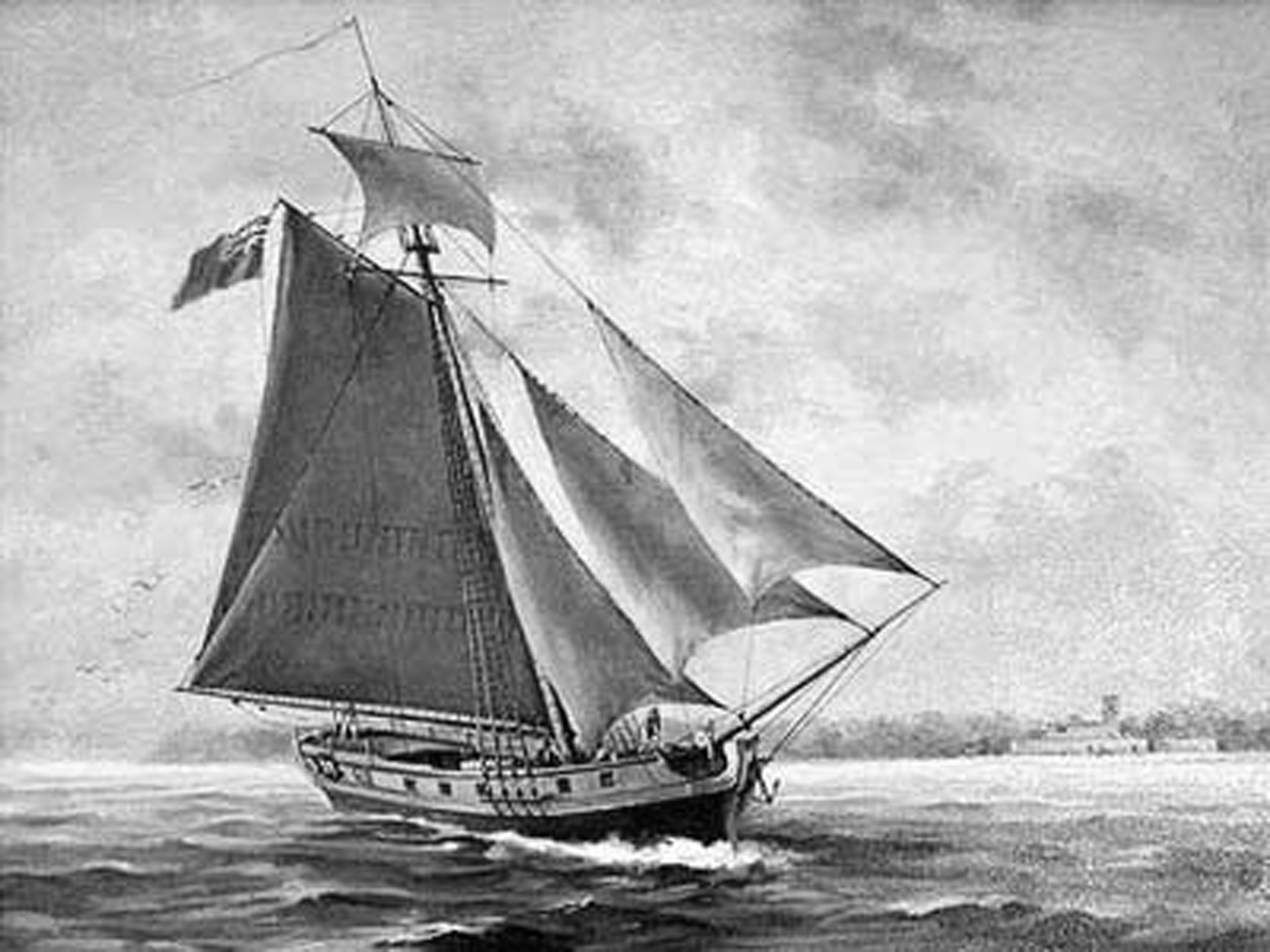
A sloop, similar to the Three Brothers
A vessel similar to the Carolina.
1744
Twenty-two year old Eliza Lucas married Charles Pinckney, a widower who was twice her age. She took her family responsibilities seriously, vowing:
to make a good wife to my dear Husband in all its several branches; to make all my actions Correspond with that sincere love and Duty I bear him… I am resolved to be a good mother to my children, to pray for them, to set them good examples, to give them good advice, to be careful both of their souls and bodies, to watch over their tender minds.
For the first time in Charles Town records, names of individual Jews appear on the roll register for full citizenship:
Simon Valentine, a merchant from New York
Jacob Mendis, from the Caribbean
Abraham Avilia, from the Caribbean
1836 – Slavery.
The Pinckney Resolutions, introduced by Henry Laurens Pinckney, passed the U.S. House of Representatives with a vote of 117 to 68. It stated that Congress had no constitutional authority to interfere with slavery in the states and imposed the Gag Rule that forbade the raising, consideration or discussion of abolition.
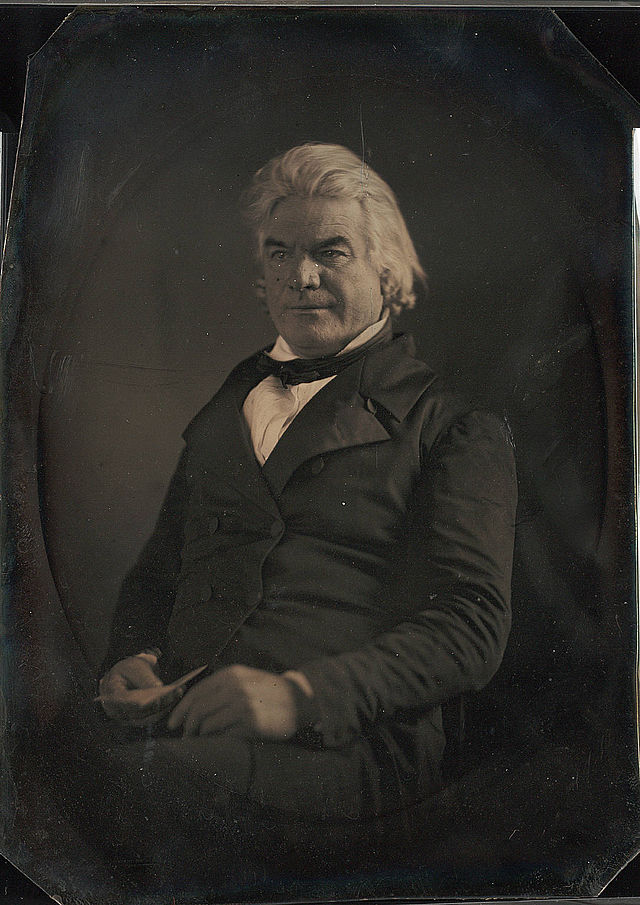
Henry L. Pinckney
Pinckney was born in Charleston and graduated from South Carolina College (now the University of South Carolina) in 1812. He studied law and was admitted to the bar and commenced practice in Charleston. He served as a member of the South Carolina House of Representatives (1816–1832). In 1819 he founded the Charleston Mercury and was its sole editor for fifteen years. Between 1829 and 1840, he served six terms as intendant or mayor of Charleston. He died in Charleston, South Carolina, February 3, 1863, and was buried in the Circular Congregational Church.
1864-Bombardment of Charleston.
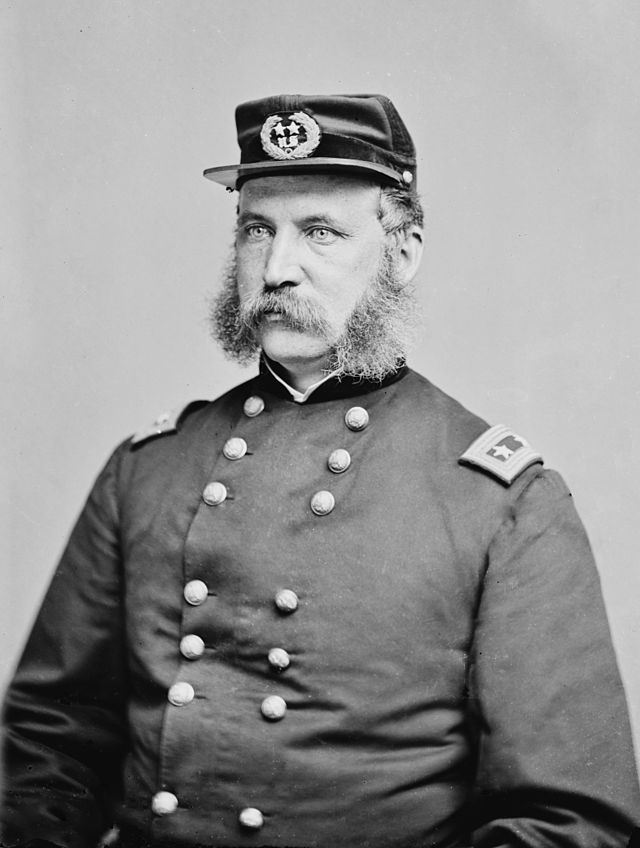
Gen. John G. Foster
Gen. John G. Foster became commander of the Federal forces in Charleston. He had been an engineer during the construction of Ft. Sumter, and was second in command during the battle of Ft. Sumter, on April 12, 1861.
His first order was to increase the number of shells being thrown daily into the city.
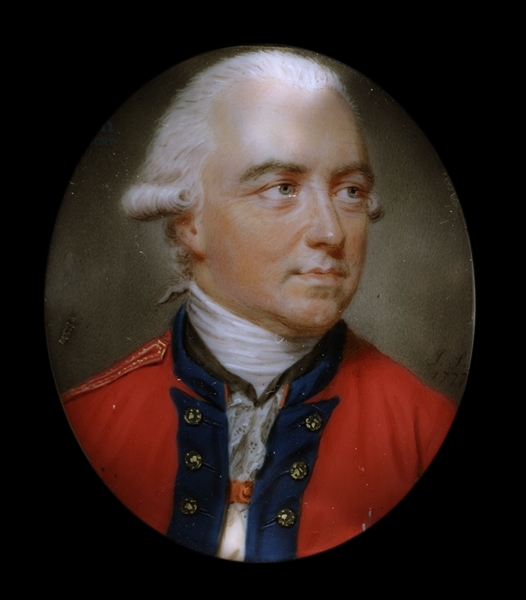
Sir Henry Clinton noted that 200 citizens of Charlestown had congratulated them on their victory and that more than “1500 have already been here with their arms, desiring to join us.” He was encouraged that all men of property “have most heartily joined us with their arms.” Most organized resistance in South Carolina had been eliminated.
1787- Constitutional Convention
The Convention opened in Philadelphia. George Washington was chosen as president of the convention. Charles Pinckney was appointed to the Committee of the Rule with Alexander Hamilton to set up the rules of the convention.
The first Lutheran Holy Communion was held by Rev. John Martin Bolzius.
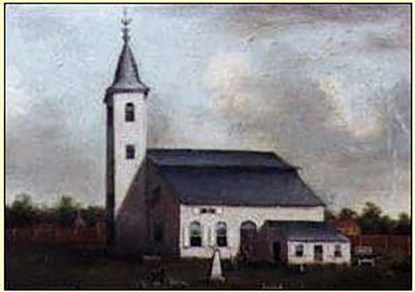
The St. John’s congregation was organized in 1742 with arrival of Dr. Henry Melchior Muhlenberg, the father of the Lutheran Church in America. He stopped for two days in Charleston on his way to visit the Salzburger colony at Ebenezer, Georgia. He returned a month later and spent three weeks waiting for a ship to Philadelphia during which time he held services, taught catechism to the children of the German residents, and held services with communion on Sundays at various places including the Huguenot Church. Their first structure began construction in 1759 on Clifford Street (behind where the present Archdale church sits) and was dedicated in 1764.
The original St. John’s Lutheran on Clifford Street, c. 1764
1780-American Revolution
Governor John Rutledge arrived in Camden, SC and learned the terms of Charlestown’s surrender. Rutledge was disappointed by Gen. Lincoln’s surrender and wrote “the Terms of Capitulation are truly mortifying.” He demanded to know why Lincoln “did not evacuate the Town, & save his Troops.” Things looked bleak for South Carolina militarily.
Presided by Gov. Thomas Pinckney, the South Carolina Legislature ratified the U.S. Constitution by a vote of 149-73, the eighth state to do so. Voting was divided among the lowcountry planters and merchants for ratification and the backcountry farmers against. Christopher Gadsden was “stuck with amazement” by the document.
1806-Religion
The new Independent Church opened for public worship. Due to demand for pews, a new church was needed at the Meeting Street location. During the two years of demolition (of the old building) and construction, the congregation worshiped at South Carolina Society Hall (72 Meeting Street).
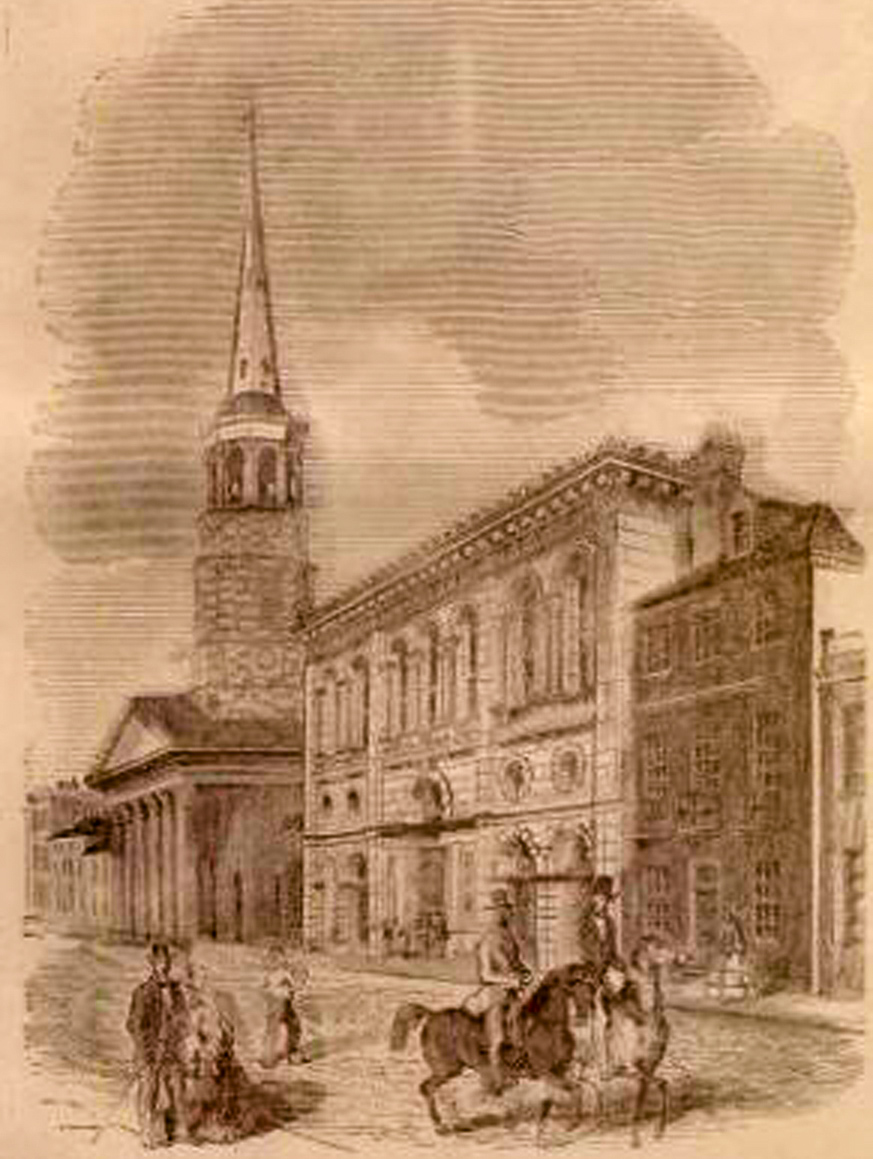
Meeting Street view of the Circular Church
The new church was opulent, costing $60,000. It featured a round auditorium with a copper roof, a steeple sixty feet high and could seat up to 2000 people. A portico of six columns stood over the sidewalk. The entire church was lit by candles, which took the sexton more than two hours to light and extinguish.
Robert Mills
The church was designed by local architect, Robert Mills. Church member, Dr. David Ramsay, suggested in his writings that the new church be circular in form, crediting the idea from drawings done by his wife, Martha. Due to its shape, the church acquired the popular title, “Circular Church.”
A visiting minister, Rev. Abiel Abott, wrote about the new church:
The most extraordinary building on some accounts, I presume to say, in the United States … It was built of Carolina brick with a flagged pavement, the aisles broad … & carpeted to prevent echo – the Pulpit at the East end … It is beyond all comparison, the most difficult to fill with a human voice that I have ever seen & is said to be the coldest house in the winder in this city & the hottest in the summer.
Detractors of the church also made fun of the undersized steeple for such a magnificent building, creating a popular rhyme:
Charleston is a pious place and full of pious people
They built a house on Meeting Street but could not raise a steeple
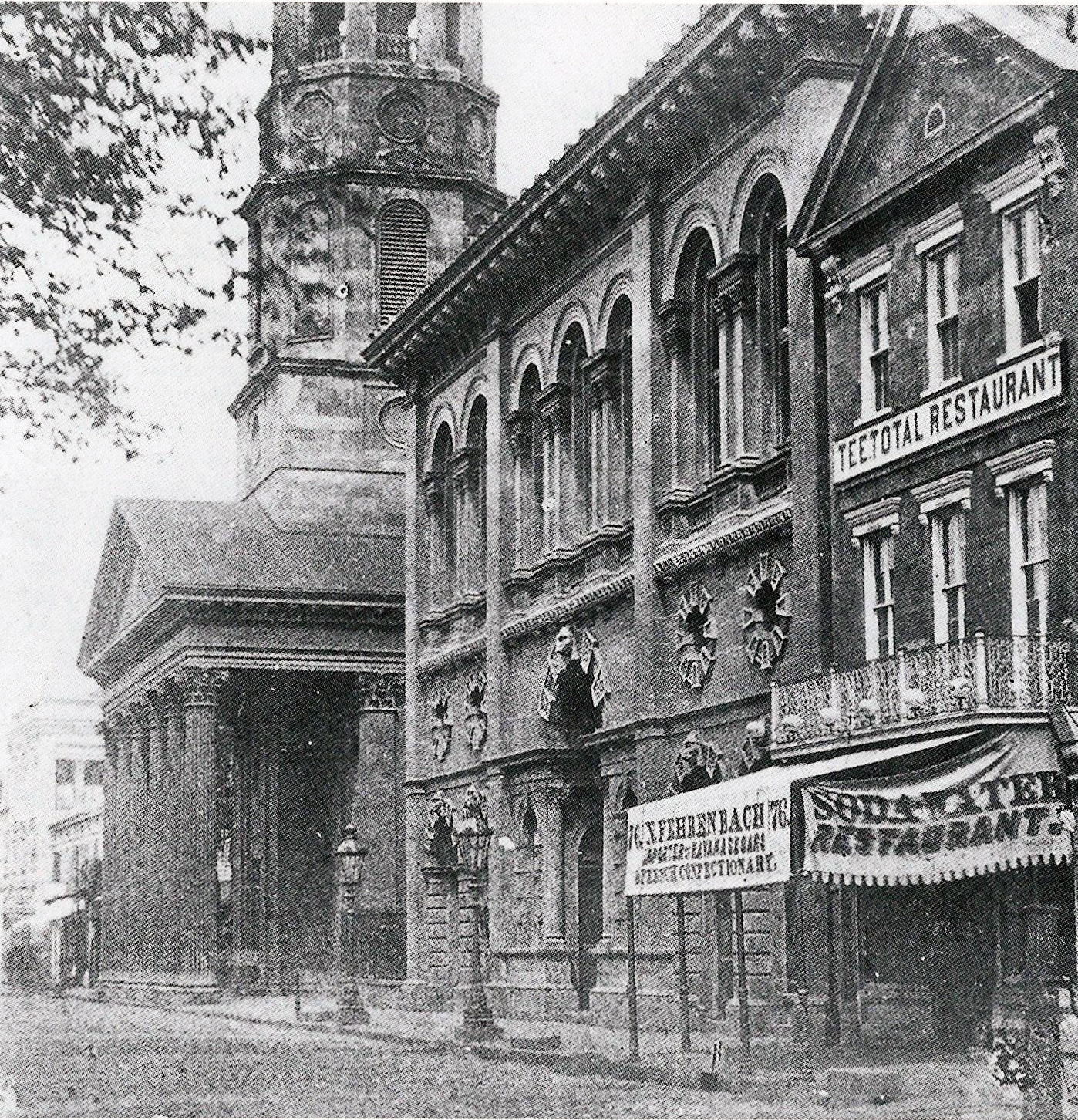
In 1838 the rhyme became passe when a New England-style steeple that towered 182 feet above Meeting Street was constructed.
Photo of Meeting Street of Circular Church steeple and portico and SC Institute Hall, c 1860.
1818
In the case State vs. Rebecca Solomons, Aaron Solomons, Nancy McDowall claimed that Rebecca Solomons, her husband Aaron and her son Shane had attacked her. She claimed that Mr. and Mrs. Solomon threw brickbats at her in her yard, cutting her head. She also claimed that Shane then threw a dead fowl at her and hit her in the face. Mrs. McDowall threw back the fowl and called Mrs. Solomons “a damned Jew bitch.”
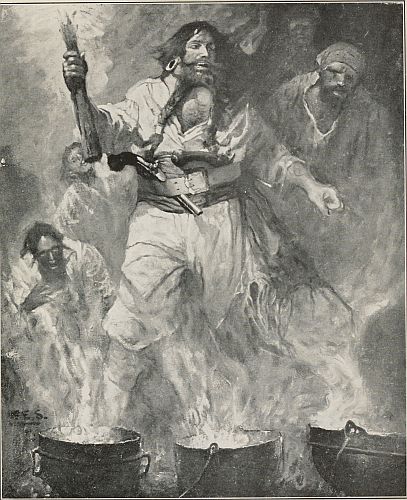
Blackbeard and Stede Bonnet’s six ship fleet blockaded the Charles Town bar and quickly pillaged nine vessels, including the Crowley, which was headed for London with several prominent citizens hostage, including Samuel Wragg, a member of the Governor’s Council and his four-year old son, William. With these hostages at his mercy, Blackbeard effectively held the city of Charles Town in his control for several days.
Blackbeard directed his ship’s surgeon to compile a list of needed medicines for the fleet. He sent an armed boat commanded by a Mr. Richards into the city, along with a Mr. Marks, one of the captured citizens. Blackbeard demanded that within two days, Marks would convince Governor Johnson to meet the demand or the citizens would be hanged one by one from the bowsprit of the Crowley.
The deadline passed and Blackbeard sailed eight of his ships into the harbor, creating a panic among the citizens. Finally, in exchange for rations, money and medical supplies gathered from among the leading merchants, Governor Johnson was able to buy the release of the hostages. Blackbeard sailed unmolested out of the harbor with more than £1500 of gold and silver and made a beeline to his hideout on Ocracoke Island for Teach’s Hole.
Stede Bonnet and David Herriot sailed to North Carolina and received a pardon from Governor Charles Eden. Bonnet then renamed the Revenge the Royal James and called himself Captain Thomas. They sailed to Delaware and plundered several vessels.
1770 – Death
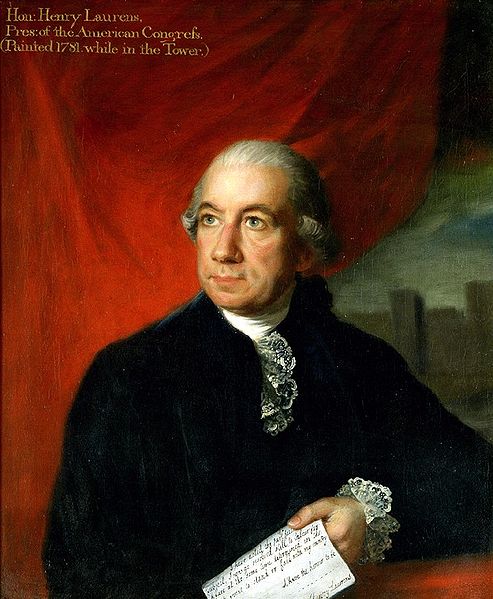
Henry Laurens’ wife, Eleanor, died in childbirth. Laurens fought a losing battle over his sorrow for several years. He wrote:
If I go here or there I find something or other to refresh my Sorrow and feel that some thing which constituted my Happiness is gone from me … I look round upon my Children, I lament for their Loss. I weep for my own.
He never married again.
1777 – State Seal
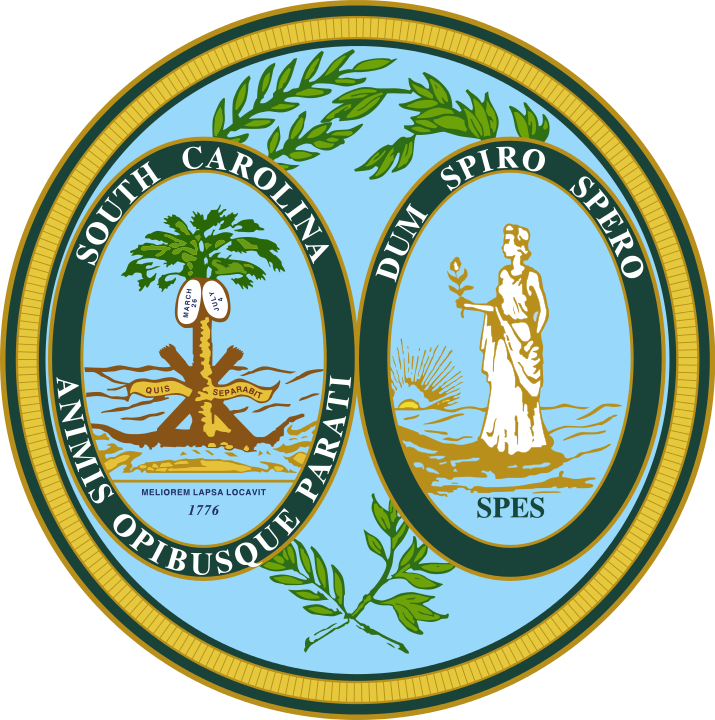
The state seal was used for the first time by President John Rutledge. The seal was made up of two elliptical areas, linked by branches of the palmetto tree. The image on the left was a tall palmetto tree and an oak tree, fallen and broken, which represents the battle fought on June 28, 1776, between defenders of the unfinished fort on Sullivan’s Island, and the British Fleet. The standing palmetto represents the victorious defenders, and the fallen oak is the British Fleet. Banded together on the palmetto with the motto “Quis separabit?” (Who Will Separate [Us]?), are 12 spears that represent the first 12 states of the Union. At the bottom is the phrase “Animis Opibusque Parati,” or “Prepared in Mind and Resources.”
Seal of South Carolina
The other image on the seal depicts a woman walking along a shore littered with weapons. The woman, symbolizing Hope, grasps a branch of laurel as the sun rises behind her. Below her image is the word “Spes,” (Hope) and over the image is the motto “Dum Spiro Spero,” (While I Breathe I Hope.)
1802 – Birth
Theodosia Burr Alston gave birth to a son, Aaron Burr Alston at the Miles Brewton House at 27 King Street, the home of her father-in-law. It was a difficult birth and Theodosia suffered a prolapsed uterus, which rendered her incapable of having further children, and made marital relations with her husband impossible. For the rest of her life she would endure spasms of intense pain.
1822-Denmark Vesey Rebellion
A slave named Peter, sitting on the Charleston wharves, noticed a ship named Sally recently arrived from St. Domingue. The ship was flying a flag with the number “96.” Puzzled, he asked another black man, William Paul, about the flag. Paul, who worked in a grocery store owned by John Paul, told him it was a reference to the 1796 Haitian slave insurrection. Paul then began to talk about the horrific conditions of the slaves in South Carolina. Peter became frightened and fled from Paul.
Peter reported the conversation with Paul to a friend, a prosperous free black man named William Penceel and member of the Brown Fellowship Society. Penceel advised Peter to tell his master. Peter’s master, John Prioleau, lived at 50 Meeting Street. Prioleau was a factor and was out of town inspecting plantations so Peter told Prioleau’s wife and young son about the conversation with Paul. They did nothing.
1856- Road to Secession
Preston Brooks
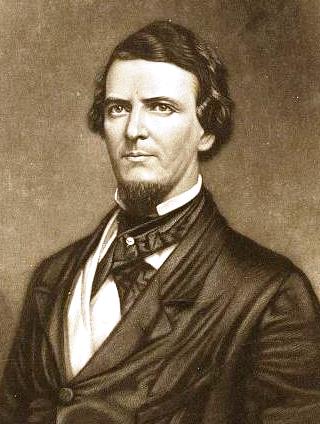
Congressman Preston Brooks (D-SC) beat the hell out of Charles Sumner on the floor of the U.S. Senate in retaliation of Sumner’s verbal attack on Brooks’ uncle, Sen. Andrew Butler. See May 19th entry.
Brooks, Butler’s nephew and Democratic representative from South Carolina, discussed challenging Sumner to a duel. He was told by fellow SC Congressman, Lawrence Keitt, that “dueling is for gentlemen of equal statue. Sumner is lower than a drunkard. Dueling with him would only be an insult to yourself.”
Sen. Charles Sumner
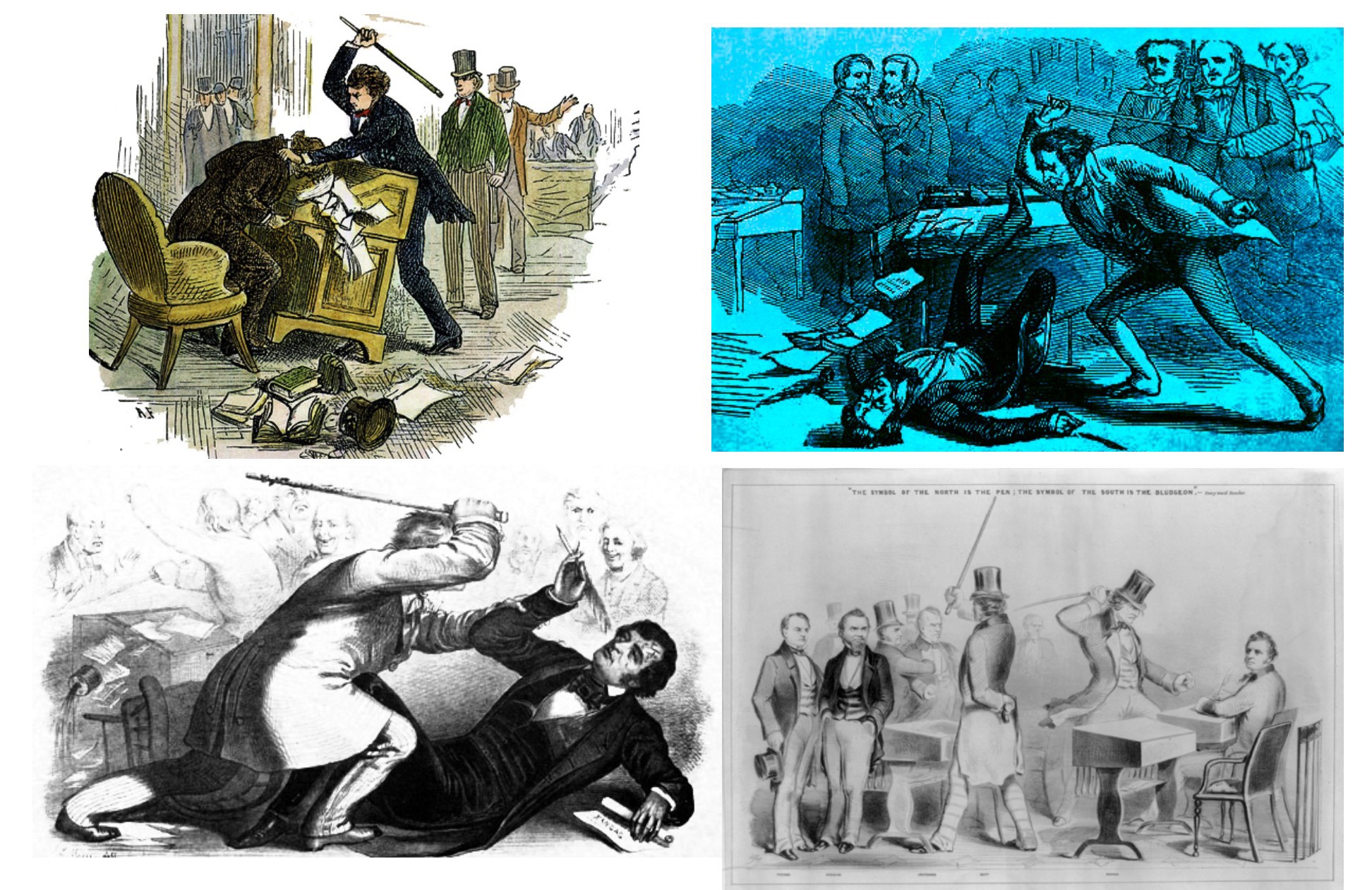
Two days later Brooks strode into the Senate chamber approached Sumner sitting at his desk. As Lawrence Keitt held other senators at bay, Brook said:“Mr. Sumner, I have read your speech twice over carefully. It is a libel on South Carolina, and Mr. Butler, who is a relative of mine.” He then struck him repeatedly with a cane until it broke into five pieces before several men rushed past Keitt and overpowered Brooks.
Brooks became an instant hero in the South, and the fragments of his weapon were “begged as sacred relics.” A new cane, presented to Brooks by the city of Charleston, bore the inscription “Hit him again.”
Various editorial illustrations of the Preston Brooks’ attack on Sen. Charles Sumner
A fort was completed at Albemarle Point. Even though plans were well underway to moving the colony to Oyster Point, security against the Spanish was still a major consideration.
1721-Bloodless Revolution
Sir Nathaniel Johnson
Former Governor Nathaniel Johnson, with the assistance of Colonel Rhett and Nicholas Trott, assembled members of his former Proprietary council and a group of about 120 armed men, including the Captain Hildesly and the crew of the H.M.S. Flamborough. They marched into Charlestown and demanded the Revolutionary Assembly surrender.
Governor James Moore II announced that he was prepared to defend the colony “in the king’s name” and fired three cannon into Johnson’s forces. Moore then presented official British government documents that recognized Moore and the Commons House of Assembly.
In the new administration, Rhett was allowed to keep his positions:
Comptroller of the King’s Customs
the Proprietor’s Receiver General
Overseer of the Repairs and Fortifications of Charles Town.
1771-American Revolution – Foundations
At a meeting under the Liberty Tree, a group of citizens decided that no tea should be imported while the tax on it remained.
Charles and Eliza Pinckney returned to Charlestown from London, with their ten-year old daughter Harriot. Their sons, Charles Cotesworth and Thomas, remained in England to attend school. Charles contracted malaria soon after their arrival.
1767
Henry Laurens
Henry Laurens sent his schooner, Wambaw, loaded with provisions, to his Georgia plantation without clearing Charlestown customs. The Wambaw offloaded her cargo and took on 50,000 cypress shingles as ballast and sailed back to Charlestown. Customs Collector Moore refused to allow the ship legal clearance of the harbor and seized the vessel.
1780-British Occupation.
Most of the American militia were given parole and allowed to return to their homes. Many of the important men, stripped of their property, had little recourse than to pledge loyalty to the Crown.
John Wells of the South Carolina and American General Gazette quickly swore allegiance to the King to save his property. He was allowed to resume publication in July.
Peter Timothy’s paper, the South Carolina Gazette, was seized by the British and given to the Tory Robert Wells.
Miles Brewton House, 27 King Street
The Miles Brewton home at 27 King Street was made headquarters for Gen. Henry Clinton, and later Lt. Col. Nisbit Balfour, commandant of Charlestown, and Lord Rawdon, supreme commander of British troops in South Carolina.
Rebecca Brewton Motte, with a sick and invalid husband, refused to give up her brother’s home to the occupying force. Although she was at the mercy of her “guests”, she always “sat at the head of her table in the large drawing-room and commanded the respect, at least, of his lordship and followers.” The officers “showed her the greatest courtesy and referred to themselves as ‘her guests’.”
Rebecca’s main concern was the safety of her three daughters and the care of her husband. The Motte family was crowded into a small area of the house on the third floor while the British lived in comfort in the large rooms on the lower floors.
1835-Deaths
Capt. Joseph Vesey died at the age of eighty-eight. Vesey was a notorious figure in Charleston. His former slave, Denmark Vesey, had been executed in 1822 as the leader of a large slave insurrection.
1828-Nullification Crisis-“Tariff of Abominations”
The Tariff of 1828 was passed by Congress, designed to protect industry in the northern United States. It was signed by President John Quincy Adams. It became known as the Tariff of Abominations in the South due to the negative effects it had on the antebellum Southern economy.It so enraged South Carolina that the state legislature denounced it by formal resolution and published an “Expositon and Protest,” secretly written by Vice-President John C. Calhoun. The “Exposition” claimed that:
Congress cannot extend its constitutional authority;
Congress cannot enact tariffs that are not justified by public necessity
The tariff is therefore unconstitutional
The tariff to protect domestic manufacture goes against a “simple, consolidated government”
The tariff actually was not enacted to regulate commerce, a Constitutional power of Congress, but to prohibit foreign trade
The power to protect manufacture is not a Constitutional power
Even if the tariff does regulate commerce, as it is too oppressive, it is an abuse of power
1852-Slavery
Reuben Roberts, a Negro cook aboard a British schooner, the Clyde, was arrested by Charleston sheriff Jeremiah D. Yates and confined to jail, citing the 1835 Seaman’s Act.
1856-Road to Secession
Sen. Charles Sumner
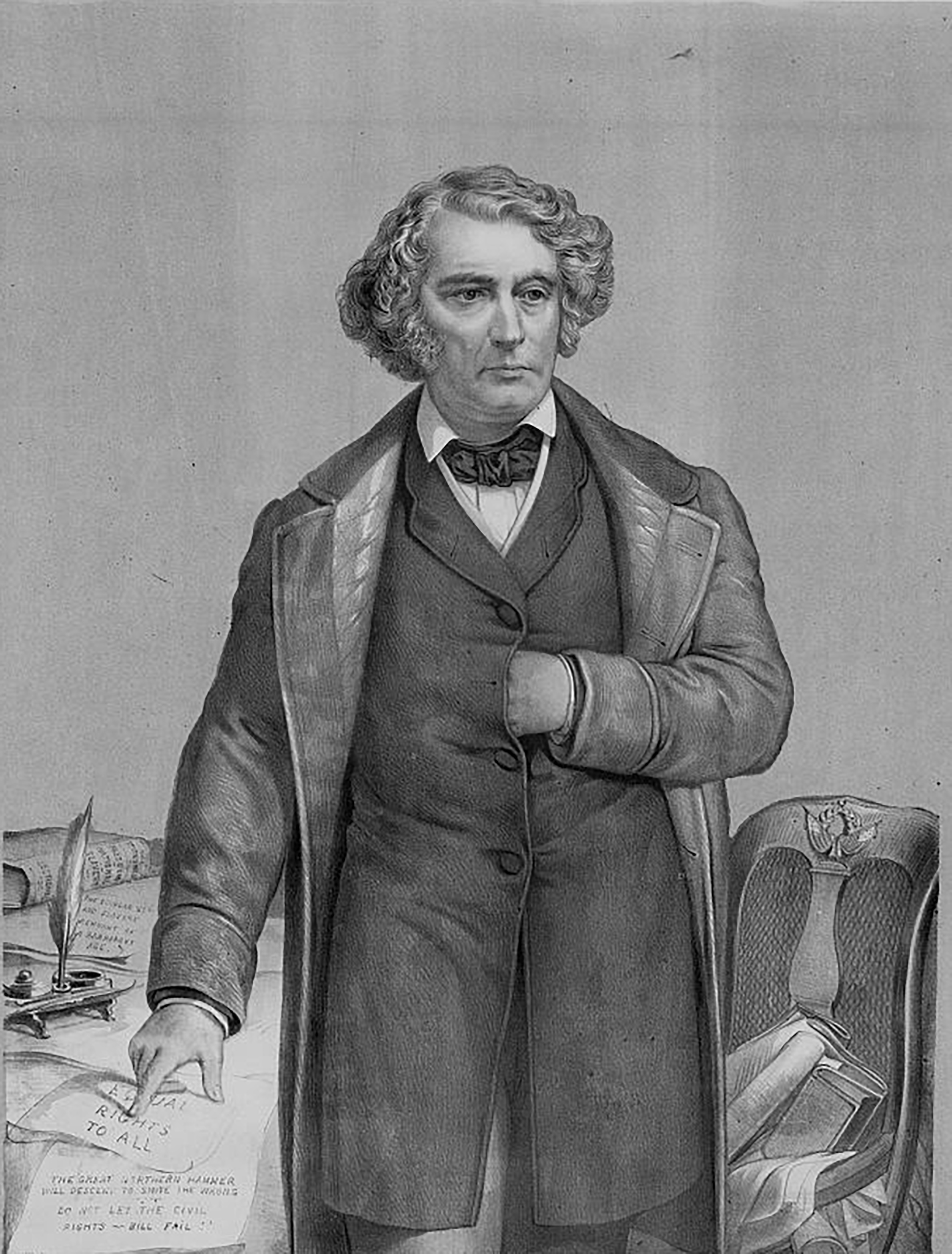
On the floor of the U.S. Senate, Sen. Charles Sumner (Mass), gave his “Crime Against Kansas” speech. Sumner spoke out against slavery, and specifically called out South Carolina senator Andrew Butler, one of the authors of the 1854 Kansas-Nebraska Act.
The senator from South Carolina has read many books of chivalry, and believes himself a chivalrous knight with sentiments of honor and courage. Of course he has chosen a mistress to whom he has made his vows, and who, though ugly to others, is always lovely to him; though polluted in the sight of the world, is chaste in his sight — I mean the harlot, slavery. For her his tongue is always profuse in words. Let her be impeached in character, or any proposition made to shut her out from the extension of her wantonness, and no extravagance of manner or hardihood of assertion is then too great for this senator.