THE CITY: A Review

As a longtime reader (30+ years) of Dean Koontz, over the past decade I have approached his new books with much apprehension. His most recent fiction has become … hopeful and uplifting to some  … cloying and overly-sentimental to me. Sentimentality has always been present in most of Koontz’s fiction. His male-female relationships are so stylized and romanticized they often weaken the story.

cityWith The City, Koontz give us a much younger protagonist than usual – 10-year old Jonah Kirk who is a child piano prodigy – growing up with a blue singer mother, jazz pianist grandfather and a mostly-absent father, who is slowly draws the family into extreme danger. He also meets a woman named Pearl who informs Jonah that she is the soul of the city. Pearl serves almost as an ex deus machina and is one of the more unbelievable aspects of the story. 

The book painfully creeps out of the gate, and rarely has any story momentum … something few Koontz books can be accused of. As much as Koontz tries to get the reader emotionally involved with Jonah and his family, it never happens. Instead, a sense of annoyance replaces any sense of anticipation. And, then … Koontz commits an error that, to me, ran the entire book completely off the tracks.

The story takes place during the 1960s, and Jonah becomes friends with a Japanese-American man, Mr. Yashioka, who lives in his apartment building and spent several years in a WWII interment camp. In a conversation with Jonah Mr. Yashioka uses the phrase “slam dunk.”  He even goes so far as associating it with basketball.  And it stopped me cold. The story was set in the late 1960s when dunking was not allowed in basketball. The phrase “slam dunk” was made popular by Los Angeles Lakers’ announcer Chick Hearn in the 1970s. 

I read the rest of the book with declining interest from that point onward. Unlike most Koontz books, The City has little tension, narrative drive or suspense. Go back and read classic Koontz novels like Strangers, or Watchers.   

2 palmettos

THE GHOST: A Review

Almost every other review of this book makes reference to it’s roman a clef nature – the main character Adam Lang is a thinly veiled portrait of former British Prime Minster, Tony Blair. They go on and on about the clever plot and dialogue and point out all the parallel political tidbits. But, I don’t give a damn about the political nature of the story. No one ever points out the major glaring error which forced me to literally THROW THIS BOOK ACROSS THE ROOM and say “Screw you, Mr. Harris, be a better writer.”Ghost_cover_scan_

A quick summary: Former British prime minister Adam Lang (modeled on Tony Blair) is up against a firm deadline to submit his memoirs to his publisher, and the project is dangerously derailed when his aide and collaborator, Michael McAra, perishes in a ferry accident off the coast of Martha’s Vineyard. To salvage the book, a professional ghostwriter is hired to whip the manuscript into shape, but the writer, who is never named, soon finds that separating truth from fiction in Lang’s recollections a challenge. The stakes rise when Lang is accused of war crimes for authorizing the abduction of suspected al-Qaeda terrorists in Pakistan, who then ended up in the CIA’s merciless hands. As the new writer probes deeper, he uncovers evidence that his predecessor’s death may have been a homicide and begins to fear for his own life.

Okay, sounds fine. The book opens with the ghostwriter meeting with the publishers and taking on the job of finishing the Prime Minister’s memoirs. He has one month to take the unreadable manuscript and turn it into something salable. It will be his largest pay day ever – $200,000 for four weeks of work. The writer has made a decent living churning autobiographies of rock stars, celebrities and sports figures, but this assignment is the opportunity of a lifetime.

He also has to sign a confidentiality clause and is under strict guidelines as how and where he can work on the manuscript. He can only work on the manuscript at the palatial house on Martha’s Vineyard where the PM and wife are living. He cannot discuss the manuscript with anyone. He cannot make copies. His laptop on which he is writing and editing the book, cannot leave the mansion. The writer has no problem with that … hey, he’s making $200,000 to basically re-write a completed manuscript.

So what does this idiot do? On page 98, after an interview session with the PM, the writer e-mails a copy of the manuscript to himself so he can work on the book at night while he’s in his hotel room. That was the moment when I tossed this book. The only reason for this idiotic action was to give the novel its plot. Who cares if it goes against everything we have learned about the character? It’s the plot that counts.

And another thing: if it was so important for the manuscript to stay secret until publication why in the hell is the writer staying at a deserted hotel in off season Martha’s Vineyard? Why wasn’t the writer sequestered in the mansion with the PM and wife and staff and secret service? Why? Because then, there is no plot.

“Screw you, Mr. Harris. Be a better writer.”

1 palmetto

SMOKE SCREEN; A Review

I live in Charleston, and try to read as many novels that use my hometown as a setting. Unfortunately, as Charleston has become the #1 tourist destination over the last 5 years, more authors are using us in their fiction. Usually with bad results.

smoke screenThis book is awful. One of the clues that you’re reading a poorly written (re: poorly designed plot) is when all the characters spend A LOT of time at the end explaining the story. It’s the writer’s job to get that information to the reader without the clunky conclusion of endless explanations. We are no longer living in the age of Agatha Christie.

Brown seems to have studied Charleston via Google maps for her location descriptions. And, by the way … seems like she was reaching for a little bit of Carl Hiaasen feel at the beginning by creating an eccentric and wacky hermit (Delno Pickens) living in the marsh, but for no reason except local color. Pickens has NOTHING to do with the story. 

That being said: the plot is something about a fire and city corruption blah … blah … blah. Pretty sure that producers of the CBS show “Reckless” (also based in Charleston) must have read this novel for research.

1 palmetto


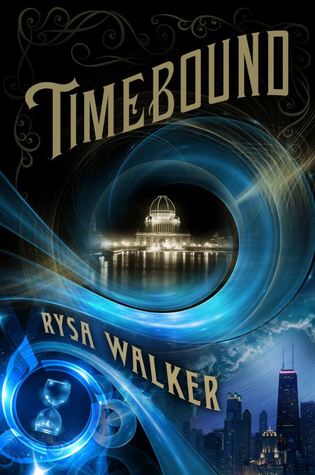
TIMEBOUND: A Review

When Kate Pierce-Keller’s grandmother gives her a strange blue medallion and claims to be a member of a time travel group from the future named CHRONOS, sixteen-year-old Kate assumes the old woman is delusional. But it all becomes horrifyingly real when a murder in the past destroys the foundation of Kate’s present-day life. Suddenly, that medallion is the only thing protecting Kate from blinking out of existence.

timeboundKate learns that the 1893 killing is part of something much more sinister, and her genetic ability to time travel makes Kate the only one who can fix the future. Risking everything, she travels back in time to the Chicago World’s Fair to try to prevent the murder and the chain of events that follows.

Changing the timeline comes with a personal cost—if Kate succeeds, the boy she loves will have no memory of her existence. And regardless of her motives, does Kate have the right to manipulate the fate of the entire world?

So … sounds good, entertaining and fascinating. Also, there are more than 1600 five-star reviews on Amazon for this book and the author, Rysa Walker, was awarded the Amazon Breakthrough Novel in 2013, so I decided to give it a shot.

First of all, for all the acclaim – it’s pretty boring! The first section of the book is a quite dull … setting up the characters and plot with a heavy hand, telling not showing. Characters seemed to be little more than chess pieces, moved from place to place only to advance the story. Kate (the heroine) never becomes a well-defined character … by the end of the book I cared little about what happened to her.

The middle section of the book then actually s-l-o-w-s the story d-o-w-n with convoluted explanations of time travel, how the Chronos team works and the confusing back story. During the final 1/3 of the story finally kicks into gear as Kate goes back in time to the 1893 Chicago World’s Fair and crosses path with the notorious H.H. Holmes, which, unfortunately, does not have as great a payoff as it should.

As a fan of time travel stories (see my article, Essential Time Travel Novels), I found this YA novel lacking in many ways. Good idea, haphazardly executed.

3 palmettos


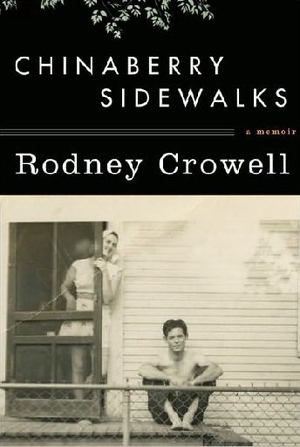
CHINABERRY SIDEWALKS: A Review

I’ve been a Rodney Crowell fan since 1978. He is, to be blunt, one of the great American songwriters of the last 40 years and I have listened to his music for 1000s of hours. What little guitar playing I learned, I learned so I could play Crowell’s songs. During the 70s and 80s Nashville artists waited for new Rodney songs to record. He has also recorded seventeen LPs (or CDs) since 1978, charting eight Top Ten Country songs, including five consecutive #1 hits, in 1988-89. 

chinaberry1Crowell has written a memoir about his early life growing up in hardscrabble Houston, Texas in the 1950s. Crowell’s former wife, Rosanne Cash, published an amazing memoir last year, Composed, which was less a memoir of her public life, than an intense meditation on how her life influenced her artistically. I was hoping for something like that from Crowell, but not this time out. It is a study of his life as a child, and tells the story of his parent’s life more than his own.

Most reviews are giving the book a home run … I have to differ. First of all, it is written in too much of a folksy, aw shucks style, peppered with down home expressions that most of us heard while growing up, but left behind as we moved out into the world. Crowell and his editor obviously had never read the old adage, “a little bit goes a long way.” It also is a bit clunky at times jumping from chapter to chapter, back and forth in time. There is an endless chapter about attending pentecostal church meetings that wears out its welcome after the first 2000 words, but goes on and on and on.

Here’s hoping Crowell has another memoir in the works that will illuminate his professional career as a songwriter and musician. Until then, I recommend you pull out your copies of Diamonds & Dirt or Fate’s Right Hand and enjoy the music!

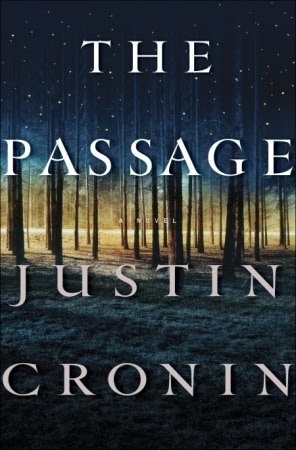
THE PASSAGE: A Review

First, the good things:

There is NO Bella in this book. No misty eyed teenage romance. There is no soul-searching Lestat who laments his life in overlong paragraphs filled with purple prose. There is no erudite Count with a cape. No Victorian damsels in flimsy nightgowns and heaving bosoms. In Justin Cronin’s The Passage, the “vampires” are the result of a military genetic experiment gone horribly wrong and ultimately, out of control. They are vicious, nasty, virtually unstoppable and very very hungry. The first 250 pages of The Passage are the best fiction I have read this year.

Now the bad:

passageUnfortunately, the book is 766 pages long. With two sequels on the way. The novel covers over 1000 years. The first section follows modern day events. A military/ scientific expedition in South America captures a jungle virus and takes the secret to a lab for study. They discover the virus increases strength in test monkeys and prolongs their lifespan. The government hatches plans to create a Super Soldier. FBI agent Brad Wolgast is put on special assignment with the military to bring “volunteer test subjects” from death row prisons across America to be infected with the virus. But when Wolgast is ordered by his military superiors to capture a 10 year old girl, Amy, and deliver her to the lab, he rebels. The army hunts them down and Amy is taken to the lab to be tested. Then, the world goes to hell.

Twelve of the infected creatures escape the lab and overnight destroy the entire military installation. Wolgast and Amy barely escape and spend the next several years living in isolation. Then … one day there is a brilliant explosion to the west. Amy is blinded by the nuclear blast, and Wolgast slowly dies of radiation poisoning.

The book then jumps 1000 years in the future. The creatures (called Virals or Jumps) have wiped out most of the human population. Ninety per cent of infected humans die – ten per cent become Virals themselves.

What follows is an alternately entertaining, horrific, tedious and ultimately, frustrating apocalyptic story of the human survivors and their civilization. This is where author Justin Cronin falls woefully short of his goals. Having published two short modern and very literary novels, Cronin branches into territory usually reserved for such “inferior” writers as Stephen King, Robert McCammon and Richard Matheson. When “serious” writers stoop to write horror or science fiction – genre fiction! – the result is usually well-written crap.

Several years ago we got the novel Jonathon Strange & Mr. Norrel, an old fashioned English novel about magic and evil. The literary world loved it … heaped praise upon it and claimed that it “redefined the horror novel.” It sure did – it redefined the horror novel as tedious and stodgy. The Historian was also forced upon us as a “brilliant re-working of the vampire legend.” The only brilliant thing about the book was its ad campaign. The book was literary sawdust. Remember when Norman Mailer (a literary giant, just ask him) claimed he could write a great mystery novel, and we got Tough Guys Don’t Dance? If you actually finished that book, your place in heaven is assured. Those of us going to hell will probably have to reread it for eternity.

There are sections of The Passage, and I mean dozens of pages, that beg to be skipped. Cronin often forgets he is NOT writing a mainstream novel where nothing is supposed to happen. He has chosen to write a genre novel for money … and of course, he can make it better than those popular writers because, after all … he is a serious novelist.

If you really want to read this kind of story, I recommend 2009’s The Strain, with a similar story and sweep (now a TV event on FX) or how about two all-time apocalyptic classics: The Stand by Stephen King and Swan Song by Robert MacCammon. Those two pulp writers managed to write a couple of horrific novels that are everything The Passage isn’t … great. 

For all its posturing (and intellectual promotion among the literary elites) The Passage is not a bad novel, just not a good one. I’m betting the Hollywood movie will be better than the book.

3 palmettos

THE LOST SYMBOL: A Review

HOW TO WRITE A BESTSELLER.

the_lost_symbolLet’s see: Your previous novel sold more copies than Wilt Chamberlain had sexual partners. What do you do for an encore?

  • Replace the Catholic Church with the Freemasons. Check!
  • Replace DaVinci’s painting “The Last Supper” with the architecture of Washington, DC. Check!
  • Keep the hero from your previous books, Robert Langdon. Check!
  • Replace Silas (from The Da Vinci Code), who practiced corporal mortification, with Mal’akh, a tattooed, self-castrated and brilliant villain who is in search of an ancient source of power. Check!
  • Toss in another brilliant (and gorgeous, of course) female character named Dr. Katherine Solomon. Check!
  • Make sure the characters get to visit most of the major buildings in DC. Check!
  • 5 million copies for a first run printing. Check!
  • Start thinking about the next project … hmmm, the Boy Scouts have some shady things in their past, don’t they? Check!

Final thoughts: The Lost Symbol is bad, but not as bad as Pat Conroy’s South of Broad. No one expects Dan Brown to deliver good writing … Conroy however, we do. Beyond bad, beyond comprehension. Recommended if you’re into agony.


Companion Read: The Brotherhood of the Rose by David Morrell.

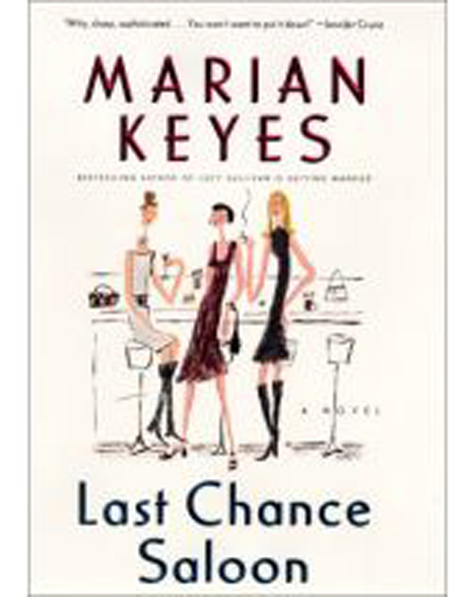
LAST CHANCE SALOON: A Review

Three friends from a small Irish town have lived in London for the past 12 years. Kathleen leads a quiet, orderly existence as an accountant for an advertising agency. She’s happy on her own, believing that romantic relationships only lead to pain. Tara shares a flat with her boyfriend, Thomas, and works as a computer analyst. Thomas is an opinionated cheapskate who constantly badgers Tara about her weight, but hey, it’s better than being single and she really does love him (she just doesn’t like him very much). Of the three, the gay man Fintan is the happiest, with a fashion design career and a caring partner.

last chanceKatherine is by far the most interesting and well-developed character. She is called the Ice Queen at by the men at her work, but she is doggedly pursued by her good-natured co-worker Joe, Katherine rebuffs him constantly until he stops his pursuit, and then Katherine realizes she is jealous when Joe begins to date another co-worker. Slowly, she releases the emotional baggage and wounds that have kept her distant for over a decade. By the end, she is by far the most settled character and her course of lie is set.

Tara is a difficult character to like. Her live-in BF, Thomas is unlikeable in every regard, but her low self-esteem keeps her in the relationship. It takes her waaay too long to grow a backbone and drop the loser, but at that point the reader has given up on liking her. Fintan is alternating cheery, flamboyant and brooding. His battle with cancer mainly serves as an impetus for Katherine and Tara to change their static lives.

Irish-born Keyes is the most literate of the British slate of chick-lit writers; she also has the best sense of humor and her writing gets better with each book. Last Chance Saloon was Keyes’ first non-first person narrative, jumping between five different character viewpoints effortlessly. She seems to be on her way to inheriting the mantle left  from the death of Maeve Binchy.

Breezy, funny and not-too-annoying as chick-lit. 


3 palmettos

Wayward Pines Trilogy: A Review

Book One: Pines. Secret Service Agent Ethan Burke arrives in the idyllic town of Wayward Pines in Idaho – surrounded by tall pine tree forests and insurmountable mountains on all sides to investigate the mysterious disappearance of two agents who had landed here two weeks before.  He is involved in a horrific accident that leaves him with partial memory loss. But when he recovers, his interactions with the town residents  makes him realize there is something wrong with the whole town itself. He is not able to reach his wife and kids in Boise or his handler within the agency. Dead bodies turning up, mysterious bar-tenders who disappear, a psychiatrist and a nurse who seem hell bent on harming him than curing and a whole town of kooks who love nothing more than shooting the breeze during day time and take part in blood fetes at night. It gets murky and weirder by the page. And then, when he attempts to escape the town, the real horror begins … pines trilogy

Book Two: Wayward. Except for the electrified fence and razor wire, snipers scoping everything 24/7, and the relentless surveillance tracking each word and gesture Wayward Pines is an Eden. None of the residents know how they got here. They are told where to work, how to live, and who to marry. Some believe they are dead. Others think they’re trapped in an unfathomable experiment. Everyone secretly dreams of leaving, but dare not. Ethan Burke has seen the world beyond. He’s sheriff, and one of the few who knows the truth—Wayward Pines isn’t just a town. And what lies on the other side of the fence is a nightmare beyond imagining.

Book Three: The Last Town. The children of Wayward Pines are taught that David Pilcher, the town’s creator, is god. No one is allowed to leave; asking questions can be lethal. But Ethan Burke has discovered the astonishing secret of what lies beyond the electrified fence that surrounds Wayward Pines and protects it from the terrifying world beyond. It is a secret that has the entire population completely under the control of a madman and his army of followers, a secret that is about to come storming through the fence to wipe out this last, fragile remnant of humanity.


There is a downward spiral in the narrative. Book 1, Pines, was thrilling and suspenseful, with a v-e-r-y Twilight Zone feel to the entire story  Book 2, Wayward, is substantially less intriguing. The plot seems to be papered over and the ending (as is common with the middle books of trilogies) is flat and slightly unfair when the reader realizes the author has been misleading you the entire book – cheap and silly and very much TV. Book 3, The Last Town, is poorly written and runs out of narrative steam – the ending is a sudden jolt!

It seems perfect that FOX TV is turning the books into a series, executive produced by M. Night Shymalyan since most of his projects are intriguing ideas poorly executed.

3 palmettos

I Travel By Night: A Review

Welcome back, Mr. MacCammon!

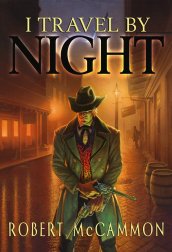
I know MacCammon never really went away, but he’s back to more familiar territory. As entertaining as the Matthew Corbett histortravelb y nightical mysteries are, MacCammon is always at his best when brushing up against the fictional dark side.

I Travel By Night is a slight novel, but it hints at a larger world and narrative which I hope MacCammon is going to explore over a series of several more novels.


Trevor Lawson, a man of adventure who lives in the Hotel Sanctuaire in New Orleans, is a recognizable character … a bit of Travis McGee, Repairman Jack and Cullen Bohannon (from AMC’s “Hell On Wheels”) except that Lawson was turned into a member of the “Dark Society” during the battle of Shiloh. He has spent the next 30 years fighting the other members of the Dark Society, and killing more than his share. When Lawson is hired to deliver a gold ransom for the return of the daughter of a rich plantation owner, all it not as it seems. The woman was taken by members of the Dark Society in an effort to lure Lawson into their nest in the middle of the bayou. Their goal is to either force Lawson to join, or kill him.

Along the way the kidnapped woman’s sister joins Lawson and … you’ll have to read the rest. Enjoy!

4 palmettos