It is one of the pitfalls that writers have had to endure since Edison perfected the motion picture camera – movies based on their books. Most of us agree that 99.2% of the time the film version of a novel is infinitely inferior to the book. Stephen King could write a book about bad adaptations … come to think of it, he probably will.
Dean Koontz’ Watchers is one of the most charming, thrilling and entertaining best-selling books of the past 30 years and was turned into an unwatchable and offensive film. Bicentennial Man was turned into another Robin Williams embarrassment, whereas Issac Asimov’s novella is a subtle and brilliant examination on the meaning of humanity.
But every once in a while, Hollywood takes a book and turns it into a masterpiece. Some are good books that benefited from a brilliant adaptation; others are pedestrian books that were actually improved by the filmmakers; and some are just bad and boring novels that someone somehow turned into a great move.
Here is a list of movies that are MOVIES BETTER THAN THE BOOKS. And it is surprisingly longer than you would think.
GOOD BOOK / GREAT MOVIE
CHOCOLAT by Joanne Harris
 This 1999 novel explored the lure of temptation and alternated between sweet and sinister forces of humanity and nature. The movie stays close to the spirit of the story, but is much more positive and cheerful.
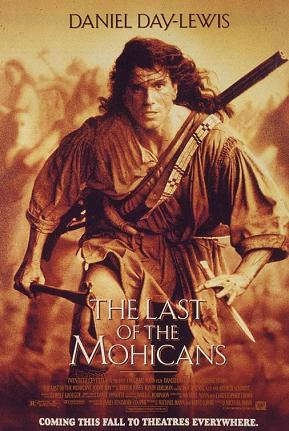
LAST OF THE MOCHICANS by James Fenimore Cooper
 As is most fiction from that time period (1826), Cooper is virtually unreadable these days, but writers and books from the 18th and 19th century seem to benefit from Hollywood treatments. The turgid prose and stilted dialogue can be glossed over with spectacular visuals. Every one who has seen this movie knows what a great, and emotionally involving, action film it is.
MARY POPPINS by B.L. Travers
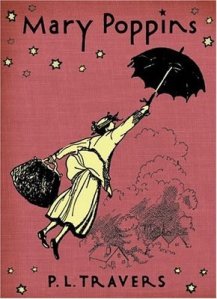 Come on, everyone loves Disney’s Mary Poppins. Julie Andrews is magical and Dick Van Dyke has never been better than as Bert – street artist, chimney sweep and good time guy. The movie was based a popular series of English children’s novels (1935-1988) and portrayed Poppins as more stern and with a darker side than the movie version.
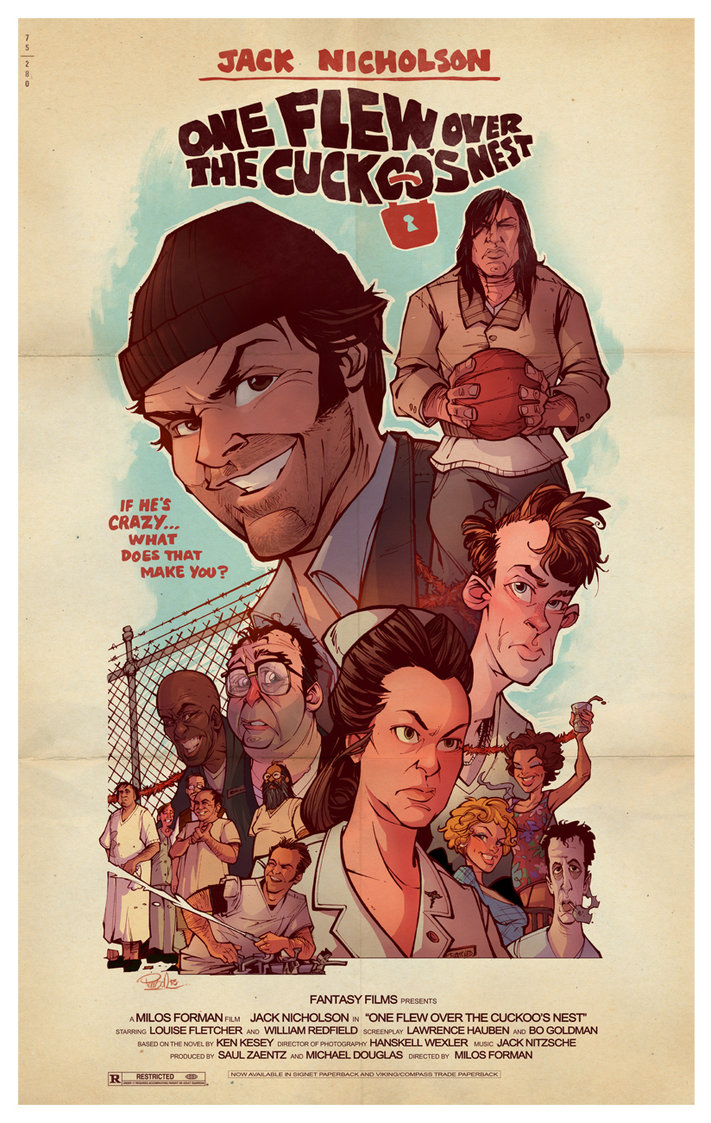
ONE FLEW OVER THE CUCKOO’S NEST by Ken Kesey
 The 1962 novel by Ken Kesey is a stunning work that is well written and emotionally compelling. And then director Milos Forman turned it into one of the all time great movies. There are a few differences, the most apparent is the voice of the narrator in the book, but we need a character to anchor our thoughts in the novel, whereas Forman can show us the story that develops, and allows us to become the narrator. We all become just another nut in the nuthouse. Jack Nicholson’s performance is genuinely inspired and the cast that surrounds is like a who’s who of soon-to-be 80s stars.
THE SHAWSHANK REDEMPTION by Stephen King

Tim Robbins and Morgan Freeman
Based on the short novel “Rita Hayworth and Shawshank Prison” from the book Different Seasons, this may be the best adaptation of Stephen King’s prose to cinema. While the story has its charms and contains all the elements of the plot, it is a mere shadow of the emotional depth and sheer grand story-telling that director and screen writer Frank Darabont manages to capture.
MEDIOCRE NOVEL / GREAT MOVIE
BEING THERE by Jerzey Kosinsky
 The book is an ingenius portrayal of a mentally slow gardener named Chance whose only knowledge of the outside world comes from watching television. Through an series of circumstances, Chance becomes homeless and is left to his own devices to face the world. The book often reads flat and uninvolved, a technique of detached emotionless that makes sense (TV viewing results the deadening of senses and intellect ) but does not make it an enjoyable read. The film, however, as directed by Hal Ashby is a constant joy of subtle humor and ironic social commentary. Peter Sellers pulls off the role of his career with a brilliant and nuanced performance which ranks as one of the all time greatest. The fact that he did not win the Academy Award (Dustin Hoffman in Kramer vs. Kramer … and when’s the last time you had a discussion with anyone about that movie or that performance?) is a travesty. In fact, the film was not even nominated for Best Picture. (Kramer; All That Jazz; Apocalypse Now; Breaking Away and Norman Rae).
THE BRIDGE OVER THE RIVER KWAI by Pierre Boulle

This is a terse novel written by a former French resistance fighter in WWII. It is difficult book to read – completely devoid of humor and few of the characters are developed enough to either hate or love. Yet in the hands of film maker David Lean it becomes an thrilling story of epic proportions dealing with racial prejudice and nationalism.
HIGH FIDELITY by Nick Hornby
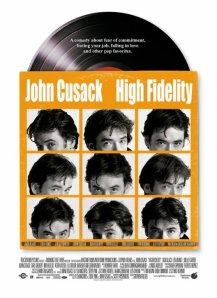
Hornby may be the most successful mediocre novelist of the 21st century. Three of his books (and as of this writing a fourth, A Long Way Down is in production) have become movies: Fever Pitch, About A Boy and this novel about a record store owner and his driftless life after his girlfriend dumps him. The tends to be clunky, but the movie is an intense character study given vitality by an inspired quirky performance by John Cusack.
FRIED GREEN TOMATOES AT THE WHISTLE STOP CAFE by Fanny Flagg
 Flagg, a comedian, actress and perennial game show guest (Match Game; Hollywood Squares) found a second career writing cheerful comedic Americana novels. But the movie, Fried Green Tomatoes takes the basic story and super charges it with great performances by Mary Stuart Masterson and Kathy Bates.
ORDINARY PEOPLE by Judith Guest
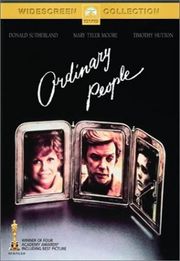 The novel is a chore to read, meandering with emotional passages filled ironic angst. The movie, as directed by Robert Redford, is a brooding study at the fractious nature of a family in crisis and emotionally satisfying.
RAGTIME by E.L. Doctorow
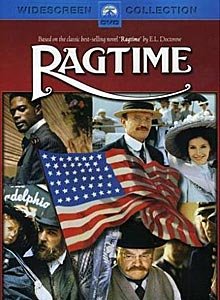 I recently tried to re-read this 1975 novel (first attempt had been while in high school in 1977 and was bewildered by the bad writing) and still found it boring and stylistic clunky. The fact that Time magazine listed it as one of the Greatest 100 English Language Novels Between 1923-2005 is more of an indictment about the lack imagination of Time’s editors than in your taste in books. Almost every book on the list is one of those boring academically approved books .. i.e. the books your college professor makes you read in college and which you never have the desire to read again. The movie, however, is devoid of Doctorow’s turgid writing and shines. Filled with great performance and emotionally charged.
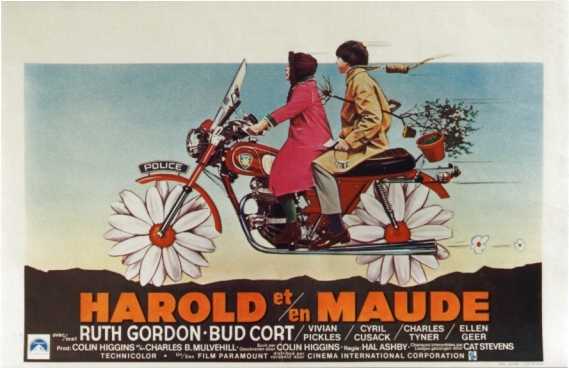
HAROLD AND MAUDE by Calder Willingham
 One of the all-time great weird cult movies is based one of the all-time weird and unreadable books.
SOMEWHERE IN TIME (Bid Time Return by Richard Matheson)
 Matheson is one of those great writers of the 20th century whose books never make Time’s list of 100 Greatest Books because he is a popular writer of horror (gasp!) and sci-fi thrillers. Potboilers! The literati elite can’t have that! However, as many good books that Matheson has written, Bid Time Return is at the bottom of the list. It is a time-travel romance that never really seems to take off, and ultimately, becomes more annoying than anything else. The film, however, is a grand piece of movie-making, lush, romantic and satisfying.
PLANET OF THE APES by Pierre Boulle
 Another short novel by French writer Boulle that became a classic Hollywood epic. I’ve tried to read Planet of the Apes (sometimes titled Monkey Planet) and found it bewildering. The story is told as a narrative found in a bottle which thankfully, the movie ignores that plot device. “Get your hands off me, you stinkin’ ape,” is one of the great quotable lines in cinematic history.
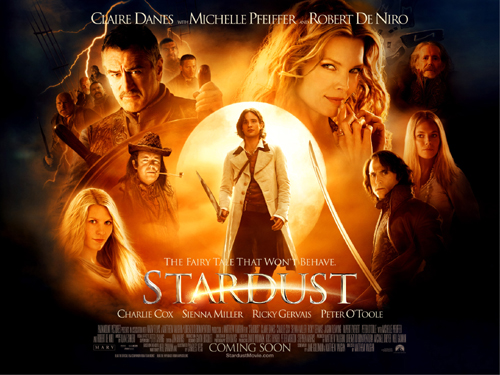
STARDUST by Neil Gaiman
 The novel is good, but a bit more dark and sinister … come on, we are talking about Neil Gaiman. The movie turned out to be a delightfully romantic and ironically hilarious fable. The movie is worth watching alone for Robert DeNiro’s enthusiastic campy turn as a lightning-gathering cross-dressing pirate.
THE SEARCHERS by Alan Le May
 A very typical Western novel in which a former Civil War soldier becomes driven to avenge the death of his family members by marauding Indians. But in the hands of director John Ford, and John Wayne who for once doesn’t play John Wayne and gives a deep and disturbing portrayal of a man who is close to being psychotic, this becomes an epic movie.
TERMS OF ENDEARMENT by James McMurtry
 A veeery middle-of-the-road novel by a good novelist is transformed into a 4 star drama / romantic comedy on the strength of all around great performances by Nicholson and Shirley McClaine.
PSYCHO by Robert Bloch
 Based on a real life story, Psycho was first published in 1959. Robert Bloch based the novel on the horrific Ed Gein, who was arrested in Plainfield, Wisconsin for murdering women and making furniture, silverware and even clothing out of body parts, in an attempt to make a “woman suit” to pretend to be his dead mother. Gein also was the inspiration for Buffalo Bill in The Silence of the Lambs. Bloch’s novel was nothing more than a pedestrian thriller turned into a film classic in 1960 by Alfred Hitchcock, THE classic horror film even though there is less than 60 seconds of screen violence.
BAD BOOK / GREAT MOVIE
THE BOURNE IDENTITY / THE BOURNE SUPREMACY / THE BOURNE ULTIMATUM by Robert Ludlum.
 How these densely written and over-the-top plotted Cold War novels ever became popular is still a mystery. And the fact that they were turned into a James Bond style thrill-a-minute movie franchise is almost a miracle. Ignore the books, enjoy the movies.
COOL HAND LUKE by Donn Pearce
 A book that truly is impossible to read was miraculously turned into one of the most iconic movies of the 1960s, and one of Paul Newman’s all time great screen characters.
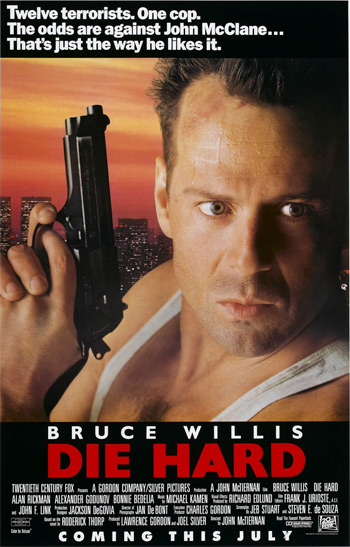
DIE HARD (Nothing Lasts Forever by Roderick Thorpe)
 The book is really bad. The main character is a sappy ex-cop has-been who spends the entire novel whining and pining over his now-dead ex-wife and worries about his daughter stuck in the building with him and the terrorists. Thanks to screenwriters Steven E. de Souza and Jeb Stuart and director John McTiernan for shutting him up, giving him more attitude and hiring Bruce Willis to play him. The result was a superior action film, smart and funny, as well as edge-of-your-seat exciting. Yippee-ki-yay, motherfucker, indeed.
DELIVERANCE by James Dickey
 Dickey is one of the most over rated writers of the 20th century. Loved by literary critics and his peers (other college professors who write fiction and poetry) but ignored by everyone else, he even ruined his one great idea for a novel by trying to infuse it with a poetic sensibility that only illustrated the fact that he was a too good of a writer to just write a thriller. It was left to Hollywood to take away all the pretension and strip the story down to it’s most basic elements.
“You sure have a purty mouth,” is one of the most disturbing lines in cinematic history.
I’ve always wondered how good this novel would have been like if David Morrell had written it.
THE GODFATHER by Mario Puzo

This may be the second worst written book ever to become a best-seller. We read the book in high school for the sex scenes … who can forget Sonny pushing Lucy up against the wall? But, as has been documented in abundance elsewhere, this is one of the all time classic movies.
THE GRADUATE by Charles Webb
 The 1963 novel was, at best, barely readable, but somehow Mike Nichols, with his writing team Calder Willingham and Buck Henry took everything the novel had to offer, and expanded it to create one of the most iconic films of the 1960s. One reason the movie is better is one of the most perfect soundtracks ever, by Simon and Garfunkel.
THE HUNT FOR RED OCTOBER / PATRIOT GAMES / THE SUM OF ALL FEARS / CLEAR AND PRESENT DANGER by Tom Clancy
 Let’s be honest … Tom Clancy can’t write. Period. We keep a copy of Red Storm Rising next to the bed in case of insomnia. Two pages and your eyes are dropping.Clancy is a high-concept book packager where ideas are more important that creating characters and setting the mood. But they make fairly entertaining movies.
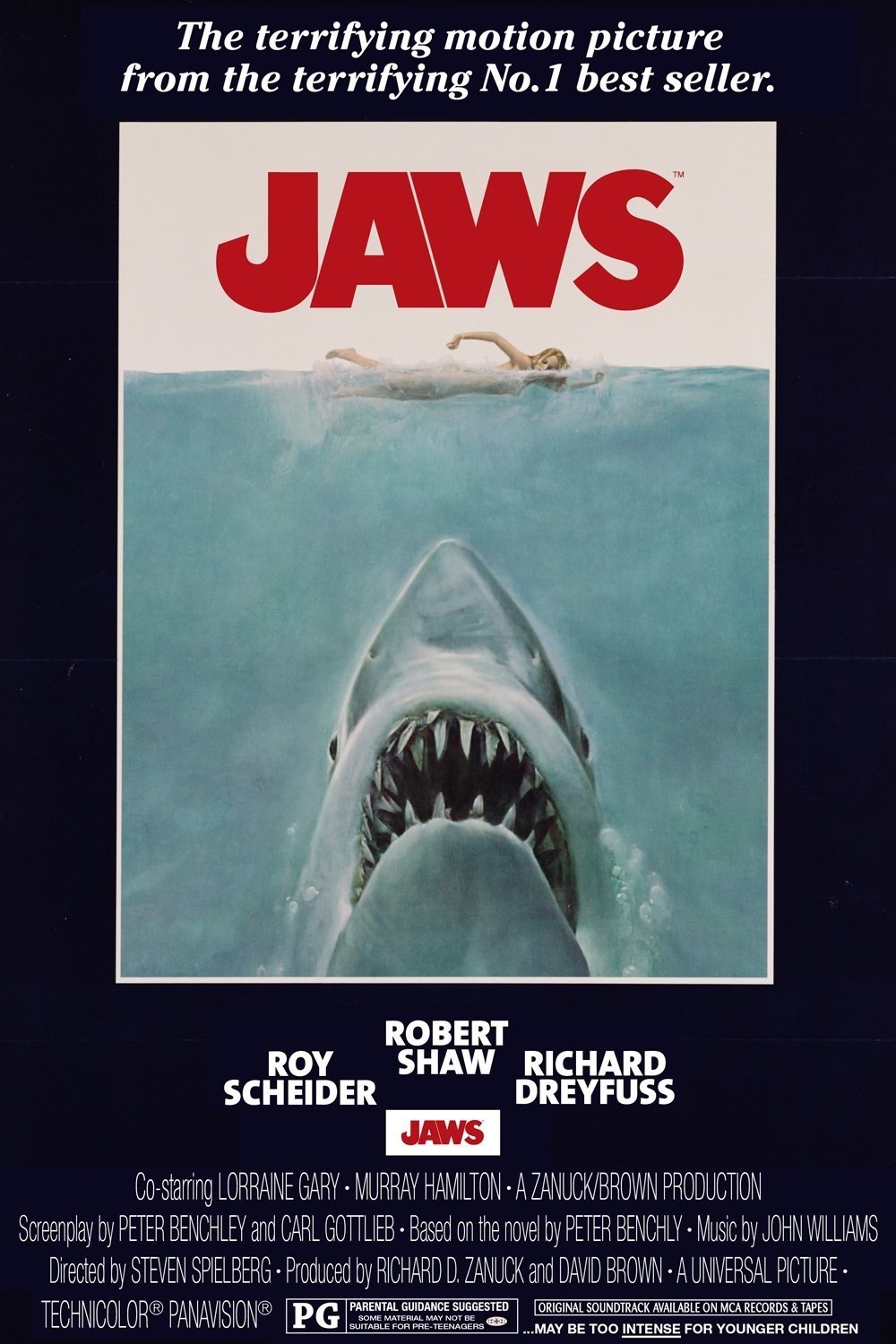
JAWS by Peter Benchley
 This may be one of the worst written books ever to become a best-seller. Jaws was one of the first “high-concept” novels which now periodically hit the best seller list (every heard of The DaVinci Code?). But, a young Steven Spielberg turned the material into one of the most edge-of-the-seat movies ever. Roy Schneider, Robert Shaw and Richard Dreyfuss are top notch.
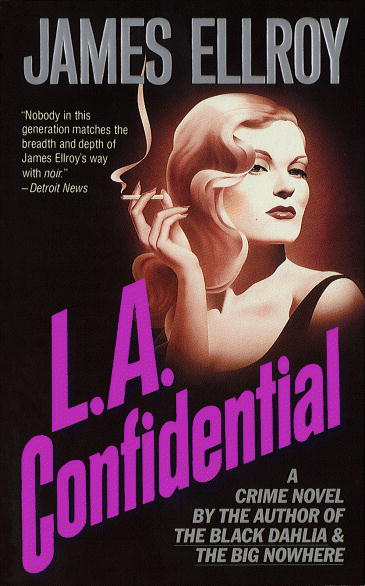
L.A. CONFIDENTIAL by James Ellroy
 Ellroy is an enigmatic figure. The real mystery is how his unreadable books keep getting published, and keep getting positive reviews. But, buried within all the turgid prose and literary devices (think of a hard-boiled Thomas Pynchon with none of the humor) someone in Hollywood saw a thrilling and brutal movie … and they were right.
A PLACE IN THE SUN by Theodore Dreiser
 Dreiser is a literary darling and virtually impossible to read. However, the novel An American Tragedy, which is the basis for this movie, had all the plot elements needed for Hollywood to fashion a classic soap opera.

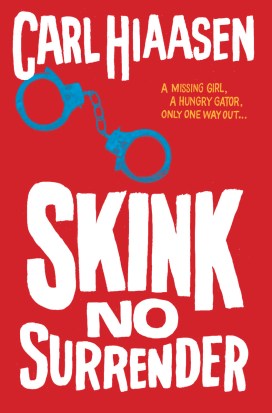 The basic story: Fourteen-year old Malley is being sent away to a boarding school in the cold climes of the Northeast, away from her home in sunny Florida. And since Malley “doesn’t do” cold weather, she decides to run away with a guy she meets online. Disappears without a trace. Her best friend, her cousin Richard, decides to track her down. However, he is also only 14, so where does he even begin?

















 MarkJonesBooks