Today In Charleston History: December 8

1769 England  – John Wilkes Affair.

The South Carolina Assembly voted to send to £1500 sterling to help pay the debts of John Wilkes “for the support of the just and constitutional rights and liberties of the people of Great Britain and America.”  (See November 21 post for explanation of the John Wilkes affair.)

The Sons of Liberty, who met at the Liberty Tree, considered this part of “their resistance to the arbitrary rule by the same Parliament that had imposed unconstitutional taxes on America.” At the behest of Christopher Gadsden, the Assembly ordered Jacob Motte, the public Treasurer, to send £10,500 provincial currency to the John Wilkes Fund in London “for assisting in the support of the just and constitutional rights of the People of Great Britain and America.” Only seven members of the Assembly voted against the measure, including Speaker Peter Manigault. This action shocked and infuriated government officials in both London and Charlestown, as it undermined official authority over the financial purse-strings of the colony.

1808
Langdon Cheves

Langdon Cheves

Langdon Cheves was elected Attorney General of South Carolina. He would later be elected to the House of Representatives and served as Speaker of the House 1814-15.

1817

John C. Calhoun took the oath of office as Secretary of War under Pres. James Monroe.

1822 – Slavery.

Intendent (Mayor) James Hamilton introduced a bill to grant “compensation [to] those persons whose slaves have been executed” associated with the Denmark Vesey Rebellion – $122.40 for each slave. 

1864 – Bombardment of Charleston. 
Gen. John G. Foster

Gen. John G. Foster

Gen. John G. Foster, in command of the Department of the South, acknowledged the Federal order to discontinue the bombardment of Charleston … two weeks after receiving it.
Today In Charleston History: December 4

1832 – Nullification Crisis.

Pres. Andrew Jackson assigned Major General Winfield Scott to take charge of all federal forces in South Carolina.

1833 – Slavery.

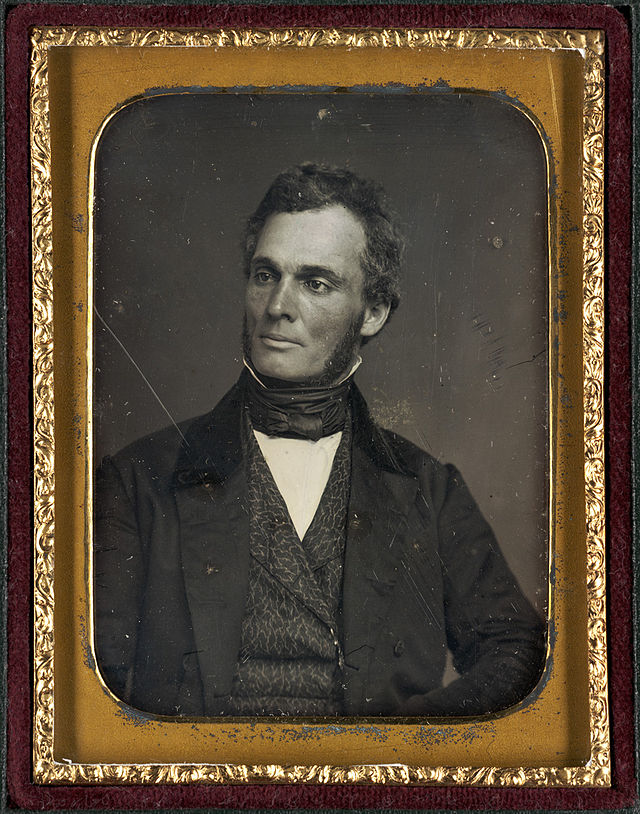
The American Anti-Slavery Society was formed in Philadelphia, Robert Purvis, a mulatto born in Charleston helped abolitionist William Lloyd Garrison establish the Society and signed its “Declaration of Sentiments.”

Robert Purvis

Robert Purvis

Purvis was born in Charleston, South Carolina in 1810. His father was an English immigrant to Charleston, William Purvis. His mother, Harriet Judah, was a free woman of color, the daughter of former slave Dido Badaraka and Baron Judah, a Jewish American born in Charleston. Robert’s grandmother, Badaraka, had been kidnapped at age 12 from Morocco and transported to the colonies on a slave ship.  She was sold as a slave in Charleston. She was freed at age 19 by her master’s will. She then married Baron Judah, who was born in Charleston, the third of ten children of Hillel Judah, a German Jewish immigrant, and Abigail Seixas, his Sephardic Jewish wife, a native of Charleston.

1864 – Bombardment of Charleston.  

The Union and Confederate prisoner exchanges between resumed in Charleston harbor. A cease-fire was negotiated to last the duration of the exchange.

Today In Charleston History: December 1

1773 – American Revolution – Foundations.

Two hundred and fifty-seven chests of tea arrived in Charlestown on the ship London. Consigned by the East India Company, the arrival of the tea set off a crisis. Handbills were passed out, calling for a mass meeting of all South Carolinians at the great hall in the Exchange Building.

1781 American Revolution

Henry Laurens, Charleston diplomat, and the first American imprisoned in the Tower of London, wrote a bitter note which was smuggled out of the Tower and sent to Congress:

Almost fifteen months I have been closely confined and inhumanely treated. The treaty for exchange is abortive. There has been languor, and there is neglect somewhere. If I merit your attention, you will not longer delay speedy and efficacious means for my deliverance.

laurens, tower

Tower of London; Henry Laurens’ cell. Photos by Mark R. Jones

1801
Tucker_Thomas_Tudor_-_St._George

Dr. Thomas Tudor Tucker

Dr. Thomas Tudor Tucker of Charleston was appointed as Treasurer of the United States by President Thomas Jefferson. He would hold the position for twenty-six years under four different presidents: Jefferson, Madison, Monroe and John Quincy Adams, and died while holding the office in 1828. From 1809 to 1817, Tucker managed to hold the treasurer’s post while also serving as President James Madison’s personal physician.

Tucker was the longest serving Treasurer in American history.

1820

Thomas Bennett was elected governor of South Carolina.

1822 – Slavery

As a result of the Vesey Conspiracy, SC Legislature passed a law requiring all free black males over fifteen years old either take a white guardian, or be sold into slavery.  Any free black who left South Carolina and returned could be enslaved.

1832 – Nullification Crisis

In a coordinated effort with V-P Calhoun, Robert Hayne resigned his seat in the U.S. Senate.

1863

On December 1, the Planter was caught in a crossfire between Union and Confederate forces. The ship’s commander, Captain Nickerson, decided to surrender. The ship’s pilot, Robert Smalls refused, fearing that the black crewmen would not be treated as prisoners of war and might be summarily killed. The Planter was a former Confederate vessel that was piloted out of Charleston harbor by an enslaved pilot, Robert Smalls, who surrendered the vessel to the United States navy. Smalls and his family were given their freedom and Smalls later met with Pres. Lincoln. 

Taking command of the Planter from Nickerson, Smalls piloted the ship out of range of the Confederate guns. For his bravery, Smalls was named to replace Nickerson as the Planter’s captain – the first black captain of a vessel in the service of the United States.

planter-gun-boat

The Planter

Today In Charleston History: November 29

1752

William De Brahm presented his fortification plan to Gov. Glen and the bill for his services. The Assembly, upset they had not been consulted, refused to pay the fee. Glen paid De Brahm out of his own pocket.

1765 – Stamp Act

The Assembly adopted a report by Christopher Gadsden which reflected the sentiments of the Stamp Act Congress, that taxes should only be enacted by the Assembly of each province. It also said:

Sincerely as we are attached to his Majesty, we insist that we are entitled to all inherent rights and liberties of his natural born subjects within the Kingdom of Great Britain.

The Gazette published that day on plain paper with the headline: No Stamped Paper to be had.

1782 – American Revolution

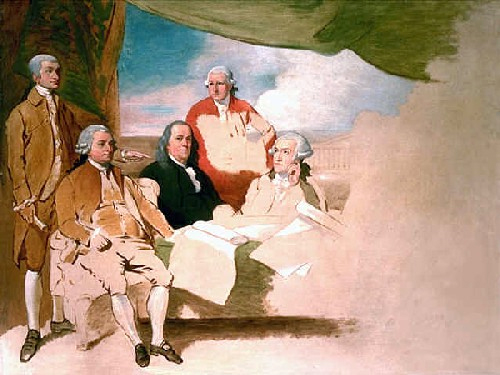
Henry Laurens arrived in Paris from Vigan, France, to help negotiate a peace treaty between the United States and Great Britain. The next day he signed the preliminary articles with John Jay, Benjamin Franklin and John Adams.

Treaty_of_Paris_by_Benjamin_West_1783

Benjamin West’s painting of the delegations at the Treaty of Paris: John Jay, John Adams, Benjamin Franklin, Henry Laurens, and William Temple Franklin. The British delegation refused to pose, and the painting was never completed.


1864 – Bombardment of Charleston

Seventy-four shots landed in Charleston overnight, proving that the Federal authorities outside Charleston were willing to ignore the six-day old order to cease the bombardment. Paroled Federal prisoner Robert Sneden, traveling through Charleston on his way back up north, wrote:

During the night our forces … shelled Charleston … until daylight. I could see the trail of the burning fuses on the sky, and heard plainly the bursting shells, and the dull roar of the falling walls in Charleston. Two or three small fires were burning at the same time. King and Queen Streets seemed to have been favored … and no place is esteemed safe in the city … I kept indoors as much as possible.

broad street shelling

Broad Street shelling. Harper’s Weekly


Today In Charleston History: November 19

1755 – Deaths.

Andrew Rutledge died. The childless attorney left his estate – a house and plantation valued at £12,000 in trust for his brother’s oldest children, John, Thomas, Andrew and Sarah. John Rutledge  was serving a five-year apprenticeship in the Charlestown law office of James Parsons, along with another local young man, Thomas Bee.

1779 – American Revolution – Arrivals.

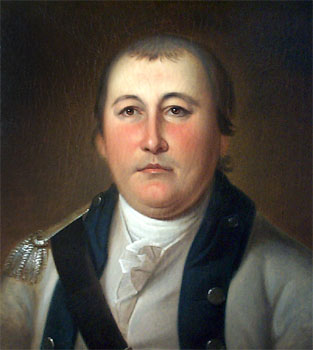
William Washington by Rembrandt Peale

Lt. Col. William Washington, second cousin to George Washington, was transferred from New Jersey to the Southern theatre of war, to join the army of Major General Benjamin Lincoln in Charlestown.

1832 – Nullification Crisis

South Carolina called for a convention. By a vote of 136 to 26, the convention overwhelmingly adopted an ordinance of nullification drawn by Chancellor William Harper. It declared that the tariffs of both 1828 and 1832 were unconstitutional and unenforceable in South Carolina. While the Nullification Crisis would be resolved in early 1833, tariff policy would continue to be a national political issue between the Democratic Party and the newly emerged Whig Party for the next twenty years.

1863 – Bombardment of Charleston.

During a special Thanksgiving service a Union shell exploded near the church door as the congregation was exiting. It was the last service held in St. Michael’s during the war.

 During their service at St. Philip’s a shell passed over the church and landed half a block away at the corner of Church and Cumberland Streets. Rev. Howe continued his sermon and finished the service before dismissing the congregation. It was the last service held at St. Philip’s during the war. Both congregations (St. Michael’s and St. Philip’s) continued to worship at St. Paul’s Episcopal (present-day Cathedral of St. Luke and St. Paul) on Coming Street, north of Calhoun Street, out of the range of the Federal guns.

For the remainder of the year 283 shells landed in Charleston. Many of the shells were filled with “Greek Fire” – an incendiary mixture of turpentine and petroleum. As the shell exploded pieces of fire were thrown great distances in the air and catch buildings on fire. 

st. mikes - wordpress

1863 – Bombardment of Charleston.  

George Trenholm purchased the abandoned Lagare’s Female Academy in Orangeburg for the removal of the children from the Charleston Orphanage House.

1929

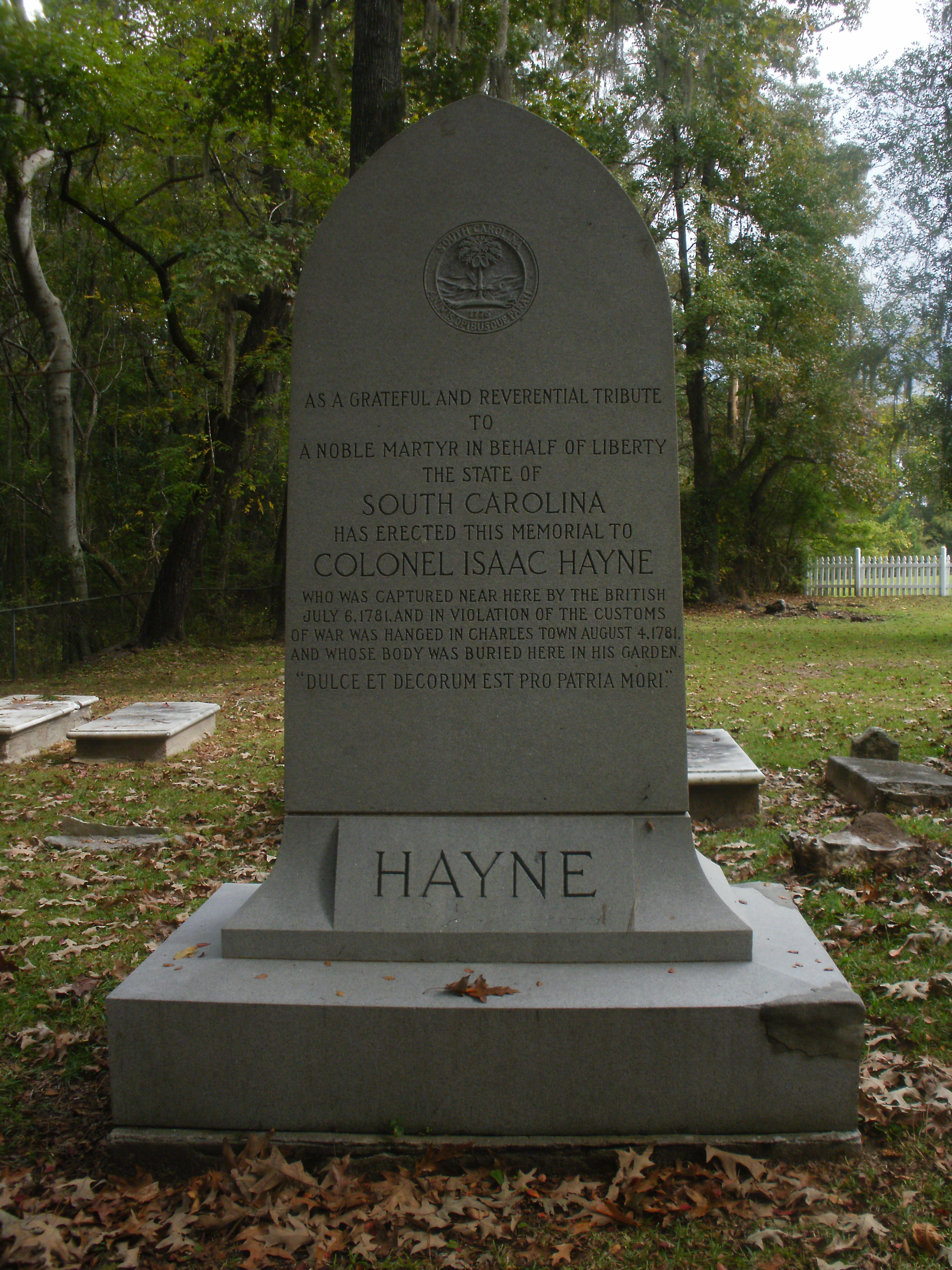
By resolution of the SC House a monument was erected for Issac Hayne at his burial site near Jacksonboro.

OLYMPUS DIGITAL CAMERA

Today in Charleston History: November 16

1699

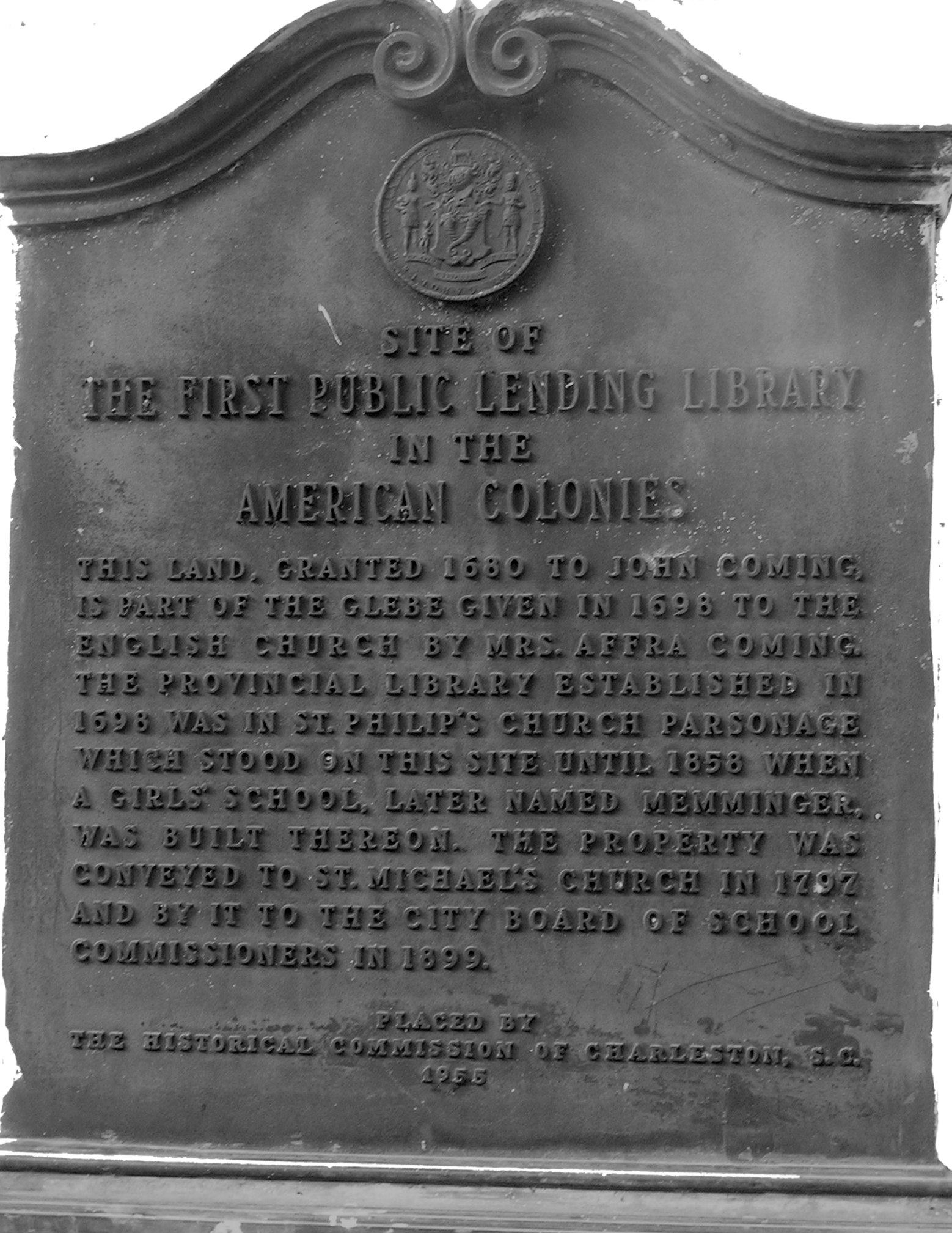
A law passed by the Assembly established a tax-supported free provincial library on St. Philip’s Street. It operated for 14 years, possibly the first Public library in the American colonies. library marker copy

1863 -Bombardment of Charleston

Union guns fired fifteen shells into Charleston overnight.

broad street shelling

Broad Street shelling.


Today In Charleston History: November 8  

1691
Gov_P_Ludwell

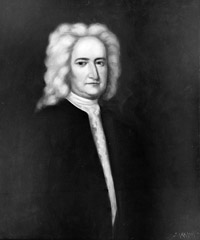
Philip Ludwell

Sir Nathaniel Johnson led the “Goose Creek men” in opposition against Governor Sothell, forcing his retirement.  The Lords Proprietors appointed Philip Ludwell “Governor and Comander in Cheif [sic] of Carolina” with the authority “to apoint [sic] a Deputy Governor of North Carolina.” 

Colonel Ludwell lived at Middle Plantation (which later became Williamsburg) in the Colony of Virginia. In 1676, he supported Virginia Governor William Berkeley during Bacon’s Rebellion. Later, Ludwell married Berkeley’s widow, Frances Culpeper Berkeley of Green Spring Plantation. After serving in Carolina, Ludwell returned to Virginia, where he served as Speaker of the House of Burgesses in 1695–96. Around 1700 he moved to England, where he died.

1718 – Piracy

 Stede Bonnet’s crew was found guilty by Judge Trott. The twenty-nine men from his crew were hanged that day. Their bodies were dumped in the marsh beyond the low-water mark.

1781 – American Revolution

Gen. Green established the Continental Army at Round O, about 45 miles west of Charleston.

1786 – Theater

Because of a sore foot, Mr. Godwin of the Harmony Hall theater could not perform his popular comic dance “The Drunken Peasant.” The audience hurled bottles on stage, which Godwin tossed back and charged the audience with a drawn sword.  After the death of his leading lady, Godwin was forced to close his theater.

1827
Poe in uniform

Poe in uniform

Private Edgar Perry (Edgar Allan Poe) arrived on Ft. Moultrie on Sullivan’s Island an articifer – an enlisted tradesman who prepared shells for artillery.

1864 – Bombardment of Charleston

During the overnight Federal bombardment, a shell crashed through the roof of the house of John and Mary Mullane, killing them in their sleep.

1870  

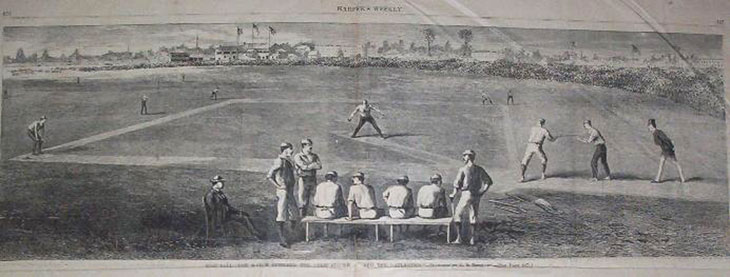
To celebrate the conclusion of the South Carolina Institute Fair, a three inning baseball game was played with the Palmettos beating the Schachte team 27-16.

1870 baseball - Atlantics vs. Red Stockings. Harper's Weekly

1870 baseball – Atlantics vs. Red Stockings. Harper’s Weekly