Today In Charleston History: March 17

1758 – Births  

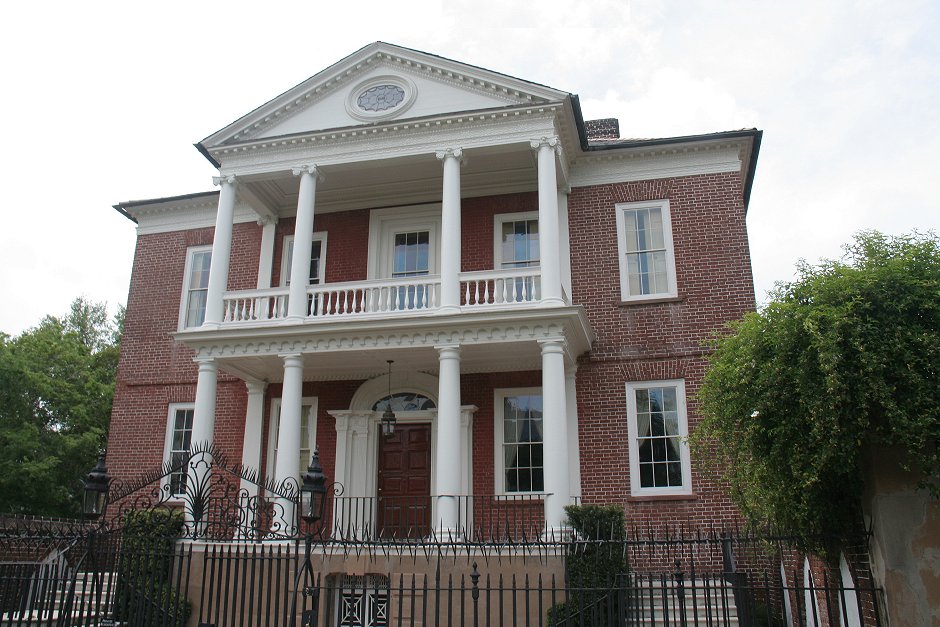
Gabriel Manigault was born in Charlestown. He would become one of the most successful merchants in America.

1780
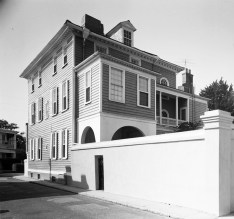
106 tradd street - side view

106 Tradd Street, viewed from Orange Street

Captain Alexander McQueen held a dinner party at his home at 106 Tradd Street. After dinner Alexander locked all doors and began to propose a series of toasts. One of his guests, Lt. Colonel Francis Marion, one of the heroes of Ft. Moultrie victory in 1776, was not a heavy drinker. He removed himself from the house by dropping out of a second floor window, breaking his foot. 

1801

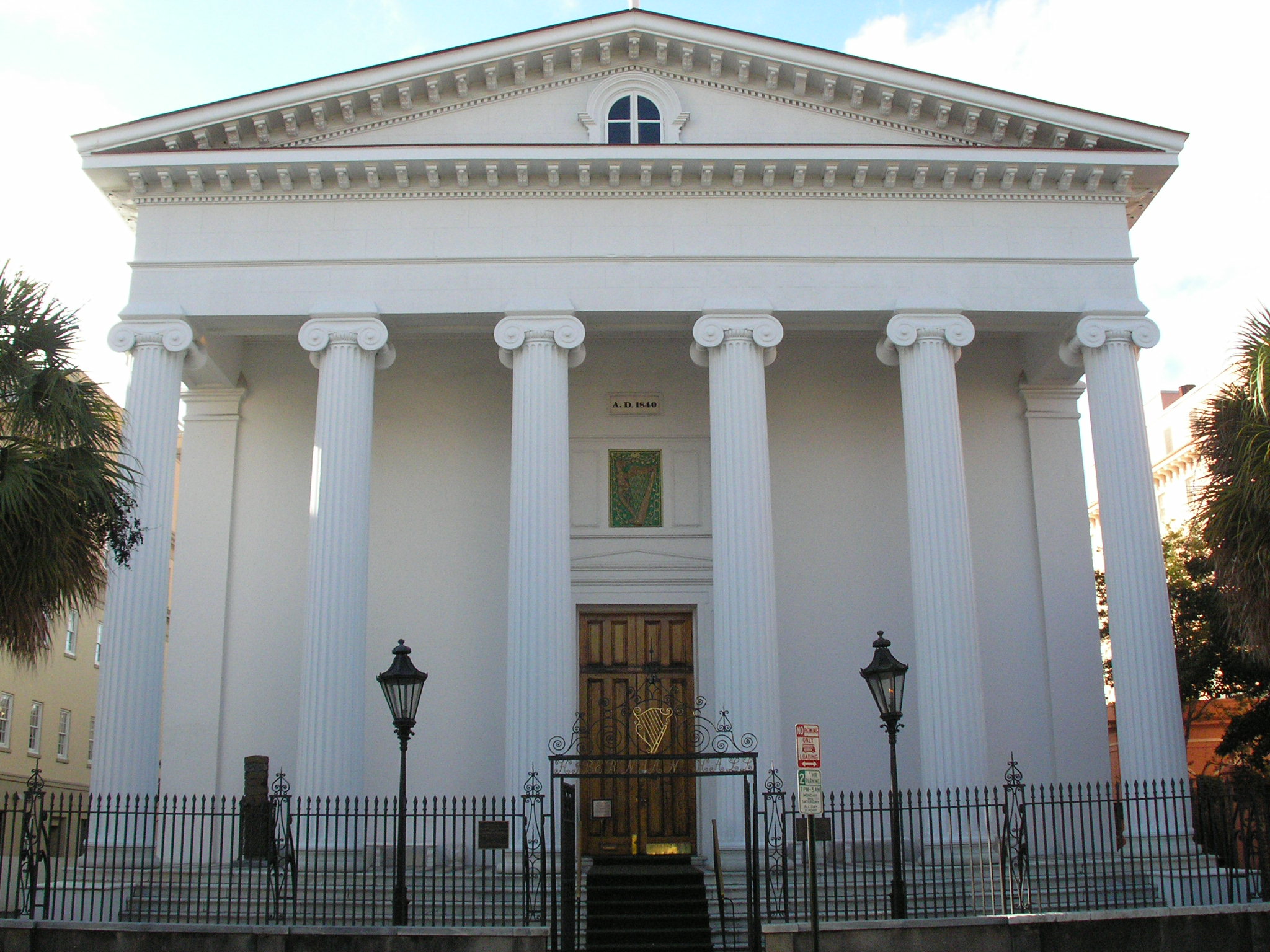
The Hibernian Society was organized in Mr. Corbett’s Tavern. By 1840 the Society had constructed a magnificent hall on Meeting Street, where they still conduct weekly meetings.    

OLYMPUS DIGITAL CAMERA

1870

Christopher Columbus (C.C.) Bowen married a widow eight years his senior, Susan Petigru King. Bowen had met King in Washington, D.C. while she was working as a clerk-translator in the Post Office Department. He discovered that Susan was the “largely ungovernable” daughter of James Louis Petigru, one of South Carolina’s most influential citizens. The elder Petigru was an able and respected lawyer who served as the state’s Attorney General and Federal District Attorney.

1933 – Jenkins Orphanage 

In the pre-dawn morning of, one hundred and seventy-seven children were evacuated from the Jenkins Orphanage when a fire swept through the second floor. Part of the wall collapsed and several rooms were gutted. The old orphanage was no longer habitable. The fire also destroyed the majority of the Orphanage’s historical records, a monumental loss that has only become more tragic over time as various historians, writers and archivists have attempted to piece together the story of the orphanage and its music. This was the event that ended the Jenkins Orphanage presence in downtown Charleston. Soon after the fire, the city moved the orphanage to out of the city.

20 franklin, jenkins orphanage 3 (loc)

Old Marine Hospital on Franklin Street (side view). The back wing burned.

Today In Charleston History: March 16

1699 – Piracy

Collector of Customs, Edward Randolph, arrived in Charles Town and announced that the royal government was tightening its grip on all the colonies and was considering voiding all Proprietary charters. Randolph also made it clear that the Royal Admiralty Courts believed the Proprietors allowed:

illicit trade … and sought to establish a sort of independence of the King … traded with the Dutch, welcomed pirates as free spenders and have no regard to the acts of trade.

Randolph also discovered that Governor Blake was “a notorious offender against the act.” He also accused Blake and his brother-in-law, Judge Joseph Morton, Jr. of:

fraudulently condemning vessels as contraband and then colluding to purchase, at auction, ships and cargoes at bargain prices … took bribes to ignore smuggling and traded with pirates and the Spanish in Florida.

1735_CHARLESTON

Charlestown, 1735

1773

Josiah Quincy, visiting Charlestown from Boston, wrote about race week:

spent this day in viewing horses, riding over the town … am now going to the famous races … well performed … Filmnap beat Little David (who had won the last sixteen races) out and out. The first four –mile heat was performed in eight minutes and seventeen seconds. I saw a fine collection of excellent, though very high-priced horses … Two thousand pounds were won and lost at this race and Filmnap sold at public vendue … for £300 sterling.

Today In Charleston History: March 15

1670 

The Carolina expedition arrived at Bull’s Island, 100 miles north of Port Royal (just north of present day Charleston). They were greeted onshore by the Cassique (chief / leader) of the Kiawah Tribe speaking bad Spanish, “Bony Conraro Angles!” (Good English comrades!) The Kiawah were a small tribe, approximately 160 members
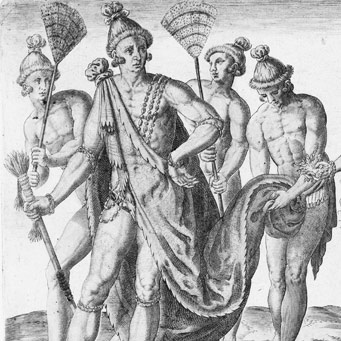
Cassique of the Kiawah tribe

Cassique of the Kiawah tribe – 1670

The Cassique was a young man (nephew of the Cassique at Port Royal) who had traveled to England four years before with Captain Sanford during the expedition to explore the coast. He informed Sayle that a tribe called Westoes had destroyed everything from St. Helena (Port Royal) north to the Kiawha River (Ashley River). 

He tried to convince Sayle they should settle in the Bull’s Island/Kiawha (Ashley) River area. Sayle, however, was determined to go south. The young Indian agreed to join the expedition and guide them to Port Royal. Having spent several years in England, he was a firm friend of the English and during the journey he continued to encourage them away from Port Royal, which was closer to Spanish Florida. Most native tribes of the Carolina coast had been attacked and enslaved by the Spanish for over one hundred years. The Cassique believed the English would be better neighbors and partners.

During their short stay at Port Royal, Governor Sayle summoned the passengers and they elected five men “to be of the council” – Paul Smith, Robert Donne, Ralph Marshall, Samuel West and Joseph Dalton. This was the first election in South Carolina. The council voted to return to the Kiawha area to settle. 

1813. Privateering.

 The Defiance, under Jean Pierre Chazal, battled with the British brig, Nimrod. When Defiance’s main boom was damaged, Chazal was unable to run a full speed. During the battle five of his crew were killed, and ten more wounded. Defiance was captured and taken to Port Royal, Jamaica. Chazal and two of his officers were exchanged.

1813

An advertisement in the City Gazette read:

AT THE AMPHITHEATRE:

Mr. Langley has the honor to inform the Ladies and Gentlemen of Charleston and its vicinity that his Benefit is fixed for THIS EVENING, when every exertion on the part of the Managers, himself, and the whole Company will be made to give general satisfaction. He hopes to meet the approbation of a generous audience. To commence by the Grand Entry and Military Manoeuvres.

Master Charles will perform a variety of Feats of Activity, will jump his whip, etc. Mr. Langley will perform, on one Horse, several Steps and Attitudes – he will also dance a HORNPIPE, his horses in full speed.

Mr. Codet will exert himself to please the spectators by performing numerous Feats of Agility, &c. Master Parfee will exert his utmost endeavors to please. Mr. Langley will also execute the laughable scene of the METAMORPHOSE, or the SAILOR’S VOYAGE, A FOX HUNTING. 

ACT II: GROUND AND LOFTY TUMBLING, By the Company, in which Mr. Laenia will throw a row of FLIP FLAPS across the Circus, and conclude by a lofty back Somerset. Mr. Langley, on two Horses, will execute the feat of Apples, Forks, Bottle, &c, also, the difficult feat of the Hoop, and Leap over the Ribbands.

Mr. Pepin will perform a variety of feats of Horsemanship, in which he will execute the Leap over four Ribbands and over four Illuminated Galleries.

STILL VAULTING by the Company, in which Mr. Langley will perform that unparalleled feat of balancing his body, extending in the air, on one hand.

Mr. Cayetano will perform the admired scene of the INTOXICATED OFFICER.

The whole of this brilliant representation to conclude with the pleasing scene of BILLY BUTTON, or the TAYLOR’S JOURNEY TO BRENTFORD.

Doors to be open at 6, and performance to commence precisely at 7 o’clock. For sale, a full blooded Spanish Stud HORSE.

1825

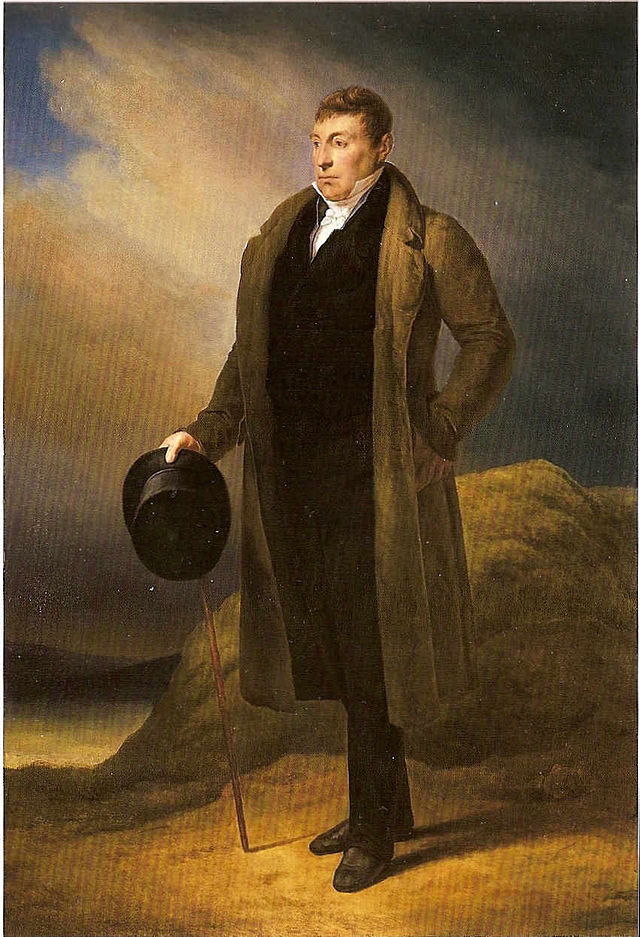
Marquis de Lafayette, arrived in Charleston and enjoyed three days of balls and reunions while here.
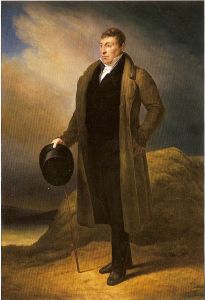
Lafayette portrait, 1824, which hangs in the U.S. House of Representatives

1824 Lafayette portrait, which hangs in the U.S. House of Representatives

William Seabrook, an Edisto plantation owner and planter, invited him to be his guest on Edisto. Lafayette accepted his invitation. William Seabrook met the steamboat that brought Lafayette from the city at the mouth of the creek leading to his plantation. He carried him the rest of the way in his personal smaller steamboat. The slaves rolled out a red carpet for Lafayette to walk ashore upon his arrival at the dock.

That evening they had a lavish dinner. While waiting in the ballroom for other guests to arrive William Seabrook placed his infant daughter in the arms of Lafayette and requested that he name her. Lafayette said that he would call her “Carolina” for the state, and said he would consider it an honor to add Lafayette for himself. The reverend in attendance christened the baby “Carolina Lafayette.”

Today In Charleston History: March 14  

1699

Peter Girad wrote that there were 195 French Protestants in Charles Town.

1740 – Religion
George Whitefield

George Whitefield

Rev. George Whitefield warned that God had been:

Contending with the people of South Carolina … for two years with disease, the Stono Rebellion … God has quarreled with you, for your abuse of and cruelty to the poor negroes.

While in Charlestown he conducted public services that disregarded the Book of Common Prayer, an offense against the church of which he was a licensed minister. Rev. Alexander Garden called on him to explain his offense.

1767

Daniel Moore, new customs collector, was determined to use the position to increase his personal wealth. He increased collection fees, strictly enforced the coastal trade regulations and colluded with customs searcher, George Roupell, to “set a new standard for rapaciousness.” This angered many of the local merchants, including Henry Laurens who organized the merchants in an attempt to isolate the Royal officials.

Today In Charleston History: March 13

1826

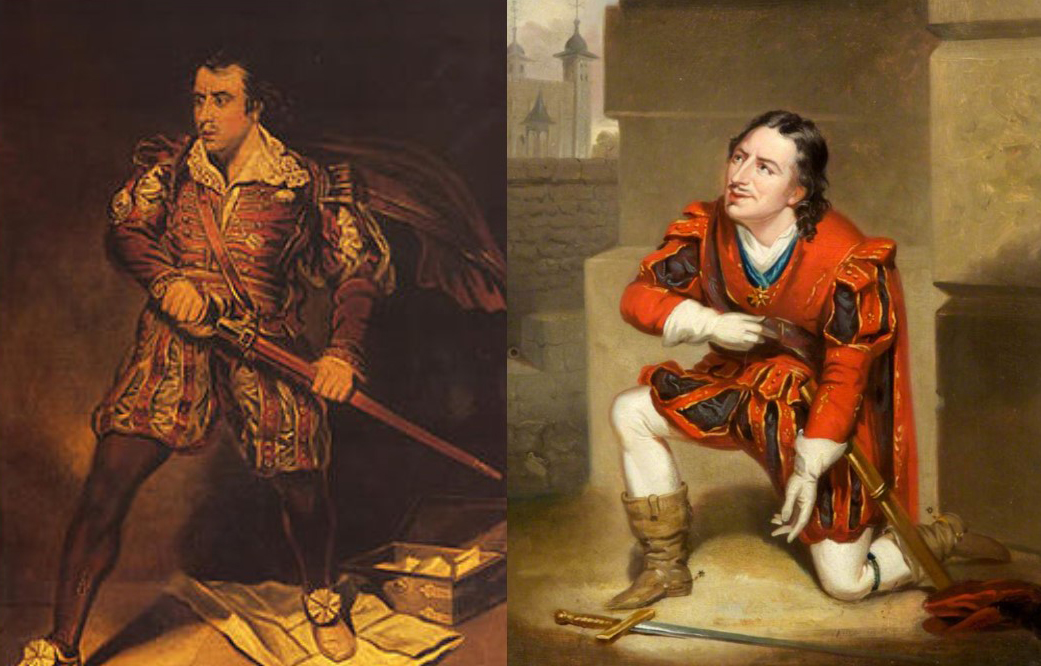
Edmund Kean, Junius Booth’s great rival in the Shakespearian world, played King Lear, Othello, and Richard III in Charleston. He was touring America due to his scandalous affair with the wife of a London city councilman which resulted in Kean’s wife leaving him. That created such a furor that he was forced to leave England for America to allow the scandal to cool down.

Edmund Kean

Edmund Kean

1834   

Charleston City Council approved the line of the Charleston & Hamburg Rail Road to be extended into the city, with a new depot built at Mary Street, between Meeting and King Streets.

Today In Charleston History: March 12

1698 – Epidemic.

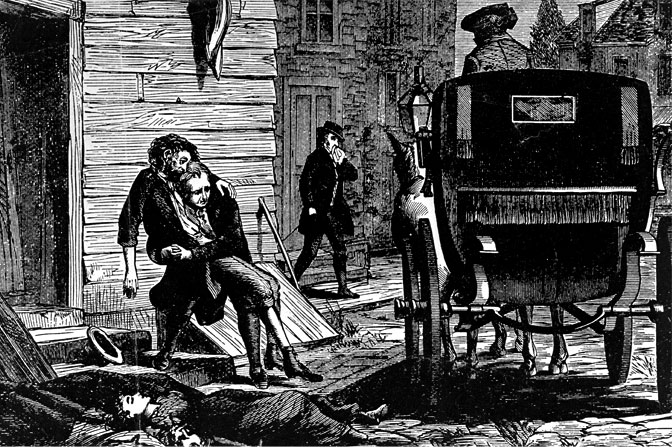
The governor wrote that

“We have had the small pox amongst us nine or ten months which hath been very infectious and mortal. We have lost by the distemper 200 or 300 persons.”

Mrs. Affra Coming wrote to her sister that the epidemic

“killed 200 or 300 persons … unburied, lying upon the ground for the vultures to devour.”

image-05-large

Picking up the Dead.

Today In Charleston History: March 11

1703 – Fortifications

Sir Nathaniel Johnson

Sir Nathaniel Johnson

Sir Nathaniel Johnson was appointed governor. He urged the Assembly to pass an act for repairing the existing fortifications and building new works to surround the town. It specified:

 the severall forts, halfe moons, platforms, batterys and flankers, built . . . on the front wall [i.e., East Bay Street], shall have gabions [walls built on a slope to protect against erosion] fixed upon them, and shall also be well piled, for their preservation against the sea.

The act also stipulated that the fortifications “shall be [made] by intrenchments, flankers and parapets, sally ports, a gate, drawbridge and blind necessary for the same.” This plan created a ring of fortification, including four corner bastions linked by a curtain walls and punctuated by eight redans, surrounding sixty-two acres of high land.

1778 – American Revolution.

Alexander Gillon, a Dutch merchant from Charlestown, was appointed Commodore of the South Carolina navy.

Today In Charleston History: March 10

1673
Anthony-Ashley-Cooper-Earl-Shaftesbury-1560137

Lord Ashley Cooper

A deed of transfer was registered by Lord Ashley Cooper by which the Cassoes ceded “the great and lesser Cassoe [River]” between the Ashley, the Stono and the Edisto for cloths, hatchets, beads, and other manufactured goods.

1696

Henry Peronneau was one of sixty-three petitioners who were granted “the rights and privileges of citizenship.”

1780 – The Seige of Charlestown  

Lt. Colonel William Washington’s regiment joined forces with the remnants of the 1st Continental Light Dragoons at Bacon’s Bridge (20 miles north of Charlestown) to reconnoiter, screen and disrupt the advancing British troop. They felled trees across roads, burned bridges and boats in an effort to slow the march toward Charlestown.

Today In Charleston History: March 9

1686-Arrivals.  

Jean Boyd, a well-educated Huguenot merchant, arrived in Charles Towne and penned a lengthy letter to his sister back in London. He described various aspects of life and culture, and sketched a map of the town.

Here we are at last landed in this much longed-for country. In truth, I had imagined that I would find the town of Charlestown built differently and much larger than it is … The temperature of the air is here the same as in the southern provinces of France.  The English, in truth, who are not accustomed to hearing large claps of thunder in England exclaim in surprise at those in Carolina, but they would never scare a French person.

boyd map - 1687

Jean Boyd’s map of Charles Towne

The head of the rivers & principally the creeks are full of crocodiles so monstrous that we saw some that were 22 feet long. They do not hurt anyone and people fear them so little that several people who were bathing went swimming after them.

When one sells something here one must specify if it will be paid for in silver; otherwise they will pay you in silver of the country, which means in corn or animals & there is a great difference, least 25% for cattle to silver. Sometimes when silver is plentiful, that is to say when the buccaneers have come, livestock is worth a lot.

Aside from game one sees many wild beasts but a  little higher up in the  country, like wolves, wildcats, leopards,  tigers, bears, foxes, raccoons,  badgers, otters, beavers & a type of black and white cat which for its only  defense (urinates)  on people who pursue it, but its urine is so foul that it is  capable  of making one feel sick. The stench does not go away for two or three months even though one washes.

1738 – Slavery.

A writer in the Gazette addressed his concerns about the issue of Negro population:

I cannot avoid observing that altho’h a few Negroes annually imported into the province might be of advantage to most People, yet such a large importation of 2600 or 2800 every year is not only a loss to many, but in the end may prove the Ruin of the Province, as it most certainly does that of many industrious Planters who unwarily engage in buying more than they have occasion or able to pay for.

1779

Andrew Groundwater and William Tweed were hanged for treason. Both men had refused to take the oath of fidelity to the Patriot cause, and were arrested for carrying a message from a British prisoner of war to Colonel Archibald Campbell. According to Charles Pinckney:

some interest was made for Groundwater … he had been captain of a small vessel, and had been of service in the bringing in to us stores and many necessary articles which we were in want of … [but also] strongly suspected of being concerned with Tweed in setting fire to the town on Trott’s point … the inhabitants were so incensed against him, that he suffered, to appease the people.

Today In Charleston History: March 8

1770 – American Revolution – Foundations

In the Gazette, Peter Timothy reported that British merchants had lost £300,000 sterling just in the loss of slave trading, an unreasonable sacrifice in an attempt to raise £13,000 sterling. 

1773

During his visit to Charleston, Josiah Quincy wrote in his diary of his evening at the Miles Brewton House, 27 King Street:

Dined with a large company at Miles Brewton’s, Esq. a gentleman of a very large fortune – a most superb house, said to have cost him £8000 sterling. The grandest hall I ever beheld, azure blue satin window curtains, rich blue paper with gilt … most elegant pictures … a most elegant table, three courses, jellies, preserves, sweet meats, etc … After dinner, two sorts of nuts, almonds, raisins, three sorts of olives, apples, oranges … by odds the richest wines I ever tasted.

Miles Brewton House

Miles Brewton House