Today In Charleston History: June 1

1734 – Culture

A billiard table was advertised for sale at Ashley Ferry in the Gazette.

1738 – Treatment for Pox

The Gazette published Dr. Pitcarn’s treatment for small pox to help stop its spread. It consisted of bloodletting and the use of a syrup of white poppies. By the end of the summer 2112 people had come down with the disease, killing more than 400.  It was reported that there were not:

sufficient number of persons in health to attend the sick, and many persons perished from neglect and want. There was scarcely a house in which there had not been one of more deaths. Inoculation was at this time first attempted with some success and the disease soon after abated. 

1756-Arrivals

William Henry Lyttelton arrived in Charlestown as the Governor on the HMS Winchelsea. Crowds of citizens gathered to toast the new governor but Lyttelton’s term would be riddled with controversies. 

1775-American Revolution – Foundations.

 The Secret Committee of Five ordered the tarring and feathering of James Dealy and Laughlin Martin for rejoicing (supposedly) that Catholics, Negroes and Indians were going to be armed in an uprising against the people.  The two men were carted about the streets and banished from town.

1776-American Revolution
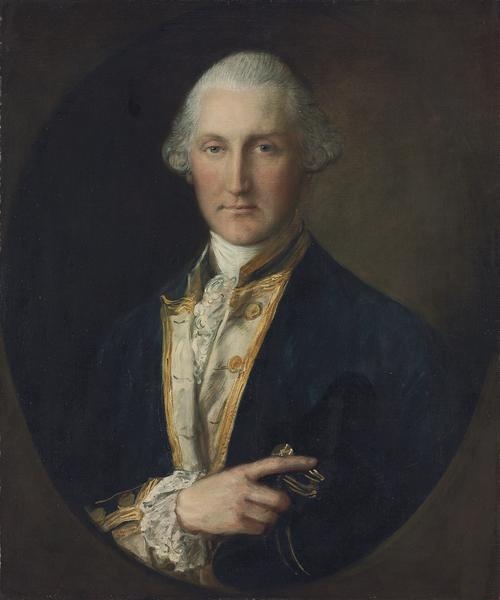
Lord William Campbell

Lord William Campbell

Lord William Campbell, who, several months before, had left Charleston in the middle of the night in fear of being attacked, had been urging a major expedition against South Carolina to crush the rebellion in the South. On June 1, the British fleet, commanded by Sir Peter Parker and Sir Henry Clinton, appeared and “displayed about fifty sail before the town, on the outside of the bar.”

Col.  Moultrie described their effect on Charlestonians:

The sight of these vessels alarmed us very much, all was hurry and confusion, the president with his council busy in sending expresses to every part of the country, to hasten down the militia; men running about the town looking for horses, carriages and boats to send their families into the country; and as they were going out through the town gates to go into the country, they met the militia from the country marching into town…

1782 – Culture

Hamilton Stevenson advertised his services as a “painter of miniatures or a hair sylist.”

1822-Denmark Vesey Rebellion

Mingo Harth and Peter Poyas were interrogated by city officials. Another Slave, William Paul, had named them as part of a “conspiracy” against the whites.  Poyas laughed and called William Paul a young fool. Intendent (mayor)Hamilton was impressed that “these fellows behaved with so much composure and coolness.”

1825 – Politics

Joel Roberts Poinsett was appointed the first United States minister to Mexico.

1832 – Death
Statue of Gen. Sumter on the courthouse lawn, Sumter S.C.

Statue of Gen. Sumter on the courthouse lawn, Sumter S.C.

Thomas Sumter died, the last surviving Revolutionary War generals.

In February 1776, Sumter was elected lieutenant colonel of the Second Regiment of the South Carolina Line. He subsequently was appointed brigadier general, a post he held until the end of the war. Perhaps his greatest military achievement was his partisan campaigning, which contributed to Lord Cornwallis’ decision to leave the Carolinas for Virginia.

Sumter acquired the nickname, “Carolina Gamecock,” during the American Revolution for his fierce fighting tactics. After the Battle of Blackstock’s Farm, British General Banastre Tarleton commented that Sumter “fought like a gamecock”, and Cornwallis paid him the finest tribute when he described the Gamecock as his greatest plague.

1865 –  Reconstruction

By this time, more than 30,000 cartloads of material and debris had been removed out of the city under the U.S. Army’s supervision, using more than 200 laborers and 50 teams of animals. The debris was dumped in the marshes as landfill.

One visitor described the city as:

The splendid houses are all deserted, the glass in the windows broken, the walls dilapidated, the columns toppled over … arches demolished, mantels shattered, while fragments, great and small, of every description strew the floors … but where are the owners of these estates – where are they?

Charleston, after the War and fire destruction. Looking  west at St. John's Lutheran and Unitarian Churches

Charleston, after the War and fire destruction.

1882 – Politics 

The “Eight Box Law, written by Charlestonian Edward McCrady, Jr. and passed by the state assembly went into effect. The law got its name from the requirement that, on Election Day, there were to be eight separate ballot boxes for different offices. A voter had to be able to read in order to know where to place his ballot. At this time illiteracy rate among blacks was five times greater than whites. Another provision of the law was that every voter must re-register before June 1, 1882, or be forever banned from voting.

Within four years, tens of thousands of black voters in South Carolina were disenfranchised. Voting districts were redrawn, leaving only one majority black district. The state’s last 19th century black congressman was defeated for re-election in 1896

Today In Charleston History: May 31 – Charleston First

On May 31, 1801, the first Supreme Council of the Thirty-third Degree, the Mother Council of the World organized in Charleston, with the motto “Ordo ab Chao” (Order from Chaos). Although it is the “Mother Council” for Scottish Rite, it was not the first Masonic activity in Charles Town.

The first Masonic Lodge in Charles Town was established on October 28, 1736. The South Carolina Gazette announced:

Last night a Lodge of the Ancient and Honorable Society of Free and Accepted Masons, was held, for the first time, at Mr. Charles Shepheard’s, in Broad Street, when John Hammerton, Esq., Secretary and Receiver General for this Province, was unanimously chosen Master, who was pleased to appoint Mr. Thomas Denne, Senior Warden, Mr. Tho. Harbin, Junior Warden, and Mr. James Gordon, Secretary.

sheapheard's tavern2

Shepheard’s Tavern, corner of Broad and Church Streets

By 1765 there were four active Lodges in Charlestown, under the jurisdiction of the Provincial Grand Lodge, and through it, the Grand Lodge of England. They were: Solomon’s Lodge, Union Lodge, Master’s Lodge and Marine Lodge.

The Scottish Rite is one of the two branches of Freemasonry in which a Master Mason may proceed after he had completed the three degrees of Blue Lodge Masonry – the other branch being the York Rite, which includes the Royal Arch and Knights Templar. The Scottish Rite included degrees from 4 to 32.

scottish rite

The word “Scottish” has led many to believe the Rite originated in Scotland, which is not true. During the late 1600s many Scots fled to France during the English Civil Wars. The Scots in France who practiced their Masonic interests were referred as “Ecossais,” which translates to “Scottish Master.”

In 1732 the first “Ecossais” or Scottish Lodge was established in Bordeaux, which included Scottish and English members. In 1763, a Masonic patent was given to Stephen Morin to carry their advanced degrees to America. Morin established his degrees in Jamaica.

In 1801, the Supreme Council was established in Charleston to unify competing groups of “Ecossais.” Their membership consisted of eleven Grand Inspectors General:

  • John Mitchell
  • Frederick Dalcho
  • Abraham Alexander
  • Emanuel De La Motta
  • Thomas Bartholomew Bowen
  • Israel De Lieben
  • Issac Auld
  • Le Comte Alexandre Francois
  • Auguste de Grasse
  • Jean Baptiste Marie Delahogue
  • Moses Clava Levy
  • James Moultrie

They announced control of high-degree Masonry in America by introducing a new system that incorporated all 25 of the Order of the Royal Secret, and added eight more, including that of 33 degree – Sovereign Grand Inspector General.

It was a diverse group of men, with only Auld and Moultrie being native-born South Carolinians. Four of the founders were Jews, five were Protestants and two were Catholics. Under the leadership of Grand Commander Albert Pike, in 1859 the Supreme Council expanded its membership to the mystical number of thirty-three members.

Pike also wrote the Morals and Dogma of the Ancient and Accepted Scottish Rite of Freemasonry, published by the Supreme Council, Thirty-third Degree, a collection of thirty-two essays which provide a philosophical rationale for the degrees of the Ancient and Accepted Scottish Rite. The lectures provided a backdrop for each degree with lessons in comparative religion, history and philosophy.

640px-Albert_Pike_-_Brady-Handy

Albert Pike

Pike served as a general for the Confederacy during the War and his writings have influenced Masonic practices for 150 years. He is the only Confederate soldier to have a statue in Washington, D.C., at Judiciary Square.

 From this beginning in Charleston, the Scottish Rite has spread throughout the world. Currently there are approximately 170,000 Scottish Rite Masons, with about 4000 of them attaining the Thirty-third degree. All regular Supreme Councils of the world today descend from the Charleston Lodge.

Today In Charleston History: May 31

1770

The statue of William Pitt, ordered in 1766, arrived in Charlestown at Charles Elliott’s Wharf via the ship Carolina Packet. The statue created great public excitement. Cannons were fired and crowds cheered on the docks as it was unloaded. The bells St. Michaels would have rung “but were stopped out of regard to Issac Mazyck, a very worthy member of the community, who was extremely ill near the church.”

1774-American Revolution

Charlestown received word of the Boston tea party, and that the Boston merchants had called upon all colonies to cut off trade with Britain, imports and exports, to force a repeal of the Tea Act. John and Edward Rutledge supported the trade embargo.

1801 – Charleston First

On May 31, 1801, the first Supreme Council of the Thirty-third Degree, the Mother Council of the World organized in Charleston, with the motto “Ordo ab Chao” (Order from Chaos). Although it is the “Mother Council” for Scottish Rite, it was not the first Masonic activity in Charles Town. Read the entire story here.

1902 – South Carolina Inter-State and West Indian Exposition
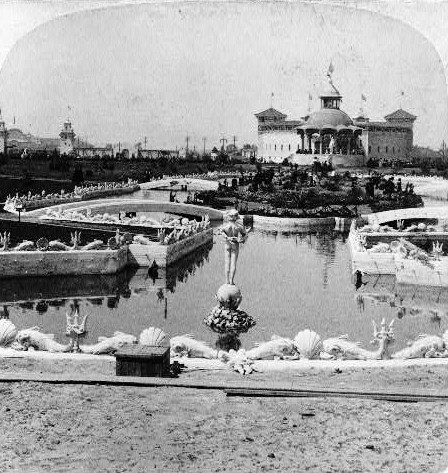
Grounds of the Expo

Grounds of the Expo

The last day of the South Carolina Inter-State and West Indian Exposition was “Charleston Day.” At the stroke of midnight “Taps” was played.

During the Exposition’s run 674,086 people had entered the gates, with total ticket sales of $148,062.90. It was considered a failure. Unlike the Buffalo Expo, which had been supported with federal money, the South Carolina Exposition received no money from Congress, giving the impression that Charleston was a second-rate city. There was some sentiment among the locals that it was another slight by the government to the city that had started the War.

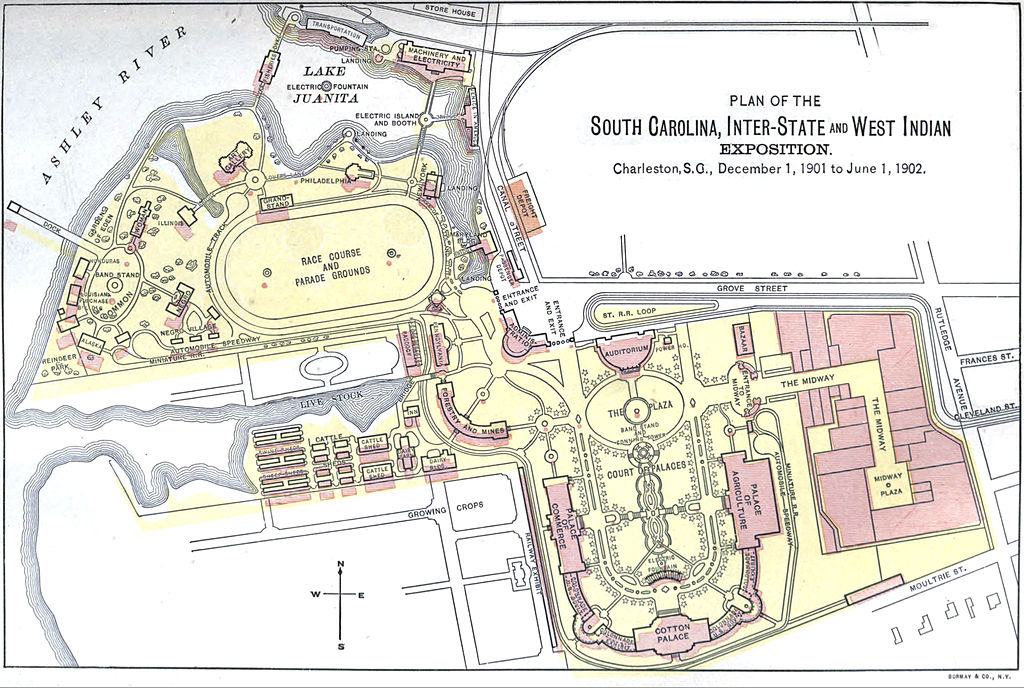
Plan_of_the_South_Carolina_Inter-State_and_West_Indian_Exposition

Plan of Expo

The Cotton Palace and Sunken Gardens

The Cotton Palace and Sunken Gardens

Today In Charleston History: May 30

1721

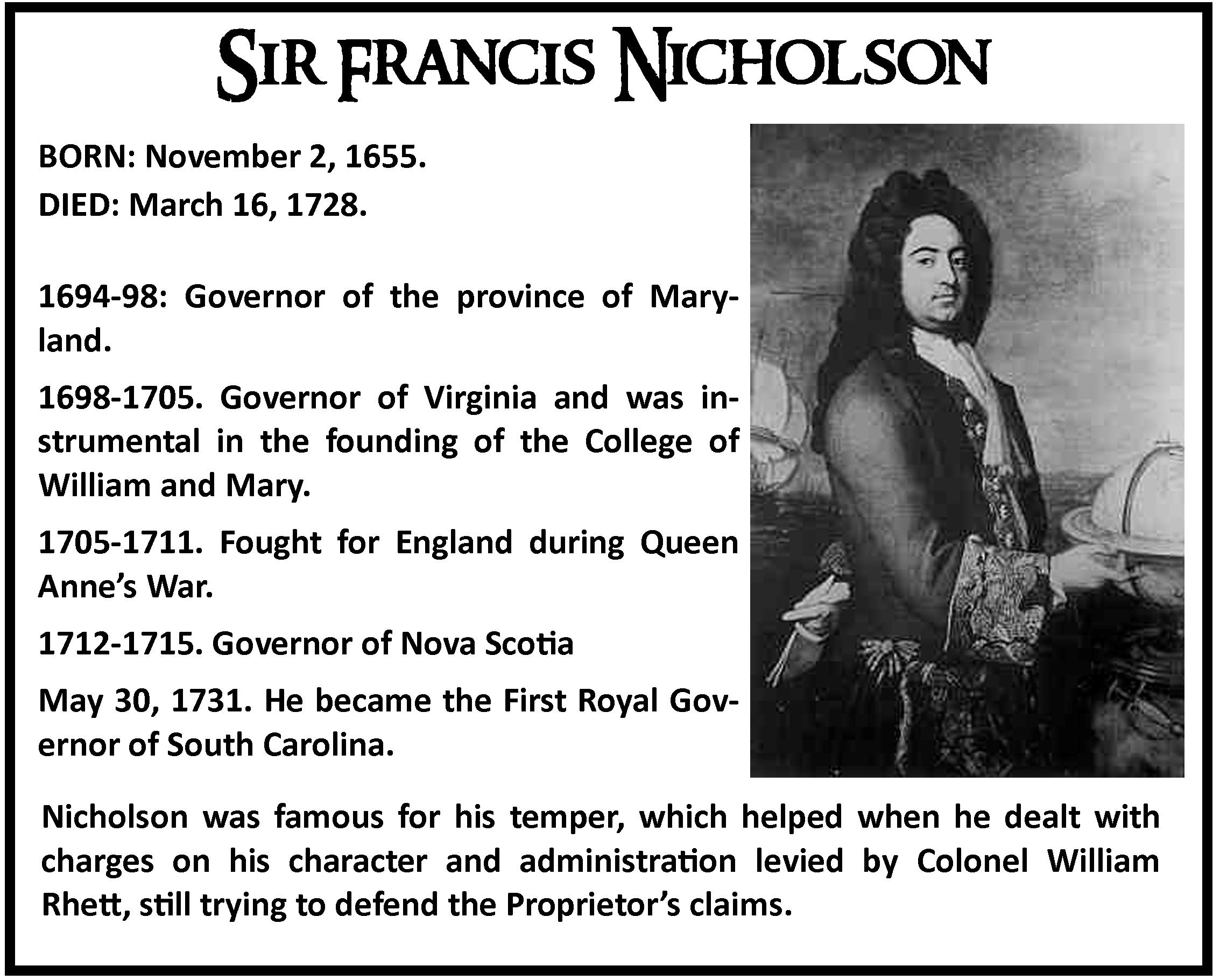
General Sir Francis Nicholson became the 1st Royal Governor of South Carolina. He had served as governors of Maryland, Virginia and Nova Scotia. He helped found the College of William and Mary and was a passionate supporter of the Anglican Church, making many of the Dissenters nervous. He was also instrumental in positive negotiations with the Cherokee nation but duplicitous in his dealing with the Creek nation. In a treaty he promised the English settlements would not extend west of the Savannah River.  

Nicholson was notorious for his temper. He was “subject to fits of passion.” In one story, an Indian said of Nicholson, “The general is drunk.” When informed that Nicholson did not partake of strong drink, the Indian replied, “I do not mean that he is drunk with rum, he was born drunk.”

nicholson profile

1822-Denmark Vesey Rebellion
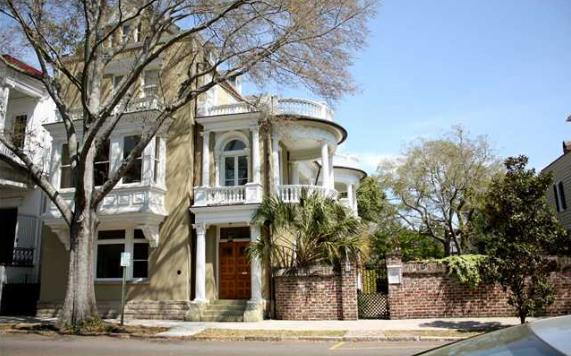
John Prioleau House, 68 Meeting Street, Charleston

John Prioleau House, 68 Meeting Street, Charleston

John Prioleau returned home from a business trip and was told about his slave Peter’s incident on the Charleston wharf with William Paul eight days previously. Alarmed that slaves were openly discussing the Haitian Revolution, Prioleau wrote a note and ordered Peter to deliver it immediately to Indendent (mayor) James Hamilton. Prioleau then marched to John Paul’s grocery story and ordered all the male slaves working at the store arrested and taken to the Guard-House.

Hamilton wrote his own note and sent it to the governor of South Carolina, Thomas Bennett, Jr. who lived a few doors down.

 1830
James Hamilton

James Hamilton

Political parties organized for the City Council elections in September. Leading the Union Party was Daniel Huger and James Petigru. Leading the Nullification Party was Robert Hayne and James Hamilton, Petigru’s former business partner, and former Charleston mayor.

Today In Charleston History: May 29

1630-Births

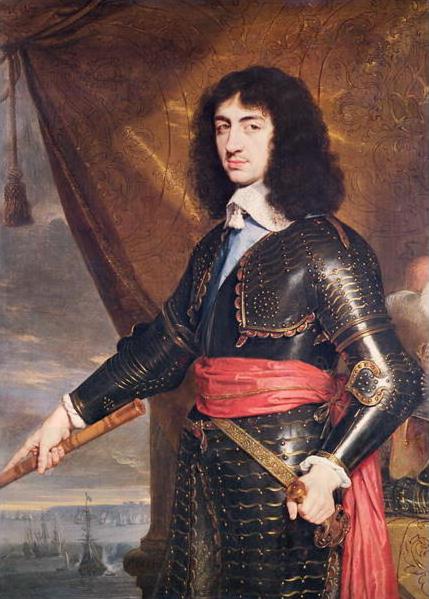
Charles II was born at St. James’s Palace in London. He was to become the namesake of Charleston, SC. 

1660-Restoration
Charles II

Charles II

Charles II arrived in London on his 30th birthday and restored the English monarchy. He granted amnesty to most of Cromwell’s former supporters, including Baron Anthony Ashley Cooper. Fifty people, however, were excluded from the King’s amnesty; nine were hanged, drawn and quartered, and the rest were given life imprisonment. Charles II extended baronages to thirteen loyal gentlemen of Barbados, including Sir John Colleton and Sir John Yeamans, who became early leaders of the Carolina colony.

1787-Constitutional Convention-Pinckney’s Draught
Charles Pinckney

Charles Pinckney

At the Convention, Charles Pinckney presented a complete outline of a constitution. James Madison wrote in his diary:

Mr. Charles Pinkney [sic] laid before the house the draught of federal Government which he had prepared to be agreed upon between the free and independent States of America.

Pinckney’s Draught (as it came to be known) included thirty-one of the provisions of the Constitution as finally adopted. They included:

  • A strong central government consisting of three separate and distinct branches
  • Legislative branch divided into a Senate and a House of Delegates, elected proportionate to the white population; blacks would be counted as three-fifths.
  • Control of the President over the military
  • Federal power to order militia into any State
  • House with powers of Impeachment.
  • “No religious test shall ever be required as a qualification to any office or public trust under the authority of the United States.”
  • The president should annually report on the “condition of the United States” – a state of the union address.

Pinckney reminded the delegates that the citizens were watching the Convention:

From your deliberations much is expected. The eyes, as well as hopes of your constituents are turned upon the convention; let their expectations be gratified. Be assured, that, however unfashionable for the moment your sentiments may be, yet, if your system is accommodated to the situation of the Union, and founded in wise and liberal principals, it will, in time, be consented.

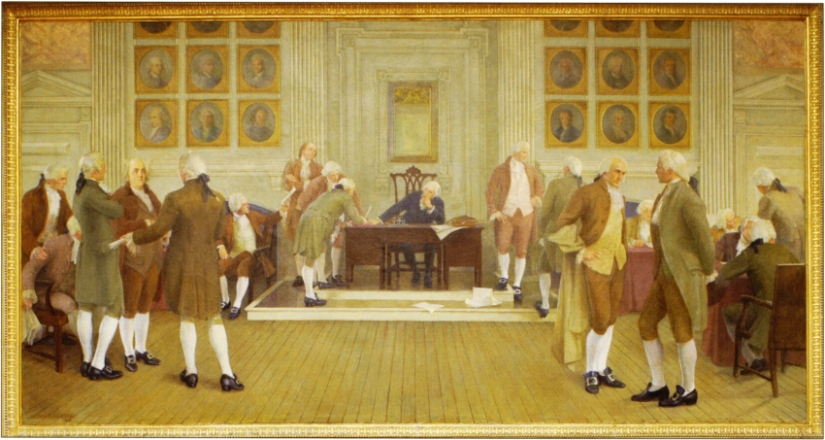
Albert Herter's painting of the Constitutional Convention.

Albert Herter’s painting of the Constitutional Convention. Charles Pinckney is seated to the left of the table, pointing.  John Rutledge (SC) is standing to the left in green coat, next to Benjamin Franklin.

Today In Charleston History: May 28

1745-Slavery

Gov. Glen asked London for three companies of British regulars who “would give heart to our … people [and] prove usefull in preventing or suppressing any Insurrections of our Negroes.” Many citizens were growing concerned over the “great numbers of Negroes … playing Dice and other Games.”

1788-First Golf Club

On May 28, 1788, an advertisement in the Charleston City Gazette requested that members of the South Carolina Golf Club meet on “Harleston’s Green, this day, the 28th.” After which they adjourned to “Williams’ Coffee House.” Also in 1788 there was an announcement of the formation of the South Carolina Golf Club was also listed in The Southern States Emphemris: The North and South Carolina and Georgia Almanac. Read the entire story here …    

1818-Births

Pierre Gustave Toutant Beauregard was born at the “Contreras” sugar-cane plantation in St. Bernard Parish, Louisiana, about 20 miles outside New Orleans.

1823-Slavery
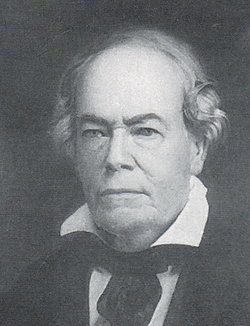
Rev. Richard Furman

Rev. Richard Furman

Motivated by the Denmark Vesey rebellion, Rev. Dr. Richard Furman of Charleston’s First Baptist Church published his “Exposition of the Views of the Baptists Relative to the Coloured Population in the United States” – a biblical defense of slavery that southerners would use to defend slavery until the 13th US constitutional amendment (1865) finally put an end to slavery in the United States. In the “Exposition” Furman claimed that:

the holding of slaves is justifiable by the doctrine and example contained in Holy writ; and is; therefore consistent with Christian uprightness, both in sentiment and conduct … That slavery, when tempered with humanity and justice, is a state of tolerable happiness; equal, if not superior, to that which many poor enjoy in countries reputed free. That a master has a scriptural right to govern his slaves so as to keep it in subjection; to demand and receive from them a reasonable service; and to correct them for the neglect of duty, for their vices and transgressions; but that to impose on them unreasonable, rigorous services, or to inflict on them cruel punishment, he has neither a scriptural nor a moral right. At the same time it must be remembered, that, while he is receiving from them their uniform and best services, he is required by the Divine Law, to afford them protection, and such necessaries and conveniencies of life as are proper to their condition as servants … That it is the positive duty of servants to reverence their master, to be obedient, industrious, faithful to him, and careful of his interests; and without being so, they can neither be the faithful servants of God, nor be held as regular members of the Christian Church. 

1862-Slavery

Robert Smalls met Abraham Lincoln and gave the President his personal account of the events of his escape to freedom.  

Robert Smalls

Robert Smalls

Today In Charleston History: May 27

1670

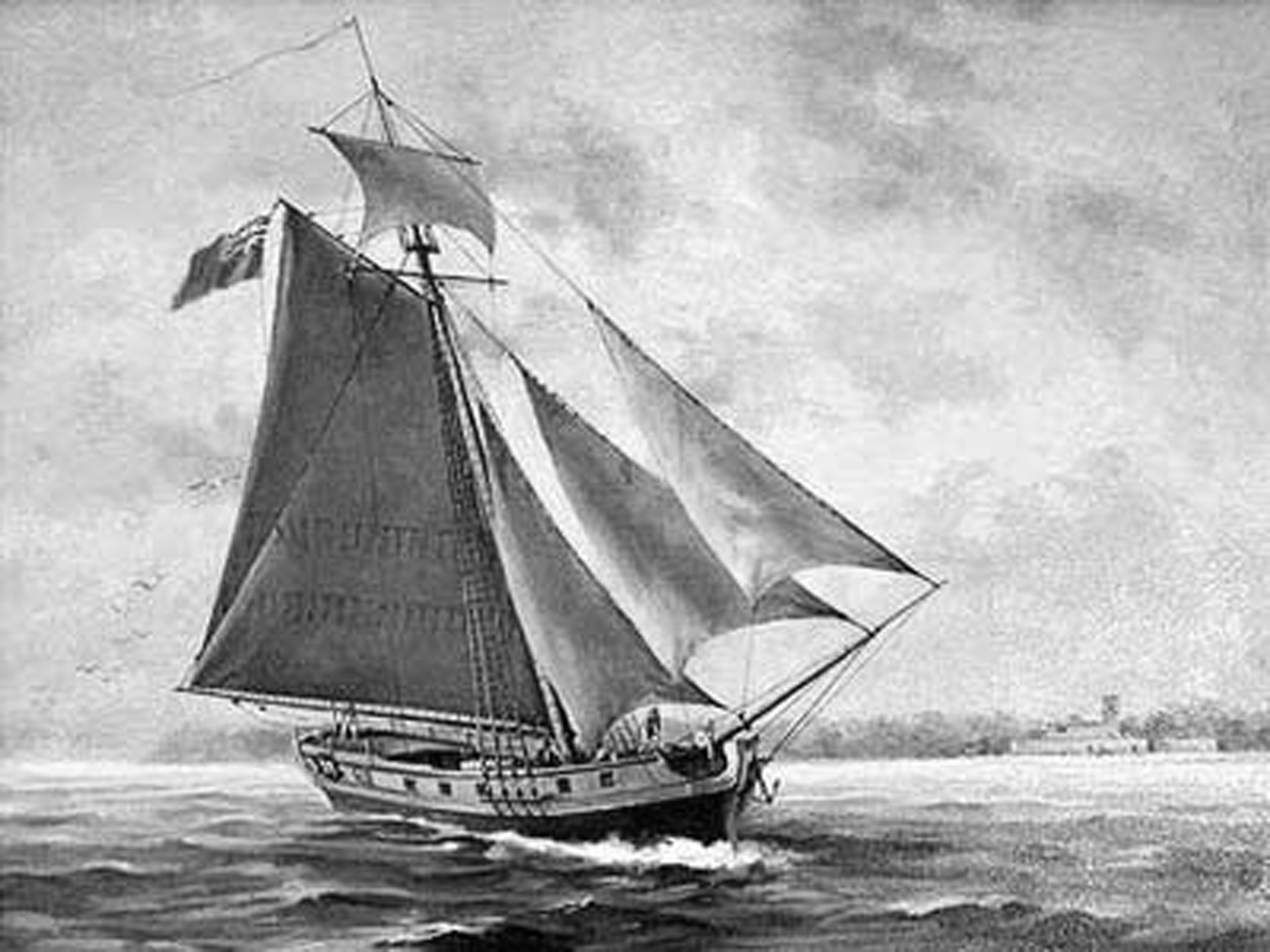
Six weeks after the colonists’ arrival, the ship Carolina, now commanded by Captain Henry Braine, sailed to Virginia for supplies. The sloop, Three Brothers, sailed to Bermuda for more settlers and supplies.

A sloop, similar to the Three Brothers

A sloop, similar to the Three Brothers

A frigate class vessel, similar to the Carolina.

A  vessel similar to the Carolina.

1744

Twenty-two year old Eliza Lucas married Charles Pinckney, a widower who was twice her age. She took her family responsibilities seriously, vowing:

 to make a good wife to my dear Husband in all its several branches; to make all my actions Correspond with that sincere love and Duty I bear him… I am resolved to be a good mother to my children, to pray for them, to set them good examples, to give them good advice, to be careful both of their souls and bodies, to watch over their tender minds.

Today In Charleston History: May 26

1697-Religion.

For the first time in Charles Town records, names of individual Jews appear on the roll register for full citizenship:

  • Simon Valentine, a merchant from New York
  • Jacob Mendis, from the Caribbean
  • Abraham Avilia, from the Caribbean
1836 – Slavery.

The Pinckney Resolutions, introduced by Henry Laurens Pinckney, passed the U.S. House of Representatives with a vote of 117 to 68. It stated that Congress had no constitutional authority to interfere with slavery in the states and imposed the Gag Rule that forbade the raising, consideration or discussion of abolition.

Henry L. Pinckney

Henry L. Pinckney

Pinckney was born in Charleston and graduated from South Carolina College (now the University of South Carolina) in 1812. He studied law and was admitted to the bar and commenced practice in Charleston. He served as a member of the South Carolina House of Representatives (1816–1832). In 1819 he founded the Charleston Mercury and was its sole editor for fifteen years. Between 1829 and 1840, he served six terms as intendant or mayor of Charleston. He died in Charleston, South Carolina, February 3, 1863, and was buried in the Circular Congregational Church.

 1864-Bombardment of Charleston.  
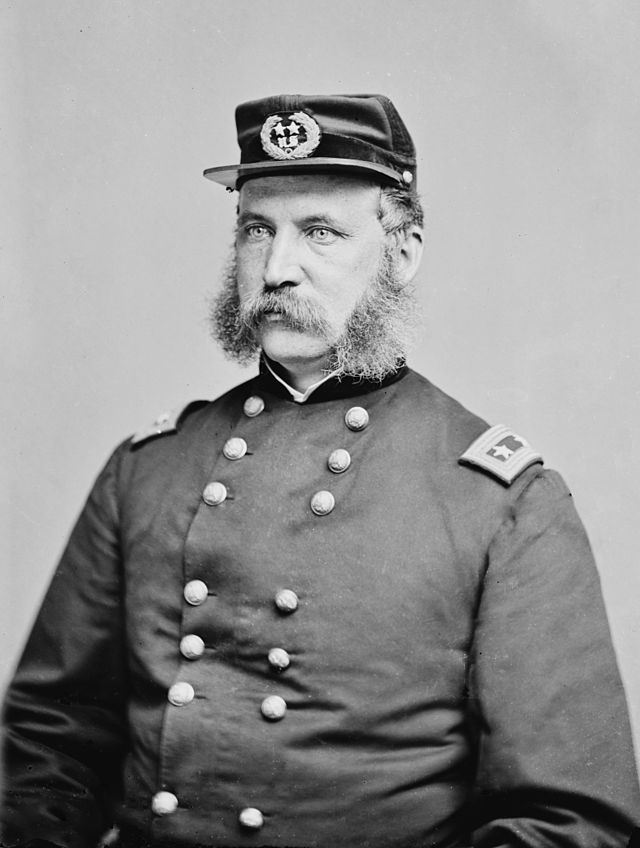
Gen. John G. Foster

Gen. John G. Foster

Gen. John G. Foster became commander of the Federal forces in Charleston. He had been an engineer during the construction of Ft. Sumter, and was second in command during the battle of Ft. Sumter, on April 12, 1861.

His first order was to increase the number of shells being thrown daily into the city.

Today In Charleston History: May 25

1780-British Occupation
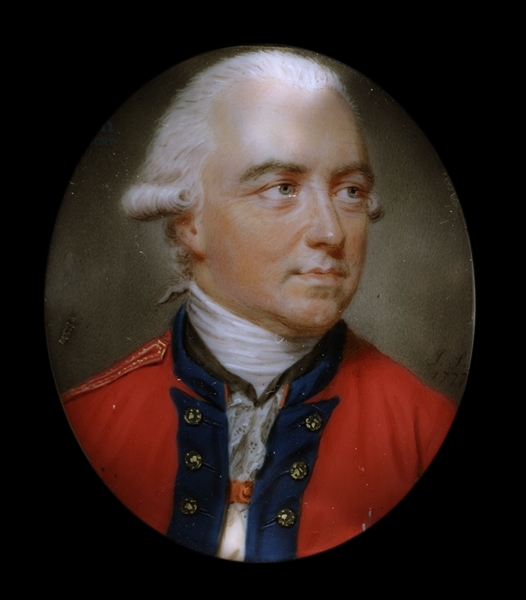
Sir Henry Clinton

Sir Henry Clinton

 Sir Henry Clinton noted that 200 citizens of Charlestown had congratulated them on their victory and that more than “1500 have already been here with their arms, desiring to join us.” He was encouraged that all men of property “have most heartily joined us with their arms.” Most organized resistance in South Carolina had been eliminated.

 1787- Constitutional Convention

The Convention opened in Philadelphia. George Washington was chosen as president of the convention. Charles Pinckney was appointed to the Committee of the Rule with Alexander Hamilton to set up the rules of the convention. 

Today In Charleston History: May 24

1734-Religion

The first Lutheran Holy Communion was held by Rev. John Martin Bolzius.

The St. John’s congregation was organized in 1742 with arrival of Dr. Henry Melchior Muhlenberg, the father of the Lutheran Church in America. He stopped for two days in Charleston on his way to visit the Salzburger colony at Ebenezer, Georgia. He returned a month later and spent three weeks waiting for a ship to Philadelphia during which time he held services, taught catechism to the children of the German residents, and held services with communion on Sundays  at various places including the Huguenot Church. Their first structure began construction in 1759  on Clifford Street (behind where the present Archdale church sits) and was dedicated in 1764.  

st. .johns

The original St. John’s Lutheran on Clifford Street, c. 1764

1780-American Revolution

Governor John Rutledge arrived in Camden, SC and learned the terms of Charlestown’s surrender. Rutledge was disappointed by Gen. Lincoln’s surrender and wrote “the Terms of Capitulation are truly mortifying.” He demanded to know why Lincoln “did not evacuate the Town, & save his Troops.” Things looked bleak for South Carolina militarily.