#Today In Charleston History: May 12

1780 – The Surrender of Charlestown.

At 2:00 pm Gen. Lincoln and Gen. Moultrie met the British commanders at the horn work and gate and surrendered the city of Charlestown. It was the British army’s greatest prize of the Revolutionary War, capturing the majority of the Southern Continental Army regulars. Sir Clinton wrote:

Whatever severe Justice might dictate, we resolved not to press to unconditional Submission a reduced army whom we hoped Clemency might yet reconcile to us.

He ordered all regular army and militia to “bring all their arms with them, guns, swords and pistols.”

Henry Laurens also complained about surrendering the troops, “Thousands of Muskets … useless in Charles Town which might have been shouldered in our defence.”

A marked man by the British, Gov. John Rutledge traveled to Philadelphia and spent the rest of the war living with other Southern refugees. He spent most of his time trying to secure help from Congress for South Carolina.

Casualties during the Charlestown siege were:

  • American: 150 dead; 138 wounded
  • British: 99 dead; 217 wounded.

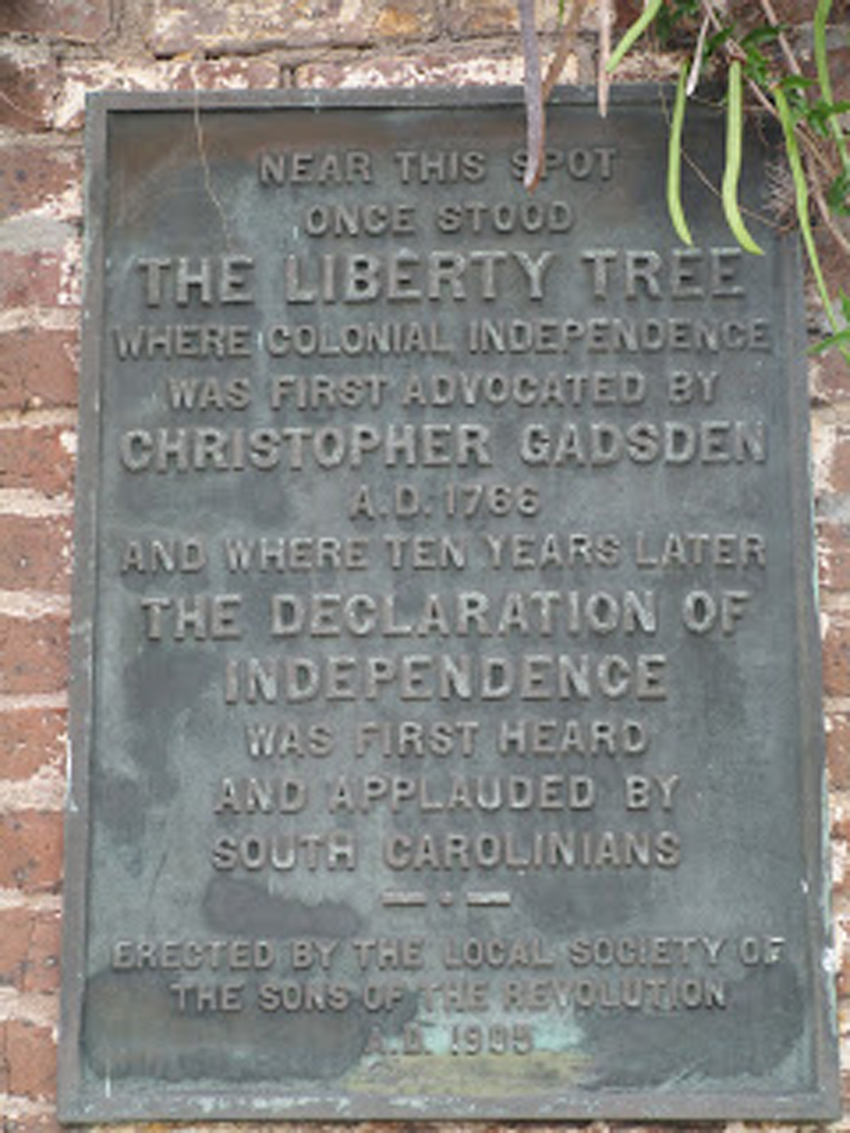
British soldiers were given the power to arrest people on any pretext’ citizens could be jailed without a pre-trial hearing. They also cut down the Liberty Tree on Mazyck’s Pasture and burned the stump. Thus began a two-and-a-half year occupation.

1781-American Revolution. 
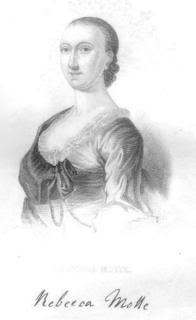
motte1Rebecca Brewton Motte’s plantation home on the Congaree River in St. Matthews Parish, was called Mt. Joseph. It had fallen in British hands, by British Lt. Donald McPherson with over 150 men who threw up earthworks and dug a deep ditch around the house. The British called it Fort Motte.

Rebecca Motte, whose Charleston home was also being occupied by occupying British officers, was distressed that both of her homes were now in British hands. The British ordered Motte to gather what belongings she wanted and move to her overseer’s house nearby – a rough structure, covered with weather-boards, and only partially finished.

Patriot leaders were determined to re-take Ft. Motte. Gen. Francis Marion thought that the best thing would to be set fire to the mansion house and burn the British out. When Rebecca was told of their plans she:

“immediately and cheerfully consented, assuring him that the loss of her property was nothing compared to the advancement of their cause.”

Imacon Color Scanner

Rebecca Motte directing Gen. Marion and Lt. Col. “Light Horse” Harry Lee to use the arrows to ignite her house.

To facilitate the effort she handed three special arrows to Lt. Col. “Light Horse” Harry Lee. The arrows had given to her by her deceased brother, Miles Brewton. These East Indian, chemically-tipped arrows, were supposed to be “ignited upon contact with any hard substance.” The arrows had been kept in the plantation house, but Rebecca had managed to take them with her as she evacuated to the cottage.

motte3

Ft. Motte as the combustible arrows ignite the house’s roof. In this painting Lt. Col. Lee consoles Mrs. Motte while Gen. Marion watches.

The combustible arrows were fired from a musket; two of them sputtered out, but the third hit its mark and set fire to the roof of the house. The British, sneaking out of the attic dormer windows in effort to the flames, were easy targets for the Patriot riflemen and were quickly driven back inside. Lt. McPherson ran up the white flag, fearing they would be blown up if the gunpowder stored in the house were set on fire. Together, British and American soldiers put out the flames, saving most of the house.

Rebecca then invited both the American and British officers to join her for dinner in the main house.

1790
State legislature met in Columbia for the first time, in a newly constructed wooden State House. Gov. Charles Pinckney presided during the writing of a new state constitution.
1828

The South Carolina Canal & Rail Road Company (SCC&RR) was chartered, and the Charleston & Hamburg Rail Road became one its projects. Elias Horry was the president of the SCC&RR.

Today In Charleston History: May 11

1780- The Seige of Charlestown

Lt. Governor Christopher Gadsden wrote to Gen. Lincoln encouraging him that

“no time should be lost in renewing the negotiation with Sir Henry Clinton on the Subject of Articles of Capitulation.”

1838
Loquat tree, Charleston

Loquat tree, Charleston

The Loquat came to Charleston. First known as the Japanese Medlar, the loquat became a garden fixture in the 1850s and early 60s when pomologist A. Pudgion sold hundreds of trees from his nursery on King Street Road. It was viewed as the Asian equivalent of the American persimmon—a yellow-orange stone fruit that was “ripe when it was rotten.” It was described as “a fine table fruit, and very desirable for jellies and preserves” and was attractive because it set fruit over winter and ripened in March, thus making it the first fruit in the year harvest cycle.

The first tree for which a record exists was one planted by Miss M. Smith on Broad Street in 1838.

Today In Charleston History: May 10

1682

Governor Joseph West signed an act for “suppressing idleness, drunkenness, and profanity.”

1740 – Slavery

In reaction to the Stono Rebellion, a new Slave Code was enacted by the Assembly. It provided the following:

  • levied a penalty of £5 upon any person who employed a slave on the Lord’s Day.
  • Selling of liquor to slaves was prohibited.
  • Slaves were to be provided sufficient clothing, food and shelter.
  • Slaves could work no more than 15 hours a day between March 25-September 25, no more than 14 hours the other half of the year.
  • Imposed a tax on newly purchased Negro slaves by height.
1775 –American Revolution – Continental Congress

The Second Continental Congress met in Philadelphia. Representing South Carolina was Edward Rutledge, Thomas Heyward, Jr., Thomas Lynch and Arthur Middleton.

1789-Births

James Louis Pettigrew was born near Abbeville, South Carolina. He later changed the spelling of his last name to “Petigru.”

1849

In celebration of his 60th birthday, James Petigru’s daughters hosted a party in his new elegant office building at 8 St Michael’s Alley. Sue and Caroline, “in their usual high spirits,” presided over an afternoon feast “of cold meats, strawberries and cream, ice cream and an abundance of champagne & punch.”  

1899 – Confederate Reunion

A story from the Associated Press, printed in the Los Angeles Herald. 

CONFEDERATE VETS BEGIN THE ANNUAL REUNION AT CHARLESTON
Charleston, S. C.,—Fully 25,000 visitors and Confederate veterans are here today attending the annual reunion of the Confederate Veterans’ Society. Every hotel and boardinghouse in the city is filled, and cots were today placed in the public buildings. The feature of the day was the parade of the veterans, succeeded by the reunion exercises at the new auditorium. Ten thousand veterans were in line when the procession moved, shortly before 3 o’clock. The divisions in each department were arranged in the order of the dates of succession, followed in the order by those which did not leave the Union, placed in the order of their joining the United Confederate Veterans… When General C. L. Walker called the first session of the reunion to order with the gavel used at Secession Assembly, in 1800, over 75OO people were in the auditorium. Thousands were turned away. Governor Ellerhee could not attend the reunion, on account of illness and the ad>dress of welcome was delivered by Lieut. Governor McSweeney. Mayor J. A. Smyth followed. His reference to South Carolina and Charleston as the cradle of the secession brought forth the rebel yell. The yell was caught up by the crowd on the outside and passed along for blocks. At 11:30 General Walker introduced General John B. Gordon, Commander-in-Chief of the United Confederate Veterans. The audiences arose and for several minutes shouted like demons. Hats were thrown in the air and the band played “Dixie.” Every sentence pf his speech was applauded. General Gordon closed his speech with these words: “I feel power by your confidence to send to every patriot in every section and State the fraternal greetings of this convention and of the whole people, and to pledge in the name of every Confederate and son or daughter of Confederates of the South’s eternal loyalty to every cause for the uplifting of manhood, the perpetuity of American freedom, the unity of the American people, that by all these agencies we may accelerate the upward march of the republic in its benign mission to humanity.” It was several minutes after he had taken his seat before quiet could be restored. When order was secured General Gordon said: “I want every comrade to stand and sing ‘Praise God from whom all blessings flow.’ ” Mrs. Stonewall Jackson was introduced by General Gordon. As Mrs. Jackson appeared, the veterans went wild with enthusiasm. “I am going to shake her hand, comrades,”‘ cried General Gordon. “I am going to hug her,” and he caught her in his arms and pressed her to his bosom. 

reunion badge

A conservative estimate places the number of visitors here at between 23,000 and 35,000. When John B. Gordon, the commander-in-chief, appeared before the convention he received a tremendous ovation. The old Confederate chieftain was presented by General Walker, and delivered an eloquent address. When he closed, General Gordon led Mrs. Stonewall Jackson to the front of the stage, and she was enthusiastically applauded. The parade of the veterans occurred this afternoon, and they marched through a dense crowd of cheering people, led by Generals Gordon and Wade Hampton, along the line of grizzled old warriors. At intervals along the line the fluttering of a war-worn and shot-torn flag called forth cheers, while many heads were bared as the frayed emblems of a dead cause gleamed over some organization whose name is a household word to the south. Hampton and Gordon were cheered vociferously at every step, and rode almost the entire route with bared heads. The absence of General Wheeler in the line was a source of considerable disappointment. He reached the city early today, but did not participate in the parade.

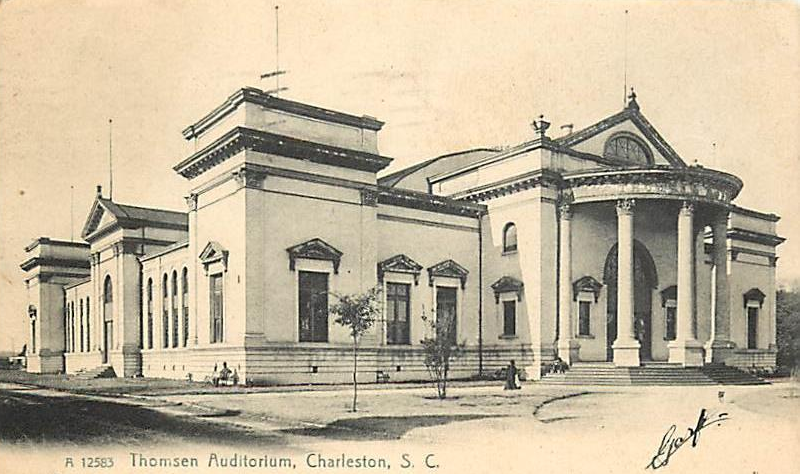
Thompson Auditorium, built for the Confederate Reunion and later became the Charleston Museum. It later burned, with only the columns remaining in Cannon Park.

Thompson Auditorium, built for the Confederate Reunion and later became the Charleston Museum. It later burned, with only the columns remaining in Cannon Park.

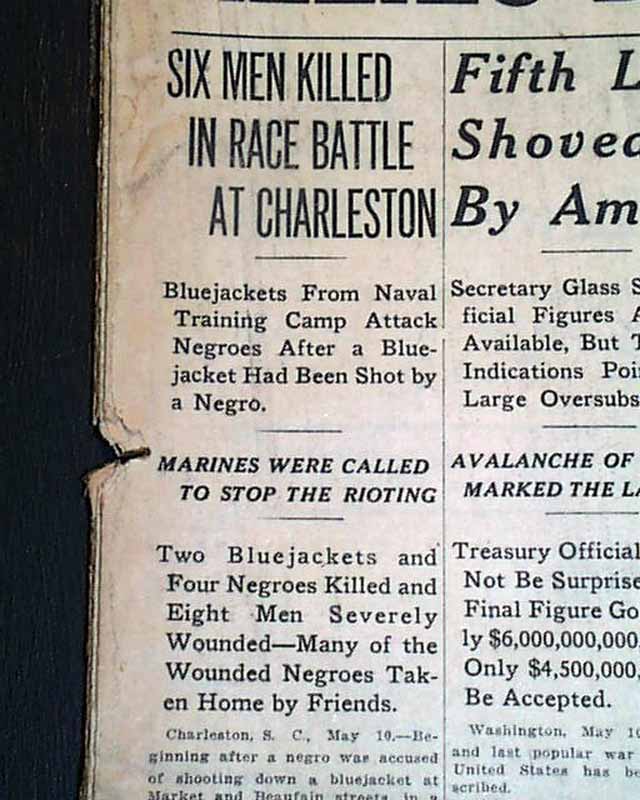
1919 – Charleston Riot – Red Summer 

In the words of the Navy investigation,

“a disturbance which assumed the nature and proportions of a race riot took place in the city of Charleston, South Carolina, on the night of May 10-11, 1919, between the hours of 7:00 p.m., and 3:00 a.m.”

race riotAt the time, Charleston’s population was 80,000, more than half of whom were black.  On one side of the conflict were black civilians, and on the other was “a mixed crowd of whites” including mostly sailors, along with civilians, and “a scattering of soldiers and marines.” The incident started when an unidentified black man allegedly pushed Roscoe Coleman, U.S. Navy, off the sidewalk. A group of sailors and civilians chased the man, who took refuge in a house on St. Philip Street. A fight then took place there, with both sides throwing bricks, bottles, and stones. The crowd dispersed when one of the black civilians “drew a revolver and fired four shots without injuring anyone.” There followed “wild rumors and stories of a sailor having been shot by a negro” and general rioting. Beginning near Harry Polices’ Poolroom at the corner of George and King streets, rioting spread to other parts of the city and continued with varying intensity until about 3:00 a.m.  

Charleston’s Mayor Hyde requested assistance in restoring order. The Charleston Navy Yard sent a detachment of soldiers and marines to help.“Bluejackets” were rounded up by the Marines and either taken back to the Navy Yard or held at the police station. All blacks were told to get off the streets.

During the riot, both sides used firearms. Sailors stole thirteen 22-calibre rifles from the shooting galleries of H.B. Morris and Fred M. Faress. Rioters robbed and vandalized W. G. Fridie’s barber shop at 305 King Street and James Freyer’s shoe shop, both black-owned businesses. Eighteen black men were seriously injured, as were five white men. Three black men, William Brown, Isaac Doctor, and James Talbot, died of gunshot wounds.

Today In Charleston History: May 9

1780-The Siege of Charlestown

Sir Henry Clinton refused Gen. Lincoln’s terms of surrender for Charlestown and ordered hostilities to commence at 8:00 pm. Lt. Colonel Grimke wrote it was “a most furious cannonade & bombardment which continued throughout the night.” Overnight the British launched 814 shots into the city, and the Americans responded with 380. Gen. William Moultrie called it “a dreadful night.”

1791 – George Washington in Charleston
Pierce Butler

Pierce Butler

 Early in the morning Washington left for Savannah in the company of Gov. Charles Pinckney, Gen. Charles Cotesworth Pinckney and Sen. Pierce Butler. They escorted Washington to his cousin’s (Col. William Washington) plantation Sandy Hill for the evening meal and lodgings. Butler remained with President Washington for the entire journey to Savannah, where Butler owned several plantations on St. Simon’s Island. 

Today In Charleston History: May 8

1734 – Culture – Poetry

In a letter in the Gazette, a writer commented on an affair between an elderly gentleman and a young lady with a poem:

In this our Town I’ve heard some Youngsters say

That cold December does make Love to May

This may be true, that warm’d by youthful charms

He thinks of Spring, when melting in her arms

As trees, when crown’d with blossoms white as snow

May feel the heat, and yet no life below

1780-The Siege of Charlestown.

After several weeks under siege, living conditions in Charlestown were becoming grim. Colonel Grimke recorded, “no more Meat served out.” Gen. Lincoln convened the war council within the Horn Work to discuss Sir Clinton’s new summons of surrender. A 24-hour cease fire was ordered for the Americans to consider the offer.

Gen. Moultrie welcomed the cease fire. He wrote that fatigue “was so great, for want of sleep, that many faces were so swelled they could scarcely see out of their eyes.” Many of the militia:

Looked upon all the business as settled, and without orders, took up their baggage and walked into town, leaving the lines quite defenceless.

Sixty-one officers composed the war council that met with Gen. Lincoln. A vote of 49-12 favored offering surrender terms to the British. The twelve dissenters included Col. Charles Cotesworth Pinckney and Lt. Col. John Laurens, natives of the city. Lincoln ordered the officers to draw up articles for surrender, which was sent to Sir Clinton that night.

1781-American Revolution. 
Francis Marion

Francis Marion

General Nathanael Greene returned to South Carolina with his Continental Army, and reinforced General Francis Marion’s brigade with Lt. Col. Henry “Light Horse” Harry Lee and his Legion. The task of this combined force was to capture and destroy the line of British forts that protected communications and supplies between Charlestown and the interior of South Carolina. Fort Motte was one of those.

Fearing that British reinforcements were on the way, Marion and Lee decided to attack at once. Ft. Motte was put under siege. Rebecca and her family were ordered to the nearby overseer’s cottage for safety.

GEORGE WASHINGTON VISIT: DAY 8 

May 8, 1791
Gen. William Moultrie

Gen. William Moultrie

 President Washington spent the Sunday in Charleston attending crowded churches” in the morning (St. Michael’s) and evening (St. Philip’s).

His evening meal was with Gen. William Moultrie.

1815-Deaths.

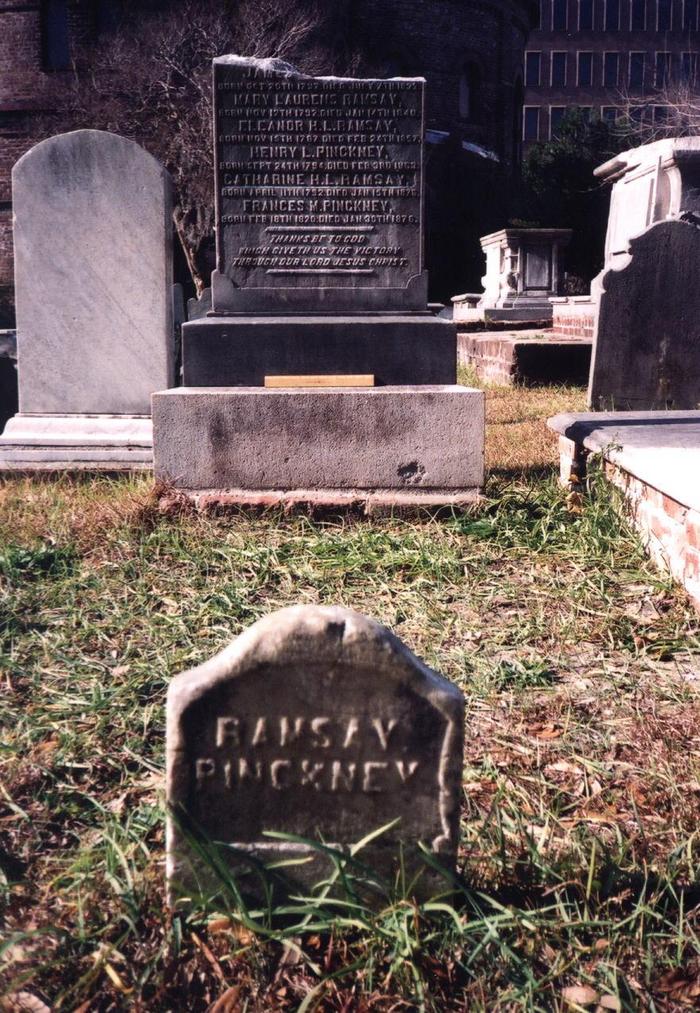
Dr. David Ramsay died at 7 a.m. from his wounds at the hand of William Linnen. He was buried at the Circular Congregational Church next to his wife, Martha.

Ramsay grave, Circular Church graveyard

Ramsay grave, Circular Church graveyard

Today In Charleston History: May 7

1725 – Gov. Nicholson leaves.
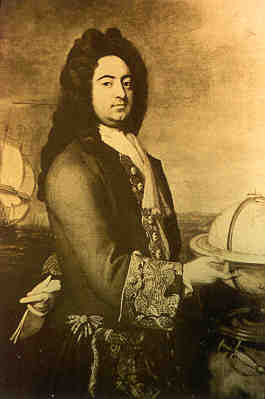
Sir Francis Nicholson

Sir Francis Nicholson

Gov. Nicholson returned to London, carrying with him Cherokee baskets that became part of the earliest collections in the British Museum. Arthur Middleton, as president of the Council, assumed the administration of South Carolina.

 1780-The Siege of Charlestown.

Ft. Moultrie fell to the British. This was militarily significant, but for most citizens it was also psychologically devastating. Moultrie had successfully repulsed the British on June 28, 1776. but it was now under the enemy’s control, the British flag flying from its ramparts. The reality that the British were winning the siege of Charlestown was driven home. 

1781-British Occupation

Gen. Clinton issued a proclamation encouraging “Rebels or those serving in Rebel army or militia” to enlist in the British army. For a three-year enlistment, the British promised the “regiment of his choice, six guineas (a gold coin worth £1 sterling) and a grant of land.”

GEORGE WASHINGTON VISIT: DAY 7

Saturday, May 7, 1791

        Before breakfast, Washington visited the Orphan House at which there were 107 boys and girls, and he was impressed with the management of the house.After touring the house and gardens, the President had breakfast with the children. 

(Note: The Orphan House was being operated out of a building off Market Street at this time. The famous Orphan House building on Calhoun street opened in 1794.)

        Washington wrote in his diary:

I also viewed the City from the balcony (the portico above the clock) of [St. Michael’s] Church from whence the whole is seen in one view and to advantage, the Gardens & green trees which are interspersed adding much to the beauty of the prospect. Charleston stands on a Pininsula [sic] between the Ashley & Cooper Rivers and contains about 1600 dwelling houses and nearly 16.000 Souls of which about 8000 are white—It lies low with unpaved streets (except the footways) of sand. —There are a number of very good houses of Brick & wood but most of the latter—The Inhabitants are wealthy, —Gay—& hospitable; appear happy and satisfied w’ith the Genl. Government.

st. michael's - postcard

St. Michael’s Church, built in 1762. 

Today In Charleston History: May 6

1766-Stamp Act. American Revolution – Foundations.

News reached Charlestown that Parliament had repealed the Stamp Act. The city celebrated by ringing church bells and burning bonfires. Lt. Gov. Bull hosted “a very elegant entertainment” at Dillon’s Tavern for the Council and Assembly.

The Assembly voted £1000 sterling for a marble statue of William Pitt in gratitude of his exertions for the repeal of the Stamp Act. They also voted to appropriate funds for portraits of Gadsden, John Rutledge and Thomas Lynch to be displayed in the Assembly room in recognition of their service during the Stamp Act Congress.

Liberty Tree marker on Alexander Street

Liberty Tree marker on Alexander Street

They also learned that Parliament passed the Declaratory Act which stated that Parliament’s authority was the same in America as in Britain – their laws were as binding on the American colonies as in England. That night, Christopher Gadsden gave a speech under the great oak tree in Mr. Mazyck’s cow pasture. He:

harangued them at considerable length on the folly of relaxing their opposition and vigilance, or of indulging in the fallacious hope that Great Britain would relinquish their designs and pretensions.

Gadsden cautioned not to rejoice in the repeal of the Stamp Act, because the Declaratory Act was a threat to the liberty of all Americans. From that night onward, the oak was called the Liberty Tree. At the end of the meeting the men gathered hands around the tree and swore resistance to future tyranny. 

1780-The Seige of Charlestown

Knowing of the extreme conditions within the city, Sir Clinton was frustrated by the American resistance. He wrote, “I begin to think these people will be Blockheads enough to wait the assault.”

GEORGE WASHINGTON VISIT: DAY 6

May 6, 1791

Washington toured the town on horseback for most of the day, riding up and down most of the principal streets. Sometime during the day Washington stopped to observe the work on rebuilding of the State House and talk with the supervising architect, James Hoban.

Charleston  courthouse- Old  _large

Charleston County Courthouse, formerly the State House.

Washington had recently been given the duty by Congress to build “the President’s House” (later called the White House) in D.C. Hoban was given the job by Washington to design and supervise the construction of the White House. 

The evening meal was at Sen. Pierce Butler’s home and then a party at Gov. Pinckney’s home.

1802
the alstons

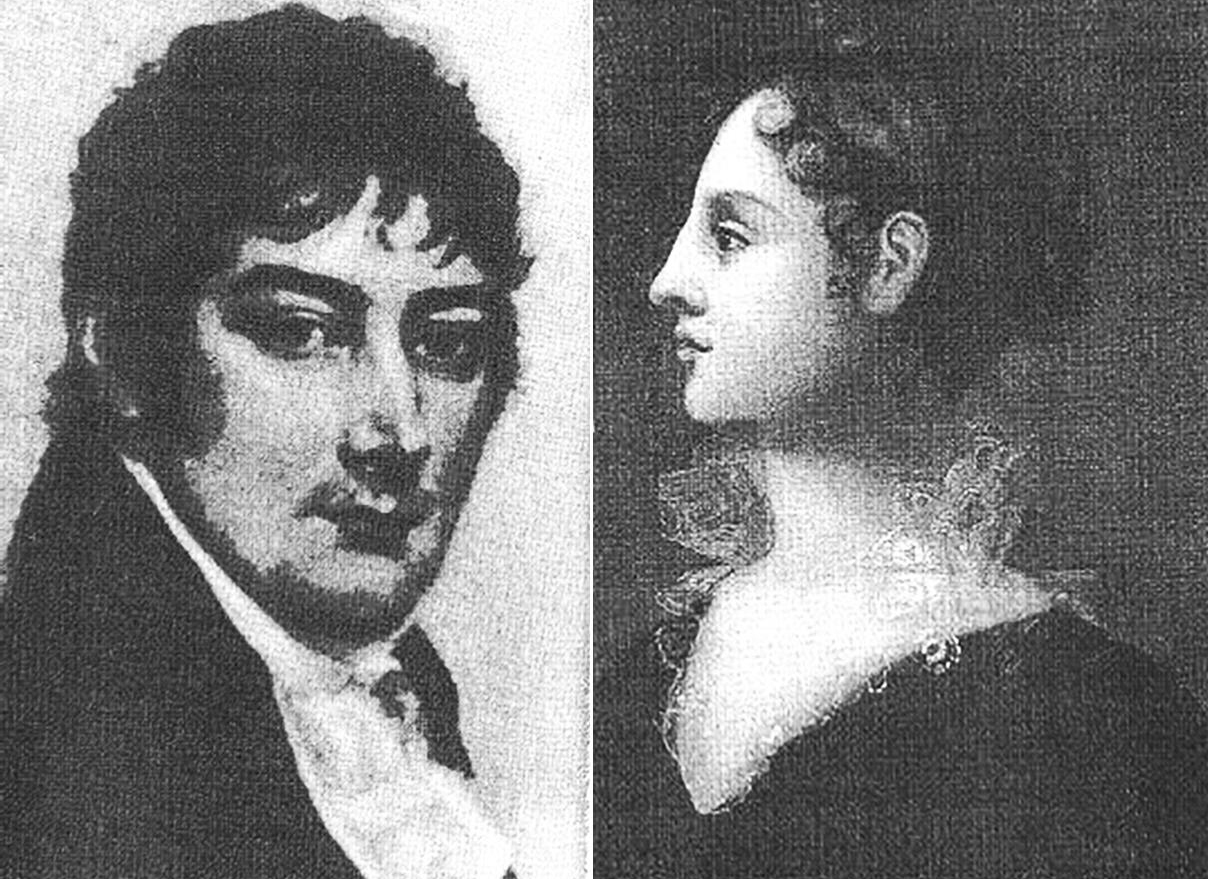
Joseph Alston and Theodsia Burr Alston

Vice-president Aaron Burr arrived in Charleston for the birth of his grandson. His daughter, Theodosia, was married to Joseph Alston. His carriage was floated across the Cooper River from Mt. Pleasant to Charleston. The Charleston Times wrote,

“The Vice-President of the United States is expected in town, this evening. The Federalist Artillery Company have orders to salute him on his landing.”

1815

On a Saturday afternoon, David Ramsay strolled down Broad Street, on his way home. He passed William Linnen who was standing behind the columns of St. Michael’s Church. Linnen stepped out and “took a large horseman’s pistol … and shot the doctor in the back.”

According to one source:

Having been carried home, and being surrounded by a crowd of anxious citizens, after first calling their attention to what he was about to utter, he said ‘I know not if these wounds be mortal; I am not afraid to die; but should that be my fate, I call on all here present to bear witness, that I consider the unfortunate perpetrator of this deed a lunatic, and free from guilt.’

Dr. David Ramsay

Dr. David Ramsay

One month previously, Dr. David Ramsay had been appointed by the court to examine William Linnen, a tailor known for serial litigation and nuisance suits against lawyers, judges and juries.  After Linnen had attempted to murder his attorney Ramsay examined Linnen and reported to the court that he was “deranged and that it would be dangerous to let him go at large.” After apparently regaining his sanity, Linnen was released. Though he had threatened Ramsay, the doctor did not take the threat seriously.

Today In Charleston History: May 5

1687-Religion.

A lot was conveyed by Ralph and Mary Izard to James Nichols “for the use of the community of the French church in Charles Town.” The lot was located at the corner of Dock and Church Streets and is currently the site of the 1845 Gothic French Huguenot Church.

French Huguenot Church postcard

French Huguenot Church postcard

 1780-The Seige of Charlestown.

Col. Banastre Tarleton defeated a large American cavalry, capturing sixty-seven officers and more than 100 horses.

GEORGE WASHINGTON VISIT: DAY 5
May 5, 1791

Washington visited Fort Johnson (James Island) and Fort Moultrie (Sullivan’s Island). For the evening Washington was once again entertained at the Exchange at a dinner hosted by Gov. Pinckney and other principal gentlemen of the city.

The dinner must have been as spectacular as the previous evening for Washington wrote in his diary “there were at least 400 ladies – the Number & appearance of which exceeded anything of the kind I had ever seen.”

charles-pinckney

Charles Pinckney

Today In Charleston History: May 4

1670-Arrivals.

The Three Brothers arrived. The sloop left Virginia after repairs, overshot the Port Royal site and sailed into the Spanish settlement of Guale, (near present day St. Catherine’s Island, Georgia). They were attacked, losing twelve passengers. The sloop turned north and was met by a group of friendly Kiawah Indians who informed them of the English settlement at Albemarle Point. So the expedition was now reunited.

The 1620 voyage of the Mayflower voyage was a mere two months. During the nine month voyage of the Carolina expedition five ships had been used, dozens of lives lost and only one of the original vessels that sailed out of the Thames River at Gravesend had survived.  

The Carolina colonists were extremely wary of the Spanish presence at St. Augustine, 200 miles south. They immediately began the construction of entrenchments and instituted a twenty-four hour watch. Such was to become the reality of the Carolina colony for the next fifty years.

The extreme heat was another constant enemy. Captain Joseph West wrote about “pestiferous gnats called Moschetoes” and complained about the low moral standard of most of the settlers.

1704- Religion.

A bill, called the Exclusion Act, to exclude from future Assemblies all but persons communing in the Church of England was passed by the Assembly by a vote of 12-11. The 12 “yes” votes came from Anglicans.

The Assembly passed legislation that prevented “Mens cohabitating with women with whom they ware not married.”

GEORGE WASHINGTON’S VISIT: DAY 4

 Wednesday, May, 1791

Before breakfast Washington visited and examined the lines of Attack and Defense of the city and proclaimed them adequate.

For the noon meal Washington dined with the Members of Cincinnati in the long room of McCrady’s Tavern on East Bay Street. A choir of singers entertained the diners throughout the meal.

  In the evening Washington attended “an elegant dancing Assembly at the Exchange – At which were 256 elegantly dressed & handsome ladies.” According to newspaper reports the ladies were “all superbly dressed and most of them wore ribbons with different inscriptions … such as “long live the President.”

Exchange1823_650x650

Exchange Building, Charleston

Today In Charleston History: May 3

1672- Fortifications.

A fort was completed at Albemarle Point. Even though plans were well underway to moving the colony to Oyster Point, security against the Spanish was still a major consideration.

Charles Town, 1671

Charles Town, 1671

1690- Politics. Religion. Slavery

Using his power as Proprietor, Seth Sothell called a Charles Town Parliament which voted to banish Governor Colleton. Citing the Fundamental Constitutions which stated “it is provided that the eldest proprietor that shall be in Carolina shall be governor,” Sothell then claimed the office of governor.

Sothell’s banishment of Colleton tempered his governing style. His administration in Charles Town was marked by substantial positive events.

  • Established just treatment of disliked foreigners (Huguenots).
  • Forbade supplying Indians with liquor and firearms.
  • Required licenses for all liquor retailers.
  • Provided for an organized militia and town watch.
  • Provided a store of gunpowder.
  • Granted a patent for a rice-husking machine.
  • Enacted a slave code, heavily based on the Barbadian. It included a provision for punishment of anyone who killed a slave.
1718-Bloodless Revolution

 Francis Yonge arrived in London to meet with the Proprietors. Yonge, a member of the Assembly, was sent to press the Colony’s case of grievances in person before the Lordships. He delivered a packet of letters written by Governor Johnson, Nicholas Trott and William Rhett. And then, Yonge waited for three months for a reply.

1780-The Seige of Charlestown.

Edward Rutledge

Edward Rutledge

Edward Rutledge, brother of Gov. Rutledge and signer of the Declaration of Independence, was captured by British cavalry with two other officers east of the Cooper. He was attempting to sneak out of the city with letters and communications to his brother and other officials.

GEORGE WASHINGTON’S VISIT: DAY 3

Tuesday, May 3, 1791

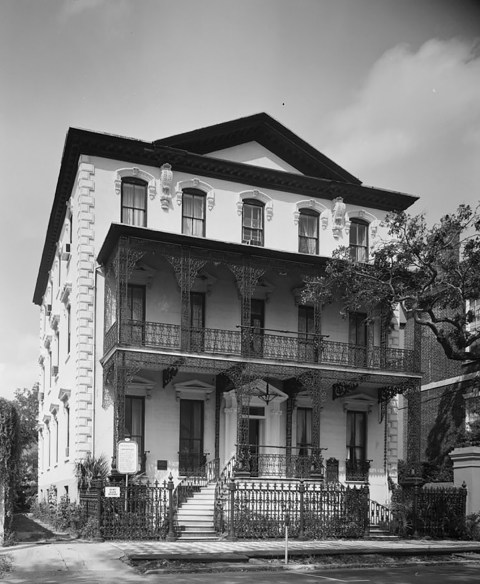
The president had breakfast with Elizabeth Grimke Rutledge at her home on Broad Street (John Rutledge House). Mr. Rutledge (Chief Justice of the S.C. Supreme Court) was on the Circuits and not in the city.

116 broad street - john rutledge house

John Rutledge House, 116 Broad Street. Library of Congress.

Later in the day, at his lodgings, he

was visited about 2 oclcock, by a great number of the most respectable ladies of Charleston – the first honor of the kind I had ever experienced and it was flattering as it was singular.

1898

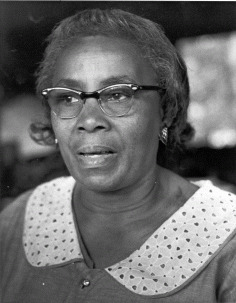
Septima Poinsette Clark was born in Charleston, the second of eight children. Her father, once a slave, encouraged her to get an education. Clark attended public school, then worked to earn the money needed to attend the Avery Normal Institute, a private Charleston school for African Americans.

Septima_Poinsette_ClarkShe qualified as a teacher in 1916, but since Charleston did not hire black teachers, Clark was forced to take a position at a school on John’s Island. Three years later, she was teaching at the Avery Institute and joined the NAACP in an attempt to convince Charleston to hire black teachers.   Later, she moved to Columbia, and through the NAACP chapter there worked with Thurgood Marshall in a 1945 case that sought equal pay for black and white teachers. She described it as her “first effort in a social action challenging the status quo.”

Septima Clark’s work was commonly under-appreciated by Southern male activists. She became known as the “Queen mother” or “Grandmother” of the Civil Rights Movement in the United States. Martin Luther King, Jr. commonly referred to Clark as “The Mother of the Movement”. Clark’s argument for her position in the Civil Rights Movement was one that claimed “knowledge could empower marginalized groups in ways that formal legal equality couldn’t.”

To read more about her remarkable life and career as a Civil Rights pioneer, go to her page on the King Institute @ Stanford University.