Today In Charleston History: May 22

 
1718 – Blackbeard Blockades Charles Town 

Blackbeard and Stede Bonnet’s six ship fleet blockaded the Charles Town bar and quickly pillaged nine vessels, including the Crowley, which was headed for London with several prominent citizens hostage, including Samuel Wragg, a member of the Governor’s Council and his four-year old son, William. With these hostages at his mercy, Blackbeard effectively held the city of Charles Town in his control for several days.
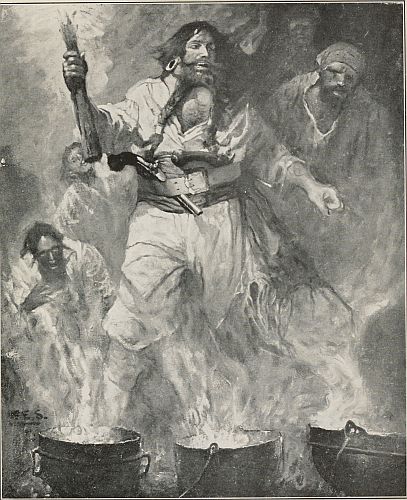
blackbeard-brimstoneBlackbeard directed his ship’s surgeon to compile a list of needed medicines for the fleet. He sent an armed boat commanded by a Mr. Richards into the city, along with a Mr. Marks, one of the captured citizens. Blackbeard demanded that within two days, Marks would convince Governor Johnson to meet the demand or the citizens would be hanged one by one from the bowsprit of the Crowley.

The deadline passed and Blackbeard sailed eight of his ships into the harbor, creating a panic among the citizens. Finally, in exchange for rations, money and medical supplies gathered from among the leading merchants, Governor Johnson was able to buy the release of the hostages. Blackbeard sailed unmolested out of the harbor with more than £1500 of gold and silver and made a beeline to his hideout on Ocracoke Island for Teach’s Hole.

Stede Bonnet and David Herriot sailed to North Carolina and received a pardon from Governor Charles Eden. Bonnet then renamed the Revenge the Royal James and called himself Captain Thomas. They sailed to Delaware and plundered several vessels.

1770 – Death

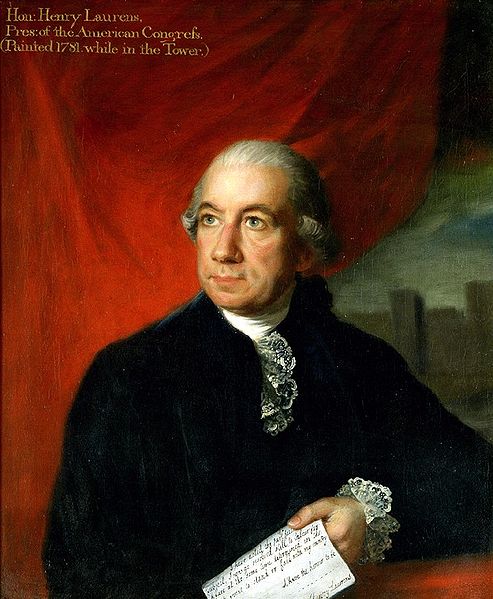
Henry Laurens’ wife, Eleanor, died in childbirth. Laurens fought a losing battle over his sorrow for several years. He wrote:

If I go here or there I find something or other to refresh my Sorrow and feel that some thing which constituted my Happiness is gone from me … I look round upon my Children, I lament for their Loss. I weep for my own.

 He never married again.

1777 – State Seal

The state seal was used for the first time by President John Rutledge. The seal was made up of two elliptical areas, linked by branches of the palmetto tree. The image on the left was a tall palmetto tree and an oak tree, fallen and broken, which represents the battle fought on June 28, 1776, between defenders of the unfinished fort on Sullivan’s Island, and the British Fleet. The standing palmetto represents the victorious defenders, and the fallen oak is the British Fleet. Banded together on the palmetto with the motto “Quis separabit?” (Who Will Separate [Us]?), are 12 spears that represent the first 12 states of the Union. At the bottom is the phrase “Animis Opibusque Parati,” or “Prepared in Mind and Resources.”
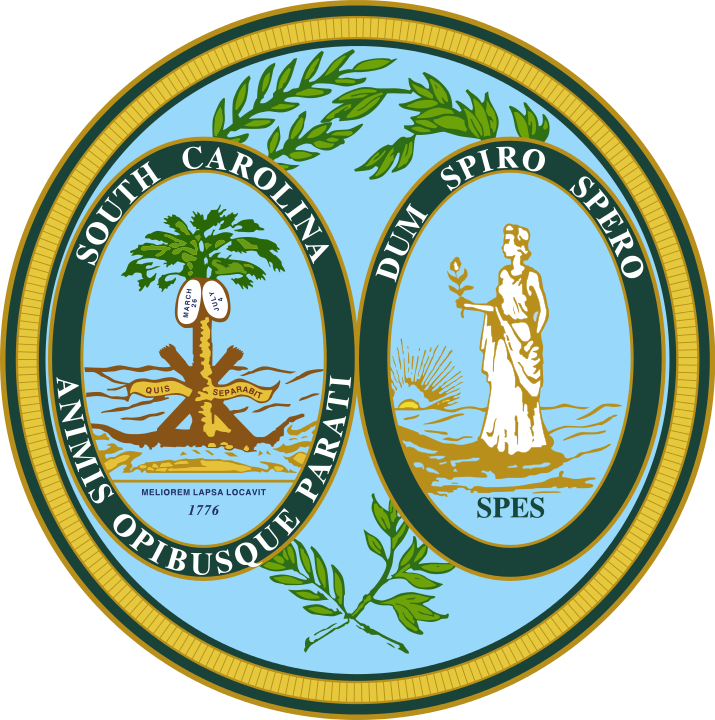
Seal of South Carolina

Seal of South Carolina

The other image on the seal depicts a woman walking along a shore littered with weapons. The woman, symbolizing Hope, grasps a branch of laurel as the sun rises behind her. Below her image is the word “Spes,” (Hope) and over the image is the motto “Dum Spiro Spero,” (While I Breathe I Hope.)

1802 – Birth

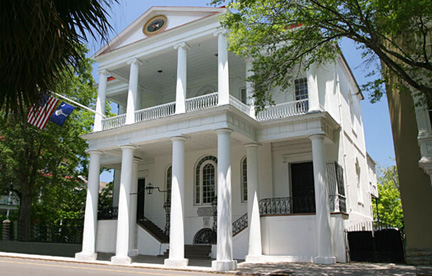
Theodosia Burr Alston gave birth to a son, Aaron Burr Alston at the Miles Brewton House at 27 King Street, the home of her father-in-law. It was a difficult birth and Theodosia suffered a prolapsed uterus, which rendered her incapable of having further children, and made marital relations with her husband impossible.  For the rest of her life she would endure spasms of intense pain.

1822-Denmark Vesey Rebellion

A slave named Peter, sitting on the Charleston wharves, noticed a ship named Sally recently arrived from St. Domingue. The ship was flying a flag with the number “96.” Puzzled, he asked another black man, William Paul, about the flag. Paul, who worked in a grocery store owned by John Paul, told him it was a reference to the 1796 Haitian slave insurrection. Paul then began to talk about the horrific conditions of the slaves in South Carolina. Peter became frightened and fled from Paul.

Peter reported the conversation with Paul to a friend, a prosperous free black man named William Penceel and member of the Brown Fellowship Society. Penceel advised Peter to tell his master. Peter’s master, John Prioleau, lived at 50 Meeting Street. Prioleau was a factor and was out of town inspecting plantations  so Peter told Prioleau’s wife and young son about the conversation with Paul. They did nothing.

1856- Road to Secession
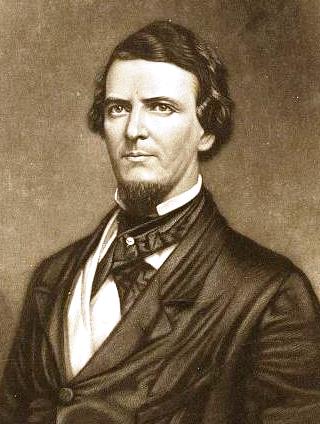
Preston Brooks

Preston Brooks

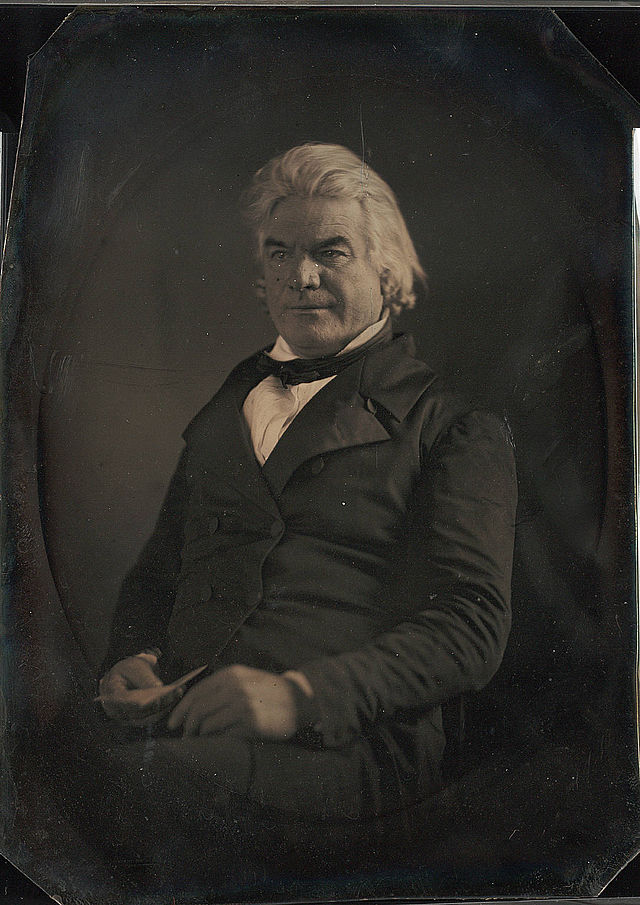
Congressman Preston Brooks (D-SC) beat the hell out of Charles Sumner on the floor of the U.S. Senate in retaliation of Sumner’s verbal attack on Brooks’ uncle, Sen. Andrew Butler. See May 19th entry.

Brooks, Butler’s nephew and Democratic representative from South Carolina, discussed challenging Sumner to a duel. He was told by fellow SC Congressman, Lawrence Keitt, that “dueling is for gentlemen of equal statue. Sumner is lower than a drunkard. Dueling with him would only be an insult to yourself.”
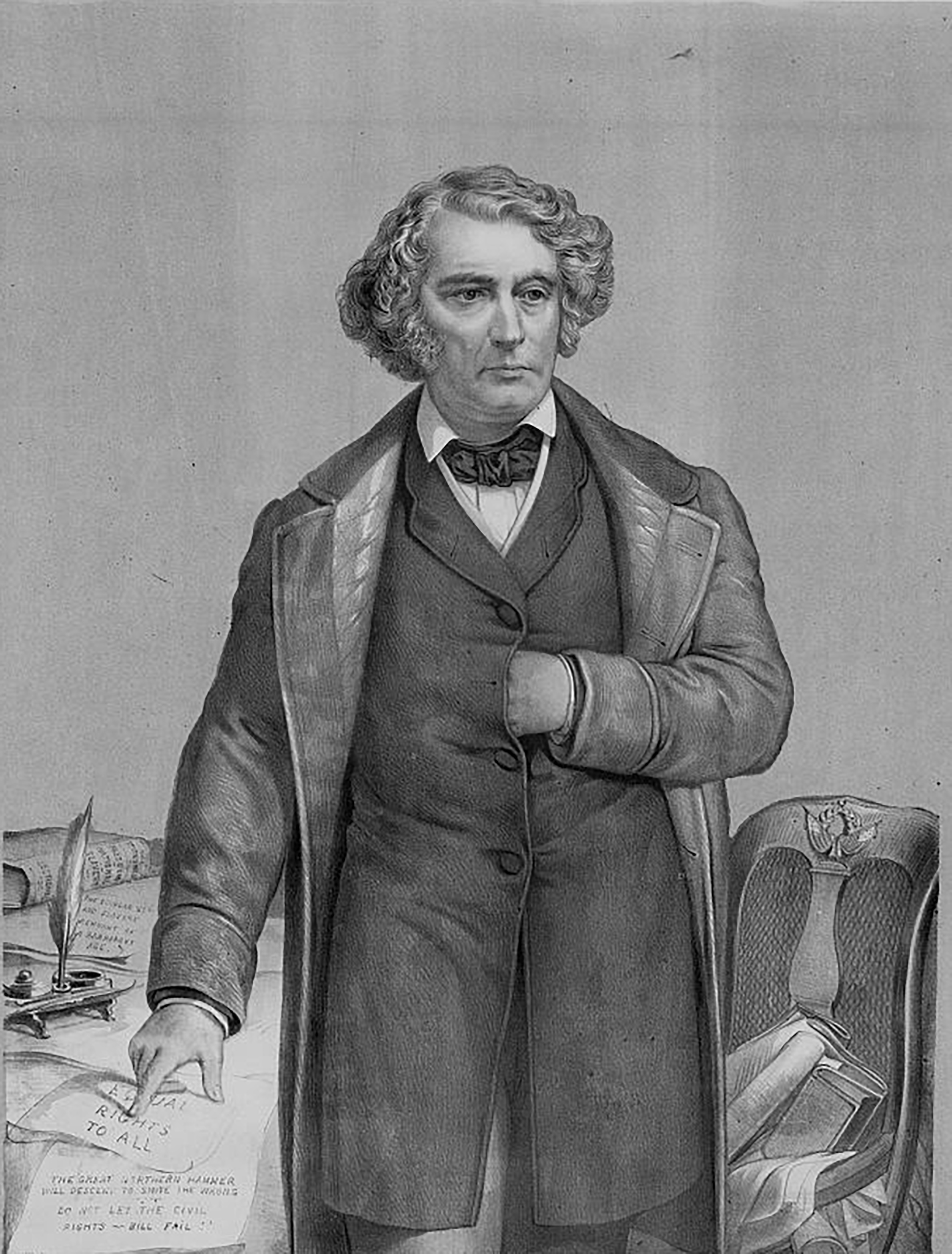
Sen. Charles Sumner

Sen. Charles Sumner

Two days later Brooks strode into the Senate chamber approached Sumner sitting at his desk. As Lawrence Keitt held other senators at bay, Brook said: “Mr. Sumner, I have read your speech twice over carefully. It is a libel on South Carolina, and Mr. Butler, who is a relative of mine.” He then struck him repeatedly with a cane until it broke into five pieces before several men rushed past Keitt and overpowered Brooks. 

Brooks became an instant hero in the South, and the fragments of his weapon were “begged as sacred relics.” A new cane, presented to Brooks by the city of Charleston, bore the inscription “Hit him again.”
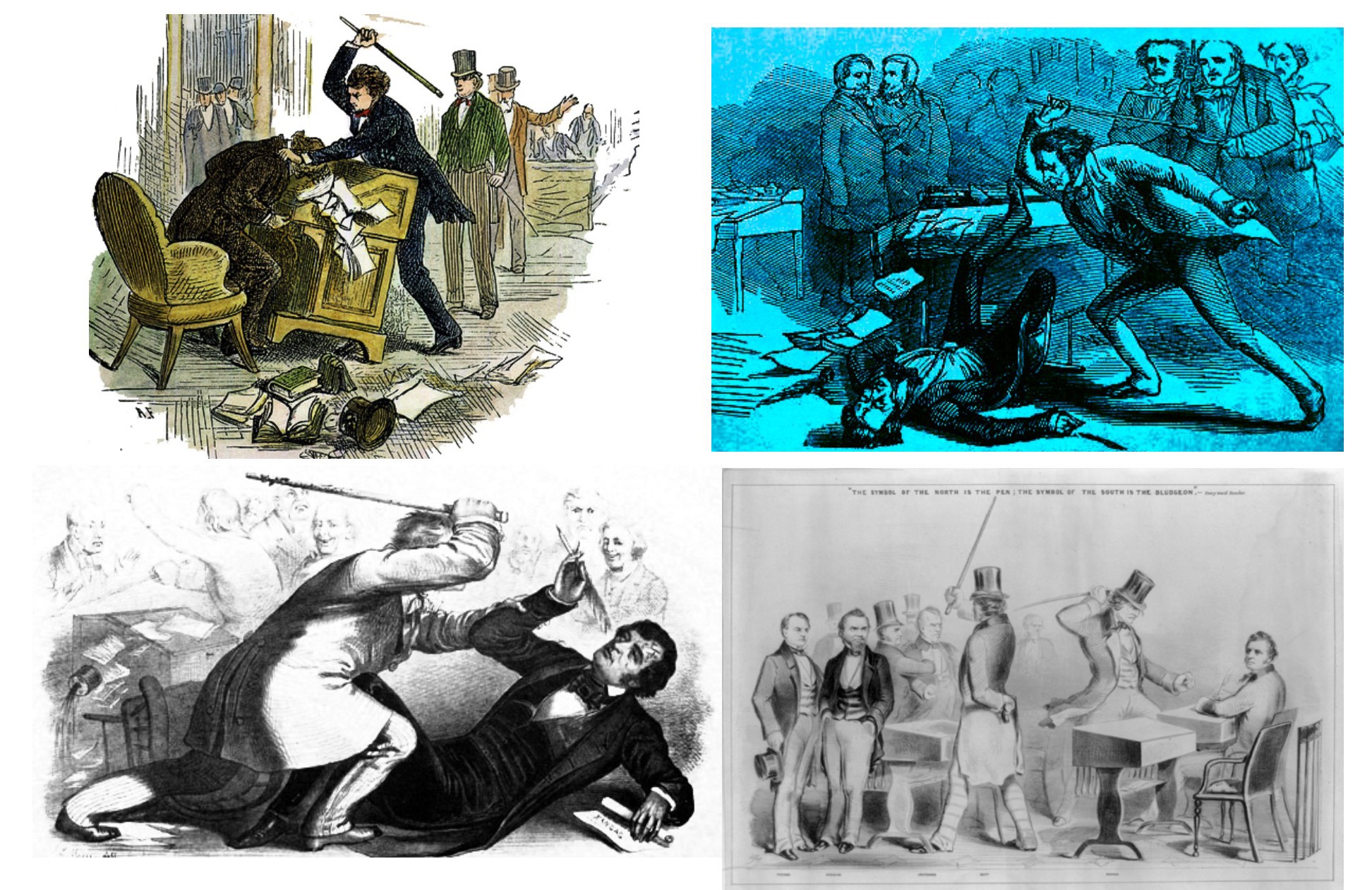
Various editorial illustrations of the Preston Brooks’ attack on Sen. Charles Sumner

Today In Charleston History: May 21

1672-Fortifications

A fort was completed at Albemarle Point. Even though plans were well underway to moving the colony to Oyster Point, security against the Spanish was still a major consideration.

1721-Bloodless Revolution  

Sir Nathaniel Johnson

Sir Nathaniel Johnson

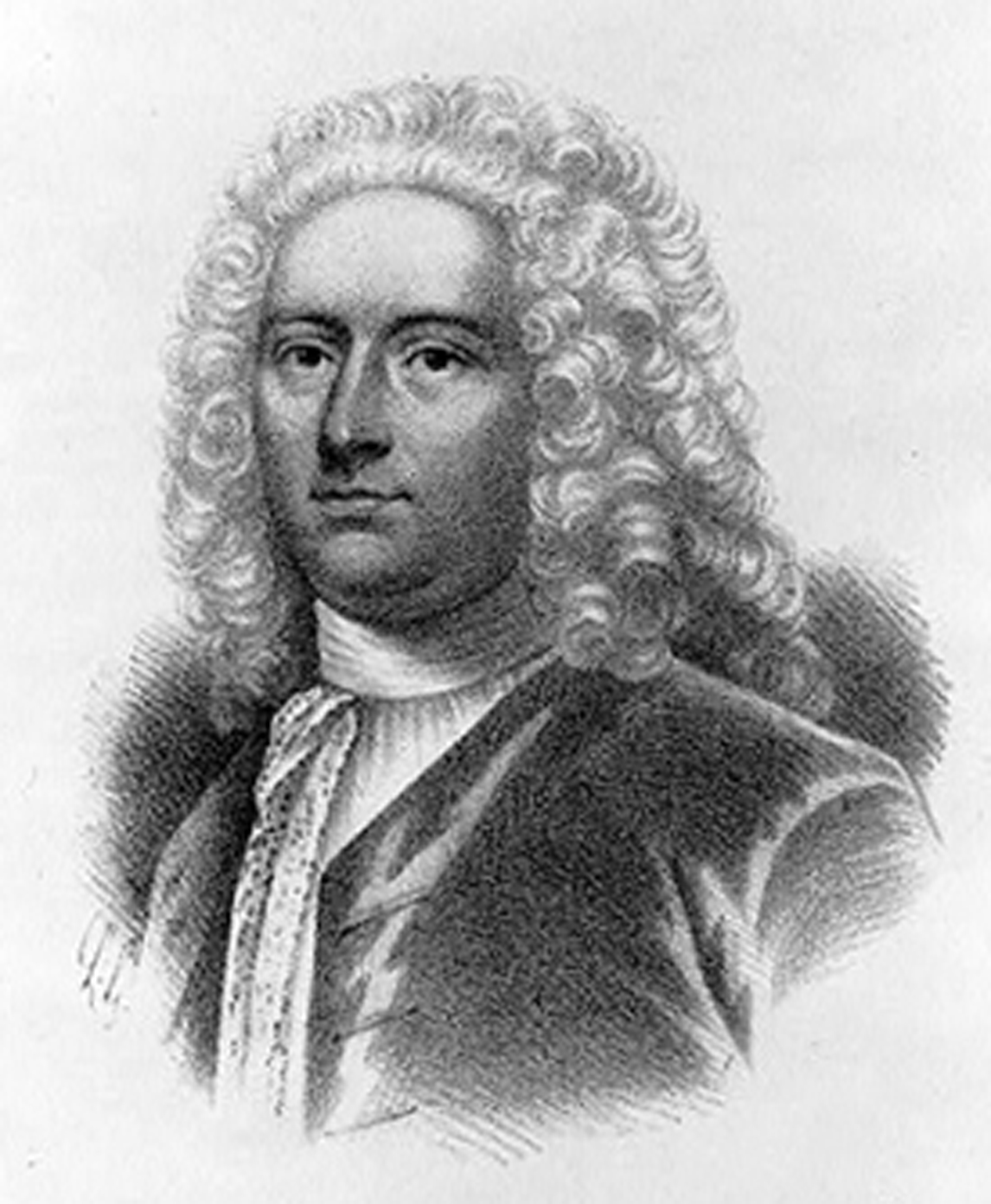
Former Governor Nathaniel Johnson, with the assistance of Colonel Rhett and Nicholas Trott, assembled members of his former Proprietary council and a group of about 120 armed men, including the Captain Hildesly and the crew of the H.M.S. Flamborough. They marched into Charlestown and demanded the Revolutionary Assembly surrender.

Governor James Moore II announced that he was prepared to defend the colony “in the king’s name” and fired three cannon into Johnson’s forces. Moore then presented official British government documents that recognized Moore and the Commons House of Assembly.

In the new administration, Rhett was allowed to keep his positions:

  • Comptroller of the King’s Customs
  • the Proprietor’s Receiver General
  • Overseer of the Repairs and Fortifications of Charles Town.
 1771-American Revolution – Foundations

At a meeting under the Liberty Tree, a group of citizens decided that no tea should be imported while the tax on it remained.

Today In Charleston History: May 20

1758

Charles and Eliza Pinckney returned to Charlestown from London, with their ten-year old daughter Harriot. Their sons, Charles Cotesworth and Thomas, remained in England to attend school. Charles contracted malaria soon after their arrival.

1767   

Henry Laurens

Henry Laurens

Henry Laurens sent his schooner, Wambaw, loaded with provisions, to his Georgia plantation without clearing Charlestown customs. The Wambaw offloaded her cargo and took on 50,000 cypress shingles as ballast and sailed back to Charlestown. Customs Collector Moore refused to allow the ship legal clearance of the harbor and seized the vessel.

1780-British Occupation. 

Most of the American militia were given parole and allowed to return to their homes. Many of the important men, stripped of their property, had little recourse than to pledge loyalty to the Crown.

John Wells of the South Carolina and American General Gazette quickly swore allegiance to the King to save his property. He was allowed to resume publication in July.

Peter Timothy’s paper, the South Carolina Gazette, was seized by the British and given to the Tory Robert Wells.

miles brewton house

Miles Brewton House, 27 King Street

The Miles Brewton home at 27 King Street was made headquarters for Gen. Henry Clinton, and later Lt. Col. Nisbit Balfour, commandant of Charlestown, and Lord Rawdon, supreme commander of British troops in South Carolina.

Rebecca Brewton Motte, with a sick and invalid husband, refused to give up her brother’s home to the occupying force. Although she was at the mercy of her “guests”, she always “sat at the head of her table in the large drawing-room and commanded the respect, at least, of his lordship and followers.” The officers “showed her the greatest courtesy and referred to themselves as ‘her guests’.”

Rebecca’s main concern was the safety of her three daughters and the care of her husband. The Motte family was crowded into a small area of the house on the third floor while the British lived in comfort in the large rooms on the lower floors.

1835-Deaths

Capt. Joseph Vesey died at the age of eighty-eight. Vesey was a notorious figure in Charleston. His former slave, Denmark Vesey, had been executed in 1822 as the leader of a large slave insurrection. 

Today In Charleston History: May 19

1828-Nullification Crisis-“Tariff of Abominations”

The Tariff of 1828 was passed by Congress, designed to protect industry in the northern United States. It was signed by President John Quincy Adams. It became known as the Tariff of Abominations in the South due to the negative effects it had on the antebellum Southern economy.It so enraged South Carolina that the state legislature denounced it by formal resolution and published an “Expositon and Protest,” secretly written by Vice-President John C. Calhoun. The “Exposition” claimed that: 

  • Congress cannot extend its constitutional authority;
  • Congress cannot enact tariffs that are not justified by public necessity
  • The tariff is therefore unconstitutional
  • The tariff to protect domestic manufacture goes against a “simple, consolidated government”
  • The tariff actually was not enacted to regulate commerce, a Constitutional power of Congress, but to prohibit foreign trade
  • The power to protect manufacture is not a Constitutional power
  • Even if the tariff does regulate commerce, as it is too oppressive, it is an abuse of power

1852-Slavery

Reuben Roberts, a Negro cook aboard a British schooner, the Clyde, was arrested by Charleston sheriff Jeremiah D. Yates and confined to jail, citing the 1835 Seaman’s Act. 

1856-Road to Secession  

Sen. Charles Sumner

Sen. Charles Sumner

On the floor of the U.S. Senate, Sen. Charles Sumner (Mass), gave his “Crime Against Kansas” speech. Sumner spoke out against slavery, and specifically called out South Carolina senator Andrew Butler, one of the authors of the 1854 Kansas-Nebraska Act. 

The senator from South Carolina has read many books of chivalry, and believes himself a chivalrous knight with sentiments of honor and courage. Of course he has chosen a mistress to whom he has made his vows, and who, though ugly to others, is always lovely to him; though polluted in the sight of the world, is chaste in his sight — I mean the harlot, slavery. For her his tongue is always profuse in words. Let her be impeached in character, or any proposition made to shut her out from the extension of her wantonness, and no extravagance of manner or hardihood of assertion is then too great for this senator.

Sen. Andrew Pickens Butler

Sen. Andrew Pickens Butler

Today In Charleston History: May 18

1673

Sir John Yeamans

Sir John Yeamans

Lord Anthony Ashley Cooper, one of the Lords Proprietors, sent Joseph West a patent making him a Landgrave, and gave him the commission as Governor of Carolina. The Proprietors had received numerous letters of complaints about Governor Sir John Yeamans, 

1682 

Joseph Morton of Barbados replaced Joseph West as Governor. According to the Proprietors the change was due to West’s involvement in Indian slave trading. In reality, it was most likely a move to encourage more immigration from Barbados and other islands.

Today In Charleston History: May 17

1751

South Carolina Society

South Carolina Society

The South Carolina Society was incorporated by the Assembly, making it one of the most important organizations in the colony.

In 1732, a French Huguenot named Elisha Poinsett opened a tavern in Charleston.  Several friends agreed to help him out his business by spending an evening or two each week in his tavern. They began to collect two bits (sixteen pence) a week for a fund to help any of their members with a need; they soon became known as the “two-bit society.” When Poinsett’s business no longer needed their help, they formalized their association with the idea that education would be their main charity.

1781 – British Occupation

In violation of Gen. Lincoln’s terms of surrender, Charles Pinckney and other militiamen on parole were arrested and placed aboard two British prison ships in the Charlestown harbor – the Pack Horse and the Torbay. Conditions on the ships were horrendous. More than one third of the prisoners held in Charlestown by the British died in captivity.

Charles Pinckney wrote a letter to Colonel Balfour complaining about:

a most injurious and disagreeable confinement … the idea of detaining in close custody as hostages a number of men fairly taken in arms … is so repugnant to the laws of war and the usage of civilized nations …

1787-Constitutional Convention

Indian Queen Tavern, Philadelphia

Indian Queen Tavern, Philadelphia

John Rutledge arrived in Philadelphia and found lodgings at the Indian Queen Tavern on Third Street, which he described as having “sixteen rooms for lodgers, plus four garret rooms … greeted by a liveried servant in coat, waistcoat, and ruffled shirt.” Other delegates who stayed at the Tavern included George Mason and Alexander Hamilton.

Charles Pinckney stayed at the home of Mrs. Mary House, at the corner of Fifth and Market Street, with James Madison.

1828   

Horatio Allen, chief engineer of the Delaware & Hudson Canal Company, met with officials of the South Carolina Canal & Rail Road Company and discussed the type of road to build and recommended using a steam locomotive. Allen had studied steam locomotives in England and was positive that steam locomotives were the future.

1840-Births

John Reeks aka ... Francis Dawson

Austin John Reeks (Francis Dawson)

Austin John Reeks was born in London. The Reeks were one of the oldest Catholic families in England and traced their roots back to the War of Roses. He would later join the Confederacy under the name Francis Warrington Dawson and re-locate to Charleston where he would become publisher of the News and Courier.

Today In Charleston History: May 16

1838-Slavery.

Angelina Grimke Weld gave a lecture at Pennsylvania Hall to the Anti-Slavery Convention of American Women, a gathering of mixed-race abolitionists, amid a hostile atmosphere on the streets of Philadelphia, packs of mobs parading through the streets protesting the “amalgamation” of people inside the hall. 

As Angelina took the podium bricks and stones were thrown through the windows, with jeering from the outside easily carrying inside the hall, but she lectured for more than an hour, addressing the mob outside the hall:

What is a mob? What would the breaking of every window be? Any evidence that we are wrong or that slavery is a good and wholesome institution? What if that mob should now burst in upon us, break up our meeting and commit violence upon our persons – would this be anything compared with what the slaves endure? 

The next day a mob stormed Pennsylvania Hall and burned it to the ground. The city’s official report concluded that the fire and riots were the fault of the abolitionists, saying they had upset the citizens by encouraging “race mixing” and inciting violence.

Pennyslvania Hall burning

Pennyslvania Hall burning


1918

Edmund Thorton Jenkins

Edmund Thorton Jenkins

Edmund Thornton Jenkins was awarded the Charles Lucas Prize for Composition at the Royal Academy. Jenks ( as he was called) was the son of Rev. Daniel Jenkins, of the Jenkins Orphanage House in Charleston. The Jenkins Band had been performing at the Anglo-America Expo in London, but the outbreak of World War I caused the Expo to shut down. Jenks remained in London and enrolled at the Royal Academy of Music.

During his fifth year at school Will Marion Cook’s Southern Syncopated Orchestra played at London’s Philharmonic Hall. Jenks looked upon Cook as the type of musician he aspired to be – a serious black musician.

Today In Charleston History: May 15

1863

  Angelina Grimke Weld gave the closing speech at the convention of the American Anti-Slavery Society titled “Address to the Soldiers of our Second Revolution” in which she said:

This war is not, as the South falsely pretends, a war of races, not of sections, nor of political parties, but a war of Principles; a war upon the working classes, whether white or black, a war against Man, the world over … The nation is in a death-struggle. It must either become one vast slaveocracy of petty tyrants, or wholly the land of the free …

1864-Bombardment of Charleston.  

Gus Smythe, serving in the Confederate Signal Corps in Charleston wrote:

Just at the corner of Tradd & the Bay, as I was going to step on one end of a cellar door, a shell fell thro’ the other end, not three ft. from me, & burst down in the cellar, covering me with dirt & smoke, but leaving me unharmed.

Gus Smythe

Gus Smythe

Today In Charleston History: May 14

1660-Restoration

General_Monck, by David_Loggan, 1661, National Portrait Gallery, London

General Monck, by David Loggan, 1661, National Portrait Gallery, London

With the military support of General George Monck, governor of Scotland and Duke of Albemarle, Charles II was proclaimed king of England. For his service, Monck was named one of the original Lords Proprietors of Carolina in 1663.

1729 – Royal Colony

King George bought out the Lords Proprietors, finalizing South Carolina’s transformation into a Royal Colony. The agreed payment was £2500 sterling ($250,000) and £5000 sterling to cover incidental expenses.

1802 – Aaron Burr

Vice President Aaron Burr dined at the Carolina Coffee-House at 120 East Bay Street in the company of Captain John Blake. Eighteen toasts were drunk during the evening. Burr was in Charleston to visit his daughter, Theodosia, on the occasion of the birth of her son. 

1838 – Marriage

In Philadelphia, Angelina Grimke of Charleston married Theodore Weld, editor of the abolitionist newspaper The Emancipator.  The ceremony was attended by eighty mixed race guests. Their wedding cake was made by a Negro confectioner, using only “free sugar” – sugar not harvested and manufactured by a slave system.

1863 – Abolition

 Angelina Grimke Weld attended the national convention of the American Anti-Slavery Society. She gave a speech titled “Address to the Soldiers of our Second Revolution” and stated:

My country is bleeding, my people are perishing around me, but I feel as a South Carolinian, I am bound to tell the North, go on! go on! Never falter, never abandon the principles which you have adopted. 

Angelina Grimke Weld

Angelina Grimke Weld


#Today In Charleston History: May 13

1862 – The Escape of The Planter

Z_The_Planter

The Planter

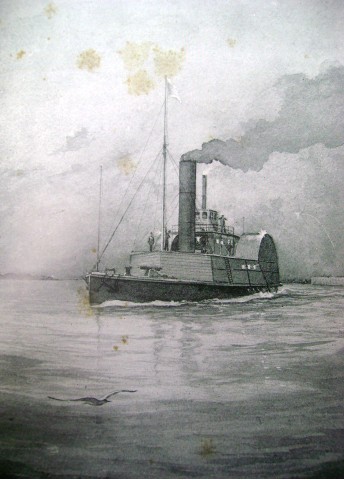
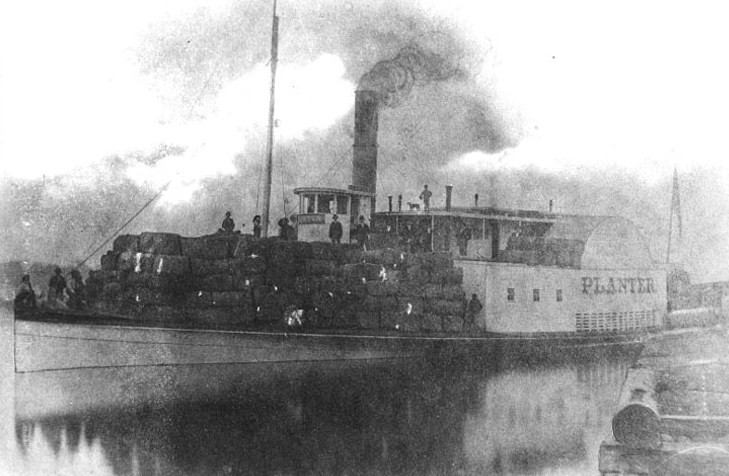
The Planter was a high-pressure, side-wheel steamer, one hundred and forty feet in length, and about fifty feet beam. She was built in Charleston, was formerly used as a cotton-boat, and was capable of carrying about 1400 bales. On the organization of the Confederate navy she was transformed into a gun-boat, and was the most valuable war vessel the Confederates had at Charleston. Her armament consisted of one 32-pound rifle gun forward, and a 24-pound howitzer aft.

On the night of May 12-13 The Planter also had on board one seven-inch rifled gun, one eight-inch Columbiad, one eight-inch howitzer, one long 32-pounder, and about two hundred rounds of ammunition, which had been consigned to Fort Ripley, and which would have been delivered at that fortification on Tuesday had not the designs of the rebel authorities been frustrated.

The Planter’s slave pilot was named Robert Smalls. On this night, three white officers decided to spend the night ashore. About 3:00 am on the 13th, Smalls and seven of the eight enslaved crewmen decided to make a run for the Union vessels that formed the blockade.

Robert Smalls

Robert Smalls

Smalls dressed in the captain’s uniform was wearing a straw hat similar to that of the white captain. He backed the Planter out of what was then known as Southern Wharf around 3 a.m. The Planter stopped at a nearby wharf to pick up Smalls’ family and the relatives of other crewmen, who had been concealed there for some time. With his crew and the women and children, Smalls made the daring escape. The Planter had as cargo four valuable artillery pieces, besides its own two guns. Perhaps most valuable was the code book that would reveal the Confederate’s secret signals, and the placement of mines and torpedoes in and around Charleston harbor. Smalls used proper signals so the Confederate soldiers would not know he was escaping in the ship.

Smalls piloted the ship past the five Confederate forts that guarded the harbor, including Fort Sumter. The renegade ship passed by Sumter approximately 4:30 a.m. He headed straight for the Federal fleet, which was part of the Union blockade of Confederate ports, making sure to hoist a white sheet as a flag.

The first ship he encountered was USS Onward, which was preparing to fire until a sailor noticed the white flag. When the Onward’s captain boarded the Planter, Smalls requested to raise the United States flag immediately. Smalls turned the Planter over to the United States Navy, along with its cargo of artillery and explosives intended for a Confederate fort.

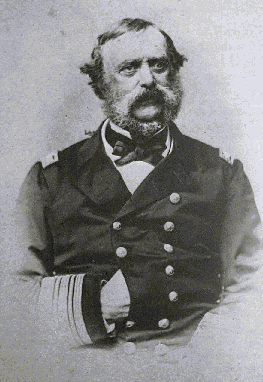
Admiral Samuel DuPont

Admiral Samuel DuPont

Because of his extensive knowledge of the shipyards and Confederate defenses, Smalls provided valuable assistance to the Union Navy. He gave detailed information about the harbor’s defenses to Admiral Samuel Dupont, commander of the blockading fleet.

Smalls quickly became famous in the North. Numerous newspapers ran articles describing his daring actions. Congress passed a bill, signed by President Abraham Lincoln, that rewarded Smalls and his crewmen with the prize money for the captured Planter. Smalls’ own share was $1,500 (about $34,000 adjusted for inflation in 2012 dollars), a huge sum for the time.

 The names of the black men of the crew were:

  • Robert Smalls, pilot;
  • John Smalls and Alfred Gradine, engineers;
  • Abraham Jackson, Gabriel Turno, William Morrison, Samuel Chisholm, Abraham Allston, and David Jones.

The Planter, loaded with bales of cotton at Georgetown, SC

The Planter, loaded with bales of cotton at Georgetown, SC