
March 24
1663
Charles II granted the territory called Carolana to the “true and absolute Lords and Proprietors.” The eight men were:
- John Berkeley, Baron Berkeley of Stratton – Berkeley fought on the Royalist side during the Rebellion, general of the Royal forces in Devon. He also became a Proprietor for the Colony of New Jersey.
- Sir William Berkeley – During the Rebellion, William served as Governor of Virginia and was a consistent supporter of Royal rule.
- Sir George Carteret – Served as lt. governor of Jersey, the largest of the channel islands, fifteen miles off the French coast, which became a refuge for Royalists during the Rebellion. Carteret ran an active privateering campaign against Parliament, who branded him a pirate. After the execution of Charles I, Carteret had Charles II declared King in Jersey, even though the action forced him into exile for nine years. He also became a Proprietor of New Jersey.
- Sir John Colleton, 1st Baronet – Served in the infantry during the Rebellion and made heavy financial contributions to the Royal cause. After Charles’s execution, Colleton fled to Barbados where he acquired an extensive estate.
- William Craven, Earl of Craven – Contributed substantial financing for the Royal cause during the Rebellion. Known for his “bawdy language,” Craven was one of the few noblemen who did not flee London during the Great Plague of 1665. He remained in the city to help keep order and donated property for mass grave sites.
- Anthony Ashley Cooper, Baron Ashley of Wimborne St. Giles – A political opportunist who started the Rebellion as a Loyalist, then became a supporter of Cromwell after the War, but then devoted much of his energy for the Restoration of Charles II, for which he was well rewarded, becoming one of the most politically powerful men in England.
- Edward Hyde, Earl of Clarendon – Maternal grandfather of two monarchs, Queen Mary II and Queen Anne, Hyde was one of Charles’ closest advisors during the nine-year exile. His daughter, Anne, married Charles’s younger brother, James, Duke of York. Later in life he authored the acclaimed “History of the Rebellion.”
- George Monck, Duke of Albemarle – A brilliant military leader for Charles during the Rebellion, Monck was arrested and spent two years in the Tower of London. Accepting a commission as Major General he fought with Cromwell in Ireland and Scotland. After being elected to Parliament in 1660, Monck campaigned for the Restoration of Charles II. He was rewarded as Knight of the Most Noble Order of the Garter, the most prestigious honor in England.
Each Proprietor contributed £75 sterling to establish a fund for financing a colony in Carolina. They also agreed, if necessary, to contribute an additional £500 sterling each. The Proprietors, of course, hoped that no more money would be required. There was a strong consensus that the colony could be established by luring experienced settlers from established Caribbean colonies like Barbados and Bermuda, by offering large land grants in lieu of providing financing.
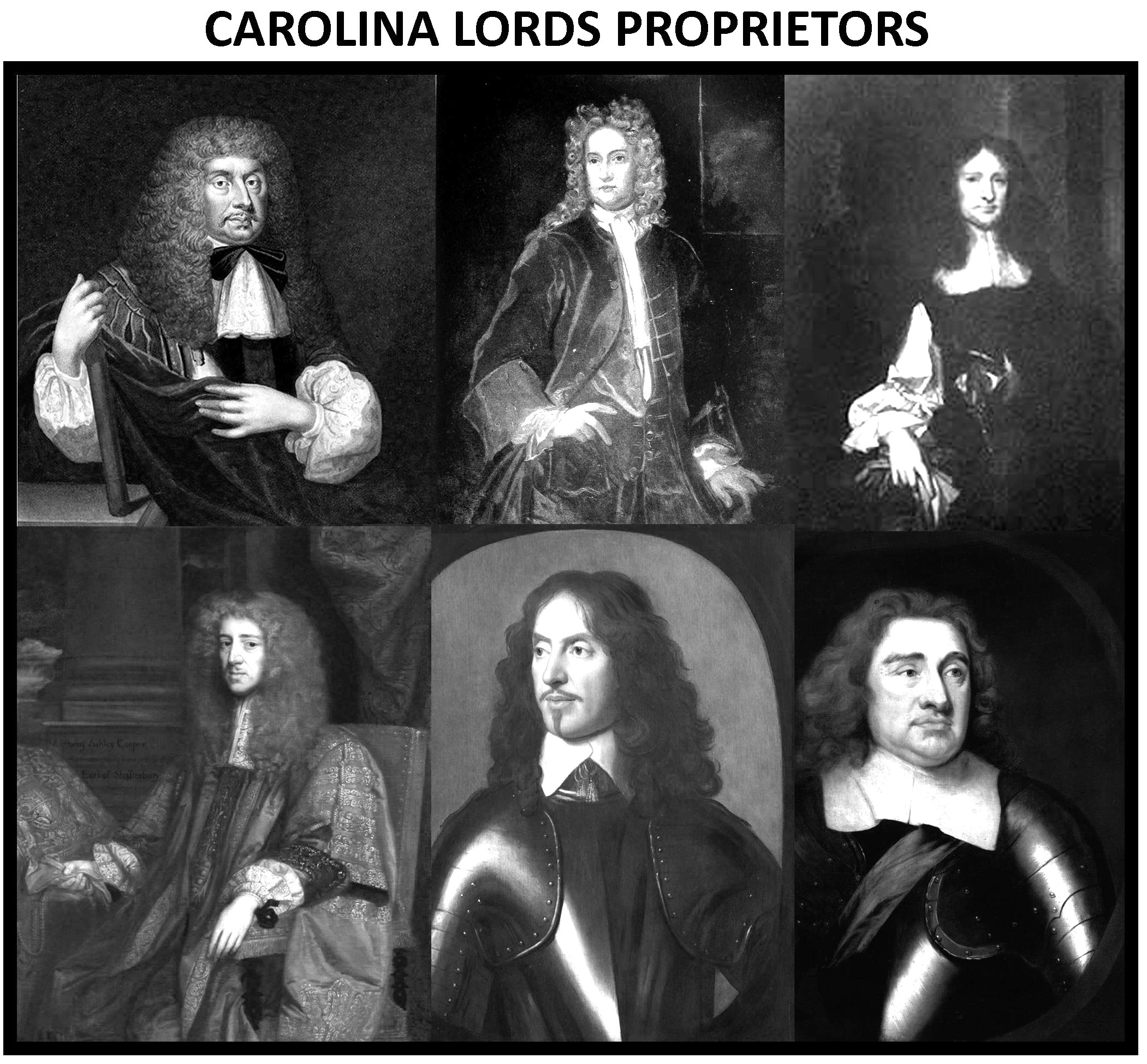
Six of the Lords Proprietors of the Carolina Colony
1804
William Johnson of Charleston was appointed an Associate Justice of the Supreme Court. He was the first of Thomas Jefferson’s three appointments to the court, and is considered to have been selected for sharing many of Jefferson’s beliefs about the Constitution. Johnson was the first member of the U.S. Supreme Court that was not a member of the Federalist Party.

William Johnson
Born in Charleston on December 27, 1771, Johnson was the second son of blacksmith William Johnson and his wife Sarah Nightingale. Graduated first in his class from the College of New Jersey (Princeton) in 1790, Johnson went on to read law under attorney Charles Cotesworth Pinckney, The following year, on March 16, Johnson married Sarah C. Bennett, sister of future governor Thomas Bennett.


 MarkJonesBooks