Today In Charleston History: February 7

1649-English Civil War

Parliament voted to abolish the English monarchy. What does this have to do with Charleston history?

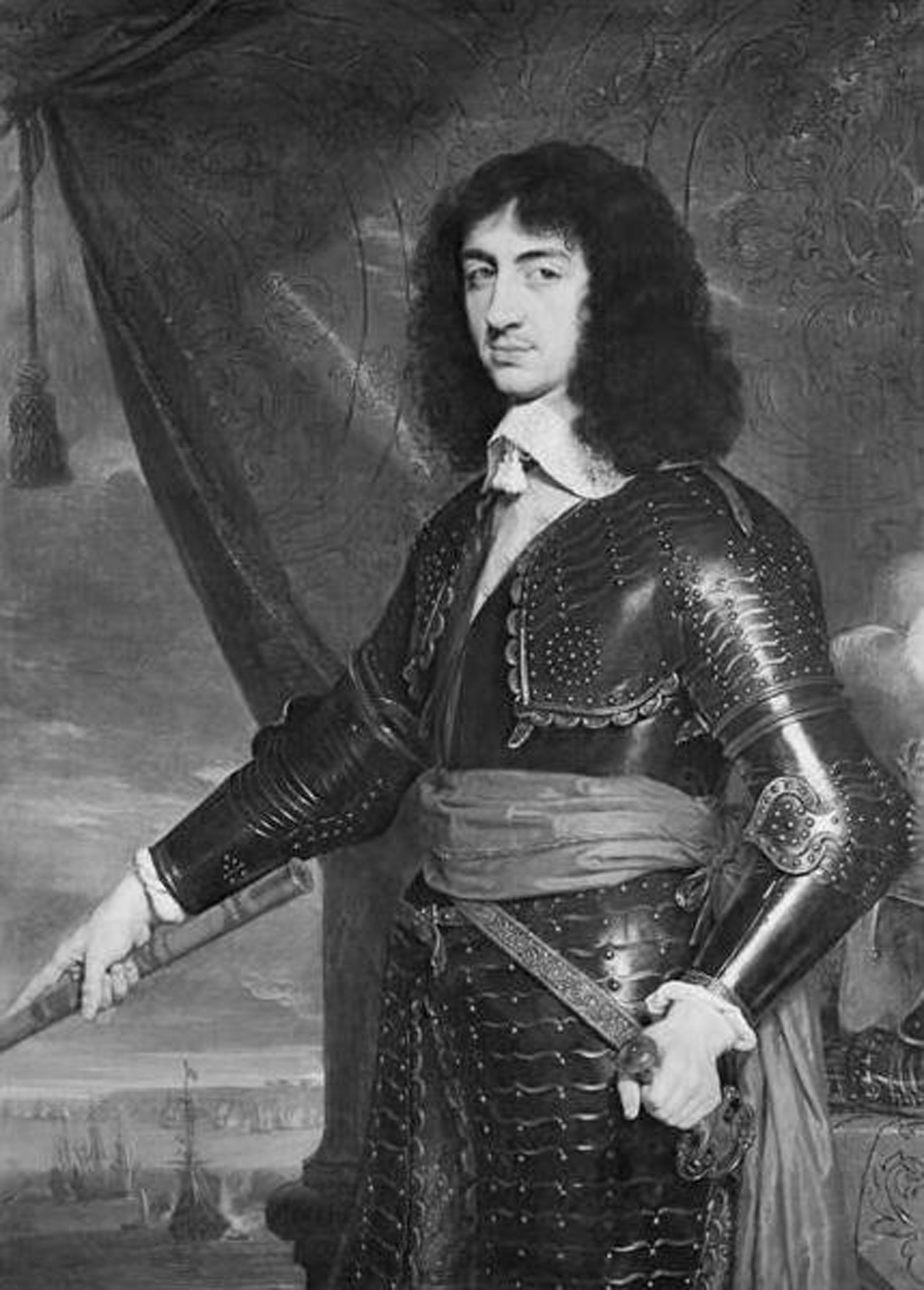
Charles II

Charles II

After the beheading of Charles I, and the defeat of his army, his sons, Charles and James, were forced to flee England and live in exile for many years. After the Restoration of the throne Charles II became king of England in 1660. To reward some of the men who were instrumental in his restoration, Charles granted them the Carolina colony. 

1747

A severe frost causes the end of trying to grow oranges for profit in the lowcountry. The Orange Grove Plantation was where the present-day Citadel stands today.

Today In Charleston History: February 6

1719 – Fortifications.

The Assembly passed an act “for the more speedy putting the bastions of the Fortification of Charles Town in a posture of defence” by repairing the existing fortifications.

1740 – Religion.
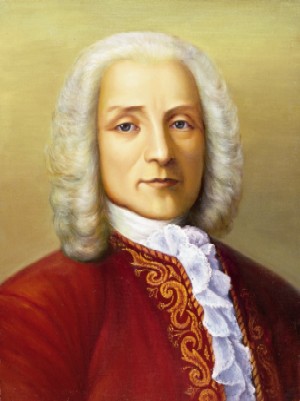
Charles Pachelbel

Charles Pachelbel

Charles Theodore Pachelbel (baptized Karl Theodorus) became the organist at St. Philip’s Church.

 Pachelbel arrived in Charlestown in April 1736.  Born in Germany in 1690, he was the son of the famous Johann Pachelbel, composer of the popular Canon in DPachelbel initially migrated to Providence, Rhode Island to install an organ in Trinity Church in 1733. Three years later he arrived in Charlestown and stayed until his death.

Today In Charleston History: February 5

1698 – Arrivals.  
trott-n-lg

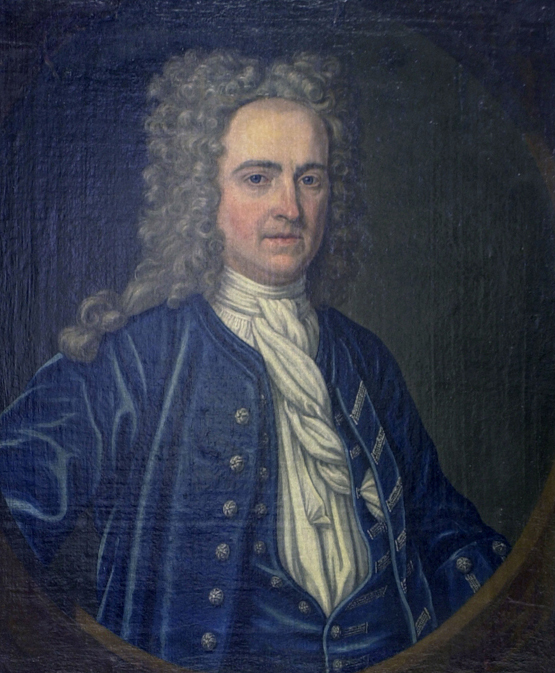
Nicholas Trott

Nicholas Trott was appointed Attorney General of Carolina. Trott had served the same post in Bermuda. He was the first Carolina official who was trained at the Inns of Court – a professional association for barristers. His uncle, Sir Nicholas Trott, had been governor of the Bahamas and was accused of harboring pirates for personal profit. Edmund Bohun was appointed Chief Justice.

Disasters

The first recorded earthquake shook the lowcountry.

1755- Walled City

The South Carolina Assembly agreed to hire German-born engineer William De Brahm to build new fortifications under the direction of the Assembly-appointed Commissioners of Fortifications. They decided to concentrate on building up the southeastern seaward side of the peninsula.

1763

gadsdenChristopher Gadsden defended the Assembly’s decision to cease all business until a disputed election issue was settled. It was an early declaration of the “natural rights” philosophy which would soon sweep the American colonies during the opposition against British policies. Gadsden called their action: 

Absolutely necessary, and the only step that a free assembly, freely representing a free people, that have any regard for the preservation of the happy constitution handed down to them by their ancestors, their own most essential welfare, and that of their posterity, could freely take. ‘Tis a joke to talk of individual liberty of free men, unless a collective body, freely chosen from amongst themselves are empowered to watch and guard it.

1779

John Rutledge was elected Governor of South Carolina, replacing Lowndes as chief executive.

Today In Charleston History: January 28

1787 – Marriage

Dr. David Ramsay married Martha Laurens.

Ramsay had been married twice, and tragically lost both wives within a year of being married. Martha was the beloved daughter of Henry Laurens, former President of Continental Congress, and the first American imprisoned in the Tower of London (he was arrested by the British while acting as an agent for Congress raising funds for the Revolution in Europe.) Ramsay met Martha while he was researching his History of the Revolution of South Carolina. 

1861 – Secession 
Pierre Gustave Toutant Beuaregard

Pierre Gustave Toutant Beauregard

P.G.T. Beauregard was removed as Superintendent of the U.S. Military Academy at West Point. It was the shortest tenure of any superintendent – five days. His orders were revoked when his native Louisiana seceded from the Union. Beauregard protested to the War Department that they had cast “improper reflection upon [his] reputation or position in the Corps of Engineers” by forcing him out as a Southern officer before any hostilities began.

Within a month he resigned his commission and became the first Brigadier General of the Confederate Army. He served in Charleston and ordered the firsts shots of the War be fired at Fort Sumter. 

1866 – Civil War

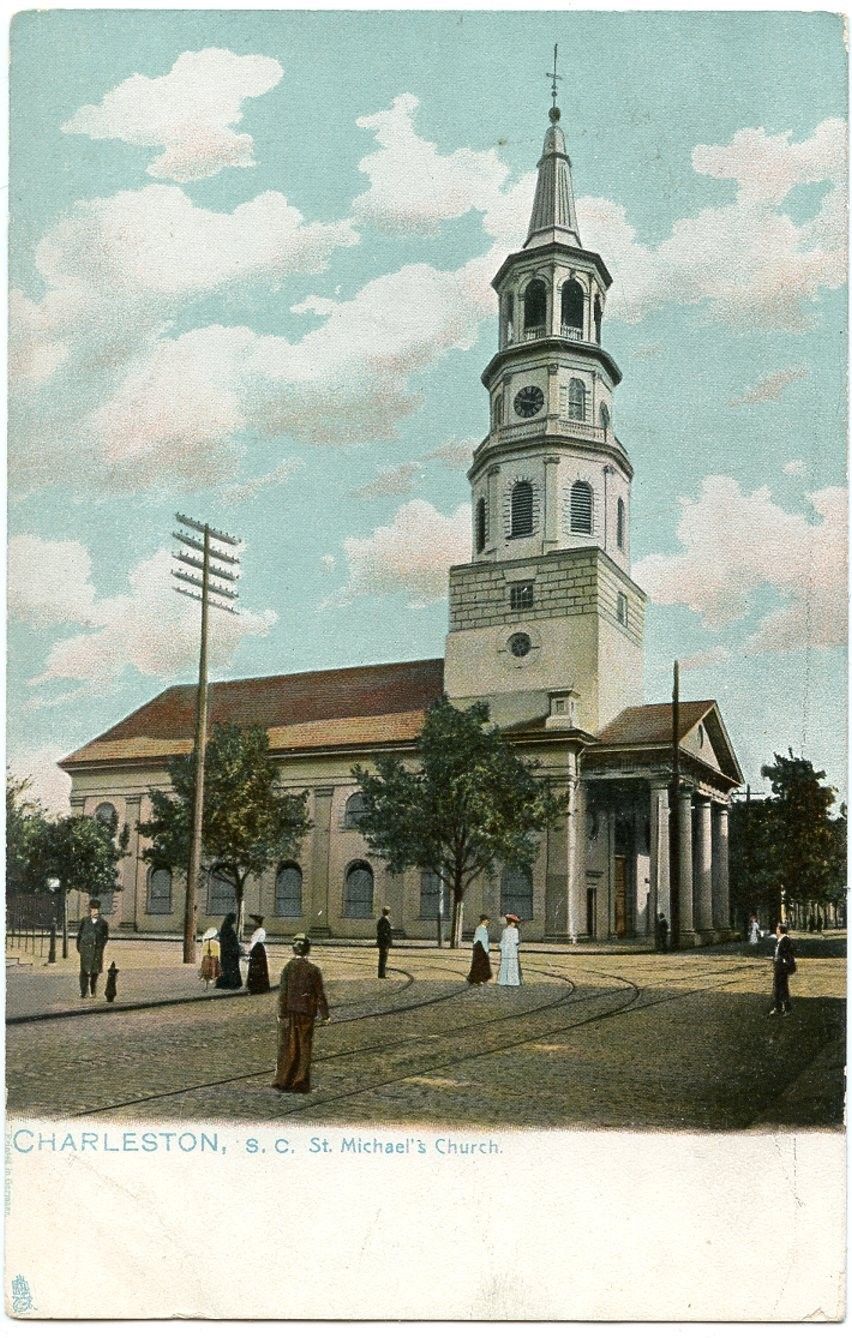
The melted fragments of St. Michael’s bells were shipped to England by Fraser, Trenholm and Company. 

The bells for St. Michael’s were cast in 1764, by Lester & Pack in London. When the British evacuated Charleston in 1782 as part of their plunder, the eight bells of St. Michael’s were taken back to England. Shortly afterward, a merchant in London secured the bells and returned them to a grateful Charleston. 

st. michael's - postcard

St. Michael’s Church

In 1864, when Sherman made his march through the South Carolina, Charleston expected to be in his path, so the bells were sent to Columbia for safe-keeping.  Sherman by passed Charleston and burned Columbia, the state capital. The shed in which the bells were stored was burned and the bells were reduced into molten slag. The metal was salvaged and the bells were sent to London to be recast by Lester & Pack – today in history.The bells were returned in 1868 and resumed their place in the church.

In 1989, the bells were damaged by Hurricane Hugo in 1989. They once again were shipped to London for repair. They can be heard chiming in Charleston today on an hourly basis.

Today In Charleston History: January 24

1735
tavern2

Shepheard’s Tavern

The first record of a theatrical season in Charleston began with the show The Orphan, or the Unhappy Marriage by Thomas Otway. It was performed in the long room of Shepherd’s Tavern, which once stood on the corner of Church and Broad Street. Tickets cost 40 shillings. (Note: one shilling =12 pennies, so the ticket cost would be appx. $8.)

1781 – American Revolution.

Patriot commanders Lieutenant Colonel “Light Horse” Harry Lee (father of Robert E. Lee) and Brigadier General Francis Marion the “Swamp Fox” of the South Carolina militia combined their forces and raided Georgetown, South Carolina, which was defended by 200 British soldiers.

1847
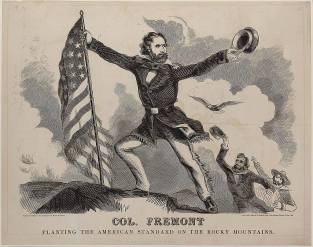
A leader in the successful fight to wrest California away from Mexico, the explorer and mapmaker John C. Fremont, the Great Pathfinder, briefly became governor of the newly won American territory. Fremont, CA is named after him.
     Fremont attended the College of Charleston, and later mapped the Oregon Trail with Kit Carson. He was one of the first two senators from California, serving only 175 days in 1850-51. He was a Free Soil Democrat and was defeated for reelection largely because of his strong opposition to slavery. He was the first presidential candidate of the new Republican Party in 1856.
col fremont
          EMANCIPATION CONTROVERSY. Frémont took command of the Department of the West for the Union Army in 1861. On August 30 Frémont, without notifying President Lincoln, issued a controversial proclamation putting Missouri under martial law. The edict stipulated that civilians in arms would be subject to court marital and execution, the property of those who aided secessionists would be confiscated, and the slaves of rebels were emancipated. President Abraham Lincoln asked Frémont to revise the order of emancipation. Frémont refused to do so. Lincoln publicly revoked the proclamation and relieving Frémont of command on November 2, 1861, saying, that Frémont “should never have dragged the Negro into the war.”
     The FIRST Federal official to free slaves was a Southern man. Lincoln, the Great Emancipator, re-enslaved the freed blacks because it was not politically convenient … at that time.

Today In Charleston History: January 23

1800 – Deaths.

 Governor Edward Rutledge died “with perfect resignation, and with perfect calmness.” He was buried in the family plot in St. Philip’s graveyard. He was replaced as governor by John Drayton.
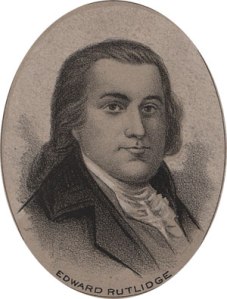
Edward Rutledge

Edward Rutledge

Born to an aristocratic family, Edward Rutledge spent most of his life in public service. He was educated in law at Oxford and was admitted to the English Bar. He and his older brother John both attended the Continental Congress and unabashedly supported each other. Edward attended Congress at the remarkable age of 26 and was the youngest man to sign the Declaration of Independence.

During the Revolution he served as a member of the Charleston Battalion of Artillery, and attained the rank of Captain. The colonial legislature sent him back to Congress in 1779 to fill a vacancy. During the defense of Charleston, Rutledge was captured and held prisoner until July of 1781.

In 1782 he served in the state legislature, intent on the prosecution of British Loyalists. In 1789 he was elected Governor.

1861 – Secession.

Pierre Gustave Toutant Beauregard was appointed superintendent of the U.S. Military Academy at West Point. It was the shortest term in the post ever. Six days later his commission as superintendent was revoked, the day after his native Louisiana seceded from the Union. The Federal powers-that-be did not trust Beauregard’s Southern sympathies. One month later, Beauregard resigned his captaincy in the U.S. Army Engineers and offered his services to the Confederate government being formed in Montgomery, Alabama.

Pierre Gustave Toutant Beuaregard

Pierre Gustave Toutant Beuaregard

Beauregard was born into a prominent Creole family in St. Bernard Parish, Louisiana and raised on a sugarcane plantation outside of New Orleans. He was appointed to the United States Military Academy at West Point in 1834 at age sixteen and became a popular cadet, earning several nicknames including “Little Napoleon” and “Little Creole,” due to his slight statue – 5’7”, 150-pounds. His favorite teacher was his professor of artillery, Robert Anderson. He graduated second in his class in 1838 and remained at the school to serve as Anderson’s assistant artillery instructor.

During the Mexican War he serving under Gen. Winfield Scott and during the 1850s served as a military engineer clearing the Mississippi River of obstructions. He also spent time as an instructor at West Point before becoming the school’s superintendent for less than a week.

On February 27 in Montgomery, Alabama, Beauregard was appointed the first brigadier general of the Confederate Army and sent to Charleston. On April 12, he ordered the first shot of the Civil War fired at Fort Sumter, commanded by his former West Point instructor, Major Anderson.

Today In Charleston History: January 22

1787

The Columbian Herald called for drastic measures to prevent burglaries and robberies:

The danger which threatens the inhabitants from a gang of villains who now actually invest this city [Charleston], calls loudly for an extraordinary exertion of the police, but also of the inhabitants themselves. – It were to be wished that voluntary associations might be entered into to patrol the streets, guard the property of citizens, detect the villains, and bring them to condign punishment.

1800 – Slavery.

 The newly freed slave, Telemaque, now called Denmark, chose his former owner’s surname as his own, Vesey. Most freedmen chose a name that cut their ties with their former owners. Denmark, however, knew that making his living in Charleston would be hard enough and the linguistic association with a prominent white man’s name would give him a better chance to make his way in the city. 

He was unable to purchase freedom for his wife, Beck and their three children. He was also not allowed as a free black to live in the home of his wife’s master. Due to Charleston’s growth, city expansion and ship building Denmark began to make his living as a carpenter in Charleston. A Freeman carpenter could earn a respectable $1.50 per day so Vesey apprenticed himself to a “free black” carpenter named Saby Gaillard, who lived at 2 Wentworth Street.

Vesey “soon became much respected and esteem’d by de white folks … distinguished for his great strength and activity.”

vesey statue copy

Denmark Vesey statue @ Hampton Park, Charleston


Today In Charleston History: January 21

1683 – Deaths 

Lord Anthony Ashley Cooper died in Amsterdam.

anthony ashley cooper profile

1813 – Births

John C. Fremont was born in Savannah, Georgia, the illegitimate son of Mrs. Ann Pryor and her French tutor, Charles Fremon. As a young man, John Fremont attended the College of Charleston and in 1838 he was appointed second lieutenant in the Corps of Topographical Engineers of the U.S. Army. He assisted and led multiple surveying expeditions through the western territory of the United States and beyond. Due to his extensive explorations Fremont was nicknamed “The Great Pathfinder.”

Frémont_1856In 1842 Fremont met frontiersman Kit Carson for the first time on a Missouri steamboat in St.  Louis. The two men then led a five-month journey into present-day Wyoming. During a second expedition Fremont and Carson mapped the second half of the Oregon Trail, from South Pass to the Oregon Country, following a route north of the Great Salt Lake, down the Snake River to the Columbia River and into Oregon.

They came within sight of the Cascade Range peaks and mapped Mount St. Helens and Mount Hood. Rather than continue west through the Columbia River gorge to Fort Vancouver, the party turned south and followed Fall Creek to its headwaters near the present-day northern border of California. They ventured into the Sierra Nevada, becoming some of the first Americans to see Lake Tahoe.

Upon his return, Frémont produced a new map, using data gathered during the first expedition to update an earlier map by Gibbs.  Congress published Frémont’s “Report and Map”; it guided thousands of overland immigrants to Oregon and California from 1845 to 1849 which helped guide the forty-niners through the California Gold Rush. 

Fremont later served as a General in the U.S. Army during the Civil War, one of the few Southerners who did not join the Confederacy. He created a controversy when given command of the Department of the West by President Abraham Lincoln. Always an independent-minded man, Frémont made decisions without consulting Washington D.C. or President Lincoln. In 1861 Frémont issued an emancipation edict that freed slaves in his district, and was relieved of his command by President Lincoln for insubordination. Lincoln claimed that Fremont “should never have dragged the Negro into the war.” Two years later, Lincoln would issue his own Emancipation Proclamation and be forever celebrated. Ironically, the first Federal official to free slaves during the War was a Southerner who was reprimanded for his actions. 

In 1856 Fremont was the first Republican to be nominated as a Presidential candidate.

Today In Charleston History: January 20

1672

Secretary Dalton wrote that the number of colonists transported to Carolina by this date was 337 men, 71 women and 62 children – 470. Sixty-four had died, leaving a population of 406.

1733

James Oglethorpe and Col. William Bull explored the territory around the Savannah River together, scouting for a good location for a permanent settlement. They decide on Yamacraw Bluff on the river, where Savannah sits today.

1807

Joel Roberts Poinsett, dined with Czar Alexander at the Palace in Russia. During the meal Alexander attempted to entice Poinsett into the Russian civil or military service. Poinsett was hesitant, which prompted Alexander to advise him to “see the Empire, acquire the language, study the people,” and then decide. Poinsett spent the next several months traveling across Russia.

1837

Angelina and Sarah Grimke began a six-week series of successful lectures about slavery in a New York City Baptist Church.

grimke sisters

Today In Charleston History: January 17

1711

The town of Beaufort was chartered on the Port Royal Sound, making it the second oldest town in South Carolina. It was named after Henry Somerset, the 2nd Duke of Beaufort and a Lord Proprietor from 1700-14. The Beaufort settlement made the Yemassee Indians unhappy, as it usurped a large part of their territory.  It was one of the factors that led to the Yemassee War, 1715-17.

1781 – British Occupation

The Knights Terrible Society was organized at Mr. Holliday’s Tavern, for the purpose of drinking once a week during the British occupation. They disbanded after the British evacuated the city.

1782 – American Revolution

Gov. John Rutledge and the South Carolina House convened in Jacksonboro, thirty miles from Charleston, near the site of the Stono Slave Rebellion on the Edisto River. Only persons loyal to South Carolina were allowed to vote. Christopher Gadsden was elected governor, but declined due to his health, which had suffered during his imprisonment in St. Augustine. John Mathews was chosen as governor, “a younger and more even-tempered individual.” 

Laws were quickly passed for raising Continental troops and for punishing “conspicuous Tories.” Called the “Act for Disposing of Certain Estates and Banishing Certain Persons” it banished Loyalists and provided for the confiscation and sale of their estates. The list of confiscation contained more than 700 individuals.

gadsden and rutledge