Today In Charleston History: June 14

1751-Religion

Charlestown was divided into two Anglican parishes: St. Michael’s, south of Broad Street and St. Philip’s, north of Broad.

1774-American Revolution

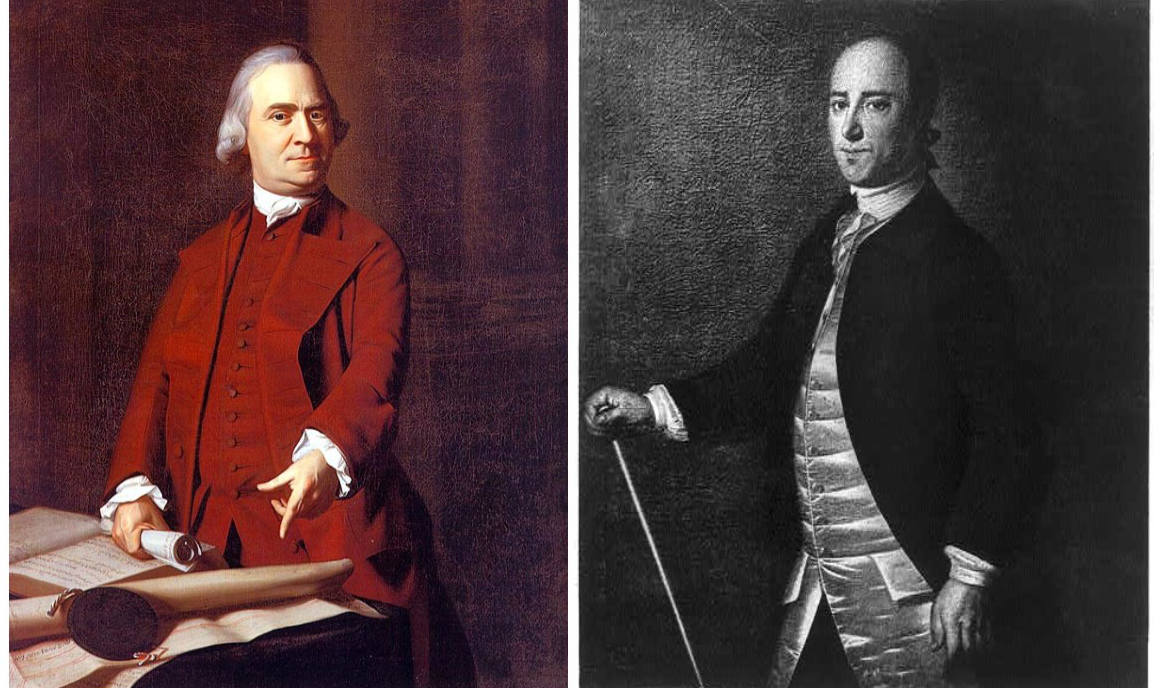
Christopher Gadsden wrote to Sam Adams in Boston, assuring him that South Carolina would stand firm with Massachusetts, reminding him that South Carolina was the last to desert the non-importation agreement in 1770. He wrote:

For my part I would rather see my own family reduced to the utmost Extremity and half cut to pieces than to submit to their damned Machinations. 

(L) - Sam Adams. (R) - Christopher Gadsden

(L) – Sam Adams. (R) – Christopher Gadsden

1775-American Revolution – Continental Congress 

Edward Rutledge was appointed to a three-member committee to draft George Washington’s commission and instructions as commander of the Continental Army.  

1822-Denmark Vesey Rebellion

George Wilson informed his master, Major John Wilson of 106 Broad Street, about the plot to kill whites, related to him by Rolla Bennett.

8:00 p.m.

Major Wilson informed Intendent (mayor) Hamilton that the governor’s slaves were involved in an insurrection planned for two nights hence – Sunday June 16. The story Wilson told was so similar to that of William Paul and Peter Prioleau that Hamilton and Governor Bennett had no choice but to believe it.

Just before midnight, Gov. Bennett ordered the arrest of ten slaves including Peter Poyas, Mingo Harth, and his own personal slaves, Rolla and Ned Bennett.

1864-Bombardment of Charleston  

Captured Union officers purposely placed in range of Federal guns at 180 Broad Street in an attempt to stop the bombardment of Charleston. The Charleston Mercury announced:

 For some time it has been known that a batch of Yankee prisoners, comprising the highest in rank now in our hands, were soon to be brought hither to share in the pleasures of the bombardment. These prisoners we understand will be furnished with comfortable quarters in that portion of the city most exposed to enemy fire. The commanding officer on Morris Island will be duly notified of the fact of their presence in the shelled district and if his batteries still continue at their wanton and barbarous work, it will be at the peril of the captive officers.’ 

The Charleston Daily Courier wrote:

We do not confine these prisoners in a fortress or a walled town or city, or thrust them forward in our battle as the Yankees do with the unfortunate negro … We place them in our city of Charleston, among and near our own wives and children …

Two views of the O'Conner House, 180 Broad Street, where Union officers were imprisoned within range of Federal guns.

Two views of the O’Conner House, 180 Broad Street, where Union officers were imprisoned within range of Federal guns.

Today In Charleston History: May 11

1780- The Seige of Charlestown

Lt. Governor Christopher Gadsden wrote to Gen. Lincoln encouraging him that

“no time should be lost in renewing the negotiation with Sir Henry Clinton on the Subject of Articles of Capitulation.”

1838
Loquat tree, Charleston

Loquat tree, Charleston

The Loquat came to Charleston. First known as the Japanese Medlar, the loquat became a garden fixture in the 1850s and early 60s when pomologist A. Pudgion sold hundreds of trees from his nursery on King Street Road. It was viewed as the Asian equivalent of the American persimmon—a yellow-orange stone fruit that was “ripe when it was rotten.” It was described as “a fine table fruit, and very desirable for jellies and preserves” and was attractive because it set fruit over winter and ripened in March, thus making it the first fruit in the year harvest cycle.

The first tree for which a record exists was one planted by Miss M. Smith on Broad Street in 1838.

Today In Charleston History: May 6

1766-Stamp Act. American Revolution – Foundations.

News reached Charlestown that Parliament had repealed the Stamp Act. The city celebrated by ringing church bells and burning bonfires. Lt. Gov. Bull hosted “a very elegant entertainment” at Dillon’s Tavern for the Council and Assembly.

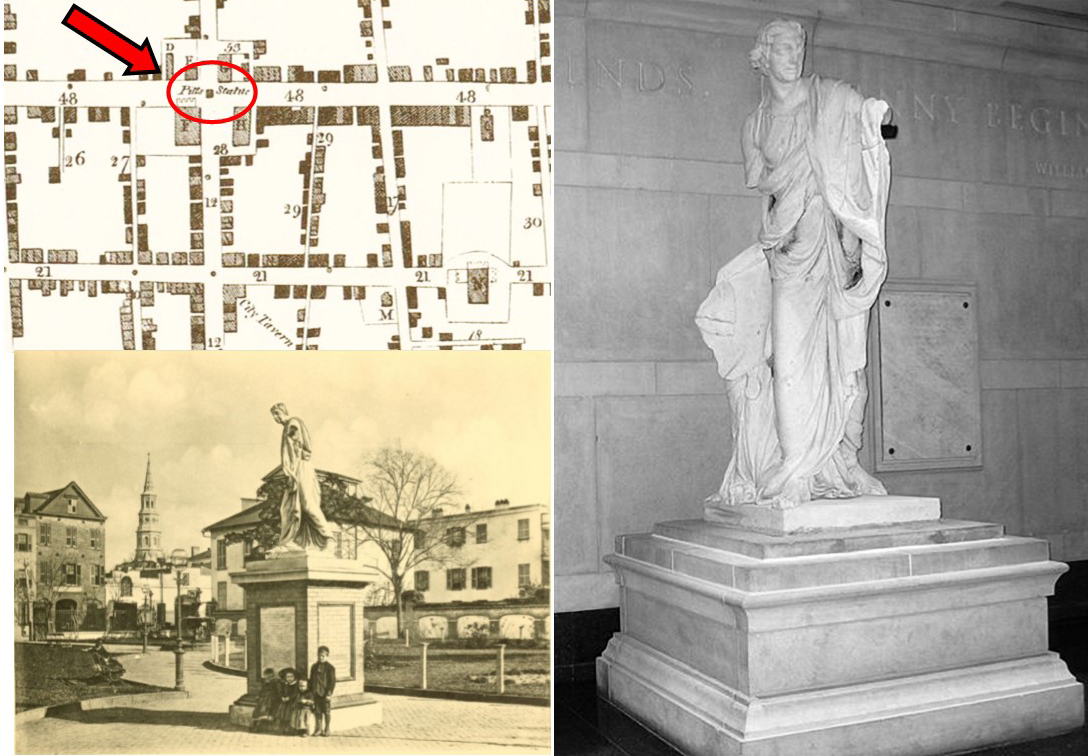
The Assembly voted £1000 sterling for a marble statue of William Pitt in gratitude of his exertions for the repeal of the Stamp Act. They also voted to appropriate funds for portraits of Gadsden, John Rutledge and Thomas Lynch to be displayed in the Assembly room in recognition of their service during the Stamp Act Congress.

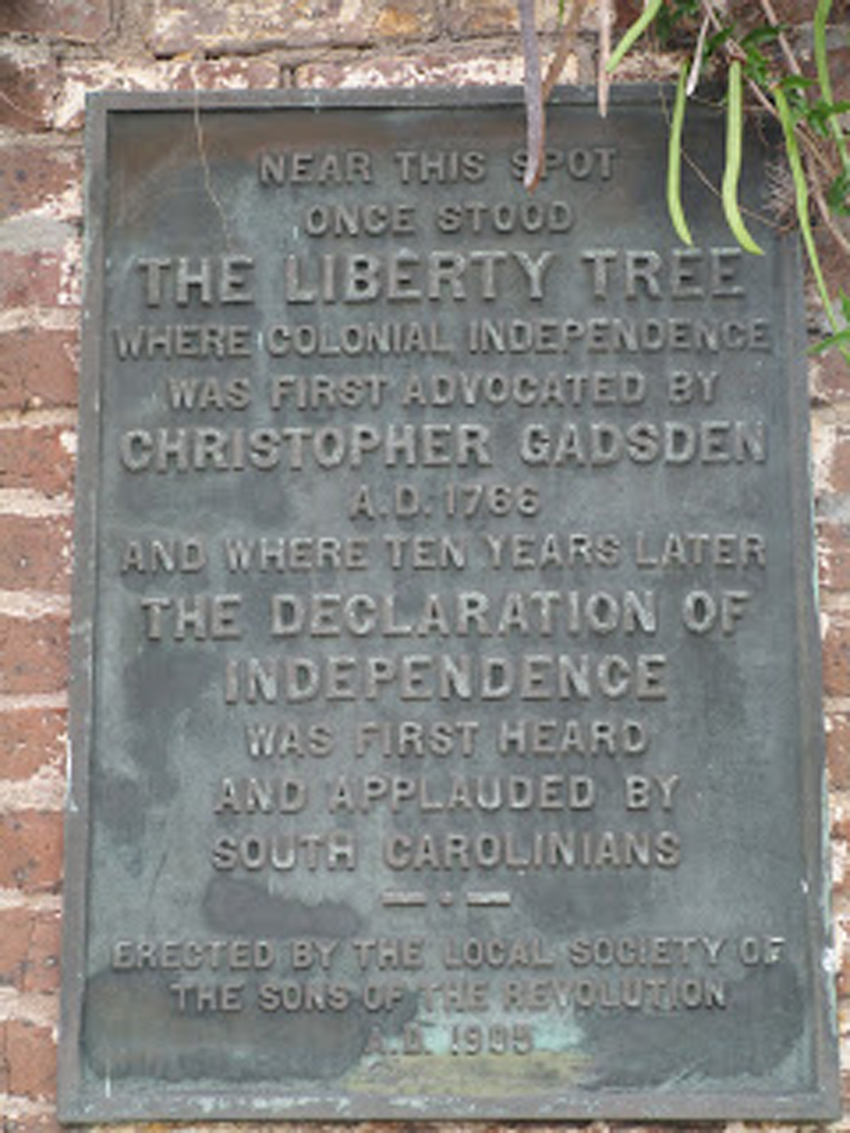
Liberty Tree marker on Alexander Street

Liberty Tree marker on Alexander Street

They also learned that Parliament passed the Declaratory Act which stated that Parliament’s authority was the same in America as in Britain – their laws were as binding on the American colonies as in England. That night, Christopher Gadsden gave a speech under the great oak tree in Mr. Mazyck’s cow pasture. He:

harangued them at considerable length on the folly of relaxing their opposition and vigilance, or of indulging in the fallacious hope that Great Britain would relinquish their designs and pretensions.

Gadsden cautioned not to rejoice in the repeal of the Stamp Act, because the Declaratory Act was a threat to the liberty of all Americans. From that night onward, the oak was called the Liberty Tree. At the end of the meeting the men gathered hands around the tree and swore resistance to future tyranny. 

1780-The Seige of Charlestown

Knowing of the extreme conditions within the city, Sir Clinton was frustrated by the American resistance. He wrote, “I begin to think these people will be Blockheads enough to wait the assault.”

GEORGE WASHINGTON VISIT: DAY 6

May 6, 1791

Washington toured the town on horseback for most of the day, riding up and down most of the principal streets. Sometime during the day Washington stopped to observe the work on rebuilding of the State House and talk with the supervising architect, James Hoban.

Charleston  courthouse- Old  _large

Charleston County Courthouse, formerly the State House.

Washington had recently been given the duty by Congress to build “the President’s House” (later called the White House) in D.C. Hoban was given the job by Washington to design and supervise the construction of the White House. 

The evening meal was at Sen. Pierce Butler’s home and then a party at Gov. Pinckney’s home.

1802
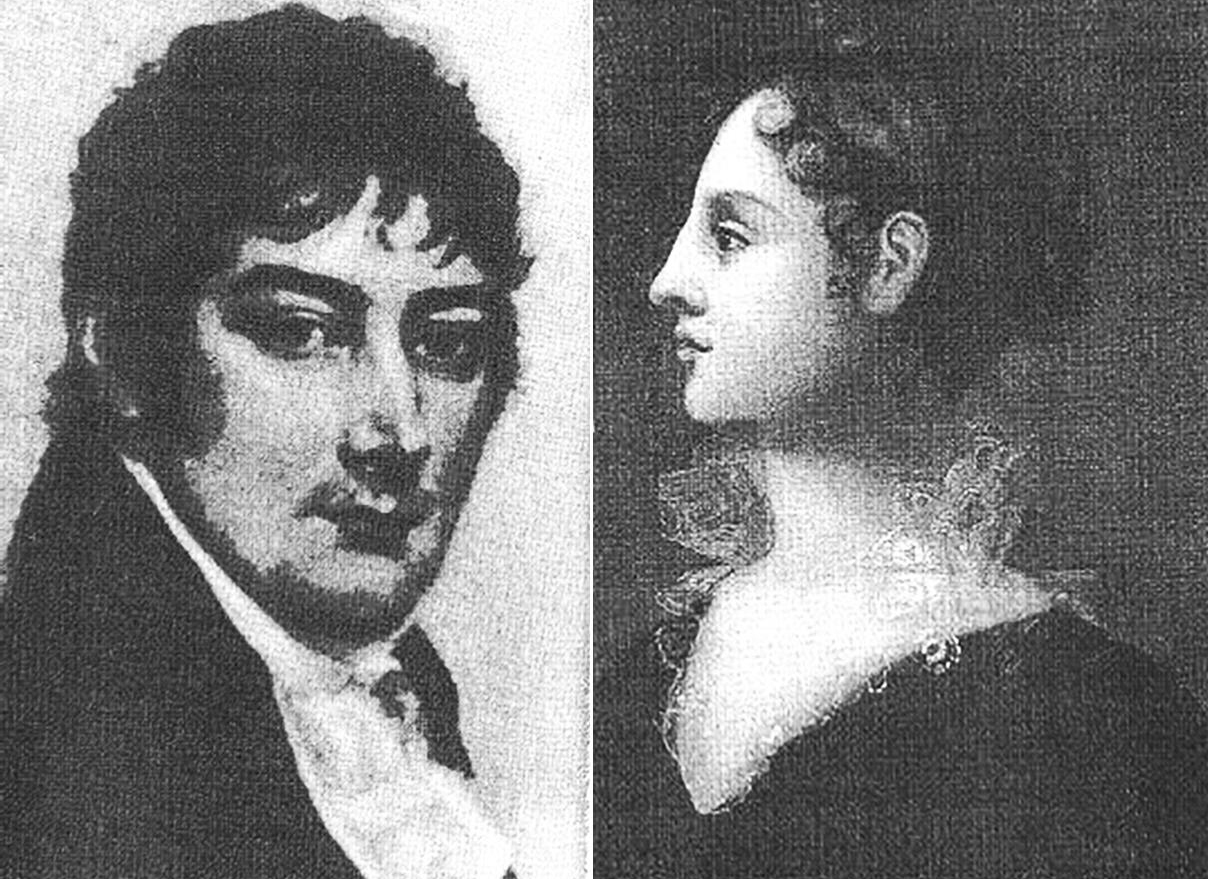
the alstons

Joseph Alston and Theodsia Burr Alston

Vice-president Aaron Burr arrived in Charleston for the birth of his grandson. His daughter, Theodosia, was married to Joseph Alston. His carriage was floated across the Cooper River from Mt. Pleasant to Charleston. The Charleston Times wrote,

“The Vice-President of the United States is expected in town, this evening. The Federalist Artillery Company have orders to salute him on his landing.”

1815

On a Saturday afternoon, David Ramsay strolled down Broad Street, on his way home. He passed William Linnen who was standing behind the columns of St. Michael’s Church. Linnen stepped out and “took a large horseman’s pistol … and shot the doctor in the back.”

According to one source:

Having been carried home, and being surrounded by a crowd of anxious citizens, after first calling their attention to what he was about to utter, he said ‘I know not if these wounds be mortal; I am not afraid to die; but should that be my fate, I call on all here present to bear witness, that I consider the unfortunate perpetrator of this deed a lunatic, and free from guilt.’

Dr. David Ramsay

Dr. David Ramsay

One month previously, Dr. David Ramsay had been appointed by the court to examine William Linnen, a tailor known for serial litigation and nuisance suits against lawyers, judges and juries.  After Linnen had attempted to murder his attorney Ramsay examined Linnen and reported to the court that he was “deranged and that it would be dangerous to let him go at large.” After apparently regaining his sanity, Linnen was released. Though he had threatened Ramsay, the doctor did not take the threat seriously.

Today In Charleston History: May 1

1707-England 

The Act of Union took effect. The Scottish Parliament and the English Parliament united to form the Parliament of Great Britain. Anne becomes Queen of Great Britain.

1757 – Fortifications

Construction of the city’s fortifications were finished within ten months.  De Brahm’s design, a “continuous line of Ramparts, forming regular Bastions, detach’d or joined with curtains,”connected Granville’s Bastion with Broughton’s at White Point. The new wall was four feet taller than the previous one and the Gazette noted that “the sea is damn’d out.”

1763 – Marriage

John Rutledge married Elizabeth Grimke. There were to have ten children, eight that reached maturity.

1775 – Publishing

 Robert Wells of the South Carolina and American General Gazette, a committed Royalist, left Charlestown for England. His son, John Wells, assumed the duties of publisher and editor and espoused the Patriot cause until 1780.

106 Tradd Street, John Stuart House

106 Tradd Street, John Stuart House

False rumors that John Stuart, British Superintendent of Indian Affairs, was plotting to incite Indians to attack back country settlements, forced him to abandon his house at 106 Tradd Street. He was fearful of reprisals by the Secret Committee of Five, and other Revolutionaries. He fled to St. Augustine.

 1780-The Siege of Charlestown.

Provisions for the American army was reduced to seven weeks of rice. In order to taunt the Americans, the British began to fire shells armed, not with gunpowder and lead, but with rice & sugar. 

Being cut off from supply lines Lt. Governor Christopher Gadsden permitted Lincoln’s officers to confiscate foodstuffs from citizen’s houses. They discovered “scare a sufficiency for the supply of private families.” More than twenty civilians had been killed and thirty houses burned by British artillery.

GEORGE WASHINGTON’S VISIT: DAY I

May 1, 1791

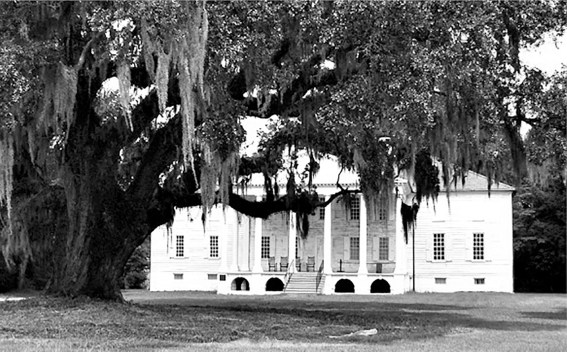
The president’s party had breakfast at Hampton Plantation, the home of the widowed Harriet Pinckney Horry. Her mother, Eliza Lucas Pinckney, had been living with her daughter for several years.

During the visit, Eliza asked Pres. Washington whether a certain oak tree should be cut down to create a better view from the portico. Washington replied that he liked the tree and the view. The tree was saved and from that day it was known as the Washington Oak.
On the road to Charleston County

Washington Oak at Hampton Plantation. Photo by author.

1865

A number of towns around the nation claim holding the first Memorial Day. The distinction generally goes to the town of Waterloo New York. Not so fast.

On May 1, 1865, more than 10,000 people gathered for a parade, to hear speeches and dedicate the graves of Union dead in what is now Hampton Park in Charleston. The group consisted of several thousand black freedmen, northern missionaries and teachers who had arrived in Charleston to teach in freedmen schools post-War.

memorial day - club house

Club House of the Planters Race Course where Union soldiers were imprisoned.

Hampton Park was originally the Planters Race Course and, during the final months of the Civil War, it was a hellish open-air Confederate prison. A total of 257 Union troops died at the camp, some of whom had been transferred from the infamously horrific Andersonville in Georgia before it was liberated.

The dead were originally buried in an unmarked, hastily-dug mass grave by the Confederates. After the war in April 1865, twenty-eight members of local black churches buried the soldiers in individual graves at the site of the camp. They built a fence around the cemetery and an arch over the entrance which read “The Martyrs of the Race Course.”

On May Day, 1865 the large assembly marched to the burial site. Nearly everyone brought flowers to place on the burial field. A New York Tribune correspondent witnessed the event, described as “a procession of friends and mourners as South Carolina and the United States never saw before.”

David Blight, a history professor at Yale, wrote about the event:

The symbolic power of the low-country planter aristocracy’s horse track (where they had displayed their wealth, leisure, and influence) was not lost on the freed people.

The procession began at 9:00 a.m., led by 3000 black children carrying roses and singing “John Brown’s Body.” They were followed by several hundred black women with baskets of flowers and crosses. Black men marched in cadence next, followed Union soldiers which included the famous 54th Massachusetts (made famous in the movie Glory) and the 34th and 104th U.S. Colored Troops. 

Inside the cemetery a children’s choir sang several spirituals, “We’ll Rally Around the Flag” and “The Star Spangled Banner.” Several black ministers read from Bible scriptures. After the service, the crowd gathered for a picnic, watched the soldiers drill and listened to speeches.
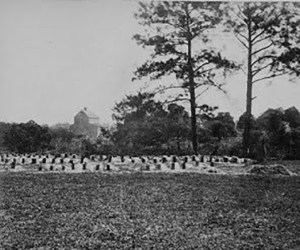
Burial site of soldiers on the race course.

Burial site of soldiers on the race course.

They called it Decoration Day, an annual ritual of remembrance. David Blight wrote:

This was the first Memorial Day. African Americans invented Memorial Day in Charleston, South Carolina. What you have there is black Americans recently freed from slavery announcing to the world with their flowers, their feet, and their songs what the war had been about. What they basically were creating was the Independence Day of a Second American Revolution.

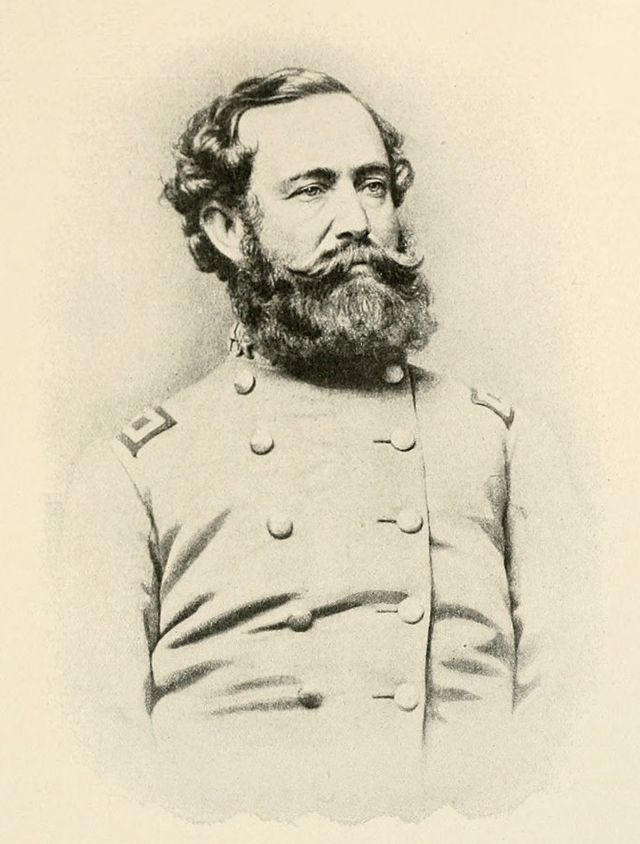
In 1876 former confederate general Wade Hampton declared that it was time for white Southerners to “dedicate themselves to the redemption of the South.” Hampton was elected South Carolina governor that year in one of the most volatile elections in the state’s history, filled with riots, murders, intimidations and blatant voter fraud.

Hampton, running on his white-supremacy program, narrowly defeated Republican governor Daniel Chamberlain, despite the presence of Federal troops under General William T. Sherman in an attempt to stop violent mob action at the polls. On election night, the voter count in Laurens and Edgefield counties exceeded the total population – with most of the votes going to Hampton and the Democrats.

640px-WadeHamptonp274crop

Gen. Wade Hampton

Hampton won the election by less than 1200 votes and each side claimed victory, accusing the other of fraud. To make matters worse, the Democrats won control of the South Carolina House and the Republicans won the Senate. Both parties moved into the State House and refused to leave, sleeping on the floor of their chambers and attempting to conduct legislative business. Outside, supporters of each side gathered as police and militia tried to keep the crowds from turning into mobs

After the South Carolina Supreme Court ruled in favor of the Republicans Chamberlain, with the support of Federal troops, was inaugurated as the governor on December 6, 1876. Hampton claimed that “the people of South Carolina have elected me Governor, and by the Eternal God, I will be the Governor!”

For the next four months South Carolina had rival houses and governors, each claiming to be the legitimate government. White citizens refused to pay their taxes to the Republican administration, but voluntarily contributed 10 percent of their money to the Democrat government. If a state agency wanted money to operate, they had to ask Hampton for funds. Soon there were defections from the Republican administration and Chamberlain’s power base faltered.

When Rutherford B. Hayes was inaugurated as the President of the United States both governors appeared before him. Hayes announced that “the whole army of United States would be inadequate to enforce the authority of Governor Chamberlain.” He ordered the evacuation of the Federal troops from South Carolina and in the first week of April 1877, Chamberlain and the Republicans vacated their offices.

Despite the chaos, the election accomplished Hampton’s goal; it wrenched control from post-War Republicans, many from the North, and back into the hands of the white Democrats. They began to institute a series of laws and reforms which removed tens of thousands of blacks from voter’s rolls. They also established a Confederate Memorial Day designed to help smother the memory of the annual Decoration Day for fallen Union soldiers.

David Blight wrote about the loss of Decoration Day:

As the Lost Cause tradition set in — the Confederate version of the meaning and memory of the war — no one in white Charleston or the state was interested in remembering the war through this event. 

hampton park locBy this time the race course cemetery was suffering from neglect, and the soldiers were reinterred at the Beaufort and Florence National Cemeteries. In 1902 the site of the race course and former cemetery became part of the fair grounds for the South Carolina Inter-State and West Indian Exposition. At the conclusion of the Expo, the city of Charleston acquired the land for a park, which they ironically named in honor of General (and governor) Wade Hampton.

Through the years Memorial Day was generally celebrated May 30. Beginning in 1971, the federal holiday was designated as the last Monday in May.

memorial day marker

Marker honoring the first Memorial Day and Union cemetery.

Today In Charleston History: April 16

1766-Slavery

Christopher Gadsden wrote to William Samuel Johnson, a Connecticut lawyer, about his concerns over the large black population and the constant threat of a revolt.  Gadsden said he hoped that “in the case of South Carolina, the enslavement of blacks would not cause the enslavement of whites.”

1767
Irish architect James Hoban arrived in Charleston from Philadelphia. He was contracted to rebuild the a court house on the ruins of the old State House. President George Washington admired Hoban’s work on his Southern Tour, where he met the young architect in Charleston in May 1791. Washington summoned the architect to Philadelphia, in June 1792, where he was chosen to design and build the White House. 
Both the Charleston County Courthouse and the White House were modeled on Leinster House, the current Irish Parliament Building.
1780-The Siege of Charlestown
pitt statue

LEFT TOP: Map with Pitt statue location. LEFT BOTTOM: Pitt statue in Washington Park. RIGHT: Pitt statue at its present location – Charleston County Courthouse.

A British cannon, fired from the James Island battery, shot off the arm of the statue of William Pitt in the intersection of Broad and Meeting Streets. After the war, the statue was later moved to the Grimke house at 321 East Bay Street. In 1808 it was moved to the Charleston Orphan House and in 1881 moved again to Washington Park. Presently it stands inside the entrance of the new Charleston County Court House.

At this time, the Americans had 4200 men in Charlestown fit for duty while the British counted 8300.

1919 – First Air Show

The first air show was performed in Charleston. It was a promotional tour by the Victory Liberty Loan program that featured eleven planes that were shipped to Hampton Park in pieces. The wings were assembled to the plane’s fuselage in the park.  Most of the pilots were former World War I and thousands of people show up to watch the “thrilling stunts and turns … turning loops … and a daring nose spin.” It was called an “impressive demonstration of the battling power of the airplane.” The local newspapers also reported that:

Interest in the part of the spectators was by no means confined to the machines, the aviators coming in for their share of curiosity, especially by members of the fair sex.

air show

Today In Charleston History: April 3

1736Arrivals.
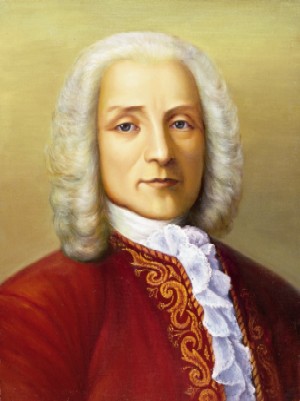
Charles Pachelbel

Charles Theodore Pachelbel

Charles Theodore Pachelbel (baptized Karl Theodorus) arrived in Charlestown. Born in Germany in 1690, he was the son of the famous Johann Pachelbel, composer of the popular Canon in D.

Pachelbel initially migrated to Providence, Rhode Island to install an organ in Trinity Church in 1733. Three years later he arrived in Charlestown and stayed until his death.

1758

Christopher Gadsden paid £6000 currency for fifteen acres of high land (and twenty-nine acres of marsh) in northeastern Charlestown, which became known as Gadsdenboro. Today it is approximately the area that encompasses the Maritime Center and Ansonborough Field.

1776- American Revolution

South Carolina legislature required all ministers and lay officials of each church to support the Patriot cause. President John Rutledge signed an act that prescribed the death penalty and confiscation of property for anyone who aided the British. Rutledge also appointed 46-year-old Col. William Moultrie, former militiaman and Indian fighter, in charge of preparing the city’s military defense.

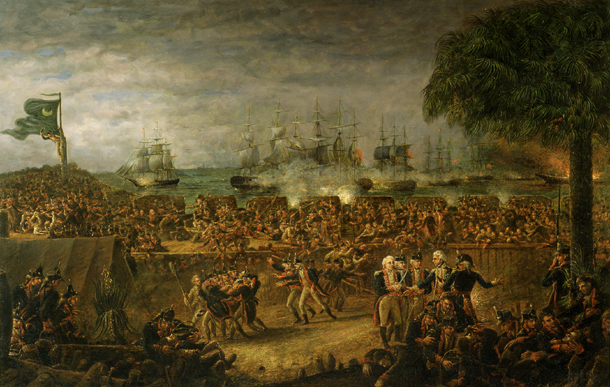
Moultrie supervised the building of a “large fort” on Sullivan’s Island, considered to be the key to the geographically shielded harbor. A large vessel sailing into Charleston had to cross the Charleston Bar, a series of submerged sand banks lying about 8 miles southeast of the city. A half-dozen channels penetrated the bar, but only the southern pair could be navigated by deep-draft ships. A broad anchorage called Five Fathom Hole lay between the bar and Morris Island. Just a thousand yards north of that shoal loomed the newly constructed Fort Sullivan.

Battle of Ft. Sullivan

Battle of Ft. Sullivan

During the next weeks, Moultrie’s work gangs cut thousands of spongy palmetto logs and rafted them over from the other islands and the mainland. The fort’s design was described as “an immense pen 500 feet long and 16 feet wide, filled with sand to stop the shot.” The workers constructed gun platforms out of 2-inch planks and nailed them together with spikes.

 Fort Sullivan was intended was to make an invasion as costly as possible, or, to prevent an invader from landing at all. Since such a fixed defensive position could not reasonably be expected to annihilate the enemy, the fort would have to be backed up by inland troops and a well-armed city.

Today In Charleston History: March 5

1773 – Commerce

Using slave labor, Christopher Gadsden finally completed his 840-foot long wharf at the north end of town on the Cooper River (at the foot of present-day Calhoun Street). It was described as “one of the most extensive of the kind ever undertaken in America.”

Gadsden Wharf on the Cooper River

Gadsden Wharf on the Cooper River

In the late 1760s, Gadsden began the construction of a large wharf on today’s Concord Street between Calhoun and Laurens Street. In January 1767 Gadsden advertised in the South Carolina Gazette for, “Pine logs 16 to18 feet long and from 10 to 12 inches thick.” Work progressed so that in nine months Gadsden announced that he had framed the wharf and had space for two ships that could be loaded and unloaded simultaneously. Gadsden also announced that planters could store their rice at his wharf for a week without charge provided that he was the factor selling the rice. Over the next seven years Gadsden continued expanding the wharf.

 In March 7, 1774 the South Carolina Gazette reported that the,
“Stupendous work was nearly completed and was believe to be the most extensive of its kind ever undertaken by any one man in America.”
In May Gadsden wrote his friend Samuel Adams describing his
“seven years of hard labor to build the wharf, extending 840 feet that included warehouses that could hold 10,000 barrels of rice.”
1778 – American Revolution

The new Constitution of South Carolina was given a third reading and approved. It deprived the President of the state of his veto. It also stated that only Protestants could be legislators or governor. The Anglican Church, was disestablished, but retained all its property.

President John Rutledge resigned his office because he felt this document surrendered all hope of reunion with Britain. Arthur Middleton was elected to succeed Rutledge but he declined. Rawlins Lowndes was then elected and served until Rutledge replaced him in January 1779. Christopher Gadsden was chosen as Vice-President. 

Today In Charleston History: February 16

1671-Arrivals  

Carolina returned from Barbados with sixty-four settlers.

1724- Births
Christopher Gadsden

Christopher Gadsden

Christopher Gadsden, son of Customs Collector Thomas Gadsden, was born in Charlestown. Christopher would become one of the richest and most powerful men in the city’s history.

1737

Charles Theodore Pachelbel married Hanna Poitevin in St. Philip’s Church in Charleston.

Today In Charleston History: February 9

1760 – England

 John Rutledge was called to the English bar and sailed home for Charlestown soon after.

1776 – American Revolution

The South Carolina delegation returned from the Continental Congress. During the return trip from Philadelphia aboard the Hawke, the British man-o-war Syren bore down on the small pilot boat. Capt. Joseph Vesey sailed hard for the shore and beached the Hawke on the North Carolina coast. The delegates and crew scrambled to safety in a nearby swamp and made their way overland to Charles Town, leaving the Hawke as a prize for the British.

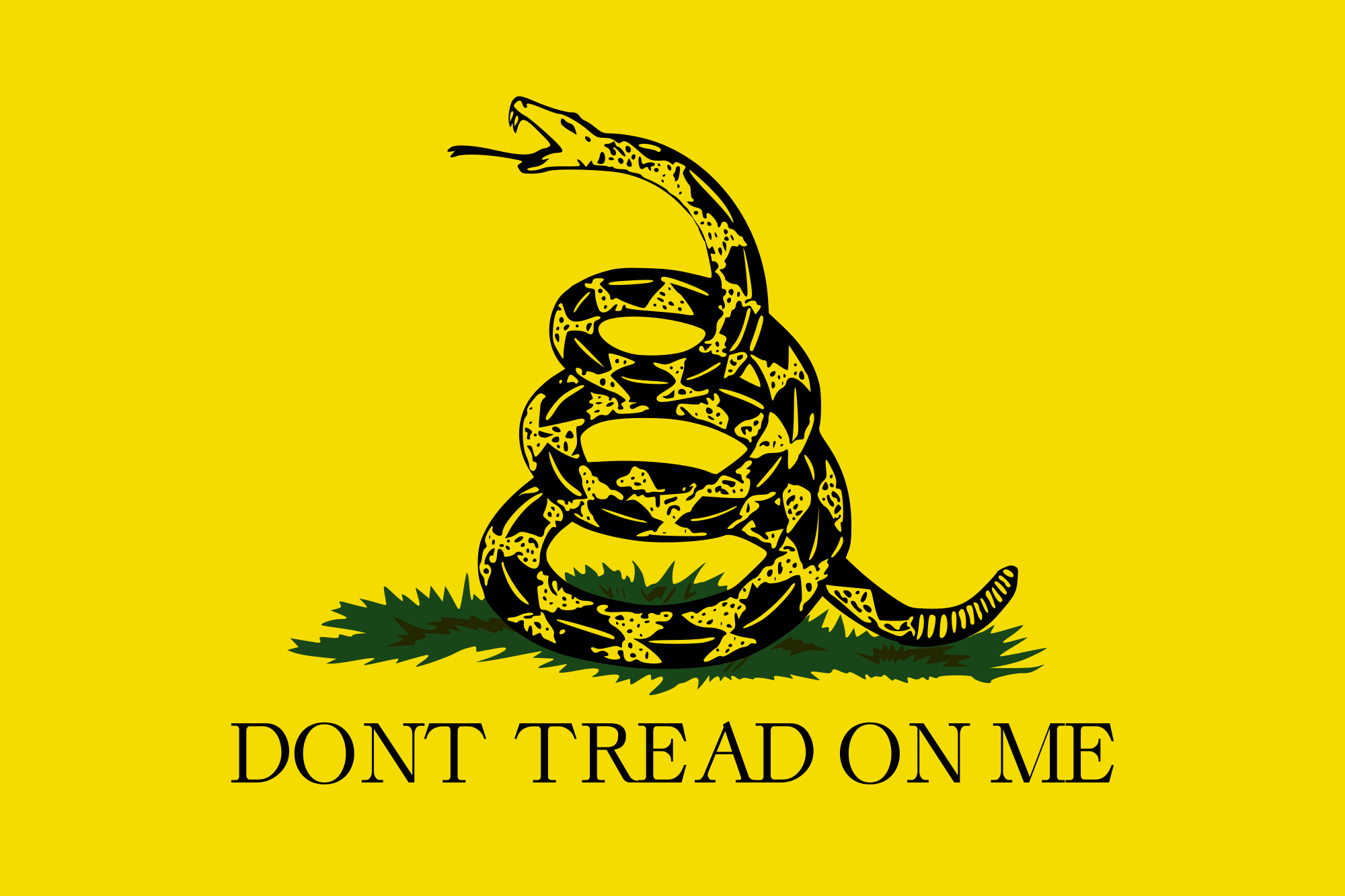
2000px-Gadsden_flag.svgOnce in Charlestown John Rutledge warned that a British attack in the South was probable. Christopher Gadsden presented his “Don’t Tread on Me” flag to the Provincial Congress. As recorded in the South Carolina congressional journals the proclamation read: 

Col. Gadsden presented to the Congress an elegant standard, such as is to be used by the commander in chief of the American Navy; being a yellow field, with a lively representation of a rattlesnake in the middle in the attitude of going to strike and these words underneath, “Don’t tread on me.”

Gadsden also a presented copy of Thomas Paine’s just published Common Sense, which helped inflame local political sensibilities.


Today In Charleston History: February 5

1698 – Arrivals.  
trott-n-lg

Nicholas Trott

Nicholas Trott was appointed Attorney General of Carolina. Trott had served the same post in Bermuda. He was the first Carolina official who was trained at the Inns of Court – a professional association for barristers. His uncle, Sir Nicholas Trott, had been governor of the Bahamas and was accused of harboring pirates for personal profit. Edmund Bohun was appointed Chief Justice.

Disasters

The first recorded earthquake shook the lowcountry.

1755- Walled City

The South Carolina Assembly agreed to hire German-born engineer William De Brahm to build new fortifications under the direction of the Assembly-appointed Commissioners of Fortifications. They decided to concentrate on building up the southeastern seaward side of the peninsula.

1763

gadsdenChristopher Gadsden defended the Assembly’s decision to cease all business until a disputed election issue was settled. It was an early declaration of the “natural rights” philosophy which would soon sweep the American colonies during the opposition against British policies. Gadsden called their action: 

Absolutely necessary, and the only step that a free assembly, freely representing a free people, that have any regard for the preservation of the happy constitution handed down to them by their ancestors, their own most essential welfare, and that of their posterity, could freely take. ‘Tis a joke to talk of individual liberty of free men, unless a collective body, freely chosen from amongst themselves are empowered to watch and guard it.

1779

John Rutledge was elected Governor of South Carolina, replacing Lowndes as chief executive.