In 1864 a young girl was born in Philadelphia. She was christened Margaret Rose Anthony Julia Josephine Catherine Cornelia Donovan O’Donovan. Her friends called her “Daisy.” Her father, Cornelius McCarthy Moore Donavon O’Donavon, died when she was three, and her mother moved to New Orleans and married Gustave Breaux, a wealthy member of an aristocratic French family.

From New York Public Library – Public Domain. Author’s Collection.
Daisy was brought up in wealth and high southern society. She became known for her smart alecky sense of humor and attitude. When schoolmates would make fun of her – “Why do you have a French name and look so Irish?”- she usually responded with a slap in the face. However, once she started turning the heads of boys, Daisy became a popular girl. So much so that her mother sent Daisy off to the Georgetown Visitation convent school in Washington, D.C.
After her schooling was finished Daisy returned to New Orleans and fielded dozens of offers of marriage. In 1885 she married a wealthy Charleston banker, Andrew Simonds, who had lavished her with gifts like a diamond necklace and diamond pendant. She wore both at the altar.
In Charleston, Daisy immediately turned heads. The couple was given a new house on the Battery as a wedding present and Daisy was told her to “decorate it anyway you wish.” She erected scaffolding in the drawing room and personally painted clouds with roses on the ceiling … all while receiving formal guests. Daisy was also fond of giving her guests unflattering nicknames, which she then proceeded to use in public. There was one grand old Charleston dame who always wore a tiara whom Daisy called “the Comb.” Another woman with unfortunately prominent teeth became known as “the Piano.”
However, the most shocking event may have been when Daisy ordered her wedding present destroyed and a new mansion was built in its place at 4 South Battery. It was an Italian Renaissance villa with four Corinthian columns along the front, designed by Frederick P. Dinkelberg who later became famous as the designer of the Flatiron Building in New York.
In 1905, Simonds’s premature death left Daisy and their 5-year-old daughter, Margaret, in a precarious financial position. Ever the practical woman, Daisy turned her Charleston home into a luxury hotel. She named it after herself: the Villa Margherita — “margherita” being Italian for “daisy.”

The “Villa Margherita” (to the left) at 4 South Battery, Charleston, SC. Author’s Collection.
Daisy invented the hotel’s motto out of fractured Latin: “Sic tibi pecunia non intrare non licet est.” Daisy translated it as: “If you ain’t got no money you needn’t come around.” She leased the property to Miss Ina Liese Dawson, who operated the Villa Margherita, serving wealthy northerners on their winter excursions to South Carolina for hunting expeditions, including Henry Ford and Alexander Graham Bell.
Daisy met her second husband, Barker Gummere Jr., when they both happened to be aboard the same yacht during a congressional junket to the Panama Canal. Gummere was a banker whose political influence earned him the nickname the “Kingmaker of New Jersey.” Their 1907 wedding took place in Charleston at the Villa.
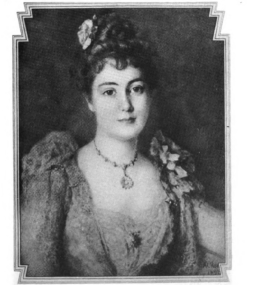
Daisy Gummere. Courtesy Library of Congress
Daisy then designed another house — a mansion called Rosedale on 57 acres that Gummere owned near Princeton. Again, tragedy cut the marriage short when he died of pneumonia in 1914. Daisy hired nine teachers and transformed Rosedale into a private academy for girls, enrolling her daughter as the first student.
Four years later, she married her third husband, Capt. Clarence Crittenden Calhoun. He was a Kentucky lawyer and Spanish-American War veteran with a lucrative law practice in Washington. Daisy became one of the most renowned hostesses in Washington, charming Edward VIII, Prince of Wales and future King of England.
In the summer of 1920, the Calhouns traveled to San Francisco for the Democratic National Convention. The 19th Amendment was about to give women the right to vote, and politicians were eagerly courting this new constituency. Daisy noticed that female conventiongoers were being treated with an amazing amount of deference. Daisy recalled:
While I had always believed in woman’s political power behind the throne, I came away from the Convention a thorough convert to her new place in the world, not only for equal rights in politics and business, but as a public speaker.
Back in Washington, D.C. Daisy had decided to harness what her husband had dubbed “dynamic woman power.” She founded the Woman’s National Foundation, and chief among its bylaws was the promise to educate:
women in their civil rights and duties as citizens, by giving and receiving instruction in history, civics and statescraft and all other branches helpful to good citizenship . . .
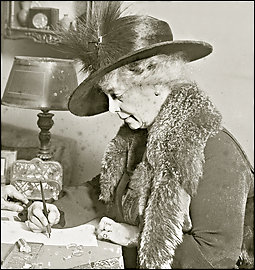
Daisy Calhoun. Courtesy Library of Congress
She raised funds from wealthy donors, in 1921 purchased 10 acres of prime land at Connecticut and Florida avenues NW for $80,000. Known as the Dean estate, the property included a mansion that became the foundation’s headquarters and was the setting for a hectic schedule of civics lessons, socials and inspirational pageants.
Daisy Calhoun, however, discovered that women had a less praiseworthy trait – jealous, sniping harpies. She wrote in her memoir, The Autobiography of a Chameleon:
Many women are so constituted that they cannot bear to see one of their sisters, who has been on a par with them, suddenly elevated to a position of authority over them.
Calhoun’s daughter, Margaret, eloped when she was about 18. Her secret suitor was a wealthy young Washingtonian named Arthur Drury, whom Calhoun described as “feckless and not suited to business.” The marriage didn’t last long, and Margaret later married Charles Waring, a Charleston lawyer. Margaret had children by both men.
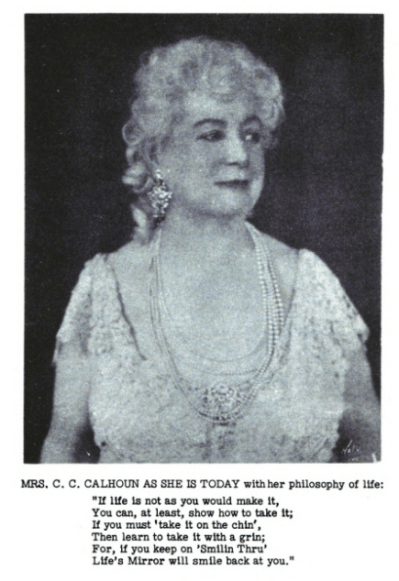
Clarence Calhoun died in 1938 and Daisy Calhoun promised to publish a second memoir that recounted how she had been “prey for many of the scoundrels and racketeers that infest Washington.” She never did, though her cookbook, Favorite Recipes of a Famous Hostess, became popular.
She moved back to Charleston in 1948 and died there the following year at age 85. She was buried at Magnolia Cemetery in Charleston.
Such was the life of Margaret Rose Anthony Julia Josephine Catherine Cornelia Donovan O’Donovan Breaux Simonds Gummere Calhoun.
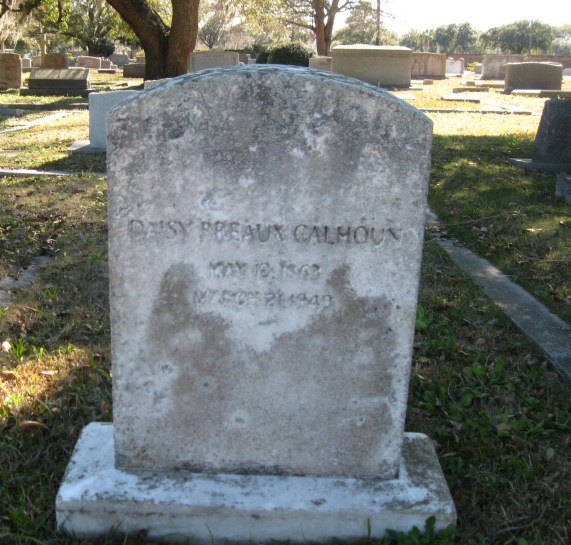
Daisy’s headstone in Magnolia Cemetery, Charleston. Photo by Mark R. Jones

 This is the second book in the Maise Dobbs series and there is a dramatic drop-off. We are constantly told (by other characters) how smart Maisie is, but she never comes across that way. She is cold, arrogant and often condescending. Her method of investigating using mysticism is too much New Ageish, feels silly and is ultimately unbelievable.
 The novel opens on the tenth anniversary of the disappearance of Suzanne Lombard. Her disappearance became one of those national stories that was covered 24/7 for weeks and weeks by the media, mainly due to her father – who was a U.S. Senator at the time, currently the vice president and a presidential candidate. Ten years later, when a new photo of Suzanne appears Gibson Vaughn is approached by a private investigation team to assist in a new inquiry into Suzanne’s case.
 Will Matherson, a retired U.S. Army colonel and college professor, gradually assumes leadership of the town. He speculates that the disaster was created by an EMP (electro-magnetic-pulse) created by either a solar flare, or was man-made. With no rescue coming, and no electricity, basic services disappear and soon the world descends into chaos.
 John Cross, a successful architect in late 19th century New York City, has a problem. Seems his eldest son has accumulated excessive gambling debts, and is entangled in a web of organized crime, thugs and opium dens. A gentleman gangster, James Kent, is determined to make the son, or the father, pay up. So the son is kidnaped and John is blackmailed into helping Kent and his gang set up robberies of prominent New York citizens whose houses and office buildings Cross designed.
 Nettie Lonesome is half black and half Native American. She was “adopted” at a very young age by a white couple and grew up working their farm pretty much as their slave, since they don’t treat her like family. One night she is attacked by a strange man and when she drives a stake into his chest, he turns to sand. From that point on, Nettie can see monsters, and her world is full of them. She encounters vampires (some of whom are prostitutes) and werewolves, as well as creatures like sirens and harpies.
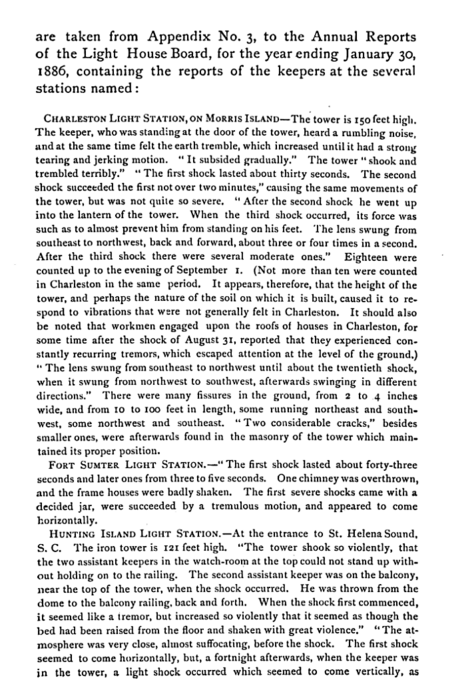
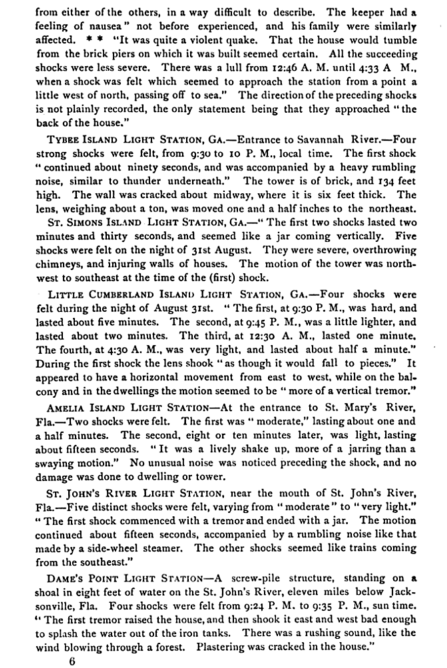
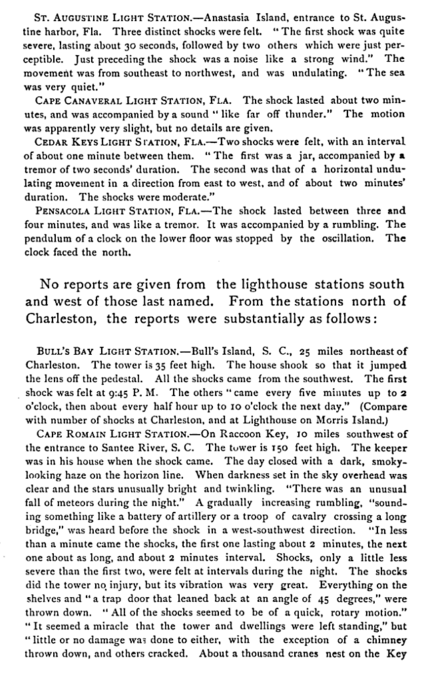
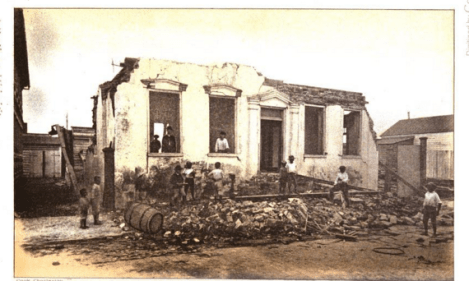
 The following pages are taken from A Descriptive Narrative of the Earthquake of August 31, 1886 by Carl McKinley for the Charleston City Year Book 1887.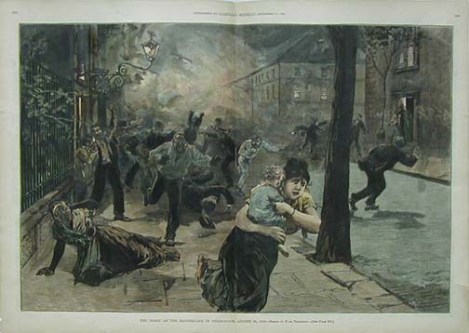

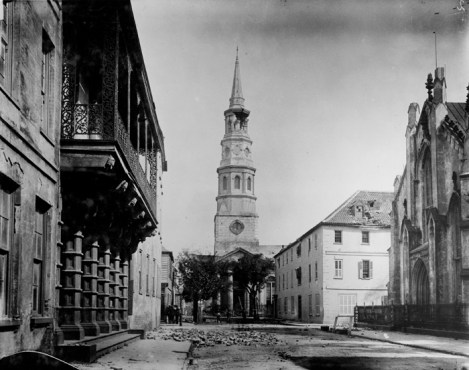










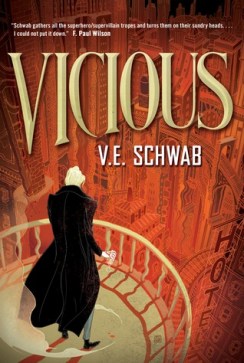 The story: Two college roommates figure out how to give people superpowers – they are called ExtraOrdinarys, or EOs. The process involves dying, being resurrected, and viola! You’re an EO! They naturally begin with themselves, however, superpowers do not make a person superhero. As these two morally ambiguous characters become rivals things become deadly.
 The basic story: Fourteen-year old Malley is being sent away to a boarding school in the cold climes of the Northeast, away from her home in sunny Florida. And since Malley “doesn’t do” cold weather, she decides to run away with a guy she meets online. Disappears without a trace. Her best friend, her cousin Richard, decides to track her down. However, he is also only 14, so where does he even begin?

 MarkJonesBooks