Today In Charleston History: July 21

1669-Fundamental Constitutions of Carolina

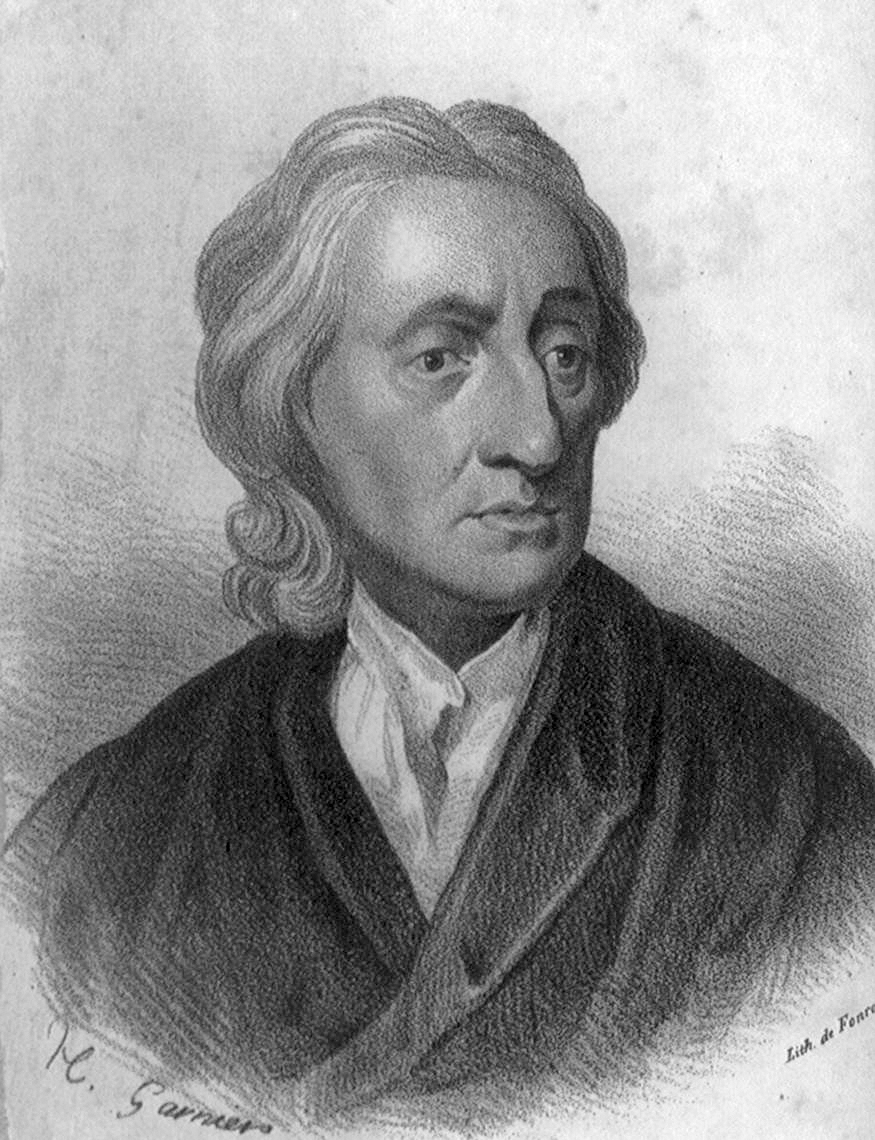
The Fundamental Constitution of Carolina, written by Anthony Ashley Cooper and John Locke, was adopted by the Proprietors. Even though the Fundamental Constitutions never became the official law of Carolina, a number of its provisions were implemented and accepted by the colonists. It was an extraordinary attempt to form an aristocratic government from a colony of adventurers, and also designed to attract settlers by offering religious tolerance, liberal land grants and property rights as well as “titles of honor.” 

Locke-John-LOC

John Locke, leader of the enlightenment movement, and co-author of The Fundamental Constitutions of Carolina.

The Constitution contained similar language of Locke’s famous 1689 A Letter Concerning Toleration, and granted the Carolina Colony religious freedom and a liberty of conscience to all settlers, expressly mentioning “Jews, heathens, and dissenters.” It would have a profound influence on Charleston society, leading to the immigration of the French Huguenots and Sephardic Jews from Portugal. Some of the religious provisions were:

  • Church of England established as the tax-supported church in the colony.
  • Religious freedom for anyone who believed in God.
  • Seven individuals could form a “church or profession” that would be officially recognized. “No person whatsoever shall disturb, molest or persecute another for his speculative opinions in religion, or his way of worship.”
  • Roman Catholicism was not tolerated

The Fundamental Constitution also set up a County Palatine, an official who could exercise powers normally reserved to the crown Palatine and established a system of government by the landed gentry. To vote a man must own 50 acres of property and to hold a seat in the elected legislature, he must own 500 acres. The nobility consisted of:

  • Landgraves (borrowed from German courts): Must possess 48,000 acres
  • Caciques (the title of Indian chiefs in America): must possess 24,000 acres.

The Proprietors promised 150 acres of land to all “free settlers over the age of sixteen” and an additional “100 acres for every able-bodied servant” in their employee. “Master” Stephen Bull had nine servants and received 1050 acres. Servants could include family members (children, cousins, nieces …) and “indentured servants” who signed a work contract for a specific period of time in exchange for their passage to the colony. If an individual acquired 3000 acres, the estate could be declared a manor and the owner would have all the rights of a lord of the manor established by English law.                   

Fundamental_Constitutions_of_CarolinaThe Constitution established “that all subjects who should be transported into the province, and the children born there, should be denizens and lieges of the Kingdom of England.”

It also set out specific and strict laws for slavery, which would become one of the most important issues facing the colony during the next 200 years.  “Every freeman of Carolina shall have absolute power and authority over his negro slaves.”

The Proprietors also approved a “Grand Modell” for the planned colony, based on the grid pattern designed for the rebuilding of London after the Great Fire of 1666.

1856

The Charleston Evening News published an editorial by Col. John Cunningham, which prompted a response from L.M. Hatch, the editor of the Standard. Cunningham charged Hatch with a “studied and wanton personal insult” and demanded satisfaction. He appointed his friend William Taber, editor of the Charleston Mercury, as his second – to negotiate the details of the duel.

1861-Civil War
Pierre Gustave Toutant Beuaregard

Pierre Gustave Toutant Beuaregard

P.G.T. Beauregard  was promoted on July 21 to be one of the eventual seven full generals in the Confederate Army; his date of rank made him the fifth most senior general, behind Samuel CooperAlbert Sidney JohnstonRobert E. Lee, and Joseph E. Johnston.

1892-Jenkins Orphanage

Daniel Jenkins received a charter from the state of South Carolina to operate the Orphan Aid Society. At this point Jenkins and his wife Lena were taking care of several dozen black lambs. Jenkins knew he needed help; the Society needed a substantial and dependable source of money. He hoped the city of Charleston would be a significant benefactor. After all, city authorities and elite citizens had a 100-year history of generously supporting the Charleston Orphan House.

They gave him $50.

Today In Charleston History: July 20

1672 – Oyster Point

The surveyor general, John Culpepper of Barbados, was ordered to “admeasure and layout for a town on the Oyster Point.”

Most of the land on Oyster Point had been given as a grant to Henry Hughes and John Coming, first mate of the Carolina in 1670. Both men voluntarily surrendered half of their lands “to be employed in and toward the outlaying of a town and commons.” This made the original plan for Charles Town extending no farther west than present Meeting Street, no farther north than Broad Street and no farther south than Water Street. 

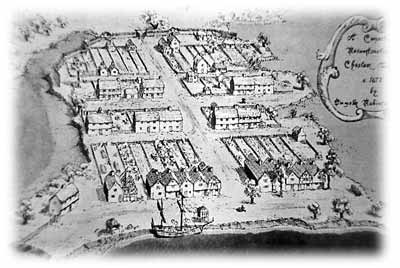
Early Charlestown

Early Charlestown

1773 

David Ramsay, an Irish immigrant and graduate of Princeton, was awarded a medical degree from the College of Philadelphia.

1776 – American Revolution

The Continental Congress issued the following proclamation:

“Resolved, That the thanks of the United States of America, be given to Maj. Gen. Lee, Col. William Moultrie, Col. William Thomson, and the officers and soldiers under their commands; who on the 28th day of June last, repulsed, with so much valor, the attack which was made on the State of South-Carolina, by the fleet and army of his British majesty.

That Mr. President transmits the foregoing resolution to Maj. Gen. Lee, Col. Moultrie, and Col. Thomson.

 By order of the Congress.

John Hancock, President.”

1863 – Civil War

Mayor Charles Macbeth and Gen. Beauregard urged “all women and children, and other non-combatants … leave the city as soon as possible.”   

1914 – Charleston Library Society

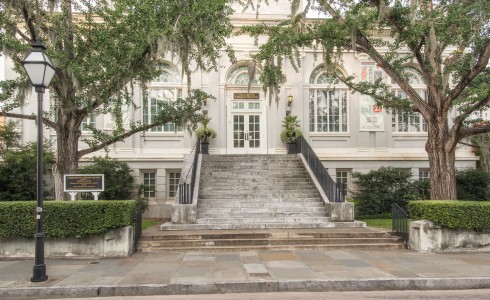
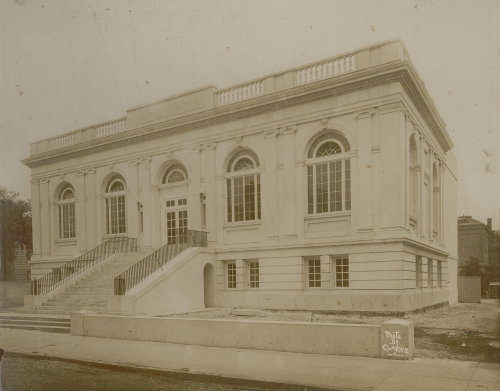
The new home of the Charleston Library Society opened, a Beaux Arts-style at 164 King building designed and constructed specifically for the society. During the opening day,  the public lined up the front steps to experience its light-filled rooms, fireproof structure, electric lamps, steam heat, and the vacuum system keeping it dust free.

The 60,000 books, pamphlets, and magazines were then accessible for $4 a year, and members such as DuBose Heyward, John Bennett, Albert Simons, and Josephine Pinckney came to read and write here.

Today, the society holds more than 110,000 volumes—from those dating to the medieval period to current best sellers—as well as an archive of rare Charleston imprints and manuscripts documenting the founders of our country, state, and city. In recent years, it has been hosting concerts, book signings, art installations, and lectures with renewed vigor, drawing a new generation of culture-seekers to propel the building into another century.

Charleston-Library-Society-4-490x300

164 King Street, Charleston Library Society, modern view

CLS_1914_medium

164 King Street, Charleston Library Society, 1914

Today In Charleston History: July 19

1863-Civil War. Battery Wagner

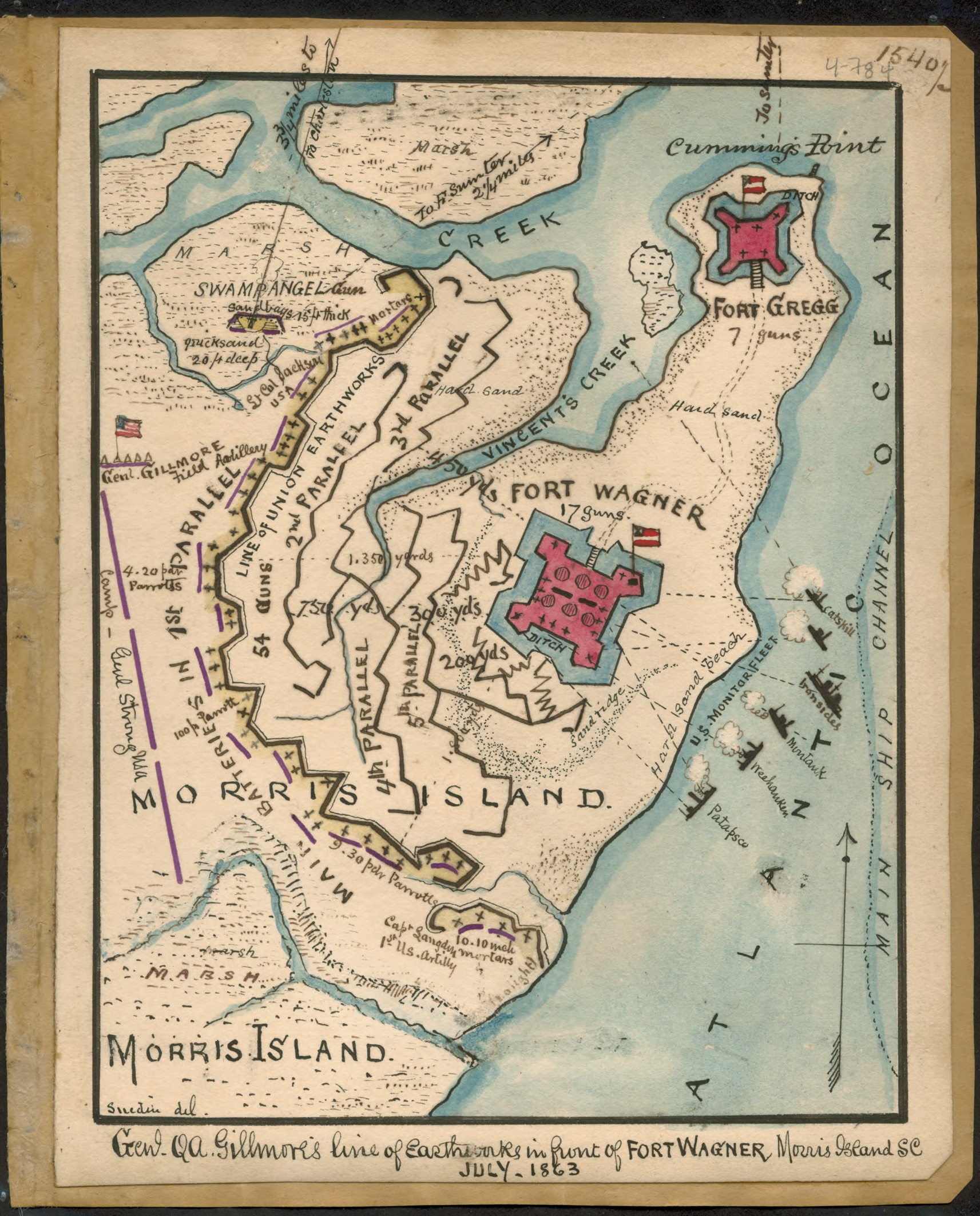
The morning after the assault of 54th Massachusetts, Gen. Beauregard instructed General Ripley to hold “Morris Island at all costs for the present.” General Gillmore (U.S. Army) resumed bombardment of Fort Wagner.

fort-wagner-sc-day-after-attack-by-union-jpg

Fort Wagner, the day after the assault by the 54th Massachusetts

Map of Morris Island

Map of Morris Island

Today In Charleston History: July 18

1800-Deaths

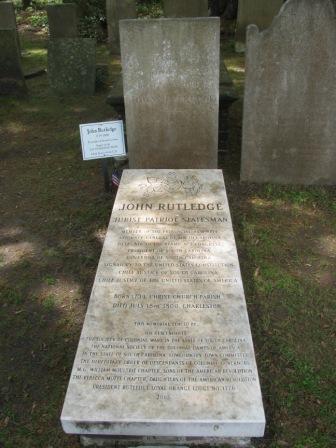
John Rutledge died from “the wearing out of an exhausted frame rather than … positive illness.” He was buried in St. Michael’s graveyard. He died without ever recovering from the crippling financial debt accrued during the Revolution. 

John Rutledge

John Rutledge

One of Charleston’s “founding fathers” Rutledge, a lawyer, served as provincial attorney general (1764), and was voted to the Stamp Act Congress (1765). He served in the 1st Continental Congress (1774) and 2nd Continental Congress (1775). In 1776, he helped South Carolina write a new state constitution, and was elected president of the new state government.

During the Constitutional Convention, he maintained a moderate nationalist stance and chaired the Committee of Detail, he attended all the sessions, spoke often and effectively, and served on five committees. Like his fellow South Carolina delegates, he vigorously advocated southern interests. In 1787 he was one of the signer of the Constituion of the United States. 

President George Washington appointed Rutledge as Associate Justice of the U.S. Supreme Court. In 1791 he became chief justice of the South Carolina supreme court. Four years later, Washington again appointed him to the U.S. Supreme Court, this time as Chief Justice to replace John Jay. But Rutledge’s outspoken opposition to Jay’s Treaty (1794), and the intermittent mental illness he had suffered from since the death of his wife in 1792, caused the Federalist-dominated Senate to reject his appointment and end his public career. Meantime, however, he had presided over one term of the Court.

Rutledge_John

John Rutledge’s grave, St. Michael’s Church


1863-Civil War. Assault on Battery Wagner

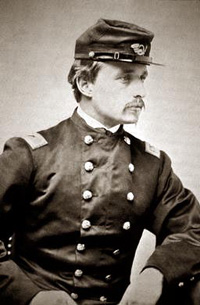
Union Colonel Robert Gould Shaw and 272 of his troops were killed in an assault on Fort Wagner, near Charleston, South Carolina. Shaw was commander of the 54th Massachusetts Infantry, perhaps the most famous regiment of African-American troops during the war.

black-troops-fort-wagner-1500

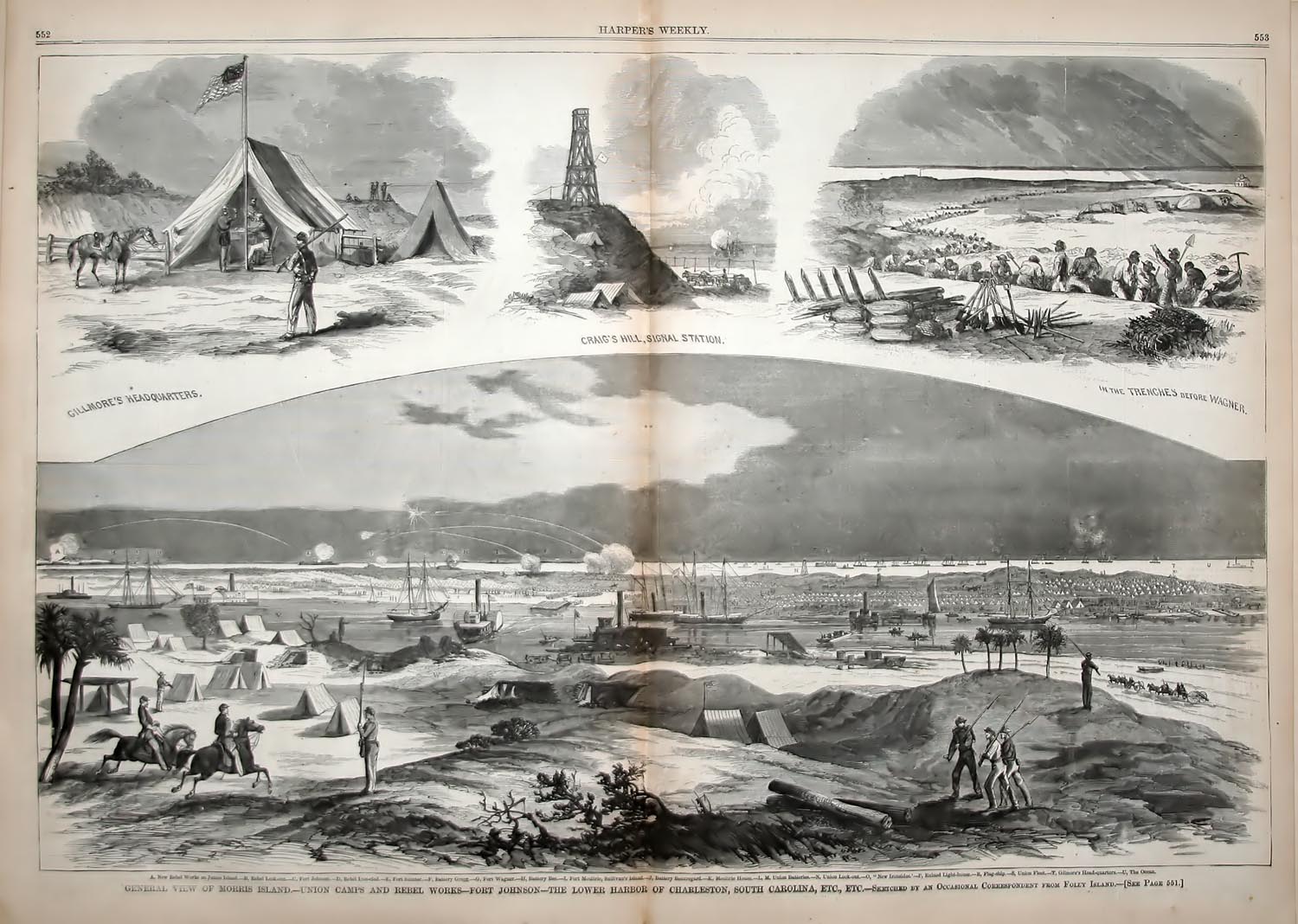
Images of Battery Wagner, Harper’s Weekly

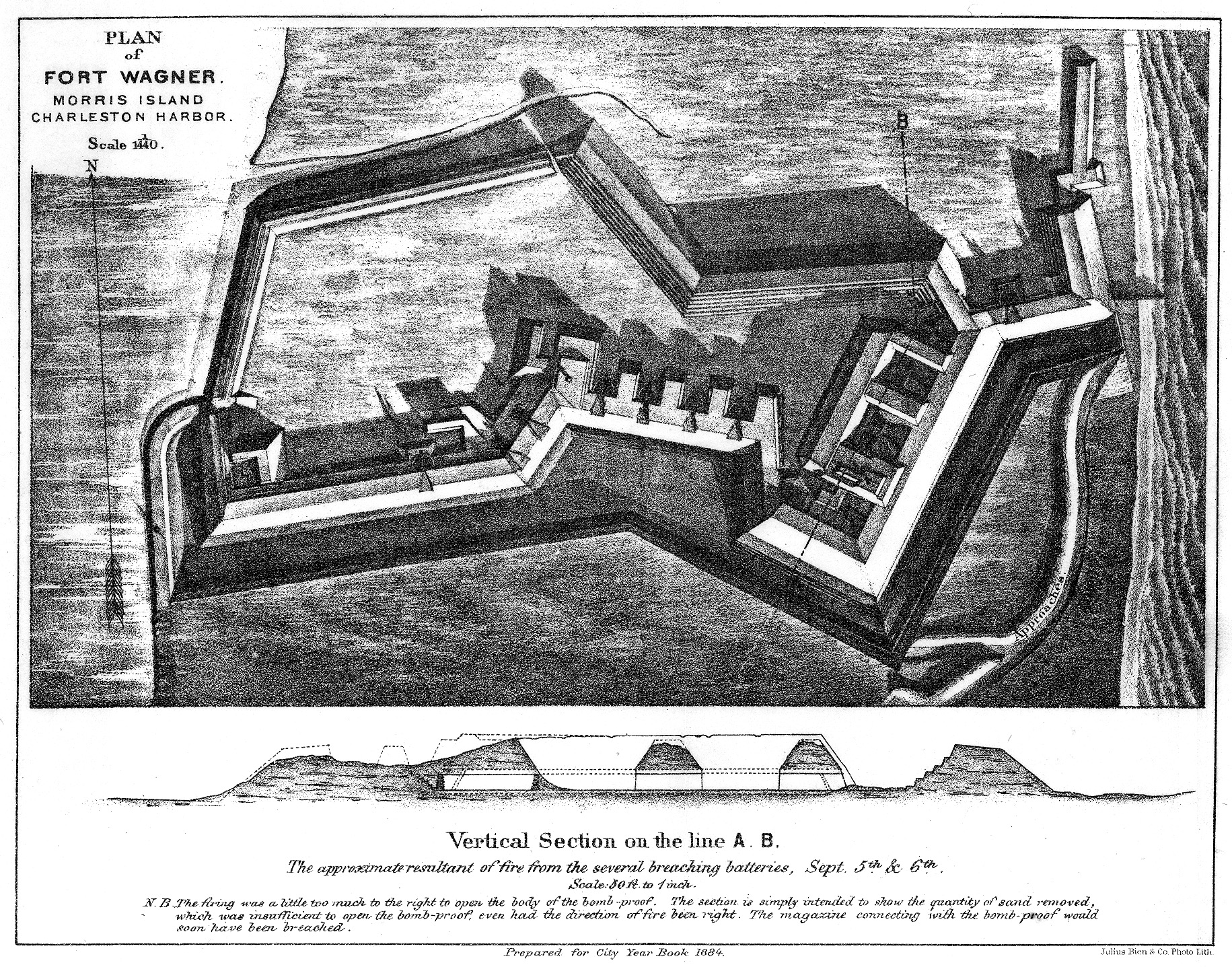
Fort Wagner stood on Morris Island, guarding the approach to Charleston harbor. It was a massive earthwork, 600 feet wide and made from sand piled 30 feet high. The only approach to the fort was across a narrow stretch of beach bounded by the Atlantic on one side and a swampy marshland on the other. Union General Quincy Gillmore headed an operation in July 1863 to take the island and seal the approach to Charleston.

wagner

Col. Robert Shaw

Col. Robert Shaw

Shaw and his 54th Massachusetts were chosen to lead the attack of July 18. Shaw was the scion of an abolitionist family and a veteran of the 1862 Shenandoah Valley and Antietam campaigns. The regiment included two sons of abolitionist Frederick Douglass and the grandson of author and poet Sojourner Truth.

Confederate General Samuel Jones wrote:

The First Brigade was formed in column by regiments, except the Fifty-fourth Massachusetts … it was a negro regiment, recruited in Massachusetts, and was regarded as an admirable and reliable body of men. Half the ground to be traversed before reaching Wagner was undulating with sand hills, which afforded some shelter, but not so much as prevent free and easy movement; the other half smooth and unobstructed up to the ditch. Within easy range of Wagner the march encroached so much on the firm sand of the island as leave a narrow way between it and the water.

Union artillery battered Fort Wagner all day on July 18, but the barrage did little damage to the fort and its garrison. At 7:45 p.m., the attack commenced. Yankee troops had to march 1,200 yards down the beach to the stronghold, facing a hail of bullets from the Confederates. Shaw’s troops and other Union regiments penetrated the walls at two points but did not have sufficient numbers to take the fort. Over 1,500 Union troops fell or were captured to the Confederates’ 222.

The Storming of Ft. Wagner, lithograph by Kurz and Allison,1890

The Storming of Ft. Wagner, lithograph by Kurz and Allison,1890

Despite the failure, the battle proved that African-American forces could not only hold their own but also excel in battle. The experience of Shaw and his regiment was memorialized in the critically acclaimed 1990 movie Glory, starring Mathew Broderick, Denzel Washington, and Morgan Freeman. Washington won an Academy Award for his role in the film.

To read more about the assault on Fort Wagner, read here

1864-Civil War
George Trenholm

George Trenholm

George Trenholm replaced Christopher G. Memminger as Secretary of the Treasury in President Jefferson Davis’s Cabinet. As skilled as he was with money, Trenholm couldn’t rescue the Confederate economy. After the fall of Richmond, he took flight southward with the rest of the Cabinet, but in ill health, was unable to continue running.

CAROLINA CRIMES: The Holy Trinity of Saxe-Gotha

A chapter from a book-in-progress, Carolina Crimes.


Lexington County, South Carolina

1730

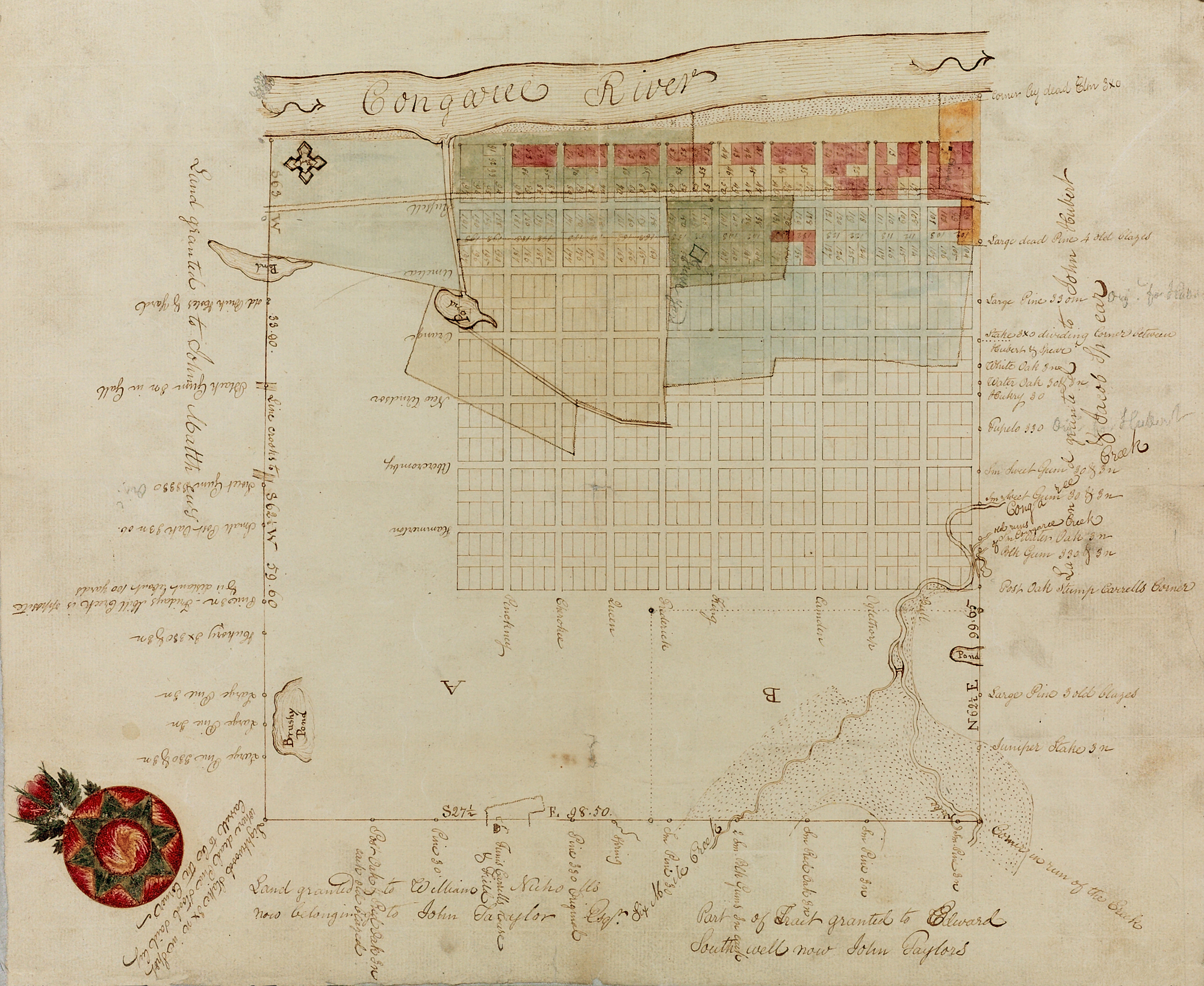
Saxe-Gotha in South Carolina was originally called the Congaree Township, located on the south side of the Congaree River in what is present-day Lexington County. As part of the Township Act of 1730 the Congaree was a grant of 20,000 acres. Royal agents were sent across Europe to recruit families as settlers, offering inducements such as free transportation to South Carolina, free provisions for one year, and free land. The Congaree Township was mainly settled by German Lutherans who renamed it Saxe-Gotha in 1735 as a reflection of their native land.

Saxe-Gotha town plat

Saxe-Gotha town plat

This township movement of the Carolina backcounty created a region that was economically, culturally and politically distinct from the lowcountry and Charleston. The backcountry tended to be more loyal to the British government than their lowcountry counterparts. It was also a more diverse religious area. Whereas the lowcountry was heavily Anglican, the backcountry was a “mix’d Medley [of] Sects and Demoninations” which included Baptists, Presbyterians and Lutherans.

The folks in the backcountry also had to deal with more volatile relations with Indians. As more white settlers encroached on Indian’s lands, skirmishes between the groups were more common, and just as common, was the quick brutal rebuttal. The more refined lifestyle of Charlestown was far removed from Saxe-Gotha. Many of the backcountry settlers were illiterate farmers. Lutheran minister, Henry Muhlenberg, described them such:

woodmasonThe people in the country, in general, grew up without schools and instruction. Occasionally a self-taught minister may labor for awhile amongst them, yet it continues only a short time. The people are wild, and continue to grow wilder …

Rev. Charles Woodmason, an Anglican priest who traveled as an itinerant minister throughout the backcountry, was horrified by their lifestyle. He wrote that:

The Open profanation of the Lords Day in this Province is one of the most crying Sins in it – and is carried to a great height – among the low Class, it is abus’d by women frolicking and Wantoness. By others in Drinking Bouts and Card Playing … the Taverns have more visitants than the Churches. They delight in … low, lazy, sluttish heathenish hellish Life and seem not desirous of changing it. Out of 100 Women that I marry … six are without child.

Jacob Weber was born in Switzerland on December 30, 1725 and was “reared and instructed in the Reformed church.” At age fourteen he and his brother Henirich immigrated to South Carolina and settled in Saxe-Gotha in 1739. Heinrich died shortly after arriving in the colony leaving Jacob in “much adversity and suffering.”

1754

By this time Jacob was married. He and his wife, Hannah, had two children and acquired 200 acres of land in the Dutch Fork area west of Saxe-Gotha, north of the juncture of the Broad and Saluda Rivers. He also completed a spiritual crisis which had begun with his brother’s death. Weber wrote that he was taking:

More pleasure in …. Godliness, and in god’s word that in the world. I was often troubled about my soul’s salvation when I thought of how God would require of me a strict accounting and how I would then hear the judgment pronounced upon me, not knowing what it would be.

1758

Weber began to invite his neighbors to gather at his house on Sunday for worship, which consisted of singing hymns and listening to Weber read from a book of sermons. In his journals, Rev. Muhlenberg discussed Jacob Weber, writing that “gradually, the hearers began to admire and honor and praise the reader, which in turn caused him to begin to admire himself.” That led Weber to preach more “out of his own spirit” and ignore written texts. Soon the “astonished” neighbors” began “to deify him.”

Like any cult of religious fanatics, it is difficult for outsiders, in particular in hindsight, to understand the dynamic that created the atmosphere leading to the establishment of a sect called the Weberites. But within this remote, enclosed society a new Holy Trinity was established, with Weber as God. A man named John George Smithpeter was the Son and a slave known only as Dauber was deemed to be the Holy Spirit. Hannah Weber was elevated to the role of the Virgin Mary.

According to Muhlenberg, the Weberites began to practice:

atrocious blasphemies … as groups of both sexes went about unclothed and naked, and practiced the most abominable wantonness. In their religious rites, they often fell into trances. They sanctioned nudity and marital confusion.

The sect quickly grew in number.

Reverend Christian Theus, a Reformed minister in the region, attended a Weberite meeting. As he reported to Rev. Muhlenberg, it nearly cost him his life. Theus described the Trinity was seated on an elevated platform as the congregation sat at their feet. Smithpeter asked, “Little parson, do you believe that I am the redeemer and savior of the world and that no man can be saved without me?”

Theus answered the “blasphemous question with a stern rebuke.” The Trinity and the congregation sentenced him to death and discussed whether he should be “hanged from the nearest tree or drowned in the deepest depths.” Theus managed to escape on foot to the Broad River where he was rescued by a passing boat.

February 23 & 24, 1761

The Trinity had a falling out, most likely over the heavy-handed behavior of Smithpeter. Smithpeter decided that Dauber had failed in “properly exercising the office of the Spirit.” According to Muhlenberg:

They placed a mattress on the bottom of a pit, threw Dauber in and piled more mattress and pillows on him. Members of the sect leaped in upon Dauber and trampled him until he suffocated. The corpse was taken out of bed and thrown into a burning pile of wood, to be consumed to ashes.

Michael Hans, an indentured servant who refused to join the Weberites, was then murdered. Webe and Smithpeter then quarreled over the two murders. According to the account written by Muhlenberg, Weber then:

declared him [Smithpeter] to be the Dragon … and chained him to a tree. The members of the band surrounded him, struck him with their fists, and beat him until he fell to the ground, and finally danced around him and trampled upon his throat until he had had enough.

Four Weberites were arrested by the Charlestown militia and put on trial for murder. Some sources claim that seven were arrested, three of them were pardoned and four executed:

  • Jacob Weber
  • Hannah Weber
  • John Geiger
  • Jacob Bourghart

However, a look at the record indicates that only one may have been executed, Jacob Weber.

April 25, 1761

The South Carolina Gazette wrote:

Some unhappy wretches, who in a fit of religious fervor and enthusiasm, had in a most barbarous manner, murdered on Michael Hass and Captain John George Smithpeter on the 23rd and 24th February last, at Congaree. Were brought down from thence and committed to jail. This delusion was so great that they acknowledged the murders, and for some days attempted to justify themselves; but at March sessions they were too well convinced of their error, that seven of them were indicted and tried and four convicted. Jacob Weber, John Geiger, Jacob Burghard and Hannah Weber, who all received sentence of death on the 31st and on the 17th, Jacob Weber was hanged pursuant to his sentence, behaving in a very becoming manner and dying a true pentitent. The other three were reprieved until May. 

April 26, 1761

Lt. Governor William Bull wrote a letter to William Pitt, the British Secretary of State, requesting pardons for Hannah Weber, John Geiger and Jacob Burghard.

Sir,

I am to acquaint you that at the last General Sessions … held at Charles Town, Jacob Weber, Hannah Weber, John Geiger and Jacob Burghard were tried and found guilty of murder, and received the sentence of deaths on the thirty-first of March last, and in pursuance thereof Jacob Weber was executed. I though Hannah Weber, John Geiger and Jacob Burghard, who acted by his commands, to be objects of His Majesty’s mercy and therefore reprieved them till His Majesty’s pleasure therein shall be known.

I thought it necessary that one, the Chief, should suffer, and as Public Justice is thereby satisfied for the blood of Murder, and as Hannah Weber, John Geiger, and Jacob Burghard each with numerous Families, bear the Character of being long known, orderly and industrious to recommend them as Objects worthy of His Majesty’s most gracious Pardon.

I must further take the liberty of representing to you, that as they are very poor, they have no Friend but your Compassion to solicit for their Pardon, no money to defray the expense of issuing this Act of Royal Grace through the usual Channel particular persons, and stand no chance of receiving this Benefit, if they shall fortunately be thought worthy of it, but by being inserted in some General Pardon.

I have the Honor to be with the greatest respect, Sir,

Your most humble Servant,

William Bull

Contrary to the claims of the Gazette, Weber did not die as a “true penitent.” In his written confession before execution he blamed Satan and Smithpeter for his “great calamity.” Like many convicted criminals, Weber claimed that was a victim, lured into sin by Satan who used Smithpeter as the “author and instrument of my ghastly fall.”  He also wrote:

I am again experiencing the testimony of the Holy Spirit. The Spirit of God is bearing witness with my spirit that I am the child of God.

According to Francis Asbury, Methodist bishop, Weber also promised “to rise the third day” after his execution, certainly not the words of a penitent man.

Weber never rose.

Today In Charleston History: July 17

1755 – Slavery

Henry Laurens described what he most desired in a slave cargo for maximum profits:

Two thirds at least Men from 18 to 25 years old, the other young Women from 14 to 18 the cost not to exceed Twenty five pounds Sterling per head … There must not be a Callabar [region in Africa, present-day Nigeria] amongst them. Gold Coast and Gambias are best, next to them the Windward Coast are prefer’d to Angolas. Pray observe that our People like tall Slaves best for our business & strong withall.

1837-Slavery

Angelina Grimke debated John Page about slavery – the first public debate between a male and female. Angelina asked Page to refrain from calling her as his “fair opponent,” adding that she wished to be judged on her intellect rather than her gender.

These debates created a controversy, with many people complaining about the prominent role the Grimke sisters were taking in a public issue, unseemly for ladies. 

1884-Reconstruction
Robert Smalls

Robert Smalls

Robert Smalls was elected to Congress, the first of five terms.  His most important legislation while in Congress was a bill that led to the creation of Parris Island Marine Base in South Carolina.

To read more about Smalls, click here – Robert Smalls: A Traveling Exhibition.

Today In Charleston History: July 16

1783 – Gazette Resumes Publication

Ann Timothy, widow of Peter Timothy, resumed publication of the Gazette of the State of South Carolina, continuing the tradition started by her mother-in-law, Elizabeth Timothy. Peter was arrested in 1781 by the British and transported to St. Augustine for imprisonment during the Revolution. He was “lost” at  sea during the voyage from Charlestown. 

——————————

Capt. Joseph Vesey leased two town lots in Charlestown from John Christian Smith. Vesey and his wife lived at 281 King Street, and the other building on East Bay Street, became Vesey’s business office.

He set himself up as a ship chandler – an importer and retailer of various commodities including naval stores, rum, sugar and African slaves. To raise the capital for his business, Vesey sold his ship Prospect and liquidated his interest in two other Caribbean slave trading vessels, the Dove and the Polly.

Vesey’s trusted manservant, Telemaque (Denmark) enjoyed quasi-freedom in the urban environment of Charlestown. He discovered a thriving black community living an illicit social life in the city’s back alleys, hidden courtyards, street corners and church basements. 

1863 – Civil War

In the Battle of Sol Legare Island, Union troops attacked the fortifications on James Island and Folly Island, but were repelled by the confederate forces. One of America´s first African American Army Regiments, 54th Massachusetts, organized in the North, fought during the Sol Legare Island battle, losing 14 men. 17 were wounded and 12 missing. 

This defeat lead to the grand assault on Battery Wagner two days later, featured in the movie Glory which was based on the true story of Massachusetts’ 54th brigade, comprised from the first all-black volunteer company, fighting the prejudices of both the Union army and the Confederate army.

Soldiers from the 54th Massachusetts Regiment.

Soldiers from the 54th Massachusetts Regiment.

Today In Charleston History: July 15

1740-Religion
Rev. George Whitefield - open air preaching

Rev. George Whitefield – open air preaching

Rev. George Whitefield appeared with his counsel, Andrew Rutledge, before an ecclesiastical court at St. Philip’s Church to answer for his violations of Anglican canons and rubries. He was found guilty and suspended. He appealed to the Lords Commissioners appointed by the King for hearing appeals of spiritual cause in his Majesty’s Plantations in America. Whitefield was allowed to continue to practice his ministry until the appeal.

1801-Religion

The Hebrew Orphan Society was organized. Although Jewish children could be placed in the Charleston Orphanage House, evidently some were afraid of the Christian training the youth would get.

1820-Slavery

In a speech on the Missouri Compromise, Charles Pinckney laid out the unwieldy rationale that permeated most of the Southern leaders:

every slave has a comfortable home, is well fed, clothed and taken care of … The great body of slaves are happier in their present situation than they could be in any other and the man or men who would attempt to give them freedom would be their greatest enemies!

1831
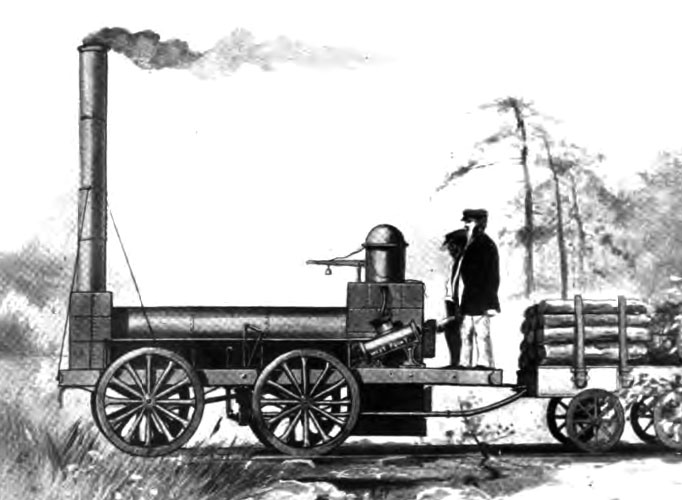
West Point locomotive

West Point locomotive

The West Point locomotive started regular service on the Charleston & Hamburg Rail Road, in place of the damaged Best Friend.

1848-Religion. Slavery

A committee of laymen hired a large room, known as Temperance Hall, over a carriage warehouse on Meeting Street for worship services for Calvary Church.

1861 – Blockade Running

Theodora, originally named Carolina, then Gordon, Theodora and finally, Nassau, intermixed privateering with a blockade running and charter service to the Confederate States as a transport and picket ship.

She was built as Carolina at Greenpoint, N.Y., in 1852 for service as a coastal packet out of Charleston, S.C., occasionally crossing to Havana, Cuba. Upon outbreak of Civil War she was strengthened and refitted as the Gordon, under Capt. T. J. Lockwood, and placed in commission as a privateer at Charleston on 15 July 1861.

1926-Jenkins Orphanage Band

Edmund Thornton Jenkins was admitted to the Hospital Tenon in Paris. The diagnosis was appendicitis and he underwent surgery. After being returned to his bed he fell onto the floor sometime during the night where he remained undiscovered for several hours. He contracted pneumonia and his condition worsened. However, for some inexplicable reason, he was released from the hospital and sent home.

Edmund Thorton Jenkins

Edmund Thorton Jenkins.

Today In Charleston History: July 14

1837-Slavery

The Grimke sisters, Sarah and Angelina, embarked on a lecture tour across Massachusetts. In Amesbury they were challenged by John Page, a local man who had recently lived for several years in the South. He thought the slaves were “no worse off than the … manufacturers [factory workers]of the North.” Since most of the people in Amesbury worked in shoe manufacturing, their remarks created such an uproar that Angelina agreed to a public debate with Page.

1849-Religion. Slavery
James Petigru

James Petigru

On Saturday night, after the trial of Nicholas and two other ringleaders of the Work House escape, a mob gathered at City Hall to destroy the nearly completed black church on Beaufain Street, located a block from the Work House.  As the mob assembled, James L. Petrigru, an esteemed Charleston lawyer and member of St. Michael’s Church, stood on the city hall steps and addressed the mob. His efforts saved the church from destruction.

1903

Charleston City Council approved the purchase of the Rhett Farm for $35,000 to extend Hampton Park.

Today In Charleston History: July 13

JULY 13

1769-American Revolution – Foundations

The South Carolina Gazette contained advertisements that called for the merchants to meet at Dillon’s Tavern and the mechanics and planters at the Liberty Tree to discuss the Townsend Duties Act. All agreed that “taxation without representation” was the main grievance.

1787-Constitutional Convention
indianqueen-s

Indian Queen Tavern

Menassah Cutler, noted in his journal that he saw James Madison, George Mason, Alexander Hamilton, John Rutledge and Charles Pinckney having dinner at the Indian Queen Tavern at the corner of Market and Third streets.  Most historians interpret this meeting as a backroom deal on the slavery question.

Pierce Butler of South Carolina introduced the Fugitive Slave law.

1804-Burr-Hamilton Duel

Vice president Aaron Burr wrote to his son-in-law, Joseph Alston, in Charleston:

General Hamilton died yesterday. The malignant federalists … unite in endeavouring to excite public sympathy in his favour and indignation against his antagonist … I propose leaving town for a few days, and meditate also a journey for a few weeks …