Today In Charleston History: August 15

1739

The Security Act was passed by the Assembly in response to white fears about the majority Negro population. The Act required that all white men carry firearms to church on Sunday. Anyone not in compliance of the law by September 29 would be subjected to a fine.

1779 – Births.
Joseph Alston

Joseph Alston

Joseph Alston was born in Charleston. He was a future governor of South Carolina and inherited one of the state’s largest fortunes. He would later marry Theodosia Burr, daughter of vice-president Aaron Burr.  

Today In Charleston History: August 14

1743-Slavery. Executions

 A Mr. Snowden was set on fire by a Negro man, who was convicted and publicly burned to death.

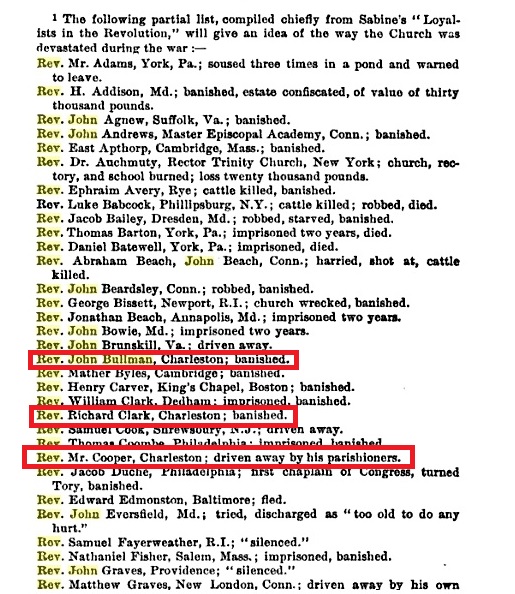
clergy banished1774

 The Sunday morning departure of Christopher Gadsden and Thomas Lynch to Philadelphia to attend the Continental Congress created a stir in Charlestown. Most of the clergy were on the side of the Revolutionaries. However, Rev. John Bullman, assistant minister at St. Michael’s Church, boldly preached a sermon titled “The Christian Duty of Peaceableness.” In a thinly veiled reference to the Boston Tea Party, he stated it was not the place of “a silly clown or illiterate mechanic (Sam Adams) to meddle in the affairs of princes and governors.” He called Gadsden and Lynch both “traitors.” Unfortunately for Bullman, many Charlestonians were sympathetic to the Boston resistance. The vestry voted 42-33 and dismissed him from the pulpit.

1863 

The Commission for the Removal of Non-Combatants submitted a list of “Camp-Grounds” prepared to receive refugees around South Carolina, which included: Summerville, Ridgeville, Branchville and St. Matthews.

ttd16-31901

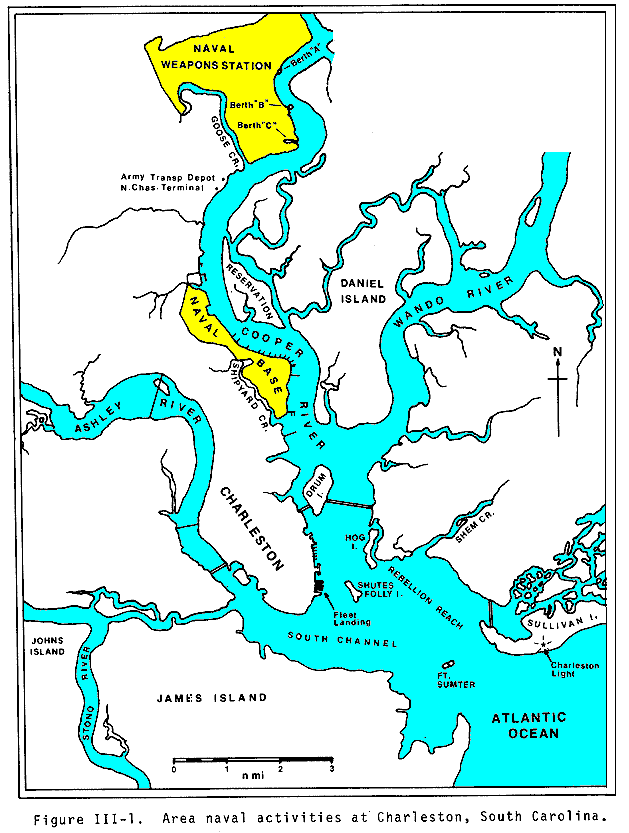
 Charleston sold 170 acres of land along the Cooper River to the United States for $200 per acre for the construction of a naval facility.

Today In Charleston History: August 13

1783-City Incorporated

 Edward Rutledge, Thomas Heyward and Thomas Bee, proposed a bill of incorporation for Charlestown. An elected intendant (mayor) and thirteen wardens would have the power to govern the city, whose name was changed to Charleston.


1864 – Civil War
Clubhouse of the race course where Federal officers were imprisoned.

Clubhouse of the race course where Federal officers were imprisoned.

By this time there were 6000 Federal prisoners within the city limits. Many of them were housed in the City Jail at the corner of Franklin and Magazine Streets. Others were housed around the corner in Roper Hospital at the corner of Queen and Logan Streets. The majority were held at the Charleston racecourse. Most of the Federal prisoners considered their imprisonment in Charleston to be a life-saving change, away from the hellish conditions of Andersonville. Lt. Benjamin Calef wrote:

We reached Charleston on the morning of August 13, and were kept waiting a long time in the Street, when I procured some fresh figs, bread and milk, and seated on the curb-stone, made an excellent breakfast … I should not omit to speak of the long piazza at the front [of Roper Hospital], on which I have spent so many hours with my pipe for my companion.

charleston-prison

Charleston Jail and prison.

Today In Charleston History: August 11

1735 – SLAVERY.

Abraham, a Negro man owned by Mr. Samuel Jones, was baptized by Rev. Nathan Bassett of the Independent Church.

1847 – BORN TODAY

Ben Tillman was born near Trenton, South Carolina. Tillman rose to power as a representative of poor white residents of the state. He was elected governor of South Carolina in 1890 and began instituting populist reforms, including Jim Crow laws. He was elected to the United States Senate in 1894, serving until his death.

He was forced to leave school at the age of 16 in order to join the Confederate Army. He was stricken with a bacterial infection in his left eye before he could enlist. The eye was subsequently removed. He joined a paramilitary effort to overthrow Republican rule in South Carolina, taking part in the “Hamburg Massacre” of 1876, in which armed citizens overwhelmed the federal militia. Tillman’s leadership in this event established him as a leading white supremacist and launched his political career.

tillmanTillman was elected governor of South Carolina in 1890, serving for a single term. During this time, he established an agricultural school that would become Clemson University.

As governor he tirelessly promoted a culture of race-based discrimination and violence. Tillman’s supporters dubbed him the “Champion of White Men’s Rule and Woman’s Virtue” for his support of lynching as a punishment for alleged sexual misconduct by African Americans. The decade of the 1890s saw a spike in mob violence, particularly lynching, that was tolerated and even encouraged by Tillman and his allies.

Tillman was elected to the United States Senate in 1894. He held the office until his death in 1918. In Washington, Tillman developed a reputation as a hot-head. He threatened to stab President Cleveland with a pitchfork, earning the nickname “Pitchfork Ben,” received a formal censure for assaulting another senator and was barred from entering the White House.

Tillman died on July 3, 1918, in Washington, D.C. A statue of Tillman was erected outside the South Carolina State House in 1940 and stands to this day.

Today In Charleston History: August 10

1664 

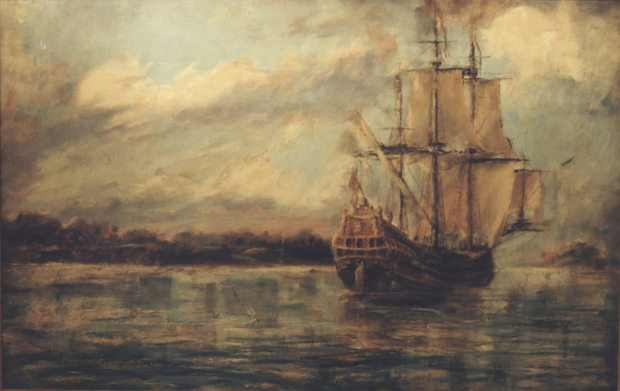
Capt. William Hilton sailed from Barbados to find a location in Carolina for settlement. He sailed into Port Royal Sound and claimed the island that protected the mouth of the harbor in his name – Hilton Head..

adventure

The Adventure, Captain William Hilton’s merchant ship, painted in 1963 by long time Hilton Head Island resident Walter Greer – is currently on display at Coastal Discovery Museum at Honey Horn.

In 1662 at the request of a group of merchants in Boston, Captain William Hilton set sail from Charlestown, Massachusetts aboard the ship Adventure to explore the Carolina coast. After investigating the area around Cape Fear (North Carolina), Hilton returned to Massachusetts with enough information to have a detailed map made of the area.

The next year a group of businessmen from New England, London and Barbados commissioned Hilton for a second voyage to explore the Carolina coast. Hilton, once again commanding Adventure, set sail, from Barbados on August 10, 1663. During this voyage he explored the entrance to Port Royal Sound and noted, just inside the entrance to the sound, the existence of a headland —a high point of land used as a reference point by mariners. Later this headland would be called Hilton’s Head and soon the island on which it was located would be called Hilton Head Island.

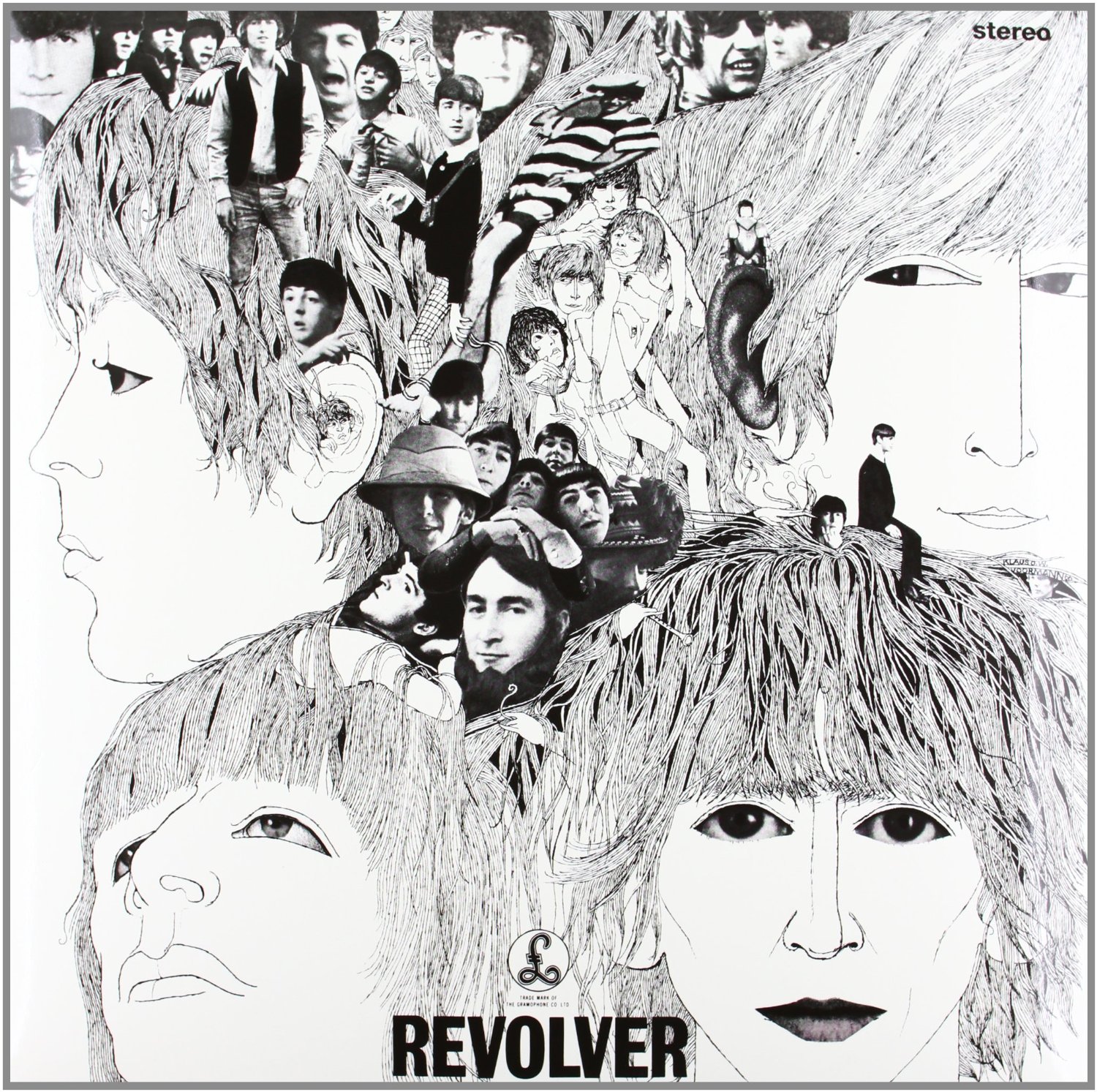
1966: Beatles Release “Revolver” LP in America (Essentials)

Revolver announced to the world that a new Beatles had replaced the fresh-faced  pop stars. Performing live concerts was a thing in the past. The loveable moptops had grown up and were now free to explore and push musical boundaries from within the studio. They were artists, not just performers.
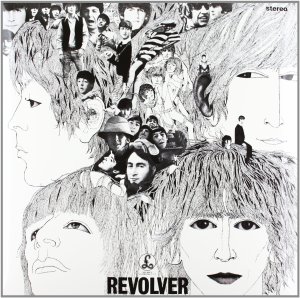
revolverRevolver was the first step toward the extensive experimentation on “Strawberry Fields Forever,” “I Am The Walrus” and Sgt Pepper’s Lonely Hearts Club Band. Despite Pepper’s lofty status as the greatest rock and roll record of all time, Revolver  is better. It shows all four members of The Beatles working together, equally for the first time, at their creative peak. It is also the record in which George steps up and produces songs that stand equal with those of Lennon and McCartney. 

McCartney noted about the recording process:

This album has taken longer than the others because, normally, we go into the studios with, say, eight numbers of our own and some old numbers, like Mr Moonlight or some numbers we used to know, which we just do up a bit. This time, we had all our own numbers, including three of George’s, and so we had to work them all out. We haven’t had a basis to work on, just one guitar melody and a few chords and so we’ve really had to work on them. I think it’ll be our best album yet. They’ll never be able to copy this!

The Beatles’ previous album, Rubber Soul, had also been a change – exploring R&B and folk stylings (“Nowhere Man,” “Norwegian Wood”),  Revolver took the experimentation further, bringing in influences such as Motown, classical Indian music, children’s songs and full orchestration. George Harrison once commented:

 I don’t see too much different between Rubber Soul and Revolver. To me, they could be Volume One and Volume Two.
revolver back cover

Revolver – back cover LP

The LP showed remarkable songwriting leaps by McCartney, Lennon and Harrison. Harrison, with “Taxman,” “I Want to Tell You” and “Love You To” challenged Lennon and McCartney.  Paul responded with “Eleanor Rigby,” “Tell No One,” “Here, There, and Everywhere” and “Got To Get You Into My Life.” 

But, of course, it was Lennon who was the most innovative with “I’m Only Sleeping,” “She Said, She Said” and the remarkable “Tomorrow Never Knows.” Attempting to distill an LSD trip into a three-minute song, Lennon borrowed lyrics from Timothy Leary’s version of The Tibetan Book of the Dead, and recorded his vocal to sound like “the Dalai Lama singing from the highest mountaintop.”
Revolver was the Beatles’ artistic high-water mark, and unlike Sgt. Pepper, it was the product of a collaborative effort, the group fully vested in creating “Beatle music. Revolver announced to the pop world (and the world at large) that the 1960s had arrived and everything that followed was going to be different.


Side one  
No. Title Lead vocals Length  
1. “Taxman”   Harrison 2:39
2. “Eleanor Rigby”   McCartney 2:08
3. “I’m Only Sleeping”   Lennon 3:02
4. “Love You To”   Harrison 3:01
5. “Here, There and Everywhere”   McCartney 2:26
6. “Yellow Submarine”   Starr 2:40
7. “She Said She Said”   Lennon 2:37
Side two  
No. Title Lead vocals Length  
8. “Good Day Sunshine”   McCartney 2:10
9. “And Your Bird Can Sing”   Lennon 2:02
10. “For No One”   McCartney 2:01
11. “Doctor Robert”   Lennon 2:15
12. “I Want to Tell You”   Harrison 2:30
13. “Got to Get You into My Life”   McCartney 2:31
14. “Tomorrow Never Knows”   Lennon 2:57


Today In Charleston History: August 8

AUGUST 8

1781 – The Royal Gazette [Charlestown] wrote: 

Mr. Issac Hayne, who since the capitulation of Charlestown, had taken protection, and acknowledged himself a subject of his Majesty’s Government, having notwithstanding been taken in arms, and at the head of a Rebel Regiment of Militia, was therefore on Saturday morning last, executed as a Traitor.

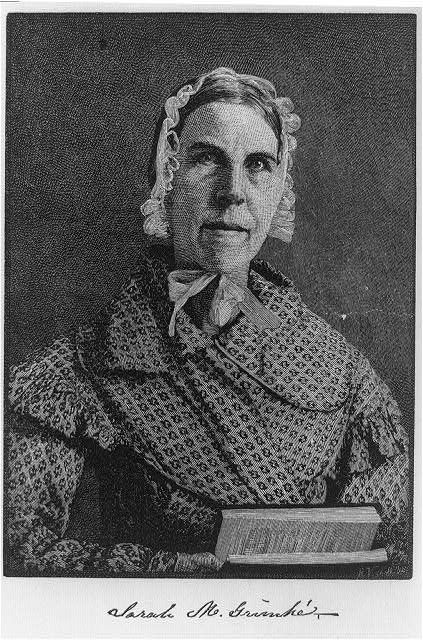
1819 – Judge John Grimke died. Judge John Grimke fell seriously ill in March. His Charleston doctors advised him to seek treatment with the foremost surgeon in American, Dr. Phillip Synge Physick of Philadelphia. Sarah Grimke accompanied her father. Physick, a Quaker, found lodgings for Sarah in a Quaker boardinghouse.

grimke, sarahFor the first time, Sarah  was surrounded by people who were NOT southern and held social views that were more in line with Sarah. It was the beginning of a life-altering change for Sarah, and ultimately, her younger sister, Angelina. The sisters became two of the most famous abolitionists within 20 years.  


Born Today: August 7

1560 – Elizabeth Báthory, Nyírbátor, Hungarian countess and serial killer.

During the Christmas season in 1609 (or 1610), King Mathias II of Hungary�sent a party of men to the massive Castle Csejthe. He had heard rumors that several young women from the area were being held in the castle against their will, if not actually killed. In haste, he sent the team to investigate. what they discovered was beyond their imagination. 

Bathory was already infamous in the area for her torture and murder of servants and peasants, but her title and high-ranking relatives had made her untouchable. 

One of her uncles instructed her in Satanism, while her aunt taught her all about sadomasochism. At the age of 15, Bathory was married to Count Nadady, and the couple settled into Csejthe Castle. To please his wife, her husband built a torture chamber to her specifications.

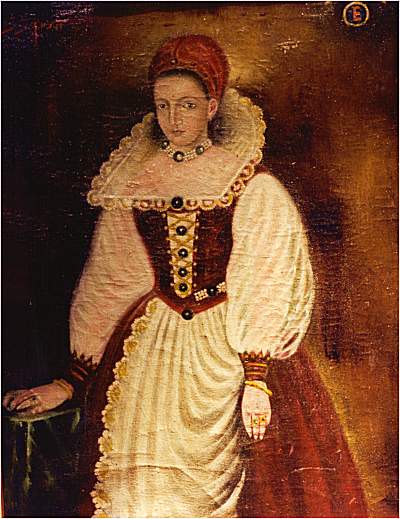
Elisabeth Bathory, the Bloody Countess

Elisabeth Bathory, the Bloody Countess

Bathory’s torture included jamming pins and needles under the fingernails of her servant girls, and tying them down, smearing them with honey, and leaving them to be attacked by bees and ants. Although the count participated in his wife’s cruelties, he may have also restrained her impulses; when he died in the early 1600s, she became much worse. With the help of her former nurse, Ilona Joo, and local witch Dorotta Szentes, Bathory began abducting peasant girls to torture and kill. She often bit chunks of flesh from her victims, and one unfortunate girl was even forced to cook and eat her own flesh. Bathory reportedly believed that human blood would keep her looking young and healthy.


1950 – Rodney Crowell, Houston Texas, singer/songwriter.

rodney-crowell-456-012811One of the best songwriters of the past forty years, Crowell has had a long career, starting in the 1970s as part of Emmylou Harris’s Hot Band. He then began to record his own solo LPs, and became the hottest songwriter / producer in Nashville. His marriage to Rosanne Cash made them one of the royal couples of country music during the 70s and 80s. Between them, they wrote and recorded together dozens of Top Ten country songs and won several Grammy Awards. In 1988 Crowell managed to have five #1 songs off his LP Diamonds and Dirt. 

During the 21st century Crowell has retreated from mainstream country music and has released a series of brilliant CDs and has become the elder statesman for the Americana music genre. 

Today In Charleston History: August 7

1753 – Religion.

A petition was made to the Royal Governor for a parcel of land upon which to build a Lutheran church.

1767 – Backcountry.

In more complaints about the dangerous conditions in the backcountry, The South Carolina and American General Gazette reported that:

If we save a little for to bring to Town Wherewith to purchase Slaves – Should it be known our Houses are beset, and Robbers plunder Us, even of our Cloaths. If we buy Liquor for to Retail, or for hospitality, they will break into our dwellings and consume it … Should be raise fat Cattle, or Prime Horses for the Market, they are constantly carried off, tho’ well guarded.  


Today In Charleston History: August 5

1749 – Births.
Thomas Lynch, Jr.

Thomas Lynch, Jr.

Thomas Lynch, Jr.  was born in Georgetown. He would later sign the Declaration of Independence for South Carolina.

1776 – American Revolution.

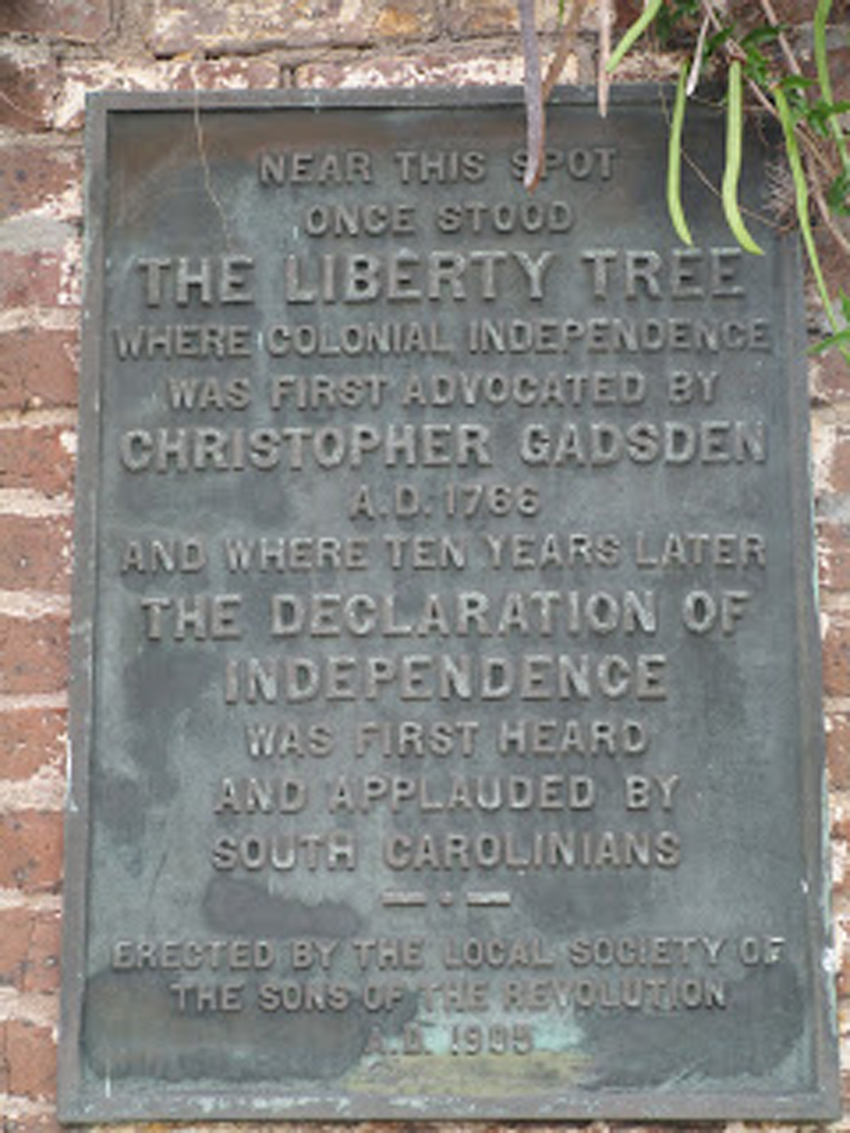
The Declaration of Independence arrived in Charleston. Maj. Barnard Elliot read it to a large, enthusiastic crowd under the Liberty Tree.

Liberty Tree marker on Alexander Street

Liberty Tree marker on Alexander Street