Today In Charleston: August 25

 1671
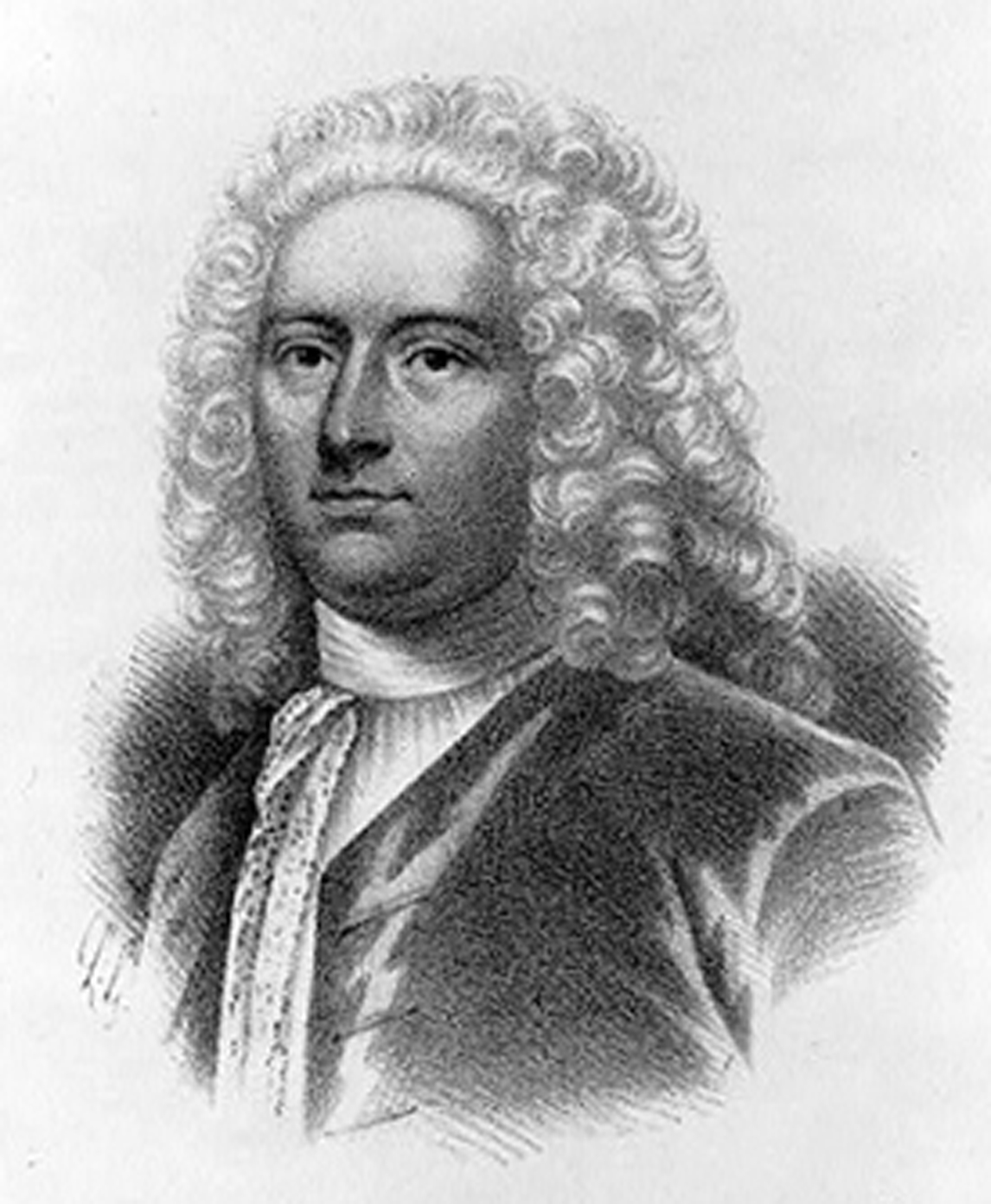
yeamans, sir john

Sir John Yeamans

The first election was held in Charles Town, choosing twenty men as a Parliament and Sir John Yeamans as speaker. Over half the councilmen were Barbadians. Five men were then selected to represent the people as the Grand Council – Mr. Thomas Gray, Mr. Maurice Mathews, Lt. Henry Hughes, Mr. Christopher Portman and Mr. Ralph Marshall.  Yeamans took every opportunity to question the legality of West’s appointment as governor.

John Coming, first mate of the Carolina, wrote that “the Barbadians endeavor to rule all.” Yeamans complained that “West is proud and peevish.” Others called Yeamans “disaffected and too selfish.” The colony was firmly divided into separate factions.

1766 – American Revolution – Foundations

John Rutledge, conveying the wishes of the South Carolina Assembly, instructed Charles Garth, their agent in London, to oppose the stamp tax, and any other tax by Parliament. Rutledge claimed it was “inconsistent with that inherent right of every British subject, not to be taxed but by his own consent, or that of his representatives.”

1781 – American Revolution

Col. John Laurens arrived in Boston with two shiploads of military supplies and half a million dollars in aid from the French.

Today In Charleston History: August 24

1706 – Queen Anne’s War.

A Dutch privateer sloop belonging to Captain Stool from New York anchored in Charles Town. Stool reported that while in St. Augustine they learned that a French ship was planning to attack Carolina. While he was making his report, five columns of smoke appeared on Sullivan’s Island, the signal that a fleet was off the bar.

It was a French squadron from Martinique led by Captain De Feboure which included the frigate Soleil (22 guns), two 8-gun sloops, two smaller sloops and a galley. On board were more than 700 Spanish soldiers.

Some of the Spanish landed on James Island and burned a plantation.

1775
miles brewton house

Miles Brewton House, 27 King Street, Charleston, SC

Miles Brewton, Charleston merchant, set sail for Philadelphia with his wife and three children. They were never seen or heard from again, and were listed as “lost at sea.” His sister, Rebecca Brewton Motte, inherited Mount Joseph, her brother’s plantation on the Congaree River in St. Matthews Parish, the Miles Brewton House on King Street in Charleston and one of South Carolina’s largest fortunes.

After Charles Town surrendered to the British, following a 40-day bombardment, the Miles Brewton House became British HQ for General  Clinton and Lord Rawdon.  In 1865, the house became HQ for Union Generals Meade and Hatch. 

1785
Thomas_Heyward_Jr

Thomas Heyward, Jr.

The Agricultural Society of South Carolina was founded. Thomas Heyward, Jr invited a select group of planters to the Exchange Bldg. for “the purpose of forming a Society in this state to encourage Agriculture and other Rural Concerns.”

Today In Charleston History: August 23

1770 – American Revolution – Foundations.
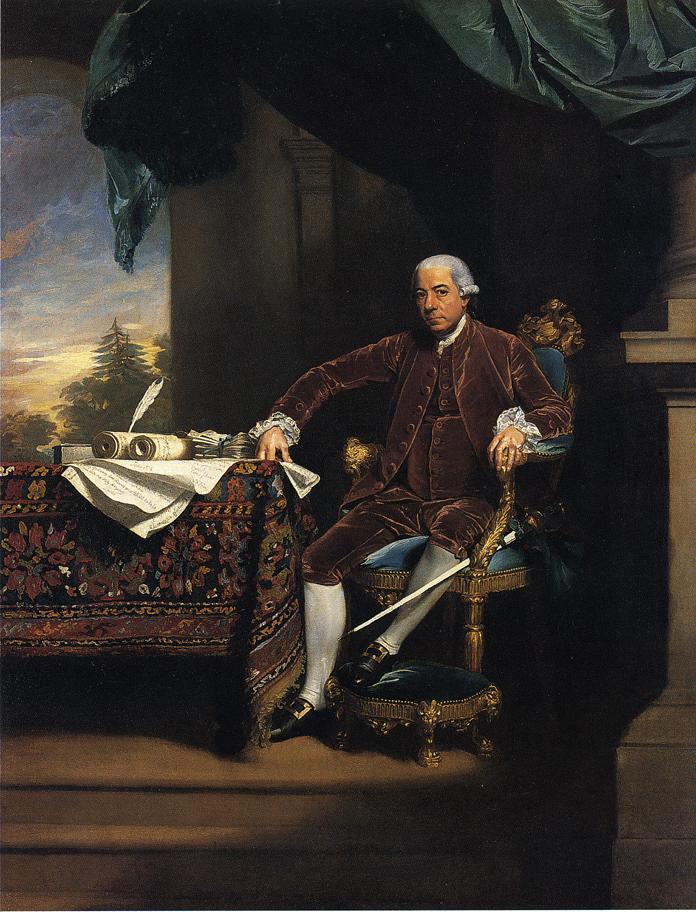
laurens

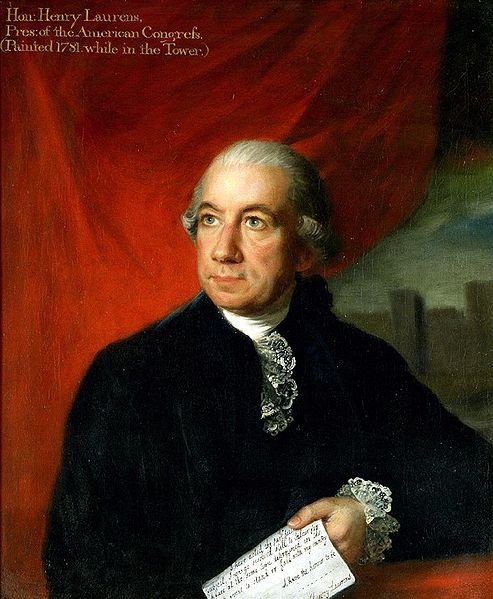
Henry Laurens

News arrived that Boston, New York and Philadelphia had joined Georgia and Rhode Island in breaking their agreements with the non-importation Association. Henry Laurens wrote:

I am so disappointed in my Expectations of several Colonies North … to their late important Resolutions that I am in a humour to disbelieve the Sincerity of the majority of all Politicians …

1783

Henry Laurens left the American treaty negotiations in Paris to travel to Vigan, France in order visit his ailing brother, James.

1864 – Bombardment of Charleston.

That night, the Swamp Angel resumed shelling Charleston, on the thirty-sixth round the gun barrel blew up, the psychological threat remained real.

Today In Charleston History: August 22

1863 – Bombardment of Charleston. 1:30 a.m.

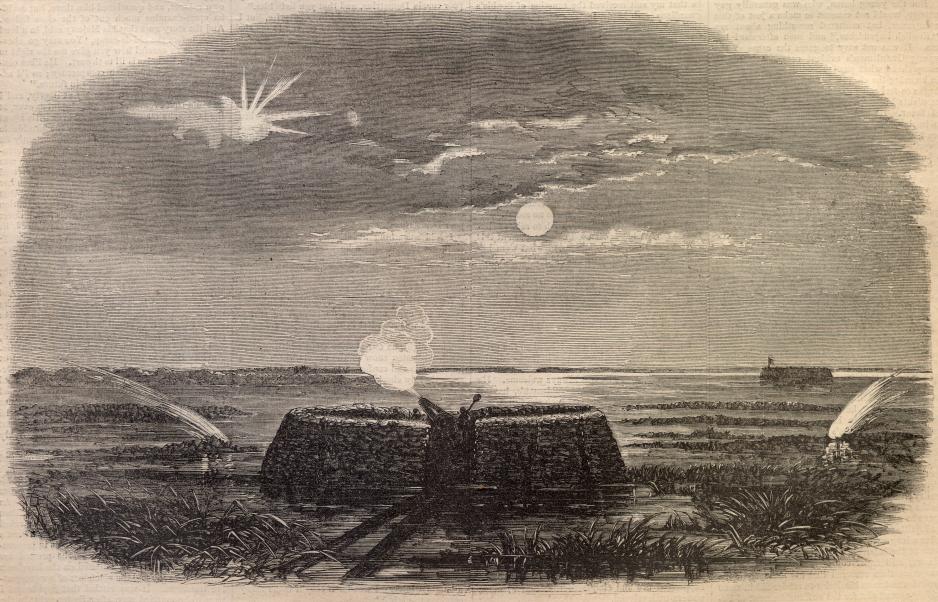
swamp angel

Swamp Angel, the Federal gun that fired upon Charleston.

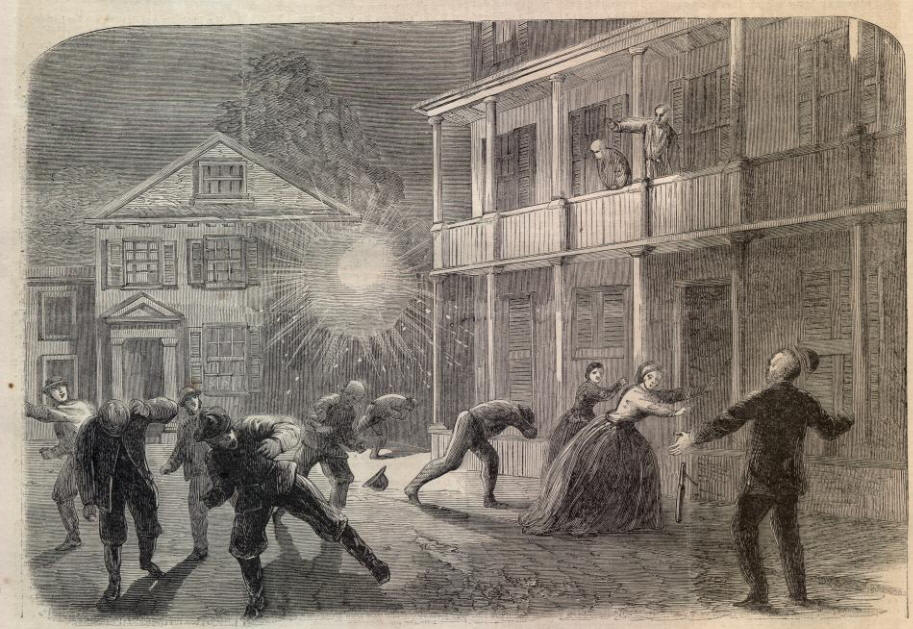
A Federal shell burst just north of the City Market at the corner of Pinckney and Church Streets. It was a 200-pounder shot from the “Swamp Angel.” British war correspondent and illustrator, Frank Vizetelly, was staying at the Charleston Hotel on Meeting Street. Unable to sleep, he was in his room reading Les Miserables when he was:

startled by a noise that …resembled the whirr of a phantom brigade of cavalry galloping in mid-air. My first feeling was that of utter astonishment; but a crash, succeeded by a deafening explosion in the very Street on my apartment was situate, brought me with a bound to the centre of the room … At first I thought a meteor had fallen, but another rush and whirr right over the hotel, and another explosion, settled any doubts I might have had: the city was being shelled.

I will defy anyone who witnessed what I witnessed on leaving my room, not to have given way to mirth … terrified gentlemen rushing about in the scantiest of costumes …One perspiring individual of portly dimensions was trotting to and fro with one boot on and the other in his hand and this was nearly all the dress he could boast …

charleston-bombardment

Frank Vizetelly’s illustration of the first shot

Capt. Charles C. Pinckney, an ordinance officer stationed in Charleston under General Roswell S. Ripley, wrote:

I rode down Smith Street about 2 o’clock A.M. The streets were entirely deserted, yet every house was lighted up. What does it mean?  Have the Yankees slipped in and taken the town while I was asleep? I urged the horse, & reached Headquarters. Without notice, a city full of sleeping women & children – a bombardment without military significance  … was clearly & purely spite!

bombardment, broad street 1864

Miss Pauline Heyward wrote in her diary:

Father went to Charleston on Sunday, and returned today, the Yankees are shelling the City … One shell went thro the roof of a house and straight thro the first floor … and thro the brick wall … into the yard that was paved, and there buried itself six feet into the earth.

Confederate Gen. P.G.T. Beauregard wrote Union Gen. Gillman, accusing the Union officer:

you now resort to the novel measure of turning your guns on the old men, the women and children, and the hospitals of a sleeping city, an act of inexcusable barbarity … if you fire again on this city … without granting a somewhat more reasonable time to remove non-combatants, I shall feel compelled to employ such stringent means of retaliation as my available …

 During the night a free “Negro” fire company extinguished the first fire from the bombardment.

Today In Charleston History: August 21

AUGUST 21

1687 – Piracy.

A small fleet of ships, commanded by Rear-Admiral Sir John Narborough, was dispatched “for suppressing pirates in the West Indies.” It was England’s first serious attempt at restraining the ever-growing threat from buccaneers. Pirates coming into any of the ports of the province [English controlled] were “to be seized and imprisoned, and their ships’ good and plunder were to be taken and kept in custody until his Majesty’s Royal pleasure should be known.”

One observer remarked “only the poor Pyrats were hanged; rich ones appear’d publicly and were not molested in the least.”

1863 –  Bombardment of Charleston.  

Gen. Gillmore wrote a note to General P.G. T. Beauregard, which was delivered to Gen. Johnson Hagood, commander of the Confederate Battery Wagner on Morris Island at 11:15 a.m. Gillmore demanded that Morris Island and Fort Sumter be evacuated, or the city would be shelled. He wrote that should Beauregard:

refuse compliance with this demand, or should I receive no reply thereto within four hours after it was delivered into the hands of your subordinate at Ft. Wagner for transmission, I shall open fire on the city of Charleston from batteries already established within easy and effective range at the heart of the city.

Later than night, Lt. Nathan Edwards took a compass reading of the white steeple of St. Michael’s Church from the “Swamp Angel” battery, in order to properly aim the gun at Charleston.

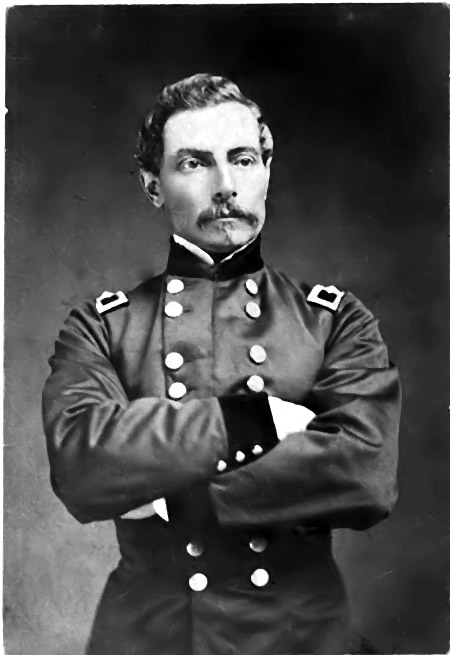
General_P_G_T_Beauregard

P.G.T. Beauregard

Beauregard was out inspecting the city’s fortifications and not present when the Gillman’s note was delivered to Beauregard’s chief of staff, Brig. Gen. Thomas Jordan. Gillmore forgot to sign the note (whether by accident or by design has never been ascertained) so Jordan returned it to Gillmore’s headquarters for verification. By the time the note was signed and returned to Confederate headquarters it was 9:00 a.m. the following morning and sixteen Union shells had already hit Charleston.

Today In Charleston History, August 20

AUGUST 20    

1731

In an attempt to establish an accurate land and rent roll, the Assembly passed the Quitrent Act. It voided all of the old Proprietary patents and ordered that, within eighteen months, these and all other land titles must be registered.

A law also established the South Carolina currency at a ratio of seven for one with sterling.

1781
st. michaels alley

St. Michael’s Alley, circa 1920

Francis Sheftall, a Jew who came to Charlestown after the fall of Savannah, wrote that after the occupation she:

rented a house in St. Michael’s Alley at the rate of 50 pounds sterling a year, and where the money is to come from god only knows for there is nothing but hard Money goes here and that I can assure you is hard enough to be got.

Today In Charleston History: August 19

AUGUST 19

1776 – American Revolution – Continental Congress.  

Edward Rutledge wrote that the states would not approve the Articles of Confederation “as they stand now.” The southern delegations opposed the provision that each state should contribute financially in proportion to their population, including slaves.

edward rutledge 2In an argument which was to continue for the next ninety years, Southern delegates argued that slaves were wealth-producing property, not people. Thomas Lynch, Jr. of South Carolina said that if the North wanted to debate whether slaves were property “there is an End of the Confederation.”

Edward Rutledge argued it was “unfair to base taxes on one form of wealth-producing property and not others, such as land and livestock.” He also wrote:

I propose that the States should appoint a special Congress to be composed of new Members for this purpose – and that no Person should disclose any part of the present plan.

Today in Charleston History: August 18

AUGUST 18

1772 

Henry_laurensHenry Laurens wrote his daughter, Martha, from Philadelphia, as he was preparing to leave for England.

My dearest Patsy, remember my precepts; be dutiful, kind and good to your Aunt … let all your reading, your study, and your practice tend to make you a wise and virtuous woman, rather than a fine lady; the former character always comprehends the latter, but the modern fine lady … is too often found to be deficient both in wisdom and in virtue.

 1775 – American Revolution – Slavery.

Thomas Jeremy, a free black man, was hanged at the workhouse green on Magazine Street, next to the Jail. Known as “Jerry the pilot” he was convicted of conspiring to foment a slave insurrection. His body was taken down and burned.

Jeremy, worth £1000 sterling and a slave owner himself, had supposedly claimed that if British warships came, he would pilot them across the Charlestown bar himself. Lord William Campbell, Carolina Royal Governor, became convinced that Jeremy was innocent. He believed that the swirling emotions of rebellion, fueled by the massacre at Lexington and Concord, created an atmosphere in which Jeremy was an unwitting victim. The day after Jeremy’s execution Campbell wrote, “I could not save him My Lord!”

Today In Charleston History: August 17

August 17

1682 – A fourth version of the Fundamental Constitutions was drawn up by the Lords Proprietors. It was never ratified.

1696 – Arrivals.  

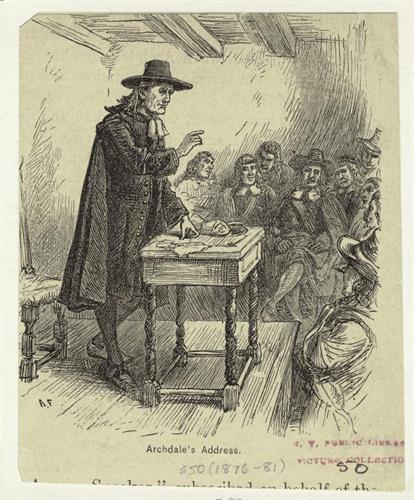
John Archdale, a Quaker from London, who owned a Proprietary share in Charles Town, arrived as Governor of Carolina, sent at the behest of the Proprietors. He retained Joseph Blake as Deputy Governor.  He wrote to the Proprietors that:

When I arriv’d I found all matters in great confusion and every faction apply’d themselves to me in hopes of relief; I appeased them with kind and gentle words and so soon as possible call’d an assembly.

Archdales address (NY public library)Archdale moderated restrictions against the Indians and was acknowledged for his more humane settlements of conflicts. He also reinforced the liquor act – prohibiting the sale, except by license, of any “beer, cider, wine, brandy, rum, punch or any strong drink whatsoever under the quantity of one gallon.”

He also passed an act stating that “laws passed by the Commons House of Assembly … could not be repealed by London without the consent of the assembly.”

1863 – Bombardment of Charleston.

Under the direction of Union General Quincy Gilmore, Colonel Edward Serrel of the Volunteer Engineers supervised the mounting of a 16,500 pound eight-inch Parrot gun, called the “Swamp Angel.” It was located five miles (8000 yards) south of Charleston, in a muddy stretch of land between Morris Island and James Island.

SwampAngelDrawingThe Swamp Angel was a rifled gun, which changed artillery forever. No longer did cannons have to merely shoot round balls, the “rifling” inside the cannon barrel (a series of grooves cast into the gun’s tube) enabled them to shoot a long, slender projectile bullet more accurately, and over greater distances.

Today In Charleston History: August 16

1736- Religion

Charles Wesley sailed back to England. John Wesley returned to Savannah to continue his ministry.

1763-College of Charleston

The Assembly established a committee to make plans for a public college for the young men of the province. It would be seven years before any action was taken and the College of Charleston would be established.

1771 – Dueling 

In a duel that took place in the long room of a tavern, Dr. John Haley, a Charlestown Whig physician, killed Mr. Delancy, a Tory from New York and brother of Mrs. Ralph Izard. Since the duel took place without the presence of seconds, Dr. Haley was charged with murder. At his trial he was defended by Thomas Heyward, Jr. and acquitted which “was considered a great triumph by the Whigs.”

1780 – American Revolution – The Battle of Camden.  
Thomas Pinckney

Thomas Pinckney

This was another major defeat for the Americans. A new Southern Army, commanded by Major General Horatio Gates, was roundly defeated by Cornwallis. With more than 1000 casualties it was the worst American battlefield defeat of the entire Revolution. Thomas Pinckney of Charleston an aide-de-camp to General Gates, and was captured on the battlefield.

1825-DEATHS

Charles Cotesworth Pinckney, eldest son of a politically prominent planter and Eliza Lucas Pinckney, died today.

At age 7, Charles accompanied his father, who had been appointed colonial agent for South Carolina, to England. Pinckney received tutoring in London, attended several preparatory schools, and went on to Christ Church College, Oxford, and graduated in 1764. Pinckney next pursued legal training at London’s Middle Temple and was accepted for admission into the English bar in 1769. He then spent part of a year touring Europe and studying chemistry, military science, and botany under leading authorities.
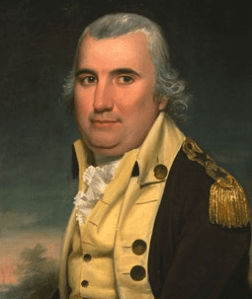
Charles Cotesworth Pinckney

Charles Cotesworth Pinckney

Late in 1769, Pinckney sailed home and the next year entered practice in South Carolina. In 1773 he acted as attorney general for several towns in the colony. By 1775 he had identified with the patriot cause and that year sat in the provincial congress.

When hostilities broke out, Pinckney, pursued a full-time military calling. When South Carolina organized its forces in 1775, he joined the First South Carolina Regiment as a captain. He soon rose to the rank of colonel and fought in the South in defense of Charleston and in the North at the Battles of Brandywine, PA, and Germantown, PA. He commanded a regiment in the campaign against the British in the Floridas in 1778 and at the siege of Savannah. When Charleston fell in 1780, he was taken prisoner and held until 1782. The following year, he was discharged as a brevet brigadier general.

Pinckney was one of the leaders at the Constitutional Convention. Present at all the sessions, he strongly advocated a powerful national government. His proposal that senators should serve without pay was not adopted, but he exerted influence in such matters as the power of the Senate to ratify treaties and the compromise that was reached concerning abolition of the international slave trade. After the convention, he defended the Constitution in South Carolina.

Under the new government, Pinckney became a devoted Federalist. Between 1789 and 1795 he declined presidential offers to command the U.S. Army and to serve on the Supreme Court and as Secretary of War and Secretary of State. In 1796, however, he accepted the post of Minister to France, but the revolutionary regime there refused to receive him and he was forced to proceed to the Netherlands. The next year, though, he returned to France when he was appointed to a special mission to restore relations with that country. During the ensuing XYZ affair, refusing to pay a bribe suggested by a French agent to facilitate negotiations, he was said to have replied “No! No! Not a sixpence!”

When Pinckney arrived back in the United States in 1798, he found the country preparing for war with France. That year, he was appointed as a major general in command of American forces in the South and served in that capacity until 1800, when represented the Federalists as Vice-Presidential candidate, and in 1804 and 1808 as the Presidential nominee but was defeated on all three occasions.

He was a charter member of the board of trustees of South Carolina College (later the University of South Carolina), first president of the Charleston Bible Society, and chief executive of the Charleston Library Society. .Survived by three daughters, he died in Charleston at the age of 79 and interred  in the cemetery at St. Michael’s Episcopal Church.