Today In Charleston History: October 15

1764

Peter Timothy of the Gazette requested that all people who owed him money pay their debts as soon as possible. He pointed out that in thirty-three years he had never resorted to a summons or an attorney to collect a bill, but such measures may be forthcoming.

1863 – Civil War. H.L. Hunley sinks

Horace Hunley and seven crew members boarded the submarine, H.L. Hunley, at Adger’s Wharf. There was a small crowd assembled on the dock to watch a demonstration of the Hunley’s capabilities, a dress rehearsal for an actual attack.  They were to submerge beneath the Confederate ship Indian Chief and surface on the other side.

The crowd watched the Hunley cruise away from the dock, submerge but … it never resurfaced. The next day, the Charleston Daily Courier posted this notice:

Melancholy Occurrence – On Thursday morning an accident occurred to a small boat in Cooper River, containing eight persons, all of whom drowned.

General P.G.T. Beauregard ordered that the submarine be raised and then grounded. So far, the Hunley had killed thirteen Confederate volunteers and not a single Yankee. “It is more dangerous to those who use it than the enemy,” he said.

Due to weather conditions in Charleston harbor, it took more than a month for the recovery. It was 60-feet below the surface, its nose buried in silt. On Saturday, November 7, several divers, including Angus Smith who had worked on the first recovery, managed to wrap enough chains around the vessel to raise it. When the Hunley was finally on the dock at Mt. Pleasant, the grim task of removing the eight corpses was begun.

Beauregard wrote, “It was indescribably ghastly. The unfortunate men were contorted into all kinds of horrible attitudes.”

1866

Several different companies started horse-drawn streetcar services in Charleston. No one from the Charleston Animal Society complained about the abuse of horses being forced to carry people around the streets. chas trolly cars

Today In Charleston History: October 14

1735 – Religion

At the request of James Oglethorpe and through the offices of the Society for the Propagation of the Gospel, John Wesley and his brother Charles sailed from Kent, England on the Simmonds to Savannah, as minister to the new settlers.

1776 – American Revolution

The Legislature announced the sale of several hundred chests of tea, which had been stored in the Exchange basement for three years. The tea had been seized from the ship Magna Carta in June 1774. The money from the sale of the tea was used in support of the Patriot cause in South Carolina.

The besement, or "dun

The basement, or “dungeon” of the Exchange.

Today In Charleston History: October 13

1758 –Deaths 

Charles Pinckney died of malaria in Charlestown. His wife, Eliza, was nearly overcome with her grief. She wrote to her sons:

How shall I write to you! What shall I say to you! You have met with the greatest loss … Your dear, dear father, the best and most valuable of parents, is no more! He met the king of terrors without the least terror … and without agony, and went like a Lamb into eternity, into a blessed Eternity! where I have not the least doubt he will reap immortal joy for Ever and Ever.

1807
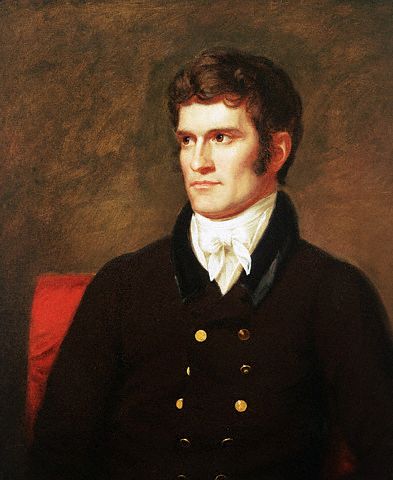
1822 portrait of John C. Calhoun ... before he became so scary-looking.

1822 portrait of John C. Calhoun … before he became so scary-looking.

John C. Calhoun was elected to the South Carolina general assembly from his home town Abbeville, SC.

Today In Charleston History: October 12

1492 – The Roots of America

Christopher Columbus’ Spanish-financed expedition landed on what is now The Bahamas. This discovery attracted the attention of Europe to the riches available in the New World, inspiring France, Portugal, Spain, England, and the Dutch to send explorers. Without this successful expedition, the history of the founding of North America would be completely different. 

1833   

Thomas Grimke died after a visit to his sisters Sarah and Angelina Grimke in Philadelphia. He was their last close tie to Charleston. They were now completely cut off from their hometown.grimke sisters

1861

A blockade-running ship, Theodora, left Charleston under the command of Captain Thomas Lockwood. On board were the two Confederate European representative, James Mason and John Slidell. The ship was owned by a syndicate headed by F. T. Porcher. George A. Trenholm, officer for Fraser, Trenholm and Company, put up half the money to supply the ship for voyage, in return for a handsome profit. Mason and Slidell were taken to Havana, Cuba to catch passage to England. They were captured by the USS San Jancinto and arrested.

She was built as Carolina at Greenpoint, N.Y., in 1852 for service as a coastal packet out of Charleston, S.C., occasionally crossing to Havana, Cuba. Upon outbreak of Civil War she was strengthened and refitted as the Gordon, under Capt. T. J. Lockwood, and placed in commission as a privateer at Charleston on 15 July 1861.

Today In Charleston History: October 11

1803

 Capt. Joseph Vesey married his fourth wife, Maria Blair, a wealthy Charleston widow. He moved back into town and purchased a house at 41 Anson Street, which was destroyed by the 1838 fire. His man servant, Denmark, lived in the house with the couple. 

Currently the location is a private home, constructed in 1840.

Today In Charleston History: October 10

1765 – Elections

The people of the back country of South Carolina decided to show their unhappiness with the Charlestown politicians during the election. Many rode more than 100 miles to vote. The voters of St. Paul’s parish (Colleton County) arrived to discover that the election had been held ten days before the announced date. They were told by Charlestown officials that was due to an error by the printer, which no one believed.

1935
p&b6

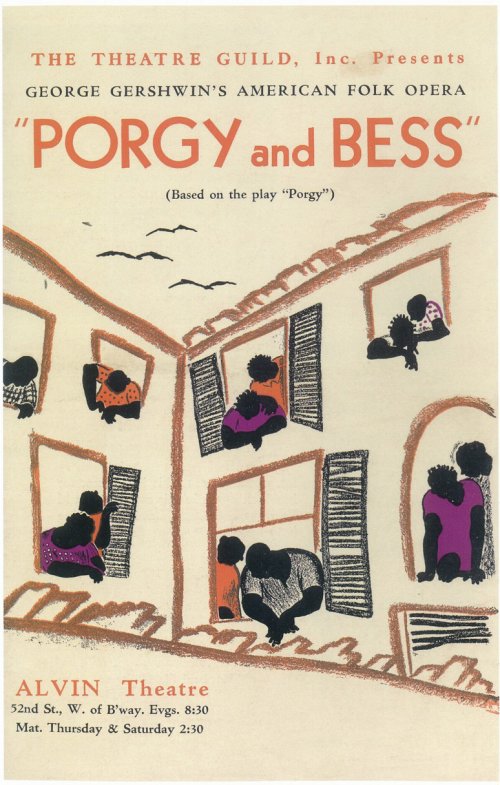
Original playbill

The New York opening of Porgy and Bess took place at the Alvin Theatre in New York City and ran for 124 performances, impressive for an opera, and but woefully short for a musical. The reviews were decidedly mixed. Brooks Atkinson wrote in the New York Times, October 9, 1935:

After eight years of savory memories, Porgy has acquired a score, a band, a choir of singers and a new title, Porgy and Bess, which the Theatre Guild put on at the Alvin last evening … Although Mr. Heyward is the author of the libretto and shares with Ira Gershwin the credit for the lyrics, and although Mr. Mamoulian has again mounted the director’s box, the evening is unmistakably George Gershwin’s personal holiday … Let it be said at once that Mr. Gershwin has contributed something glorious to the spirit of the Heywards’ community legend.

Composer/critic Virgil Thomson, writing for the New York Herald-Tribune, was less kind, calling Gershwin’s incorporation of blues and jazz influences into a “serious” operatic score to be “falsely conceived and rather clumsily executed…crooked folklore and half-way opera.”

17b. porgy and bess (loc) blank pg. 170

Porgy and Bess, original cast

Today In Charleston History: October 9

1784

Capt. Joseph Vesey imported “3000 Gallons of rum and 1 Negroe Woman from Guadaloupe on the brig Le Vigilant.”

By this time Vesey’s manservant, Telemaque, as he was known in the African population, had been taught to read by his master and was an important part of Vesey’s business. Telemaque realized city slaves had larger freedom of movement than those living on plantations. More than half of Telemaque days were spent apart from his Master’s house and business, a freedom of movement enjoyed by a majority of the slaves in Charlestown.  As Frederick Douglass wrote, “A city slave is almost a freeman, compared with a slave on the plantation.”

Through the years Telemaque became fluent in French, English, and Gullah, the common language among the slaves, born out of a diverse linguistic pool. His formal name was difficult for most Africans to pronounce, so it had been simply shortened to a nickname, “Telmak.” 

1886, Natural Disaster – Charleston Earthquake

Forty days after the earthquake, mass food distribution by the Earthquake Relief Committee (ERC) to the citizens of Charleston ended. There were less than 300 people in need, who were cared for by other charities.

eq - harpers illustrations

Harper’s Weekly – images of Charleston relief efforts

Today In Charleston History: October 8

1678

Captain Florence O’ Sullivan claimed two town lots on Oyster Point.

1698 – Slavery

The Assembly passed “An Act for the Encouragement of the Importation of White Servants.” Afraid of the growing number of blacks who had been imported as slaves, the South Carolina Assembly passed a law granting £13 to anyone who would bring a white male servant into the province as “…the great number of negroes which of late have been imported into this Colony may endanger the safety thereof.”

The Act also set out terms of indenture service: those over sixteen years old should serve at least four years, those under sixteen no less than seven years.

1817

John C. Calhoun was appointed Secretary of War by Pres. James Monroe. He would hold the position for eight years.

John_C_Calhoun_by_Mathew_Brady,_1849

Today In Charleston History: October 7

1765 – Stamp Act

The Stamp Act Congress convened in New York City. South Carolina was the only southern colony to send representatives:

  • Christopher Gadsden  a wealthy Charleston merchant and plantation owner. He was an important figure in South Carolina’s Sons of Liberty and later served in the Continental Army
  • Thomas Lynch  – a major South Carolina plantation owner and a friend of co-delegate Christopher Gadsden, he later actively supported independence.
  • John Rutledge – at 26, Rutledge was the youngest delegate in attendance. He was the provincial attorney general at the time and later served in a variety of pro-independence roles in South Carolina. He was briefly appointed Chief Justice of the United States by George Washington in 1795.

For the first time, the South Carolina men learned of the violent August protests in Boston in which the stamp officer, Andrew Oliver, was hanged in effigy and Sheriff Greenleaf and Lt. Gov. Hutchinson were stoned when they tried to intervene. 

gadsden and rutledge

Today In Charleston History: October 6

1780 -American Revolution

Gov. Rutledge commissioned Thomas Sumter as Brigadier-General in command of all state militia. His instructions to Sumter were to inspire the public, enroll as many men as possible, and be prepared to “co-operate with the Continental forces.”

Rutledge, in order to escape capture by the British, was living in the field, moving from Hillsborough, North Carolina, to Salisbury, to Charlotte, to Cheraw, South Carolina.

1780 – American Revolution – England

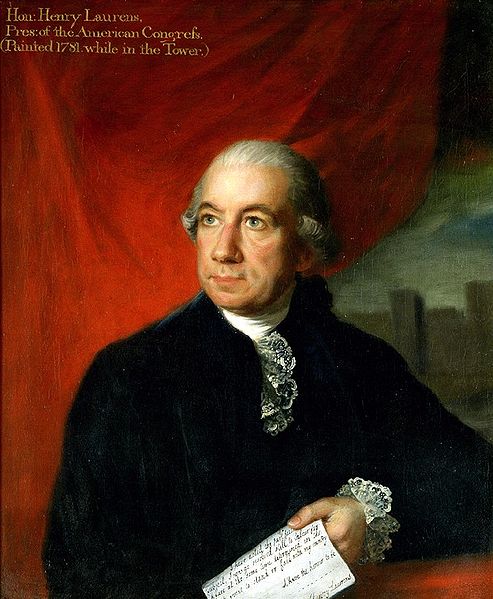
Henry_laurensHenry Laurens, was sentenced to the Tower of London for “suspicion of high treason.” His imprisonment was protested by the Americans. Laurens was captured by the British navy while acting as an envoy for the Continental Congress, negotiating treaties with European countries to support the American cause against the British. During his imprisonment, Laurens was assisted by Richard Oswald, his former business partner and the principal owner of Bunce Island. Oswald argued on Laurens’ behalf to the British government.

He was the first American to be imprisoned in the Tower. 

laurens, tower

L: Tower of London. R: Henry Laurens’ room in the Tower. Photos by Mark R. Jones