Today In Charleston History: April 1

1766-Stamp Act. 

South Carolina courts shut down, due to lack of stamped paper. Lawyers presented a petition to hold court without stamped paper. They stated:

We claim our rights under Magna Carter, the Petition of Rights, etc … We cannot think ourselves bound by the Stamp Act, which annihilates our natural as well as constitutional rights.

Chief Justice Skinner held that the court had no power to question the authority of an act of Parliament and the fact that there was no stamped paper because of unlawful demonstrations by the people was no excuse not to follow the law.

1780 –The Seige of Charlestown.

Under cover of darkness, 3000 men marched from the British camp at Gibb’s Landing toward Charlestown. – including 1500 laborers. They stopped 1000 yards from the city’s fortifications and began construction of their seigeworks. Due to the sandy soil “the work went quickly” and within one night Gen. Clinton was amazed they “completed 3 Redoubts and a communication without a single shot.”

The following morning, Samuel Baldwin of Charlestown wrote: “We were surprised … at the sight of the works thrown up by our neighbors during the night.”

1844 – Politics

John C. Calhoun became Secretary of State in John Tyler’s Cabinet.

1927 – Doin’ the Charleston

Herbert Wright of the Jenkins Orphanage was paroled on April, 1927. In 1919 he pled guilty to manslaughter and was sentenced to ten to fifteen years in the Massachusetts State Penitentiary.
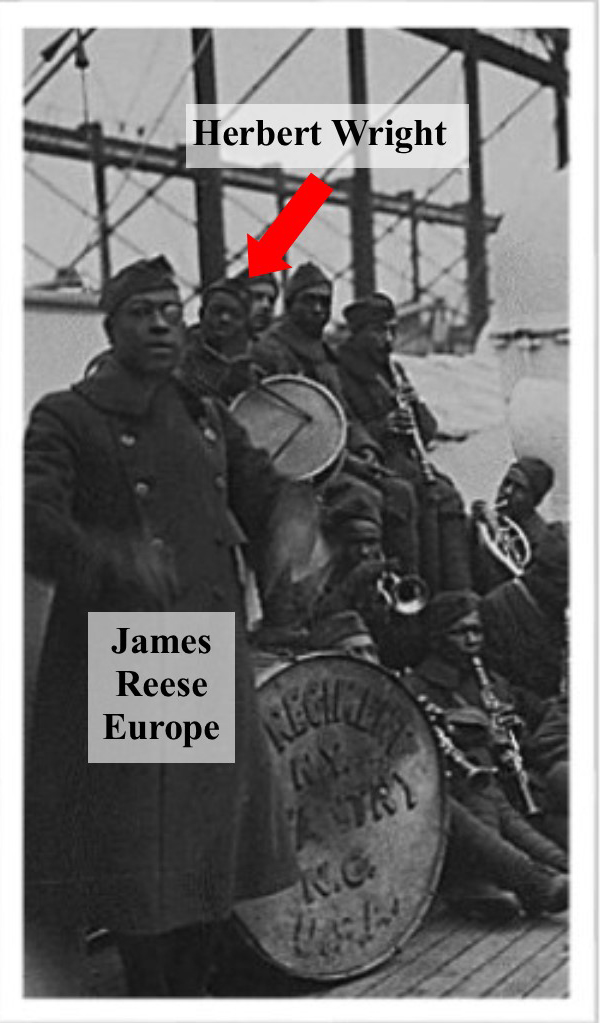
Harlem Hellfighters Band

Harlem Hellfighters Band

Wright had committed a murder that shocked the nation. He had murdered band leader, James Reese Europe, backstage at Mechanics Hall in Boston. Europe was the leader of the Harlem Hellfighters Band, an outfit which had performed across Europe during World War I and has been credited in introducing jazz music to France. The Hellfighters Band was also the first black group to record music. The band included four members of the Jenkins Orphanage Band – Steve and Herbert Wright (the Percussive Twins), Amos Gaillard (trombone) and Gene Mikell (asst. director).

Read more about James Reese Europe’s life here. 

To learn the complete story of the Jenkins Orphanage Band, the Harlem Hellfighters and the murder of James Reese Europe, read Doin’ the Charleston.

doin' the charleston

Today In Charleston History: March 31

1850 – Death

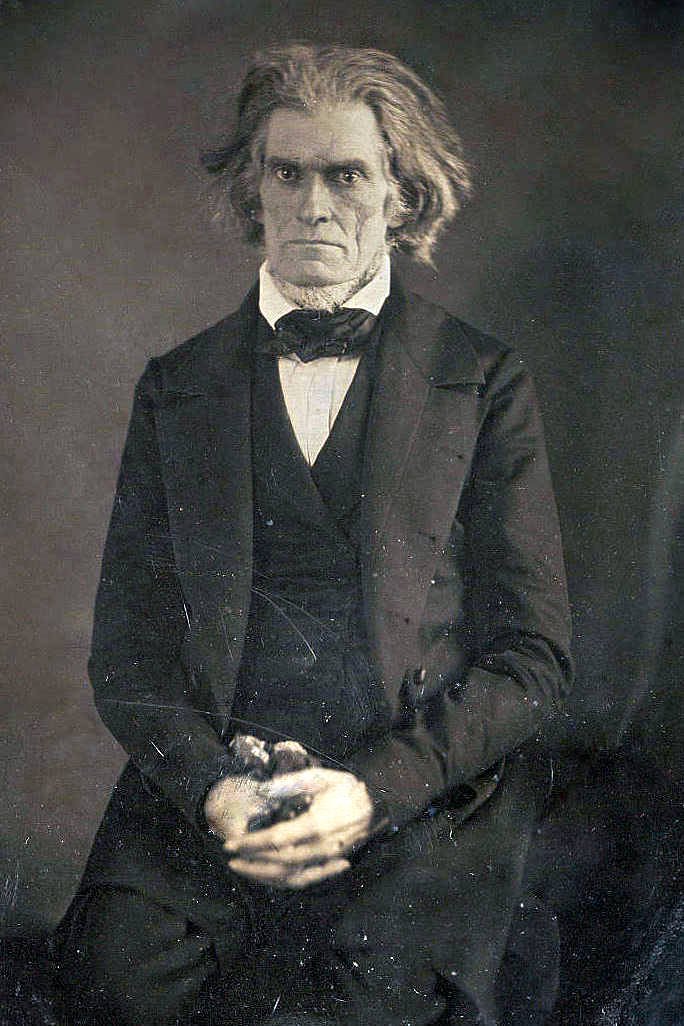
John C. Calhoun, at the age of 68, died of tuberculosis at the Old Brick Capitol boarding house in Washington, D.C. He was buried at St. Philip’s Cemetery in Charleston. 

Calhoun served in South Carolina’s legislature and was elected to the United States House of Representatives serving three terms. From 1808 to 1810 an economic recession hit the United States and Calhoun realized that British policies were ruining the economy. In 1812, Calhoun and Henry Clay, two famous “warhawks”, who preferred war to the “putrescent pool of ignominous peace”, convinced the House to declare war on Great Britian.

Calhoun's tomb in St. Philip's cemetery

Calhoun’s tomb in St. Philip’s cemetery

Calhoun served as Secretary of War under President James Monroe from 1817 to 1825 and ran for president in the 1824 election along with four others, John Q. Adams, Henry Clay, William Crawford, and Andrew Jackson. However, Calhoun withdrew from the race, due to Jackson’s support, and ran for vice president unopposed.
Calhoun was vice president of the United States in 1824 under John Quincy Adams and was re-elected in 1828 under Andrew Jackson.

Calhoun as an elder statesman

Calhoun as an elder statesman

Jackson supported the Tariff of 1828 which caused fierce opposition between the president and vice president. Because the tariffs benefited  the industrial North and hurt the slave-holding South, John C. Calhoun became the first vice president to resign. (On October 10, 1973 Vice President of the United States Spiro Agnew resigned after being charged with federal income tax evasion.)

Calhoun wrote an essay about this conflict, “The South Carolina Exposition and Protest”, in which he asserted nullification of federal laws, and in 1832 the South Carolina legislature did just that. The next year in the Senate Calhoun and Daniel Webster opposed each other over slavery and states’ rights in a famous debate. In 1844 President John Tyler appointed Calhoun secretary of state. In later years he was reelected to the Senate, where he supported the Texas Annexation and defeated the Wilmot Proviso.

In 1957, United States Senators honored Calhoun as one of the five greatest senators of all time.

1864-Bombardment of Charleston 

In a letter to his mother, Gus Smythe, look-out for the Confederate Signal Corps, wrote from the steeple of St. Michael’s Church:

Here am I on my lofty perch, behind a big telescope , looking out for any movements of the Yankees which may be of sufficient importance to send up to Gen. Jordan … My tour of duty to-night is from 1:30 a.m. to 9 a.m. & I have been on duty half the day … The worst difficulty is the trouble of getting up here, for it is no joke climbing up 150 feet … our place is in the upper piazza, above the clock. We have boarded it in, & bunks put in for us to sleep in so that we are tolerably comfortable, except when the wind blows thro’ the cracks  of the boards at a great & there is always a wind up here.

Gus Smythe

Gus Smythe

Today In Charleston History: March 30

 1780 – The Siege of Charlestown.

John Laurens, 1780 (by Charles Willson Peale)

John Laurens, 1780 (by Charles Willson Peale)

First action that morning was led by Col. John Laurens’ unit against the advancing British light infantry. After several hours of scattered battle, Lauren’s men retreated back behind the city’s fortifications at dark. Laurens described it as “a frolicking skirmish for our young soldiers.” It was the first engagement fought within sight of the city, or as one officer noted, “in view of … many ladies.”

The British set up camp at Gibbes Landing (present-day Lownde’s Grove), which was a perfect staging area from which to lay siege to Charlestown.

Three principal types of artillery used during the Revolution: field guns, howitzers and mortars.

  • Field Guns: mounted on large-wheeled carriages and fixed to fire at low angles. Varied in size from three-pound (weight of solid shot fired) to forty-two pounds. Larger guns weighed appx. 5000 pounds (2½ tons).
  • Howizters: Similar to field guns, but with shorter and stockier barrels. Could be fired at a low or high angle. Range: 1300-2000 yards.
  • Mortars: a useful weapon because of its small size and ease of movement.  It usually had a fixed trajectory (around 45 degrees), and the distance the shot traveled was adjusted by varying the powder charge.  Just like the howitzer, the use of the exploding shell was popular to reach troops inside fortifications. Range: 2000 yards.

 1843 – Marriage.

Susan Petigru King Bowen, in later life

Susan Petigru King Bowen, in later life

Susan Petigru, 19, married Henry Campbell King, “short, stout, and physically unattractive.” Henry was the son of a prominent Charleston lawyer, Mitchell King, and friend of Susan’s father.  

Susan, the daughter of another prominent Charleston lawyer, James Petigru, was something of a rebel so the marriage to King was considered the best the Petigrus could do for her. Susan herself wrote that she would “probably get no better offer.” She had been a rambunctious child who grew to be a quick-tempered woman who never bothered to conform to the role of a society belle. She moved into her husband’s family mansion at 24 George Street.

Today In Charleston History: March 29

1722 – Religion.
St. Philips Church, 1723

St. Philips Church, 1722

On Easter Sunday, the congregation of St. Philip’s worshipped for the first time in their new church. The structure was described as a

work of … Magnitude Regularity Beauty … not paralleled in his majesty’s Dominions in America … lofty arches and massive pillars, an octagonal tower topped by a dome and a quadrangular Lantern and weathervane soared eighty feet above the church.

1780 – The Seige of Charlestown.

The British army crossed the Ashley River and landed on the Charlestown peninsula, two miles north of the Continental lines, approximately near the present-day site of the Citadel. 

Due to lack of men the Continental army could not stop the British crossing. Gen. Lincoln was so determined to save Charlestown that he gambled by keeping the bulk of the Southern Army within the city. However, he did order a light infantry unit led by Col. John Laurens to take post outside the city’s fortifications “to watch the motions of the Enemy and prevent too sudden an approach.” He also wrote to the Continental Congress:

We have to lament that, from the want of Men, we are denied the advantages of opposing them with any considerable force in crossing this river.


Today In Charleston History: March 26

1726 – Ansonborough
Lord Anson, 1755

Lord Anson, 1755

Capt. George Anson purchased a tract of land which later would bear his name – Ansonborough – from his winnings at cards. According to local legend, Anson won the entire tract in a single game from Thomas Gadsden. In fact, Gadsden conveyed this tract to Capt. George Anson for £300 sterling. This was an unusually large sum for such a young naval officer to possess, so it is quite possible that Anson’s winnings at cards was the source of his money. 

Anson later led a British expedition that circumnavigated the world and served as Admiral as the British Fleet from 1756-62.

1737 – Crime & Punishment

Alexander Forbes was convicted of “stealing Cloathes and other things.” He was sentenced to “be whipped on the bare back at the cart’s tails through the town.”

1776 – American Revolution. Charleston First

Four months before the Declaration of Independence was signed, South Carolina adopted a state constitution, drafted by the Provincial Congress and the Republic of South Carolina was born. Charles Cotesworth Pinckney was chosen to chair the Constitutional Committee. This was the first plan for an independent government in the American colonies. 

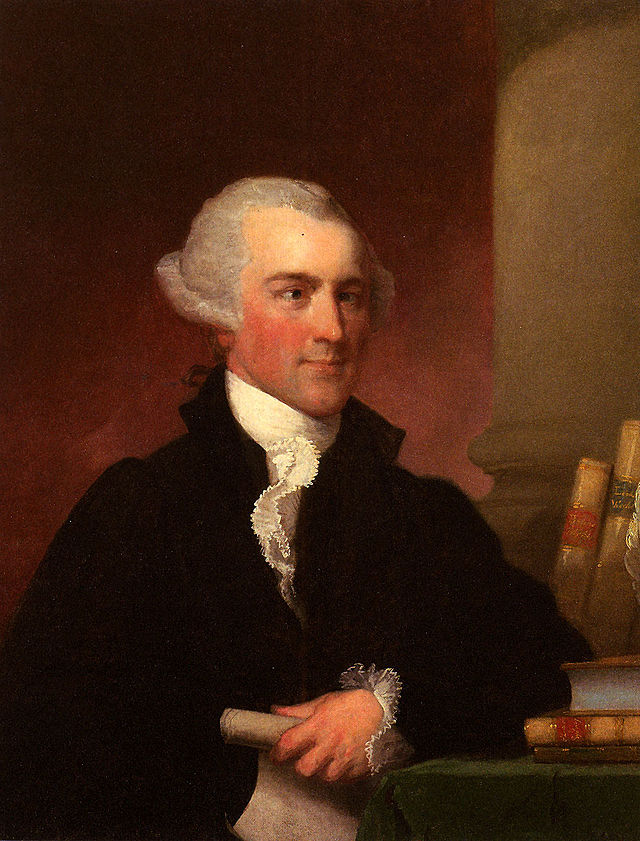
South Carolina President (later govenor)  John Rutledge

South Carolina President (later govenor) John Rutledge

John Rutledge was elected as the state’s president, Henry Laurens its vice-president and William Henry Drayton, Chief Justice. The 1776 Constitution was considered a temporary measure until “an accommodation of the unhappy differences between Great Britain and America can be obtained.” It gave the president “absolute veto power” over the acts of the legislature. Due to his power, Rutledge picked up the nickname “Dictator.”

For the second time in its history, South Carolina had forced a change in its government – in 1719 they had overthrown the Proprietors and now they had replaced British rule with a local government.

1820 – Scandal

Charles Pinckney, in Washington, D.C., was caught in an abandoned house with a “mulatto wench.” A butcher who had been robbed saw Pinckney go into the house and thought it was the robber. A group of men surrounded the house and began to holler for the “thief to come out!” Pinckney, panicked, jumped out of window and attempted to run away. Due to his age, he was unable to outrun his pursuers, who released him when they realized their mistake.

1861. Lincoln’s Spies In Charleston. 

Col. Ward Lamon, former law partner to President Lincoln,arrived in Charleston to meet with Gov. Pickens who told Lamon that “nothing can prevent war except acquiescence of the President of the United States of secession.” Any attempt to reinforce the Southern forts would mean war. Lamon responded that no attempt to reinforce Sumter would happen, and that the fort would most likely be abandoned.

Rev. Anthony Toomer Porter met James Chesnut on the street. Toomer expressed his dismay that war was now inevitable. Chesnut, however, was more optimistic. He told Toomer, “There will be no war, it will be all arranged. I will drink all the blood shed in the war.” Henry Gourdin, however, agreed with Porter that “nothing now but a miracle can arrest the onward course towards destruction and war.”

1900

The first Shakespearean play of the 20th century in Charleston was The Taming of the Shrew, at the Academy of Music. “Despite the fact that it was Lent” there was a “very large crowd …. in this most decorous and conventional of cities.”

academy of music

Academy of Music, Market and King Street (present site of the Riveria Theater.

Today In Charleston History: March 22

 1765 – American Revolution –The Stamp Act.

stamp actIn a another attempt to pay the debt run up during the French and Indian War, British Parliament passed the Stamp Act,  which required that most printed materials in the colonies be produced on “stamped paper” (an embossed revenue mark)  from London. The printed materials included newspapers, legal documents, playing cards and magazines. There was quick and passionate opposition to the Stamp Act in Boston, Philadelphia and Charlestown.

South Carolina’s London agent Charles Garth wrote to John Rutledge informing him of the proposed Stamp Act being argued in Parliament. In Garth’s opinion the Act could not be successfully opposed by the colonies.

The Stamp Act was viewed as a threat by most Charles Town’s men. Just a year before they had managed to secure the upper hand over Governor Boone who had challenged the Assembly’s right to determine the validity of elections. 

1794 – Execution

Thomas Walsh “was assisted in his devotions by the Rev. Dr. Keating, pastor of the Roman Catholic church” before he was hanged for counterfeiting in Charleston. He then

politely waved his hand to the crowd and said, ‘Good day, gentlemen’ before he pulled the cap over his face” and was immediately launched into eternity.

1888

Charles Dickens, Jr. appeared at the Academy of Music, reading excerpts from his father’s famous works.

1924
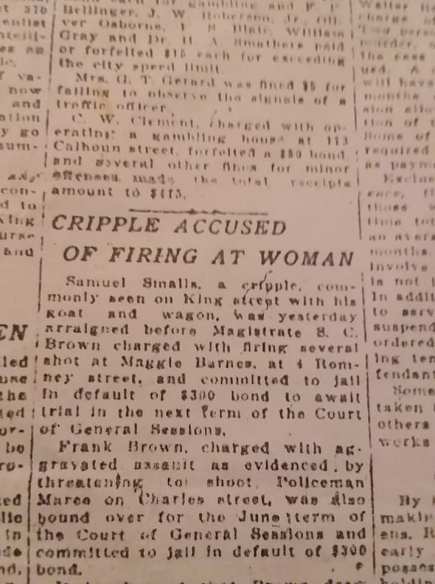
Samuel Smalls, a disabled black Charleston street peddler, often seen on his goat cart, was arrested for shooting at his girlfriend Maggie Barnes at 4 Romney Street. DuBose Heyward, wrote the novel Porgy, based on Smalls’ arrest and the fight with his girlfriend. George Gershwin read and collaborate with Heyward on “Porgy and Bess.”

sammy smalls arrest

Today In Charleston History: March 21

1917 – Music

From the Musical News, London: 

A song, “How Sweet Is Life” by a student, Mr. Edmund T. Jenkins, showed the composer to be possessed of a vein of melody, not original as yet, and of a style which needs unifying, but his effort was full of promise, especially in the matter of orchestration. The song was well rendered by Miss Marjorie Perkins.

Edmund Thorton Jenkins

Edmund Thorton Jenkins

Edmund Jenkins (who was called “Jenks”) was the son of Rev. Daniel Jenkins, founder of the Jenkins Orphanage in Charleston. He grew up playing with the Jenkins Orphanage Band, but longed to play “serious music.” He took piano lessons in Charleston and attended Morehouse College in Atlanta.

In 1914 the Jenkins Band was invited to perform at the Anglo-American Expo in London and Jenks performed with the band until the outbreak of World War I closed down the Expo. Jenks was admitted to the Royal Academy of Music in London where he studied composition.     

1921 – Music

Ethel Waters had her first recording session for the Pace & Handy Music Company. She recorded two songs –  “Down Home Blues” and “At The Jump Steady Ball.” The songs were composed by her Charleston friend, Tom Delaney, formerly a member of the Jenkins Orphanage Band. Also, two other former members of the Jenkins Band, brothers Bud (trombone) and Gus Aiken (trumpet), were part of the recording.  A twenty-three-year-old former chemistry student named Fletcher Henderson played the piano for the session.

“Down Home Blues” became a hit so Pace & Handy paired Waters and Delaney together and sent them out on tour, Waters on vocals and Delaney on piano.   

To learn more about Charleston’s role in American music … read Doin’ the Charleston. 

doin' the charleston

Today In Charleston History: March 14  

1699

Peter Girad wrote that there were 195 French Protestants in Charles Town.

1740 – Religion
George Whitefield

George Whitefield

Rev. George Whitefield warned that God had been:

Contending with the people of South Carolina … for two years with disease, the Stono Rebellion … God has quarreled with you, for your abuse of and cruelty to the poor negroes.

While in Charlestown he conducted public services that disregarded the Book of Common Prayer, an offense against the church of which he was a licensed minister. Rev. Alexander Garden called on him to explain his offense.

1767

Daniel Moore, new customs collector, was determined to use the position to increase his personal wealth. He increased collection fees, strictly enforced the coastal trade regulations and colluded with customs searcher, George Roupell, to “set a new standard for rapaciousness.” This angered many of the local merchants, including Henry Laurens who organized the merchants in an attempt to isolate the Royal officials.

Today In Charleston History: March 7

1737 – Slavery

A curfew act was enacted for blacks in Charlestown. Any black that appeared on the street after sundown without a lantern and written permission from their master could be apprehended by any white and taken to the Watch house overnight. They would be whipped in the morning and their owners could claim them after paying a fine.

1773 – Culture
Josiah Quincy

Josiah Quincy

Josiah Quincy visited Charleston in 1773. He was was an American lawyer and patriot from Boston. He was the principal spokesman for the Sons of Liberty prior to the Revolution and was John Adams’ co-counsel during the trials of Captain Thomas Preston and the soldiers involved in the Boston Massacre.

He kept a journal of his visit in the South and recorded his impressions of Charleston. He was not impressed with the church service at St. Philips. The small number in attendance shocked his Boston-Puritan ethic. In addition he noted the minister was:

A young scarcely-bearded boy … preached and prayed as to try an affect a gay air about the service. The sermon was only seventeen and a half minutes, a solemn mockery … … few women or men stood to sing … most people freely conversed with one another during the service.

1780 – Revolutionary War

British engineers constructed a bridge over the Wappoo Cut as preparations of their siege of Charlestown. 

Today In Charleston History: March 6

1724 – Births.
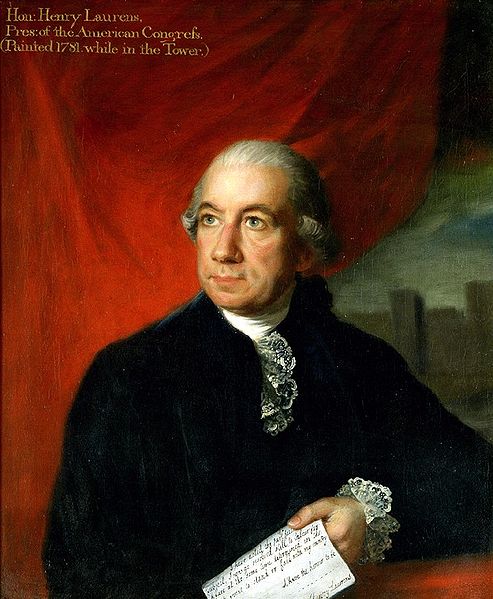
Henry Laurens

Henry Laurens

Henry Laurens was born in Charlestown, son of John Laurens a French Huguenot. The young Henry became friends with Christopher Gadsden during childhood, creating an alliance between two powerful men during the Revolution. Lauren’s son-in-law, Dr. David Ramsay wrote that they were:

…. Attached in their early youth to each other by the strongest ties of ardent friendship. They made a common cause to support and encourage each other in every virtuous pursuit, to shun every path of vice and folly, to leave company whenever it tended to licentiousness … and acquired an energy of character which fitted them for acting a distinguished part in the trying scenes of a revolution …

1837

Senate confirmed the appointment of Joel R. Poinsett as Secretary of War by President Martin Van Buren, and presided over the continuing removal of Indians west of the Mississippi and over the Seminole War.

To read more about Poinsett’s life … click here.