Today In Charleston History: June 24

JUNE 24

1717-Piracy

Stephen James de Cossey, Francis de Mont, Francis Rossoe and Emanuel Erando were charged by Judge Trott with taking the vessels the Turtle Dove, the Penelope, and the Virgin Queen off the coast of Jamaica.

1753
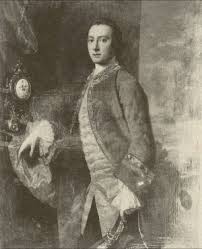
Peter Manigault

Peter Manigault

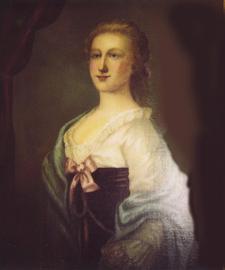
The young Peter Manigault, while studying in England, visited Charles and Eliza Pinckney in London. He wrote to his mother about the Pinckneys:

He already seems to have some desire to return to Carolina and I daresay he will, sooner than he at first talked of … His wife is an excellent Woman and I venture to say she would chuse [choose] to pass her days in England; however she is too good a Wife to ever thwart her Husband’s Inclination.

1766-Religion. The Buildings of Charleston

 St. John’s Lutheran Church was completed on Archdale Street.st. .johns

1773

Dr. Alexander Garden (the physician not the minister) was elected to the Royal Society, nominated by Benjamin Franklin. The Society renamed the Cape jessamine the “gardenia,” in his honor.

garden

Dr. Alexander Garden

A distant relative Reverend Alexander Garden, arrives in Charlestown in 1755 where he married Elizabeth Peronneau. Garden was partner in a busy medical  practice but still found time for his greatest enthusiasm – collecting and studying flora and fauna, which he sent to John Ellis, a merchant and zoologist in London, and to Carolus Linnaeus in Sweden.. There were no neighbours with similar interests –“there is not a living soul who knows the least iota of Natural History,” he wrote to Ellis. His botanical and zoological conversations were carried on by correspondence. His parcels to Europe included “birds, fish, reptiles, amphibia, insects, and plants”  from South Carolina.

2020

Statue of John C. Calhoun removed from Marion Square.

EbQHfCQWAAURATOAt about 6:00 p.m. Charleston City Council voted 13-0 to remove of the statue of the former U.S. vice president and senator from South Carolina.

At 11.34 p.m. the Charleston Police Department tweeted that, “Calhoun Street between Meeting Street and King Street is closed for the removal of the John C. Calhoun statue,” adding that the street will be closed for several hours.

Some onlookers grew restless just after 1 a.m. and began to leave just before crews used bucket trucks to soar more than 100 feet in the air to the top of the statue to make preparations for its removal. Another piece of equipment that appeared to have pulleys attached was being raised to the height of the statue from Calhoun Street, the roadway that marks the southern border of the square where the statue sits and also bears his name. Crews also removed the plaques that adorn the four sides of the pedestal on which the monument and statue sit.

During the removal there was a mechanical issue with one of the two hydraulic lifts being used to work on the monument. A mechanic was called in to repair the lift. It was also discovered there was a bronze mounting bracket filled with epoxy and concrete that ran the entire depth of the pedestal and was connected to Calhoun’s feet.  A diamond cutter was used to break through it, and the second lift was needed in order to complete the work. 

History of the Calhoun Monument

A few months after Calhoun’s death in 1850, Mrs. James Gadsden and her friends, Miss S. Hart and Mrs. Esther Monk, formed the Ladies’ Calhoun Monument Association.  They raised two dollars at that meeting, which eventually grew into $8,000 by 1855. Three years later, the cornerstone of the monument was laid, containing a cannonball from the battle of Fort Moultrie, a banner from Calhoun’s funeral procession, $100 in Continental money, and a lock of Calhoun’s hair.
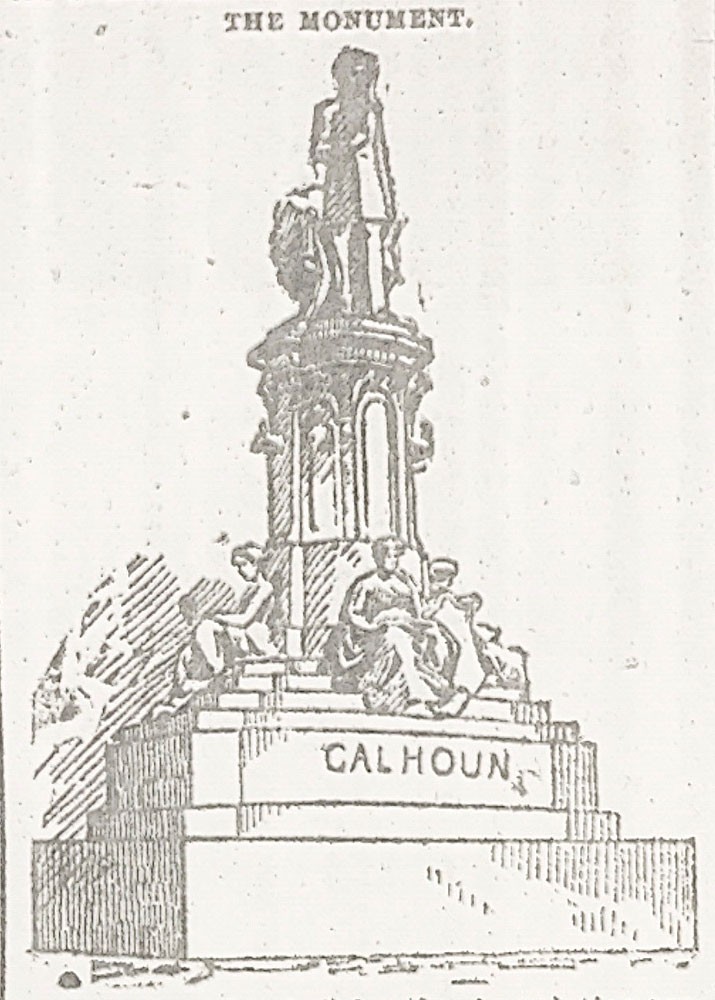
calhoun monument

Rendering of originally-proposed Calhoun monument from ‘News & Courier,’ April 26, 1887

It wasn’t until 1887 that a statue was erected. Albert E. Harnisc, a young Philadelphia artist, was hired to create a bronze statue atop a granite base. The design called for Calhoun’s figure to be surrounded by “four allegorical figures” representing truth, justice, the Constitution and history. 

City officials said eventually that the Calhoun statue will be placed permanently at “an appropriate site where it will be protected and preserved.”
Today in Charleston History: June 23  

1663 – Early Exploration

Capt. William Hilton exploring the coast for Sir John Yeamans, landed on either present-day Kiawah or Seabrook Island and officially took formal possession of Carolina for England and the Proprietors.

Dr. Henry Woodward, 20-year old ship’s surgeon under Sanford, agreed to stay behind and live with the Port Royal Indians in order to study their culture and language and lay the diplomatic groundwork for the future English settlers. The nephew of the tribal Cassique (chief) returned to London with Sanford.

1734-Religion.

First service was held at the Scots Meeting House at 53 Meeting Street. It was a simple frame structure southeast of the present-day First Scots Presbyterian Church building.

1809

Theodosia Burr Alston wrote her old friend Dolley Madison, now the First Lady of the United States, asking for her assistance to help her father return to America.

You may perhaps be surprised at receiving a letter from one with whom you have had little intercourse for the last few years, but your surprise will cease when you recollect that my father, once your friend, is now in exile; and that the President only can restore him to me and to his country.

1914 – Jenkins Orphanage

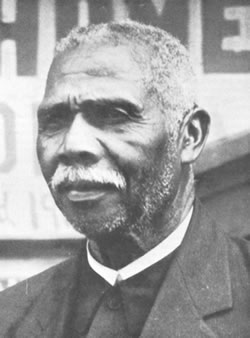
 Rev. Daniel Jenkins, in England with the Jenkins Band who were performing at the Anglo-American Expo, sent a letter on

Rev. Daniel Jenkins

Rev. Daniel Jenkins

his orphanage stationary (deleting “Charleston, S.C.” and replacing it with a typed “London, England”) to South Carolina Governor Coleman Blease. Some of the text of the letter included:

… the salvation of the South between the white and the black man lies in the careful training of the little negro boys and girls to become honest, upright and industrious citizens … Teaching the Negro to read, to write and to work is not going to do the white man any harm … Nine of the Councilmen of London called on me yesterday and congratulated me on the work I am doing for my race. If were able to gain the respect of the people of England, how much more can be done if the Governor and Lawmakers of South Carolina would simply co-operate with me?

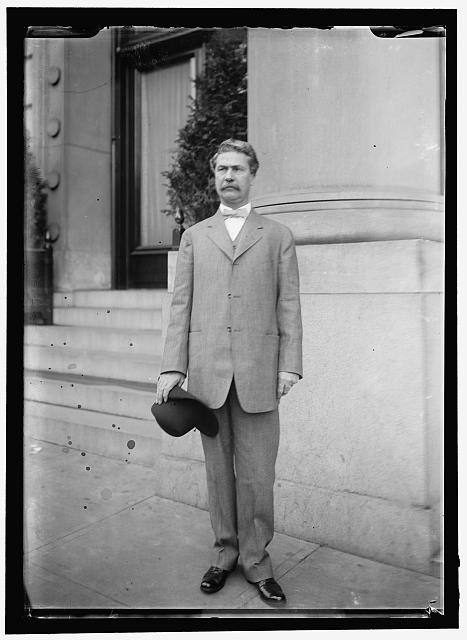
coleman blease (library of congress)Blease had been elected governor in 1910, because he “knew how to play on race, religious, and class prejudices to obtain votes.”  He was one of the most racist politicians ever elected in South Carolina. He favored complete white supremacy in all matters. He encouraged the practice of lynching, and was opposed to the education of blacks. He even once buried the severed finger of a black lynching victim in the South Carolina gubernatorial garden.

In light of Blease’s racist attitude, Jenkins’s letter to the governor is an indication of the reverend’s fierce determination to raise money, no matter how remote the success.

Today In Charleston History: June 22

1663-Founding of Carolina

Capt. Robert Sandford, exploring the Carolina coast for Sir John Yeamans, sailed five miles up a “fair river” and came across “a canoe with two Indians.” They informed Sandford that this was the country of “Edistoh.”

1722

The city of Charlestown was incorporated by Governor Nicholson.

1769

In the Gazette, Christopher Gadsden wrote:

It seems amazing, and altogether unaccountable, that our mother country should take almost every means in her power, to drive her colonies to some desperate act; for what else could be the motive (besides oppressing them) of treating them with that contempt she upon all occasions affects to do?

1781-American Revolution

The American prisoners in the British ships in Charlestown harbor were exchanged, and sent to Philadelphia.

1822-Denmark Vesey Rebellion

Frederick Wesner and Capt. William Dove arrested Denmark Vesey at the “house of one of his wives,” most likely his former wife Beck.

1864-Bombardment of Charleston

Gen. Samuel Jones

Gen. Samuel Jones

Gen. Sam Jones (CSA) angrily replied to Gen. Schimmelfenneg’s assertions that the bombardment was aimed at military targets:

The fire has been so singularly wild and inaccurate that no one who has ever witnessed it would suspect its object … the shells have been thrown at random, at any and all hours, day and night …

1917


Edmund Thorton Jenkins

Edmund Thorton Jenkins

Edmund Thornton Jenkins (Jenks) composition for grand organ and orchestra, Prelude Religieuse, was performed at the Queen’s Hall at the Royal Academy.  In a mere two years, Jenks had progressed to the point where his compositions were being performed at one of London’s leading concert halls. As the war raged across Europe, Jenks had something more important on his mind – his musical future.

Listen to one of Jenkins’ compositions, “Charlestonia: A Folk Rhapsody.” 

Today In Charleston History: June 21

1692

The Grand Council issued an order for:

  • “The better observance of the Lord’s Day by prohibiting the haunting of punch houses during the time of divine service” and

  • “that the French ministers and officers of their church be advised that they begin their divine service at 9 o’clock in the morning and about 2 in the afternoon of which they are to take due notice and pay obedience thereunto.”

This second order was directed at the Huguenots – “the church of the tides.”

1775-American Revolution

Charles Pinckney led a group of citizens to call on Royal Governor William Campbell. They presented a list of grievances and explained why they formed the Provincial Congress. They claimed:

Conscious of the Justice of our cause, and the Integrity of our Views, we readily profess our loyal Attachment to our Sovereign, his Crown and Dignity: And trusting the Event to Providence, we prefer Death to Slavery.

1783-Births

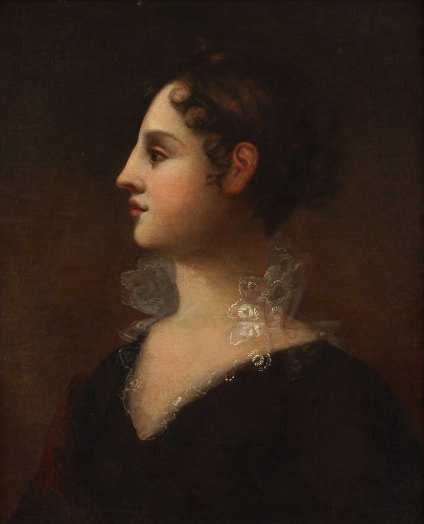
Theodosia Burr was born in Albany, New York, daughter of Aaron Burr. She would marry Joseph Alston of Charleston and become first lady of South Carolina when Alston was elected governor. 

Theodosia Burr Alston by John Vanderlyn - New York Historical Society

Theodosia Burr Alston by John Vanderlyn – New York Historical Society


Today In Charleston History: June 20

1672

Lord Ashley Cooper wrote to Sir John Yeaman:

The Distinction of the Governor from the rest of our deputies is a thing rather of order than of overruling power, and he hath no more freedom thereby than any one of the council to swerve from these rules.

1695-Religion

Governor Joseph Blake gave £1000 sterling to the Independent (Congregationalist) Church.

1776-American Revolution. Battle of Ft. Sullivan

Gen. Clinton sent a brigade under Maj. Gen. Charles Cornwallis to pitch camp within sight of The Breach on Long Island (Isle of Palms). Cornwallis reported that the depth of The Breach at low tide, initially thought to be only half-a-yard, was in reality seven feet. Col. Willliam Moultrie had already stationed an Advance Guard of 400 men on the other side of the Breach to defend against the crossing, effectively stranding Cornwallis’s force.

1779-American Revolution. Battle of Stono Ferry

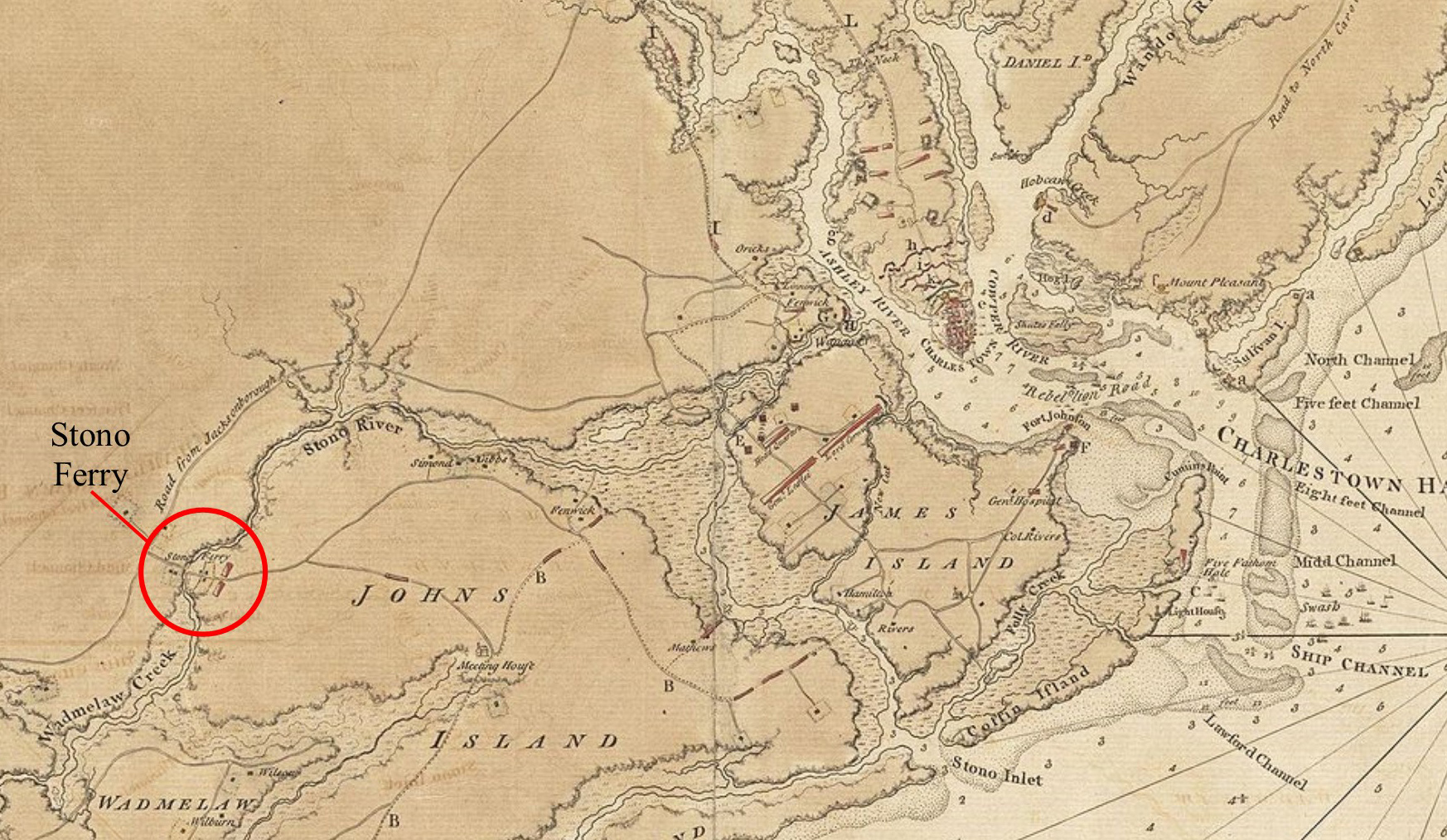
Under Lt. Col. John Maitland, the British had established their defenses at Stono Ferry, located on the Stono River. British troops were camped on one side with a detachment of Hessians camped on the other side.

The British rear guard force was attacked by Patriot forces under the command of Maj. Gen. Benjamin Lincoln. Within a hour the Patriots had taken the British redoubts and the British and Hessian troops were falling back, with many causalities. The Patriots were on the verge of victory when fresh British reinforcements came up.

The Patriots attacked the Hessian camp and  immediately came under fire from a British galley in the Stono River. The Patriots returned fire on the ship, forcing it to withdraw from the fight. The South Carolina Navy schooner Rattlesnake came down the river and began to fire into the rear of the British and Hessian forces. They both turned from the Patriot force and fired upon the Rattlesnake. The Rattlesnake was able to repulse the attack, however, incurring heavy losses.

The American loss in the battle was 34 killed, 113 wounded and 155 missing. Among the dead was Hugh Jackson, brother of future President Andrew Jackson. The British casualties were 26 killed, 93 wounded and 1 missing.

Map drawn by British officer, 1780.

Map drawn by British officer, 1780.

1794-Slavery.

A writer named “Rusticus” wrote a letter to the editor about white anxiety over the presence Haitian slaves:

The circumstances which occasion’d their introduction gave new ideas to our slaves which the opportunities of conversation with the new comers could not fail to ripen into mischief. It may be perhaps true that the generality of those admitted were not immediately concerned in the revolt  – their hands were free from blood but they witnessed [sic] all the horrors of the scene – they saw the dawning hope of their countrymen to be free – the rapidity with which the flame of liberty spread among them …

1822-Slavery. Denmark Vesey Rebellion.

One of the incarcerated conspirators, most likely William Paul, finally broke down and identified Denmark Vesey as the “instigator and chief of the plot.” This set off an intense, frantic two-day long search of Charleston, from wharfs to streets and buildings.

Today In Charleston History: June 19

1749Slavery

The Assembly passed an addition to the Negro Act of 1740 which decreed death for any Negro who administered poison to any person.

1778-American Revolution – South Carolina Navy

Commodore Alexander Gillon led a South Carolina naval excursion and captured two British vessels.

1822-Denmark Vesey Rebellion

The trials of the conspirators began. Rolla Bennett, “the slave of his Excellency, Governor Bennett” was called before the court.  A slave named Joe LaRoche entered the room, swore on the Bible and testified that Rolla had asked him to join the rebellion three weeks ago. He testified, “I told him it could not be done and that our parents for generations back had been slaves, and we had better be contented.” Rolla testified as:

I know Denmark Vesey, on one occasion he asked me, what news? I told him; none. He replied, we are free, but the white people here won’t let us be so; and the only way is, to raise up and fight the whites. I went to his house one night, to learn where the meetings were held … Vesey told me, he was the leader in this plot … Vesey induced me to join. When I went to Vesey’s house, there was a meeting there, the room was full of people, but none of them white … He was the first to rise up and speak, and he read to us from the bible, how the children of Israel were delivered out of Egypt from bondage; he said, that the rising would take place last Sunday night, (the 16th June,) …

 In the official report, Negro Plot: An Account of the Late Insurrection Among a Portion of the Black in Charleston, South Carolina it was concluded:

Rolla represented himself as the commander of the force which was to rendezvous in the vicinity of his master’s mills, & explained to the witness fully the order of attack; the division of the forces; and said, “that his troops, in their way into town, would fix his old buck (his master) and the intendant.” On being asked whether it was intended to kill the women and children, he remarked when we have done with the men we know what to do with the women.

Rolla was pronounced “unanimously guilty” and ordered to “prepare for death.”

Batteau Bennett was tried next. From the Negro Plot:

It was proved that Batteau confessed to two persons, (both of whom were introduced as witnesses,) that he belonged to the conspiracy … He stated he was to head a party near Canon’s bridge, and that he expected aid from the country. Batteau was found guilty, and sentenced to be executed on the 2d of July.

  Next on trial was John Horry, the slave of former indendent, Elias Horry. John had been arrested at his master’s house at 59 Meeting Street. John, a coachman for the Horry family, testified that “As soon as the slaves took the streets, he planned to go up stairs and kill his master and family.”

Horry asked, “Tell me, are you guilty? For I cannot believe it unless I hear you say so. What were your intentions?

John replied, “To kill you, rip open your belly & throw your guts in your face.”

Stephen Smith, Peter Poyas and Ned Bennett were also found guilty and sentenced to be hanged on July 2.

S10817710025 Branford-Horry House Charleston County 72dpi 24 Bit Color Photo By: Natalie Ford, Clemson Univsersity Graduate Program in HP

Branford-Horry House, Charleston, SC, inherited by Elias Horry in 1801.

Today In Charleston History: June 18


1718-Piracy

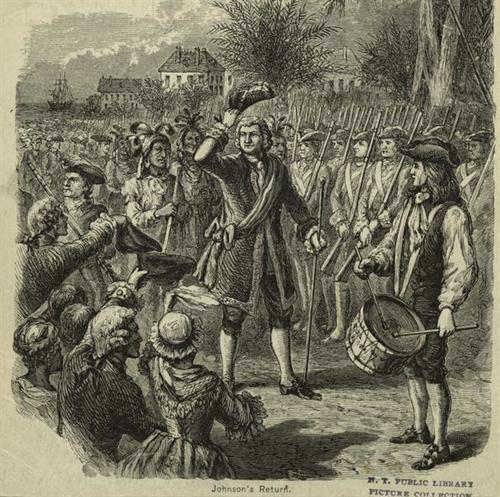
Gov. Johnson's Return.

Gov. Johnson’s Return.

Governor Robert Johnson wrote to the Proprietors, appealing for a frigate or two to cruise the Carolina coast to protect their commerce:

About fourteen days since, four sail appeared in sight of town, immediately took the pilot boat … and in a few days took eight or nine outward-bound vessels … Hardly a ship goes to sea but falls into the hands of the pirates.

1770-American Revolution – Foundations

News that Rhode Island had broken the Association led to the Sons of Liberty hanging an effigy between Dillon’s Tavern and Gray’s Tavern on Broad Street. The note attached read: Similar Treatment to all who Violate the Association. (Note: The Association was a 1769 agreement among the Colonies to not import British goods.)

The effigy was removed and placed in the Guard House. During the night, it was stolen, paraded around the town and burned on the Green. 

1773-American Revolution

Henry Laurens wrote:

I am more of opinion now, than ever, that there will be Bloodshed. God avert it. Innocent persons will fall a Sacrifice to the knavery & bad policy of wrong Heads on each Side & these will escape with the plunder.

1775-American Revolution – Arrivals

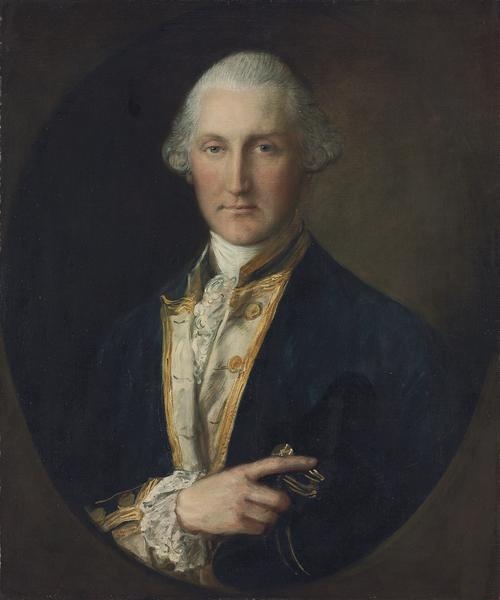
Lord William Campbell

Lord William Campbell

Lord William Campbell arrived in Charlestown as the new Royal governor. Married to Sarah Izard, one of South Carolina’s most powerful families, Campbell expected his arrival to be greeted with typical fanfare – booming cannons and cheering crowds. However, arriving six weeks after the news of the massacre in Boston, with the rising revolutionary passions, he greeted with “sullen silence.”

Campbell moved into the Miles Brewton House at 27 King Street until his residence was ready at 34 Meeting Street. He quickly learned that he was little more than a figurehead, due to the power wielded by the Provisional Congress. Campbell knew of the political rift between the aristocratic low-country (more revolutionary) and the backwoods commoners (more loyal) in the South Carolina upstate. He flooded the backcountry with pamphlets claiming that the Provisional Congress could not be trusted and had taken illegal power.

He also began to coordinate with backcountry Loyalists.

1812-War of 1812.

The United States declared war on Great Britain.

Today In Charleston History: June 17 … Charleston First.

1831

The boiler of the Best Friend exploded while picking up lumber cars at the “forks in the road”, where Dorchester and State Roads merged, near the Eight Mile House. Engineer Nicholas Darrell wrote:

When I ran the Best Friend, I had a Negro fireman to fire, clean and grease the engine. This Negro, annoyed at the noise occasioned by the blowing off the steam, fastened the valve-lever down and sat upon it which caused the explosion, badly injuring him.

This nameless Negro fireman was killed by his injuries, and was the first fatality on an America railroad. This explosion ended all train service on the C&HRR for a month.

Best Friend of Charleston

Best Friend of Charleston

1862-Civil War    

Mr. Frederick Paturzo finished removing seven of St. Michael’s bells, as well as the bells of St. Philip’s and First Scots. The eighth bell in St. Michael’s remained to be as the Municipal Alarm and became known as “Great Michael.” The bells of St. Philip’s and First Scots were donated to the Confederate cause. The bells of St. Michael’s were ultimately taken to Columbia for safe keeping.

2015 – Emanuel A.M.E. Massacre

At approximately 8 p.m. Dylan Roof entered Emanual A.M.E. Church on Calhoun Street in Charleston, S.C. and was invited to participate in a Bible study with a small group of thirteen people, being conducted by the pastor, Clementa C. Pinckney. When the group began to pray, Roof, pulled out a Glock 41 .45 caliber pistol, and began shooting. 

At 9.05 p.m. the Charleston Police Department began receiving 911 calls of a shooting at the church.  The dead included six women and three men,  Eight died at the scene; the ninth, Daniel Simmons, died at MUSC Medical Center. They were all killed by multiple gunshots fired at close range.

  • Cynthia Marie Graham Hurd (54) – Bible study member and manager for the Charleston County Public Library system.
  • Susie Jackson (87) – a Bible study and church choir member.
  • Ethel Lee Lance (70) – the church’s sexton
  • Depayne Middleton-Doctor (49) – a pastor who was also employed as a school administrator.
  • Clementa C. Pinckney (41) – the church’s pastor and a South Carolina state senator.
  • Tywanza Sanders (26) – a Bible study member; grandnephew of Susie Jackson.
  • Daniel Simmons (74) – a pastor who also served at Greater Zion AME Church in Awendaw.
  • Sharonda Coleman-Singleton (45) – a pastor; also a speech therapist and track coach at Goose Creek High School; mother of MLB prospect Chris Singleton.
  • Myra Thompson (59) – a Bible study teacher.

The victims were later collectively known as “The Charleston Nine”.

Today In History: June 16

1701-England. Religion.

King William III issued a charter establishing the “Society for the Propagation of the Gospel in Foreign Parts” as “an organisation able to send priests and schoolteachers to America to help provide the Church’s ministry to the colonists.”

1776-American Revolution

The privateer Polly, commanded by Capt. Francis Morgan and carrying a cargo of 300 barrels of gunpowder, 20 chests of cartridges, 90 barrels of rum, sugar, and gin, tried to run the gauntlet of British ships into Charleston Harbor.

The Polly ran aground near Stono Creek and the Patriots scuttled and abandoned her. The HMS Bristol sent eight boats under the command of Lt. Molloy to investigate and attempt to refloat the Polly, but she had five feet of water in her hold. So, they set her on fire, and she

“blew up with a great Explosion… It would have been much greater but she had five feet of water in her hold, which had damaged a great deal of the Powder.”

1788-Piracy

Richard Cain, Richard Williams, William Rogers, John Masters, and William Pendergrass from the schooner Two Friends, were executed for piracy and murder at Hangman’s Point opposite the city of Charleston.

The bodies of William Rogers and Richard Williams, being the principal aggressors, were cut down and conveyed to Morris’s island, there to be hung in chains.

1802

Aaron Burr sailed from Charleston on the Comet. The ailing Theodosia traveled with her father, her three-week old son and her sister-in-law Maria Alston to her father’s house in New York, Richmond Hill, to escape the Charleston summer.

1826

Another fire set by arsonists on King Street resulted in $100,000 in damages. Four years after the discovery of the Denmark Vesey plot,  Much of the white population was living in dread of another slave insurrection.

1862-Civil War

On this day, a Union attempt to capture Charleston, South Carolina, is thwarted when the Confederates turn back an attack at Secessionville, just south of the city on James Island. Read about the Battle of Secessionville.

The Union army establishes a foothold on James Island on the Stono River. Harper’s Weekly

The Union army establishes a foothold on James Island on the Stono River. Harper’s Weekly

1934-Porgy and Bess

George Gershwin and Debose Heyward on Chalmers Street, Charleston, SC

George Gershwin and Debose Heyward on Chalmers Street, Charleston, SC

George Gershwin arrived by train in Charleston with his cousin, artist Henry Botkin. They drove out to Folly Beach where Heyward had rented a cottage at 708 West Arctic Avenue. Gershwin was in the lowcountry to work on the score for his proposed opera, Porgy and Bess, based on Dubose Heyward’s novel and stage play, Porgy. 

For the entire story of Gershwin’s visit and Porgy and Bess read Doin’ the Charleston. doin' the charleston

Today In Charleston History: June 15

1737-Births

Rebecca Brewton Motte

Rebecca Brewton Motte

Rebecca Brewton, daughter of Robert Brewton, was born at her father’s house, 21 Church Street. She married Jacob Motte and later lived in her brother’s house at 27 King Street and live there with the British occupying force in 1780. 

1786-Natural Disasters

Fire swept down Broad Street, destroying fourteen buildings, including the state house.

1818-Slavery. Religion. Denmark Vesey Rebellion

In direct defiance of the City Council, Rev. Richard Allen (of Philadelpha) conducted a Sunday service in a private home for a blacks-only congregation. The city guard once again disrupted the service. Allen and his Philadelphia delegation were arrested and sentenced to “one month’s imprisonment, or to give security and leave the state.”

Allen and his group returned to Philadelphia under the threat of his arrest, but black religious services continued to be conducted in private homes at night, often conducted by Denmark Vesey.  Gullah Jack, however, was angered by what he called “the desecration of sacred ground” (the disruption of religious services), and claimed he “wanted to begin” to organize against the whites. 

1822-Denmark Vesey Rebellion

Watching the increased militia activity on the streets, and hearing of the arrests, Denmark Vesey and Monday Gell destroyed all incriminating letters and documents they had in their possession. Gullah Jack buried a small cache of gunpowder and weapons on the Buckley farm in the Charleston Neck. All three men then went into hiding.

Thomas_Bennett_JrGov. Bennett signed a General Order calling out Col. Croft’s 16th Regiment, the Washington Light Infantry, the Republican Artillery and the Charleston Neck Rangers. Bennett also requested the assistance of the federal government. He wrote to Secretary of War John C. Calhoun, a South Carolina native, about his “State of alarm and his inability to defend his city.” Bennett wrote that a show of federal force:

would tend not only to tranquilize the public mind, but produce the happiest effects upon that class of persons who have caused the present excitement.

1864-Bombardment of Charleston   

Gen. Foster notified General Henry Halleck, Army Chief of Staff, that:

The fire upon the city of Charleston had been somewhat increased, and had been continued night and day, at irregular intervals, the number of shots varying from 30 to 60 in ordinary firing.