Today In Charleston History: September 8

1714 – England.

After several meetings with Chief Justice Nicholas Trott, the Proprietors issued an order declaring him:

a permanent member of the Council without whose presence there should be no quorum for the transaction of business, and without whose consent practically no law should be passed.

Trott became the most powerful man in South Carolina: Attorney General, Chief Justice and without his presence, the Upon Trott’s return to Charles Town, Governor Craven and the Assembly were obviously distressed. They wrote: “A power in one man not heard of before … unheard of in any of the British dominions.”

 1782 – American Revolution – The Battle of Eutaw Springs.

This was the last major battle in the Carolinas, and Col. William Washington’s final action. Midway through the battle, Gen. Greene ordered Washington to charge a portion of the British line positioned in a thicket along Eutaw Creek. During the last charge, Washington’s mount was shot out from under him, and he was pinned beneath his horse. He was bayoneted, taken prisoner, and held under house arrest in the Charleston area for the remainder of the war.

1895 – Charleston minister appeared in a London court.
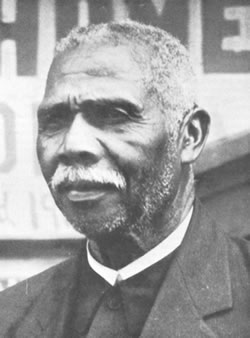
Rev. Daniel Jenkins

Rev. Daniel Jenkins

Reverend Daniel Jenkins appeared in the magistrate’s courtroom on Bow Street, followed by more than a dozen of his charges, all under the age of fourteen. The next day the London Daily Telegraph filed the following story:

Just before the rising of the court, a coloured man entered with a troupe of thirteen little Negro boys whose ages ranged from five to about fourteen years. The man in charge of the boys said he was the Reverend D. J. Jenkins, a Baptist Minister of Charlestown [sic], America, and he wished to make an application to the magistrate.

On entering the witness box, the appellant stated that he had come over to this country to raise funds for an Orphanage with which he was connected in Charlestown. He had brought with him his boys, who all played on brass instruments, and his object was to let the boys play their band in the public streets, after which he lectured and collected money for the Orphanage. He had been stopped that morning whilst thus engaged, and told that he was liable to be taken into custody for what he was doing, and he wished to be informed whether that was so.

Sir John Bridge told applicant that of course he must not cause an obstruction in the public thoroughfares or the police would interfere. Inspector Sara, who was on duty in the court, pointed out that under an Act of Parliament no child under the age of eleven years was allowed to sing, play or perform for profit in the public streets.

Applicant: But could not an exception be made in my case, seeing the object I have in view?

Sir John Bridges: Certainly not. The law makes no exceptions.

Applicant then said he was without money to take the children back to America. Sir John Bridge said he had no fund which was available for such a purpose, and advised applicant to apply to the American consulate. Inspector Sara said he would send an officer with the Applicant to the Society for the Prevention of Cruelty to Children where probably he could obtain assistance, and Sir John Bridges gave a sovereign to applicant for present necessities, for which he appeared very grateful.

This news item provoked an editorial on Page 4 of the same issue, which concluded:

Much may be done, no doubt, to raise money for an Orphanage; but to let loose a brass band of thirteen Negro children upon an urban population suffering from nerves is likely to create almost as many orphans as it would relieve.

After the court appearance and subsequent publicity, Jenkins was approached by the owner of a local London theater who offered to feature the Orphan Band on stage. Jenkins agreed, but then changed his mind once he appealed to local churches who eagerly invited him to speak during their services. From the pulpit of the Metropolitan Tabernacle, Jenkins pled for help and more than £100 was raised in a matter of moments. He repeated this successful appeal at several more churches before steaming back home to Charleston, where he paid off the debt.

Today In Charleston History: September 7

1774

Silas Deane, representing Connecticut in Congress wrote, “Mr. Gadsden leaves all N. England Sons of Liberty for behind, for he is for taking up his Firelock & marching direct to Boston.”

1796 – SLAVERY

A young slave named Molly was executed for arson, after being convicted of “robbing her master, and setting fire to capt. Vesey’s house at the Grove.” In her confession, Molly apparently not only admitted to “being guilty of these crimes, and also that she was the person who set fire to her master’s house at Belvedere.” 

Molly added to the terror by declaring that “she was persuaded to the commission of these atrocious acts by a Frenchman, named Renaud, her master’s gardener, formerly a servant to Mr. Michaud…belonging to the French Republic.”

1864 – BOMBARDMENT OF CHARLESTON

Gen. Foster ordered 600 Confederate prisoners to be placed on Morris Island “as an act of retaliation” for failing to remove the Federal prisoners from Charleston. Gus Smythe, from his look out perch in St. Michael’s steeple, could see, through his telescope the prisoners “in the morning getting their rations & also see the poor fellows looking thro’ the cracks of the fence.”

jail and workhouse, 1865

View of the yard behind the City Jail. To the right is visible the Work House and City Hospital.

By that time Gen. Jones was in charge of 6000 Federal prisoners within the city limits. Most of them were housed in the City Jail at the corner of Franklin and Magazine Streets. Others were housed around the corner in Roper Hospital at the corner of Queen and Logan Streets. The majority were held at the Charleston racecourse. Most of the Federal prisoners considered their imprisonment in Charleston to be a life-saving change, away from the hellish conditions of Andersonville. Lt. Benjamin Calef wrote:

We reached Charleston on the morning of August 13, and were kept waiting a long time in the Street, when I procured some fresh figs, bread and milk, and seated on the curb-stone, made an excellent breakfast … I should not omit to speak of the long piazza at the front [of Roper Hospital], on which I have spent so many hours with my pipe for my companion.

The Confederate prisoners on Morris Island slept beneath a canvas roof to shield them from the rain, and no shade trees. Their daily rations consisted of “three army crackers … and a half pint of soup.”

Today In Charleston History: September 6

1876 – Race Riots

During the evening six black Democrats who were supporting Gen. Wade Hampton’s campaign for South Carolina governor held a political rally in Archer’s Hall at the corner of King and George streets. They publicly called Republicans “thieves” for robbing the state of South Carolina. 

Marion Square, c. 1870

Marion Square, c. 1870

After the meeting a group of black Republicans attacked the Democrats and their white companions near the Citadel green (Marion Square). Several gun shots were fired, drawing more people to the park … during the night and the next day, a riot escalated until more than 1000 people were roaming the streets in mobs. The New York Times reported that

Blacks roamed upper King Street from midnight to sunrise, breaking windows, robbing stores, and attacking and beating indiscriminately every white man who showed his face.

More than 100 people were hurt – one white man was shot and killed, and a black man died of his injuries. 


Today In Charleston History: September 5

1713 – Disasters.

A hurricane hit Charles Town.  Rev. William Livingston, pastor of the White Meeting House, survived the storm from his house on White Point. He wrote that the storm “beat off the weatherboards of the house, carried away the book that contained the church records and the furniture of the rooms on the lower floor.”

Thomas Lamboll recorded:

On September 5 came on the great hurricane which was attended with such an Inundation from the sea and to such an unknown height that a great many lives were lost; all the vessels in Charleston harbor, except one, were drove ashore. The new Look-out on Sullivan’s Island, of wood, built eight square and eighty feet high, blown down; all the front wall and mud parapet before Charlestowne underminded and washed away.

1774

The Continental Congress opened in Philadelphia. John Adams wrote some observations about the South Carolina delegates in his diary:

  • John Rutledge: “No keenness in his Eye. No depth in his Countenance. Nothing of the profound, sagaciousness, brilliant or sparkling.”
  • Edward Rutledge: “a perfect Bob o’ Lincoln, a Swallow, a Sparrow, a Peacock, excessively vain, excessively weak.”
  • Christopher Gadsden: “Is violent against allowing Parliament any Power of regulating Trade, or allowing that they have any Thing to do with Us.”
1836
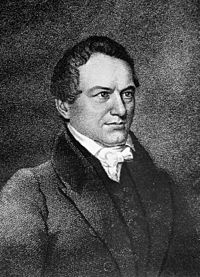
Robert_Y_Hayne

Robert Hayne, 1st mayor of Charleston

Robert Y. Hayne elected the first mayor of Charleston … previously, the office was called “the Intendent.”

Today In Charleston History: September 4

1666

William Rhett was born in London, during the Great Fire.  Thirty-two years later he would move to Carolina and become one it’s most prominent citizens.

1700 – Hurricane!

A fierce hurricane hit Charles Town causing extensive damage to the waterfront fortifications being constructed and destroying the Rising Sun, killing its 200+ crew and passengers. Stobo viewed the event as God’s judgment. He wrote that “the ship’s crew were so filled with wickedness that they could hold no more; they were ripe, they must be cut down with the sickle of His wrath.”

Edward Hyme, a newly arrived immigrant, described the catastrophe to his wife in England:

On Tuesday September 3 here happened a most terrible Storm of Wind or Hurricane with continual Rain; which has done great Damage to ye Country. Thousands of Trees have been torn up by ye Roots, many Houses blown down & more damnified; much Rice Corn & c spoiled; but ye greatest Mischief fell amongst ye Shipping of which about a Dozen Sail (of all sorts) were riding at Anchor before ye Town, some of which were driven on Shoar & broke all in Pieces, some were carryed a great Way up into ye Two Rivers into Ashley River, in her way breaking down a Pair of Gallows (from which 8 Pirats at once were hanged since my coming here) some were turn’d Bottom upwards & lost. but ye greatest and most deplorable loss of all was that to a great Scotch Ship called ye Rising-Sun, which having lost all her Masts in a Huricane in ye Gulf of Florida was riding at Anchor with out our Bar, wth Designe to come in here & refit; but being a Ship of 800 tons & 60 guns she durst not venture in with out lightening to which Purpose One Sloop has already been on board her, but waiting for another, ye Storm rise & she foundred at Anchor, ye Captain (Gibson) & all ye souls on board (being about 100) misearbly perishing…

Rev. Stobo settled in Charles Town and became renowned for his oratory skills, with sermons lasting more than four hours. Church officials asked that he divide his sermons into two sessions so that members could break for dinner. Stobo refused, claiming that Charleston’s spiritual reservoir needed filling. The next Sunday, Solomon Legare left the service at the two hour mark. Rev. Stobo called out, “Aye, aye, a little petcher (pitcher) is soon full!” Legare called back, “You’ve said enough to fill all the cisterns in Charlestown.”

1766 – Stamp Act.

Thomas Lynch, Christopher Gadsden and John Rutledge sailed for New York on the Carolina Packet to attend the Stamp Act Congress. At age twenty-six, Rutledge was the youngest delegate in attendance.

1786 – Births. Slavery
IMG_0077

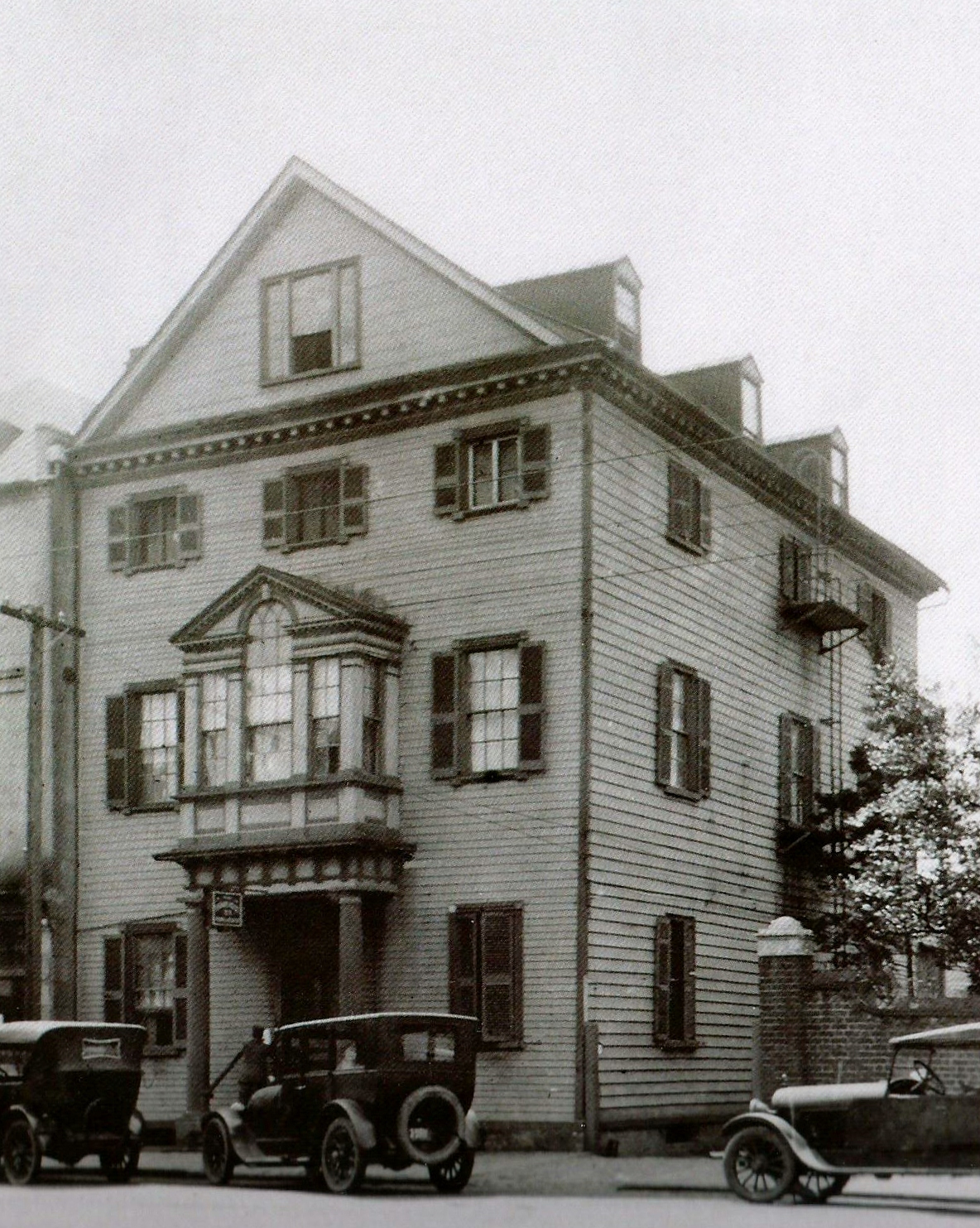
The building that once housed Jehu Jones’s hotel on Broad Street.

Jehu Jones, Jr., a mulatto, was born in Charleston as a slave. He would later become a successful tailor and gain his freedom in 1798. He operated a successful hotel on Broad Street (next to St. Michael’s church) for many years. 

1886

In one of the stranger events, a shower of warm stones fell from the sky on the offices of the News and Courier – twice! The shower of stones occurred at 7:30 a.m. and the second shower at 1:30 p.m. Coming four days after the devasting earthquake, this event increased the unease of a shocked population. 


Today In Charleston History: September 3

1700 – Religion.

The Rising Sun arrived from Scotland, with several hundred Presbyterians, led by Rev. Archibald Stobo. Members of the White Meeting House met Rev. Stobo and invited him ashore to preach the next day. Stobo, his family and twelve other passengers disembarked.

1749 – Religion.
KK BETH ELOHIM, 1812 John Reubens Smith

Kahal Kadosh Beth Elohim, c. 1812 by John Reubens Smith. Note: This building was destroyed by the 1838 fire but the smaller building pictured in the drawing survived and stands today on Hassel Street.

The first Jewish meeting in Charlestown took place. According to Jewish practice there must be a minyan, or ten males over the age of thirteen, for services to take place. They adopted the name Kahal Kadosh Beth Elohim – holy Congregation of the House of God. They used a small wooden house on Union Street (now State) for their worship services until 1750, when the purchased land on Hasell Street. 

1780 – Laurens Captured

During Henry Laurens’ return voyage from the Netherlands, the British frigate Vestal intercepted his ship, the continental packet Mercury, off the banks of Newfoundland. Laurens tossed his dispatches overboard, but they were retrieved by the British, who discovered the draft of a possible U.S.-Dutch treaty, prompting Britain to declare war on the Netherlands. The British charged Laurens with treason and transported him to England for trial.

1783 – Treaty of Paris

Treaty of Paris was signed by Benjamin Franklin, John Jay and John Adams. Henry Laurens of Charleston, who had participated in the negotiations for the Americans, left Paris before the signing ceremony. In a letter to his wife Abagail, John Adams stated:

I have the Satisfaction to inform you that the definitive Treaties were all Signed yesterday, and the Preliminaries with Holland were Signed the day before. Dr. Franklin has fallen down again with the Gout and Gravel … Mr. Laurens , has a Brother declining, so that he will go to the south of France, untill he knows his Brother’s Fates.

1820 – New Intendent

James Hamilton was elected Intendent (mayor) of Charleston.

Today In Charleston History: September 2

1706 – Queen Anne’s War

A joint French and Spanish attack upon Charles Town  is repulsed when English Colonial forces capture a French vessel. Governor Nathaniel Johnson and Lieutenant Colonel William Rhett lead the successful defense of Charles Town against a combined force of Spanish, French, and Native American combatants who sailed into Charleston harbor from St. Augustine..

1863 – Bombardment of Charleston

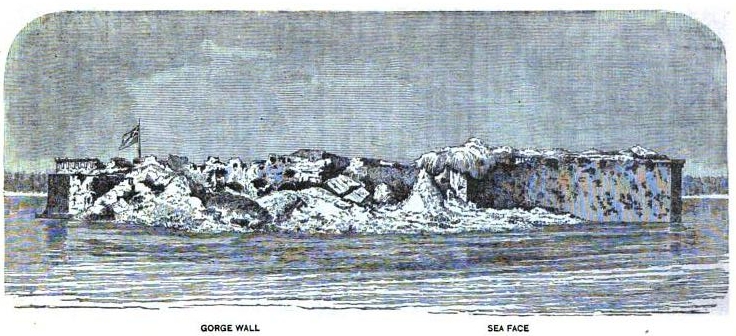
Ft. Sumter was demolished. John Johnson, a Confederate engineer, wrote:

The fort had now lost all offensive character, but it had been firmly decided by the [Confederate] general commanding to hold it in a defensive way to the last extremity.

aug24sumter21

Ft. Sumter

aug24sumter23

Ft. Sumter


Today In Charleston History: September 1

1734 

Jean Pierre Purry, wrote about South Carolina:

The Trade of Carolina is now so considerable that of late years there has sail’d from thence Annually above 200 ships … besides 3 ships of war … which had above 100 Men on Board. It appears from March 1730 to March 1731 that there sail’d rom Charles Town 207 ships … which carried … 41,957 barrels of rice about 500 Pounds Weight per barrel … besides a vast quantity of Indian corn, Pease, Beans, Beef, Pork and other salted Flesh … There were between 5(00) to 600 houses in Charles Town … most of which were very costly.

1737 – South Carolina Society
28elliott

Poinsett’s Tavern, 28 Elliott St.

The South Carolina Society was established.

Originally called the “Two-Bitt Club,” it was organized by French Huguenot artisans and forbade the use of English in the beginning. Their goal was to support indigent and widows and orphans. The met at Jacob Woolford’s Broad Street Tavern or at Poinsett’s Tavern on Elliott Street, opposite Bedon’s Alley.

The Society was incorporated by the Provincial General Assembly as the French Society on May 1, 1751, and King George II confirmed it at the Court of St. James on December 20, 1752. Soon afterward, the name was changed to the South Carolina Society and began including non-French members.

The Society purchased a block of land between George and Wentworth streets, cut a new street through it (the present Society Street), and built a school for orphan boys. 

182881_l

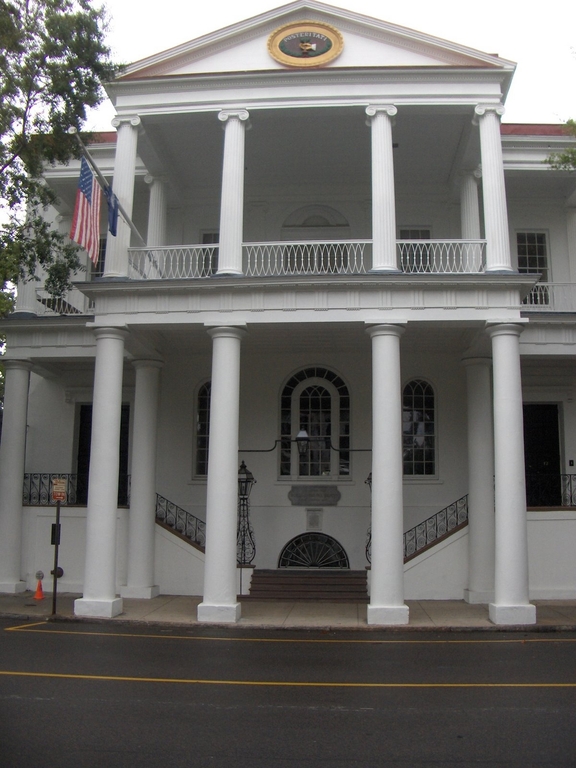
Society Hall, 72 Meeting St.

In 1804, the Society built the South Carolina Society Hall at 72 Meeting Street as a school for female orphans and indigents, and as a meeting place. The first floor was used to school orphans and indigents, while the second floor was a ballroom for social purposes.


1881 – Jenkins Orphanage

 Daniel Dickinson, a freed slave from Barnwell County (SC), chose the surname Jenkins to illustrate his freedom. He later moved to Charleston and established an orphanage house for “Black lambs.” 

Today In Charleston History: August 31

1706 – Queen Anne’s War

Colonel William Rhett and a fleet of six small vessels drove the French / Spanish invaders from the harbor. The English fleet was:

  • Flagship: Crown Galley
  • Galleys: Mermaid -12 guns; Richard -16 guns; William
  • Sloop: Flying Horse – 8 guns; Seaflower
1886 – Earthquake

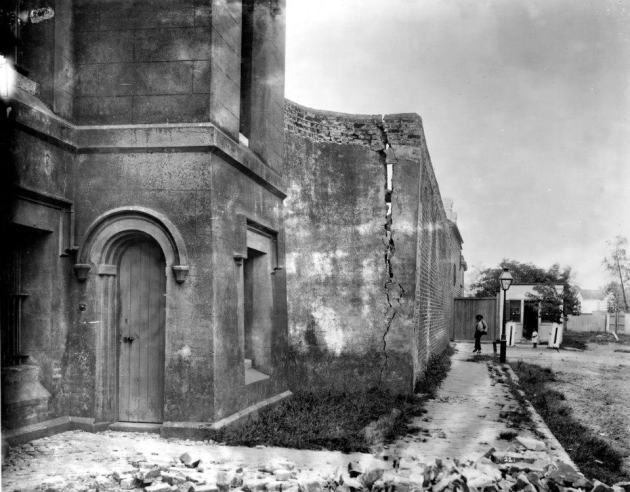
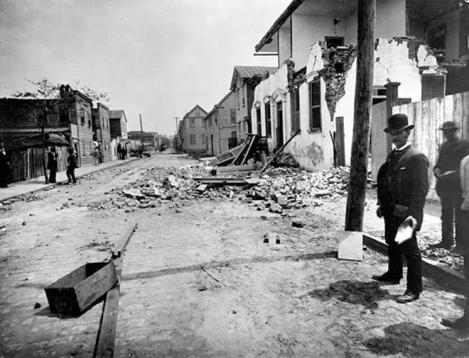
The most destructive earthquake ever recorded in the eastern United States occurred near Charleston at 9:51 P.M. on August 31st, 1886. It was one of the largest shocks in Eastern North America and was felt as far away as Boston, Chicago and Cuba. At least half of the buildings in Charleston were seriously damaged, with more than 14,000 chimneys destroyed.  Property damage was estimated at $5-$6 million (about $150-200 million in present-day). Structural damage was reported in central Alabama, central Ohio, eastern Kentucky, southern Virginia, and western West Virginia and was felt by two out of every three people living in the United States. The quake has been estimated at a 7.3 magnitude.

earthquekIn 1886 Charleston had a population of 60,145 – 27,605 whites and 32,540 blacks. After twenty years of economic depression after the Civil War, Charleston was becoming a modern city – streetcars, a paid fire department, gas works, running water in several households. There was no sewage system, and most people still got their water from wells and public cisterns.

It is a heavily studied example of an intraplate earthquake. It is believed to have occurred on faults formed during the break-up of Pangaea. Similar faults are found all along the east coast of North America. It is thought that such ancient faults remain active from forces exerted on them by present-day motions of the North American Plate. The exact mechanisms of intraplate earthquakes are a subject of much ongoing research.

eq - map

The quake occurred 21 years after the Civil War – the War that Charleston started … and lost. There were some people that thought the quake was divine retribution against Charleston’s role in starting a conflict which devastated America – more than 600,000 dead. 

The city was cut off from the outside world, all telegraph wires were destroyed. The next day, a courier rode to Summerville (thirty miles away) and reported the news of the disaster to the outside world. Rumors outside of Charleston were that the city had been swept away by a mighty tidal wave and that the Florida peninsula had snapped off from the continent and fallen into the Atlantic Ocean. 

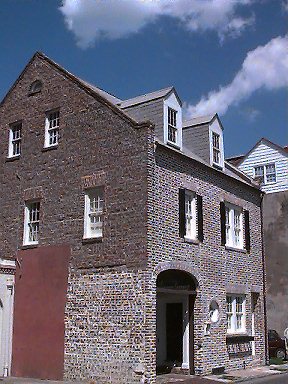
OLYMPUS DIGITAL CAMERATo repair the damaged buildings, earthquake bolts were added to existing unreinforced masonry buildings to add support to the structure without having to demolish the structure due to instability. The bolts pass through the existing masonry walls tying walls on opposite sides of the structure together for stability. One hundred and thirty years later, the buildings still stand. 

The News and Courier wrote on September 3, 1886:

“The City Hospital was badly wrecked, and it is stated that several of the inmates were killed. A number of the patients were injured. These were taken out of the building and passed the night in the open air.”

Some facts of the quake included:

  • More than 100 people were killed and almost every building in Charleston was damaged.
  • There were more than 300 aftershocks taking place over the next 3 years.
  • According to the Savannah Morning News, at least a dozen people went insane and had to be sent to lunatic asylums, including “the wives and daughters of prominent citizens.”
  • “A drugstore clerk started walking on Tuesday night and didn’t stop until he reached a town fifty miles away, where he sent a postcard to his parents saying he could not return.”
  • According to the Charleston News and Courier, three women were “frightened to death.”
  • Maine: The captain of a schooner off the coast saw “black wall” rising on the water, a mighty wave that lifted the ship to a fantastic height. The schooner was buried in a mountain of foam, its sails torn off and its mast snapped.
  • North Carolina Mountains: Flames shot from caverns, leaving behind a cloud of smoke that smelled like burning coal. Massive rocks crashed down into the valley.
  • Brooklyn, New York: A telephone operator thought he was having a heart attack when all the plugs on his switchboard popped out of their sockets.
  • Terre Haute, Indiana: At a minstrel show the galleries swayed, and one man was thrown out of the balcony; he saved himself by clinging to a railing.
  • Dubuque Iowa: The audience in the opera house stampeded, thinking the building was about to fall.

eq - city jail

eq - tradd street

eq

eq - st. mikes and guard house


To learn the entire story of the Charleston quake and it’s aftermath, read City of Heroes by Richard Cote.city of heroes

Today In Charleston History: August 29

1692 – Piracy.

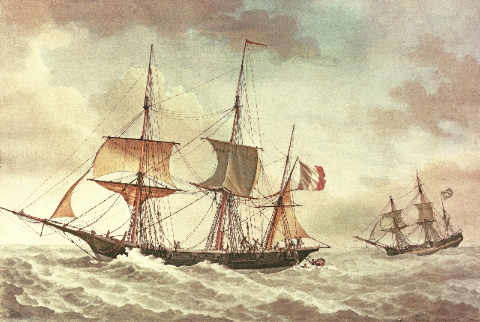
corsairA privateer with forty men, the Loyal Jamaica, arrived in Charles Town carrying “treasures of Spanish gold and silver.” They were allowed

“to enter into recognizance for their peaceable and good behavior for one year with securities, till the Governor should hear whether the Proprietor would grant them general indemnity.”

There is no record of the Loyal Jamaica being seized, or its crew and passengers being arrested. A list of the passengers included some of the most prominent names in South Carolina history: Thomas Pinckney, Robert Fenwick, and Daniel Horry.

1706 – Queen Anne’s War

About 160 Spanish troops landed at Mt. Pleasant, burning and looting several plantation houses. Two vessels in Hobcaw Creek were also burned. Gov. Johnson sent out a galley with 100 men, and the Spanish recalled their ships. At the same time, forty French troops landed on James Island and burned the countryside and then retreated.

1754 – Slavery.

A South Carolina slave named Robin was gibbeted for the murder of his master. According to the South Carolina Gazette, “till within an Hour before he expired, constantly declared his Innocence; but at last confessed.” Robin declared “that he himself had perpetrated that Murder and at the same Time disclosed a Scene equally shocking,” revealing a conspiracy among several slaves. Robin and eight other slaves had planned “the Murder of two other Gentlemen in Beaufort” and then “they were to have taken a Schooner” to get to St. Augustine in Florida.