Edward Rutledge, Thomas Heyward and Thomas Bee, proposed a bill of incorporation for Charlestown. An elected intendant (mayor) and thirteen wardens would have the power to govern the city, whose name was changed to Charleston.
1864 – Civil War
Clubhouse of the race course where Federal officers were imprisoned.
By this time there were 6000 Federal prisoners within the city limits. Many of them were housed in the City Jail at the corner of Franklin and Magazine Streets. Others were housed around the corner in Roper Hospital at the corner of Queen and Logan Streets. The majority were held at the Charleston racecourse. Most of the Federal prisoners considered their imprisonment in Charleston to be a life-saving change, away from the hellish conditions of Andersonville. Lt. Benjamin Calef wrote:
We reached Charleston on the morning of August 13, and were kept waiting a long time in the Street, when I procured some fresh figs, bread and milk, and seated on the curb-stone, made an excellent breakfast … I should not omit to speak of the long piazza at the front [of Roper Hospital], on which I have spent so many hours with my pipe for my companion.
Abraham, a Negro man owned by Mr. Samuel Jones, was baptized by Rev. Nathan Bassett of the Independent Church.
1847 – BORN TODAY
Ben Tillman was born near Trenton, South Carolina. Tillman rose to power as a representative of poor white residents of the state. He was elected governor of South Carolina in 1890 and began instituting populist reforms, including Jim Crow laws. He was elected to the United States Senate in 1894, serving until his death.
He was forced to leave school at the age of 16 in order to join the Confederate Army. He was stricken with a bacterial infection in his left eye before he could enlist. The eye was subsequently removed. He joined a paramilitary effort to overthrow Republican rule in South Carolina, taking part in the “Hamburg Massacre” of 1876, in which armed citizens overwhelmed the federal militia. Tillman’s leadership in this event established him as a leading white supremacist and launched his political career.
Tillman was elected governor of South Carolina in 1890, serving for a single term. During this time, he established an agricultural school that would become Clemson University.
As governor he tirelessly promoted a culture of race-based discrimination and violence. Tillman’s supporters dubbed him the “Champion of White Men’s Rule and Woman’s Virtue” for his support of lynching as a punishment for alleged sexual misconduct by African Americans. The decade of the 1890s saw a spike in mob violence, particularly lynching, that was tolerated and even encouraged by Tillman and his allies.
Tillman was elected to the United States Senate in 1894. He held the office until his death in 1918. In Washington, Tillman developed a reputation as a hot-head. He threatened to stab President Cleveland with a pitchfork, earning the nickname “Pitchfork Ben,” received a formal censure for assaulting another senator and was barred from entering the White House.
Tillman died on July 3, 1918, in Washington, D.C. A statue of Tillman was erected outside the South Carolina State House in 1940 and stands to this day.
Capt. William Hilton sailed from Barbados to find a location in Carolina for settlement. He sailed into Port Royal Sound and claimed the island that protected the mouth of the harbor in his name – Hilton Head..
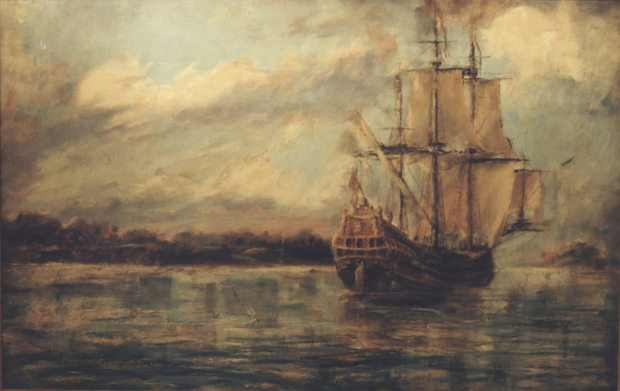
The Adventure, Captain William Hilton’s merchant ship, painted in 1963 by long time Hilton Head Island resident Walter Greer – is currently on display at Coastal Discovery Museum at Honey Horn.
In 1662 at the request of a group of merchants in Boston, Captain William Hilton set sail from Charlestown, Massachusetts aboard the ship Adventure to explore the Carolina coast. After investigating the area around Cape Fear (North Carolina), Hilton returned to Massachusetts with enough information to have a detailed map made of the area.
The next year a group of businessmen from New England, London and Barbados commissioned Hilton for a second voyage to explore the Carolina coast. Hilton, once again commanding Adventure, set sail, from Barbados on August 10, 1663. During this voyage he explored the entrance to Port Royal Sound and noted, just inside the entrance to the sound, the existence of a headland —a high point of land used as a reference point by mariners. Later this headland would be called Hilton’s Head and soon the island on which it was located would be called Hilton Head Island.
Mr. Issac Hayne, who since the capitulation of Charlestown, had taken protection, and acknowledged himself a subject of his Majesty’s Government, having notwithstanding been taken in arms, and at the head of a Rebel Regiment of Militia, was therefore on Saturday morning last, executed as a Traitor.
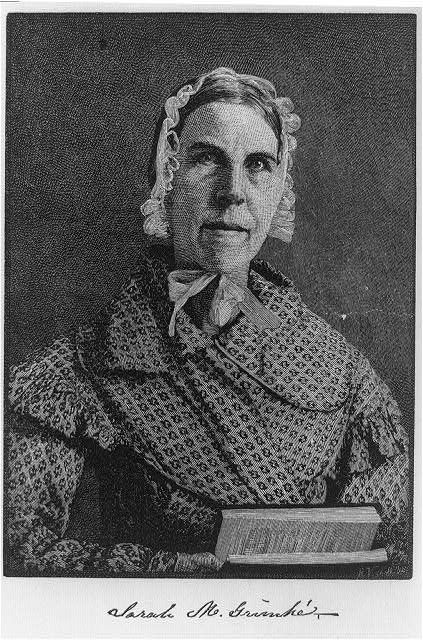
1819 – Judge John Grimke died. Judge John Grimke fell seriously ill in March. His Charleston doctors advised him to seek treatment with the foremost surgeon in American, Dr. Phillip Synge Physick of Philadelphia. Sarah Grimke accompanied her father. Physick, a Quaker, found lodgings for Sarah in a Quaker boardinghouse.
For the first time, Sarah was surrounded by people who were NOT southern and held social views that were more in line with Sarah. It was the beginning of a life-altering change for Sarah, and ultimately, her younger sister, Angelina. The sisters became two of the most famous abolitionists within 20 years.
A petition was made to the Royal Governor for a parcel of land upon which to build a Lutheran church.
1767 – Backcountry.
In more complaints about the dangerous conditions in the backcountry, The South Carolina and American General Gazette reported that:
If we save a little for to bring to Town Wherewith to purchase Slaves – Should it be known our Houses are beset, and Robbers plunder Us, even of our Cloaths. If we buy Liquor for to Retail, or for hospitality, they will break into our dwellings and consume it … Should be raise fat Cattle, or Prime Horses for the Market, they are constantly carried off, tho’ well guarded.
Sir John Yeamans died in Carolina. He was one of original landgraves of the Carolina colonial and became governor. In 1674 Yeamans was removed from office, and at once sailed for Barbados, where he soon afterward died. Robert Weir wrote:
Yeamans epitomized the enterprising Barbadians who played a large part in settling South Carolina. That some, like him, resembled pirates ashore probably both promoted and retarded development of the colony; it certainly contributed to political factionalism endemic during the early years.
1769 – American Revolution – Foundations.
William Henry Drayton was a twenty-seven year old planter who refused to join the Association. Educated in England, Drayton had expensive tastes and his fondness for gambling left him deeply in debt. He was described as “a rather frivolous young lightweight, unable to get his life in order.”
When Drayton discovered there was no market for his plantation goods, he attacked the Association in the Gazette. The publication of his name was “an infringement of individual rights” and “only the legislature could brand a man an enemy of his country.” He contemptuously called Gadsden: “either traitor or madman who looks upon himself as a monarch … the ruler of the people …[who should be] locked in an insane asylum until the change of the moon.”
1776 – American Revolution – Continental Congress.
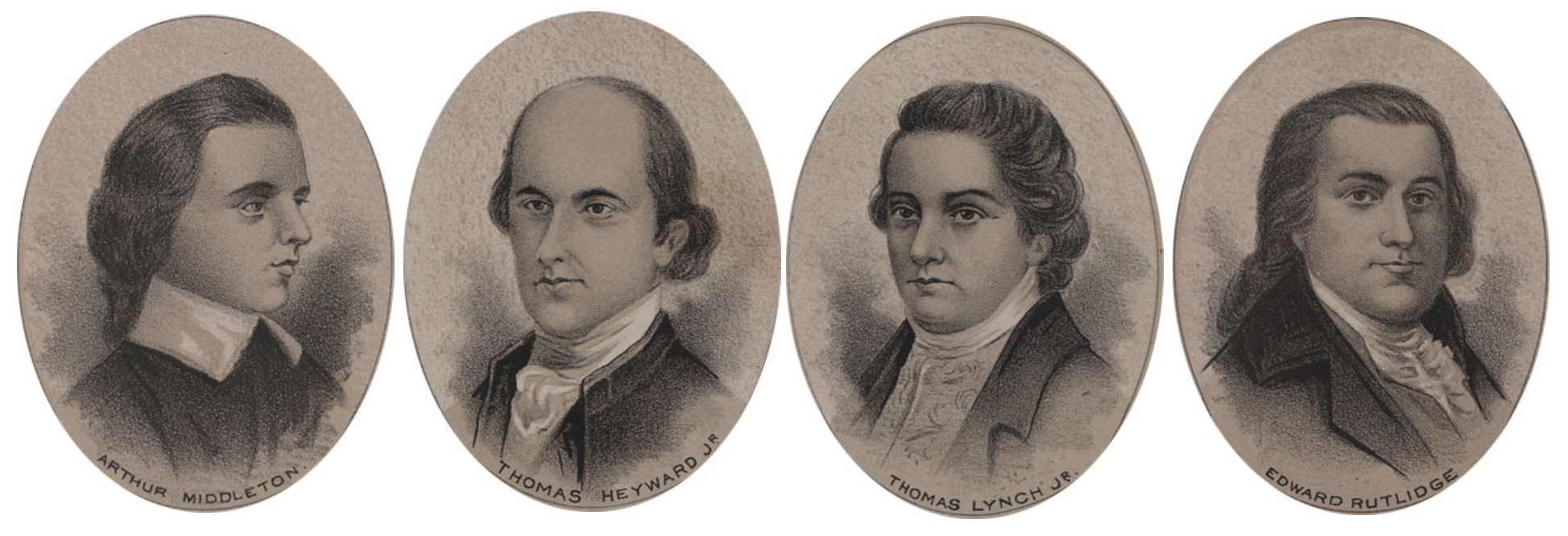
Most of the members of the Continental Congress officially signed the Declaration of Independence on this day. They then turned their attention to creating a union of the thirteen colonies. South Carolina signers were: Edward Rutledge, Arthur Middleton, Thomas Heyward, Jr. and Thomas Lynch, Jr.
South Carolina signers of the Declaration of Independence.
1781 – British Occupation.
A group of citizens meet Lord Rawdon at the Miles Brewton House to plead for Issac Hayne’s life. Col Hayne’s son, William Hayne wrote:
I recollect also going with my brother Issac & sister Sarah in Company of my Aunt Peronneau to Lieut. Col. Balfour … and on our knees presenting a petition to him in favor of my father but without effect.
1807
The trial of Aaron Burr began before a packed house. His daughter,Theodosia Burr Alston, sat in the courtroom next to her Charleston husband, Joseph Alston, during the trial. It was written about her:
There is nothing in human history that is more touching than her devotion during this ordeal. Beautiful, intelligent far beyond the average woman of her time, she was the center of admiration throughout the trial.
1836 – Religion.
Angelina Grimke Weld
Angelina Grimke was moved to speak at a silent prayer at the Orange Street Quaker Meeting in Philadelphia. She was interrupted by Jonathon Edwards, suggesting that she stop speaking. This convinced Angelina that she could no longer live in Philadelphia, since the Quakers were not supportive of her abolitionist views. She wrote, “The incident has proved the means of releasing me from those bonds which almost destroyed my mind.”
She became a full-fledged public abolitionist.
1864 – Bombardment of Charleston.
In the North Channel just outside the Charleston harbor during the morning, Union officers were exchanged for an equal number of Confederate officers.
Why are there no members of the world famous Jenkins Orphanage Band in the South Carolina Entertainment and Music Hall of Fame, or the Lowcountry Music Hall Of Fame? The Hall has such luminaries as Andie McDowell (we still watch “Groundhog Day” despite her being in it), Leeza Gibbons (celebrity-news reader) and Vanna White (the only professional letter-turner in the Hall of Fame.) The Hall also counts as members Rob Crosby, Bill Trader and Buddy Brock. (Yeah, I know, you’ll probably have to Google them to find out who they are too.)
I am not saying that any of these people don’t deserve to be in the Hall – they probably do. But not to the exclusion of more deserving artists. I would like to nominate several artists currently not in the Hall who influenced and enriched American culture in more deserving ways than interviewing celebrities on “Entertainment Tonight” or being eye candy for a game show.
From the 1890s to the 1940s the Jenkins Orphanage Band traveled across the United States and across Europe performing on street corners, on Broadway and for royalty. Members of the Jenkins Band were instrumental in transforming the music performed during 19th century minstrel shows into blues, ragtime and ultimately, jazz. My nominees are:
EDMUND THORNTON JENKINS
Edmund Thorton Jenkins
Born – April 9, 1894, Charleston, South Carolina Died- September 12, 1926, Paris, France
His father, Rev. Daniel Jenkins operated the Orphan Aid Society (a.k.a. the Jenkins Orphanage) which operated a boy’s brass band as a fundraising tool, as a kind of minstrel show on the sidewalks of towns up and down the East Coast. Called “Jenks” by everyone, he received private piano lessons from a white man in Charleston, Mr. Dorsey, and quickly mastered the piano, clarinet and violin. His father insisted that he work as a music instructor for the Jenkins Band, and also travel with them. Jenks resented having to lead a group of ragamuffin orphans who mugged, strutted and played-the-fool during their street performances. He felt it was beneath him. He wanted to play serious music. The kids, of course, made fun of the prim and dandified Jenks.
In 1910 Jenks enrolled in Morehouse College in Atlanta, Georgia to study music. Two years later he was forced by his father to leave college in order to accompany the Jenkins Band to London, where it was a featured act at the Anglo-American Expo. When the Expo came to an abrupt close, due to the outbreak of World War I, Jenks convinced his father to pay his tuition to the Royal Academy of London. For seven years Jenks excelled in his studies, winning awards for composition, and becoming a master in several instruments. During his time at the Academy he composed “Charlestonia: A Rhapsody.”
After graduation he moved to Paris where he became one of the most sought after musicians in the most popular Parisian nightclubs. Paris was “jazz mad” in the 1920s and for several years Jenks embraced the glamorous, hedonistic life of Paris. However, in 1925 he began to compose an opera, “Afram” and expanded and orchestrated “Charlestonia: A Rhapsody” which he conducted successfully in Belgium with a full orchestra. In July 1926, he was admitted to a Parisian hospital for appendicitis. He contracted pneumonia and died on September 12, 1926, cutting short the career of a promising young black composer. He is buried at the Humane Friendly Cemetery in Charleston, SC.
Listen to “Charlestonia”, composed by Edmund Thornton Jenkins.
TOMMY BENFORD
Tommy Benford in 1978
Born – April 19, 1905, Charleston, West Virginia. Died – March 24, 1994, Mount Vernon, New York.
Benford became the Jenkins Orphanage Band’s ace drummer. In 1920 he was playing in New York City and gave drumming lessons to a young wunderkind named Chick Webb. In 1928, he was the drummer for some of the most influential jazz music ever recorded as part of Jelly Roll Morton’s Victor Records sessions.
During the Depression Benford moved to Europe and for the next 30 years recorded hundreds of songs with more than a dozen bands. His most famous recording session was with Coleman Hawkins, Django Reinhardt, Stephane Grapelli and Bennie Carter, released as Coleman Hawkin’s All-Stars.
He continued to play music until his death in 1994, a career that spanned seventy years.
Watch/listen here: “Sweet Georgia Brown” by Coleman Hawkins’s All-Stars (featuring Tommy Benford).
JABBO SMITH
Jabbo Smith
Born – December 25, 1908, Pembroke, Georgia. Died, New York City – January 1991.
Raised in the Jenkins Orphanage, Jabbo quickly became one of the best Jenkins Band musicians during the years of 1915-1924. Brash and flamboyant, he was a natural performer. At age 17 he was playing in New York City at Smalls Paradise, the second most popular club in Harlem (most popular was the Cotton Club.) He became the hottest trumpet player in the city, which is like being the hottest guitar player in the hottest rock and roll band (think Eric Clapton, Jimmy Page and Eddie Van Halen.)
In 1927 he recorded one track with the Duke Ellington orchestra (“Black and Tan Fantasy”) filling in for the ailing Bubber Miley. Duke offered him a permanent job with the Ellington Orchestra, which Jabbo turned down because Duke only offered $90 a week, and Smith was making $150 with the Paradise Orchestra.
In 1928-29 Jabbo played with James P. Johnson (composer of the song “Charleston”) and Fats Waller in the Broadway show Keep Shufflin. When the show closed in Chicago Jabbo recorded nineteen historic songs for the Brunswick Record Company that are still considered some of the most influential jazz recordings. They are considered to be the first cool jazz improvisations and be-bop style playing.
By the 1950s Jabbo Smith was out of music, living in Wisconsin. As a swan song, in the 1980s he returned to Broadway in the show One Mo’Time and became the darling of New York for several months. Jabbo is a key link in the development of modern jazz trumpet playing: Louis Armstrong →Jabbo Smith →Roy Eldridge →Dizzy Gillespie→Miles Davis→Wynton Marsalis.
Watch/listen here: “Lina Blues” by Jabbo Smith.
FREDDIE GREEN
Freddie Green
Born – March 31, 1911, Charleston, S.C. Died – March 1, 1987, Las Vegas, Nevada.
Freddie Green had the longest job in jazz history, guitar player for the Count Basie Orchestra from 1937 to his death in 1987 – fifty years. He was in the Basie Orchestra longer than Count Basie himself!
As a child Freddie used to sing and dance on the streets of Charleston and became friends with members of the Jenkins Orphanage Band. Though never an orphan, he played with the Band and remained in New York City during their tour in 1932. Five years later he was discovered playing at the Black Cat Club in Harlem and asked to join the Basie Orchestra, forming what became known as the All-American Rhythm section: Basie-piano, Green-guitar, Walter Page – bass, and Jo Jones-drums.
For the next 50 years Freddie Green became the “left hand” of the Basie Orchestra, the spiritual force that held the music together. Across the world he became known a “Mr. Rhythm,” the greatest rhythm guitar player in jazz history. It is almost impossible to find a photo of the Basie Orchestra that does not include Green.
He became a composer and arranger for the orchestra and the arbitrator of good music. Byron Stripling, trumpet player for Basie said, “If an arranger comes in and his work is jive, Freddie just shakes his head and it’s all over.”
Green died in Las Vegas after a Basie Orchestra performance ending one of the quietest most legendary musical careers of the 20th century. Irving Ashby described Freddie Green’s influence on music as: “Rhythm guitar is like vanilla extract in cake, you can’t taste it when it’s there, but you know when it’s left out.”
Watch/listen here: “Corner Pocket” by the Count Basie Orchestra (written and arranged by Freddie Green.)
CAT ANDERSON
Cat Anderson
September 12, 1916, Greenville, South Carolina.
Died – April 29, 1981, Los Angeles, California.
During the late 1930s, Anderson became the latest in a line of hot trumpet players in the Jenkins Band. He developed a technique of playing in high registers, two octaves above the rest of the band. It was Anderson’s way of showing off, and getting the girls in the audience to notice him. Wynton Marsalis called Anderson “one of the best” scream trumpet players ever.
After leaving the Jenkins Band in 1937, Anderson played for several bands, and performed at the Apollo Theater in Harlem. During World War Two, Anderson played in a Special Services Army Band, performing for troops on bases across the world.
In 1945, he joined Lionel Hampton’s Band and then was hired by Duke Ellington, and became a featured player for the Duke during the next 20 years. Ellington re-arranged many of his classic songs to take advantage of Anderson’s talent for “scream” trumpet playing. Anderson is heavily featured in one of the most popular jazz recordings ever, the 1956 Newport Jazz Festival.
Through the 50s, 60s and 70s Anderson led several bands himself, and recorded several solo classic LPs with various Ellington sidemen.
Watch/listen here: Cat Anderson trumpet solo w/ the Duke Ellington Orchestra.
If you agree these men should be in the South Carolina Entertainment Music Hall of Fame, please forward/share/like /comment this article. You can read the entire story of the Jenkins Orphanage in my book, DOIN’ THE CHARLESTON.
Magnolia Cemetery is one of the greatest unknown treasures in Charleston, South Carolina. Hopefully, this book will help spread the word. For years, I’ve been hearing about this manuscript. People waxing enthusiastically about “this manuscript Ted has about Magnolia.” They kept promising it was going to dig up some dirt of those buried there (pun intended). I even ran into a couple of people who had a copy of it and promised to let me read it … to no avail.
I met Ted once in passing, through a mutual friend – it was a mere introduction, “hello”, “how are you?” and it was over. Within a year he was gone, so I never had the chance to discuss this work with him.
I have spent many pleasant hours wandering beneath the oaks and Spanish moss and taking hundreds of photos. Magnolia is thoroughly Southern (and soooo Charleston), filled with Gothic flourishes and amazing history etched on the headstones. When tourists ask me what is the one thing to see in Charleston my answer is always “Magnolia Cemetery.”
Magnolia Cemetery
City of the Silent is a simple book – several hundred concise bios of some of the notables buried in the cemetery. If you’re a Charleston history neophyte, you will learn some interesting stuff. There is a preponderance of Civil War figures (of course!), politicians, writers of questionable importance, society belles, gangsters, lawyers, and one madam. One. So much for the dirt.
If you’re a Charleston history nut (guilty) … you already know most of this stuff. So I was (and I am) a bit disappointed with the info contained within – most of it is already available in published form in one book or another.
However, the book is worth it’s hefty cover price (well, almost) for the map of the cemetery and the locations of everyone mentioned. With this book in hand, and the map you can take a stroll and find the graves and read the stories. And that is what you should do with it. Read it, mark your favorite people (see my list below) and then take a trip to Magnolia Cemetery and spend an afternoon in the tranquil presence of history – scoundrels and heroines – and everything in between.
Magnolia Cemetery, pyramid tomb
MY LIST OF FAVORITE PEOPLE IN MAGNOLIA CEMETERY
Daisy Breaux Calhoun – real name: Margaret Rose Anthony Julia Josephine Catherine Cornelia Donovan O’Donovan Simonds Gummere Calhoun. (I’m not joking.)
Langdon Cheves, Jr. – father of the Confederate Air Force.
Susan Pringle Frost – patron saint of Charleston preservationists.
Frank Hogan – bootlegger, murder victim
Leon Dunlap – bootlegger, acquitted murderer (who shot Frank Hogan)
The Crew of the H.L. Hunley – Confederate submariners.
Tristam Tupper Hyde – Charleston mayor who enforced Prohibition. (served one term)
Thomas McDow – doctor and murderer.
Josephine Pinckney – the best Charleston writer and period – period! Two classics: Three O’Clock Dinner, a superb comedy of society manners and Great Mischief, a delicious little horror book where the entrance to hell is somewhere around the corner of King and Broad Streets.
Robert Barnwell Rhett – Secessionist firebrand and newspaper editor.
George Trenholm – Confederate financier, and model for Rhett Butler.
Julius Waties and Elizabeth Waring – probably my all time favorite Charleston story. If you want to know the story … buy this book, or pick up of my own modest books about Charleston, Wicked Charleston, Volume II: Prostitutes, Politics & Prohibition. The story of the judge and his second wife is covered in great detail.
PRESTON BROOKS was a member of the South Carolina State house of representatives in 1844. Brooks was elected to Congress in 1853 as a Democrat. On May 22, 1856, Brooks beat Senator Charles Sumner with his Gutta-percha wood walking cane in the Senate chamber because of a speech Sumner had made three days earlier, criticizing President Franklin Pierce and Southerners who sympathized with the pro-slavery violence in Kansas. In particular, Sumner lambasted Brooks’ kinsman, Senator Andrew Butler.
At first intending to challenge Sumner to a duel Brooks consulted with fellow South Carolina Rep. Laurence Keitt on dueling etiquette. Keitt instructed him that dueling was for gentlemen of equal social standing, and suggested that due to his coarse language in public, Sumner occupied a lower social status lower than a drunkard. Keitt argued that a duel was too good for Sumner.
Two days after the speech, on the afternoon of May 22, Brooks confronted Sumner as he sat writing at his desk in the almost empty Senate chamber. Brooks was accompanied by Keitt and Henry A. Edmunston of Virginia.
Brooks said, “Mr. Sumner, I have read your speech twice over carefully. It is a libel on South Carolina, and Mr. Butler, who is a relative of mine.”
As Sumner began to stand up, Brooks began beating Sumner on the head with his thick cane with a gold head. Sumner was trapped under the heavy desk (which was bolted to the floor), but Brooks continued to bash Sumner until he ripped the desk from the floor. By this time, Sumner was blinded by his own blood, and he staggered up the aisle and collapsed, lapsing into unconsciousness. Brooks continued to beat Sumner until he broke his cane, then quietly left the chamber. Several other senators attempted to help Sumner, but were blocked by Keitt who was holding a pistol and shouting “Let them be!” (Keitt would be censured for his actions.)
South Carolinians sent Brooks dozens of brand new canes, with one bearing the phrase, “Hit him again.” The Richmond Enquirer crowed: “We consider the act good in conception, better in execution, and best of all in consequences. These vulgar abolitionists in the Senate must be lashed into submission.”
Brooks survived an expulsion vote in the House but resigned his seat, claiming both that he “meant no disrespect to the Senate of the United States” by attacking Sumner and that he did not intend to kill him, for he would have used a different weapon if he had. His constituents thought of him as a hero and returned him to Congress.
However, Brooks’s attack on Sumner was regarded in the north as the act of a cowardly barbarian. One of the bitterest critics of the attack was Sumner’s fellow New Englander, Congressman Anson Burlingame. When Burlingame denounced Brooks as a coward on the floor of the House, Brooks challenged him to a duel, and Burlingame accepted the challenge. Burlingame, as the challenged party, specified rifles as the weapons, and to get around American anti-dueling laws he named the Navy Yard on the Canadian side of Niagara Falls as the site. Brooks backed out of the challenge, claiming that he would be murdered on his way north. Burlingame’s reputation as a deer hunter and a deadly shot with a rifle could also have been a factor. Brooks remained in office until his death in 1857. He is buried in Edgefield, SC.
JOHN (Honest John) JAMES PATTERSON was a businessman and U.S. Senator from SC. Born in Pennsylvania Honest John was perhaps the most successful swindler during Reconstruction. In fact, when there was a suggestion that the Republican Party should reform he replied, “Why, there are five more years of good stealing in South Carolina!” His greatest swindle was the manipulation of the Columbia, Greenville and Blue Ridge Railroads. The state spent $6 million and received nothing in return. Some estimates claim that Patterson absconded with more than a third of the money for the railroad venture.
Honest John was elected to the U.S. Senate in 1872. During that time, U.S Senators were selected by the state legislature. Patterson claimed the election cost him $40,000 in bribes to each state Legislator – bribed by the state’s own money which Honest John had stolen from the railroad swindle.
BENJAMIN TILLMAN (Pitchfork Ben) served as SC governor from 1890 to 1894, and as a U.S. Senator from 1895 until his death as a Democrat. Tillman also was a founder of Clemson University and served as one of its earliest trustees.
As a young man he was involved in the execution of a black state senator, Simon Coker. Two of Tillman’s men executed Coker with a shot to the head. Tillman ordered that a second shot was needed just in case he was “playing possum.” Tillman believed that the payment for the death of one white man should be the death of seven blacks.Tillman began to attract statewide attention through his diatribes against blacks, bankers and aristocrats who he claimed were running and ruining the state. Tillman believed that farmers were “butchering the land by renting to ignorant lazy Negroes.”
He was present at the Hamburg Massacre (near current day Aiken, SC) in July 1876, during which an African-American federal militia was overthrown and its arms seized. After their surrender 6 members of the militia were killed in cold blood by a group of armed white citizens led by Tillman’s fellow “Red Shirts.”
As governor Tillman was largely responsible for calling the State constitutional convention in 1895 that disenfranchised most of South Carolina’s black men and instituted Jim Crow laws. As Tillman proudly proclaimed in 1900:
“We have done our level best [to prevent blacks from voting]…we have scratched our heads to find out how we could eliminate the last one of them. We stuffed ballot boxes. We shot them. We are not ashamed of it. We do not intend to submit to Negro domination and all the Yankees from Cape Cod to hell can make us submit to it.”
He was elected to the U.S. Senate in 1894, and was re-elected in 1900, 1906, and 1912. He served from 1895 to his death in 1918. A hotheaded and intemperate debater, Tillman became known as “Pitchfork Ben” after a speech he made on the Senate floor in 1896. In this speech, Tillman made several references to pitchforks and threatened to go to the White House and “poke old Grover [Cleveland] with a pitchfork” to prod him into action.
During his Senate career, he was censured by the Senate in 1902 after assaulting his counterpart SC Senator John L. McLaurin. As a result, the Senate added to its rules the provision that “No senator in debate shall, directly or indirectly, by any form of words impute to another Senator or to other Senators any conduct or motive unworthy or unbecoming a Senator.”He was also barred from the White House.
Reacting to news that Booker T. Washington had dined at the White House with President Theodore Roosevelt and his family, Tillman predicted, “The action of President Roosevelt in entertaining that nigger will necessitate our killing a thousand niggers in the South before they will learn their place again.”
COLEMAN BLEASE was elected SC governor (1910) and U.S. Senator (1924) favored complete white supremacy in all matters. He encouraged the practice of lynching, was steadfastly against the education of blacks, and he even derided one of his opponents for being a trustee of a black school. Blease once buried the severed finger of a lynched black man in the South Carolina gubernatorial garden.
In 1903, he praised Lt. Gov. Jim Tillman for the murder N.G. Gonzoles, editor of The State newspaper, who wrote editorials against Blease and Tillman. Blease often advocated imprisonment for reporters or editors who published candidates’ speeches.
In addition, Blease failed to enforce laws and even encouraged breaking the law. His black chauffeur was fined twice for speeding and both times Blease pardoned him. Blease enjoyed the use of the pardon and he stated that he wanted to pardon at least one thousand men before he exited office because he wanted “to give the poor devils a chance.” He far exceeded his goal and it is estimated that he pardoned between 1,500 to 1,700 prisoners, some of whom were guilty of murder and other heinous crimes. Blease received payments to pardon criminals.
Blease had one positive opinion – he was for the drinking of beer. He stated:
“I also, in this connection, beg leave to call your attention to the evil of the habitual drinking of Coca-Cola, Pepsi-Cola and such like mixtures, as I fully believe they are injurious. It would be better for our people if they had nice, respectable places where they could go and buy a good, pure glass of cold beer, than to drink such concoctions.”
JOHN JENRETTE (Congressman 1975-80) is most famous for two actions during his days as a Congressman. First, he had sex with his then-wife, Rita Jenrette, behind a pillar on the steps of the Capitol Building during a break in a late night session of Congress. The comedy group “Capital Steps” takes their name from this escapade. Second, he was charged with and convicted for accepting a $50,000 bribe in the FBI Abscam sting operation conducted by the FBI in 1980. Jenrette was sentenced to two years in prison, of which he served 13 months. He had not been videotaped taking bribes, as some of his colleagues had, but he was recorded saying he’d been given cash by an associate.
In January 1981, Jenrette’s second wife, Rita, said she was seeking a divorce. Rita found $25,000 in $100 bills (much of it FBI bribe money) in her husband’s brown suede shoes. Rita didn’t help relations with the constituents back home when she once called them “cornballs.”
Rita is probably best known for (1) telling us that she and John had sex on the steps of the U.S. Capitol (and that became a hot stop on the Washington Sex Scandals tour for out-of-towners; and (2) posing nude in Playboy. She also wrote that she found him on Capitol Hill “drunk, undressed and lying on the floor in the arms of a woman who I knew was old enough to be his mother.”
In 1989 John Jenrette was convicted of shoplifting a necktie from a department store in Bailey’s Crossroads, VA. and was sentenced to 30 days.






 MarkJonesBooks