Today In Charleston History: August 31

1706 – Queen Anne’s War

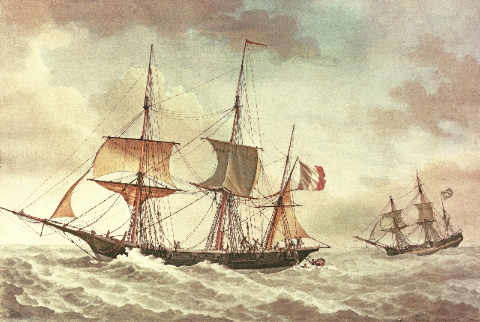
Colonel William Rhett and a fleet of six small vessels drove the French / Spanish invaders from the harbor. The English fleet was:

  • Flagship: Crown Galley
  • Galleys: Mermaid -12 guns; Richard -16 guns; William
  • Sloop: Flying Horse – 8 guns; Seaflower
1886 – Earthquake

The most destructive earthquake ever recorded in the eastern United States occurred near Charleston at 9:51 P.M. on August 31st, 1886. It was one of the largest shocks in Eastern North America and was felt as far away as Boston, Chicago and Cuba. At least half of the buildings in Charleston were seriously damaged, with more than 14,000 chimneys destroyed.  Property damage was estimated at $5-$6 million (about $150-200 million in present-day). Structural damage was reported in central Alabama, central Ohio, eastern Kentucky, southern Virginia, and western West Virginia and was felt by two out of every three people living in the United States. The quake has been estimated at a 7.3 magnitude.

earthquekIn 1886 Charleston had a population of 60,145 – 27,605 whites and 32,540 blacks. After twenty years of economic depression after the Civil War, Charleston was becoming a modern city – streetcars, a paid fire department, gas works, running water in several households. There was no sewage system, and most people still got their water from wells and public cisterns.

It is a heavily studied example of an intraplate earthquake. It is believed to have occurred on faults formed during the break-up of Pangaea. Similar faults are found all along the east coast of North America. It is thought that such ancient faults remain active from forces exerted on them by present-day motions of the North American Plate. The exact mechanisms of intraplate earthquakes are a subject of much ongoing research.

eq - map

The quake occurred 21 years after the Civil War – the War that Charleston started … and lost. There were some people that thought the quake was divine retribution against Charleston’s role in starting a conflict which devastated America – more than 600,000 dead. 

The city was cut off from the outside world, all telegraph wires were destroyed. The next day, a courier rode to Summerville (thirty miles away) and reported the news of the disaster to the outside world. Rumors outside of Charleston were that the city had been swept away by a mighty tidal wave and that the Florida peninsula had snapped off from the continent and fallen into the Atlantic Ocean. 

OLYMPUS DIGITAL CAMERATo repair the damaged buildings, earthquake bolts were added to existing unreinforced masonry buildings to add support to the structure without having to demolish the structure due to instability. The bolts pass through the existing masonry walls tying walls on opposite sides of the structure together for stability. One hundred and thirty years later, the buildings still stand. 

The News and Courier wrote on September 3, 1886:

“The City Hospital was badly wrecked, and it is stated that several of the inmates were killed. A number of the patients were injured. These were taken out of the building and passed the night in the open air.”

Some facts of the quake included:

  • More than 100 people were killed and almost every building in Charleston was damaged.
  • There were more than 300 aftershocks taking place over the next 3 years.
  • According to the Savannah Morning News, at least a dozen people went insane and had to be sent to lunatic asylums, including “the wives and daughters of prominent citizens.”
  • “A drugstore clerk started walking on Tuesday night and didn’t stop until he reached a town fifty miles away, where he sent a postcard to his parents saying he could not return.”
  • According to the Charleston News and Courier, three women were “frightened to death.”
  • Maine: The captain of a schooner off the coast saw “black wall” rising on the water, a mighty wave that lifted the ship to a fantastic height. The schooner was buried in a mountain of foam, its sails torn off and its mast snapped.
  • North Carolina Mountains: Flames shot from caverns, leaving behind a cloud of smoke that smelled like burning coal. Massive rocks crashed down into the valley.
  • Brooklyn, New York: A telephone operator thought he was having a heart attack when all the plugs on his switchboard popped out of their sockets.
  • Terre Haute, Indiana: At a minstrel show the galleries swayed, and one man was thrown out of the balcony; he saved himself by clinging to a railing.
  • Dubuque Iowa: The audience in the opera house stampeded, thinking the building was about to fall.
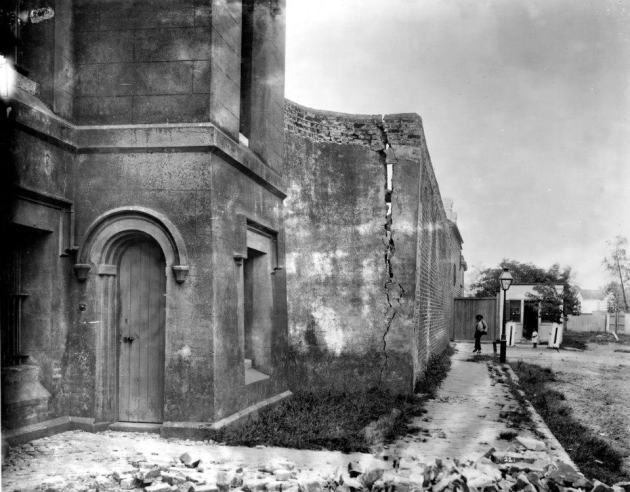
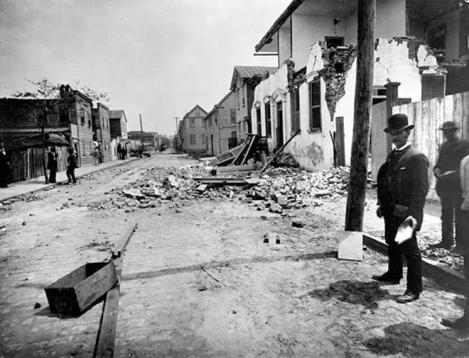
eq - city jail

eq - tradd street

eq

eq - st. mikes and guard house


To learn the entire story of the Charleston quake and it’s aftermath, read City of Heroes by Richard Cote.city of heroes

Today In Charleston History: August 29

1692 – Piracy.

corsairA privateer with forty men, the Loyal Jamaica, arrived in Charles Town carrying “treasures of Spanish gold and silver.” They were allowed

“to enter into recognizance for their peaceable and good behavior for one year with securities, till the Governor should hear whether the Proprietor would grant them general indemnity.”

There is no record of the Loyal Jamaica being seized, or its crew and passengers being arrested. A list of the passengers included some of the most prominent names in South Carolina history: Thomas Pinckney, Robert Fenwick, and Daniel Horry.

1706 – Queen Anne’s War

About 160 Spanish troops landed at Mt. Pleasant, burning and looting several plantation houses. Two vessels in Hobcaw Creek were also burned. Gov. Johnson sent out a galley with 100 men, and the Spanish recalled their ships. At the same time, forty French troops landed on James Island and burned the countryside and then retreated.

1754 – Slavery.

A South Carolina slave named Robin was gibbeted for the murder of his master. According to the South Carolina Gazette, “till within an Hour before he expired, constantly declared his Innocence; but at last confessed.” Robin declared “that he himself had perpetrated that Murder and at the same Time disclosed a Scene equally shocking,” revealing a conspiracy among several slaves. Robin and eight other slaves had planned “the Murder of two other Gentlemen in Beaufort” and then “they were to have taken a Schooner” to get to St. Augustine in Florida.

Today In Charleston History: August 28

1671 – Legal.

First recorded case of litigation in the Carolina colony was heard by Governor West and the Grand Council – an argument over timber rights of an area – John Norton and Originall Jackson against Mr. Maurice Mathews, Mr. Thomas Gray and Mr. William Owen.

1706 – Queen Anne’s War

The French raised a flag of truce, and Gov. Johnson sent a galley out to make inquiries. A French officer was brought to shore and kept at Granville Bastion before being escorted to the governor. As he was slow marched through the street, the Frenchman was greeted by militia stationed between buildings and on the side streets. It seemed Charles Town had more than four times the soldiers than they thought. He did not realize that he was actually seeing the same group of militia who were running from one street to the other, staying just ahead of the slow-marching prisoner.

Upon being received by Gov. Johnson the French officer demanded the city surrender within the hour. Johnson responded he “would not need a minute to reply in the negative.”


1805 – Deaths

gadsdenChristopher Gadsden died in Charleston at the age of eighty-one. He had been suffering dizzy spells and one morning on his walk, he slipped and hit head while crossing a ditch. Governor Paul Hamilton ordered a thirty day mourning period. The day of Gadsden’s funeral, a salute was fired from Fort Johnson every ten minutes from dawn until his interment at 1:00 p.m. He was buried at St. Philip’s Church in an unmarked grave, following the instructions left in his will.

Today In Charleston History: August 27

1706 – Queen Anne’s War.

The six French ships (a frigate, four sloops and one galley) from Martinique, led by Captain De Feboure, crossed the Charles Town bar with more than 700 Spanish soldiers on board. They anchored off Sullivan’s Island, awaiting winds in which to sail into the harbor.

1780 – British Occupation.

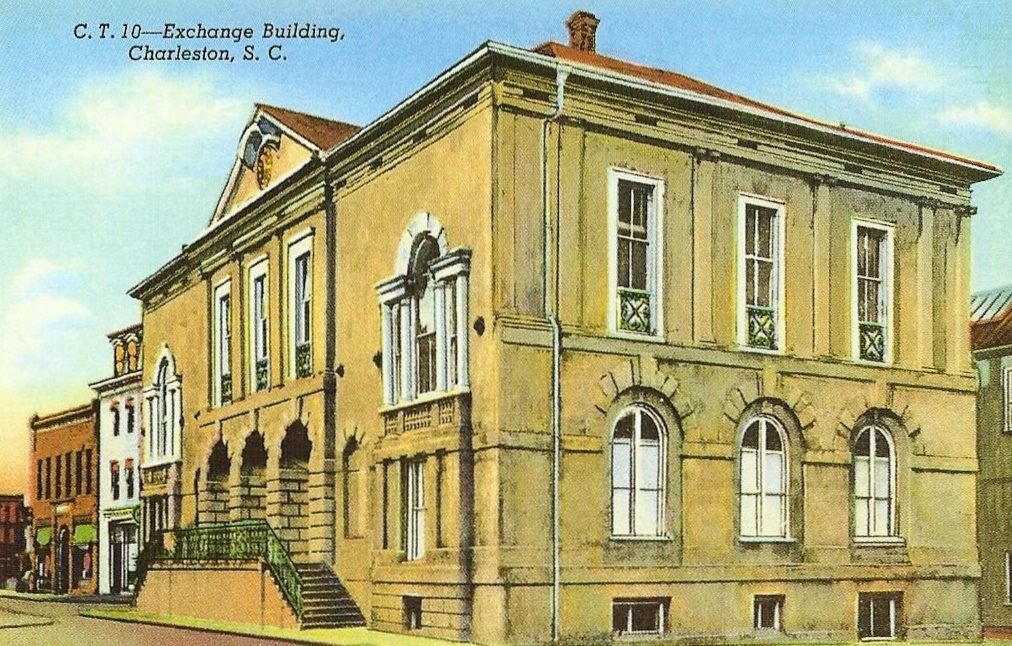
old exchange bildgThirty-three people were arrested in Charlestown and charged with encouraging residents to resist British authority. The prisoners, some of whom had been placed under house arrest, were dragged from their beds by British soldiers, and jailed in the Provost Dungeon of the Exchange Building. The arrested men included:

  • Christopher Gadsden
  • Alexander Moultrie
  • Richard Hutson
  • Dr. John S. Budd
  • William Massey
  • John Neufville
  • Joseph Parker
  • Thomas Savage
  • Dr. Peter Fayssoux
  • Dr. David Ramsay
  • Dr. John E. Poyas
  • Tom Singleton
  • Thomas Ferguson
  • Edward Rutledge
  • Hugh Rutledge
  • Thomas Heyward, Jr.
  • Arthur Middleton
  • Thomas Grimball
  • William Johnson
  • Peter Timothy

Within a few days the prisoners were transferred to the ship Sandwich in Charlestown harbor. Edward Rutledge learned of his two-year old son’s death while on board. Being unable to attend the funeral and comfort his wife increased his bitterness toward Britain. Militiamen like Charles Pinckney were paroled to their homes.

1782 – American Revolution.
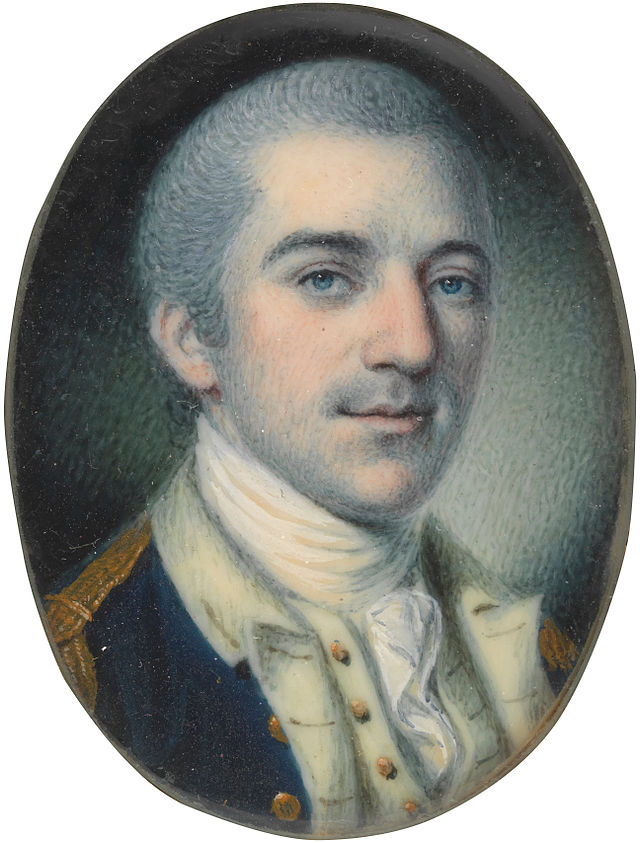
_John_Laurens_-_Google_Art_Project

John Laurens

Col. John Laurens was killed at Tar Bluff on the Combahee River, about forty miles south west of Charleston, in a completely useless skirmish. The British were trying to loot supplies of rice before leaving, and Laurens’ company of fifty men were determined to stop them. John Laurens was the first Patriot killed.

Martha Laurens, living in Vigan, France, did not learn about her brother’s death until three months later. However, during her morning prayers for her family, on this day, she stopped praying for her brother as she “felt there was no longer need.”

Years later, while visiting Charleston, Lafayette stated, “Colonel Laurens was the most valiant officer and accomplished gentleman I ever knew. He was the beau ideal of gallantry.”

In 2015 John Laurens became a more well known cultural figure through the popularity of the Broadway musical “Hamilton.” Laurens was a major character in the the first Act, and Hamilton mourns Laurens’ death in Act II.

1911 – Hurricane!

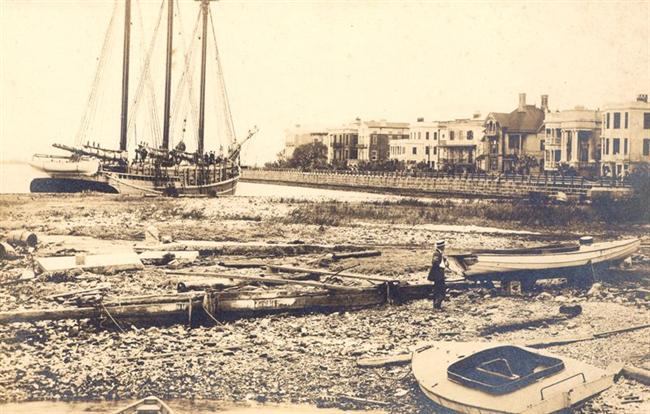
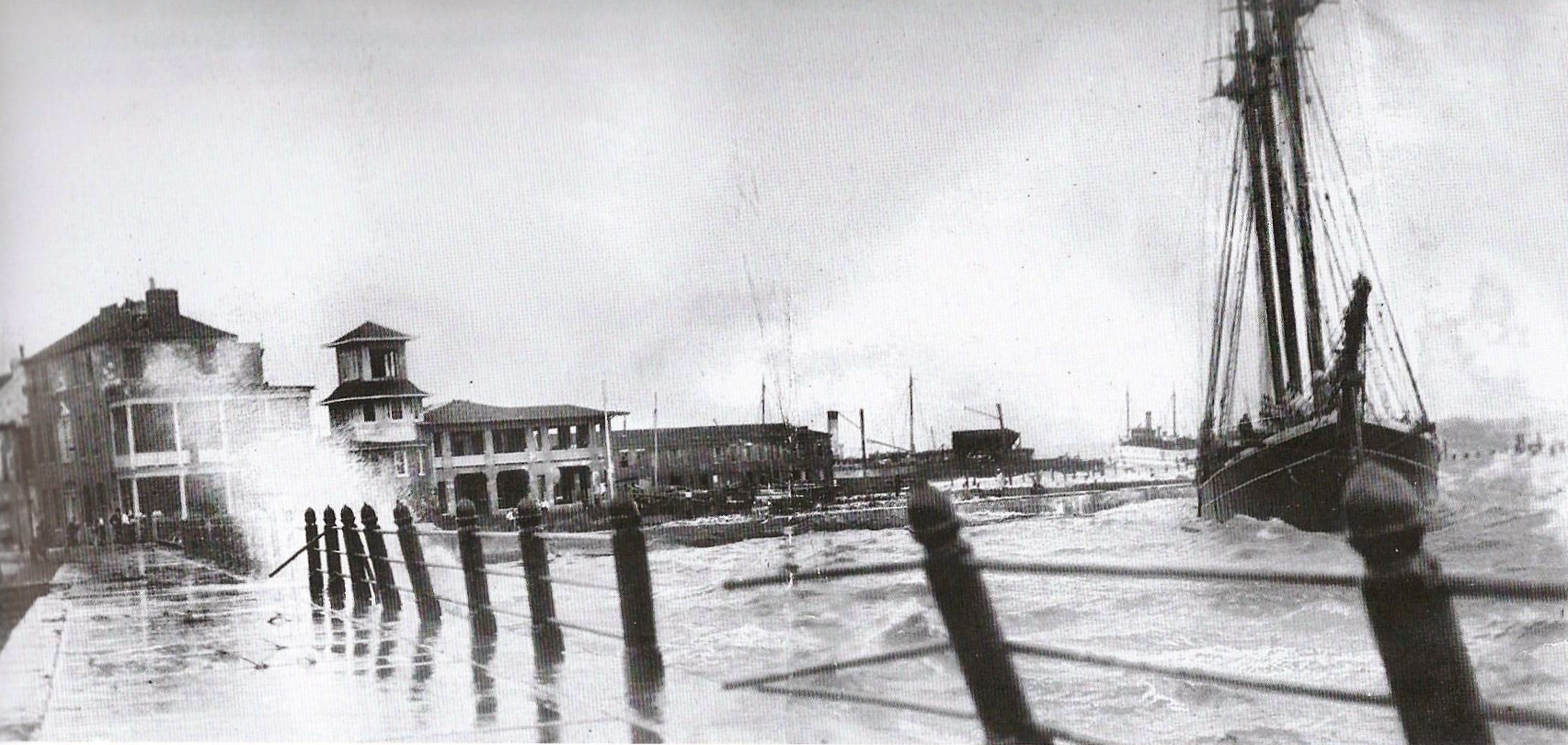
1911 hurricane

battery 1919 storm

Damage along the waterfront was extensive: Wharves were destroyed, and several houses along the Battery suffered extreme damage. The schooner Edwina, was loaded with lumber destined for New York when she was washed up near East Battery. The ship remained stuck off the Battery for six months and was finally salvaged in March 1912.

Today In Charleston History: August 26

1773 – American Revolution – Foundations.

Thomas Powell, acting editor of the Gazette, published the proceedings of the Council without their permission and was arrested. His lawyer, Edward Rutledge was able to convince the justice of the peace, Rawlins Lowndes, to secure Powell’s release. Rutledge declared his pleasure “in being called forth as the Defender of the Liberty of the Subject.”

The case became hot political issue which brought together several powerful men and families in defense of Powell, forming a core group of radical thinkers – the Rutledges, Middletons, Pinckneys and Draytons.

 August 26, 1935. JENKINS BANDS

Time magazine published an article about the Jenkins Orphanage Band in Charleston. To learn the entire story (and all the errors in this article), read my bookDoin’ the Charleston.

The end of the War between the States (or the War of the Rebellion) brought freedom to tall, blue-black Daniel Joseph Jenkins, born a slave in 1861and soon orphaned. Turned off a plantation in Charleston, S.C. he said: “I took God for my guide. I got a job on a farm and two pounds of meat and a quart of molasses a week to live on.” One day he came upon half a dozen shoeless, shivering pickaninnies huddled by a railroad track. He gave them his last dollar.

Daniel Jenkins became a Baptist minister. Soon Preacher Jenkins preached a sermon on “The Harvest Is Great but the Laborers Are Few” persuading his congregation to help him found an orphanage for poor black moppets. That was 1891. Daniel Jenkins proceeded to rid Charleston of roaming, thieving “Wild Children:” In two buildings in the city and farms and schools outside it, he had cared for more than 536 orphans at a time, today less than 300 in his charge. Of the thousands of Negroes turned out by the Jenkins Orphanage at 14, he claims that less than ten have ended up in jail. Grizzled, black-garbed and ailing at 74, Daniel Jenkins is Charleston’s No. 1 Negro citizen, prosperous enough to have been touched for a loan by a white Charlestonian in the early days of the War. The fame & fortune of the Jenkins Orphanage, however, did not come from piety alone. Taking a leaf from Booker T. Washington who successfully raised money through his Tuskegee Singers, Daniel Jenkins early began to exploit small Negroes playing band music

Having on his hands a number of undernourished, rickety and tuberculosis youngsters, Jenkins optimistically decided “My children’s lungs would get strong by blowing wind instruments.” He obtained some battered horns, organized a band which he sent North in 1893 to play on street corners for whatever passersby would give. So successful was the band that is has never since missed a trip. In 1905 it played in Teddy Roosevelt’s inaugural parade. It appeared at the St. Louis Exposition, the Anglo-American Exposition in London. It has toured the U.S. from coast to coast, played in Paris, Berlin, Rome, London, Vienna. Divided into sections as the kids grew older and learned to play better, the Jenkins Band once had five units simultaneously on tour. Today, its 125 players, age 10 to 18, earn from $75,000 to 100,000 a year for the Orphanage. Once boys & girls used to play together in the band, but says Daniel Jenkins, “They got too fresh and I had to separate them.” Now the girls play in their own bands or sing to the boys’ accompaniment. Each band-section is chaperoned and guided by a ministerial graduate of the Orphanage. Boys wear dark blue uniforms and girls wore simple print dresses.

Jenkins Orphanage Band, Author's Collection

Jenkins Orphanage Band, Author’s Collection

In winter, Jenkins bands play in schools, churches, halls throughout the South and West.  In the summer they head North. This year 65 of 125 bandsters were chosen, divided into Bands No. 1 and No. 2. Last week Band No. 1, with twenty-one year old Freddy Bennett as leader, played in Providence, R. I., moved to Hartford, Conn. Under the guidance of William Blake, who has been with the Orphanage for 38 years, Band No. 2 had been in Saratoga, N.Y. where the horse-racing season opened early this month [TIME, Aug. 12]. Day & night at the race track, at baseball games on the spa’s Broadway the hard-working youngsters played spirituals, sweet ballads and hot arrangements of tunes like Dinah and Sweet Sue on their rusty cornets, trombones, French horns, drums. Bystanders were especially taken with Band No. 2’s impish 12-year-old leader who juggled his baton and shimmied vigorously.

Rich old Rev. Daniel Joseph Jenkins in his institution’s Northern headquarters in New York’s Harlem, scrutinized detailed weekly reports of his band’s doings. Collections in Saratoga, even with five youngsters passing hats and wheedling coins from bystanders, were good only when someone with a kind heart produced a windfall. Last week Daniel Jenkins sent Band No. 2 back to Charleston, where No. 1 would rejoin it, playing its way southward by way of Philadelphia, Baltimore, Washington, Richmond and Durham. Daniel Jenkins is soon returning South. “I ain’t got long to stay here,” he cackles. “But I’ll carry on till Jesus calls me home.”

Today In Charleston: August 25

 1671

yeamans, sir john

Sir John Yeamans

The first election was held in Charles Town, choosing twenty men as a Parliament and Sir John Yeamans as speaker. Over half the councilmen were Barbadians. Five men were then selected to represent the people as the Grand Council – Mr. Thomas Gray, Mr. Maurice Mathews, Lt. Henry Hughes, Mr. Christopher Portman and Mr. Ralph Marshall.  Yeamans took every opportunity to question the legality of West’s appointment as governor.

John Coming, first mate of the Carolina, wrote that “the Barbadians endeavor to rule all.” Yeamans complained that “West is proud and peevish.” Others called Yeamans “disaffected and too selfish.” The colony was firmly divided into separate factions.

1766 – American Revolution – Foundations

John Rutledge, conveying the wishes of the South Carolina Assembly, instructed Charles Garth, their agent in London, to oppose the stamp tax, and any other tax by Parliament. Rutledge claimed it was “inconsistent with that inherent right of every British subject, not to be taxed but by his own consent, or that of his representatives.”

1781 – American Revolution

Col. John Laurens arrived in Boston with two shiploads of military supplies and half a million dollars in aid from the French.

Today In Charleston History: August 24

1706 – Queen Anne’s War.

A Dutch privateer sloop belonging to Captain Stool from New York anchored in Charles Town. Stool reported that while in St. Augustine they learned that a French ship was planning to attack Carolina. While he was making his report, five columns of smoke appeared on Sullivan’s Island, the signal that a fleet was off the bar.

It was a French squadron from Martinique led by Captain De Feboure which included the frigate Soleil (22 guns), two 8-gun sloops, two smaller sloops and a galley. On board were more than 700 Spanish soldiers.

Some of the Spanish landed on James Island and burned a plantation.

1775

miles brewton house

Miles Brewton House, 27 King Street, Charleston, SC

Miles Brewton, Charleston merchant, set sail for Philadelphia with his wife and three children. They were never seen or heard from again, and were listed as “lost at sea.” His sister, Rebecca Brewton Motte, inherited Mount Joseph, her brother’s plantation on the Congaree River in St. Matthews Parish, the Miles Brewton House on King Street in Charleston and one of South Carolina’s largest fortunes.

After Charles Town surrendered to the British, following a 40-day bombardment, the Miles Brewton House became British HQ for General  Clinton and Lord Rawdon.  In 1865, the house became HQ for Union Generals Meade and Hatch. 

1785

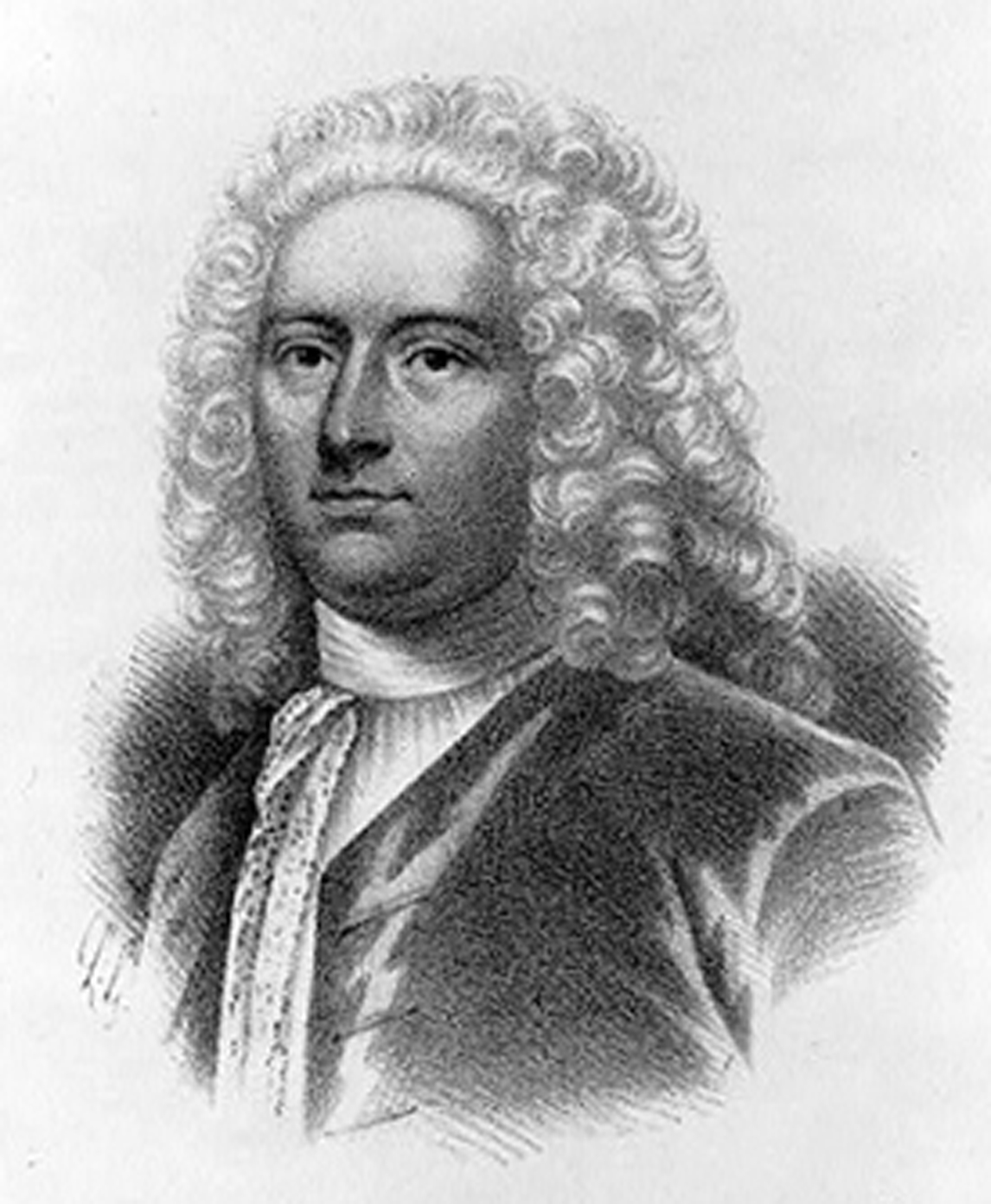
Thomas_Heyward_Jr

Thomas Heyward, Jr.

The Agricultural Society of South Carolina was founded. Thomas Heyward, Jr invited a select group of planters to the Exchange Bldg. for “the purpose of forming a Society in this state to encourage Agriculture and other Rural Concerns.”

Charleston: America’s Most Popular Dance

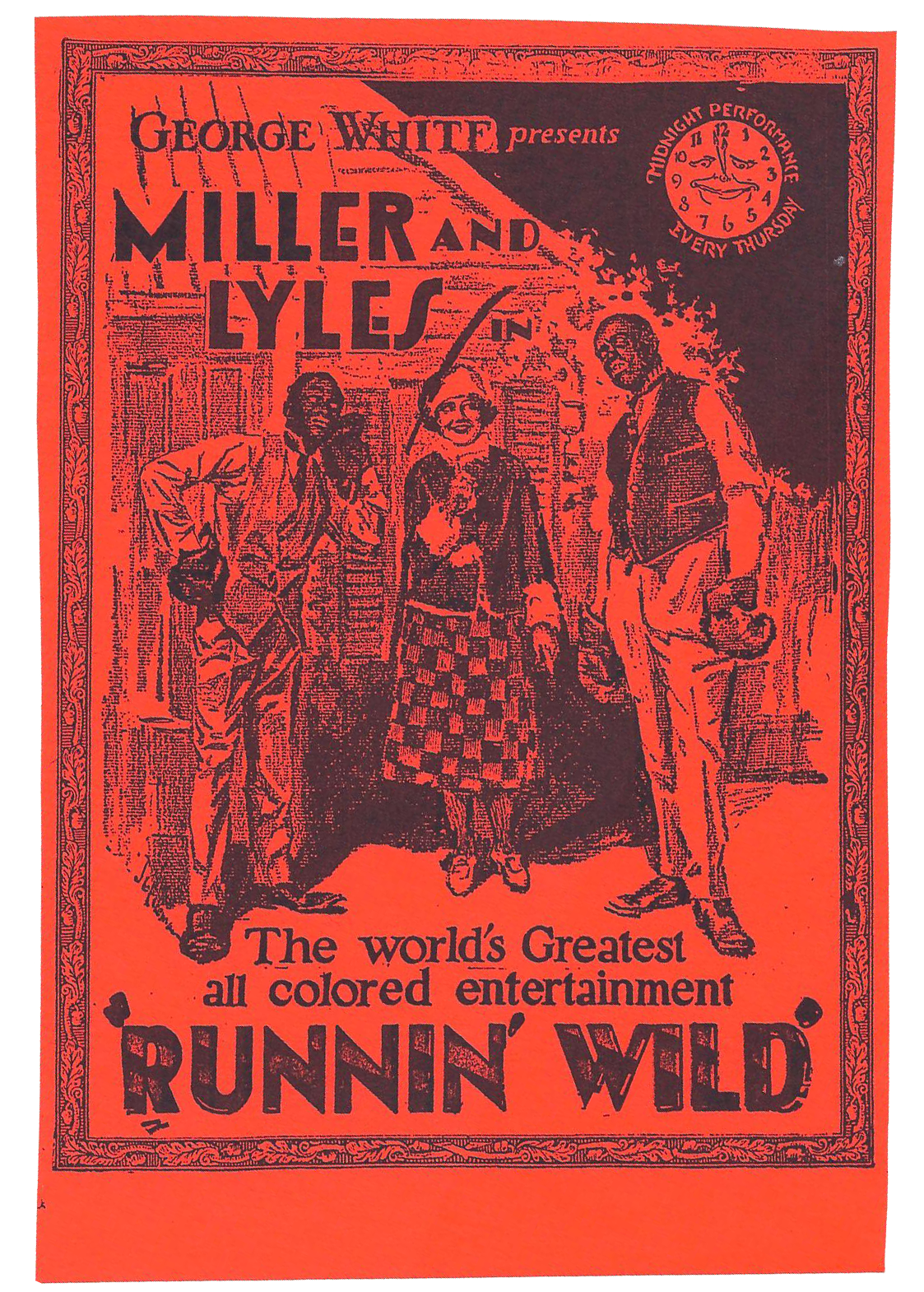
Runnin-Wild-ProgramOn October 29th, 1923, a black musical named Runnin’ Wild opened on Broadway, with songs by James P. Johnson and Cecil Mack. The first act of the show ended with the song “Charleston.” Elizabeth Welsh, as the character of Ruth Little in the show, performed the dance with chorus boys called the “Dancing Redcaps.” Elida Webb, the choreographer, claimed to have invented the dance, which, of course, was not true.

The dance called the Charleston has deep roots that trace back to the Ashanti tribe from the Gold Coast of Africa. As those Africans were enslaved and brought into America, many of their tribal customs were passed down through generations living on South Carolina low country plantations along the coast. By the turn of the 20th century hundreds of thousands of emancipated slaves, called “geechie” – slang for people from the low country, had moved to Chicago and New York for economic opportunity. Their syncopated minstrel-style music of the 1890s became ragtime, blues and ultimately, jazz. The Jenkins Orphanage Band of Charleston performed on the streets of Harlem during the first decade of the 20th century and the description of their dance steps sounds very much like the modern-day Charleston.

In fact, the composer of the song “Charleston,” James P. Johnson, talked about his inspiration for the song.

The people who came to The Jungle Casino [Harlem] were mostly from around Charleston, S.C. They picked their [dance] partners with care that would give them a chance to get off. It was while playing for these Southern dancers that I composed a number of Charlestons, eight of them, all with the same dance rhythm. One of these later became my famous ‘Charleston’ when it hit Broadway.”

 Another Harlem piano player, Willie “the Lion” Smith recalled that “the kids from the Jenkins Orphanage Band of Charleston used to do Geechie steps when they were in New York on their yearly tour.”  What cannot be denied is that by the end of 1923 everybody in America was doing the Charleston.

Nothing else epitomizes the spirit and joyous exuberance of the 1920s as the Charleston. Other dance crazes have had their fifteen minutes of fame: the Waltz, the Tango, the Hokey-pokey, the Twist, the Hustle, the Macarena, and even Break dancing. None of them, however, managed to influence and infect an entire generation so thoroughly the way the Charleston did. Almost 100 years later, the image of the Jazz Age is always a Flapper doing the Charleston. No other American decade can be so neatly summed up in one simple image.

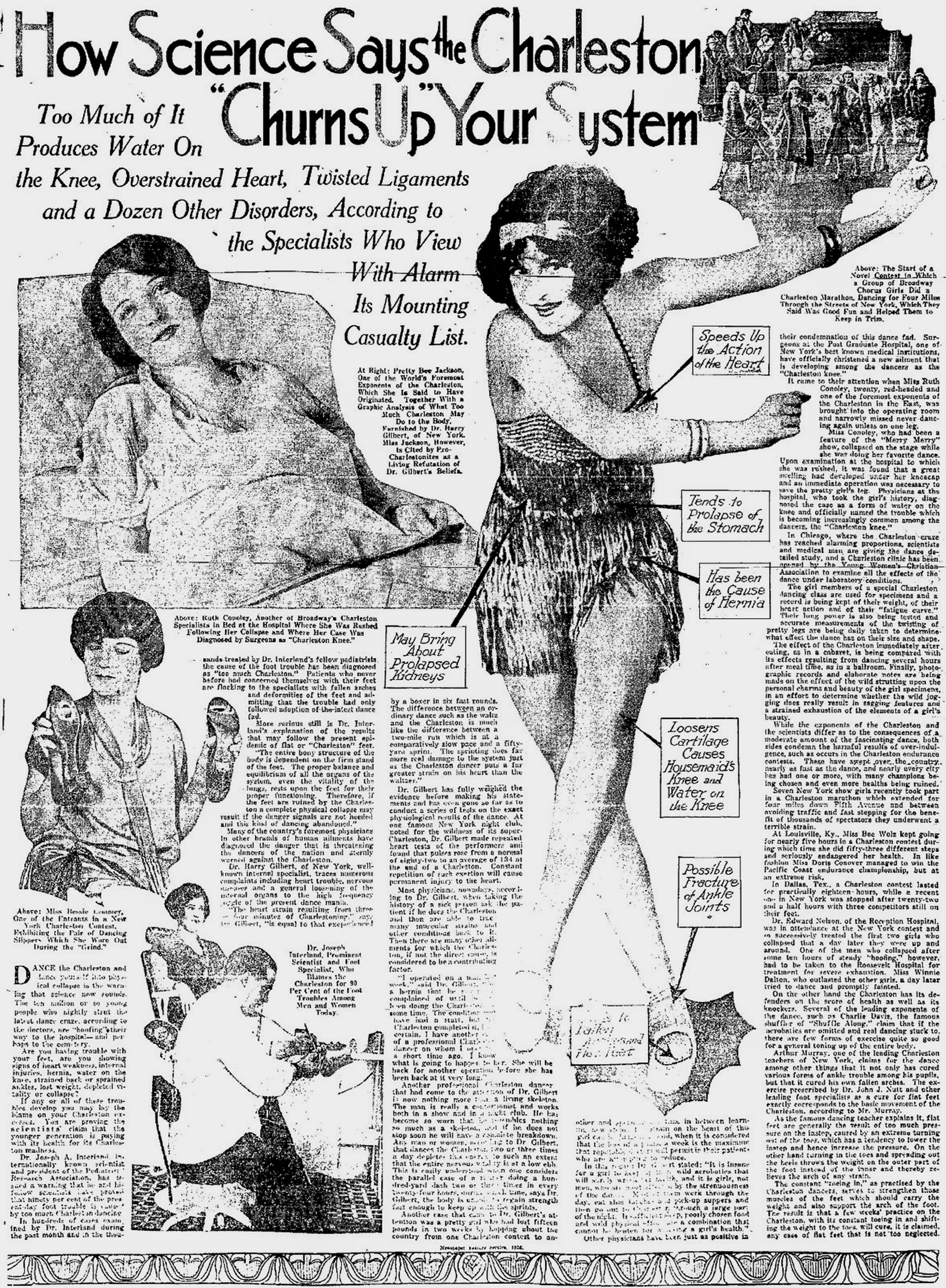
 Tin Pan Alley songwriters in New York quickly turned out hundreds of “Charleston” songs. Charleston contests became a regular part of Dance halls and hotels everywhere, from big cities to small towns. One of the most famous scenes in American cinema is the Charleston dancing contest in It’s A Wonderful Life with James Stewart and Donna Reed falling into the swimming pool as the dance floor opens up. Hospitals across America began to admit patients complaining of “Charleston knee.”

Many non-dancing jobs of the day required black employees to be competent to dance or teach the Charleston in order to be hired. There were hundreds of advertisements in the New York papers looking for a waiter, a maid, a cook, or a gardener with the stipulation: “Must be able to Charleston!”

 16b. Charleston - Churns You Up - 28 March 1926However, not everyone was infected with Charleston fever. In London, sixty teachers of ballroom dancing were taught the “Charleston” in July 1925 and pronounced it “vulgar.” That is, until the Prince of Wales, Prince Edward, learned it and performed it very skillfully in public. The Vicar of St. Aidan’s however, thought that “any lover of the beautiful will die rather than be associated with the Charleston. It is neurotic! It is rotten! It stinks! Phew, open the windows!”

In 1925, tragedy struck. The press found a physician in Seneca, Kansas, who claimed that “pretty Evelyn Myers,” age 17, had died of peritonitis brought on by dancing the Charleston too violently. Variety Magazine reported that in Boston, the vibrations of Charleston dancers were so strong that it caused the Pickwick Club to collapse, killing fifty of its patrons. The headline screamed:

 WAS THIS BUILDING STAMPED DOWN BY ‘CHARLESTON’ DANCERS? 

pickwick club_filtered

 More than 200 people – police, fireman and volunteers – worked for twenty hours digging through the rubble of the building to free the trapped victims. Following the catastrophe, the Boston mayor’s office issued an edict banning the Charleston from public dance-halls. Other cities followed suit, banning the dancing of the Charleston for safety reasons, but nothing could stop the Charleston stampede. The more the authorities preached against it, the more popular the Charleston became.

 Mayor Frank Borden, Jr, of Bradley Beach, New Jersey, outlawed the dance from the city-owned ballroom. He cited “broken shins” as his reason. “I have no objection to a person dancing their feet and head off, but I think it best that they keep away from the Charleston.” Richard Zober of Passaic, New Jersey also banned the Charleston in his town. “I think it would be safer and better for all concerned,” he said. An article syndicated by the International Feature Service read: 

“From coast to coast the ‘Charleston’ has caught the country swaying to its curious rhythm. No dance, since jazz first came into vogue, has created such a furor. Enthusiasts ecstatically stamp to its syncopated measures, while others, equally in earnest, denounce it. But the controversy that is carried on everywhere concerning this latest mania has failed to stem its tide of popularity. America is “Charleston” mad!” 

Emil Coleman, a famous orchestra leader, declared that the “Charleston” is “the most characteristically American of any of the modern dances whose peculiar accent in time is the musical expression of the native (black) temperament.” One female evangelist in Oregon called the Charleston “the first and easiest step toward hell.”

Some dance ballrooms gave up trying to discourage the frenetic Charleston all together and just posted large signs on the dance floor that read: PCQ – PLEASE CHARLESTON QUIETLY! 

CharlestonQuietly

Today In Charleston History: August 23

1770 – American Revolution – Foundations.

laurens

Henry Laurens

News arrived that Boston, New York and Philadelphia had joined Georgia and Rhode Island in breaking their agreements with the non-importation Association. Henry Laurens wrote:

I am so disappointed in my Expectations of several Colonies North … to their late important Resolutions that I am in a humour to disbelieve the Sincerity of the majority of all Politicians …

1783

Henry Laurens left the American treaty negotiations in Paris to travel to Vigan, France in order visit his ailing brother, James.

1864 – Bombardment of Charleston.

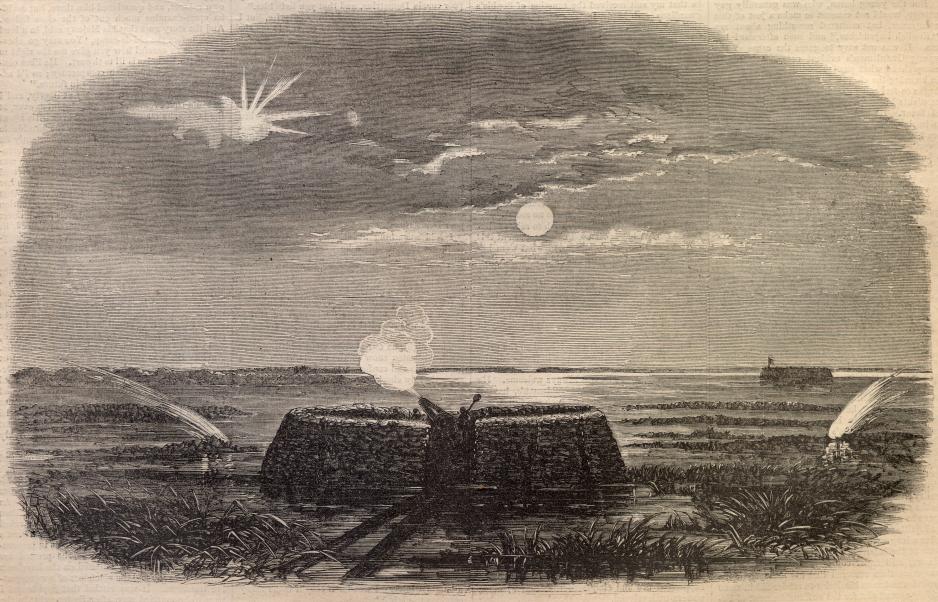
That night, the Swamp Angel resumed shelling Charleston, on the thirty-sixth round the gun barrel blew up, the psychological threat remained real.

Today In Charleston History: August 22

1863 – Bombardment of Charleston. 1:30 a.m.

swamp angel

Swamp Angel, the Federal gun that fired upon Charleston.

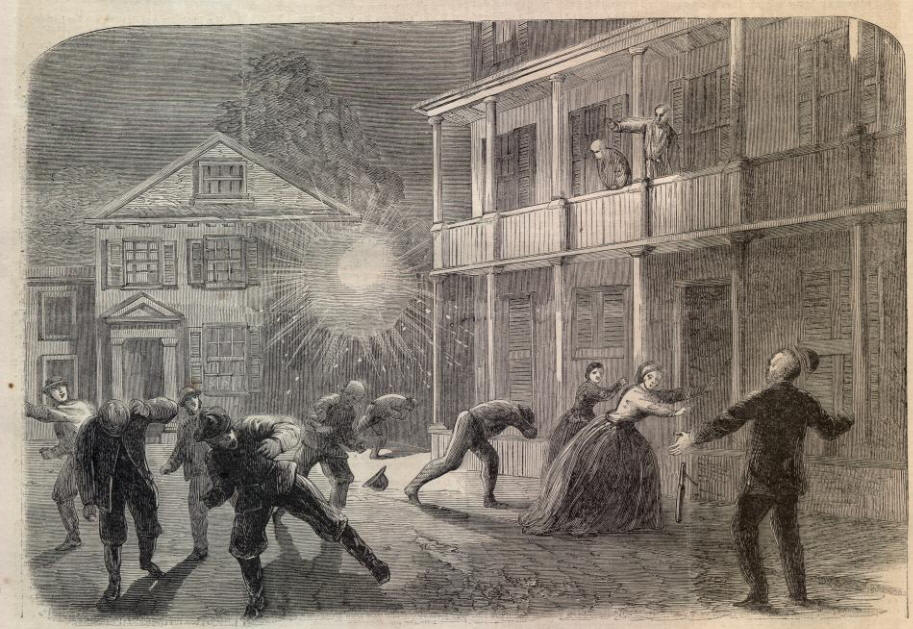
A Federal shell burst just north of the City Market at the corner of Pinckney and Church Streets. It was a 200-pounder shot from the “Swamp Angel.” British war correspondent and illustrator, Frank Vizetelly, was staying at the Charleston Hotel on Meeting Street. Unable to sleep, he was in his room reading Les Miserables when he was:

startled by a noise that …resembled the whirr of a phantom brigade of cavalry galloping in mid-air. My first feeling was that of utter astonishment; but a crash, succeeded by a deafening explosion in the very Street on my apartment was situate, brought me with a bound to the centre of the room … At first I thought a meteor had fallen, but another rush and whirr right over the hotel, and another explosion, settled any doubts I might have had: the city was being shelled.

I will defy anyone who witnessed what I witnessed on leaving my room, not to have given way to mirth … terrified gentlemen rushing about in the scantiest of costumes …One perspiring individual of portly dimensions was trotting to and fro with one boot on and the other in his hand and this was nearly all the dress he could boast …

charleston-bombardment

Frank Vizetelly’s illustration of the first shot

Capt. Charles C. Pinckney, an ordinance officer stationed in Charleston under General Roswell S. Ripley, wrote:

I rode down Smith Street about 2 o’clock A.M. The streets were entirely deserted, yet every house was lighted up. What does it mean?  Have the Yankees slipped in and taken the town while I was asleep? I urged the horse, & reached Headquarters. Without notice, a city full of sleeping women & children – a bombardment without military significance  … was clearly & purely spite!

bombardment, broad street 1864

Miss Pauline Heyward wrote in her diary:

Father went to Charleston on Sunday, and returned today, the Yankees are shelling the City … One shell went thro the roof of a house and straight thro the first floor … and thro the brick wall … into the yard that was paved, and there buried itself six feet into the earth.

Confederate Gen. P.G.T. Beauregard wrote Union Gen. Gillman, accusing the Union officer:

you now resort to the novel measure of turning your guns on the old men, the women and children, and the hospitals of a sleeping city, an act of inexcusable barbarity … if you fire again on this city … without granting a somewhat more reasonable time to remove non-combatants, I shall feel compelled to employ such stringent means of retaliation as my available …

 During the night a free “Negro” fire company extinguished the first fire from the bombardment.