Today In Charleston History: March 12

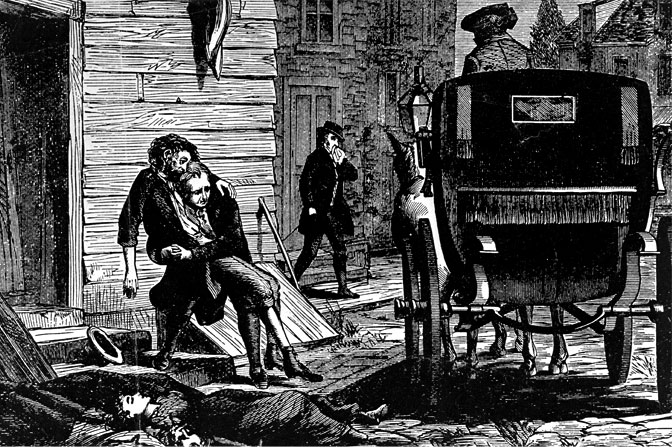
1698 – Epidemic.

The governor wrote that

“We have had the small pox amongst us nine or ten months which hath been very infectious and mortal. We have lost by the distemper 200 or 300 persons.”

Mrs. Affra Coming wrote to her sister that the epidemic

“killed 200 or 300 persons … unburied, lying upon the ground for the vultures to devour.”

image-05-large

Picking up the Dead.

Today In Charleston History: March 11

1703 – Fortifications

Sir Nathaniel Johnson

Sir Nathaniel Johnson

Sir Nathaniel Johnson was appointed governor. He urged the Assembly to pass an act for repairing the existing fortifications and building new works to surround the town. It specified:

 the severall forts, halfe moons, platforms, batterys and flankers, built . . . on the front wall [i.e., East Bay Street], shall have gabions [walls built on a slope to protect against erosion] fixed upon them, and shall also be well piled, for their preservation against the sea.

The act also stipulated that the fortifications “shall be [made] by intrenchments, flankers and parapets, sally ports, a gate, drawbridge and blind necessary for the same.” This plan created a ring of fortification, including four corner bastions linked by a curtain walls and punctuated by eight redans, surrounding sixty-two acres of high land.

1778 – American Revolution.

Alexander Gillon, a Dutch merchant from Charlestown, was appointed Commodore of the South Carolina navy.

Today In Charleston History: March 10

1673
Anthony-Ashley-Cooper-Earl-Shaftesbury-1560137

Lord Ashley Cooper

A deed of transfer was registered by Lord Ashley Cooper by which the Cassoes ceded “the great and lesser Cassoe [River]” between the Ashley, the Stono and the Edisto for cloths, hatchets, beads, and other manufactured goods.

1696

Henry Peronneau was one of sixty-three petitioners who were granted “the rights and privileges of citizenship.”

1780 – The Seige of Charlestown  

Lt. Colonel William Washington’s regiment joined forces with the remnants of the 1st Continental Light Dragoons at Bacon’s Bridge (20 miles north of Charlestown) to reconnoiter, screen and disrupt the advancing British troop. They felled trees across roads, burned bridges and boats in an effort to slow the march toward Charlestown.

Today In Charleston History: March 9

1686-Arrivals.  

Jean Boyd, a well-educated Huguenot merchant, arrived in Charles Towne and penned a lengthy letter to his sister back in London. He described various aspects of life and culture, and sketched a map of the town.

Here we are at last landed in this much longed-for country. In truth, I had imagined that I would find the town of Charlestown built differently and much larger than it is … The temperature of the air is here the same as in the southern provinces of France.  The English, in truth, who are not accustomed to hearing large claps of thunder in England exclaim in surprise at those in Carolina, but they would never scare a French person.

boyd map - 1687

Jean Boyd’s map of Charles Towne

The head of the rivers & principally the creeks are full of crocodiles so monstrous that we saw some that were 22 feet long. They do not hurt anyone and people fear them so little that several people who were bathing went swimming after them.

When one sells something here one must specify if it will be paid for in silver; otherwise they will pay you in silver of the country, which means in corn or animals & there is a great difference, least 25% for cattle to silver. Sometimes when silver is plentiful, that is to say when the buccaneers have come, livestock is worth a lot.

Aside from game one sees many wild beasts but a  little higher up in the  country, like wolves, wildcats, leopards,  tigers, bears, foxes, raccoons,  badgers, otters, beavers & a type of black and white cat which for its only  defense (urinates)  on people who pursue it, but its urine is so foul that it is  capable  of making one feel sick. The stench does not go away for two or three months even though one washes.

1738 – Slavery.

A writer in the Gazette addressed his concerns about the issue of Negro population:

I cannot avoid observing that altho’h a few Negroes annually imported into the province might be of advantage to most People, yet such a large importation of 2600 or 2800 every year is not only a loss to many, but in the end may prove the Ruin of the Province, as it most certainly does that of many industrious Planters who unwarily engage in buying more than they have occasion or able to pay for.

1779

Andrew Groundwater and William Tweed were hanged for treason. Both men had refused to take the oath of fidelity to the Patriot cause, and were arrested for carrying a message from a British prisoner of war to Colonel Archibald Campbell. According to Charles Pinckney:

some interest was made for Groundwater … he had been captain of a small vessel, and had been of service in the bringing in to us stores and many necessary articles which we were in want of … [but also] strongly suspected of being concerned with Tweed in setting fire to the town on Trott’s point … the inhabitants were so incensed against him, that he suffered, to appease the people.

Today In Charleston History: March 8

1770 – American Revolution – Foundations

In the Gazette, Peter Timothy reported that British merchants had lost £300,000 sterling just in the loss of slave trading, an unreasonable sacrifice in an attempt to raise £13,000 sterling. 

1773

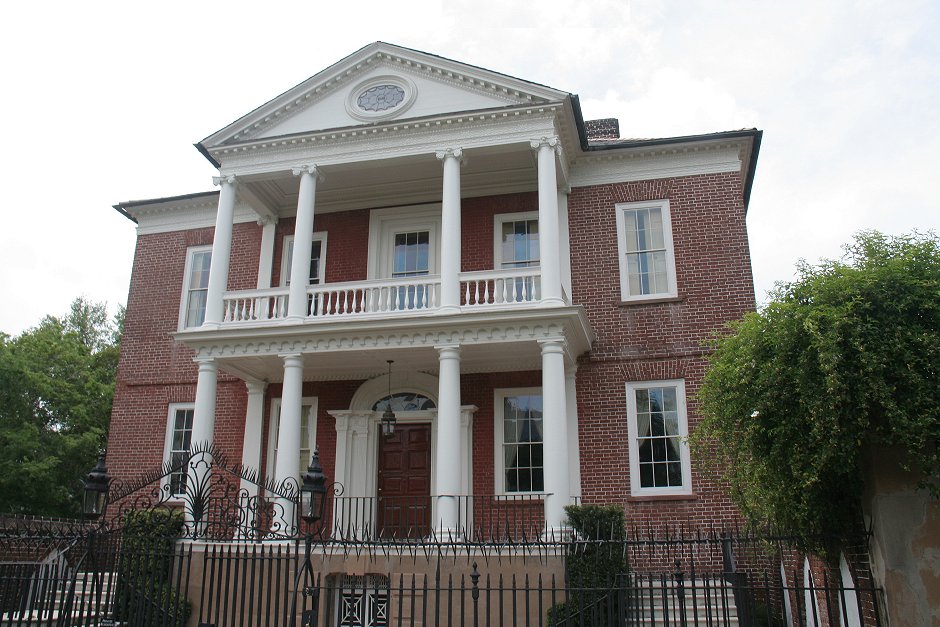
During his visit to Charleston, Josiah Quincy wrote in his diary of his evening at the Miles Brewton House, 27 King Street:

Dined with a large company at Miles Brewton’s, Esq. a gentleman of a very large fortune – a most superb house, said to have cost him £8000 sterling. The grandest hall I ever beheld, azure blue satin window curtains, rich blue paper with gilt … most elegant pictures … a most elegant table, three courses, jellies, preserves, sweet meats, etc … After dinner, two sorts of nuts, almonds, raisins, three sorts of olives, apples, oranges … by odds the richest wines I ever tasted.

Miles Brewton House

Miles Brewton House

Today In Charleston History: March 7

1737 – Slavery

A curfew act was enacted for blacks in Charlestown. Any black that appeared on the street after sundown without a lantern and written permission from their master could be apprehended by any white and taken to the Watch house overnight. They would be whipped in the morning and their owners could claim them after paying a fine.

1773 – Culture
Josiah Quincy

Josiah Quincy

Josiah Quincy visited Charleston in 1773. He was was an American lawyer and patriot from Boston. He was the principal spokesman for the Sons of Liberty prior to the Revolution and was John Adams’ co-counsel during the trials of Captain Thomas Preston and the soldiers involved in the Boston Massacre.

He kept a journal of his visit in the South and recorded his impressions of Charleston. He was not impressed with the church service at St. Philips. The small number in attendance shocked his Boston-Puritan ethic. In addition he noted the minister was:

A young scarcely-bearded boy … preached and prayed as to try an affect a gay air about the service. The sermon was only seventeen and a half minutes, a solemn mockery … … few women or men stood to sing … most people freely conversed with one another during the service.

1780 – Revolutionary War

British engineers constructed a bridge over the Wappoo Cut as preparations of their siege of Charlestown. 

Today In Charleston History: March 6

1724 – Births.
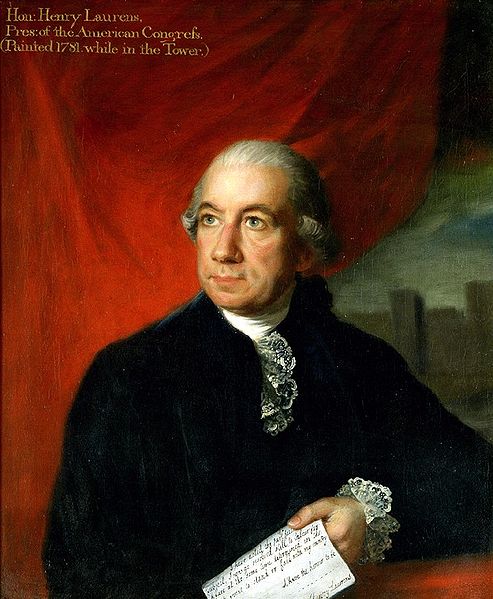
Henry Laurens

Henry Laurens

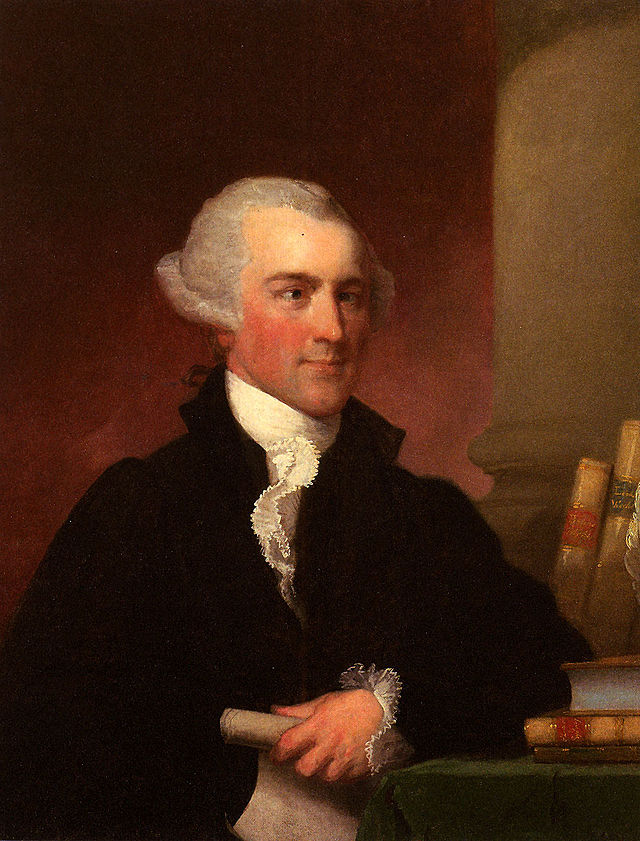
Henry Laurens was born in Charlestown, son of John Laurens a French Huguenot. The young Henry became friends with Christopher Gadsden during childhood, creating an alliance between two powerful men during the Revolution. Lauren’s son-in-law, Dr. David Ramsay wrote that they were:

…. Attached in their early youth to each other by the strongest ties of ardent friendship. They made a common cause to support and encourage each other in every virtuous pursuit, to shun every path of vice and folly, to leave company whenever it tended to licentiousness … and acquired an energy of character which fitted them for acting a distinguished part in the trying scenes of a revolution …

1837

Senate confirmed the appointment of Joel R. Poinsett as Secretary of War by President Martin Van Buren, and presided over the continuing removal of Indians west of the Mississippi and over the Seminole War.

To read more about Poinsett’s life … click here. 

Today In Charleston History: March 5

1773 – Commerce

Using slave labor, Christopher Gadsden finally completed his 840-foot long wharf at the north end of town on the Cooper River (at the foot of present-day Calhoun Street). It was described as “one of the most extensive of the kind ever undertaken in America.”

Gadsden Wharf on the Cooper River

Gadsden Wharf on the Cooper River

In the late 1760s, Gadsden began the construction of a large wharf on today’s Concord Street between Calhoun and Laurens Street. In January 1767 Gadsden advertised in the South Carolina Gazette for, “Pine logs 16 to18 feet long and from 10 to 12 inches thick.” Work progressed so that in nine months Gadsden announced that he had framed the wharf and had space for two ships that could be loaded and unloaded simultaneously. Gadsden also announced that planters could store their rice at his wharf for a week without charge provided that he was the factor selling the rice. Over the next seven years Gadsden continued expanding the wharf.

 In March 7, 1774 the South Carolina Gazette reported that the,
“Stupendous work was nearly completed and was believe to be the most extensive of its kind ever undertaken by any one man in America.”
In May Gadsden wrote his friend Samuel Adams describing his
“seven years of hard labor to build the wharf, extending 840 feet that included warehouses that could hold 10,000 barrels of rice.”
1778 – American Revolution

The new Constitution of South Carolina was given a third reading and approved. It deprived the President of the state of his veto. It also stated that only Protestants could be legislators or governor. The Anglican Church, was disestablished, but retained all its property.

President John Rutledge resigned his office because he felt this document surrendered all hope of reunion with Britain. Arthur Middleton was elected to succeed Rutledge but he declined. Rawlins Lowndes was then elected and served until Rutledge replaced him in January 1779. Christopher Gadsden was chosen as Vice-President. 

Today In Charleston History: March 4

1788 – City Market

old market stalls - postcardPlans for a “City Market” began to take shape when six prominent citizens donated land to the city to build the new street. Much of the property was a canal created by building up the banks of a tidal creek that ran from the Cooper River to Meeting Street. The donors gave the city four years to fill the canal property from Meeting to Church Street and six additional years to fill it from Church to East Bay. The donors were:

  • Charles Cotesworth Pinckney
  • John Deas
  • Thomas Jones
  • Sims White
  • John Wyatt
  • Mary Lingard

The canal was to be filled to make the street 33 feet wide and divided into what is now North and South Market Streets, with spaces along each side of the canal about 33 feet wide as well.

1825 – Presidential election

John Quincy Adams took the oath of office as President of the United States. John C. Calhoun was sworn in as Vice President of the United States.

1829 –  Presidential election

Andrew Jackson took the oath of office as President of the United States and John C. Calhoun was sworn in as Vice-President. Calhoun was only one of two men to serve two consecutive terms as VP for two different presidents. Two times a bridesmaid, never a bride. The other was George Clinton who served as V-P for Thomas Jefferson and then a term for James Madison. 

Vice President John C. Calhoun

Vice President John C. Calhoun

Today In Charleston History: March 3

1763

Peter Timothy announced he was suspending publication of the South Carolina Gazette because he was unable to procure a printing assistant, his paper stock was depleted and he had been too busy to collect bills due to him. 

1781 – British Occupation

The South Carolina Gazette resumed publication as the Royal Gazette.  The Tory publisher John Wells made sure the paper reflected the British perspective.

1853

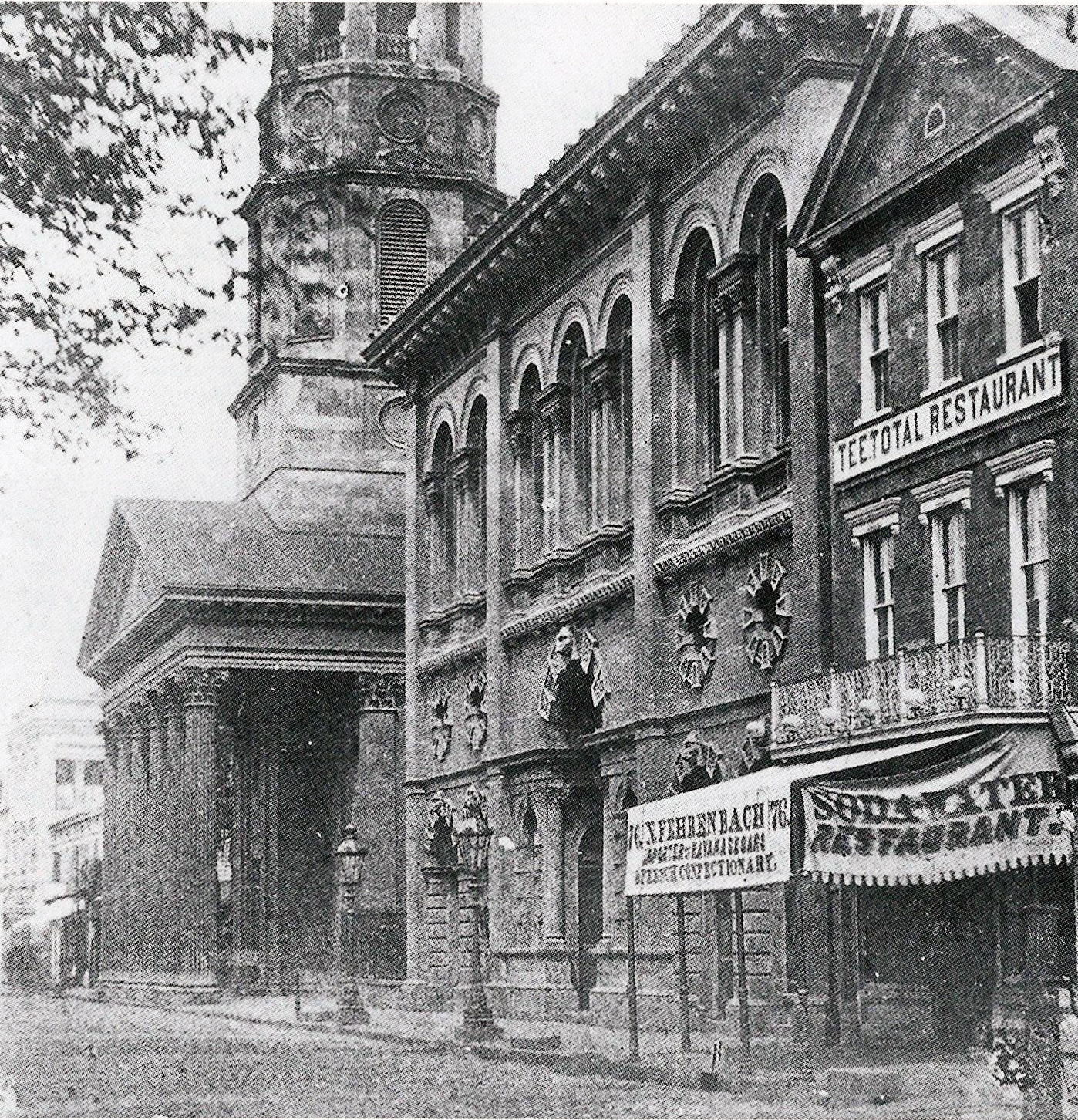
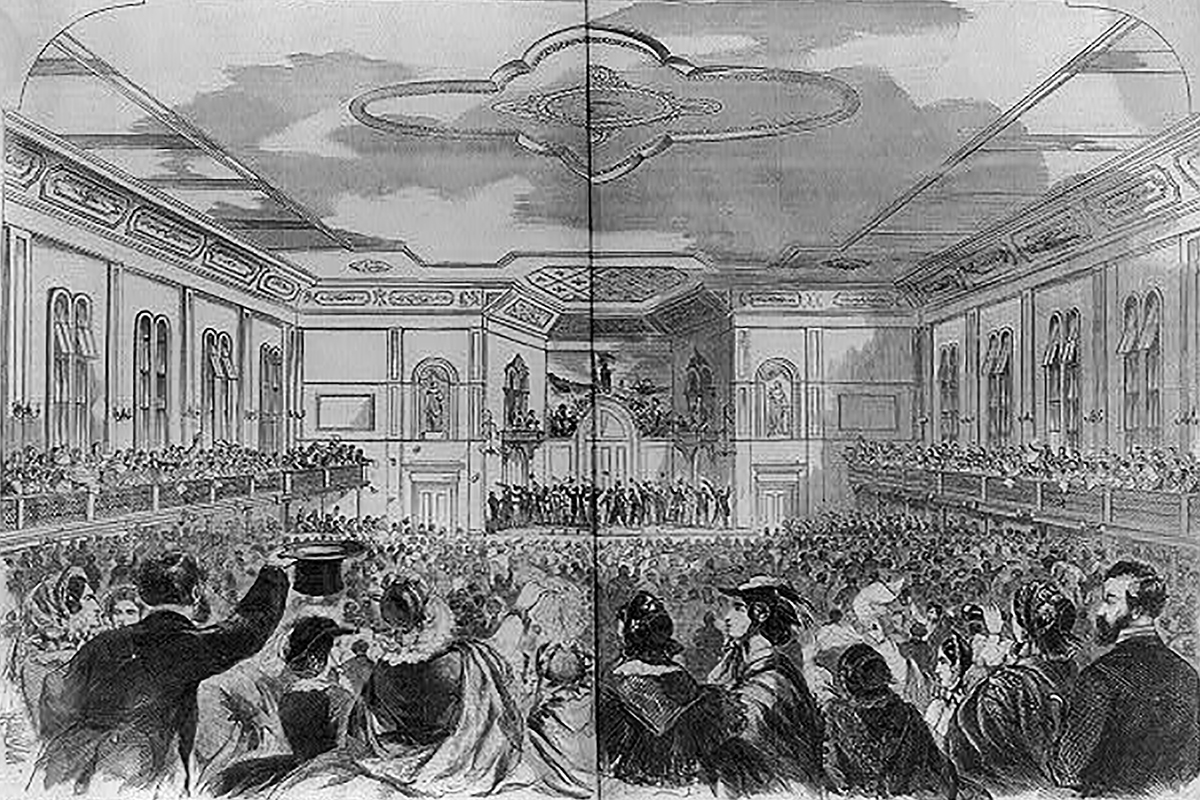
Construction of South Carolina Institute Hall began – for the purpose of hosting agricultural and industrial fairs. In 1860 it was the site of two events which changed American history: the Democrat National Convention, and the signing of the Ordinance of Secession. 

South Carolina Institute Hall on Meeting Street. Harper's Weekly illustration

South Carolina Institute Hall on Meeting Street. Harper’s Weekly illustration

circular church - teetotal

Photo of Meeting Street with 1806 version of Circular Church steeple and portico and SC Institute Hall, c 1860.

secession

Inside South Carolina Institute (Secession) Hall. From Frank Leslie’s Newspaper. Courtesy of the Library of Congress