Today In Charleston History: January 5

1758
j. rutledge

John Rutledge

John Rutledge sailed to England to study law at the Middle Temple at the Inns of Court. While in London he spent considerable time at the Carolina Coffee House on Birchen Lane, “dining, drinking and fellowship.”

The Coffee House was the center for Carolinians in London or Englishmen with business connections to the colony. Sixty years before the Coffee House was the location where the Lords Proprietors met potential colonists. Many ship captains sailing to and from Carolina frequented the Coffee House so it was the best place to send and receive mail get news from home or book passage.

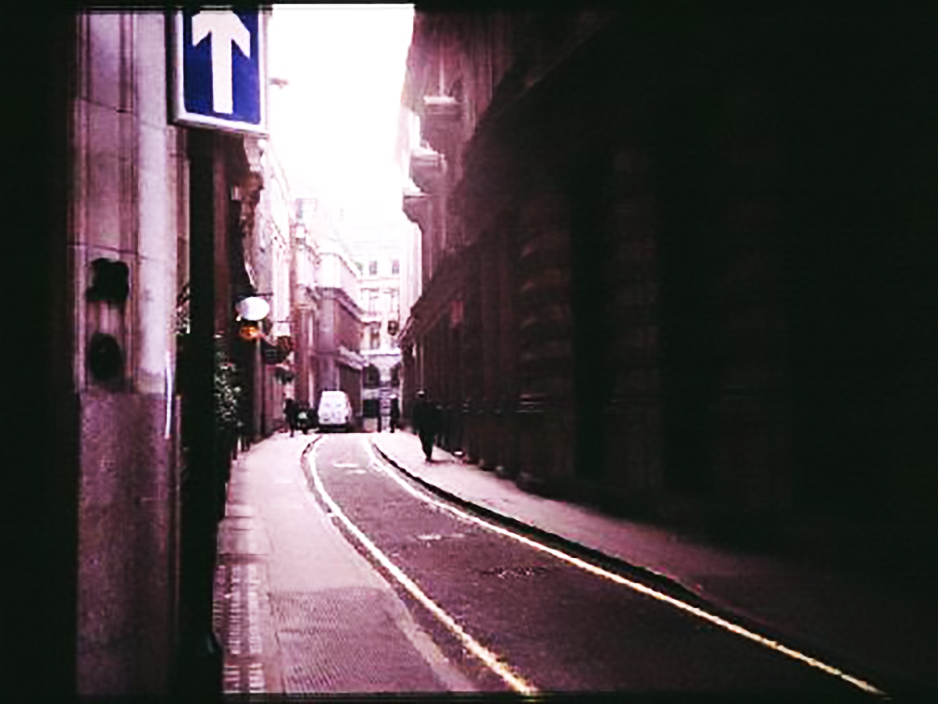
birlane

Birchen Lane, London, modern view.

1776

Capt. Joseph Vesey, a privateer of an “armed pilot boat,” Hawke, captured a British brigantine off the Carolina coast and dragged the prize up the Stono River. He was then ordered to sail to Philadelphia to pick up Christopher Gadsden and the rest of the South Carolina delegates to the Continental Congress. 

1861

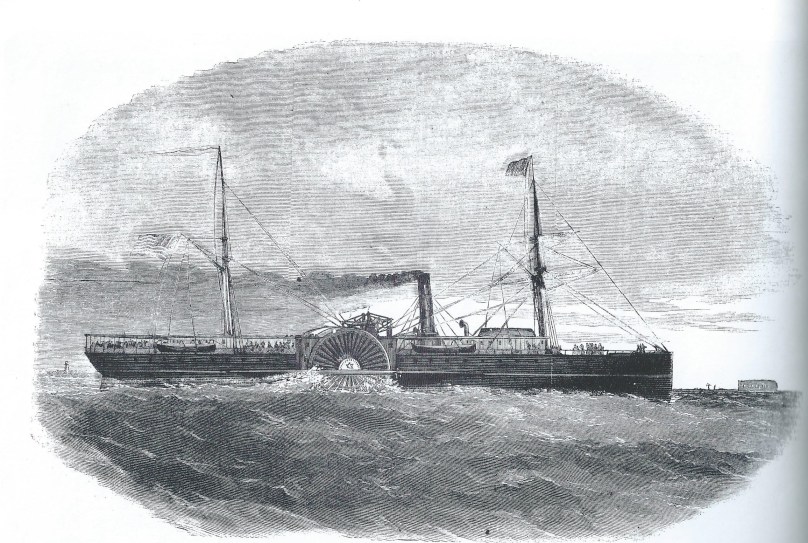
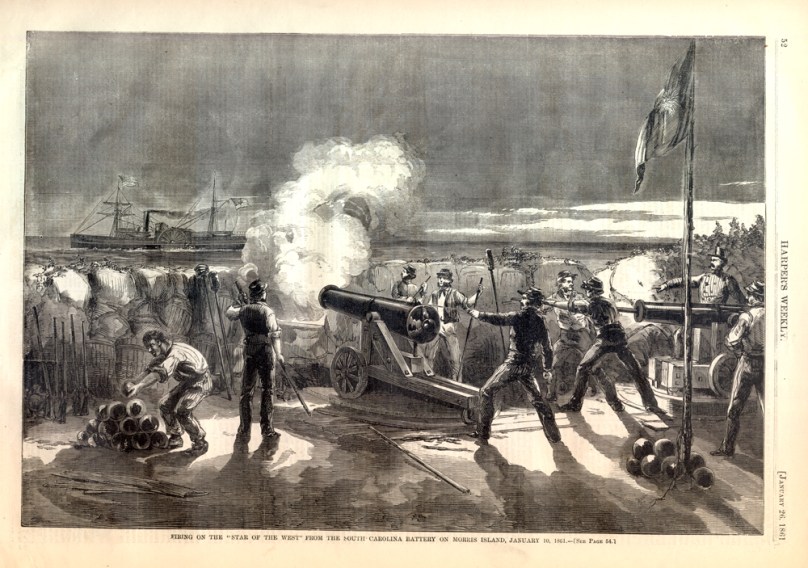
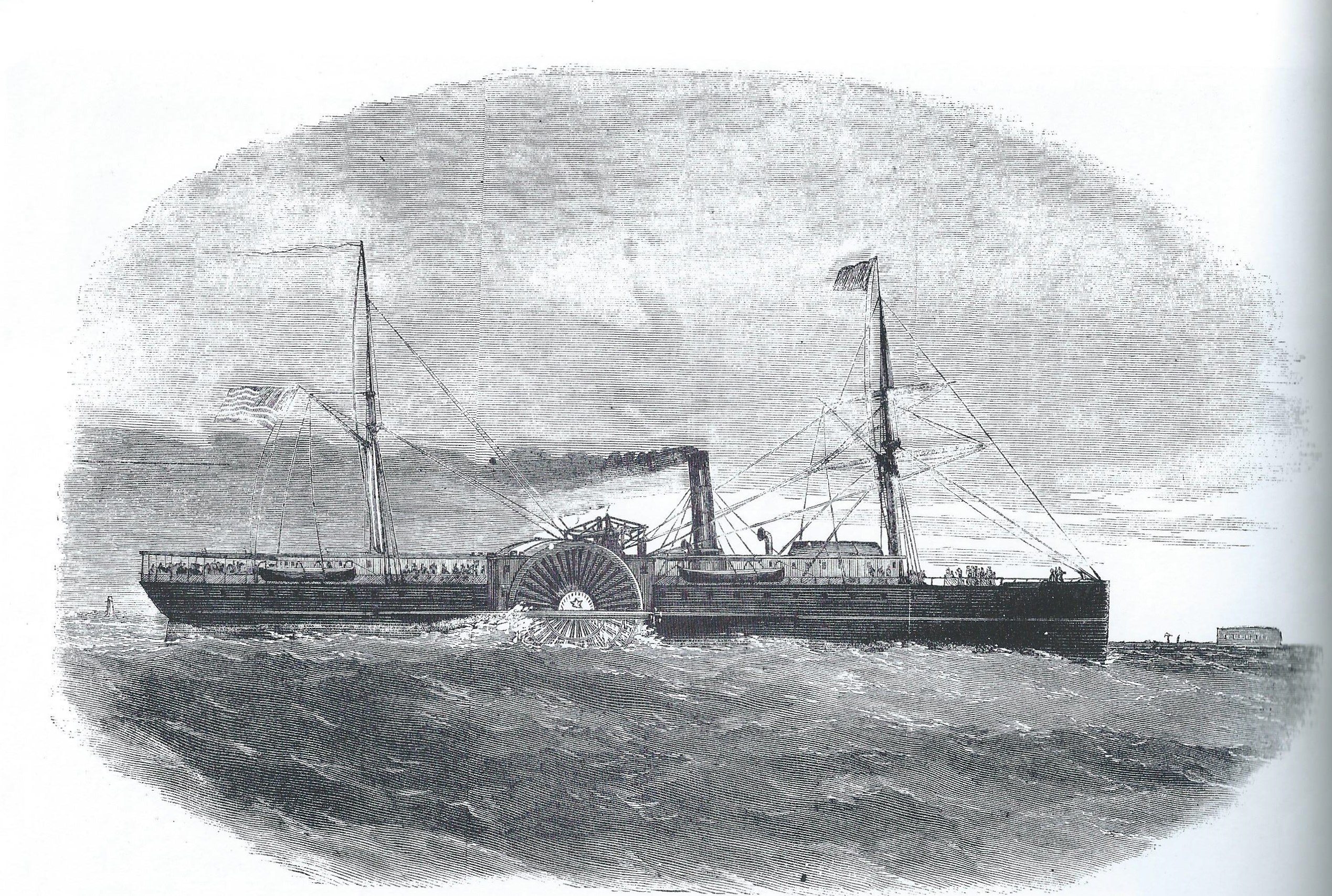
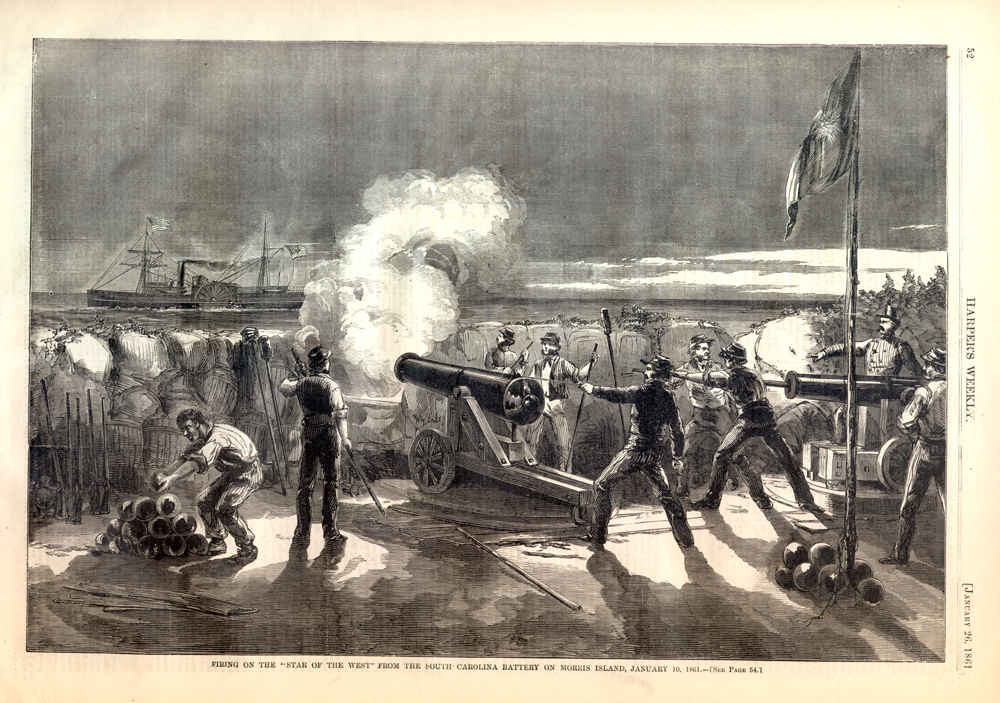
The merchant vessel, Star of the West, left New York, captained by John McGowan. It was a 1,172-ton steamship built for Cornelius Vanderbilt in 1852, 228.3 feet in length and 32.7 feet in beam, with a wooden hullside, paddle wheels and two masts. For several years she was in service making regular runs between New York, Havana, and New Orleans until she was chartered by the U.S. War Department. On board the Star supplies for the Sumter garrison and 250 new recruits.

star of the west

Star of the West Courtesy Library of Congress

Known for its speed, Gen. Scott thought the ship would be able to slip past the newly constructed Morris Island Battery. The drawback however, was that it was not reinforced to sustain cannon fire.

Assistant Adjutant General Thomas wrote to Major Anderson:

I yesterday chartered the steamship Star of the West to re-enforce your small garrison with two hundred well-instructed recruits from Fort Columbus … likewise, three months’ subsistence for the detachment.

Should a fire … be opened upon any vessel bringing re-enforcements or supplies, or upon tow boats with reach of your guns, they may be employed to silence such fire. You are warned to be upon your guard against all telegrams, as false ones many be attempted to be passed to you.

Late in the day Gen. Scott realized that news of the mission to resupply Fort Sumter was already known in Charleston. Upon learning that the Star of the West had already departed New York. Scott ordered Captain Farragut to take the Brooklyn and intercept the civilian vessel. However, the Star was too fast, and the Brooklyn had no success of catching it.

Today In Charleston History: January 4

1739

First issue of the South Carolina Gazette, edited by Elizabeth Timothy was published. The masthead said “Printed by Peter Timothy.”

SC_Gazette_1_4_1739_front_page

Masthead of the first edition of the South Carolina Gazette edited and published by Elizabeth Timothy.

In the first issue, at the bottom of the front page Elizabeth announced that she was now publishing the newspaper, under the name of her son, making her made her the first female editor and publisher of a newspaper in America and the first female franchisee in America.

Whereas the late Printer of this Gazette hath been deprived of his life by an unhappy accident. I take this Opportunity of informing the Public, that I shall contain the said paper as usual; and hope, by the Assistance of my Friends, to make it as entertaining and correct as may be reasonable expected. Wherefore I flatter myself, that all those Persons, who, by Subscription or otherwise, assisted my late Husband, on the prosecution of the Said Undertaking, will be kindly pleased to continue their Favours and good Offices to this poor afflicted Widow and six small children and another hourly expected.

Over the next seven years, Elizabeth Timothy increased the quality of the newspaper. She not only included local news, but news from Boston, Newport, and Philadelphia and European news from London, Paris, and Constantinople. Many times she dedicated at least a full page of her four-page newspaper to advertising.

Benjamin Franklin praised her, stating that she was a better business manager and accountant than her late husband had been. He remarked in his Autobiography that while her husband was “a man of learning and honest, but ignorant in matters of account,” Mrs. Timothy:

not only sent me as clear a state as she could find of the transactions past, but continued to account with the greatest regularity and exactness every quarter afterwards, and managed the business with such success, that she not only brought up reputably a family of children, but, at the expiration of the term, was able to purchase of me the printing-house, and establish her son in it.

Elizabeth Timothy also took over her husband’s position as the official “public printer” for the colony of South Carolina. She printed acts, laws, and other proceedings for the Assembly of the colony of South Carolina. In addition to publishing the South-Carolina Gazette and government documents pretty much as her late husband did, she printed sermons and religious materials. She also published some 20 historical books and pamphlets between 1739 and 1745. She also was the postmaster for Charlestown, in charge of the postal deliveries of letters, packages, and newspapers.

1815 – Religion. Arrivals.  

Rev. John Bachman arrived in Charleston as minister of St. John’s Lutheran church, a position he held for the next fifty-six years.

Prior to his arrival, the church had been without a pastor for four years, and had depended on other protestant ministers to conduct services. The church totaled sixty-two members. Ailing from tuberculosis, Bachman had taken the position to live in the warmer climate for his health. For the first year in Charleston, Bachman lived in the house of Col. Jacob Sass and joined the German Friendly Society.   

As a child, Bachman had been fascinated in the birds and mammals in his rural home, and had considered studying science in college, until the ministry called him. As he journeyed deeper into the lush semi-tropical landscape of the low-country, his scientific mind was instantly engaged. Next to his religious ministry, the study of the low country’s natural history became Bachman’s lifelong obsession.

Today In Charleston History: January 3

1840 – Religion

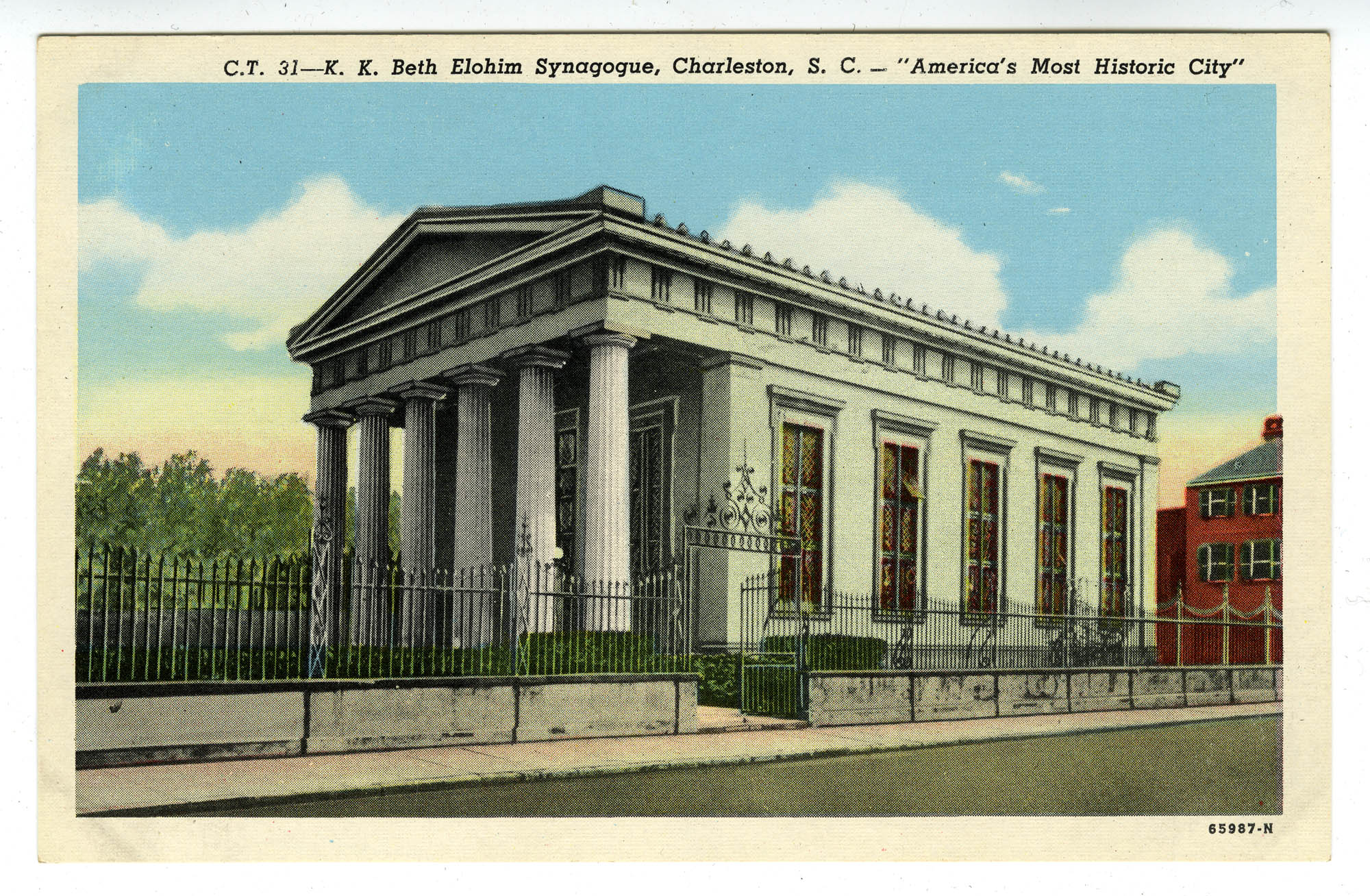
The ceremony for the laying of cornerstones for the new Beth Elohim synagogue on Hasell Street took place.

Kahal Kadosh Beth Elohim, (Holy Congregation House of God) was organized in 1749 making it the fourth oldest Jewish congregation in the continental United States (after New York, Newport and Savannah). Prayers were initially recited in private quarters and in 1775 an improvised synagogue adjacent to the present-day grounds was constructed.In 1792 America’s “largest and most impressive” synagogue was constructed which was destroyed in the great Charleston fire of 1838 and replaced in 1840 on the same Hasell Street site by the Greek Revival structure in use today.

Today, KKBE has the second oldest synagogue building In the United States and the oldest in continuous use. It was designated a National Historic Landmark in 1980.

kkbe

1864

 Captain Walpole, commander of the Confederate outpost on John’s Island, captured a “mulatto fellow” who claimed to be the cook of Union General Gillmore. He reported that 18,000 troops were being removed from the Charleston area.

Today In Charleston History: January 2

1813 – Deaths

Most scholars agree that the sometime today, the Patriot  wrecked off Cape Hatteras. Lost with the ship was South Carolina first lady, Theodosia Burr Alston. 

Theodosia Burr Alston by John Vanderlyn - New York Historical Society

Theodosia Burr Alston by John Vanderlyn –      New York Historical Society

On December 31, 1812, Theodosia sailed aboard the schooner Patriot from Georgetown, South Carolina to visit her father, former vice president Aaron Burr in New York. The Patriot was a famously fast sailer, which had originally been built as a pilot boat, and served as a privateer during the War of 1812, when it was commissioned by the United States government to prey on English shipping. The schooner’s captain, William Overstocks, desired to make a rapid run to New York with his cargo; it is likely that the ship was laden with the proceeds from her privateering raids.

Logbooks from the British warships report a severe storm of the Carolina coast on January 2, 1813. The Patriot would have been just north of Hatteras when the storm was at its fiercest, facing hurricane-force winds on the early morning hours of Sunday. The Patriot was never heard from again. Despite many romantic conspiracy stories that Theodosia survived the wreck, or was captured by pirate, she most likely was lost at sea with the rest of the passengers and crew.

Today In History: January 1

1787 – Deaths  
TOP: Arthur Middleton & the Great Seal of South Carolina BOTTOM: Middleton tomb at Middleton Place

TOP: Arthur Middleton & the Great Seal of South Carolina BOTTOM: Middleton tomb at Middleton Place

Arthur Middleton died and was buried at Middleton Plantation. The death notice from the State Gazette of South-Carolina described him as a “tender husband and parent, humane master, steady unshaken patriot, the gentleman, and the scholar.”

He was educated in Britain, at Westminster School, and Trinity Hall, Cambridge.He then studied law at the Middle Temple and traveled extensively in Europe where his taste in literature, music, and art was developed and refined. In 1764, Arthur and his bride Mary Izard settled at Middleton Place.

Arthur Middleton was one of the more radical thinkers in South Carolina politics – a leader of the American Party in Carolina and one of the boldest members of the Council of Safety and its Secret Committee. His attitude toward Loyalists was said to be ruthless. In 1776, Arthur signed the United States Declaration of Independence and designed the Great Seal of South Carolina with William Henry Drayton.  

During the American Revolutionary War, Arthur served in the defense of Charleston. After the city’s fall to the British in 1780, he was one of the 30+ Patriot leaders imprisoned in St. Augustine, Florida.

1788

The City Gazette reported that a man “was paraded through the streets, covered with feathers, stuck in a coat of tar, as a spectacle for the execration of others more honest than himself.

No, it was not a drunken New Years Eve celebration. Apparently, the man had gone “on board of a vessel, where he saw some goods so bewitching as to induce him to break at least one of the commandments, which says ‘Thou shalt not steal.’”

1808 – Slavery.

African American History Slave Ships The foreign slave trade ended by Federal law, as negotiated during the creation of the U.S. Constitution. When the US Constitution was written in 1787, a generally overlooked and peculiar provision was included in Article I, the part of the document dealing with the duties of the legislative branch:

Section 9. The migration or importation of such persons as any of the states now existing shall think proper to admit, shall not be prohibited by the Congress prior to the year one thousand eight hundred and eight, but a tax or duty may be imposed on such importation, not exceeding ten dollars for each person.

 In other words, the government could not ban the importation of enslaved people for 20 years after the adoption of the Constitution. And as the designated year 1808 approached, those opposed to enslavement began making plans for legislation that would outlaw the trans-Atlantic trade of enslaved people.

1865 – Civil War

Maj. John Johnson, a Confederate engineer wrote, “The first of January 1865, found Charleston gathered within her circle of defenses – Not invested, but much perplexed.”

Today In Charleston History: December 31

1738

By the end of the year the city had completed a hospital on “an acre of … Land called the old Burying Ground, lying on the back Part of Charles Town” – along Mazyck Street (now Logan). The hospital would also serve as a “Workhouse and House of Correction.”  

1781 –England, Tower of London

Henry Laurens was released from the Tower, in exchange for Lord Cornwallis and the payment of £12,000. Edward Rutledge had forcefully argued against Cornwallis’ release. Most South Carolina patriots blamed Cornwallis for the wholesale murder and plundering across the state. Rutledge wrote that Cornwallis should be “held a Prisoner for Life … because he was a Monster and an Enemy to Humanity.”

On the day of his release Laurens wrote:

On the 31st of December, being, as I had long been, in an extreme ill state of health, unable to rise from my bed, I was carried out of the Tower to the presence of the Lord Chief Justice of England, and admitted to bail “to appear at the court of king’s bench on the first day of Easter term, and not to depart thence without leave of the court.

Laurens immediately sent for his daughters to join him from France in London. He then went for several weeks to recuperate with the waters of Bath. 

Tower of London; Laurens marker. Photo by author.

Tower of London; Laurens marker. Photos by Mark R. Jones.

1799 – Slavery, Denmark Vesey Rebellion

On the last day of the 18th century, Denmark Vesey handed over one-third of his earnings from the lottery. In return he was handed his manumission papers, signed by Capt. Joseph Vesey. To Denmark the future looked bright. As Archibald Grimke, a Charleston mulatto and Denmark’s first biographer, wrote, Vesey was:

In possession of a fairly good education – was able to read and write, and to speak with fluency the French and English languages … [and had] obtained a wealth of valuable experience.  

At that time, the total free black population in South Carolina was 3,185, the majority of them being of mixed race ancestry – called Browns.  After being a dark-skinned slave for seventeen years in Charleston, Denmark, at thirty-three years of age, entered the 19th century as a free black man.

1864 – Civil War    
pgt beaureard

P.G.T. Beauregard

Gen. P.G.T. Beauregard left Charleston to inspect what was left of Gen. Hood’s army in Georgia. Gen. Hardee’s Georgia troops withdrew into South Carolina. Beauregard ordered:

You will apply to the defense of Charleston the same principle applied to that of Savannah – that is, defend it as long as compatible with the safety of your forces … The fall of Charleston would necessarily be a terrible blow to the Confederacy, but its fall with the loss of its brave garrison would be still more fatal to our cause.

      Gen. Willliam T. Sherman communicated with Admiral Porter off the North Carolina coast, “The President’s anxiety to take Charleston may induce Grant to order me to operate on Charleston.”


Today In Charleston History: December 30

1820 – Religion
Bishop_John_England

Bishop John England

The Catholic Church in Rome created a new diocese out of the Carolinas and Georgia. The newly consecrated Bishop John England arrived in Charleston.  He discovered that conditions were most uninviting and unpromising in the new diocese, with Catholics scattered in little groups over these states. Most of the few in Charleston were very poor immigrants from Ireland or ruined refugees from San Domingo and their servants.

1874 – Births

Future mayor John Patrick Grace was born in Charleston. He grew up on Society Street and attended the High School of Charleston. All four of his grandparents were natives of Ireland.

mayor grace

John P. Grace

His most lasting accomplishment as mayor was the construction of the John P. Grace Memorial Bridge, which spanned the Cooper River to connect Charleston and Mt. Pleasant. It replaced the ferry system had been used to that point and opened in 1929.

John P. Grace Memorial Bridge

John P. Grace Memorial Bridge

Today In Charleston History: December 29

1778

The British captured Savannah, Georgia, giving them a strong base to build up a land force in the South. It placed South Carolina and Charlestown, directly in the sights of British troops.

OLYMPUS DIGITAL CAMERA

Savannah Marker, photo by author.

1811

Joel Poinsett of Charleston arrived in Santiago, Chile. President James Madison had appointed him as Consul in General to investigate the prospects of the revolutionists in Chile and Argentina, in their struggle for independence from Spain.

1899

     The South Carolina Jockey Club voted to disband and donate the club’s property to the South Carolina Library Society.  As the News & Courier noted:

The prospects of the amusement of horse racing on a respectable and financially safe footing have proved hopeless and the South Carolina Jockey Club finds itself the owner of property which can no longer be utilized for the purpose  in which it was formed …

Read this great on-line manuscript about the Jockey Club.

Washington Race Track - 1857. A one-mile loop around what is present day Hampton Park. Library of Congress

Washington Race Track – 1857. A one-mile loop around what is present day Hampton Park. Library of Congress

Today In Charleston History: December 28

1698

Affra Harleston’s will, divided her estate between her nephew, John Harleston, and her husband’s half-nephew, Elias Ball.

1722 – Births

Elizabeth Lucas (known as “Eliza) was born in Antigua, West Indies at Cabbage Tree Plantation. It was customary for elite colonists to send boys to England for their education. Her father, Lieut.-Colonel George Lucas, recognized Eliza’s intelligence and against the custom of the time, sent her to boarding school in London at age eight. Her favorite subject was botany.  She wrote to her father that she felt her “education, which I esteem a more valuable fortune than any you could have given me, will make me happy through my future.”

1748

The Charlestown Library Society was organized by seventeen young gentlemen of various trades and professions who wished to avail themselves of the latest publications from Great Britain. At first, the elected librarians safeguarded the Library’s materials in their homes. From 1765 until 1778, it resided in the upstairs of Gabriel Manigault’s liquor warehouse.

In 1792, the collection was transferred to the upper floor of the Statehouse, currently the County Courthouse at Broad and Meeting. From 1835 until its 1914 move to the current King Street location, the Charleston Library Society occupied the Bank of South Carolina building at the corner of Church and Broad Streets. That building was paid for with “Brick” memberships, a permanent membership for a one-time lump sum: several of these memberships are still in use, generations later, by Charleston families.

1773

Surveyor for the Southern District of North America, William Gerard de Brahm, sent a report to his Majesty which said:

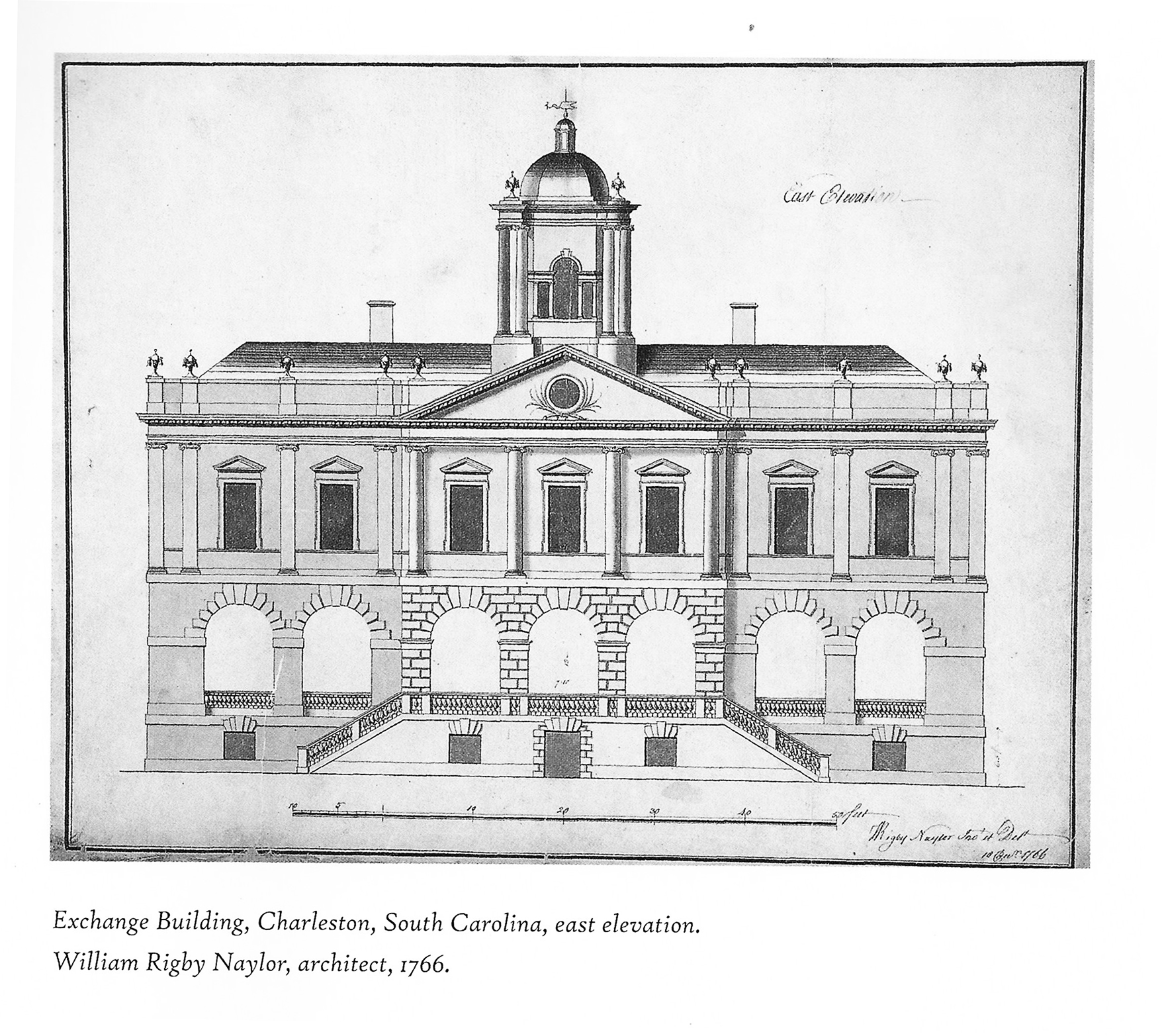
The city of Charlestown is in every respect the most eminent and by far the richest city in the Southern District of North America; it contains about 1500, and most of them big houses, arrayed by straight, broad and regular streets; the principal of them is seventy-two feet wide call’d Broad Street, is decorated, besides many fine houses, with a State house near the centre of said street, constructed to contain two rooms, one of the Governor and Council, th’ other for the Representative of the people, the Secretary’s office, and a Court room; opposite the state House is the Armory-house, item St. Michael’s Church, whose steeple is 192 foot high, and seen by vessels at sea before they make any land; also with a new Exchange on the east end of said street upon the bay; all four buildings have been rais’d since the year 1752, an no expense spared to make them solide, convenient and elegant.

The city is inhabited by above 12,000 souls, more than half are Negroes and Mulattoes; the city is divided in two parishes, has two churches, St. Michaels and St. Philips, and six meeting-houses, vid, an Independent, a Presbyterian, a French, a German and two Baptists. There is also an assembly for Quakers, and another for Jews, all which are composed of several nations.

Charleston, circa 1780

Charleston, circa 1780

1832 – Nullification Crisis

John C. Calhoun resigned as Vice President to take Sen. Robert Hayne’s vacated seat in the U.S. Senate. It was a coordinated political move as a response to the Nullification Crisis and perceived heavy Federal hand of Pres. Andrew Jackson. 

1864 – Civil War    

Gen Henry Halleck, Army chief of staff wrote to Gen. William Sherman, who was in Savannah after burning through Georgia:

 … should you capture Charleston, I hope by some accident that the place be destroyed, and if a little salt should be sown on the site it may prevent the future growth of nullification and secession.

Today In Charleston History: December 27

1771 – Births  

William Johnson was born in Charleston. He would later serve as an associate justice of the U.S. Supreme Court.

WilliamJohnson

William Johnson

His father, William Johnson, was a revolutionary, and deported by Sir Henry Clinton to St. Augustine with other distinguished South Carolina patriots. [His mother, Sarah Johnson, née Nightingale, was also a revolutionary. During the siege of Charleston, she quilted her petticoats with cartridges, which she thus conveyed to her husband in the trenches. 

The younger Johnson studied law at Princeton and graduated  in 1790. He read law in the office of Charles Cotesworth Pinckney before passing the bar in 1793. Johnson was nominated to the U.S. Supreme Court by Thomas Jefferson on March 22, 1804, to a seat vacated by Alfred Moore. He was the first of Jefferson’s three appointments to the court, and is considered to have been selected for sharing many of Jefferson’s beliefs about the Constitution. Johnson was the first member of the U.S. Supreme Court that was not a member of the Federalist Party.

Johnsons-row-charleston-sc1

Johnson’s Row, 22-28 Queen Street, Charleston. Photo by Brian Stansberry. 

Johnson’s Row in Charleston on Queen Street, is named after him.

1773

Lord Dartmouth, Secretary of State for the Colonies, congratulated Lt. Gov. Bull on his handling of the tea situation, saying the events in Charlestown:

altho not equal in criminality to the Proceedings in other Colonies, can yet be considered in no other light than that of a most unwarrantable insult to the authority of this Kingdom.

1773

The Douglass Company opened the last theatrical season until after the Revolution in a newly constructed theater on Church Street (the Dock Street Theater had been destroyed in the 1740 fire). The Company performed seventy-seven plays and farces.

1860

Governor Pickens, and South Carolina’s delegates in Washington, were shocked to discover that Major Anderson had broken the armistice and reinforced Fort Sumter during the night. They demanded federal troops be withdrawn immediately. 

President Buchanan’s Secretary of War was notified that Major Anderson has violated the standing armistice, abandoned Fort Moultrie, and reenforced the previously abandoned Fort Sumter. (Act of War) Sec. J. B. Floyd asks for conformation of the violation directly from Major Anderson, and Anderson replied as follows:

CHARLESTON, December 27, 1860.

Hon. J. B. FLOYD, Secretary of War:

The telegram is correct. I abandoned Fort Moultrie because I was certain that if attacked my men must have been sacrificed, and the command of the harbor lost. I spiked the guns and destroyed the carriages to keep the guns from being used against us.

If attacked, the garrison would never have surrendered without a fight.

ROBERT ANDERSON, Major, First Artillery

anderson - 1861