Today In Charleston History: December 16

1762

The Assembly voted 24-6 to suspend all other business until Governor Thomas Boone apologized for violating the rights and privilege of the House. They also sent a full account to London, asking British officials to decide the issue. They also suspended the governor’s salary. From now on, the Assembly would become more assertive in their relationship with British officials.

1891

Rev. Daniel Jenkins founded the Orphan Aid Society for black children in Charleston. 

1901

WashRaceCourse1864_650x650The first horse race was held at the South Carolina West Indian Exposition. A smaller (half mile), private track had been built on the former Washington Race Course. A stable for more than 500 horses were constructed. Races were offered daily. An admission price was levied so that “undesirable characters may be discouraged from entering.” However, a “blind tiger” (illegal saloon) operated near the race course. Ultimately, the race course failed, and by the end of the Exposition it was closed.

Today In Charleston History: December 15

1730

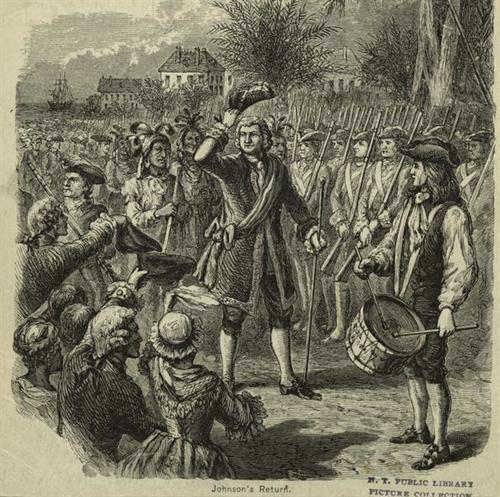
Robert Johnson arrived and took office as the Royal Governor of South Carolina.  Also on board his ship were the six Cherokee chiefs who had negotiated the treaty with the king.

Gov. Johnson's Return.

Gov. Johnson’s return with Cherokee Indian chiefs.

Johnson had also served as the last Proprietary governor of South Carolina from 1717–1719. The most important event of his first administration was the suppression of the pirates who were preying upon the commerce of South Carolina and neighboring colonies. Fitting out an expedition, he personally commanded a victorious engagement with them off the bar of Charleston, and carried on the campaign until they were exterminated and their leader. Stede Bonnet was captured.

During his second term, Governor Johnson aided General Oglethorpe and the first settlers of Georgia by giving them food and escort, and during his term the settlement of Purrysburgh, by the Swiss under Colonel Peter Purry, was made. The Commons House of Assembly erected a monument to his memory in St. Philip’s church, Charles Town.

1860, Pickens Becomes Governor.
Francis_Wilkinson_Pickens

Francis Pickens

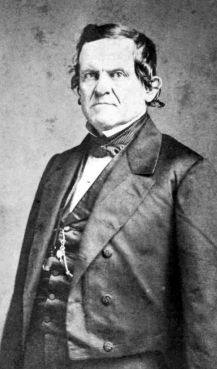
Francis Pickens became South Carolina governor, replacing William Henry Gist. Robert Barnwell Rhett was third on the first ballot. By the fifth ballot, Rhett was off the ballot altogether. It was a fatal blow to his political aspirations to lead a Southern Confederacy.

 Pickens, the former U.S. Ambassador to Russia, managed to win over the Charleston radicals by pledging a “secession now” platform.

Today In Charleston History: December 14

1743

George Lucas was named Lt. Royal Governor of Antigua. He realized that he would never live in Carolina again. He sent his oldest son, George, to Carolina to bring his family back to the island. His daughter, Eliza, who was running her father’s plantation in his absence wrote to a friend, “We expect my brother George very shortly … His arrival will, I suppose, determine how long we shall continue here.”

Eliza was horrified about leaving Carolina. She had built a successful life and did not want to leave.

1782 – British Occupation.

The British Army evacuated Charlestown.

Wholesale looting by British troops began weeks before the withdrawal, private property from houses. More than 5000 slaves were taken by enterprising British officers, who contracted transport to the West Indies where the slaves were re-sold. Major Traile of the Royal Artillery, took down the church bells of St. Michael’s and carried them away as being British property.

As significant as the material losses were, perhaps the loss of people was more devastating in the long run. Approximately, 3800 whites and 5300 blacks joined the British exodus, resettling in Jamaica, Bermuda, England and St. Lucia. However, hundreds of British soldiers deserted and remained in South Carolina.

The Continental Army entered the city that afternoon. At Gov. Rutledge’s invitation, Gen. Green made his headquarters on Rutledge’s house on Broad Street. The thirty-month nightmare occupation was over, with bitterness lingering between both sides.

british evacuate

British evacuate Charlestown

1830

The Best Friend locomotive pulled two fourteen-foot coaches with forty men at twenty miles per hour.

Best Friend of Charleston

Best Friend of Charleston

1839 – Births.

Angelina Grimke Weld gave birth to a son, Charles Stuart.

Today In Charleston History: December 13

1770 – American Revolution – Foundations.

Henry Laurens and Charles Pinckney, Junior presided over a meeting at the Liberty Tree in which the continuation of the Association was discussed. Thomas Lynch: “rode fifty miles to Charles Town and exerted all his eloquence and even the trope of Rhetorical Tears for the expiring liberties of his dear country, which the Merchants would sell like any other merchandise.” They then voted to discontinue the boycott on all items except tea, and “send a bitter letter to the northern colonies” about their conduct in breaking the Association.

The non-importation crisis had a severe economic impact on the American colonies, with a dramatic drop in imports from 1768 to 1769.

  • New York: £490, 673 to £75,930
  • Philadelphia: £441,829 to £204,978
  • New England (Boston and Rhode Island): £430,806 to £223,694
  • Carolina: £306,600 to £146,273

The stage was now set for Charlestown, and the rest of the American colonies, to shrug off their ties with the British motherland.

1891

daniel_jenkinsDaniel Jenkins discovered four small black children huddled in a railroad box car. Despite the fact that he lived in a two-room house, with his wife and four children, Jenkins brought the orphaned children to his small home. This was the incident that led to the formation of the Orphan Aid Society of Charleston, the founding of the Jenkins Orphanage, the establishment of the Jenkins Orphanage Band. Within ten years, the Jenkins Band had performed in Europe and for Pres. Teddy Roosevelt’s inauguration. They later appeared on Broadway in Uncle Tom’s Cabin, and Porgy, performed for Pres. William Howard Taft and at the Anglo-American Expo in London. They also had a hand in introducing jazz music to small towns up and down the east coast and helping to popularize a dance that became known as “the Charleston.” 

1. doin book cover (create space) official - frontFor the entire story, read my 2013 book, Doin the Charleston.

Today In Charleston History: December 12

NATIONAL POINSETTIA DAY

1851

Joel Roberts Poinsett died, a Master Mason of Solomon’s Lodge, Charleston.

poinsettPoinsett was one of the most interesting men in South Carolina history. Born in Charleston in 1779, he studied law under Henry William DeSaussure. Poinsett, however, was not interested in becoming a lawyer, and convinced his parents to allow him to go on an extended tour of Europe in 1801.  For the next several years, Poinsett traveled the European continent, from France to Italy traveling through the Alps and Switzerland. He hiked up Mount Etna on the island of Sicily.

In October 1803, Poinsett left Switzerland for Vienna, Austria, and from there journeyed to Munich. In December he received word that his father was dead, and that his sister, Susan, was seriously ill. He immediately secured passage back to Charleston. Poinsett arrived in Charleston early in 1804, months after his father had been laid to rest. Hoping to save his sister’s life, Poinsett took her on a voyage to New York, remembering how his earlier voyage to Lisbon had intensified his recovery. Yet, upon arriving in New York City, Susan Poinsett died. As the sole remaining heir, Poinsett inherited a small fortune in town houses and lots, plantations, bank stock, and “English funds.” The entire Poinsett estate was valued at a hundred thousand dollars or more.

Poinsett traveled to the Russian capital of St. Petersburg in November 1806. Levett Harris, consul of the United States at St. Petersburg, and the highest American official in the country, hoped to introduce Poinsett at court to Czar Alexander. Learning that Poinsett was from South Carolina, the Empress asked him if he would inspect the cotton factories under her patronage. Poinsett and Consul Harris traveled by sleigh to Cronstadt to see the factories. Poinsett made some suggestions on improvement, which the Dowager Empress accepted.

In January, 1807, Czar Alexander and Poinsett dined at the Palace. Czar Alexander attempted to entice Poinsett into the Russian civil or military service. Poinsett was hesitant, which prompted Alexander to advise him to “see the Empire, acquire the language, study the people”, and then decide. Always interested in travel, Poinsett accepted the invitation and left St. Petersburg in March 1807 on a journey through southern Russia. He was accompanied by his English friend Lord Royston and eight others.

JRP-SoW,_SPoinsett and Royston were among the last westerners to see Moscow before its burning in October 1812 by Napoleon’s forces. Poinsett’s company traveled to Baku on the Caspian Sea. He noted that because of the petroleum pits in the region, it had long been a spot of pilgrimage for fire-worshipers. He became one of the earliest U.S. travelers to the Middle East, where, in 1806, the Persian khan showed him a pool of petroleum, which he speculated might someday be used for fuel.

Upon his return to Moscow, a year later, Czar Alexander’s discussed the details of Poinsett’s trip with him and offered him a position as colonel in the Russian Army. However, news had reached Russia of the attack of the H.M.S. Leopard upon the Chesapeake, and war between the United States and Great Britain seemed certain. Poinsett eagerly sought to return to the United States.

Before leaving Russia, Poinsett met one last time with Czar Alexander, who expressed his approval of the energetic measures by the Congress of the United States to resist the maritime pretensions of Britain. The Czar declared that Russia and the United States should maintain the same policy of respect. Poinsett again met with Foreign Minister Count Romanzoff where the Russian disclosed to Poinsett that the Czar ardently desired to have a minister from the United States at the Russian Court.

 In 1809  Pres. James Madison appointed Poinsett as Consul in General to Chile and Argentina. Poinsett was to investigate the prospects of the revolutionists, in their struggle for independence from Spain. He returned to Charleston on May 28, 1815.

poinsettia

In 1820, Poinsett won a seat in the United States House of Representatives for the Charleston district. As a congressman, Poinsett continued to call for internal improvements, but he also advocated the maintenance of a strong army and navy. He was appointed the first American minister to Mexico in 1825, and became embroiled in the country’s political turmoil until his recall in 1830. It was during this time that he visited the area south of Mexico City around Taxco del Alarcon, where he was introduced to a Mexican plant  called “Flor de Noche Buena” (Christmas Eve flower).  Poinsett, an avid amateur botanist, sent samples of the plant home to the States and by 1836 the plant was most widely known as the “poinsettia.”

In 1830, Poinsett returned to South Carolina  to again serve in the South Carolina state legislature, from 1830 to 1831. An avowed strong Unionist, his correspondence with Pres. Andrew Jackson during the Nullification Crisis kept the president abreast of the evolving situation in their home state, helping Jackson to craft policy. In 1833, Poinsett married the widow Mary Izard Pringle (1780-1857), daughter of Ralph and Elizabeth (Stead) Izard.

Poinsett-statue

Poinsett statue in Greenville, SC

Poinsett served as Secretary of War from March 7, 1837 to March 5, 1841 and presided over the continuing removal of Indians west of the Mississippi and over the Seminole War; reduced the fragmentation of the Army by concentrating elements at central locations; equipped the light batteries of artillery regiments as authorized by the 1821 army organization act.

In 1840 he a co-founder of the National Institute for the Promotion of Science and the Useful Arts in 1840, a group of politicians advocating for the use of the “Smithson bequest” for a national museum that would showcase relics of the country and its leaders, celebrate American technology and document the national resources of North America. The group was defeated in its efforts, as other groups wanted scientists, rather than political leaders, guiding the fortunes of what would become the Smithsonian Institution.

In 1841 he retired to his plantation at Georgetown died of tuberculosis, hastened by an attack of pneumonia, in Stateburg, South Carolina in 1851, and is buried at the Church of the Holy Cross Episcopal Cemetery.

Poinsett Bridge in Traveler's Rest, SC

Poinsett Bridge in Traveler’s Rest, SC


Today In Charleston History: December 11

1861 – GREAT FIRE.

A fire started at Russell and Co.’s sash factory at the foot of Hasell Street and East Bay (present-day location of Harris Teeter). It crossed to the south side of Hasell Street and spread to Cameron and Co.’s machine shop. The fire spread quickly, fueled by a windy Nor’easter and an endless supply of wooden buildings. Another factor in the devastation was that most of the men who would have been available to fight the fire had signed up for Confederate military service and were not living in the city. Many people were able to save some of their belongings, but few could stop the fire from destroying their homes.

It left the city of Charleston in shambles and it remained in ruins for the remainder of the War.  Business was suspended and planters sent produce into town for the needy. “Soup houses” were opened to feed those left homeless and relief committees were established to house the homeless and to raise money for the victims. The effects of the fire were long lasting and rebuilding was slow during the economic depression in the decades following the War. The damage caused by the fire became associated with damages from the war.  Photographs of the burned city were often misrepresented as damage caused by Union guns. The Great Fire of 1861 did more damage to Charleston in one night than the Federal blockade and bombardment did over the next four years.

1861 fire path map. From the Post and Courier.

1861 fire path map. From the Post and Courier.

Emma Holmes, 23 –year old described the fire in her diary:

The flames swept on with inconceivable rapidity & fierceness, notwithstanding the almost superhuman efforts of the firemen … Through that awful night, we watched the weary hours at the windows and still the flames leaped madly on with demonic fury … At five a.m. the city was wrapped in a living wall of fire from the Cooper to the Ashley without a single gap t break its dread uniformity. It seemed as if the day would never dawn … when the sun rose, the fire was still raging so fiercely that its glare almost overpowered that of the sun … The wind circled in eddies, driving the flames in every direction & carrying showers of flakes to an immense distance …

1861 fire

Harper’s Weekly reported the fire, including the rampant speculation that the fire may have been started by rebellious slaves.

IT matters little, in effect, whether the burning of the city of Charleston was the fruit of accident or of negro incendiarism. The rebels are sure to ascribe the disaster to the latter cause. Secret terrors are the price of despotism : in slave countries, every noise, every cry, every unusual movement of a slave, carries apprehension to the heart of his master. At the time of the John Brown affair, Governor Wise told us that Virginia matrons living miles and miles away were beside themselves with terror. We know that so terrible was the alarm created by that trumpery attempt, that down on the Gulf shore negroes whose behavior had attracted attention were imprisoned, whipped, and even shot by scores. In the language of Southern members of Congress who talked secession in those days, life was not worth having, if accompanied by the agonies which such events implanted in every Southern breast.
It is by the light of these memories that we must read the tale of the burning of Charleston. The burning of 600 houses, including every public building in the city, and property valued at $7,000,000, is an astounding event. Whatever the politicians and the papers may say, the Southern people from Norfolk to Galveston are sure to conclude that the negroes did the dread deed, and each man and woman is now quaking in terror lest his or her house should be the next to go. Nor is this opinion likely to be confined to the whites. The slaves, too, will hear of the fire, and will hear simultaneously—for we know that news does spread among the slaves, hard as their masters try to keep them in ignorance—that between eight and ten thousand slaves, till lately the overworked laborers on Carolina cotton plantations, are now free men, getting eight and ten dollars a month. It will not exceed the negro’s power of combination to connect the two events together. When he does, beware the result.

Fire path, from Frank Leslie's Illutrated

Fire path, from Frank Leslie’s Illustrated

Meeting Street damage, Harper's Weekly

Meeting Street damage, Harper’s Weekly. Looking east from the roof of the Mills House. Circular Church ruins to the left … St. Philips to the right. Harper’s Weekly.

1900
At a public gathering, ground was broken for the construction of the South Carolina West Indian Exposition. Mayor Smythe and Gov. M.B. McSweeney spoke at ceremony. More than seven thousand people attended, arriving on trolleys, carriages and bicycles.

Today In Charleston History: December 10

1698

Affra Harleston donated 17 acres of land south of George Street to St. Philips Church, known as the “Glebe Lands,” or lands belonging to the church.

1718 – Piracy.

Stede Bonnet, Gentleman Pirate, was hanged, supervised by Col. Rhett. Bonnet stood clutching a posey of wild flowers. He was “swung off” the cart and died “the agonizing death of strangulation.” During one month’s time, the province of South Carolina executed forty-nine pirates, an unparalleled event. 

http://hdl.loc.gov/loc.pnp/cai.2a13632

Illustration from: Kate Bonnet: The Romance of a Pirate’s Daughter, 1902 – Library of Congress

Stede Bonnet execution

Stede Bonnet execution

1719 – Bloodless Revolution.

Angry Carolinians met in Charles Town and formed a Revolutionary Assembly. They refused to recognize the Proprietors’ vetoes and asked Governor Johnson to:

hold the reins of government for the King till his Majesty’s pleasure be known, for the people are determined to get rid of the oppression and arbitrary dealings of the Lords Proprietors.

Governor Johnson refused the Assembly’s request, supported the Proprietors and ordered the Assembly dissolved.

1740

In response to the catastrophic November fire, The Assembly passed an Act for Rebuilding which required all buildings to be made of brick or stone and fixed the prices of building materials.

1812

Joseph Alston was elected governor of South Carolina.

1843 – Marriage.
Mary Baker Eddy, 1850

Mary Baker Eddy, 1850

Mary Baker Eddy married George Washington Glover, a Charleston businessman, in her family’s home in Boston. They moved to Charleston for a short period, living in his home at 51 Hasell Street.   In June 1844, after six months of marriage, Glover died of yellow fever during a business trip to Wilmington. Eddy who was with him in Wilmington was six months pregnant and had to make her way back to New Hampshire, 1,400 miles by train and steamboat, where her only child, George Washington II, was born on 12 September in her father’s home. In the 1860s Eddy founded the Christian Science religion. 

Today In Charleston History: December 9

1773 – Charleston Firsts. Chamber of Commerce

On December 9, 1773, the Charlestown Chamber of Commerce was organized at Mrs. Swallows’ Tavern on Broad Street.

The formation of the Chamber can be traced back to the economic stress the British Empire suffered after the Seven Years’ War (the French and Indian War). The victory over the French had come at a high cost, so Parliament passed the 1764 Sugar Acts and the 1765 Stamp Act in an attempt to pay the debt run up during the war. The Stamp Act required that most printed materials in the colonies be produced on “stamped paper” – an embossed revenue mark. Those included newspapers, legal documents, playing cards and magazines.

It was within this volatile atmosphere of political upheaval and business uncertainty that a group of Charleston businessmen met at Mrs. Swallows Tavern and organized the Chamber of Commerce. Today it is called the Charleston Metro Chamber of Commerce.

1777 – American Revolution.

Henry Laurens’ term as President of the Continental Congress ended. He was elected after John Hancock’s retirement due to ill health. During his term, Laurens dealt with the conspiracy to replace George Washington as commander-in-chief, perpetuated by several members of Congress and the military.

1806 – Elections

Charles Pinckney was elected to his third term as governor.

1911

John Olmsted delivered a set of plans for Hampton Park.

John Charles Olmsted was the nephew and adopted son of Frederick Law Olmsted, was an American landscape architect. With his brother, Frederick Law Olmsted, Jr., he founded Olmsted Brothers, a landscape design firm in Brookline, Massachusetts. The firm is famous for designing many urban parks, college campuses, and other public places. John Olmsted’s body of work from over 40 years

John Olmsted

John Olmsted

as a landscape architect has left its mark on the American urban landscape, carrying his design philosophy of integrated park systems into new cities such as Portland, Maine; Portland, Oregon; Seattle, Spokane, Dayton, and, f course, Charleston. In these cities, he pioneered his comprehensive planning philosophy of integrating civic buildings, roads, parks, and greenspaces into livable urban areas.

Olmsted also designed individual parks in New Orleans; Watertown, New York; and Chicago. His work in park design led to commissions for numerous institutions such as school campuses, civic buildings, and state capitols, as well as designs for large residential areas, including roads and schools. His work in comprehensive planning for the communities surrounding industrial plants and factories is considered especially noteworthy.

Today In Charleston History: December 8

1769 England  – John Wilkes Affair.

The South Carolina Assembly voted to send to £1500 sterling to help pay the debts of John Wilkes “for the support of the just and constitutional rights and liberties of the people of Great Britain and America.”  (See November 21 post for explanation of the John Wilkes affair.)

The Sons of Liberty, who met at the Liberty Tree, considered this part of “their resistance to the arbitrary rule by the same Parliament that had imposed unconstitutional taxes on America.” At the behest of Christopher Gadsden, the Assembly ordered Jacob Motte, the public Treasurer, to send £10,500 provincial currency to the John Wilkes Fund in London “for assisting in the support of the just and constitutional rights of the People of Great Britain and America.” Only seven members of the Assembly voted against the measure, including Speaker Peter Manigault. This action shocked and infuriated government officials in both London and Charlestown, as it undermined official authority over the financial purse-strings of the colony.

1808
Langdon Cheves

Langdon Cheves

Langdon Cheves was elected Attorney General of South Carolina. He would later be elected to the House of Representatives and served as Speaker of the House 1814-15.

1817

John C. Calhoun took the oath of office as Secretary of War under Pres. James Monroe.

1822 – Slavery.

Intendent (Mayor) James Hamilton introduced a bill to grant “compensation [to] those persons whose slaves have been executed” associated with the Denmark Vesey Rebellion – $122.40 for each slave. 

1864 – Bombardment of Charleston. 
Gen. John G. Foster

Gen. John G. Foster

Gen. John G. Foster, in command of the Department of the South, acknowledged the Federal order to discontinue the bombardment of Charleston … two weeks after receiving it.

Today In Charleston History: December 7

1785
Dr. David Ramsay

Dr. David Ramsay

Dr. David Ramsay published his two-volume History of the Revolution of South Carolina. In an attempt to gain maximum profits, he paid for the printing himself – 3200 copies printed by Issac Collins of Trenton, New Jersey. It was also the first book to receive a copyright in the United States. 


1808
Charles Cotesworth Pinckney

Charles Cotesworth Pinckney

James Madison defeated the Federalist candidate Charles Cotesworth Pinckney for the Presidency of the United States. Madison received 122 electoral votes to Pinckney’s forty-seven. Once again, Pinckney did not carry his home state of South Carolina.