Today In Charleston History: January 9

 1803 – Births.
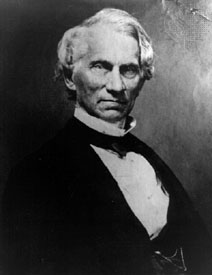
memminger

Christopher Memminger

Christopher Gustavus Memminger was born in Vaihingen an der Enz, Germany. His father, Gottfried Memminger, a military officer, died in combat a month after his son’s birth. Eberhardina Kohler Memminger, and her son Christopher immigrated to Charleston. He was placed in the Charleston Orphan House at age five after his mother died of yellow fever. It was noted by the Orphan officials that Christopher showed “a great native genius, particularly in mathematics.”

 At age ten, Memminger was taken in by Thomas Bennett, Jr.and two years later, he enrolled in South Carolina College (University of South Carolina) and graduated second in his class at age sixteen. He became a prominent lawyer and politician. He served as the first Treasurer of the Confederacy.

1861 – Secession.

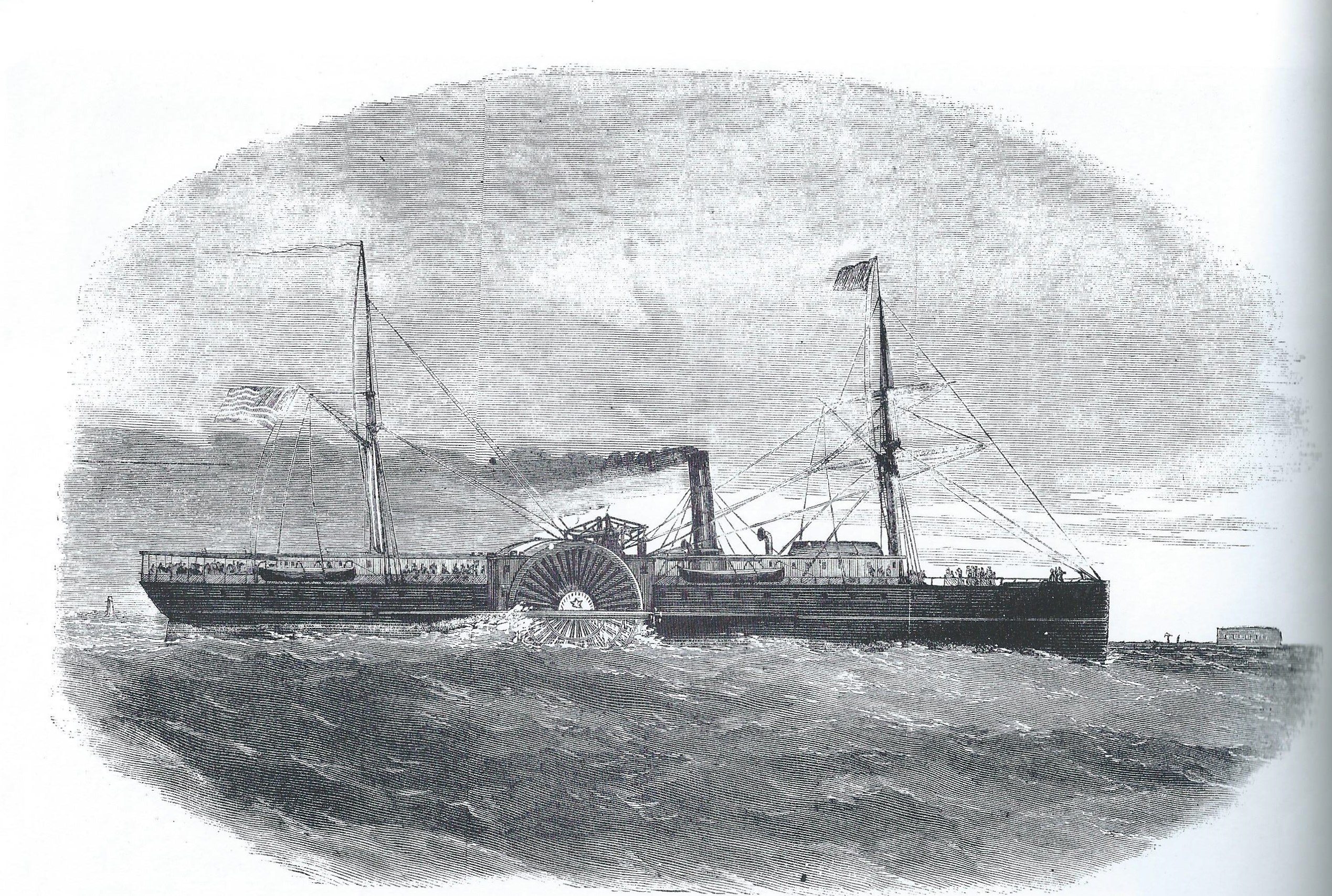
The Union merchant ship, Star of the West, was fired upon as it tried to deliver supplies to Fort Sumter in Charleston Harbor. The Star, built by Cornelius Vanderbilt, was a 1,172 ton, two-deck steamship, a length of 228.3 feet (69.6 m) and a beam of 32.7 feet (10.0 m) and with wooden hullside paddle wheels and two masts.

star of the west

Star of the West

When South Carolina seceded on December 20, 1860, it demanded the immediate withdrawal of the Federal garrison at Fort Sumter. President James Buchanan refused to comply with this demand, but was also careful not to make any provocative move. Inside the fort, Major Robert Anderson and his 80 soldiers needed supplies so Buchanan decided, in order to keep tensions from erupting even more, to dispatch an unarmed civilian ship, Star of the West, instead of a military transport.

The Star left New York on January 5, 1861. After the ship was en route, Secretary of War Joseph Holt received a dispatch from Anderson saying supplies were not needed immediately. Holt realized that the ship may be in danger and war might erupt. He tried in vain to recall the Star of the West, and Anderson was not aware that the ship continued on its way.

The Charleston Mercury newspaper wrote on January 6:

Despatches from New York say that the steamer Star of the West of the Panama line, coaled up yesterday with unusual celerity. The rumor is that she is to carry troops to Charleston, but this is ridiculed at the Steamship Company’s Office.

On January 8 the Mercury reported, in all capital letters:

UNITED STATES TROOPS HASTENING FROM ALL POINTS SOUTHWARD. THE STAR OF THE WEST, WITH REINFORCEMENT FOR ANDERSON, DUE HERE TODAY.

The people of Charleston were feverish with excitement. They spent the afternoon sitting on the roofs of mansions with spyglasses staring out at sea.

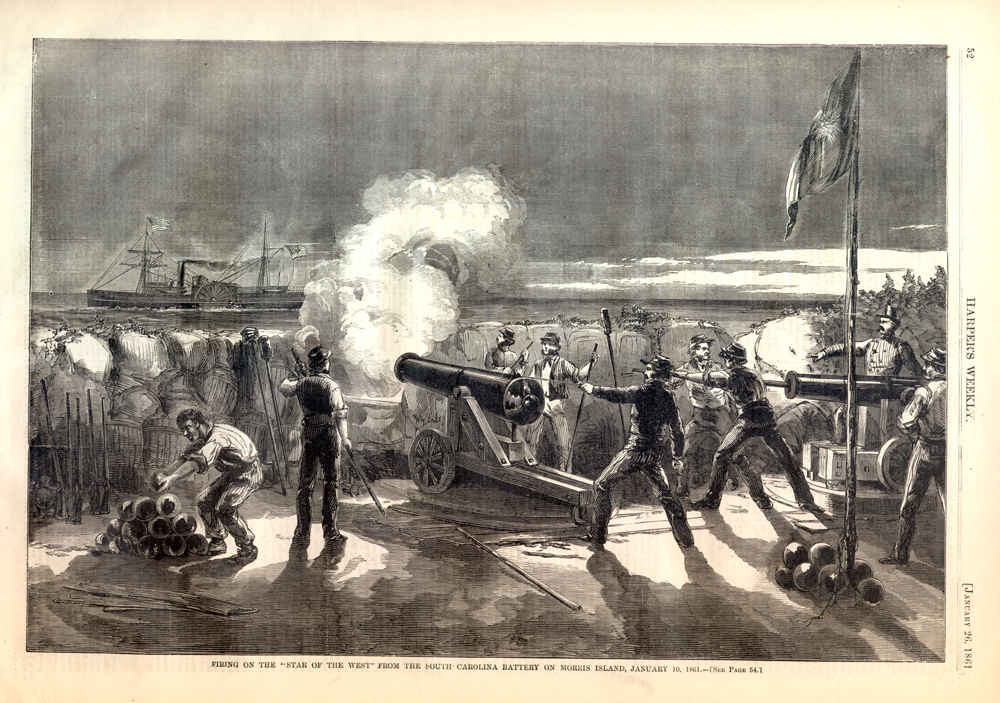
A few minutes past six in the morning of January 9, Star of the West captain John McGowan steered the ship into the channel near the fort, passing Morris Island.  A week before, South Carolina governor Francis Pickens had ordered a hastily-built battery on the island, on the site of an abandoned hospital. Manned by about 200 infantrymen and about fifty Citadel cadets, trained in artillery usage. During that frantic week, the cadets had managed to build a battery of 24-pounders, facing east, hidden behind sand dunes and sand bags.

It was just after Reveille when the sentries on Morris Island spied the Star of the West . Major Peter F. Stevens gave the order, “Commence firing.” Two cannon shots roared from a South Carolina battery on Morris Island. the shots skipped in front of the Star and splashed harmlessly into the water. They came from cadet gunner George E. Haynsworth.  In all, seventeen shots were fired and the Star suffered a minor hit. Not being a military vessel and never before been engaged in battle, Capt. John McGowan decided to turn around and exit the harbor. From the beginning to end the entire episode had lasted forty-five minutes.

Firing on the Star of the West - Harper's Weekly.

Firing on the Star of the West – Harper’s Weekly.

 The next day the Charleston Mercury crowed: 

Yesterday will be remembered in history. The expulsion of the Star of the West from Charleston Harbor yesterday morning was the opening ball of the Revolution. We are proud that our harbor has been so honored. The State of South Carolina, so long and so bitterly reviled and scoffed at has thrown back her enemies.

Lt. Smith on the Star of the West humorously wrote:

The people of Charleston pride themselves on their hospitality, but it exceeded my expectations. They gave us several balls before we landed.

Today In Charleston History: January 7

1665
Sir John Yeamans

Sir John Yeamans

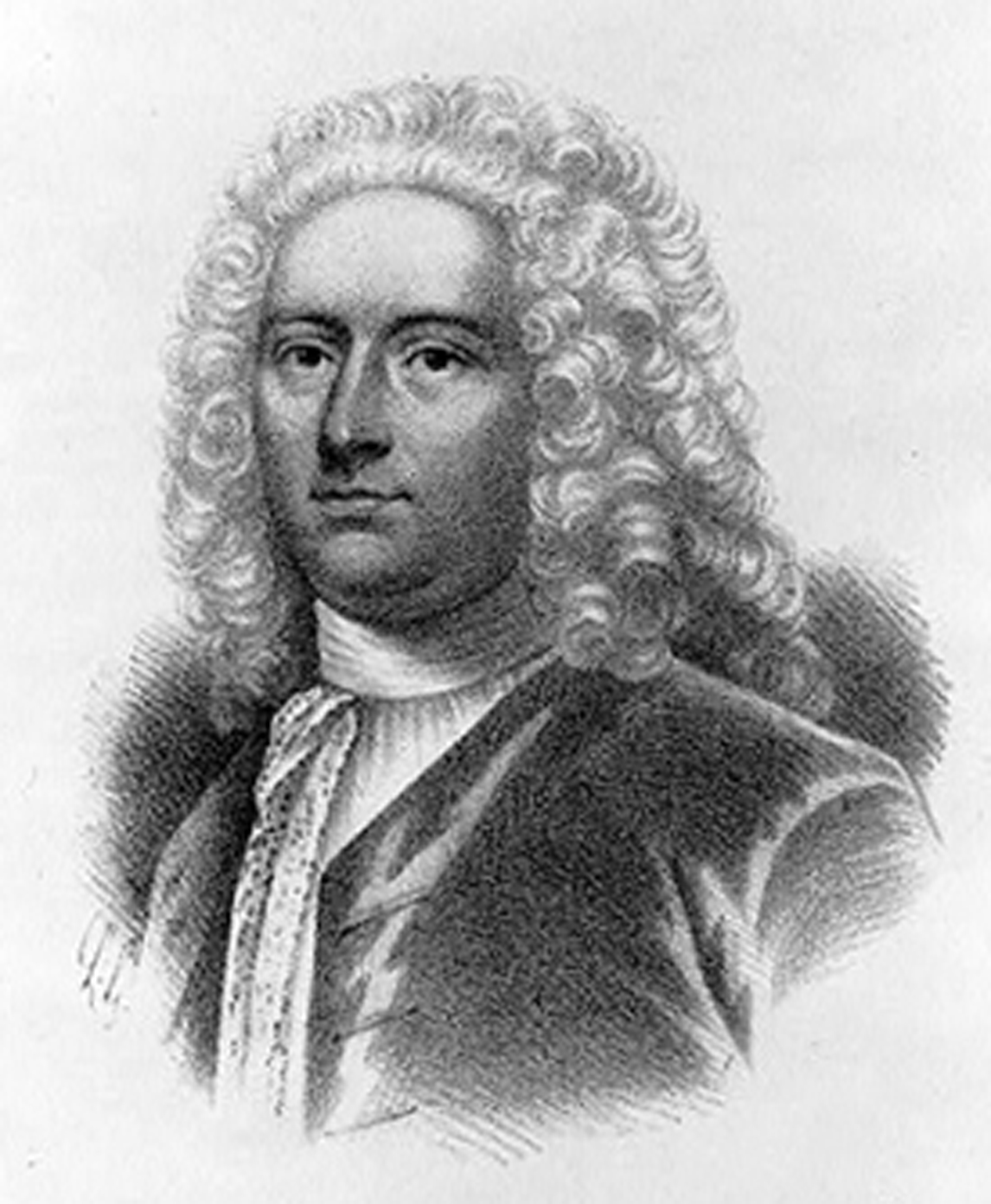
The Concessions and Agreements between the Lords Proprietors and Sir John and William Yeamans was finalized. This document provided the guidelines for governing and distributing land in Carolina. John became a governor of the fledgling colony and one of its most vital founding fathers. 

1864 – Bombardment of Charleston

The chief commissary gave Gen. P.G.T. Beauregard a report on the availability of meat:

My report of stores on hand made this day shows the stock of meats. The results are not encouraging, and future prospects are bad. Cattle are very scarce. It is said many hogs have died of an epidemic … I respectfully suggest that an order be promptly issued restricting the shipment of all subsistence out of the state … without an early remedy it will be very difficult to get bread before the year closes.

    1865 – Bombardment of Charleston

Five shells were thrown into Charleston, the first since December 20.

Today In Charleston History: January 6

1740 – Religion

George Whitefield

Rev. George Whitefield arrived in Charlestown for the second time, to visit his brother, the captain of ship. By this time, Whitefield was one of the most famous recognized public figures in colonial America, drawing massive, passionate crowds (10,000+) to his open air services and field services in New York and Philadelphia. His radical methods made traditional clergy uncomfortable.

He preached from the pulpit of Josiah smith’s Independent Meeting House and accused the people in attendance of “sin and worldliness” and being “polite and unaffected.” He called upon their sins of “affected finery, gaiety of dress … and balls and assemblies.” He promised them that “God intended to visit some in Charlestown with His salvation.”

1861

A workman at Ft. Sumter brought a Northern newspaper with the news that the Star of the West was en route to Charleston. Maj. Robert Anderson and Capt. Abner Doubleday, ranking officers at Sumter, not having received official confirmation, concluded the story was false, since Washington would send a warship, not a civilian steamer.  

1864 – Bombardment of Charleston  

Maj. Henry Bryan, Confederate assistant inspector-general, reported that the damage from Federal Bombardment included:

  • 145 houses
  • Five people killed
  • Eight wounded

Thomas Hale, Confederate military observer in the steeple of St. Michael’s, wrote that:

The enemy’s principal line of fire upon the city has been St. Michael’s church steeple, radiating north-eastward as far as St. Phillips church … their shells usually landing no further west than Archdale St.

Archdale Street - damage from 1861 fire and Federal bombardment. St. Johns Lutheran & Unitarian Churches.

Archdale Street – damage from 1861 fire and Federal bombardment. St. Johns Lutheran & Unitarian Churches.

1874

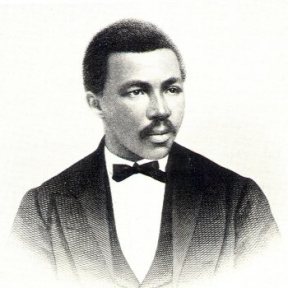
South Carolina representative Robert B. Elliott delivers a passionate speech in favor of Charles Sumner’s Civil Rights Act in the House of Representatives. The Act, which guaranteed equal treatment in all places of public accommodation to all people regardless of their “nativity, race, color, or persuasion, religious or political,” was passed on March 1, 1875. 

elliott_robert loc

Robert Elliott. Library of Congress

Elliott’s speech gained national attention as he rebuffed opponents of the bill, who argued that federal enforcement of civil rights was unconstitutional. Responding to former Confederate Vice President Alexander Stephens of Georgia, who had been re–elected to the House, Elliott reaffirmed his belief in the right and duty of Congress to legislate against discrimination. He concluded by evoking the sacrifices made during the Civil War and asserting that its true purpose was to obtain civil rights for all Americans, including women, who experienced discrimination. 

Before a packed House, Elliott stated his universal support for civil rights,

“I regret, sir, that the dark hue of my skin may lend a color to the imputation that I am controlled by motives personal to myself in my advocacy of this great measure of national justice. The motive that impels me is restricted to no such boundary, but is as broad as your Constitution. I advocate it because it is right.”

Elliott’s youthful appearance and the “harmony of his delivery” contrasted sharply with those of the elderly Stephens, who, confined to a wheelchair, dryly read a prepared speech. The Chicago Tribune published a glowing review, noting that “fair–skinned men in Congress … might learn something from this black man.”

With a legislative style more flamboyant and aggressive than his predecessors’, and considerable oratorical skills, young, talented Robert Elliott regularly dazzled audiences. Possessing a strong, clear voice “suggestive of large experience in outdoor speaking,” Elliott fought passionately to pass a comprehensive civil rights bill in his two terms in Congress. However, his fealty to the South Carolina Republican Party led him to resign his seat in the U.S. House of Representatives to serve the state government in Columbia. Elliott’s classical education, photographic memory, and obsession with politics impressed contemporary observers.

Today In Charleston History: January 3

1840 – Religion

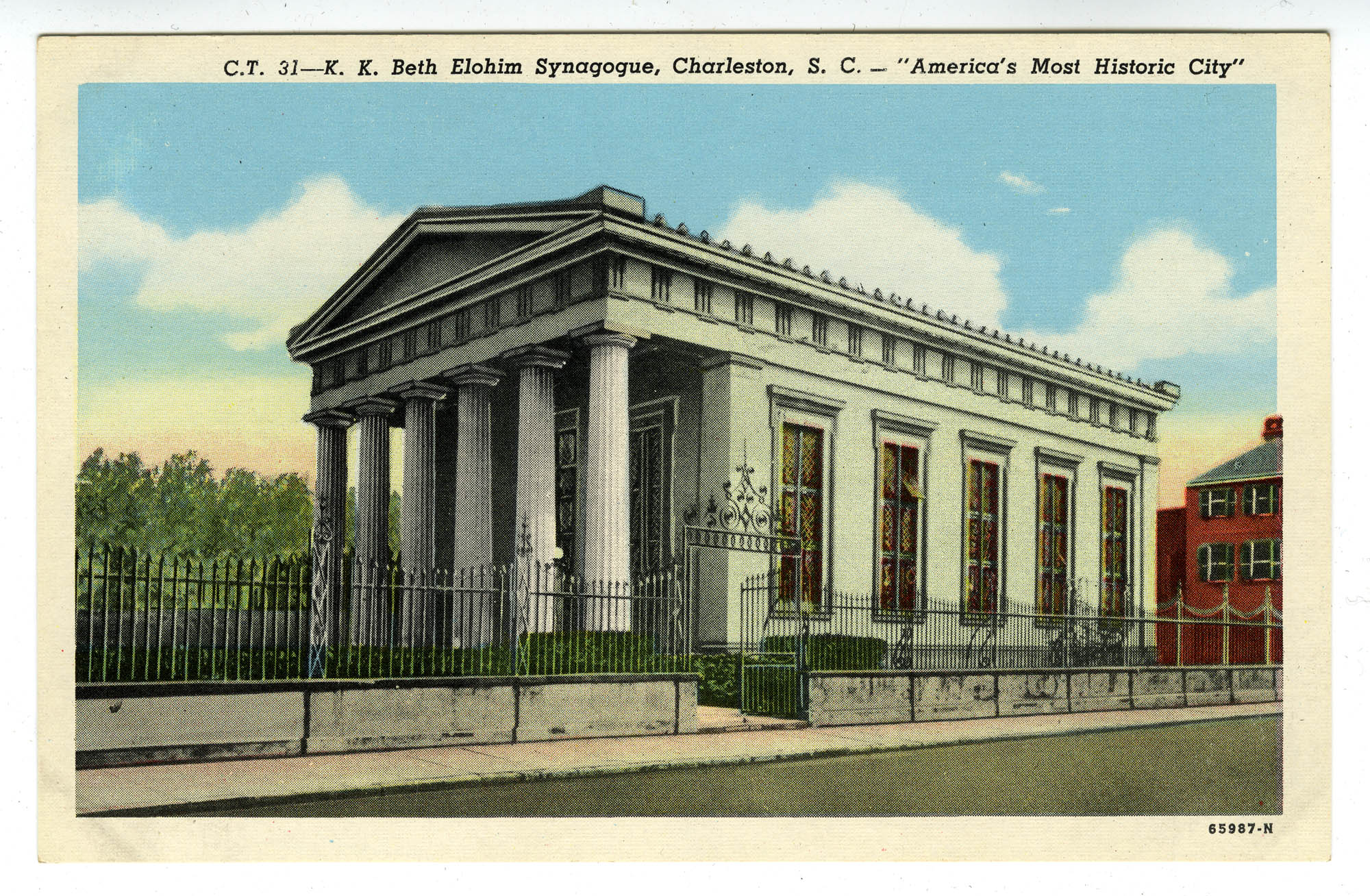
The ceremony for the laying of cornerstones for the new Beth Elohim synagogue on Hasell Street took place.

Kahal Kadosh Beth Elohim, (Holy Congregation House of God) was organized in 1749 making it the fourth oldest Jewish congregation in the continental United States (after New York, Newport and Savannah). Prayers were initially recited in private quarters and in 1775 an improvised synagogue adjacent to the present-day grounds was constructed.In 1792 America’s “largest and most impressive” synagogue was constructed which was destroyed in the great Charleston fire of 1838 and replaced in 1840 on the same Hasell Street site by the Greek Revival structure in use today.

Today, KKBE has the second oldest synagogue building In the United States and the oldest in continuous use. It was designated a National Historic Landmark in 1980.

kkbe

1864

 Captain Walpole, commander of the Confederate outpost on John’s Island, captured a “mulatto fellow” who claimed to be the cook of Union General Gillmore. He reported that 18,000 troops were being removed from the Charleston area.

Today In History: January 1

1787 – Deaths  
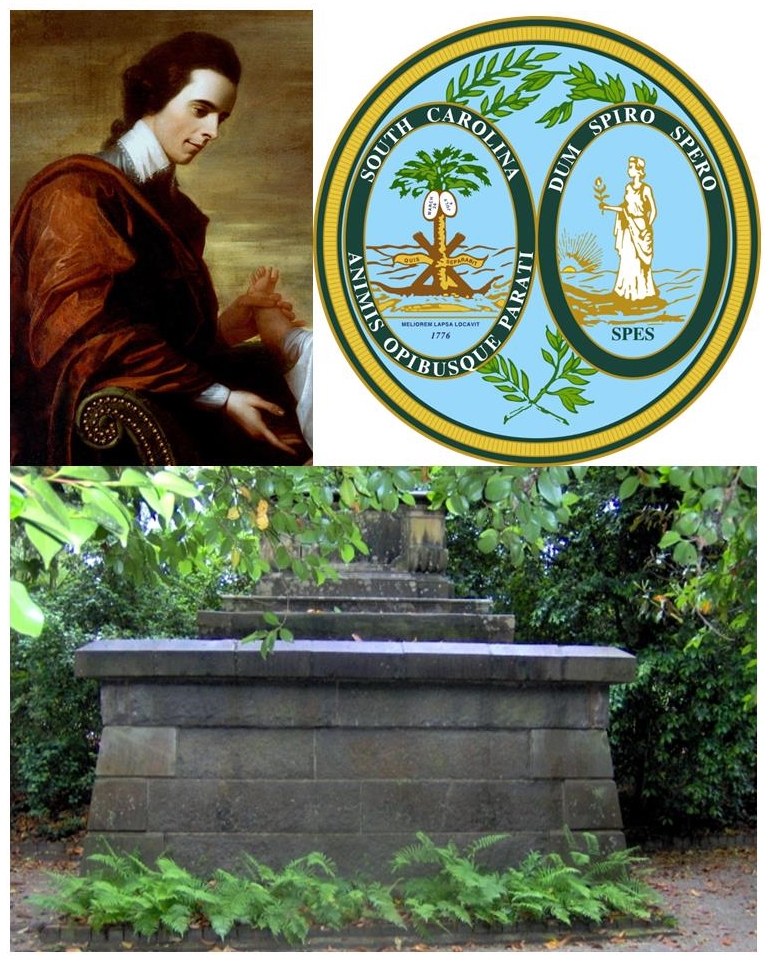
TOP: Arthur Middleton & the Great Seal of South Carolina BOTTOM: Middleton tomb at Middleton Place

TOP: Arthur Middleton & the Great Seal of South Carolina BOTTOM: Middleton tomb at Middleton Place

Arthur Middleton died and was buried at Middleton Plantation. The death notice from the State Gazette of South-Carolina described him as a “tender husband and parent, humane master, steady unshaken patriot, the gentleman, and the scholar.”

He was educated in Britain, at Westminster School, and Trinity Hall, Cambridge.He then studied law at the Middle Temple and traveled extensively in Europe where his taste in literature, music, and art was developed and refined. In 1764, Arthur and his bride Mary Izard settled at Middleton Place.

Arthur Middleton was one of the more radical thinkers in South Carolina politics – a leader of the American Party in Carolina and one of the boldest members of the Council of Safety and its Secret Committee. His attitude toward Loyalists was said to be ruthless. In 1776, Arthur signed the United States Declaration of Independence and designed the Great Seal of South Carolina with William Henry Drayton.  

During the American Revolutionary War, Arthur served in the defense of Charleston. After the city’s fall to the British in 1780, he was one of the 30+ Patriot leaders imprisoned in St. Augustine, Florida.

1788

The City Gazette reported that a man “was paraded through the streets, covered with feathers, stuck in a coat of tar, as a spectacle for the execration of others more honest than himself.

No, it was not a drunken New Years Eve celebration. Apparently, the man had gone “on board of a vessel, where he saw some goods so bewitching as to induce him to break at least one of the commandments, which says ‘Thou shalt not steal.’”

1808 – Slavery.

African American History Slave Ships The foreign slave trade ended by Federal law, as negotiated during the creation of the U.S. Constitution. When the US Constitution was written in 1787, a generally overlooked and peculiar provision was included in Article I, the part of the document dealing with the duties of the legislative branch:

Section 9. The migration or importation of such persons as any of the states now existing shall think proper to admit, shall not be prohibited by the Congress prior to the year one thousand eight hundred and eight, but a tax or duty may be imposed on such importation, not exceeding ten dollars for each person.

 In other words, the government could not ban the importation of enslaved people for 20 years after the adoption of the Constitution. And as the designated year 1808 approached, those opposed to enslavement began making plans for legislation that would outlaw the trans-Atlantic trade of enslaved people.

1865 – Civil War

Maj. John Johnson, a Confederate engineer wrote, “The first of January 1865, found Charleston gathered within her circle of defenses – Not invested, but much perplexed.”

Today In Charleston History: December 31

1738

By the end of the year the city had completed a hospital on “an acre of … Land called the old Burying Ground, lying on the back Part of Charles Town” – along Mazyck Street (now Logan). The hospital would also serve as a “Workhouse and House of Correction.”  

1781 –England, Tower of London

Henry Laurens was released from the Tower, in exchange for Lord Cornwallis and the payment of £12,000. Edward Rutledge had forcefully argued against Cornwallis’ release. Most South Carolina patriots blamed Cornwallis for the wholesale murder and plundering across the state. Rutledge wrote that Cornwallis should be “held a Prisoner for Life … because he was a Monster and an Enemy to Humanity.”

On the day of his release Laurens wrote:

On the 31st of December, being, as I had long been, in an extreme ill state of health, unable to rise from my bed, I was carried out of the Tower to the presence of the Lord Chief Justice of England, and admitted to bail “to appear at the court of king’s bench on the first day of Easter term, and not to depart thence without leave of the court.

Laurens immediately sent for his daughters to join him from France in London. He then went for several weeks to recuperate with the waters of Bath. 

Tower of London; Laurens marker. Photo by author.

Tower of London; Laurens marker. Photos by Mark R. Jones.

1799 – Slavery, Denmark Vesey Rebellion

On the last day of the 18th century, Denmark Vesey handed over one-third of his earnings from the lottery. In return he was handed his manumission papers, signed by Capt. Joseph Vesey. To Denmark the future looked bright. As Archibald Grimke, a Charleston mulatto and Denmark’s first biographer, wrote, Vesey was:

In possession of a fairly good education – was able to read and write, and to speak with fluency the French and English languages … [and had] obtained a wealth of valuable experience.  

At that time, the total free black population in South Carolina was 3,185, the majority of them being of mixed race ancestry – called Browns.  After being a dark-skinned slave for seventeen years in Charleston, Denmark, at thirty-three years of age, entered the 19th century as a free black man.

1864 – Civil War    
pgt beaureard

P.G.T. Beauregard

Gen. P.G.T. Beauregard left Charleston to inspect what was left of Gen. Hood’s army in Georgia. Gen. Hardee’s Georgia troops withdrew into South Carolina. Beauregard ordered:

You will apply to the defense of Charleston the same principle applied to that of Savannah – that is, defend it as long as compatible with the safety of your forces … The fall of Charleston would necessarily be a terrible blow to the Confederacy, but its fall with the loss of its brave garrison would be still more fatal to our cause.

      Gen. Willliam T. Sherman communicated with Admiral Porter off the North Carolina coast, “The President’s anxiety to take Charleston may induce Grant to order me to operate on Charleston.”


Today In Charleston History: December 28

1698

Affra Harleston’s will, divided her estate between her nephew, John Harleston, and her husband’s half-nephew, Elias Ball.

1722 – Births

Elizabeth Lucas (known as “Eliza) was born in Antigua, West Indies at Cabbage Tree Plantation. It was customary for elite colonists to send boys to England for their education. Her father, Lieut.-Colonel George Lucas, recognized Eliza’s intelligence and against the custom of the time, sent her to boarding school in London at age eight. Her favorite subject was botany.  She wrote to her father that she felt her “education, which I esteem a more valuable fortune than any you could have given me, will make me happy through my future.”

1748

The Charlestown Library Society was organized by seventeen young gentlemen of various trades and professions who wished to avail themselves of the latest publications from Great Britain. At first, the elected librarians safeguarded the Library’s materials in their homes. From 1765 until 1778, it resided in the upstairs of Gabriel Manigault’s liquor warehouse.

In 1792, the collection was transferred to the upper floor of the Statehouse, currently the County Courthouse at Broad and Meeting. From 1835 until its 1914 move to the current King Street location, the Charleston Library Society occupied the Bank of South Carolina building at the corner of Church and Broad Streets. That building was paid for with “Brick” memberships, a permanent membership for a one-time lump sum: several of these memberships are still in use, generations later, by Charleston families.

1773

Surveyor for the Southern District of North America, William Gerard de Brahm, sent a report to his Majesty which said:

The city of Charlestown is in every respect the most eminent and by far the richest city in the Southern District of North America; it contains about 1500, and most of them big houses, arrayed by straight, broad and regular streets; the principal of them is seventy-two feet wide call’d Broad Street, is decorated, besides many fine houses, with a State house near the centre of said street, constructed to contain two rooms, one of the Governor and Council, th’ other for the Representative of the people, the Secretary’s office, and a Court room; opposite the state House is the Armory-house, item St. Michael’s Church, whose steeple is 192 foot high, and seen by vessels at sea before they make any land; also with a new Exchange on the east end of said street upon the bay; all four buildings have been rais’d since the year 1752, an no expense spared to make them solide, convenient and elegant.

The city is inhabited by above 12,000 souls, more than half are Negroes and Mulattoes; the city is divided in two parishes, has two churches, St. Michaels and St. Philips, and six meeting-houses, vid, an Independent, a Presbyterian, a French, a German and two Baptists. There is also an assembly for Quakers, and another for Jews, all which are composed of several nations.

Charleston, circa 1780

Charleston, circa 1780

1832 – Nullification Crisis

John C. Calhoun resigned as Vice President to take Sen. Robert Hayne’s vacated seat in the U.S. Senate. It was a coordinated political move as a response to the Nullification Crisis and perceived heavy Federal hand of Pres. Andrew Jackson. 

1864 – Civil War    

Gen Henry Halleck, Army chief of staff wrote to Gen. William Sherman, who was in Savannah after burning through Georgia:

 … should you capture Charleston, I hope by some accident that the place be destroyed, and if a little salt should be sown on the site it may prevent the future growth of nullification and secession.

Today In Charleston History: December 21

1800 – Birth.

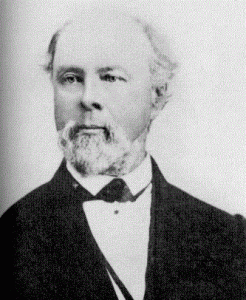
Robert Barnwell Smith (Rhett) was born. 

Rhett2-246x300After entering public life Robert Smith changed his last name for that of his prominent colonial ancestor Colonel William Rhett.  He studied law and became a member of the South Carolina legislature in 1826 and also served as South Carolina attorney general (1832), U.S. representative (1837–1849), and U.S. senator (1850–1852). He was pro-Southern extremist he split (1844) and one of the leading fire-eaters at the Nashville Convention of 1850, which failed to endorse his aim of secession for the whole South.

One of the original “Fire-Eaters” Rhett was was dubbed the ‘Father of Secession’ and called the ‘Lone Star of Disunion’ by his enemies in the Whig Party. In her famous diary, Mary Chesnut called Rhett “the greatest of seceders.”  During the War Rhett continued to express his radical views  through editorials in the Charleston Mercury newspaper, edited by his son. After the other Southern secession in 1861, Rhett was considered one of the leading candidates for President of the Confederate States. bit In the end, he was viewed as too radical for the position and the more conservative Jefferson Davis was selected as chief executive. 

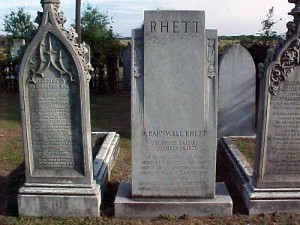
Robert-Barnwell-Rhetts-grave-300x225Rhett was critical of the Confederate Government for many reasons, including government intervention in the economy. He had previously envisioned a Confederacy that also included the Caribbean and even Brazil, but the Confederate States didn’t live up to Rhett’s dream and criticized Jefferson Davis’ adminstration as strongly as he had once criticized Washington, DC. After the War Rhett refused to apply for a Federal pardon. He died of cancer in 1876 and is buried in Magnolia Cemetery in Charleston.

1842

The Citadel, a military college, was founded in response to the Denmark Vesey rebellion. Charleston City Council established a “municipal force of 150 men … for an arsenal, or a ‘Citadel’ to protect the preserve the public property and safety.” 

1860. Day After Secession.

     The celebrations continued through the night until the sun was rising over Charleston harbor. That evening another parade of brass bands and militia units marched through the street. They stopped in front of the Mills House, where Gov. Pickens addressed the crowd:

Allow me to say to you that I hope and trust I am in possession of information that, perhaps, there may be no appeal to force on the part of the Federal authorities. If I am mistaken in this, at least as far as I am concerned, we are prepared to meet any and every issue. 

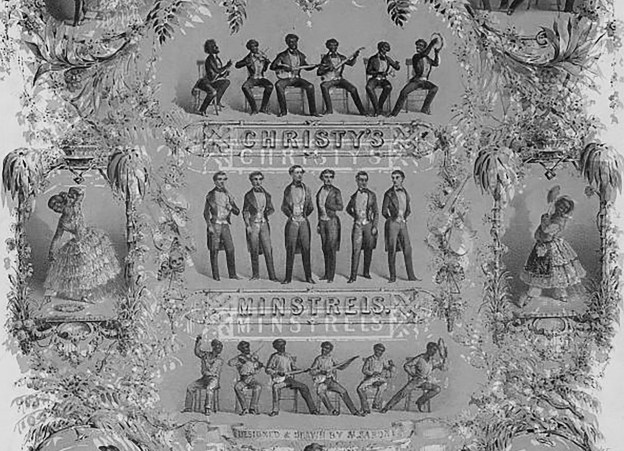
         Christy’s Minstrels, in town from New York for a series of performances at Institute Hall, entertained the crowd with their famous blackface version of “Dixie,” followed by a rousing version of the La Marseillaise.

christy minstels

1891  – Jenkins Orphanage  

Daniel Jenkins preached a sermon at the New Tabernacle Fourth Baptist Church titled “The Harvest is Great by the Laborers Are Few.” It was an appeal to the congregation to “to help these and other unfortunate children.” The congregation was just a poor as Jenkins. The donated money did not last long; it paid for some food and clothing and the rental of a small shack at 660 King Street.

Today In Charleston History: December 20

1752

King George II confirmed the charter of the Two-Bit Club at the Court of St. James. Soon afterward, the name was changed to the South Carolina Society and began including non-French members.

1782 – Slavery

Capt. Joseph Vesey returned to Charlestown with his wife, Kezia, their son John and Vesey’s personal servant / cabin boy, sixteen year-old Telemaque.

1783

The first theatrical performance in Charleston after the British evacuation was held in the Exchange Building.

1800 – Slavery

 A law was passed making it more difficult to emancipate slaves. Also passed was “An Act Respecting Slaves, Free Negroes, Mulattoes and Mestizoes” which permitted blacks to gather for religious worship only after the “rising of the sun and before the going down of the same … a majority [of the congregation] shall be white persons.”

Perhaps thinking that the “Christianization [sic] of the city’s black labor force would have a stabilizing effect,”  the white authorities ignored late night church meetings among all black congregations for many years.

1826

The South Carolina Jockey Club was formed.

1860 – Secession

On this day, a secession convention meeting in Charleston, South Carolina, unanimously adopted an ordinance dissolving the connection between South Carolina and the United States of America.

Click here to read the Charleston Mercury’s account of secession. 

Nina Glover, in Charleston, wrote to her daughter, Mrs. C. J. Bowen, “The Union is being dissolved in tears. The feeling exhibited was intense; each man, through the day, as he met his neighbor, anxiously asked if the Ordinance had yet passed.”

By mid-morning a large crowd of thousands had gathered on Broad Street in front of St. Andrew’s Hall. The Charleston police guard stood in front of the closed and locked doors. 

st andrews hall - ext

The ordinance, written by Christopher Memminger, was a simple but direct statement. John Ingliss claimed that it meant: “in the fewest and simplest words possible to be uses … all that is necessary to effect the end proposed and no more.”

 The call of the roll started at 1:07 P.M. and ended at 1:15, with every delegate voting “yea,” a unanimous vote – eight minutes to vote to “dissolve” the Union. From a window at St. Andrew’s a signal was flashed to the crowd. Then, according to Rev. Anthony Toomer Porter:

 A mighty shout arose. It rose higher and higher until it was the roar of a tempest. It spread from end to end of the city, for all were of one mind. No man living could have stood the excitement.

The Mercury had received a draft copy of the ordinance, by 1:20 P.M., five minutes after the vote concluded, the “extra” was on the streets. During the day, tens of thousands of copies of the “extra” were printed.  Perry O’Bryan’s telegraph office wired the news to the rest of the nation.

dissolved

Upon the signing of the Ordinance, all the church bells in the city began to ring. James Petigru asked a passerby, “Where’s the fire?” The man responded, “Mr. Petigru, there is no fire; those are the joy bells in honor of the passage of the Ordinance of Secession.”

 Petigru responded, “I tell you there is a fire. They have this day set a blazing torch to the temple of constitutional liberty, and please God, we shall have no more peace forever.”    

Across the city, celebrations continued through the day. Elderly men donned the uniforms of their volunteer units and marched, shouting the news to all the neighborhoods. A man in a golden helmet trotted a horse around the city, a copy of the ordinance held aloft. Men gathered around Calhoun’s grave and vowed to “devote their lives, their fortunes, and their sacred honor, to the cause of South Carolina independence.”

The text of the Ordinance:

The State of South Carolina

At a Convention of the People of the State of South Carolina, begun and holden at Columbia on the Seventeenth day of December in the year or our Lord one thousand eight hundred and sixty and thence continued by adjournment to Charleston, and there by divers adjournments to the Twentieth day of December in the same year –

An Ordinance To dissolve the Union between the State of South Carolina and other States united with her under the compact entitled “The Constitution of the United States of America.”

We, the People of the State of South Carolina, in Convention assembled do declare and ordain, and it is hereby declared and ordained, That the Ordinance adopted by us in Convention, on the twenty-third day of May in the year of our Lord One Thousand Seven hundred and eight-eight, whereby the Constitution of the United State of America was ratified, and also all Acts and parts of Acts of the General Assembly of this State, ratifying amendment of the said Constitution, are here by repealed; and that the union now subsisting between South Carolina and other States, under the name of “The United States of America,” is hereby dissolved.

Done at Charleston, the twentieth day of December, in the year of our Lord one thousand eight hundred and sixty.

Jacob Shirmer, a Union man like Petigru, prophetically wrote in his diary:

This is the commencement of the dissolution of the Union that has been the pride and glory of the whole world, and after a few years, we will find the beautiful structure broke up into as many pieces as there are now States, and jealously and discord will be all over the land.

Robert Gourdin wrote to John W. Ellis, governor of North Carolina:

Before the sun sets this day, South Carolina will have assumed the powers delegated to the federal government and taken her place among the nations as an independent power. God save the State.

We may, if possible, avoid collision with the general government, while we negotiate the dissolution of our situation with the Union. I apologize for the brevity of this … It is written at the dinner table amid conversation, wine and rejoicing.     

At 6:30 p.m. the secession delegates lined up on Broad Street in front of St. Andrew’s Hall, and through the gas lamp glow, marched east to Meeting Street, turned left and marched past Hibernian Hall, the Mills House and arrived at the front doors of Institute (Secession) Hall. The delegates entered the hall, to the roar of applause and cheers from more than 3,000 Charlestonians, packed into the building.  One of the attendants was eighteen-year old Augustine Smythe, the son of Presbyterian minister, Rev. Thomas Smythe, who was crammed into the corner of the upper gallery. Also in the gallery was Virginian Edmund Ruffin and British consul Robert Bunch.
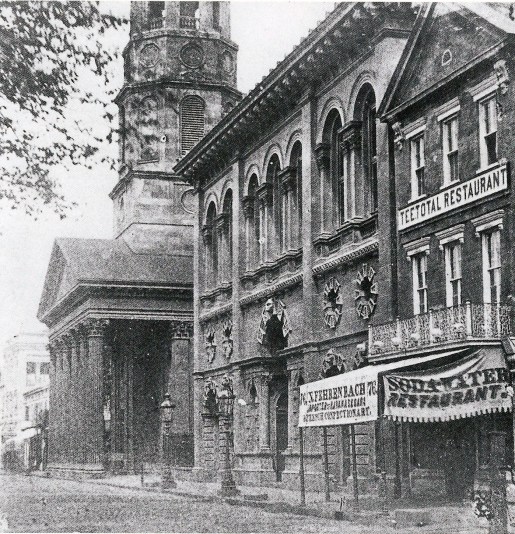
circular church - teetotal

Photo of Meeting Street with 1806 version of Circular Church steeple and portico and SC Institute Hall, c 1860.

 On the stage was a lone table, flanked by two potted palmetto trees. A banner on the stage read “Built from The Ruins.” After the delegates were seated, Rev. John Bachman offered a prayer where he asked God for “wisdom on high for the leaders … forced by fanaticism, injustice, and oppression” to secede. Then a copy of the ordinance, or, as the Mercury called it, “the consecrated parchment,” was read aloud and, as the Mercury breathlessly reported:

On the last word – “dissolved” – those assembled could contain themselves no longer, and a shout that shook the very building, reverberating, long-continued, rose to Heaven, and ceased on with the loss of breath.

Institute-hall-secession

South Carolina Institute Hall, street view, (Harper’s Weekly)

Upon the signing of the Ordinance of Secession, all the church bells in Charleston began to ring. James Petigru asked a passerby, “Where’s the fire?” The man responded, “Mr. Petigru, there is no fire; those are the joy bells in honor of the passage of the Ordinance of Secession.”

 Petigru responded, “I tell you there is a fire. They have this day set a blazing torch to the temple of constitutional liberty, and please God, we shall have no more peace forever.” Late in the day, Petigru was again asked about secession and famously remarked, “South Carolina is too small for a republic and too large for an insane asylum.”
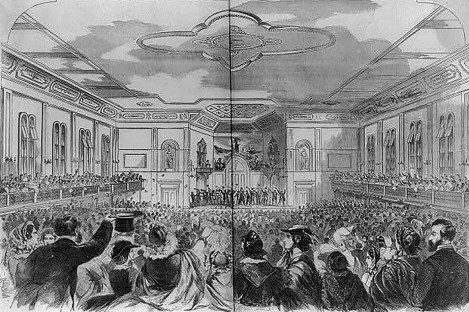
secession

Inside South Carolina Institute (Secession) Hall. From Frank Leslie’s Newspaper. Courtesy of the Library of Congress

The ordinance was then placed on the stage table, and one-by-one, the delegates stepped forward to sign. Over the next two hours the delegates signed the Ordinance of Secession, and as politicians are apt to do, offered a few remarks on the “monumental occasion.” Ruffin wrote, “no one was weary, and no one left.”

After the last signature, Chairmen Jamison held the document above his head and exclaimed, “I proclaim the State of South Carolina an Independent Com-monwealth!” At that, the crowd rushed the stage, and frantically removed souvenir fronds from the palmetto trees. Augustine Smythe, slid down a pillar to the main floor, joined the scrum. He managed to not only get a palmetto frond souvenir, but also removed the pen and blotter used to sign the document. These items today are in the collection at the Confederate Museum, housed in Market Hall on Meeting Street.

The raucous celebration spilled into the Charleston streets, with men whooping and shooting pistols in the air. Bonfires in tar barrels, were lit on street corners across the city. Edmund Ruffin wrote, “The bands played on and on, as if there were no thought of ceasing.”

A teenager named Augustus Smythe procured a seat in the balcony of Charleston’s South Carolina Institute Hall on the night of December 20, 1860.  Over the next three hours Smythe watched the members of the South Carolina legislature sign the Ordinance of Secession, officially removing the state of South Carolina from the Union and establishing an independent republic, ultimately called the Confederate States of America. The raucous celebration after that historic event spilled into the Charleston streets, with men whooping, drinking whiskey and shooting pistols in the air. Smythe had the calm foresight to make his way through the crowd to the stage and remove the inkwell and pen which had been used to sign the Ordinance. These items today are in the collection at the Confederate Museum, housed in Market Hall on Meeting Street.

secssion, mills house

Rally on Meeting Street, in front of Mills House, 1861. From Frank Leslie’s Newspaper. Courtesy of the Library of Congress

Today In Charleston History: December 11

1861 – GREAT FIRE.

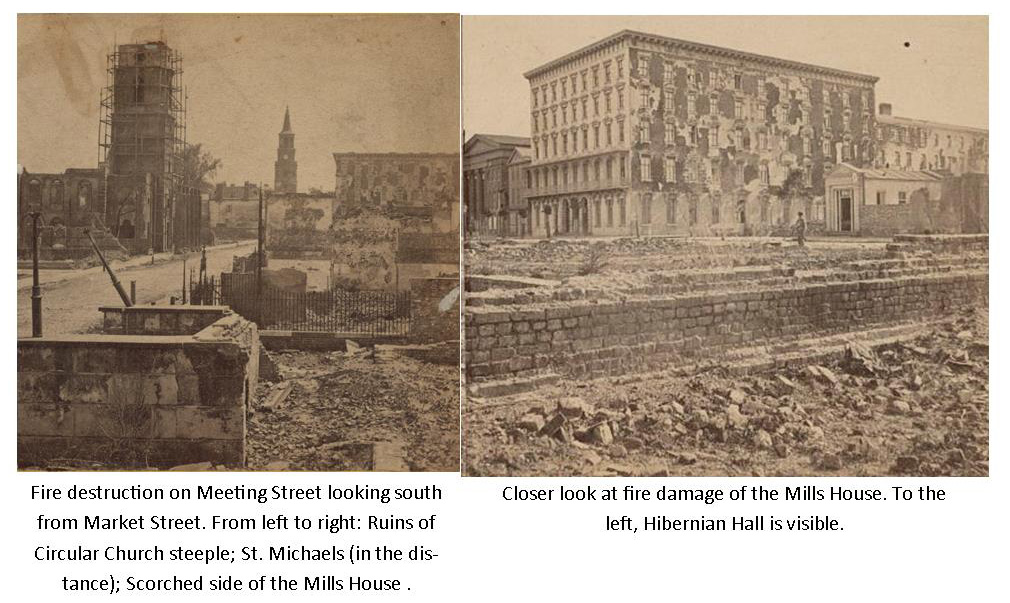
A fire started at Russell and Co.’s sash factory at the foot of Hasell Street and East Bay (present-day location of Harris Teeter). It crossed to the south side of Hasell Street and spread to Cameron and Co.’s machine shop. The fire spread quickly, fueled by a windy Nor’easter and an endless supply of wooden buildings. Another factor in the devastation was that most of the men who would have been available to fight the fire had signed up for Confederate military service and were not living in the city. Many people were able to save some of their belongings, but few could stop the fire from destroying their homes.

It left the city of Charleston in shambles and it remained in ruins for the remainder of the War.  Business was suspended and planters sent produce into town for the needy. “Soup houses” were opened to feed those left homeless and relief committees were established to house the homeless and to raise money for the victims. The effects of the fire were long lasting and rebuilding was slow during the economic depression in the decades following the War. The damage caused by the fire became associated with damages from the war.  Photographs of the burned city were often misrepresented as damage caused by Union guns. The Great Fire of 1861 did more damage to Charleston in one night than the Federal blockade and bombardment did over the next four years.

1861 fire path map. From the Post and Courier.

1861 fire path map. From the Post and Courier.

Emma Holmes, 23 –year old described the fire in her diary:

The flames swept on with inconceivable rapidity & fierceness, notwithstanding the almost superhuman efforts of the firemen … Through that awful night, we watched the weary hours at the windows and still the flames leaped madly on with demonic fury … At five a.m. the city was wrapped in a living wall of fire from the Cooper to the Ashley without a single gap t break its dread uniformity. It seemed as if the day would never dawn … when the sun rose, the fire was still raging so fiercely that its glare almost overpowered that of the sun … The wind circled in eddies, driving the flames in every direction & carrying showers of flakes to an immense distance …

1861 fire

Harper’s Weekly reported the fire, including the rampant speculation that the fire may have been started by rebellious slaves.

IT matters little, in effect, whether the burning of the city of Charleston was the fruit of accident or of negro incendiarism. The rebels are sure to ascribe the disaster to the latter cause. Secret terrors are the price of despotism : in slave countries, every noise, every cry, every unusual movement of a slave, carries apprehension to the heart of his master. At the time of the John Brown affair, Governor Wise told us that Virginia matrons living miles and miles away were beside themselves with terror. We know that so terrible was the alarm created by that trumpery attempt, that down on the Gulf shore negroes whose behavior had attracted attention were imprisoned, whipped, and even shot by scores. In the language of Southern members of Congress who talked secession in those days, life was not worth having, if accompanied by the agonies which such events implanted in every Southern breast.
It is by the light of these memories that we must read the tale of the burning of Charleston. The burning of 600 houses, including every public building in the city, and property valued at $7,000,000, is an astounding event. Whatever the politicians and the papers may say, the Southern people from Norfolk to Galveston are sure to conclude that the negroes did the dread deed, and each man and woman is now quaking in terror lest his or her house should be the next to go. Nor is this opinion likely to be confined to the whites. The slaves, too, will hear of the fire, and will hear simultaneously—for we know that news does spread among the slaves, hard as their masters try to keep them in ignorance—that between eight and ten thousand slaves, till lately the overworked laborers on Carolina cotton plantations, are now free men, getting eight and ten dollars a month. It will not exceed the negro’s power of combination to connect the two events together. When he does, beware the result.

Fire path, from Frank Leslie's Illutrated

Fire path, from Frank Leslie’s Illustrated

Meeting Street damage, Harper's Weekly

Meeting Street damage, Harper’s Weekly. Looking east from the roof of the Mills House. Circular Church ruins to the left … St. Philips to the right. Harper’s Weekly.

1900
At a public gathering, ground was broken for the construction of the South Carolina West Indian Exposition. Mayor Smythe and Gov. M.B. McSweeney spoke at ceremony. More than seven thousand people attended, arriving on trolleys, carriages and bicycles.