
Frederick “Freddie” William Green (guitar, banjo, vocals,) 1911-1987
“Rhythm guitar is like vanilla extract in cake. You can’t taste it when it’s there, but you know when it’s left out.” – Irving Ashby
Freddie Green had the longest job in jazz history – guitar player in the Count Basie band from 1937 until his death fifty years later. In a Downbeat article in 1939 Billie Holiday was asked about marriage and she said:
I’ve loved three men. One was a Marion Scott, when I was a kid. He works for the post office now. The other was Freddie Green, Basie’s guitar man. But Freddie’s first wife is dead and he has two children and somehow it didn’t work out. The third was Sonny White, the pianist, but like me, he lives with his mother and our plans for marriage didn’t jell. That’s all.

Freddie Green, cover of Jazz Podium
Freddie was born Charleston, South Carolina in 1911. He lived at 7 Dalts Court near Rutledge Avenue. Freddie’s first musical memories were at home. His father played the pump organ and his mother sang in the AME Church choir. He played the ukulele and sang baritone in barbershop quartets as a kid. They performed Irish songs on the street corners of Charleston for nickels and dimes. He was also a good dancer. That’s how he first ran into the Jenkins Orphanage Band. Green recalled:
They used to come into my neighborhood. The minute I heard that brass I used to stop whatever I was doing and follow them all over the city … There was a group called the Nighthawks in Charleston and the trumpet player’s father was one of the teachers at the Jenkins Orphanage. His son was Samuel Walker. He was a terrific trumpet player so he had this group. I think it was trumpet, drums, saxophone, and piano … Most of the bands back in those days had banjos.
Freddie Green’s father died and at the age of twelve Freddie moved to New York City to live with his maternal aunt. They had an apartment in Harlem, on 141st Street, between Seventh and Eighth Avenues, close to The Rhythm Club. That was where Freddie heard Jelly Roll Morton for the first time. He attended PS-5l, located near 141st Street and Edgecombe Avenue, but left school at age sixteen. He remembered:
My aunt used to give house rent parties in Harlem. And she used to hire a guy to come in and play the piano. His name was Rock. He was a stride piano player. I really enjoyed the way he played. My aunt would keep drinks on the piano for him.
I made a friend with one of the guys in the neighborhood who was supposedly the baddest guy in the neighborhood. I think we had a fight one day. And after a while, I think I kind of knocked him down. And everybody was amazed that I did that to the bad guy. So then he and I were real close friends. And he was the leader of the gang on the block. We used to go around on different corners, that’s when the Charleston was out and I could always dance. So he had a ukulele and we used to go on corners and dance.
Freddie Green returned home to Charleston for his mother’s funeral. His former neighbor from Dalts Court, Leotha Elmo, met him at the train station. She became Freddie’s girlfriend and later, his wife. He recalled how he became a professional musician:
There was a professor of brass instruments at Jenkins. Professor Blake was his name. We became good friends. I used to go to his house. He was a graduate of Howard University. He was a tuba player. On Sundays we would go through his library where his music books would be, and he’d help me. We would use a blackboard. We would go through the routine of scales, and what not.
My father-in-law was a contractor [in Charleston] and I used to help him quite a bit doing odd jobs and what-not … I tried all kinds of jobs and I was never pleased with whatever I did until music came.
We had our first kid. Then I left Charleston. The Jenkins [Orphanage] group had a show. They were going to tour the state of Maine. I left with them [as a non-resident of the orphanage and a grown man] and went up to Maine with this show they had. Went on the road with them with my banjo. We toured the state of Maine playing in Grange Halls, whatever they had up there in order to accommodate this traveling show. It was something! I don’t think we got paid. We played for contributions and the like.
The band had two alto saxes, one tenor sax, two trumpets, two trombones, one tuba, one banjo [Freddie] and drums. We used to have to get up around noon and play all through the streets … a parade, you know. We were in the small towns of Maine. And we had dress uniforms that we wore.
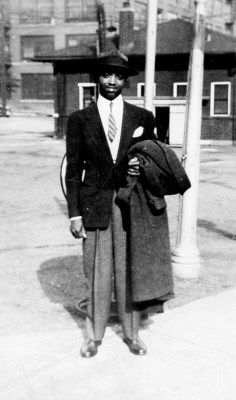
Freddie Green, 1940s
The Jenkins Band stopped in New York and Freddie decided to stay. He sent for Leotha and their son to join him.
During the early 1930s Freddie had two jobs in New York, working at a factory upholstering chairs during the daytime, and playing in a dance trio at night.
I was working in a club called the Yeah Man Club. I knew how to play the ukulele. And the banjo, well, I could tune it, you know what I mean (laughs). Then I got a few books on banjo chords. As soon as I picked up the banjo, the guitar came in (laughs).
At the Yeah Man I was playing banjo. And the manager of the club said “Well, everybody’s playing guitar now. You have to get a guitar, okay?” I got one from a music store on 47th Street. King’s Music Store. I bought it on time.
In 1937 Freddie was hired at the Black Cat Club in Greenwich Village for eleven dollars a week. Record producer and talent scout, John Hammond was a regular customer at the Black Cat. Hammond later achieved mythical status for his keen eye of spotting talent. Through the years he was given credit for “discovering” Billie Holiday, Pete Seeger, Count Basie, Aretha Franklin, George Benson, Bob Dylan, Bruce Springsteen and Stevie Ray Vaughn. In his autobiography John Hammond on Record he discussed his first impressions of Green:
One of my favorite clubs was the Black Cat, a mob-owned joint. The band included two cousins, the drummer Kenny Clarke and the bass player Frank Clarke, but it was the guitarist that interested me the most. His name was Freddie Green, and I thought he was the greatest I had ever heard. He had unusually long fingers, a steady stroke, and unobtrusively held the whole rhythm section together. He was the antithesis of the sort of stiff, chugging guitarist Benny Goodman liked. Freddie was closer to the incomparable Eddie Lang than any guitar player I’d ever heard. He was perhaps not the soloist that Lang was, but he had a beat.
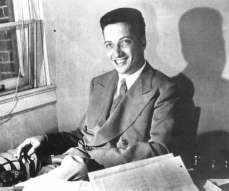
John Hammond, 1939
Hammond had brought the Basie Band from Kansas City to New York and he thought a good rhythm guitar was the missing piece for the band’s sound. Green auditioned in Basie’s dressing room at Roseland. When the Basie Band left for Pittsburgh the next day, Freddie Green was on the bus and he stayed on it for the next five decades.
In 1938 the Count Basie Orchestra became one of the leading dance bands in America, due in part to what has been called “the All-American Rhythm Section”: Count Basie, piano; Jo Jones, drums; Walter Page, bass and Freddie Green, guitar.

The All-American Rhythm Section, (L-R): Freddie Green, Jo Jones, Walter Page, Count Basie.
As the years passed, Freddie Green’s importance to the Count Basie Band increased. The numerous nicknames he acquired are good illustration of his musical stature: “Esquire” – because he was such a cool gentleman; “Pepper” or just “Pep” short for “Pepperhead”, because his head was shaped like a pepper; “The Fourth Wheel”, short for “the fourth wheel on the Basie band wagon”, “Quiet Fire” and “Mr. Rhythm.” Count Basie called Freddie Green “my left hand.”
Buck Clayton, trumpet player with Basie explained, “Basie never did play much with his left hand, so Freddie substituted for it.” Basie’s adopted son, Aaron Woodward III said, “… everyone knew Freddie’s position was of equal importance to Dad’s.”
Quincy Jones, who arranged for Basie as a young man before becoming more famous as Michael Jackson’s musical mentor and producer, said about Freddie:
That man is a sort of spirit. He doesn’t talk loud and he doesn’t play loud. But man! You sure know he’s there.
The brass and reeds can be up there shouting away, but there’s Freddie, coming right through it all, steady as a rock and clear as a bell. He’s something special. What he represents is the only one of its kind in existence.

Freddie Green’s 1955 solo swing classic LP. Author’s collection
Saxophonist Paul Quinichette once observed of Green:
He’s got it right there, in his wrist. What he has is the key to a musical era, an unmatched mastery of big band rhythms.
Green did not live the stereotypical life of jazz musicians. He ate smartly, rarely drank or smoked. Even while on the road with the Basie band, he rose at 7 or 8 a.m. each morning to take a long walk or play golf. Singer Joe Williams, recalling his own philandering youth, says:
At a critical time, Freddie took me aside and advised, “Take some and leave some. Don’t try to get it all. You’ll enjoy it more and you’ll last much longer, no matter what it is.” Since it came from Freddie Green, who doesn’t say that much, he only had to say it once, and I’ve never forgotten it.
When Charlie Christian introduced the electric guitar with the Benny Goodman in 1939, the jazz world changed dramatically. Freddie, however, continued to use his acoustic guitar on stage. Harry Edison recalls:
Charlie Christian and he [Freddie] were very close friends, and Christian gave him an amplifier. But whenever Freddie would lay out of the band to take his solo, the whole rhythm section used to fall apart. It got to the point where we had to do something about it. So one night I would remove the plug from Freddie’s amplifier wire and it wouldn’t work. Next night Herschel Evans would break a wire in it so it wouldn’t play, and Freddie would have it fixed … So finally we took all the guts out of the amplifier. Freddie got ready to play one night and there was nothing but a box. Naturally he got furious but nobody paid him any attention. So he reached a point where he said, “Well, to hell with it. I won’t play anymore solos.” So that’s the reason he’s not a soloist today. He probably could have been one of the best at that time, but we had to sacrifice him for the good of the band.
One of the greatest Freddie Green stories was how Freddie re-hired himself to play with Basie in 1950. After World War II most of the big bands were struggling to make money. So, Basie, like other top bands, was forced to downsize. He put together a small group that included Clark Terry, Buddy DeFranco, Bob Graf, Jimmy Lewis, and Gus Johnson. They worked a month at the Brass Rail in Chicago. Everyone in the audience was surprised that Freddie Green was not with the group.
When the sextet met in New York for their next gig, Green was sitting on the bandstand with his guitar. Clark Terry recalled the dialogue between Basie and Green:
Basie: “Say, Pep, you’re not on this gig, are you?”
Green: “You’re workin’, aren’t you? After I gave you the best years of my life, you think you’re going to leave me now?”
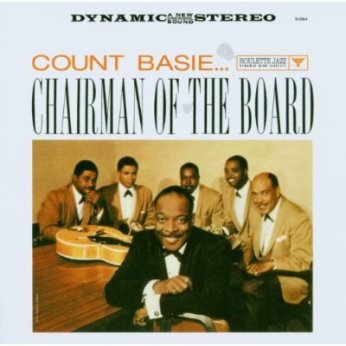
So the sextet became a septet and Freddie Green remained the anchor of the rhythm section until his death. During his career Freddie Green performed worldwide, made over 1,000 recordings with the Basie band, and appeared as a sideman on over 700 recordings by other jazz artists. The list of artists he recorded with are a Who’s Who of the 20th century: Mildred Bailey, Emmett Berry, Ruby Braff, Kenny Burrell, Benny Carter, Buck Clayton, Al Cohn, Harry Edison, Duke Ellington, Herb Ellis, Karl George, Benny Goodman, Lionel Hampton, Woody Herman, Billie Holiday, Illinois Jacquet, Jo Jones, Joe Newman, Paul Quinichette, Jimmy Rushing, Pee Wee Russell, John Sellers, Sonny Stitt, Joe Sullivan, Jack Teagarden, Joe Turner, Earl Warren, Dicky Wells, Teddy Wilson, and Lester Young.

Duke Ellington, Freddie Green, Count Basie
Through the years Freddie Green also became the gauge of quality. Byron Stripling, trumpet player with Basie said, “If an arranger comes in and his work is jive, Freddie just shakes his head and it’s all over.”
According to Dennis Wilson (trombone), all new Basie Band members had to deal with:
… the intimidation of Freddie Green. You never know if Freddie likes you. It worries you until that mystical, magical day when he finally says a couple of words to you. Then you know you’re okay, and you realize he hasn’t been testing you; he’s been allowing you to test yourself.
When Count Basie died in 1984 almost every publication in the world offered a eulogy. Freddie Green simply said: “I’ve been with the band since 1937, what am I to do now?”
Thad Jones, the popular trumpeter and Basie sideman, was chosen to take up the reins of the Basie Band after the Count’s death. He commented:
I don’t think it’s possible to speak of the Basie band without Freddie Green. He’s the link that keeps the tradition alive. He’s the dean, the guy we look to for that spiritual thing.
In the May 1983 issue of Guitar Player, Jim Hall wrote:
If you pruned the tree of jazz, Freddie Green would be the only person left. If you have to listen to only one guitarist, study the way he plays rhythm with Count Basie.
One of the longest and quietest careers in musical history came to a conclusion on March 1, 1987. Freddie Green died of a heart attack after playing a Basie show in Las Vegas. Tributes and obituaries poured in from all over the world. Several days later, what was intended to be a surprise tribute to Green in Los Angeles organized by jazz critic Leonard Feather was turned into a memorial featuring the Basie band, vocalist Sarah Vaughan, and guitarist Kenny Burrell. Los Angeles mayor Tom Bradley declared March 19 Freddie Green Day.
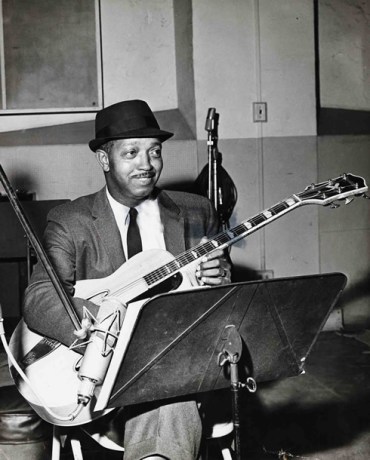
Freddie Green, “Mr.Rhythm”
Sonny Cohn said, “The most important part of your body is your heart. It keeps everything else going. That’s what Freddie does.”
Dennis Wilson, a trombonist and composer-arranger with Count Basie said, “It’s as if in the Bible they said, ‘Let there be time’, and Freddie started playing.”
Freddie’s son, Al Green, eulogized his father:
Dad had a quiet dignity about him, with a demeanor of an elder statesman, unassuming, diplomatic, and fair. I spent three days with Dad to celebrate his Grammy nomination as a member of The Swing Reunion album. As we got dressed for the affair that evening, he asked if I would help him with his bow tie, a kind of reversal of roles that we both acknowledged warmly. After the Grammys when we were departing, we kissed and embraced, (not knowing that it would be for the last time), he said, “I really enjoyed this time we got to spend together. It was special.”
You’ve lost Mr. Rhythm. We’ve lost our Dad. I’ve lost my hero.
Freddie once discussed about his role in the Basie band:
The main thing is the Basie band. I get a joy out of keeping the band together and supplying the soloists with a foundation. That’s more soloing to me than soloing. I’ve played rhythm so long that it’s just the same as playing solos as far as I’m concerned. The rhythm guitar is very important. A performance has what I call a “rhythm wave”, and the rhythm guitar can help to keep that wave smooth and accurate. I have to concentrate on the beat, listening for how smooth it is. If the band is moving smoothly, then I can play whatever comes to mind, but that doesn’t happen too often.
I feel responsible for keeping my part in the structure going, as from the original band. I do what I do. That’s enough. It’s given me a whole lot of joy, pleasure, good feeling. And some bad feeling which goes with everything – you’ve got to take the bitter with the sweet. I’m part of it, and I’m doing a job, and that’s it. I realize that the public likes the band. And I appreciate it. And I think that’s what keeps us going. I go along. After all, you have to live.

The rhythm section at work.
FREDDY GREEN DISCOGRAPHY
Selected Count Basie Recordings:
- The Complete Decca Recordings, 1937-39. Verve, 1992
- Count Basie Live – 1938 At The Famous Door, NYC. Jazz Hour Records, 1997
- April In Paris. Polygram Records, 1956
- The Complete Atomic Basie. Blue Note Records, 1958
- Chairman of the Board. Blue Note Records, 1958
Other Recommended Recordings:
- Rhythm – Freddie Green. Fresh Sound Records.
These are the only recording sessions available with Green as band leader. As one would expect, its filled with sharp, tight arrangements of swinging songs, all propelled by Freddie’s steady rhythm guitar playing.
- Billie Holiday – The Legacy. AMG, 1991.
This three-boxed set offers more than 50 songs that cover Lady Day’s career. Twenty-three of the songs feature Freddie’s very audible guitar strumming.
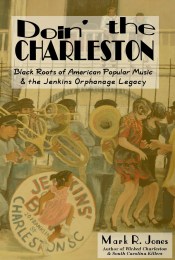
From the book Doin’ the Charleston (2013)
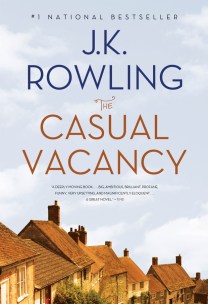 When Barry Fairbrother drops dead of an aneurysm, his death sets off a chain reaction in the small English town, Pagford. First of all, it creates a vacancy (hence the book’s title) on the Council. Fairbrother had been a strong supporter of keeping a low income housing project as part of Pagford. He is opposed by a smug, controlling businessman Howard Mullison who wants to rid the village of the “undesirables.” The battle over the empty seat, and the haves and have-nots, soon engulfs everyone in Pagford, and slowly reveals the messy and not-so-pretty reality behind the pretty facade of the town.
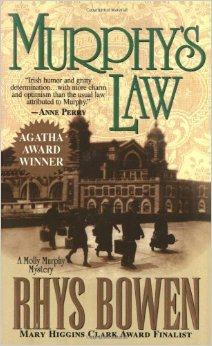 Molly Murphy accidentally kills a man and flees Ireland at the spur of the moment. She manages to catch a boat to England where miraculously she is taken in by an Irish woman with two small children. They are leaving tomorrow for America to join her husband. However, the woman is unable to board the ship due to suffering from TB so … she asks Molly to take her place, pretend to be her and take the children to America for her. (Coincidence #1).
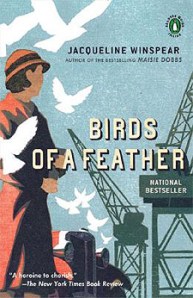 This is the second book in the Maise Dobbs series and there is a dramatic drop-off. We are constantly told (by other characters) how smart Maisie is, but she never comes across that way. She is cold, arrogant and often condescending. Her method of investigating using mysticism is too much New Ageish, feels silly and is ultimately unbelievable.
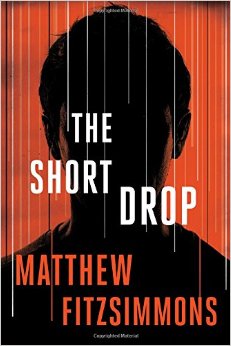 The novel opens on the tenth anniversary of the disappearance of Suzanne Lombard. Her disappearance became one of those national stories that was covered 24/7 for weeks and weeks by the media, mainly due to her father – who was a U.S. Senator at the time, currently the vice president and a presidential candidate. Ten years later, when a new photo of Suzanne appears Gibson Vaughn is approached by a private investigation team to assist in a new inquiry into Suzanne’s case.


 Will Matherson, a retired U.S. Army colonel and college professor, gradually assumes leadership of the town. He speculates that the disaster was created by an EMP (electro-magnetic-pulse) created by either a solar flare, or was man-made. With no rescue coming, and no electricity, basic services disappear and soon the world descends into chaos.
 John Cross, a successful architect in late 19th century New York City, has a problem. Seems his eldest son has accumulated excessive gambling debts, and is entangled in a web of organized crime, thugs and opium dens. A gentleman gangster, James Kent, is determined to make the son, or the father, pay up. So the son is kidnaped and John is blackmailed into helping Kent and his gang set up robberies of prominent New York citizens whose houses and office buildings Cross designed.
 Nettie Lonesome is half black and half Native American. She was “adopted” at a very young age by a white couple and grew up working their farm pretty much as their slave, since they don’t treat her like family. One night she is attacked by a strange man and when she drives a stake into his chest, he turns to sand. From that point on, Nettie can see monsters, and her world is full of them. She encounters vampires (some of whom are prostitutes) and werewolves, as well as creatures like sirens and harpies.
 MarkJonesBooks