Early this morning off the Charles Town bar, Governor Johnson’s fleet was waylaid by a sloop, the Eagle, which raised the black flag and called on the ships to surrender. Johnson raised the King’s standard, threw open his ports and delivered a broadside which swept the deck of the pirate ship. The Eagle surrendered.
Johnson discovered the ship was not that of Christopher Moody, but the captain was Richard Worley who had captured the Eagle in Virginia. Worley had been killed by the broadside, but his crew of twenty-four were arrested. The cargo included 106 convicts and covenant servants, thirty-six of whom were women, bound as settlers in Maryland.
1768 – Backcountry
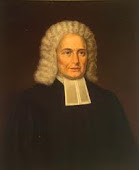
Rev. Charles Woodmason
Rev. Charles Woodmason presented a petition to the Assembly which argued that the leaders of the low country (Charlestown planters and merchants) treated the inhabitants of the back country worse than their slaves. He pointed out that the area along the coast had forty-four representatives in the Assembly, while the back country only had six – despite containing two-thirds of the white population of South Carolina.
1779 – Births
Washington Allston was born on a rice plantation on the Waccamaw River near Georgetown, South Carolina. He would grow up to pioneer America’s Romantic movement of landscape painting.
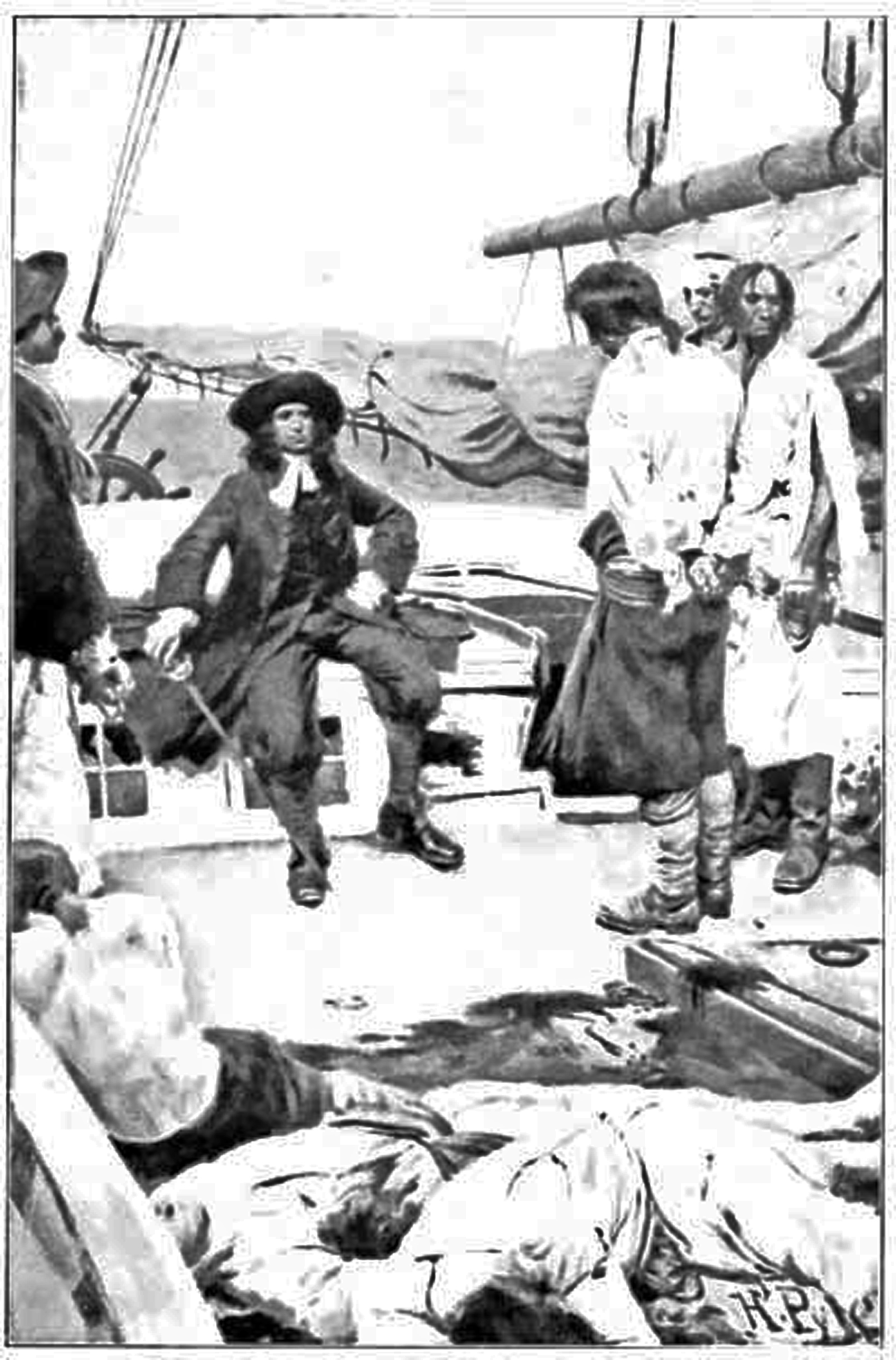
After getting reports of mysterious campfires on Sullivan’s Island Rhett searched the western end and discovered Bonnet hiding. During the subsequent battle Herriot was killed and the two slaves wounded. Bonnet surrendered and was returned to Charleston, this time imprisoned in the watch-house.
That same night, Governor Johnson’s fleet sailed out of the harbor to seek Christopher Moody.
Stede Bonnet stands before Col. William Rhett
1872 – Carpetbagger & Scalawag
Christopher Columbus Bowen was elected sheriff of Charleston.
Born in Rhode Island, Bowen had worked a series of odd jobs until eventually making his way to Georgia, where he volunteered (after being threatened with conscription) in the Confederate cavalry. After forging a commanding officer’s signature on a furlough pass to gamble in Charleston, Bowen was court-martialed and dishonorably discharged. He then hired a fellow soldier to murder his commanding officer, for which he was arrested and imprisoned in Charleston. While Bowen was awaiting trial, Charleston was successfully invaded by Union forces and Bowen, among other prisoners, was released. He then began working for the Freedmen’s Bureau, which he was fired from shortly thereafter for “irregularities in his accounts.” Afterwards he began acting as a pro-bono lawyer for newly freed slaves, and the connections he developed allowed him to become first a Republican delegate to South Carolina’s 1868 constitutional convention, and later the elected representative of its first congressional district.
In 1871 Bowen married Susan Petigru King, daughter of James Louis Petigru. Sue had her own fast reputation as a woman who defied social convention and was the author of several “scandalous novels” about Charleston life. Soon after their marriage Bowen was arrested and tried on charges of bigamy.Tabitha Park, a manager of brothels, brought suit against Bowen claiming she was, in fact, his real wife. According to Park, Bowen left her three-years earlier in order that he might live in “open adultery with another woman.” Bowen offered a settlement of one thousand dollars, but Park suspected a member of the United States Congress could do better than that. A bigamy trial followed and Bowen escaped conviction because one member of the jury would not find him guilty. It was noted “a distinct likelihood” that the juror “had been well rewarded beforehand for agreeing to hang the jury.”
Christopher Columbus Bowen
Frances Hicks then appeared before a federal grand jury. She claimed (and had evidence) that Bowen had actually married her, in 1852. This time, the jury took only twenty minutes to reach a verdict and Representative Bowen was found guilty as charged. Susan Petigru played a more visible role in the second trial and dramatically offered up herself for sentencing, as a substitute for the person who was claiming to be her current husband. She also informed the court that she could not part with Mr. Bowen because he was “too pure” and “too good.” Bowen was sentenced to two years in the Albany penitentiary and fined two hundred and fifty dollars.
Susan Petigru King Bowen decided to seek help directly from the White House. When President Grant declined to see her, she took it upon herself, without hesitation, to seek a letter of support from General Sherman. She then followed the Grants to their summer home in Long Branch, New Jersey. There, she managed to get the ear of Grant’s wife, Julia Dent. Less than a month after Representative Bowen’s conviction, President Grant signed a “full and unconditional pardon” for his fellow Republican.
Grant’s clemency warrant stated the Representative was “innocent of any intentional violation of the law” and “acted in good faith believing his former wife to be dead.” The warrant also gave Bowen credit – amazingly enough – for rendering “good service” to “the cause of the Union during the late rebellion and since its termination.”
Bowen was reelected in 1872, but an investigation by the House of Representatives deemed both his and his opponent’s campaigns too corrupt to be officially recognized. he then was elected sheriff of Charleston County.
Martha Laurens was born, daughter of Henry and Eleanor Laurens, the beginning of one of Charleston’s most extraordinary lives.
Her father, Henry, was a successful merchant. Through his London contacts, Laurens entered into the slave trade with the Grant, Oswald & Company who controlled 18th century British slave castle in the Republic of Sierra Leone, West Africa known as Bunce Castle. Laurens contracted to receive slaves from Serra Leone, catalogue and marketed the human product conducting public auctions in Charles Town. His company Austin and Laurens, in the 1750s, handled was responsible for the sales of more than eight thousand Africans.
Three month old Martha Ramsay was pronounced dead of smallpox. Her body was laid out in preparation for a funeral and placed next to an open window. Dr. John Moultrie arrived and pronounced her still alive, speculating she had been revived by the fresh breeze. This event made Martha very special to her father, Henry.
In 1780 Henry Laurens was imprisoned in the Tower of London for “suspicion of high treason” as supporting the American Revolution. After his release he moved to Vigan, France and was nursed back by Martha, where she had spent the years of the War living with her uncle. In 1787 she married Dr. David Ramsay. The two had met while Ramsay writing a History of the American Revolution and reading Henry Laurens’ papers.
1835
Mr. William Laval secured from the state of South Carolina a vague grant to 870 acres of “land” in Charleston Harbor. Acting on this odd grant, Laval made claim to the site of Fort Sumter. This also raised a question in the South Carolina legislature as to what authority the government had acted upon to begin construction. Laval wrote to the engineer in charge at Fort Johnson, Charleston Harbor:
Sirs:
You are hereby notified that I have taken out, from under the seal of the State, a grant of all those shoals opposite and below Fort Johnson, on one of which the new work called Fort Sumter, is now erecting. You will consider this as notice of my right to the same; the grant is recorded in the office of the secretary of state of this State, and can be seen by reference to the records of that office.
Laval’s claim was presented to Robert Lebly, superintendent in charge of the building of fortifications at Charleston Harbor. Lebly forwarded the claim to Brigadier General Charles Gratiot the next day.
The ships of the Carolina expedition made port in Barbados a day before a hurricane hit the island. The sloop Albemarle was destroyed and the other two ships were so severely damaged that repairs took more than a month. Food was so short that Sir John Colleton took “more than 20 servants” to his plantation.
1786 – Duel
Dr. Joseph Brown Ladd died as a result of wounds sustained in a duel with Ralph Issacs on Philadelphia Alley.
1828 – Deaths.
Thomas Pinckney died.
Pinckney was the son of Eliza Lucas Pinckney and younger brother of Charles Cotesworth, who signed the Constitution of the United States. Thomas served during the American Revolution as captain of the 1st South Carolina Regiment of the Continental Army. In 1781 he fought in Virginia with Lafayette. He served as the 36th governor of South Carolina from 1787-89. In 1792, Pinckney replaced John Adams as Minister to Great Britain for four years. He also served as Envoy Extraordinary to Spain and arranged the Treaty of San Lorenzo, also known as Pinckney’s Treaty, with Spain in 1795.
“There’s just a little bit of magic in the country music we’re singin’”
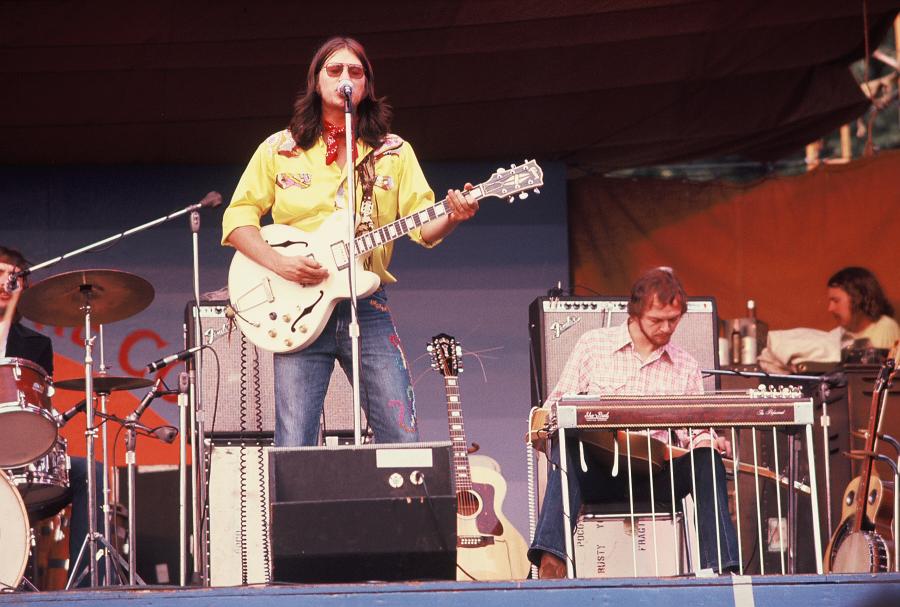
Formed out of the remnants of Buffalo Springfield in 1968, Poco released their debut LP Pickin’ Up The Pieces on May 19, 1969. One of the most frustrating stories in modern rock and roll, Poco was a band that consistently released great music, were a stellar live band, and year after year, LP after LP, sales were lukewarm. Their 25+ LP catalogue is a breathtaking body of work that charts the beginning of the country rock genre from 1969 into the 21st century. However, the consistent theme in the Poco story is … change and inconsistency.
Buffalo Springfield imploded in 1968, due to the competing egos of Stephen Stills and Neil Young. Both men left the band – Stills hooked up with David Crosby and Graham Nash, and Young began a solo career. That left Richie Furay and Jim Messina responsible for finishing Springfield’s final album, Last Time Around. After that project was finished, they decided to form a band and steer their new sound toward a harder-edged country rocking sound.
In his autobiography Furay stated,
“One of my main musical influences was Buck Owens … a real musical innovator as a singer, guitarist and bandleader … a genuine inspiration for the country rock sound … harder and edgier than a lot of mainstream country. I wanted them [the new songs] to be accessible as well as uplifting.”
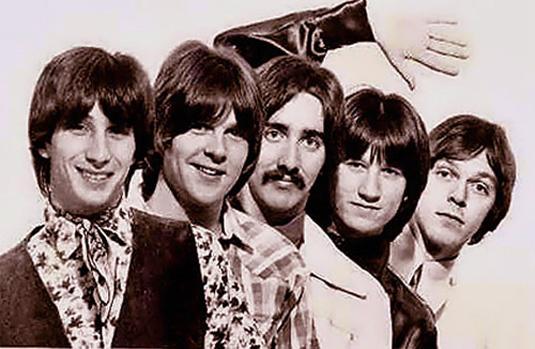
Poco, 1968: Jim Messina, Randy Meisner, George Grantham, Richie Furay, Rusty Young
Messina and Furay filled out the new band with Rusty Young, a wunderkind multi-instrumentalist (guitar, banjo, mandolin, steel guitar, etc …) George Grantham on drums & vocals and, after a long deliberation, they chose Randy Meisner on bass, over the other candidate, Timothy B. Schmit.
They initially called the band Pogo, after the popular comic-strip character, but ran into legal issues over the name’s copyright. Since they had already been performing under the “Pogo” name for several months around L.A., they simply changed the “g” to a “c” and went with POCO so their fans wouldn’t become too confused. Their first LP was released and although it is considered a “lost classic” the LP never sold. Today, Pickin’ Up The Pieces is a seminal LP of the late 1960s California country rock genre, and sounds just as fresh and energetic 45 years later.
The band played before enthusiastic crowds across America (as an opening act) but the sales were lukewarm. Meisner quit, to join Glenn Frey and Don Henley as part of Linda Ronstadt’s back-up band (later The Eagles), and Timothy B. Schmit joined the band, replacing Meisner.
In 1970-71 Poco released their second LP, Poco and a year later, a live album, Deliverin’. Jim Messina quit to join Kenny Loggins as a duo (Loggins & Messina). He was replaced by Paul Cotton and the new band quickly recorded their fourth LP From The Inside. Again … lackluster sales.
The band then recorded and released A Good Feelin’ to Know (1972) which is considered the band’s masterwork, and is one of the puzzling chapters of the Poco story. The LP was filled with great songs, the title song, released as a single, is one of the most infectious and upbeat country rockers ever recorded, but the single failed to chart and the album itself peaked at No. 69. As a result, Furay became increasingly discouraged with Poco’s prospects, especially since ex-bandmates Stills, Young, Meisner and Messina were enjoying huge success with their respective groups. In an April 26, 1973 Rolling Stone magazine interview with Cameron Crowe Furay vented that Poco was still a second-billed act and had not increased its audience and the writing was on the wall. The next album, Crazy Eyes (1973), reached No. 38 but Furay departed at its release.
Most people assumed the band would fold without founding father Furay, but Schmidt, Young, Cotton and Grantham re-grouped and released six albums in four years as a quartet, with very little change in sound of quality. In fact, Cotton and Young, in particular, stepped up and picked up the composition void left by Furay. In fact, among fans, 1974’s Cantamos and Rose of Cimarron (1976) rank among the best Poco LPs ever.
Then, in 1977, Timothy B. Schmidt left the band (with the other member’s blessing) to replace Randy Meisner in The Eagles. Cotton, Young and Grantham regrouped, added two more players and released Legend, which became Poco’s best-selling LP of all time, and included their two highest charting songs, “Crazy Love” and “In The Heart of The Night.”
Throughout the 1980s Poco, under Young and Cotton’s direction, released five more LPs some excellent (Blue and Grey) and some mediocre (Cowboys & Englishman.) In 1989 the original line-up (Furay, Messina, Young, Meisner, Grantham) reunited for a lackluster LP, Legacy.
Since that time, Paul Cotton has released a few solo LPs and Young has carried on performing as Poco with a variety of musicians supporting him – often joined by Cotton. In November 2002 Poco offered a new release of new songs by Cotton and Young, Running Horse.
In October 2013, Rusty Young announced his retirement from touring and performing – and after 45 years, no one will deny he deserves it! He also mentioned he was working on “the book” – hopefully a comprehensive history of Poco.
Coda: Updated 2022. Rusty Young died suddenly in April 2022, and three months later, July 2021, Paul Cotton died. Furay, Schmit and Grantham are still alive, and sometimes performing. Hopefully, the last Poco chapter will be their induction into the Rock and Roll Hall of Fame.
Ashley Cooper wrote to Captain West and Governor Sayle ordering that the settlement, Albemarle Point, be renamed “Charles Town.”
1765 – Stamp Act.
The Stamp Act went to effect. Ships could not get clearances to leave Charlestown harbor and courts could not conduct any legal business without stamped paper.
1773
Jacob Ramos was convicted of inciting a slave to commit a robbery of Mr. William Sommerfall. The Negro slave was hanged, and Ramos was sentenced to “stand in the pillory for an hour, pay a fine of $350, and receive 39 lashes.” During the time in the pillory Ramos was “most severel & incessantly pelted by an enraged Populace; who nevertheless were so orderly, as to not use any other Materials than rotten eggs, Apples & Onions.”
1775 – American Revolution.
Second Provisional Congress was hastily called into session in to deal with the threat the two British war ships in Charlestown harbor. William Henry Drayton was voted President of the Congress. In anticipation of Lord Campbell sailing up the Cooper River to meet with Loyalists living in the back country, Drayton ordered the blocking of Hog Island Channel by the sinking of four hulks.
1777 – American Revolution
Upon John Hancock’s retirement due to ill health, Henry Laurens was elected President of the Congress and served until December 9, 1778. During his term, Laurens dealt with the conspiracy to replace George Washington as commander-in-chief, perpetuated by several members of Congress and the military.
William Henry Drayton and Henry Laurens
1870
The South Carolina Institute Fair opened. It was open to all – white and black – from 9:00 a.m. to 5:00 p.m. Tickets were twenty-five cents, with more than 12,000 visitors in one day. Inside the hall visitors could see exhibits featuring the most modern agricultural equipment, sewing machines and steam engines. The main building for the South Carolina Institute Fair was on the site of the present day Citadel softball stadium. The building was 300 feet long by 80 feet wide by forty feet tall, had 154 windows and fourteen doors.The Charleston Daily News wrote:
Charleston will do her part in the grand work of building up South Carolina, and extends a cordial welcome to all her visitors, whether they come from North or West or South. There is no sectionalism in commerce, and we can promise to all who now pay our city a visit a hearty and generous reception.
The Sally brought slaves to Charlestown. Henry Laurens wrote:
A third poor pining creature hanged herself with a piece of small vine which shows her carcass was not very weighty … who that views the above Picture can love the African trade?
Laurens rationalized his role as a slave trader using what was to become a tried and true Charleston excuse – tradition.
These Negroes were first enslaved by the English … I was born in a Country where Slavery had been established by the British Kings & Parliaments … I found the Christian Religion & Slavery growing under the same authority … I am not the Man who enslaved them, they are indebted to English men for that …
Charles I granted the American territory between the thirty-one- and thirty-six-degrees north latitude to Sir Robert Heath. This land included everything from Florida to the present Cape Fear River and included the Bahamas. The charter was never used. Heath was impeached by Parliament for high treason in 1644. He fled England and died in Calais.
1765, October 30. Stamp Act.
Attorney Richard Hutson complained that many locals were indifferent, yet they praised the “laudable example of the northern provinces in endeavoring to repel the manifest encroachments on their liberty.”
1935, October 30.
Ethel Barrymore appeared at the Academy of Music in Somerset Maughn’s The Constant Wife.
Governor Robert Johnson met with the Assembly for the first time. As the representative of the Proprietors, he was not warmly received. The lack of assistance the Proprietors offered during the Yemassee War had soured the people’s opinion. Judge Nicholas Trott and Col. William Rhett, Speaker of the Assembly, were the two most powerful men in colony, more respected than the Proprietors. Johnson, however, knew that former Governor Craven was in London seeking a path to make South Carolina a Royal Colony. During his address to the Assembly Johnson said:
I am obliged for your sakes to give you my opinion touching the disrespectful behavior that has of late been shown to the Lords Proprietors … very unjustifiable and impolitic. If it be supposed their character is a bar to your relief, it is a mistake. His Majesty and his Parliament are too just to divest their Lordships of their properties without a valuable consideration.
1824 – Deaths
Charles Pinckney died. In his will, Pinckney stated that his body be laid out until decomposition began – a common practice to avoid the possibility of being buried alive. However, against his wishes, the funeral was held the next day and he was buried at St. Philip’s graveyard.
His will also freed eight slaves, Primus, Cate, Betty, and Dinah, as well as Dinah’s children –Anthony, John, Peneta and Carlos. He directed that the four children be “suitably maintained and bound out for trades.” Dinah was a “washerwoman” who seemed special to Pinckney. It was openly speculated that the freed children were Pinckney’s own with Dinah. Particularly in the light of Pinckney’s service in Spain and two of the children having Spanish names, including one named Carlos, the Spanish version of Charles, that speculation seems likely.
1924 – The “Charleston” Debuts on Broadway
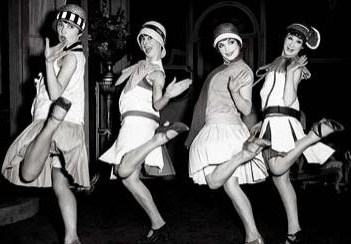
Flournoy Miller and Aubrey Lyles introduced their second Broadway show Runnin’ Wild with songs by James P. Johnson and Cecil Mack. The choreographer, Elida Webb, later falsely claimed to have invented the “Charleston” dance. Yet, the first act of Runnin’ Wild ended with the “Charleston” performed by Elizabeth Welsh, backed by a group of chorus boys called the “Dancing Redcaps.”
James Weldon Johnson wrote when the dance was introduced in Runnin’ Wild:
They did not wholly depend upon the orchestra – an extraordinary jazz band – but had the major part of the chorus supplement it with hand and foot patting. The effect was electrical and contagious. It was the best demonstrating of beating out complex rhythms I have ever witnessed; and, I do not believe New York ever before witnessed anything of just its sort.
Roger Pryor Dodge, in his book Hot Jazz and Jazz Dance says:
The famous single-step, the Charleston, suggests the rhythm 4/4 but does not explicitly state it. The Charleston rhythm … pervades all music, and for our purposes is predominant in ragtime. Nevertheless the Charleston rhythm had not, up to the time of James P. Johnson’s composition “Charleston” become unmistakably identified. While ragtime sheet music and piano rolls are records of the past, the elusive elements of the dance are lost. Whether the dancers actually used a Charleston rhythm before James P.’s piece I do not know. Since that time and with the help of a music strongly accenting this rhythm, the dancers still do not actually follow it, but give the impression that they do only because we associate the step with a music having this rhythm. Maybe James P. made point of constantly holding to this rhythm because of the impression he got from the dancers, or very likely with the music in a slower tempo some dancers did more than just give an impression of the rhythm and did accent it. Certainly the dance was not evolved to fit James P.’s composition; rather, James P. derived his music from his impression of the dancers, with the possibility that some of them actually may have followed the musical rhythm. Thus our visual impression of the step is influenced by the Charleston rhythm in the music so that whatever the dancer is doing we assume he is still following the musical rhythm.
The Charleston dance step may have a longer history than most think. The Branle of 1520 is presumed by most dance scholars to be similar to the Charleston. Dance historians speculate the Ashanti People of Africa were the originators since some of their tribal dances incorporated what could be viewed as Charleston-style steps and movements.
But Willie “the Lion” Smith in his autobiography mentions a black Charleston dancer named Russell Brown:
His dance was a Geechie step like those I had seen in “The Jungles” [a name often used in the 1910s for the San Juan Hill District of New York]. He was given a nickname by the people of Harlem . . . they would holler at him, “Hey Charleston, do your Geechie dance!” Some folks say that is how the dance known as the Charleston got its name. I’m a tough man for facts, and I say the Geechie dance had been around New York for many years before Brown showed up. The kids from the Jenkins Orphanage Band of Charleston used to do Geechie steps when they were in New York on their yearly tour.
It can safely be accepted that the origins of “the Charleston” are most likely a combination of all of the above, particularly the line that runs from the Ashanti African tribal dances directly to the southern plantations of the 18th and 19th centuries. What cannot be denied is that by the end of 1923, everybody in the country was doin’ the Charleston.
Nothing else epitomizes the spirit and joyous exuberance of one the most tumultuous decades in American history as the Charleston dance. Other dance crazes have had their fifteen minutes of fame: the Waltz, Tango, Hokey-pokey, Twist, Hustle, Macarena, and Breakdancing. None of them, however, managed to influence and infect an entire generation so thoroughly the way the Charleston did. Almost 100 years later, the image of the Jazz Age is always a Flapper doing the Charleston. No other American decade can be so neatly summed up in one simple image.
From the book Doin’ the Charleston: Black Roots of American Popular Music & the Jenkins Orphanage Legacy
First Masonic Lodge in Charlestown was organized under a warrant issued by Lord Weymouth of England, Grand Master of the Ancient and Honorable Society of Free and Accepted Masons. An announcement in the Gazette said:
Last night a Lodge of the Ancient and Honorable Society of Free and Accepted Masons, was held, for the first time, at Mr. Charles Shepheard’s, in Broad Street, when John Hammerton, Esq., Secretary and Receiver General for this Province was unanimously chosen Master, who was pleased to appoint Mr. Thomas Denne, Senior Warden, Mr. Tho. Harbin, Junior Warden, and Mr. James Gordon, Secretary.
Shepheard’s Tavern (corner of Broad & Church Streets), circa 1740s; In the distance on the left hand corner can be seen St. Philip’s Church
1752
Gov. Glen proposed a plan for repairing and improving the city’s fortifications. He claimed the defenses were “piece-meal” and suggested the hiring of a “regular Engineer.” Without consulting the Assembly, Glen hired German-born engineer William De Brahm.
1765 – Stamp Act
Due to political pressure and threats of violence, George Saxby and Caleb Lloyd, stamp officer and stamp distributor, publically promised not to perform their duties.
Lt. Gov. Bull called the Gazette the “Conduit Pipe of northern propaganda … poisoning the minds … against the Stamp Act.” In an effort not “to directly support and engage in the most violent Opposition” Peter Timothy temporarily suspended the publication of the South Carolina Gazette.
1790
Charleston City Council passed an ordinance that established the Charleston Orphan House. Until a structure could be built Mrs. Elizabeth Pinckney provided a building on Market Street, close to the Sailors’ Homes, for children too young to be bound out.









 MarkJonesBooks