Nineteen Eighty-Four to 2014: A Brave New World (Essentials)

Sixty-five years ago one of the most famous and influential novels was published, Nineteen Eighty-Four. George Orwell’s dystopian novel introduced terms and concepts that have entered everyday use: Big Brother, doubl1984ethink, thoughtcrime, Newspeak and memory hole.
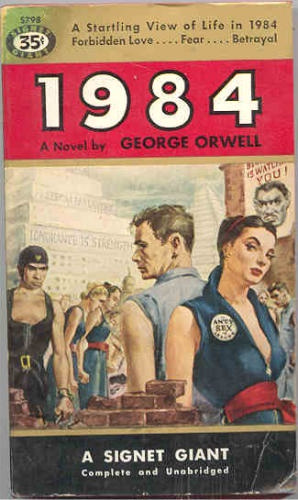
I first read the novel in 1977 in Mrs. Mazursky’s Advanced Composition class at Barnwell High School (S.C.) And here we are in 2014, living in the world Orwell warned us about. For those of you who have never read 1984 a quick summary:

The Oceanian province of Airstrip One is a world of perpetual war, omnipresent government surveillance, and public mind control, dictated by a political system euphemistically named English Socialism (Ingsoc) under the control of a privileged Inner Party elite that persecutes all individualism and independent thinking as thoughtcrimes. Their tyranny is headed by Big Brother, the quasi-divine Party leader who enjoys an intense cult of personality, but who may not even exist. Big Brother and the Party justify their rule in the name of a supposed greater good.

Winston Smith is a low-ranking member of the Outer Party who works for the Ministry of Truth (Minitrue), which is responsible for propaganda and historical revisionism. Smith’s job is to re-write past newspaper articles so that the historical record always supports the current party line. Smith is a diligent and skillful worker, but he secretly hates the Party and dreams of rebellion against Big Brother.

Everywhere Winston goes, even his home, the Party watches him through telescreens; everywhere he looks he sees the face of the Party’s seemingly omniscient leader, Big Brother. The Party controls everything in Oceania, even the people’s history and language. Currently, the Party is forcing the implementation of an invented language called Newspeak, which attempts to prevent political rebellion by eliminating all words related to it. Even thinking rebellious thoughts is illegal. Such thoughtcrime is, in fact, the worst of all crimes.

If you have a pulse and are reasonably aware of the world around you, everything in the previous paragraph should sound familiar. A few comparisons between the novel 1984 and our world should make it clear:

1984: Newspeak. NOW: Politically Correct speech

1984: Telescreens in every room. Programming runs 24 hours a day. Proles have no way to turn off their screens. NOW: Telescreens in almost every room. In everyone’s hands. Programming runs 24 hours a day. Proles rarely turn off their screens.

1984: Telescreens in all public and private places, so the populace can be watched to prevent thoughtcrime. NOW: Surveillance cameras in most buildings and public streets to prevent crime. People carrying tracking devices called cell phones. 

1984: Helicopters silently watch over the masses to keep people from creating thoughtcrime, reinforcing the fear that you are “always being watched.” NOW: Helicopters and drones silently watch over the masses to keep people from breaking traffic laws, reinforcing the fear that you are “always being watched.”

1984: Lotteries with very few winners. Held to collect income for the state, and to give hope to the masses. NOW: Lotteries with very few winners. Held to collect income for the state, and to give hope to the masses.

1984: History is rewritten to conform with modern beliefs. All references to oldthink are removed. NOW: History is rewritten to conform with modern beliefs. Example: In the 2013 history textbooks, the 9/11 attacks are described as being committed by “terrorists.” No description of their Islamic extremism and hatred for Western beliefs. However, in the same book, Timothy McVeigh is described as a “radical right-wing terrorist.” There are too many examples to list here. You’ve probably already come up with 3 or 4 in your head. 

1984: People are steered away from consuming goods such as chocolate, steak, sugar, coffee, cigarettes and alcohol by rationing. NOW: People are steered away from consuming certain foods by warnings that these items are bad for your health. Cigarette smokers are portrayed as a criminal class. In New York City, Mayor Bloomberg did his best Big Brother imitation by banning sugary drinks more than 16 ounces. Other states and cities have levied heavy taxes on food items that the state has deemed “not good for the public.” 

1984: There is always a war, always an enemy always a crisis. If peace is made with one country, war is started somewhere else. When one “crises” is solved, another is discovered. NOW: There is always a war, always an enemy always a crisis. If peace is made with one country, war is started somewhere else. When one “crises” is solved, another is discovered. “War on Poverty.” War on Drugs.” Etc … 

1984: Songs are created by machines. No one can write a song not in line with Big Brother. No creativity is needed. NOW: Songs are created by synthesizers and digital samples.The creativity of past musicians are “sampled” by “artists” and re-mixed into a collage of mechanized sound.

1984: Telescreen is full of confessions of “Thought criminals.” They confess their crimes and perversions. NOW: Daytime talk shows are filled with people who enjoy sharing the low-rent, thuggish lifestyles with the rest of the world.

Over the past two years we have learned that the U.S. government directed the IRS to target conservative Tea Party groups merely because of their opposition to the expansion of federal government programs. We also learned that the government has been listening to the private conversations of EVERY Verizon cell phone customer since 2007. Through a program called PRISM, the government has also had access to the date of everyone on the internet who has logged on to FaceBook, Yahoo, Google, YouTube, Apple and Skype. The government’s response to all of this is: “We have done nothing wrong. We have done nothing illegal.” Various criminal operations and counties are hacking into digital date of corportations, political groups etc … 

So, if you have never read 1984, it would make a great (yet uncomfortable) summer read to discover what Mr. Orwell warned us about sixty-five years ago. And for the government bureaucrat whose job is to read this column, I hope you enjoyed it. I encourage you to purchase my books and read them also!
1966: Beatles Release “Revolver” LP in America (Essentials)

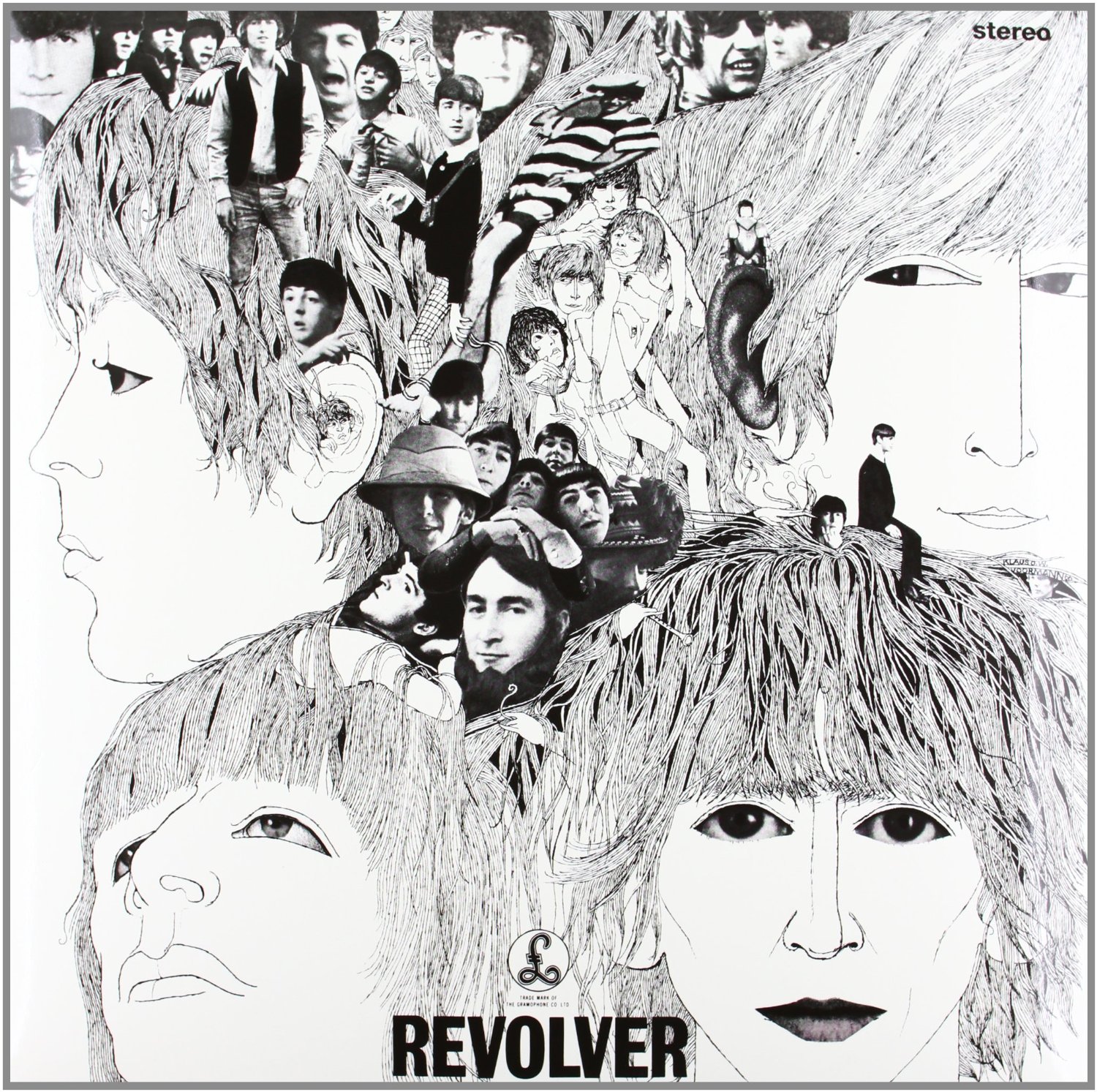
Revolver announced to the world that a new Beatles had replaced the fresh-faced  pop stars. Performing live concerts was a thing in the past. The loveable moptops had grown up and were now free to explore and push musical boundaries from within the studio. They were artists, not just performers.

revolverRevolver was the first step toward the extensive experimentation on “Strawberry Fields Forever,” “I Am The Walrus” and Sgt Pepper’s Lonely Hearts Club Band. Despite Pepper’s lofty status as the greatest rock and roll record of all time, Revolver  is better. It shows all four members of The Beatles working together, equally for the first time, at their creative peak. It is also the record in which George steps up and produces songs that stand equal with those of Lennon and McCartney. 

McCartney noted about the recording process:

This album has taken longer than the others because, normally, we go into the studios with, say, eight numbers of our own and some old numbers, like Mr Moonlight or some numbers we used to know, which we just do up a bit. This time, we had all our own numbers, including three of George’s, and so we had to work them all out. We haven’t had a basis to work on, just one guitar melody and a few chords and so we’ve really had to work on them. I think it’ll be our best album yet. They’ll never be able to copy this!

The Beatles’ previous album, Rubber Soul, had also been a change – exploring R&B and folk stylings (“Nowhere Man,” “Norwegian Wood”),  Revolver took the experimentation further, bringing in influences such as Motown, classical Indian music, children’s songs and full orchestration. George Harrison once commented:

 I don’t see too much different between Rubber Soul and Revolver. To me, they could be Volume One and Volume Two.
revolver back cover

Revolver – back cover LP

The LP showed remarkable songwriting leaps by McCartney, Lennon and Harrison. Harrison, with “Taxman,” “I Want to Tell You” and “Love You To” challenged Lennon and McCartney.  Paul responded with “Eleanor Rigby,” “Tell No One,” “Here, There, and Everywhere” and “Got To Get You Into My Life.” 

But, of course, it was Lennon who was the most innovative with “I’m Only Sleeping,” “She Said, She Said” and the remarkable “Tomorrow Never Knows.” Attempting to distill an LSD trip into a three-minute song, Lennon borrowed lyrics from Timothy Leary’s version of The Tibetan Book of the Dead, and recorded his vocal to sound like “the Dalai Lama singing from the highest mountaintop.”
Revolver was the Beatles’ artistic high-water mark, and unlike Sgt. Pepper, it was the product of a collaborative effort, the group fully vested in creating “Beatle music. Revolver announced to the pop world (and the world at large) that the 1960s had arrived and everything that followed was going to be different.


Side one  
No. Title Lead vocals Length  
1. “Taxman”   Harrison 2:39
2. “Eleanor Rigby”   McCartney 2:08
3. “I’m Only Sleeping”   Lennon 3:02
4. “Love You To”   Harrison 3:01
5. “Here, There and Everywhere”   McCartney 2:26
6. “Yellow Submarine”   Starr 2:40
7. “She Said She Said”   Lennon 2:37
Side two  
No. Title Lead vocals Length  
8. “Good Day Sunshine”   McCartney 2:10
9. “And Your Bird Can Sing”   Lennon 2:02
10. “For No One”   McCartney 2:01
11. “Doctor Robert”   Lennon 2:15
12. “I Want to Tell You”   Harrison 2:30
13. “Got to Get You into My Life”   McCartney 2:31
14. “Tomorrow Never Knows”   Lennon 2:57


Today In Charleston History: August 8

AUGUST 8

1781 – The Royal Gazette [Charlestown] wrote: 

Mr. Issac Hayne, who since the capitulation of Charlestown, had taken protection, and acknowledged himself a subject of his Majesty’s Government, having notwithstanding been taken in arms, and at the head of a Rebel Regiment of Militia, was therefore on Saturday morning last, executed as a Traitor.

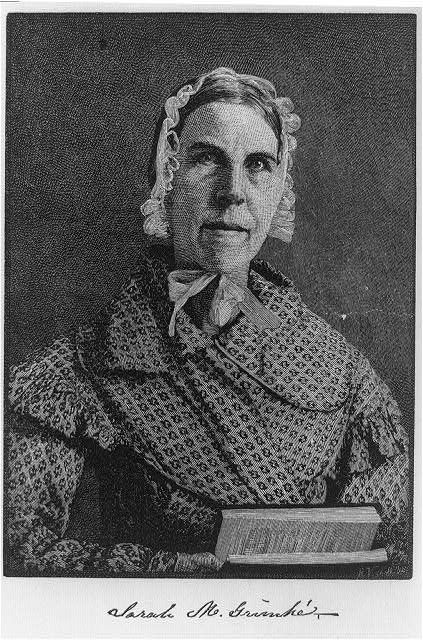
1819 – Judge John Grimke died. Judge John Grimke fell seriously ill in March. His Charleston doctors advised him to seek treatment with the foremost surgeon in American, Dr. Phillip Synge Physick of Philadelphia. Sarah Grimke accompanied her father. Physick, a Quaker, found lodgings for Sarah in a Quaker boardinghouse.

grimke, sarahFor the first time, Sarah  was surrounded by people who were NOT southern and held social views that were more in line with Sarah. It was the beginning of a life-altering change for Sarah, and ultimately, her younger sister, Angelina. The sisters became two of the most famous abolitionists within 20 years.  


A TOWN LIKE ALICE: A Review (Essentials)

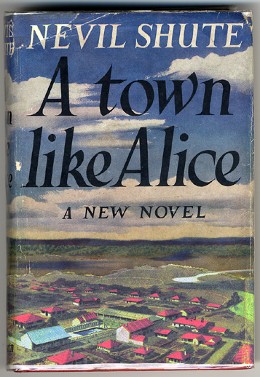
This is one of the best books of the 20th century. In 1998, Modern Library voted A Town Like Alice #17 on the list of 100 Greatest English-language Novels of 20th Century. It is also known as The Legacy. It is an unbashedly romantic tale that I have read more than a dozen times. aliceNevil Shute was the author of 30+ novels and can best be described as “old fashioned.” His books are literate, with a distinctly British view, but also very worldly. He often explored unusual themes like reincarnation, utopian visions (In The Wet is a very entertaining variation of Brave New World.) 

Shute was a trained engineer and science plays a huge role in many of his books. Many of his characters are aviators, engineers, and geologists. During his lifetime Shute was one of the most popular writers in the world and his most famous book, On The Beach, while justly famous as the only close-ended novel ever written (no one in the book survives after the final page) is one of his lesser efforts. It is a shame that dozens of Shute’s novels do not sit on the shelves of modern bookstores.

In 1981 the book was turned into a world wide award winning mini-series for Australian television starring Helen Morse and Bryan Brown, it is superb! 

SUMMARY

After World War II, a young English woman named Jean Paget learns that she has inherited a legacy from her great uncle. She is now a rich young woman with no need to work ever again. When the Scottish lawyer, Noel Strachan, whose firm manages the legacy asks what she’d like to do with the money, she replies, “I’d like to build a well.”

Jean and her family had lived in Malaysa for most of her childhood until her fathered died. Now, Jean was alone living in London. Her mother was dead and her brother died in a Japanese POW camp. Jean and her family had lived in Malaysa for most of her childhood until her father died.

TownLikeAliceJean tells Strachan her story:During the war she was working in Malaya when the Japanese invaded and she ended up as one of a party of English women and children who are marched around Malaya by the Japanese, since no camp will take them in and the Japanese army does not want to take responsibility for them. Many of them die on the march, and the rest survive only on the charity of the local villagers. Jean’s knowledge of Malay language and culture proves invaluable to the group’s survival.

The women meet Joe Harman, an Australian soldier who is also a prisoner. He drives a truck for the Japanese across Malaya carrying supplies. He steals food and medicines to help the women and Jean and Joe become friends. Jean always carries a small boy, orphaned after his mother died, and which leads Harman to the mistaken belief that she is married; to avoid giving Joe any temptation, Jean does not correct this misperception. The thefts are investigated and Harman takes the blame to save Jean and the rest of the group. He is beaten, crucified, and left to die by the Japanese soldiers. The women are marched away leaving Joe for dead.

To survive, the women become part of a native village where they grow rice and work as part of the village. This saves their lives, and they live there for three years, until the war ends. This village is where Jean wants to build the well so that the local women will not have to walk so far to collect water: “A gift by women, for women”.

With her legacy, Jean travels to Malaya, where she goes back to the village and persuades the headman to allow her to build the well. While it is being built she discovers that by a strange chance Joe Harman survived his punishment and returned to Australia. She decides to travel on to Australia to find him. 

In her travels, she visits the town of Alice Springs, where Joe lived before the war, and is much impressed with the quality of life there. She then travels to the (fictional) primitive town of Willstown in Queensland where Joe has become manager of a cattle station. She soon discovers that the quality of life in Alice is an anomaly, and life for a woman in the outback is elsewhere very rugged. While staying in the local hotel in Willstown she finds that the local hunters shoot crocodiles and prepare their skins for export, at prices much lower than they are sold in England. To show the locals what their exports are used for, she makes a pair of crocodile-skin shoes in her bedroom, by hand.

In the meantime, Joe has learned both that Jean survived the war and is unmarried. He takes the money he won in the state lottery in order to travel to Britain in search of her. In London, he meets lawyer Strachan, who must decide on his client’s behalf how to handle this situation. On Strachan’s advice, Harman returns to Queensland, and Jean and Joe two finally meet again in one of the most emotionally charged and poignant love scenes ever written.

At this point, you are about halfway through the book, and I would deserve to be crucified myself if I revealed any more of the plot. Read it NOW.

5 palmettos


Companion Read: 
No Highway by Nevil Shute

Dylan Goes Electric at Newport Folk Festival, 1965.

The Newport Folk Festival was founded in 1959 by George Wein, founder of the already-well-established Newport Jazz Festival. Members of the supporting board included Theodore Bikel, Oscar Brand, Pete Seeger and Albert Grossman.

The festival introduced a number of performers who went on to become major stars, most notably Joan Baez in 1959, and Bob Dylan at the 1963 festival. It also featured many country-blues artists like Johnny Cash, Muddy Waters and Howlin’ Wolf.  However, the 1965 festival became famous as one of the watershed events in modern American music.

On Saturday, July 24, 1965, Bob Dylan performed three solo acoustic numbers, “All I Really Want to Do”, “If You Gotta Go, Go Now”, and “Love Minus Zero/No Limit” at a Newport workshop. Dylan was irritated by what he considered condescending remarks about the Paul Butterfield Blues Band made by Newport Folk Festival organizer Alan Lomax. Dylan made a spontaneous decision that day that he would challenge the Festival by performing with a fully amplified band.

dylan, newport2

Dylan performs an acoustic set at Newport.

On the night of Sunday, July 25, Dylan’s appearance was sandwiched between Cousin Emmy and the Sea Island Singers, two very traditional folk acts. The band that went on stage with Dylan included two musicians who had played on his recently released single, “Like a Rolling Stone”: Mike Bloomfield on lead guitar and Al Kooper on organ.

Master of Ceremonies Peter Yarrow of Peter, Paul & Mary, introduced Dylan with, “Ladies and gentlemen, the person that’s going to come up now has a limited amount of time … His name is Bob Dylan.” The band took the stage, plugged in their electric guitars and launched into a blistering version of “Maggie’s Farm.” Within a few bars of the song, the boos began from the audience and continued throughout the three song set. After playing “Like a Rolling Stone.” Dylan closed with an early version of “It Takes a Lot to Laugh, It Takes a Train to Cry” titled “Phantom Engineer.” As the band left the stage there was a mixture of booing and clapping from the audience. Peter Yarrow returned to the microphone and begged Dylan to continue performing., Dylan returned to the stage and performed two songs on acoustic guitar for the audience: “Mr. Tambourine Man”, and then, as his farewell to Newport, “It’s All Over Now, Baby Blue”. 

Bob-Dylan-at-Newport-1965

It has been argued for years that the boos were from outraged folk fans, who disliked Dylan playing an electric guitar. Al Kooper, and others present at Newport, have disagreed with this interpretation, and argued that the audience was upset by poor sound quality, and the boos were brought on by Dylan’s short set, not the fact that Dylan had gone electric. Kooper said: “The reason they booed is because he only played for fifteen minutes, when everybody else played for forty-five minutes or an hour. They were feeling ripped off. Wouldn’t you? They didn’t give a shit about us being electric. They just wanted more.”

Poor sound quality was the reason Pete Seeger gave for disliking the performance. He was watching the performance backstage and says he told the audio technicians, “Get that distortion out of his voice … It’s terrible. If I had an axe, I’d chop the microphone cable right now.” Seeger has also said, however, that he only wanted to cut the cables because he wanted the audience to hear Dylan’s lyrics properly, because he thought they were important.

Joe Boyd, responsible for the sound mixing at the 1965 Newport Folk Festival, said, “I think there were a lot of people who were upset about the rock band, but I think it was pretty split. I think probably more people liked it than didn’t.”

In an interview in Mojo magazine, Murray Lerner, director the documentary The Other Side of the Mirror: Bob Dylan Live at the Newport Folk Festival 1963-1965 said,

“I think they were definitely booing Dylan and a little bit Pete Yarrow because he was so flustered. He was not expecting that audience’s reaction and he was concerned about Bob’s image, since they were part of the same family of artists through Al Grossman. But I absolutely think that they were booing Dylan going electric.”

Three months before Dylan’s performance, the rock band, The Byrds, released an electric version of Dylan’s “Mr. Tambourine Man.” The Byrds’ version featured traditional folk harmonies soaring over Roger McGuinn’s jangly 12-string Rickenbacker guitar and a driving beat, which hit #1 in late June 1965, three weeks before Dylan’s performance. The combination of those two events unleashed the folk-rock explosion in popular music. The Beatles’ George Harrison introduced his 12-string guitar and the Fab Four created a Byrds-like sound on their Rubber Soul and Revolver LPs.  This opened the floodgates for artists like The Searchers, The Lovin’ Spoonful, The Mamas and the Papas, Donovan, the Turtles, Sonny & Cher and Simon & Garfunkel. 

If Bob Dylan had faded into obscurity during the 1970s, he would still be considered as one of the most important artists of the 20th century based on his output of dozens of classic songs and his electric performance at the 1965 Newport Folk Festival.

Born Today: August 7

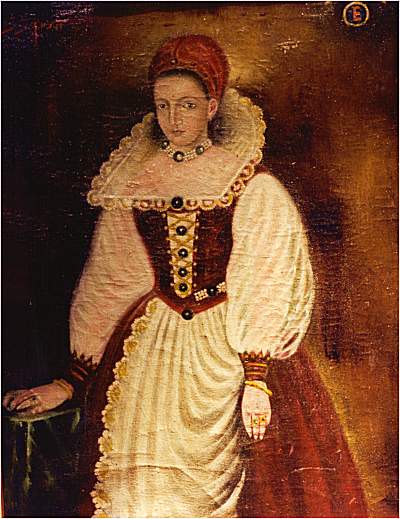
1560 – Elizabeth Báthory, Nyírbátor, Hungarian countess and serial killer.

During the Christmas season in 1609 (or 1610), King Mathias II of Hungary�sent a party of men to the massive Castle Csejthe. He had heard rumors that several young women from the area were being held in the castle against their will, if not actually killed. In haste, he sent the team to investigate. what they discovered was beyond their imagination. 

Bathory was already infamous in the area for her torture and murder of servants and peasants, but her title and high-ranking relatives had made her untouchable. 

One of her uncles instructed her in Satanism, while her aunt taught her all about sadomasochism. At the age of 15, Bathory was married to Count Nadady, and the couple settled into Csejthe Castle. To please his wife, her husband built a torture chamber to her specifications.

Elisabeth Bathory, the Bloody Countess

Elisabeth Bathory, the Bloody Countess

Bathory’s torture included jamming pins and needles under the fingernails of her servant girls, and tying them down, smearing them with honey, and leaving them to be attacked by bees and ants. Although the count participated in his wife’s cruelties, he may have also restrained her impulses; when he died in the early 1600s, she became much worse. With the help of her former nurse, Ilona Joo, and local witch Dorotta Szentes, Bathory began abducting peasant girls to torture and kill. She often bit chunks of flesh from her victims, and one unfortunate girl was even forced to cook and eat her own flesh. Bathory reportedly believed that human blood would keep her looking young and healthy.


1950 – Rodney Crowell, Houston Texas, singer/songwriter.

rodney-crowell-456-012811One of the best songwriters of the past forty years, Crowell has had a long career, starting in the 1970s as part of Emmylou Harris’s Hot Band. He then began to record his own solo LPs, and became the hottest songwriter / producer in Nashville. His marriage to Rosanne Cash made them one of the royal couples of country music during the 70s and 80s. Between them, they wrote and recorded together dozens of Top Ten country songs and won several Grammy Awards. In 1988 Crowell managed to have five #1 songs off his LP Diamonds and Dirt. 

During the 21st century Crowell has retreated from mainstream country music and has released a series of brilliant CDs and has become the elder statesman for the Americana music genre. 

Today In Charleston History: August 7

1753 – Religion.

A petition was made to the Royal Governor for a parcel of land upon which to build a Lutheran church.

1767 – Backcountry.

In more complaints about the dangerous conditions in the backcountry, The South Carolina and American General Gazette reported that:

If we save a little for to bring to Town Wherewith to purchase Slaves – Should it be known our Houses are beset, and Robbers plunder Us, even of our Cloaths. If we buy Liquor for to Retail, or for hospitality, they will break into our dwellings and consume it … Should be raise fat Cattle, or Prime Horses for the Market, they are constantly carried off, tho’ well guarded.  


Today In Charleston History: August 5

1749 – Births.
Thomas Lynch, Jr.

Thomas Lynch, Jr.

Thomas Lynch, Jr.  was born in Georgetown. He would later sign the Declaration of Independence for South Carolina.

1776 – American Revolution.

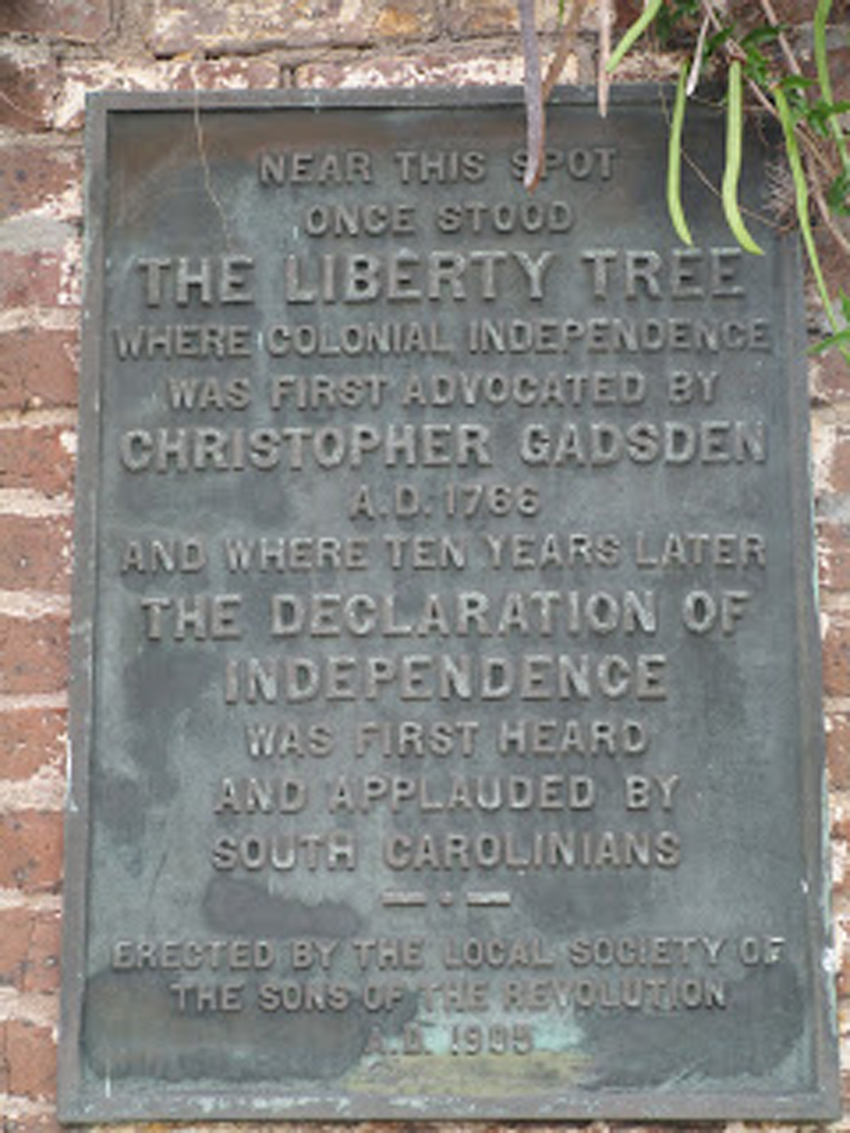
The Declaration of Independence arrived in Charleston. Maj. Barnard Elliot read it to a large, enthusiastic crowd under the Liberty Tree.

Liberty Tree marker on Alexander Street

Liberty Tree marker on Alexander Street

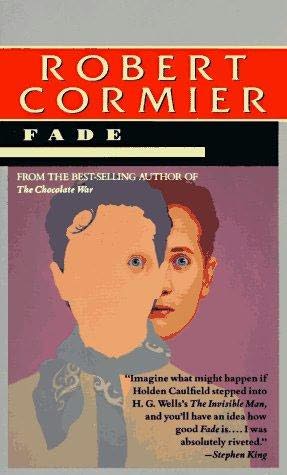
FADE: A Review

Why is Robert Cormier marketed to Young Adult audiences? His books explore disturbing subjects, dark themes, and create a generally bleak tone. Thomas Hardy has nothing on Cormier for tragic conclusions. And, not withstanding the constant presence of The Chocolate War, on must-read lists for Young Adults, Fade may be Cormier’s best book.

Fade_Robert_Cormier_novel_coverSUMMARY: At the age of thirteen, Paul Moreaux discovers that he can turn invisible. Paul, a sensitive and thoughtful working-class boy, doesn’t even realize it when he first gets The Fade. On a dare, he spies on a meeting of the Ku Klux Klan. (This is the 1930s, and anti-Catholic/anti-immigrant sentiments are running high against Paul and the other citizens of Frenchtown.) When the meeting is ambushed, a crazed Klansman discovers Paul and tries to kill him– but inexplicably, he somehow loses sight of his intended victim.

What Paul doesn’t realize is that he has inherited the ability to turn invisible. Sometimes it’s useful, as when escaping from Klansmen and bullies; more often it’s horrible, as when spying upon people who reveal secrets Paul never wanted to know. One male in his family has inherited this “gift” for several generations. Paul at least has guidance from an uncle, also a Fader. 
The invisible teenaged Paul slowly discovers that his “gift” only helps him learn quickly the tragedy of human existence; he is doomed to lead a life marked by violence, madness, and despair, with relief coming only when health complications from the invisibility cause him to die, lonely and young and unmourned.

A generation later, Paul’s own nephew Ozzie has no such counseling, because Paul doesn’t know he exists; the child had been secretly given up for adoption. Unfortunately Ozzie was raised by a physically abusive father, and when Ozzie discovers his Fading powers, after years of beatings and neglect, the results are terrible, with “terrible” meaning “like Stephen King’s Carrie on prom night.”

Thoughtful, horrific and suspenseful. Highly recommended!

Companion Read: Jumper by Steven Gould. (Note: do not let the bad movie based on Jumper keep you from reading it.)

 4 palmettos

Today In Charleston History: August 4

 1781 – British Occupation.

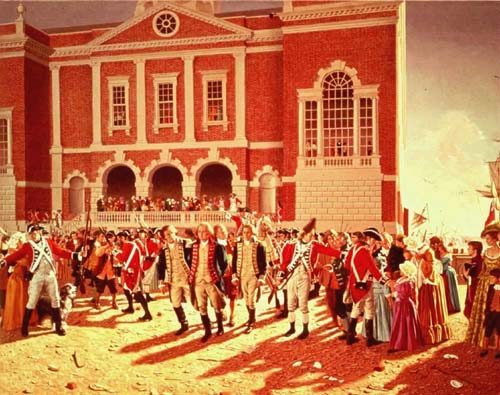
At 5:00 p.m. Col. Issac Hayne “was escorted by a party of soldiers to a gallows erected within the lines of the town with his hands tied behind, and there hung up till he was dead.” David Ramsay reported:

The military escort consisted of three hundred men. The place of execution was just without the city-lines, near Radcliffe’s Garden, nearly in front, and within a stone’s throw of the present Orphan House building. The troops formed a hollow square around the scaffold, the British troops occupying the front and rear, the Hessians on the right and left.

During the march through the city “the streets were crowded with thousands of anxious spectators.” Someone in the crowd called to Hayne “Exhibit the example of how an American can die!” Hayne replied, “I will endeavor to do so.”

gs_hayne

Issac Hayne marched from the Exchange Building to his execution.