Today In Charleston History: December 4

1832 – Nullification Crisis.

Pres. Andrew Jackson assigned Major General Winfield Scott to take charge of all federal forces in South Carolina.

1833 – Slavery.

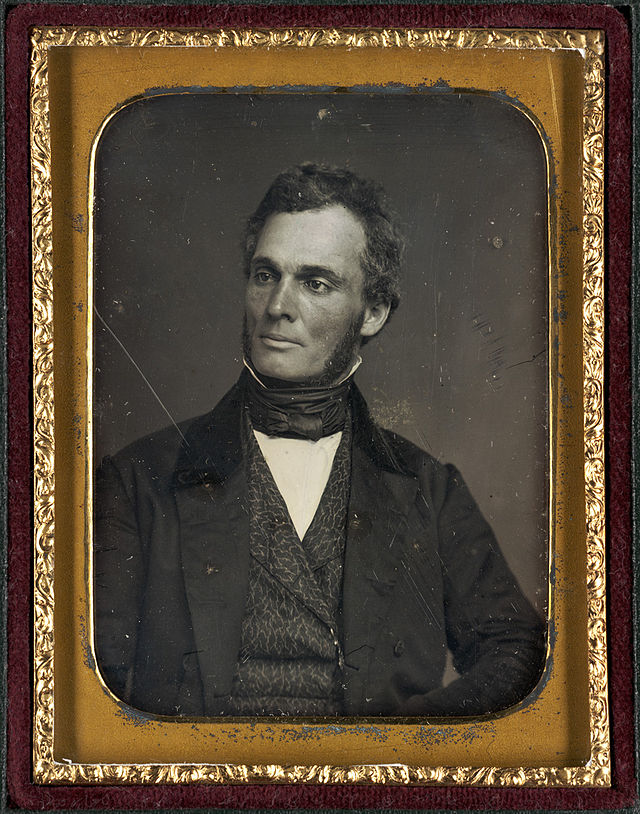
The American Anti-Slavery Society was formed in Philadelphia, Robert Purvis, a mulatto born in Charleston helped abolitionist William Lloyd Garrison establish the Society and signed its “Declaration of Sentiments.”

Robert Purvis

Robert Purvis

Purvis was born in Charleston, South Carolina in 1810. His father was an English immigrant to Charleston, William Purvis. His mother, Harriet Judah, was a free woman of color, the daughter of former slave Dido Badaraka and Baron Judah, a Jewish American born in Charleston. Robert’s grandmother, Badaraka, had been kidnapped at age 12 from Morocco and transported to the colonies on a slave ship.  She was sold as a slave in Charleston. She was freed at age 19 by her master’s will. She then married Baron Judah, who was born in Charleston, the third of ten children of Hillel Judah, a German Jewish immigrant, and Abigail Seixas, his Sephardic Jewish wife, a native of Charleston.

1864 – Bombardment of Charleston.  

The Union and Confederate prisoner exchanges between resumed in Charleston harbor. A cease-fire was negotiated to last the duration of the exchange.

Today In Charleston History: December 3

1737

Samuel Dyssli, an immigrant from Switzerland wrote to his family and declared:

 I am over here, thank God, hale and hearty, and doing at present quite nicely. I am working with an English master. He gives me every week …. 50 shillings and … plentiful … food and drink.  Carolina looks more like a Negro Country than like a country settled by white people.

1744

The Gazette published a letter to Eliza Pinckney from a London merchant which read:

I have shown your Indigo to one of our most noted Brokers … who tried it against some of the Best French, and in his opinion is it as Good … when you can in some measure supply the British Demand, we are persuaded, that on proper Application to Parliament, a Duty will be laid on Foreign Growth, for I am informed we pay for Indigo to the French £200,000 per annum.

1772

American Revolution – Foundations. During a public meeting most of the people demanded the tea be sent back to England. They also resolved not to purchase any tea being taxed for raising revenue in America. They resolved:

That the tea ought not to be landed, received or vended in this colony, nor should any be imported while the law imposing this unconstitutional tax remained …

Christopher Gadsden was appointed chairman to the committee to secure signatures in support of this resolution. They also resolved to boycott the business of any non-signers. Anonymous letters arrived at the Exchange Building threatening the burning of the ship London and the wharf where it was docked.

1779

A grand jury complained about the “excessive number of Negro Wenches, suffered to buy and sell about the streets, corners, and markets.”

1886
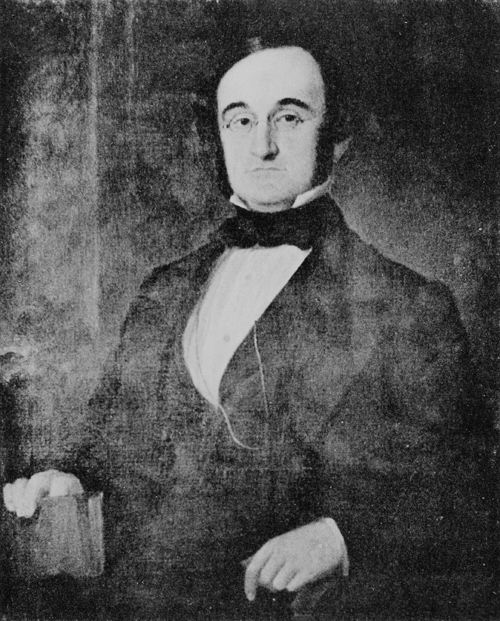
Benjamin_Franklin_Perry

Benjamin Franklin Perry

Benjamin Perry died in Greenville on December 3, 1886 and was interred at Christ Church Episcopal Cemetery.

Benjamin F. Perry was appointed provisional Governor of South Carolina on June 30, 1865 by President Andrew Johnson – due to his strong unionist views. Perry was directed by the president to enroll voters and to lead the state in the writing of a new state constitution. The delegates at the constitutional convention largely followed Perry’s guidelines for the constitution, but they strayed by adopting the black codes to prevent black suffrage.

Despite his pro-Union views, Perry did not believe in racial equality.  In 1865 he said,

The African, has been in all ages, a savage or a slave. God created him inferior to the white man in form, color, and intellect, and no legislation or culture can make him his equal… His hair, his form and features will not compete with the Caucasian race, and it is in vain to think of elevating him to the dignity of the white man. God created differences between the two races, and nothing can make him equal.

Today In Charleston History: December 2

1824
John-C-Calhoun

Calhoun as an elder statesman

John C. Calhoun was elected vice-president of the United States by a large margin, with 182 electoral votes. He had doubled his chances of winning by running on two tickets, with both Andrew Jackson and John Quincy Adams.

1828

John C. Calhoun was reelected to the vice-presidency with an electoral college vote of 171.

1860

Although the outer walls of Fort Sumter were finished only about 80 % of the interior work and the mounting of guns had been completed. Of the 135 guns planned for the gun rooms and the open parapet, only 15 had been mounted.

1871

Christopher Columbus Bowen (see the November 4 post for his story) was admitted to the South Carolina House of Representatives despite the fact that he had committed “an infamous crime.” Bowen was married to Susan Petigru King of Charleston. Soon after their wedding Tabitha Park, a manger of brothels, appeared on the scene. Park claimed that she was, in fact, Bowen’s real wife. According to Park, Bowen left her three-years earlier in order that he might live in “open adultery with another woman.” Bowen offered a settlement of one thousand dollars, but Park suspected a member of the United States Congress could do better than that. A bigamy trial followed and Bowen escaped conviction because one member of the jury would not find him guilty mainly because the juror “had been well rewarded beforehand for agreeing to hang the jury.”

ChristopherCBowenA woman named Frances Hicks then appeared before a federal grand jury. She claimed (and had evidence) that Bowen had actually married her, in 1852. This time, the jury took only twenty minutes to reach a verdict and Representative Bowen was found guilty as charged. Susan Petigru dramatically offered up herself for sentencing, as a substitute for the person who was claiming to be her current husband. She also informed the court that she could not part with Mr. Bowen because he was “too pure” and “too good.” Bowen was sentenced to two years in the Albany penitentiary and fined two hundred and fifty dollars. 

Susan Petigru sought help directly from the White House. When President Grant declined to see her, she took it upon herself to seek a letter of support from General Sherman. She then followed the Grants to their summer home in Long Branch, New Jersey. There, she managed to get the ear of Grant’s wife, Julia Dent. Less than a month after Representative Bowen’s conviction, President Grant signed a “full and unconditional pardon” for his fellow Republican.

Grant’s clemency warrant stated the Representative was “innocent of any intentional violation of the law” and “acted in good faith believing his former wife to be dead.” The warrant also gave Bowen credit – amazingly enough – for rendering “good service” to “the cause of the Union during the late rebellion and since its termination.”

1901

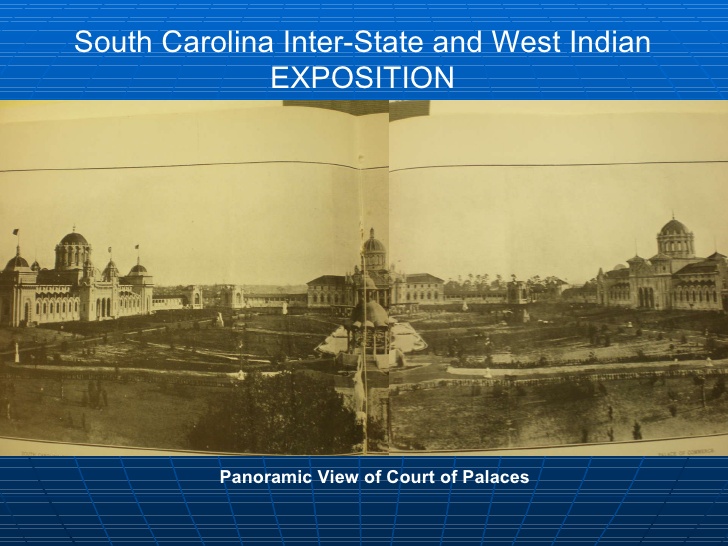
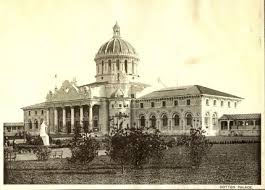
The South Carolina West Indian Exposition opened. More than 22,000 people attended on the first day. See the official guide of the Exposition.

expo

group-6-south-carolina-interstate-8-728

cotton palace

Cotton Palace


Today In Charleston History: December 1

1773 – American Revolution – Foundations.

Two hundred and fifty-seven chests of tea arrived in Charlestown on the ship London. Consigned by the East India Company, the arrival of the tea set off a crisis. Handbills were passed out, calling for a mass meeting of all South Carolinians at the great hall in the Exchange Building.

1781 American Revolution

Henry Laurens, Charleston diplomat, and the first American imprisoned in the Tower of London, wrote a bitter note which was smuggled out of the Tower and sent to Congress:

Almost fifteen months I have been closely confined and inhumanely treated. The treaty for exchange is abortive. There has been languor, and there is neglect somewhere. If I merit your attention, you will not longer delay speedy and efficacious means for my deliverance.

laurens, tower

Tower of London; Henry Laurens’ cell. Photos by Mark R. Jones

1801
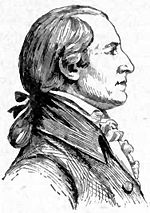
Tucker_Thomas_Tudor_-_St._George

Dr. Thomas Tudor Tucker

Dr. Thomas Tudor Tucker of Charleston was appointed as Treasurer of the United States by President Thomas Jefferson. He would hold the position for twenty-six years under four different presidents: Jefferson, Madison, Monroe and John Quincy Adams, and died while holding the office in 1828. From 1809 to 1817, Tucker managed to hold the treasurer’s post while also serving as President James Madison’s personal physician.

Tucker was the longest serving Treasurer in American history.

1820

Thomas Bennett was elected governor of South Carolina.

1822 – Slavery

As a result of the Vesey Conspiracy, SC Legislature passed a law requiring all free black males over fifteen years old either take a white guardian, or be sold into slavery.  Any free black who left South Carolina and returned could be enslaved.

1832 – Nullification Crisis

In a coordinated effort with V-P Calhoun, Robert Hayne resigned his seat in the U.S. Senate.

1863

On December 1, the Planter was caught in a crossfire between Union and Confederate forces. The ship’s commander, Captain Nickerson, decided to surrender. The ship’s pilot, Robert Smalls refused, fearing that the black crewmen would not be treated as prisoners of war and might be summarily killed. The Planter was a former Confederate vessel that was piloted out of Charleston harbor by an enslaved pilot, Robert Smalls, who surrendered the vessel to the United States navy. Smalls and his family were given their freedom and Smalls later met with Pres. Lincoln. 

Taking command of the Planter from Nickerson, Smalls piloted the ship out of range of the Confederate guns. For his bravery, Smalls was named to replace Nickerson as the Planter’s captain – the first black captain of a vessel in the service of the United States.

planter-gun-boat

The Planter