Today In Charleston History: October 6

1780 -American Revolution

Gov. Rutledge commissioned Thomas Sumter as Brigadier-General in command of all state militia. His instructions to Sumter were to inspire the public, enroll as many men as possible, and be prepared to “co-operate with the Continental forces.”

Rutledge, in order to escape capture by the British, was living in the field, moving from Hillsborough, North Carolina, to Salisbury, to Charlotte, to Cheraw, South Carolina.

1780 – American Revolution – England

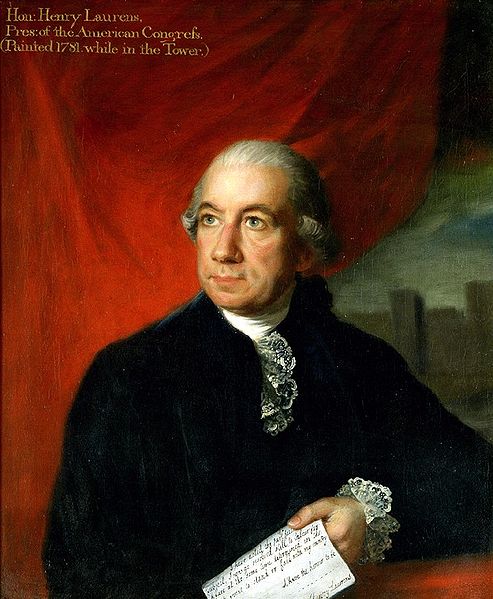
Henry_laurensHenry Laurens, was sentenced to the Tower of London for “suspicion of high treason.” His imprisonment was protested by the Americans. Laurens was captured by the British navy while acting as an envoy for the Continental Congress, negotiating treaties with European countries to support the American cause against the British. During his imprisonment, Laurens was assisted by Richard Oswald, his former business partner and the principal owner of Bunce Island. Oswald argued on Laurens’ behalf to the British government.

He was the first American to be imprisoned in the Tower. 

laurens, tower

L: Tower of London. R: Henry Laurens’ room in the Tower. Photos by Mark R. Jones

Today In Charleston History: October 5

1815

The Broad Street Theater reopened 1815 under the management of English actor Joseph Holman. He planned a network of southeastern theaters with a large company rotating among such cities as Norfolk, Augusta, and Savannah. Upon Holman’s death in 1817, his son-in-law Charles Gilfert took over.

charleston theater, broad and new streets

Broad Street Theater at Broad and New Streets, destroyed by the 1861 fire.

1842- Births

Augustine Thomas Smythe was born in Charleston, the son of Presbyterian minister Rev. Thomas Smythe. Gus grew up to become an important character in the history of Charleston, an eyewitness to secession and documenting the Federal bombardment of 1863-65 through a series of letters. 

1917

The notorious and open red light district of Charleston, SC was officially closed. Commercialized vice, an Charleston tradition since the early 1700s was wiped out through a combined pressure of federal officials, anxious to protect the many soldiers and sailors who are stationed near Charleston, and Mayor Hyde, a Baptist elected on a reform ticket.

During a large raid, Charleston police and federal officials arrested 54 “fornicators” and closed eight brothels. Within three weeks, the “segregated district” was so quiet that property owners began to complain that the “anti-vice campaign had been too successful.” 

For more history of Charleston debauchery, purchase my WICKED CHARLESTON books.

marks books - wicked 2 cover (hi res)

marks books - wicked cover (hi res)

Charleston Historic Image #1

This is the earliest outdoor known photo taken in Charleston, South Carolina.- Seigling’s Music House which sat on the corner of King and Beaufain Streets from 1840 until the early 1970s. It advertised itself as “America’s oldest music house.” 

German-born John Seigling started his music store in 1819 on Meeting Street, selling harps, pianos and wind instruments. He relocated to 243 King Street (at the bend) after the 1838 fire. During the War (Between the States) Seigling’s firm manufactured drums for the Confederate Army. C. Casimer Seigling closed the store in 1970, after being a Charleston institution for 150 years.

Seiglings Music House 1853

Seiglings Music House 1853

#Today In Charleston History: October 4

1769  – Backcountry

In a letter to Lord Hillsborough, Lt Gov. William Bull complained about those:

backcountry inhabitants who chose to live by the wandering indolence of hunting than by the more honest and domestic employment of planting … little more than white Indians.

1776   

A grand jury in Charlestown recommended:

 that Jews and others may be restrained from allowing their negroes to sell good in shops, as such practice may induce other negroes to steal and barter with them … a profanation of the Lord’s Day.

Today In Charleston History: October 3

1650 – English Civil War, Foundations of Carolina.

Parliament passed an act which prohibited trade between England and Barbados. During the English Civil War Barbados became an asylum for Royalists seeking to avoid the conflict. After the execution of Charles I, Parliament sought to punish Barbados for remaining loyal to the King by restricting their trade. This eventually created an economic crisis on the small island.

Twenty years later, the Carolina colony became the “promised land” for many Barbadian merchants and planters.

1718 – Piracy
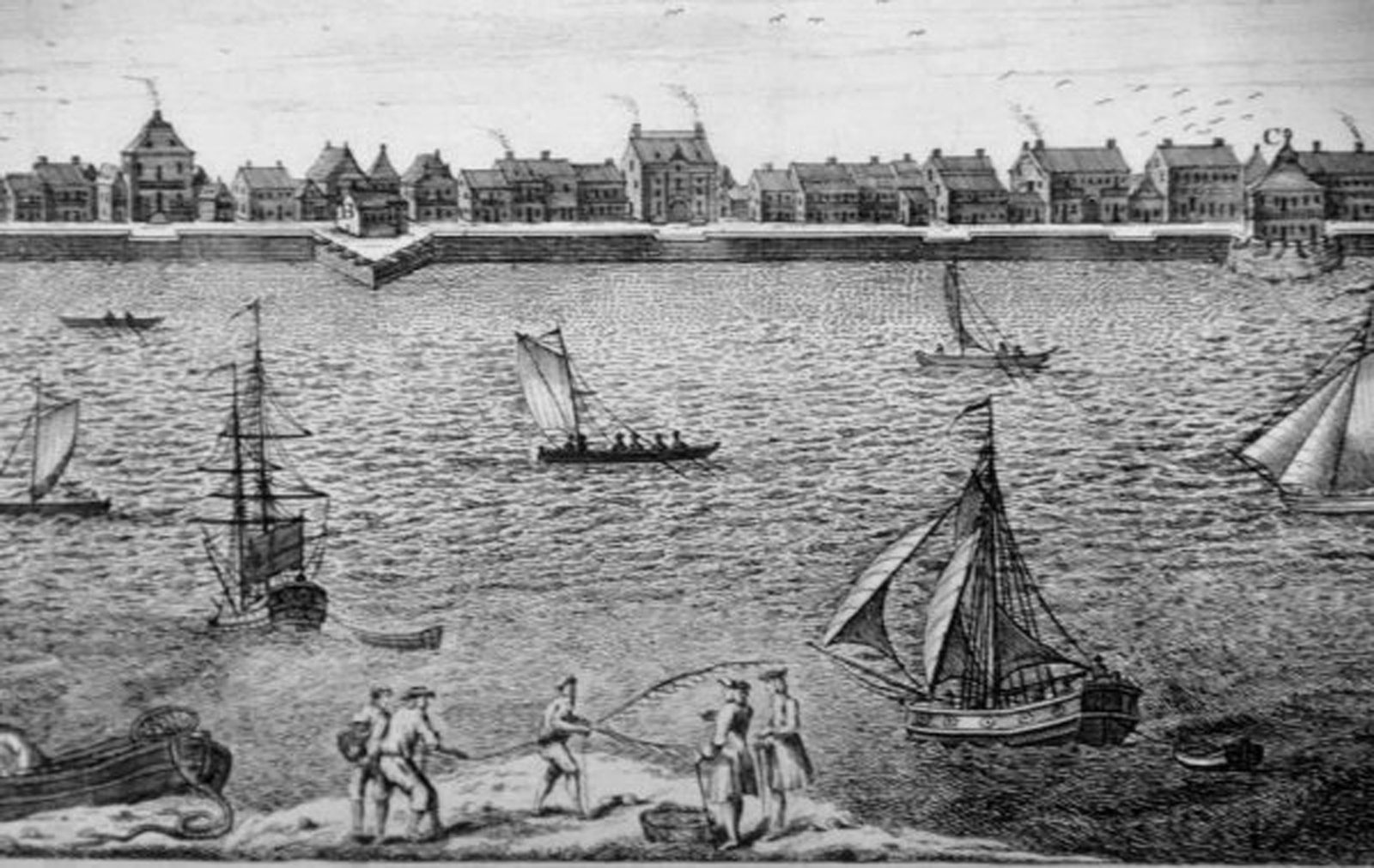
1739_prospect_half-moon_small

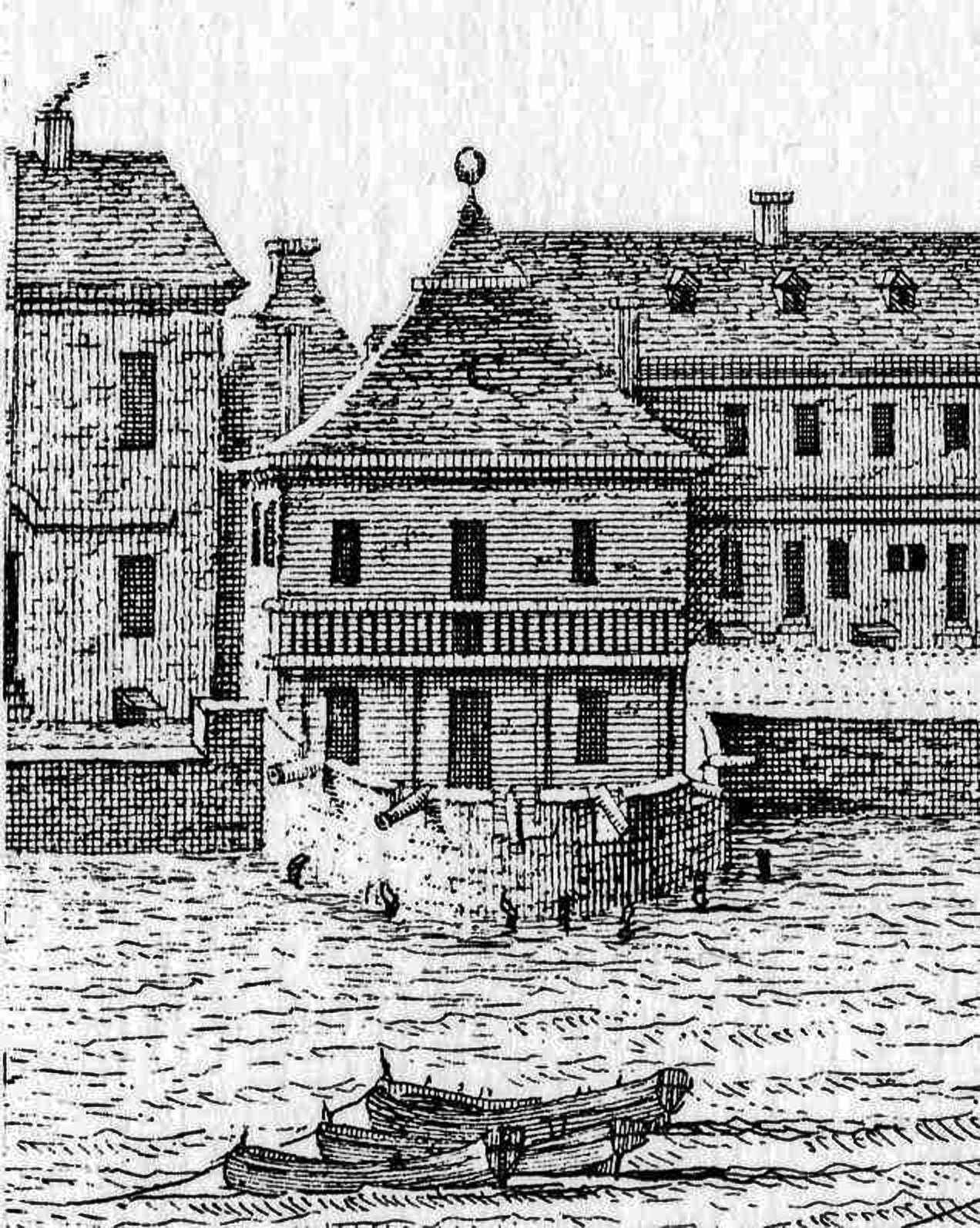
Half Moon Battery

Col. William Rhett triumphantly returned to Charles Town with two vessels which had been captured by the pirate Stede Bonnet, the Fortune and the Francis. Rhett delivered Bonnet and his men to the Provost Marshal of Carolina, Capt. Nathaniel Partridge, who placed them in the watch-house at the Half Moon battery to await trial.

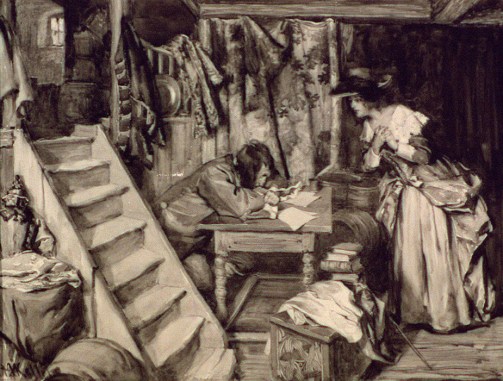
Stede Bonnet remained in the custody of Capt. Partridge at the latter’s residence under armed guard. David Herriot and boatswain Ignatius Pell were also kept in Partridge’s residence, as they had agreed to give evidence for the Crown.
http://hdl.loc.gov/loc.pnp/cai.2a13632

Stede Bonnet imprisoned in Charles Town.

1767

Henry Laurens confronted Gov. Daniel Moore and rebuked him over his behavior. When Moore responded with an insult Laurens grabbed him by the nose and twisted it before a crowd of people. Laurens and other Charlestown merchants filed several lawsuits against Moore charging him with illegal extortion of fees. Moore quickly sailed to London to present his case to the Royal authorities.

1769  – Backcountry

In a letter to Lord Hillsborough, Lt Gov. William Bull complained about those:

backcountry inhabitants who chose to live by the wandering indolence of hunting than by the more honest and domestic employment of planting … little more than white Indians.

1776   

A grand jury in Charlestown recommended:

 that Jews and others may be restrained from allowing their negroes to sell good in shops, as such practice may induce other negroes to steal and barter with them … a profanation of the Lord’s Day.

1793 – Slavery, Haitian Rebellion

The ship Maria, bearing refugees from Haiti, docked in the city’s harbor.

1833 – South Carolina Railroad

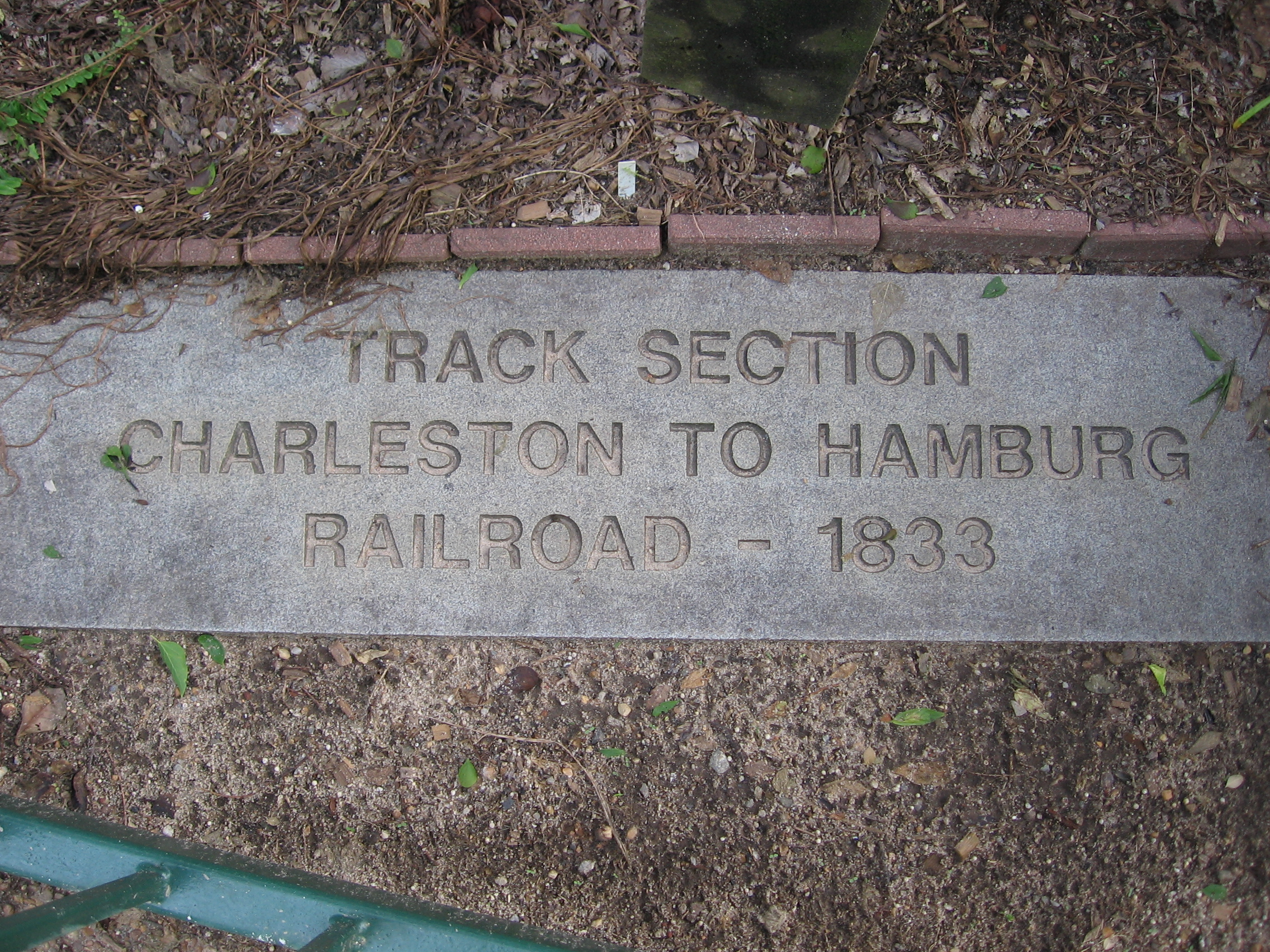
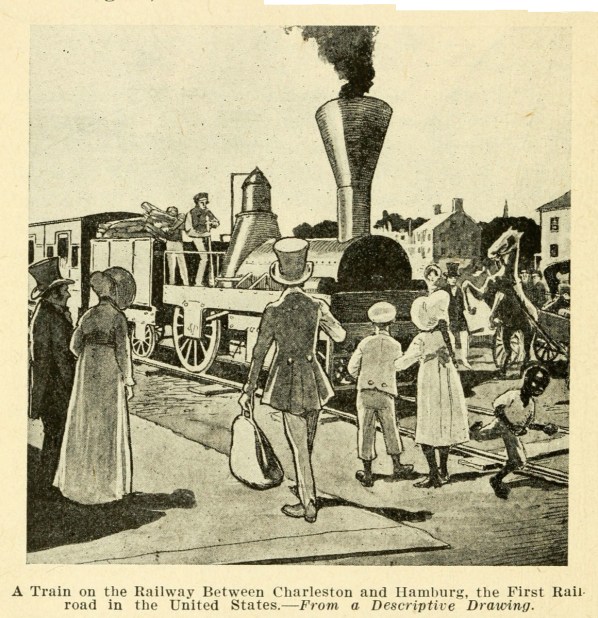
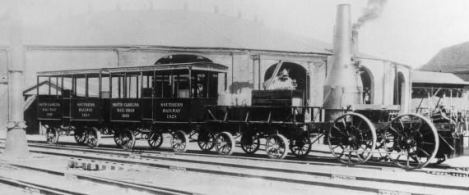
The Charleston & Hamburg Railroad began to run two passenger-only daily trains from Line Street to Ridge Road, located between Cypress Swamp and Four Hole Swamp. The first train left Charleston at 6:00 a.m. and returned at 9:00 a.m. The second train left at 1:00 p.m., returning at 3:00 p.m.  For the first time, people could visit to Charleston and return home 30 miles away in one day.
best friend

Today In History: October 2

1833

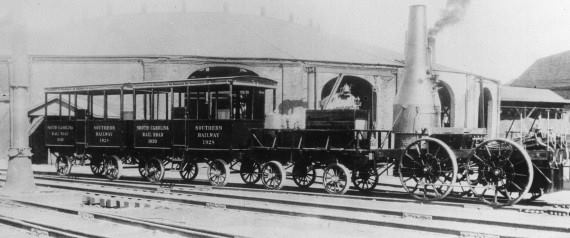
augusta-train-tracks-001The railroad from Charleston to Hamburg was completed, 136 miles – the longest railroad in the world at the time. Cost of the project was $950,000. The next day, a special “dignitaries” train ran from Charleston to Aiken, South Carolina, with Governor Robert Y. Hayne on board.

BEST FRIEND -history of south carolina - simms
1899

    At a meeting to organize the annual Fall Festival, Col. John H. Averill suggested that the festival needed some rethinking.

Why not change the Fall Festival to an Exposition of the resources and industry of South Carolina? Abandon the Festival this year, and open the twentieth century, one year from now, with an Exposition that will reflect credit on our city and all its people.

Today In Charleston History: October 1

1768 – American Revolution – Foundations.

The mechanics in Charles Town nominated candidates for election who opposed the Quartering Act, Stamp Act and Sugar Act. Led by Christopher Gadsden they met at the Liberty Tree “where many loyal, patriotic, and constitutional toasts were drank.” In honor of John Wilkes’ North Briton No. 45 the Liberty Tree was decorated with forty-five lights and forty-five rockets were fired. The company marched to Dillon’s Tavern where there were:

45 lights … upon the table, with 45 bowls of punch, 45 bottles of wine, and 92 glasses.  They spent a few hours in a new round of toasts.

map 1762, bishop

Charles Town, circa 1762

1785   

 The South Carolina Legislature voted 51-47 against West Indian slave trade ban. Charles Cotesworth Pinckney argued that South Carolina was not suited for supporting small white farmers because the land “was not capable of being cultivated by white men” – a reference to the unhealthy swamp lands of the low country. 

Alexander Gillon, Edward Rutledge and David Ramsay voted for the trade ban. Ramsay stated “that every man [who] went to church last Sunday, and said his prayers, was bound by a spiritual obligation to refuse the importation of slaves.”