SMOKE SCREEN; A Review

I live in Charleston, and try to read as many novels that use my hometown as a setting. Unfortunately, as Charleston has become the #1 tourist destination over the last 5 years, more authors are using us in their fiction. Usually with bad results.

smoke screenThis book is awful. One of the clues that you’re reading a poorly written (re: poorly designed plot) is when all the characters spend A LOT of time at the end explaining the story. It’s the writer’s job to get that information to the reader without the clunky conclusion of endless explanations. We are no longer living in the age of Agatha Christie.

Brown seems to have studied Charleston via Google maps for her location descriptions. And, by the way … seems like she was reaching for a little bit of Carl Hiaasen feel at the beginning by creating an eccentric and wacky hermit (Delno Pickens) living in the marsh, but for no reason except local color. Pickens has NOTHING to do with the story. 

That being said: the plot is something about a fire and city corruption blah … blah … blah. Pretty sure that producers of the CBS show “Reckless” (also based in Charleston) must have read this novel for research.

1 palmetto


Today In Charleston History: September 4

1666

William Rhett was born in London, during the Great Fire.  Thirty-two years later he would move to Carolina and become one it’s most prominent citizens.

1700 – Hurricane!

A fierce hurricane hit Charles Town causing extensive damage to the waterfront fortifications being constructed and destroying the Rising Sun, killing its 200+ crew and passengers. Stobo viewed the event as God’s judgment. He wrote that “the ship’s crew were so filled with wickedness that they could hold no more; they were ripe, they must be cut down with the sickle of His wrath.”

Edward Hyme, a newly arrived immigrant, described the catastrophe to his wife in England:

On Tuesday September 3 here happened a most terrible Storm of Wind or Hurricane with continual Rain; which has done great Damage to ye Country. Thousands of Trees have been torn up by ye Roots, many Houses blown down & more damnified; much Rice Corn & c spoiled; but ye greatest Mischief fell amongst ye Shipping of which about a Dozen Sail (of all sorts) were riding at Anchor before ye Town, some of which were driven on Shoar & broke all in Pieces, some were carryed a great Way up into ye Two Rivers into Ashley River, in her way breaking down a Pair of Gallows (from which 8 Pirats at once were hanged since my coming here) some were turn’d Bottom upwards & lost. but ye greatest and most deplorable loss of all was that to a great Scotch Ship called ye Rising-Sun, which having lost all her Masts in a Huricane in ye Gulf of Florida was riding at Anchor with out our Bar, wth Designe to come in here & refit; but being a Ship of 800 tons & 60 guns she durst not venture in with out lightening to which Purpose One Sloop has already been on board her, but waiting for another, ye Storm rise & she foundred at Anchor, ye Captain (Gibson) & all ye souls on board (being about 100) misearbly perishing…

Rev. Stobo settled in Charles Town and became renowned for his oratory skills, with sermons lasting more than four hours. Church officials asked that he divide his sermons into two sessions so that members could break for dinner. Stobo refused, claiming that Charleston’s spiritual reservoir needed filling. The next Sunday, Solomon Legare left the service at the two hour mark. Rev. Stobo called out, “Aye, aye, a little petcher (pitcher) is soon full!” Legare called back, “You’ve said enough to fill all the cisterns in Charlestown.”

1766 – Stamp Act.

Thomas Lynch, Christopher Gadsden and John Rutledge sailed for New York on the Carolina Packet to attend the Stamp Act Congress. At age twenty-six, Rutledge was the youngest delegate in attendance.

1786 – Births. Slavery
IMG_0077

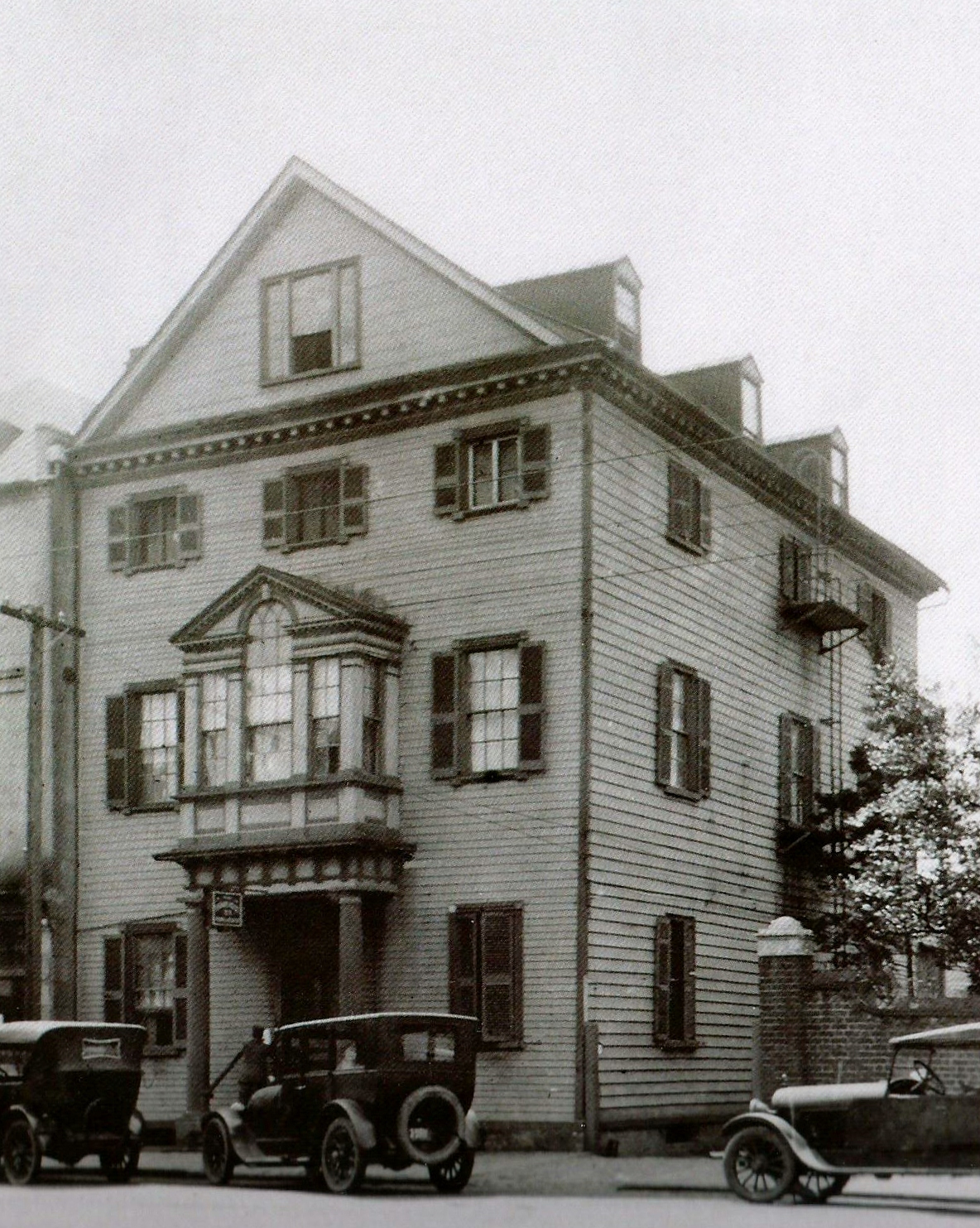
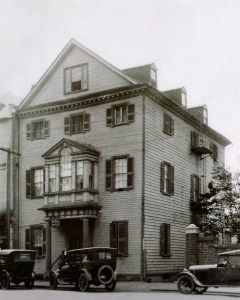
The building that once housed Jehu Jones’s hotel on Broad Street.

Jehu Jones, Jr., a mulatto, was born in Charleston as a slave. He would later become a successful tailor and gain his freedom in 1798. He operated a successful hotel on Broad Street (next to St. Michael’s church) for many years. 

1886

In one of the stranger events, a shower of warm stones fell from the sky on the offices of the News and Courier – twice! The shower of stones occurred at 7:30 a.m. and the second shower at 1:30 p.m. Coming four days after the devasting earthquake, this event increased the unease of a shocked population. 


Today In Charleston History: September 3

1700 – Religion.

The Rising Sun arrived from Scotland, with several hundred Presbyterians, led by Rev. Archibald Stobo. Members of the White Meeting House met Rev. Stobo and invited him ashore to preach the next day. Stobo, his family and twelve other passengers disembarked.

1749 – Religion.
KK BETH ELOHIM, 1812 John Reubens Smith

Kahal Kadosh Beth Elohim, c. 1812 by John Reubens Smith. Note: This building was destroyed by the 1838 fire but the smaller building pictured in the drawing survived and stands today on Hassel Street.

The first Jewish meeting in Charlestown took place. According to Jewish practice there must be a minyan, or ten males over the age of thirteen, for services to take place. They adopted the name Kahal Kadosh Beth Elohim – holy Congregation of the House of God. They used a small wooden house on Union Street (now State) for their worship services until 1750, when the purchased land on Hasell Street. 

1780 – Laurens Captured

During Henry Laurens’ return voyage from the Netherlands, the British frigate Vestal intercepted his ship, the continental packet Mercury, off the banks of Newfoundland. Laurens tossed his dispatches overboard, but they were retrieved by the British, who discovered the draft of a possible U.S.-Dutch treaty, prompting Britain to declare war on the Netherlands. The British charged Laurens with treason and transported him to England for trial.

1783 – Treaty of Paris

Treaty of Paris was signed by Benjamin Franklin, John Jay and John Adams. Henry Laurens of Charleston, who had participated in the negotiations for the Americans, left Paris before the signing ceremony. In a letter to his wife Abagail, John Adams stated:

I have the Satisfaction to inform you that the definitive Treaties were all Signed yesterday, and the Preliminaries with Holland were Signed the day before. Dr. Franklin has fallen down again with the Gout and Gravel … Mr. Laurens , has a Brother declining, so that he will go to the south of France, untill he knows his Brother’s Fates.

1820 – New Intendent

James Hamilton was elected Intendent (mayor) of Charleston.

Today In Charleston History: September 2

1706 – Queen Anne’s War

A joint French and Spanish attack upon Charles Town  is repulsed when English Colonial forces capture a French vessel. Governor Nathaniel Johnson and Lieutenant Colonel William Rhett lead the successful defense of Charles Town against a combined force of Spanish, French, and Native American combatants who sailed into Charleston harbor from St. Augustine..

1863 – Bombardment of Charleston

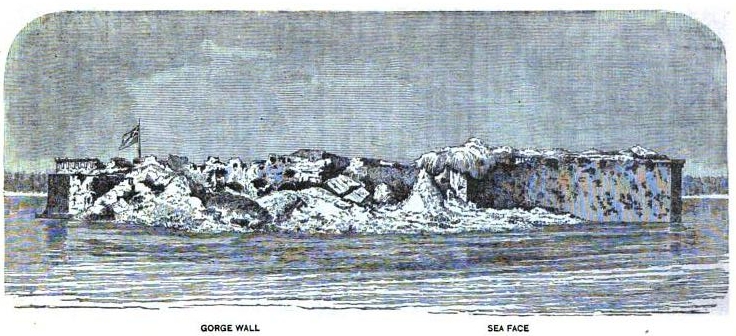
Ft. Sumter was demolished. John Johnson, a Confederate engineer, wrote:

The fort had now lost all offensive character, but it had been firmly decided by the [Confederate] general commanding to hold it in a defensive way to the last extremity.

aug24sumter21

Ft. Sumter

aug24sumter23

Ft. Sumter


Today In Charleston History: September 1

1734 

Jean Pierre Purry, wrote about South Carolina:

The Trade of Carolina is now so considerable that of late years there has sail’d from thence Annually above 200 ships … besides 3 ships of war … which had above 100 Men on Board. It appears from March 1730 to March 1731 that there sail’d rom Charles Town 207 ships … which carried … 41,957 barrels of rice about 500 Pounds Weight per barrel … besides a vast quantity of Indian corn, Pease, Beans, Beef, Pork and other salted Flesh … There were between 5(00) to 600 houses in Charles Town … most of which were very costly.

1737 – South Carolina Society
28elliott

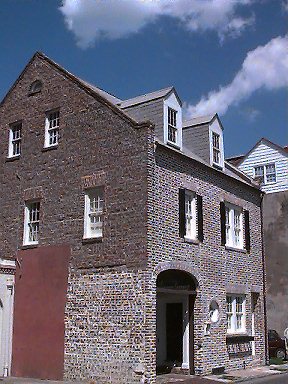
Poinsett’s Tavern, 28 Elliott St.

The South Carolina Society was established.

Originally called the “Two-Bitt Club,” it was organized by French Huguenot artisans and forbade the use of English in the beginning. Their goal was to support indigent and widows and orphans. The met at Jacob Woolford’s Broad Street Tavern or at Poinsett’s Tavern on Elliott Street, opposite Bedon’s Alley.

The Society was incorporated by the Provincial General Assembly as the French Society on May 1, 1751, and King George II confirmed it at the Court of St. James on December 20, 1752. Soon afterward, the name was changed to the South Carolina Society and began including non-French members.

The Society purchased a block of land between George and Wentworth streets, cut a new street through it (the present Society Street), and built a school for orphan boys. 

182881_l

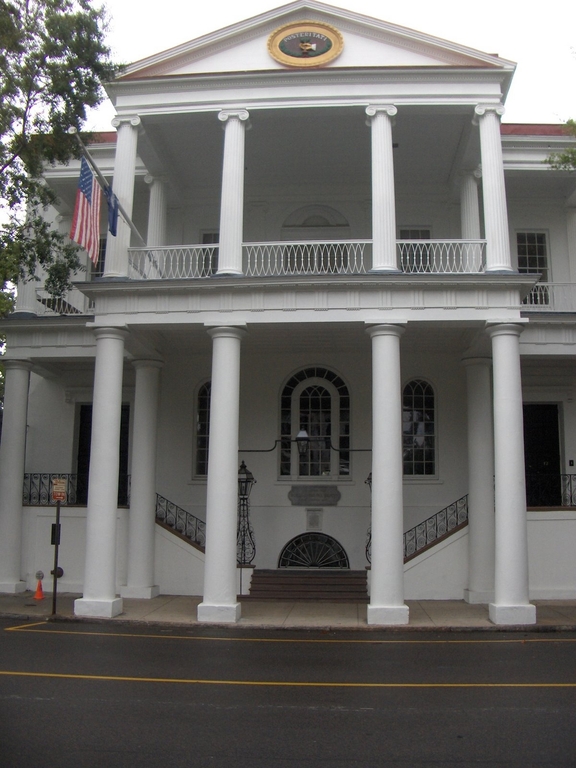
Society Hall, 72 Meeting St.

In 1804, the Society built the South Carolina Society Hall at 72 Meeting Street as a school for female orphans and indigents, and as a meeting place. The first floor was used to school orphans and indigents, while the second floor was a ballroom for social purposes.


1881 – Jenkins Orphanage

 Daniel Dickinson, a freed slave from Barnwell County (SC), chose the surname Jenkins to illustrate his freedom. He later moved to Charleston and established an orphanage house for “Black lambs.”