Today In Charleston History: January 19

1787

Four sailors allegedly “attacked a gentleman on the Bay, supposed with the intent to rob him.” The victim retreated to his store, “where he not only…defended himself, but…at length beat them off.”  No comment 😉

1814

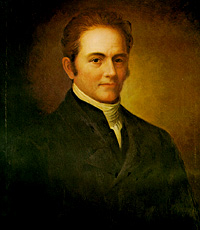
Langdon Cheves was elected speaker of the U.S. House of Representatives, replacing Henry Clay.
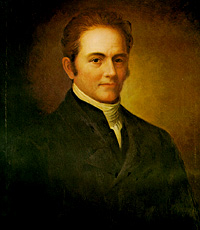
Langdon Cheves

Langdon Cheves

Cheves was born at Bull Town Fort, on the Rocky River in South Carolina.  At the age of ten he went to Charleston to earn a living, and at sixteen had become confidential clerk in a large mercantile house. In 1797 he was admitted to the bar to practice law. In 1808 his yearly income exceeded $20,000, making him wealthy for his time. He also became Attorney General of South Carolina, serving until 1810.

In 1806 he married Mary Elizabeth Dulles, of Charleston and was elected to the  U.S. House in 1808.. Cheves soon distinguished himself as the best orators in Washington. His speech on the merchants’ bonds in 1811 was so eloquent Washington Irving, who was present, said for the first time it gave him an idea of the manner in which the great Greek and Roman orators must have spoken.

Cheves became the ninth Speaker of the House on January 19, 1814, and served until March 4, 1815, when his Congressional term ended.


Today In Charleston History: December 8

1769 England  – John Wilkes Affair.

The South Carolina Assembly voted to send to £1500 sterling to help pay the debts of John Wilkes “for the support of the just and constitutional rights and liberties of the people of Great Britain and America.”  (See November 21 post for explanation of the John Wilkes affair.)

The Sons of Liberty, who met at the Liberty Tree, considered this part of “their resistance to the arbitrary rule by the same Parliament that had imposed unconstitutional taxes on America.” At the behest of Christopher Gadsden, the Assembly ordered Jacob Motte, the public Treasurer, to send £10,500 provincial currency to the John Wilkes Fund in London “for assisting in the support of the just and constitutional rights of the People of Great Britain and America.” Only seven members of the Assembly voted against the measure, including Speaker Peter Manigault. This action shocked and infuriated government officials in both London and Charlestown, as it undermined official authority over the financial purse-strings of the colony.

1808
Langdon Cheves

Langdon Cheves

Langdon Cheves was elected Attorney General of South Carolina. He would later be elected to the House of Representatives and served as Speaker of the House 1814-15.

1817

John C. Calhoun took the oath of office as Secretary of War under Pres. James Monroe.

1822 – Slavery.

Intendent (Mayor) James Hamilton introduced a bill to grant “compensation [to] those persons whose slaves have been executed” associated with the Denmark Vesey Rebellion – $122.40 for each slave. 

1864 – Bombardment of Charleston. 
Gen. John G. Foster

Gen. John G. Foster

Gen. John G. Foster, in command of the Department of the South, acknowledged the Federal order to discontinue the bombardment of Charleston … two weeks after receiving it.

Today In Charleston History: November 23

1730 – Births

wm moultrieWilliam Moultrie born in St. John’s Berkeley Parish.

1749 – Births.

Edward Rutledge, last child of Dr. John and Sarah Rutledge was born.

1814
LangdonCheves

Langdon Cheves

Vice President Elbridge Gerry died. The office of President pro tempore of the Senate was vacant which meant Charleston’s Langdon Cheves, Speaker of the U.S. House Representatives was next in line for the Presidency. This ended two days later, when Senator John Gaillard was chosen President pro tempore.

1864 – Bombardment of Charleston.  

Army chief of staff, Gen. Halleck, ordered the suspension of the Charleston bombardment.

“This is not to prohibit the throwing of occasional shell into Charleston, if circumstances should require. The object is to economize ordinance stores.”