Today In Charleston History: December 19

1774

During the elections Francis Salvador was elected to the First Provincial Congress from the Ninety-six district – the first Jew elected to office in the American colonies.

1801

The legislature chartered South Carolina College, now the University of South Carolina.

1827

The Charleston & Hamburg Rail Road was chartered by Alexander Black and William Aiken. Black proposed to build and operate a railed road from Charleston to Hamburg Columbia and Camden.

Map of route for the Charleston & Hamburg line.

Map of route for the Charleston & Hamburg line.

Charleston’s economy heavily depending on the shipping of three staples: cotton to England, rice to southern Europe and lumber to the West Indies. The development of steamers that sailed the Savannah River that brought Georgia and South Carolina crops and goods from August to the port of Savannah, severely cutting into Charleston’s trade.

The proposed railed road from Hamburg (on the Savannah River across from Augusta) was considered the best solution – goods could be transported by rail 136 miles to Charleston. 

1828 – Nullification Crisis. State’s Rights.
John_C_Calhoun_by_Mathew_Brady,_1849

John C. Calhoun (by Matthew Brady, 1849)

The South Carolina legislature adopted the Exposition and Protest (secretly written by Vice-President John C. Calhoun) which argued about the unconstitutionality of the Tariff of Abominations because it favored manufacturing over commerce and agriculture. Calhoun believed the tariff power could only be used to generate revenue, not to provide protection from foreign competition for American industries. He believed that the people of a state or acting in a democratically elected convention, had the retained power to veto any act of the federal government which violated the Constitution.

1860 – Second Day of Secession Convention

The Mercury’s front page exclaimed:

The excitement here is a deep, calm feeling … [the city] may be said to swarm with armed men [but] we are not a mobocracy here, and believe in law, order, and obedience to authority, civil and military.          

     Issac W. Hayne, the state’s attorney general, called for secession commissioners to be sent to other states, to urge them to join South Carolina. He called for each commissioner to carry a copy of South Carolina’s Ordinance of Secession, before it was even approved.

  While the whites were celebrating, among the free blacks in Charleston, the exodus, which had started in September, continued. James D. Johnson, on Coming Street, was preparing his two houses for sale. He wrote, “I only want to beautify the exterior so as to attract Capitalists.” His son wrote, “It is now a fixed fact that we must go.”

At 11:00 a.m. the delegates met at St Andrew’s Hall. A delegate proposed that should “sit with closed doors,” and James Chesnut protested. He claimed that “a popular body should sit with the eyes of the people upon them.” He then suggested they move back to Institute Hall. John Richardson argued to Chesnut: “I protest. If there is one sentiment predominant over all others, and truly the mind of the people of Charleston, it is that this Convention should proceed!” 
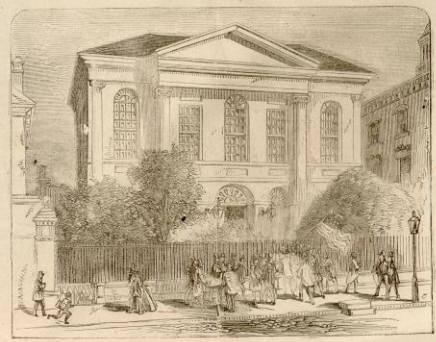
st-andrews-hall-1

St. Andrews Hall, 118 Broad Street. Courtesy of Library of Congress

The doors were shut, locked and guarded by Charleston police. All the citizens could do was wait with the patience of a child on Christmas eve. An afternoon parade by the Vigilant Rifles and the Washington Light Infantry occupied some of the afternoon. They stopped in front of South Carolina Society Hall on Meeting Street, where Mayor Charles Macbeth presented a flag to Captain S. Y. Tipper “sewn by a number of the fair daughters of Carolina.” Capt. Tipper toasted Fort Moultrie:

It is ours by inheritance. It stands upon the sacred soil of Carolina, and the spirit of our patriotic fathers hover about it. Infamy to the mercenaries [Federal troops] that fire the first gun against the children of its revolutionary defenders. 

     The day ended, and no news from the convention. No ordinance yet.

Today In Charleston History: December 8

1769 England  – John Wilkes Affair.

The South Carolina Assembly voted to send to £1500 sterling to help pay the debts of John Wilkes “for the support of the just and constitutional rights and liberties of the people of Great Britain and America.”  (See November 21 post for explanation of the John Wilkes affair.)

The Sons of Liberty, who met at the Liberty Tree, considered this part of “their resistance to the arbitrary rule by the same Parliament that had imposed unconstitutional taxes on America.” At the behest of Christopher Gadsden, the Assembly ordered Jacob Motte, the public Treasurer, to send £10,500 provincial currency to the John Wilkes Fund in London “for assisting in the support of the just and constitutional rights of the People of Great Britain and America.” Only seven members of the Assembly voted against the measure, including Speaker Peter Manigault. This action shocked and infuriated government officials in both London and Charlestown, as it undermined official authority over the financial purse-strings of the colony.

1808
Langdon Cheves

Langdon Cheves

Langdon Cheves was elected Attorney General of South Carolina. He would later be elected to the House of Representatives and served as Speaker of the House 1814-15.

1817

John C. Calhoun took the oath of office as Secretary of War under Pres. James Monroe.

1822 – Slavery.

Intendent (Mayor) James Hamilton introduced a bill to grant “compensation [to] those persons whose slaves have been executed” associated with the Denmark Vesey Rebellion – $122.40 for each slave. 

1864 – Bombardment of Charleston. 
Gen. John G. Foster

Gen. John G. Foster

Gen. John G. Foster, in command of the Department of the South, acknowledged the Federal order to discontinue the bombardment of Charleston … two weeks after receiving it.

Today In Charleston History: December 2

1824
John-C-Calhoun

Calhoun as an elder statesman

John C. Calhoun was elected vice-president of the United States by a large margin, with 182 electoral votes. He had doubled his chances of winning by running on two tickets, with both Andrew Jackson and John Quincy Adams.

1828

John C. Calhoun was reelected to the vice-presidency with an electoral college vote of 171.

1860

Although the outer walls of Fort Sumter were finished only about 80 % of the interior work and the mounting of guns had been completed. Of the 135 guns planned for the gun rooms and the open parapet, only 15 had been mounted.

1871

Christopher Columbus Bowen (see the November 4 post for his story) was admitted to the South Carolina House of Representatives despite the fact that he had committed “an infamous crime.” Bowen was married to Susan Petigru King of Charleston. Soon after their wedding Tabitha Park, a manger of brothels, appeared on the scene. Park claimed that she was, in fact, Bowen’s real wife. According to Park, Bowen left her three-years earlier in order that he might live in “open adultery with another woman.” Bowen offered a settlement of one thousand dollars, but Park suspected a member of the United States Congress could do better than that. A bigamy trial followed and Bowen escaped conviction because one member of the jury would not find him guilty mainly because the juror “had been well rewarded beforehand for agreeing to hang the jury.”

ChristopherCBowenA woman named Frances Hicks then appeared before a federal grand jury. She claimed (and had evidence) that Bowen had actually married her, in 1852. This time, the jury took only twenty minutes to reach a verdict and Representative Bowen was found guilty as charged. Susan Petigru dramatically offered up herself for sentencing, as a substitute for the person who was claiming to be her current husband. She also informed the court that she could not part with Mr. Bowen because he was “too pure” and “too good.” Bowen was sentenced to two years in the Albany penitentiary and fined two hundred and fifty dollars. 

Susan Petigru sought help directly from the White House. When President Grant declined to see her, she took it upon herself to seek a letter of support from General Sherman. She then followed the Grants to their summer home in Long Branch, New Jersey. There, she managed to get the ear of Grant’s wife, Julia Dent. Less than a month after Representative Bowen’s conviction, President Grant signed a “full and unconditional pardon” for his fellow Republican.

Grant’s clemency warrant stated the Representative was “innocent of any intentional violation of the law” and “acted in good faith believing his former wife to be dead.” The warrant also gave Bowen credit – amazingly enough – for rendering “good service” to “the cause of the Union during the late rebellion and since its termination.”

1901

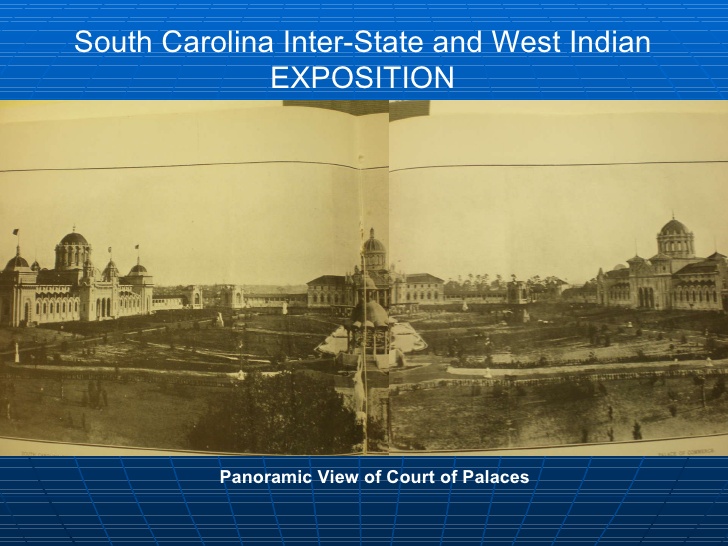
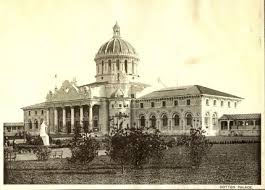
The South Carolina West Indian Exposition opened. More than 22,000 people attended on the first day. See the official guide of the Exposition.

expo

group-6-south-carolina-interstate-8-728

cotton palace

Cotton Palace


Today In Charleston History: October 13

1758 –Deaths 

Charles Pinckney died of malaria in Charlestown. His wife, Eliza, was nearly overcome with her grief. She wrote to her sons:

How shall I write to you! What shall I say to you! You have met with the greatest loss … Your dear, dear father, the best and most valuable of parents, is no more! He met the king of terrors without the least terror … and without agony, and went like a Lamb into eternity, into a blessed Eternity! where I have not the least doubt he will reap immortal joy for Ever and Ever.

1807
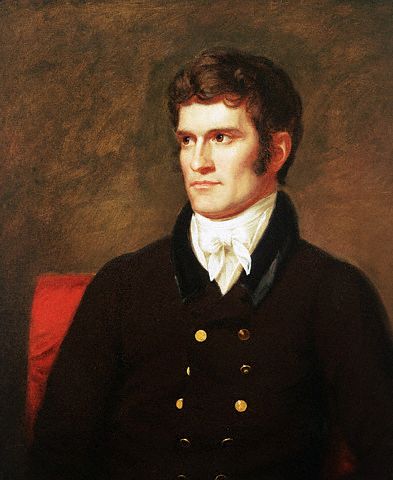
1822 portrait of John C. Calhoun ... before he became so scary-looking.

1822 portrait of John C. Calhoun … before he became so scary-looking.

John C. Calhoun was elected to the South Carolina general assembly from his home town Abbeville, SC.

Today In Charleston History: October 8

1678

Captain Florence O’ Sullivan claimed two town lots on Oyster Point.

1698 – Slavery

The Assembly passed “An Act for the Encouragement of the Importation of White Servants.” Afraid of the growing number of blacks who had been imported as slaves, the South Carolina Assembly passed a law granting £13 to anyone who would bring a white male servant into the province as “…the great number of negroes which of late have been imported into this Colony may endanger the safety thereof.”

The Act also set out terms of indenture service: those over sixteen years old should serve at least four years, those under sixteen no less than seven years.

1817

John C. Calhoun was appointed Secretary of War by Pres. James Monroe. He would hold the position for eight years.

John_C_Calhoun_by_Mathew_Brady,_1849