Today In Charleston History: August 22

1863 – Bombardment of Charleston. 1:30 a.m.
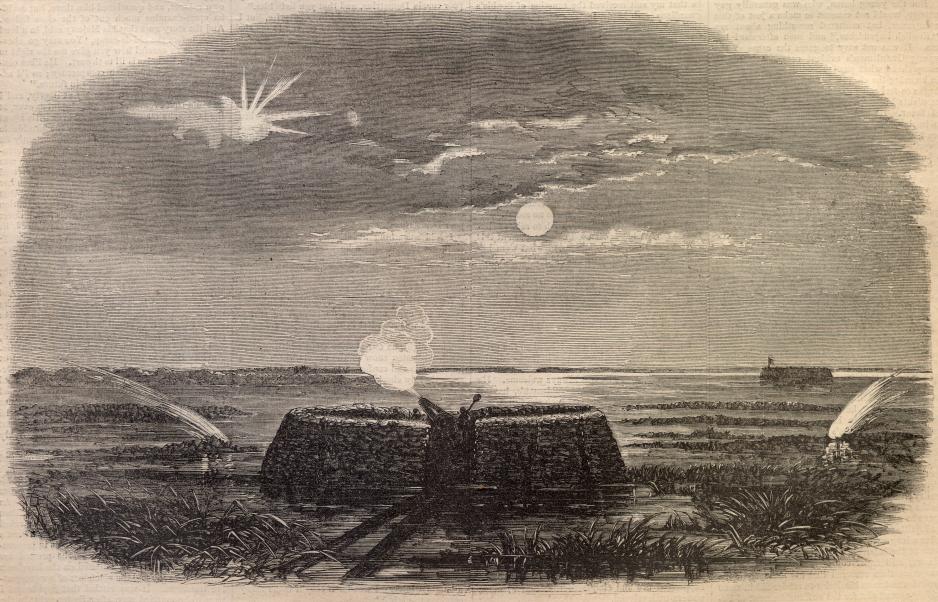
swamp angel

Swamp Angel, the Federal gun that fired upon Charleston.

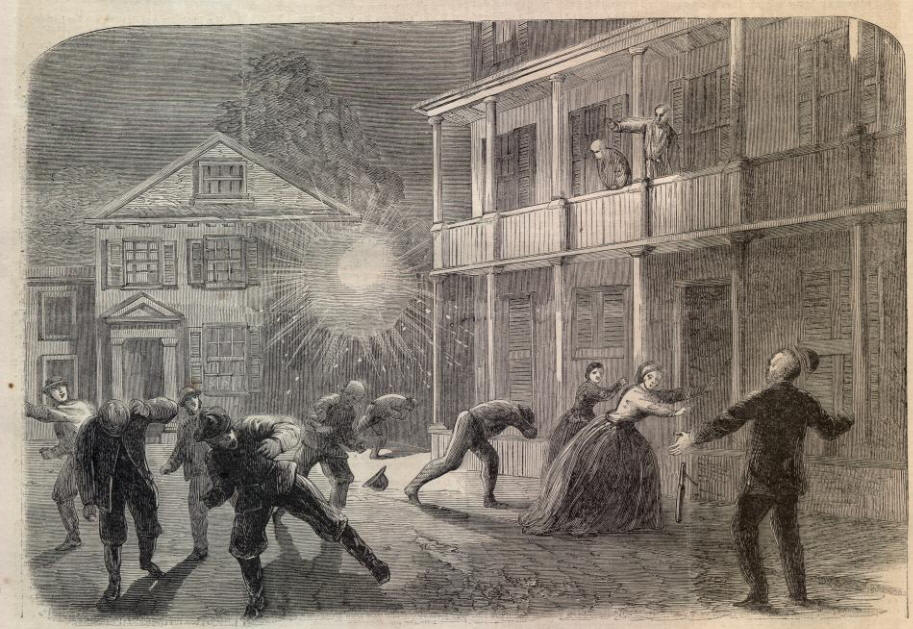
A Federal shell burst just north of the City Market at the corner of Pinckney and Church Streets. It was a 200-pounder shot from the “Swamp Angel.” British war correspondent and illustrator, Frank Vizetelly, was staying at the Charleston Hotel on Meeting Street. Unable to sleep, he was in his room reading Les Miserables when he was:

startled by a noise that …resembled the whirr of a phantom brigade of cavalry galloping in mid-air. My first feeling was that of utter astonishment; but a crash, succeeded by a deafening explosion in the very Street on my apartment was situate, brought me with a bound to the centre of the room … At first I thought a meteor had fallen, but another rush and whirr right over the hotel, and another explosion, settled any doubts I might have had: the city was being shelled.

I will defy anyone who witnessed what I witnessed on leaving my room, not to have given way to mirth … terrified gentlemen rushing about in the scantiest of costumes …One perspiring individual of portly dimensions was trotting to and fro with one boot on and the other in his hand and this was nearly all the dress he could boast …
charleston-bombardment

Frank Vizetelly’s illustration of the first shot

Capt. Charles C. Pinckney, an ordinance officer stationed in Charleston under General Roswell S. Ripley, wrote:

I rode down Smith Street about 2 o’clock A.M. The streets were entirely deserted, yet every house was lighted up. What does it mean?  Have the Yankees slipped in and taken the town while I was asleep? I urged the horse, & reached Headquarters. Without notice, a city full of sleeping women & children – a bombardment without military significance  … was clearly & purely spite!

bombardment, broad street 1864

Miss Pauline Heyward wrote in her diary:

Father went to Charleston on Sunday, and returned today, the Yankees are shelling the City … One shell went thro the roof of a house and straight thro the first floor … and thro the brick wall … into the yard that was paved, and there buried itself six feet into the earth.

Confederate Gen. P.G.T. Beauregard wrote Union Gen. Gillman, accusing the Union officer:

you now resort to the novel measure of turning your guns on the old men, the women and children, and the hospitals of a sleeping city, an act of inexcusable barbarity … if you fire again on this city … without granting a somewhat more reasonable time to remove non-combatants, I shall feel compelled to employ such stringent means of retaliation as my available …

 During the night a free “Negro” fire company extinguished the first fire from the bombardment.
THE PASSAGE: A Review

First, the good things:

There is NO Bella in this book. No misty eyed teenage romance. There is no soul-searching Lestat who laments his life in overlong paragraphs filled with purple prose. There is no erudite Count with a cape. No Victorian damsels in flimsy nightgowns and heaving bosoms. In Justin Cronin’s The Passage, the “vampires” are the result of a military genetic experiment gone horribly wrong and ultimately, out of control. They are vicious, nasty, virtually unstoppable and very very hungry. The first 250 pages of The Passage are the best fiction I have read this year.

Now the bad:

passageUnfortunately, the book is 766 pages long. With two sequels on the way. The novel covers over 1000 years. The first section follows modern day events. A military/ scientific expedition in South America captures a jungle virus and takes the secret to a lab for study. They discover the virus increases strength in test monkeys and prolongs their lifespan. The government hatches plans to create a Super Soldier. FBI agent Brad Wolgast is put on special assignment with the military to bring “volunteer test subjects” from death row prisons across America to be infected with the virus. But when Wolgast is ordered by his military superiors to capture a 10 year old girl, Amy, and deliver her to the lab, he rebels. The army hunts them down and Amy is taken to the lab to be tested. Then, the world goes to hell.

Twelve of the infected creatures escape the lab and overnight destroy the entire military installation. Wolgast and Amy barely escape and spend the next several years living in isolation. Then … one day there is a brilliant explosion to the west. Amy is blinded by the nuclear blast, and Wolgast slowly dies of radiation poisoning.

The book then jumps 1000 years in the future. The creatures (called Virals or Jumps) have wiped out most of the human population. Ninety per cent of infected humans die – ten per cent become Virals themselves.

What follows is an alternately entertaining, horrific, tedious and ultimately, frustrating apocalyptic story of the human survivors and their civilization. This is where author Justin Cronin falls woefully short of his goals. Having published two short modern and very literary novels, Cronin branches into territory usually reserved for such “inferior” writers as Stephen King, Robert McCammon and Richard Matheson. When “serious” writers stoop to write horror or science fiction – genre fiction! – the result is usually well-written crap.

Several years ago we got the novel Jonathon Strange & Mr. Norrel, an old fashioned English novel about magic and evil. The literary world loved it … heaped praise upon it and claimed that it “redefined the horror novel.” It sure did – it redefined the horror novel as tedious and stodgy. The Historian was also forced upon us as a “brilliant re-working of the vampire legend.” The only brilliant thing about the book was its ad campaign. The book was literary sawdust. Remember when Norman Mailer (a literary giant, just ask him) claimed he could write a great mystery novel, and we got Tough Guys Don’t Dance? If you actually finished that book, your place in heaven is assured. Those of us going to hell will probably have to reread it for eternity.

There are sections of The Passage, and I mean dozens of pages, that beg to be skipped. Cronin often forgets he is NOT writing a mainstream novel where nothing is supposed to happen. He has chosen to write a genre novel for money … and of course, he can make it better than those popular writers because, after all … he is a serious novelist.

If you really want to read this kind of story, I recommend 2009’s The Strain, with a similar story and sweep (now a TV event on FX) or how about two all-time apocalyptic classics: The Stand by Stephen King and Swan Song by Robert MacCammon. Those two pulp writers managed to write a couple of horrific novels that are everything The Passage isn’t … great. 

For all its posturing (and intellectual promotion among the literary elites) The Passage is not a bad novel, just not a good one. I’m betting the Hollywood movie will be better than the book.

3 palmettos

THE LOST SYMBOL: A Review

HOW TO WRITE A BESTSELLER.

the_lost_symbolLet’s see: Your previous novel sold more copies than Wilt Chamberlain had sexual partners. What do you do for an encore?

  • Replace the Catholic Church with the Freemasons. Check!
  • Replace DaVinci’s painting “The Last Supper” with the architecture of Washington, DC. Check!
  • Keep the hero from your previous books, Robert Langdon. Check!
  • Replace Silas (from The Da Vinci Code), who practiced corporal mortification, with Mal’akh, a tattooed, self-castrated and brilliant villain who is in search of an ancient source of power. Check!
  • Toss in another brilliant (and gorgeous, of course) female character named Dr. Katherine Solomon. Check!
  • Make sure the characters get to visit most of the major buildings in DC. Check!
  • 5 million copies for a first run printing. Check!
  • Start thinking about the next project … hmmm, the Boy Scouts have some shady things in their past, don’t they? Check!

Final thoughts: The Lost Symbol is bad, but not as bad as Pat Conroy’s South of Broad. No one expects Dan Brown to deliver good writing … Conroy however, we do. Beyond bad, beyond comprehension. Recommended if you’re into agony.


Companion Read: The Brotherhood of the Rose by David Morrell.

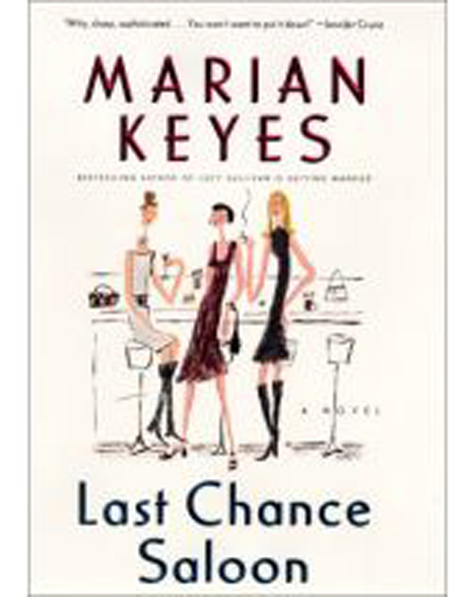
LAST CHANCE SALOON: A Review

Three friends from a small Irish town have lived in London for the past 12 years. Kathleen leads a quiet, orderly existence as an accountant for an advertising agency. She’s happy on her own, believing that romantic relationships only lead to pain. Tara shares a flat with her boyfriend, Thomas, and works as a computer analyst. Thomas is an opinionated cheapskate who constantly badgers Tara about her weight, but hey, it’s better than being single and she really does love him (she just doesn’t like him very much). Of the three, the gay man Fintan is the happiest, with a fashion design career and a caring partner.

last chanceKatherine is by far the most interesting and well-developed character. She is called the Ice Queen at by the men at her work, but she is doggedly pursued by her good-natured co-worker Joe, Katherine rebuffs him constantly until he stops his pursuit, and then Katherine realizes she is jealous when Joe begins to date another co-worker. Slowly, she releases the emotional baggage and wounds that have kept her distant for over a decade. By the end, she is by far the most settled character and her course of lie is set.

Tara is a difficult character to like. Her live-in BF, Thomas is unlikeable in every regard, but her low self-esteem keeps her in the relationship. It takes her waaay too long to grow a backbone and drop the loser, but at that point the reader has given up on liking her. Fintan is alternating cheery, flamboyant and brooding. His battle with cancer mainly serves as an impetus for Katherine and Tara to change their static lives.

Irish-born Keyes is the most literate of the British slate of chick-lit writers; she also has the best sense of humor and her writing gets better with each book. Last Chance Saloon was Keyes’ first non-first person narrative, jumping between five different character viewpoints effortlessly. She seems to be on her way to inheriting the mantle left  from the death of Maeve Binchy.

Breezy, funny and not-too-annoying as chick-lit. 


3 palmettos

Today In Charleston History: August 21

AUGUST 21

1687 – Piracy.

A small fleet of ships, commanded by Rear-Admiral Sir John Narborough, was dispatched “for suppressing pirates in the West Indies.” It was England’s first serious attempt at restraining the ever-growing threat from buccaneers. Pirates coming into any of the ports of the province [English controlled] were “to be seized and imprisoned, and their ships’ good and plunder were to be taken and kept in custody until his Majesty’s Royal pleasure should be known.”

One observer remarked “only the poor Pyrats were hanged; rich ones appear’d publicly and were not molested in the least.”

1863 –  Bombardment of Charleston.  

Gen. Gillmore wrote a note to General P.G. T. Beauregard, which was delivered to Gen. Johnson Hagood, commander of the Confederate Battery Wagner on Morris Island at 11:15 a.m. Gillmore demanded that Morris Island and Fort Sumter be evacuated, or the city would be shelled. He wrote that should Beauregard:

refuse compliance with this demand, or should I receive no reply thereto within four hours after it was delivered into the hands of your subordinate at Ft. Wagner for transmission, I shall open fire on the city of Charleston from batteries already established within easy and effective range at the heart of the city.

Later than night, Lt. Nathan Edwards took a compass reading of the white steeple of St. Michael’s Church from the “Swamp Angel” battery, in order to properly aim the gun at Charleston.

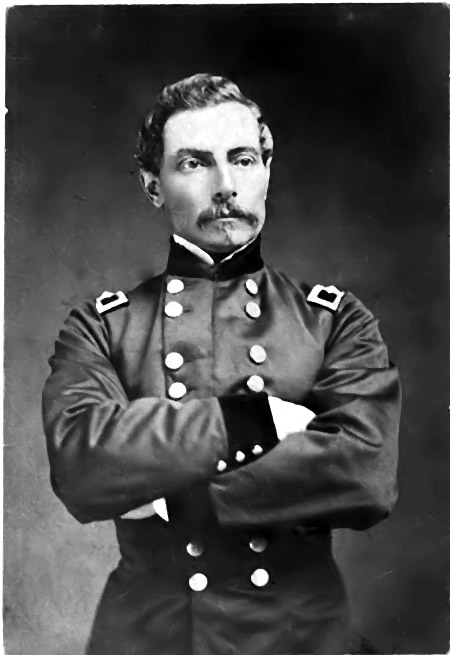
General_P_G_T_Beauregard

P.G.T. Beauregard

Beauregard was out inspecting the city’s fortifications and not present when the Gillman’s note was delivered to Beauregard’s chief of staff, Brig. Gen. Thomas Jordan. Gillmore forgot to sign the note (whether by accident or by design has never been ascertained) so Jordan returned it to Gillmore’s headquarters for verification. By the time the note was signed and returned to Confederate headquarters it was 9:00 a.m. the following morning and sixteen Union shells had already hit Charleston.

Today In Charleston History, August 20

AUGUST 20    

1731

In an attempt to establish an accurate land and rent roll, the Assembly passed the Quitrent Act. It voided all of the old Proprietary patents and ordered that, within eighteen months, these and all other land titles must be registered.

A law also established the South Carolina currency at a ratio of seven for one with sterling.

1781
st. michaels alley

St. Michael’s Alley, circa 1920

Francis Sheftall, a Jew who came to Charlestown after the fall of Savannah, wrote that after the occupation she:

rented a house in St. Michael’s Alley at the rate of 50 pounds sterling a year, and where the money is to come from god only knows for there is nothing but hard Money goes here and that I can assure you is hard enough to be got.

Today In Charleston History: August 19

AUGUST 19

1776 – American Revolution – Continental Congress.  

Edward Rutledge wrote that the states would not approve the Articles of Confederation “as they stand now.” The southern delegations opposed the provision that each state should contribute financially in proportion to their population, including slaves.

edward rutledge 2In an argument which was to continue for the next ninety years, Southern delegates argued that slaves were wealth-producing property, not people. Thomas Lynch, Jr. of South Carolina said that if the North wanted to debate whether slaves were property “there is an End of the Confederation.”

Edward Rutledge argued it was “unfair to base taxes on one form of wealth-producing property and not others, such as land and livestock.” He also wrote:

I propose that the States should appoint a special Congress to be composed of new Members for this purpose – and that no Person should disclose any part of the present plan.

Today in Charleston History: August 18

AUGUST 18

1772 

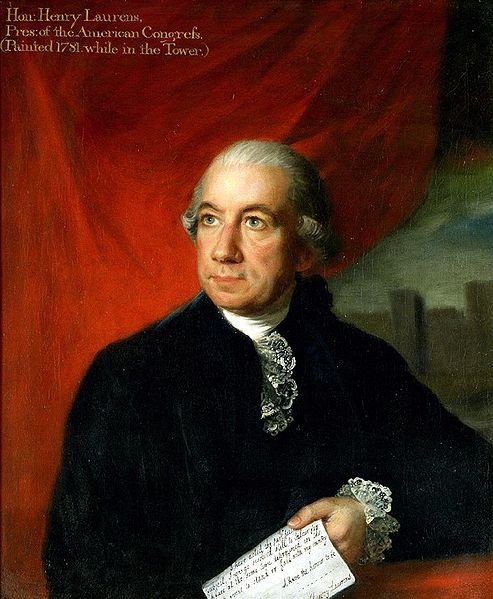
Henry_laurensHenry Laurens wrote his daughter, Martha, from Philadelphia, as he was preparing to leave for England.

My dearest Patsy, remember my precepts; be dutiful, kind and good to your Aunt … let all your reading, your study, and your practice tend to make you a wise and virtuous woman, rather than a fine lady; the former character always comprehends the latter, but the modern fine lady … is too often found to be deficient both in wisdom and in virtue.

 1775 – American Revolution – Slavery.

Thomas Jeremy, a free black man, was hanged at the workhouse green on Magazine Street, next to the Jail. Known as “Jerry the pilot” he was convicted of conspiring to foment a slave insurrection. His body was taken down and burned.

Jeremy, worth £1000 sterling and a slave owner himself, had supposedly claimed that if British warships came, he would pilot them across the Charlestown bar himself. Lord William Campbell, Carolina Royal Governor, became convinced that Jeremy was innocent. He believed that the swirling emotions of rebellion, fueled by the massacre at Lexington and Concord, created an atmosphere in which Jeremy was an unwitting victim. The day after Jeremy’s execution Campbell wrote, “I could not save him My Lord!”

Wayward Pines Trilogy: A Review

Book One: Pines. Secret Service Agent Ethan Burke arrives in the idyllic town of Wayward Pines in Idaho – surrounded by tall pine tree forests and insurmountable mountains on all sides to investigate the mysterious disappearance of two agents who had landed here two weeks before.  He is involved in a horrific accident that leaves him with partial memory loss. But when he recovers, his interactions with the town residents  makes him realize there is something wrong with the whole town itself. He is not able to reach his wife and kids in Boise or his handler within the agency. Dead bodies turning up, mysterious bar-tenders who disappear, a psychiatrist and a nurse who seem hell bent on harming him than curing and a whole town of kooks who love nothing more than shooting the breeze during day time and take part in blood fetes at night. It gets murky and weirder by the page. And then, when he attempts to escape the town, the real horror begins … pines trilogy

Book Two: Wayward. Except for the electrified fence and razor wire, snipers scoping everything 24/7, and the relentless surveillance tracking each word and gesture Wayward Pines is an Eden. None of the residents know how they got here. They are told where to work, how to live, and who to marry. Some believe they are dead. Others think they’re trapped in an unfathomable experiment. Everyone secretly dreams of leaving, but dare not. Ethan Burke has seen the world beyond. He’s sheriff, and one of the few who knows the truth—Wayward Pines isn’t just a town. And what lies on the other side of the fence is a nightmare beyond imagining.

Book Three: The Last Town. The children of Wayward Pines are taught that David Pilcher, the town’s creator, is god. No one is allowed to leave; asking questions can be lethal. But Ethan Burke has discovered the astonishing secret of what lies beyond the electrified fence that surrounds Wayward Pines and protects it from the terrifying world beyond. It is a secret that has the entire population completely under the control of a madman and his army of followers, a secret that is about to come storming through the fence to wipe out this last, fragile remnant of humanity.


There is a downward spiral in the narrative. Book 1, Pines, was thrilling and suspenseful, with a v-e-r-y Twilight Zone feel to the entire story  Book 2, Wayward, is substantially less intriguing. The plot seems to be papered over and the ending (as is common with the middle books of trilogies) is flat and slightly unfair when the reader realizes the author has been misleading you the entire book – cheap and silly and very much TV. Book 3, The Last Town, is poorly written and runs out of narrative steam – the ending is a sudden jolt!

It seems perfect that FOX TV is turning the books into a series, executive produced by M. Night Shymalyan since most of his projects are intriguing ideas poorly executed.

3 palmettos

Today In Charleston History: August 17

August 17

1682 – A fourth version of the Fundamental Constitutions was drawn up by the Lords Proprietors. It was never ratified.

1696 – Arrivals.  

John Archdale, a Quaker from London, who owned a Proprietary share in Charles Town, arrived as Governor of Carolina, sent at the behest of the Proprietors. He retained Joseph Blake as Deputy Governor.  He wrote to the Proprietors that:

When I arriv’d I found all matters in great confusion and every faction apply’d themselves to me in hopes of relief; I appeased them with kind and gentle words and so soon as possible call’d an assembly.

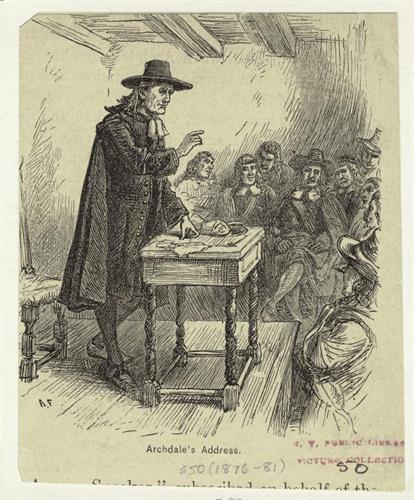
Archdales address (NY public library)Archdale moderated restrictions against the Indians and was acknowledged for his more humane settlements of conflicts. He also reinforced the liquor act – prohibiting the sale, except by license, of any “beer, cider, wine, brandy, rum, punch or any strong drink whatsoever under the quantity of one gallon.”

He also passed an act stating that “laws passed by the Commons House of Assembly … could not be repealed by London without the consent of the assembly.”

1863 – Bombardment of Charleston.

Under the direction of Union General Quincy Gilmore, Colonel Edward Serrel of the Volunteer Engineers supervised the mounting of a 16,500 pound eight-inch Parrot gun, called the “Swamp Angel.” It was located five miles (8000 yards) south of Charleston, in a muddy stretch of land between Morris Island and James Island.

SwampAngelDrawingThe Swamp Angel was a rifled gun, which changed artillery forever. No longer did cannons have to merely shoot round balls, the “rifling” inside the cannon barrel (a series of grooves cast into the gun’s tube) enabled them to shoot a long, slender projectile bullet more accurately, and over greater distances.