Today In Charleston History: March 29

1722 – Religion.
St. Philips Church, 1723

St. Philips Church, 1722

On Easter Sunday, the congregation of St. Philip’s worshipped for the first time in their new church. The structure was described as a

work of … Magnitude Regularity Beauty … not paralleled in his majesty’s Dominions in America … lofty arches and massive pillars, an octagonal tower topped by a dome and a quadrangular Lantern and weathervane soared eighty feet above the church.

1780 – The Seige of Charlestown.

The British army crossed the Ashley River and landed on the Charlestown peninsula, two miles north of the Continental lines, approximately near the present-day site of the Citadel. 

Due to lack of men the Continental army could not stop the British crossing. Gen. Lincoln was so determined to save Charlestown that he gambled by keeping the bulk of the Southern Army within the city. However, he did order a light infantry unit led by Col. John Laurens to take post outside the city’s fortifications “to watch the motions of the Enemy and prevent too sudden an approach.” He also wrote to the Continental Congress:

We have to lament that, from the want of Men, we are denied the advantages of opposing them with any considerable force in crossing this river.


Today In Charleston History: March 24

March 24

1663

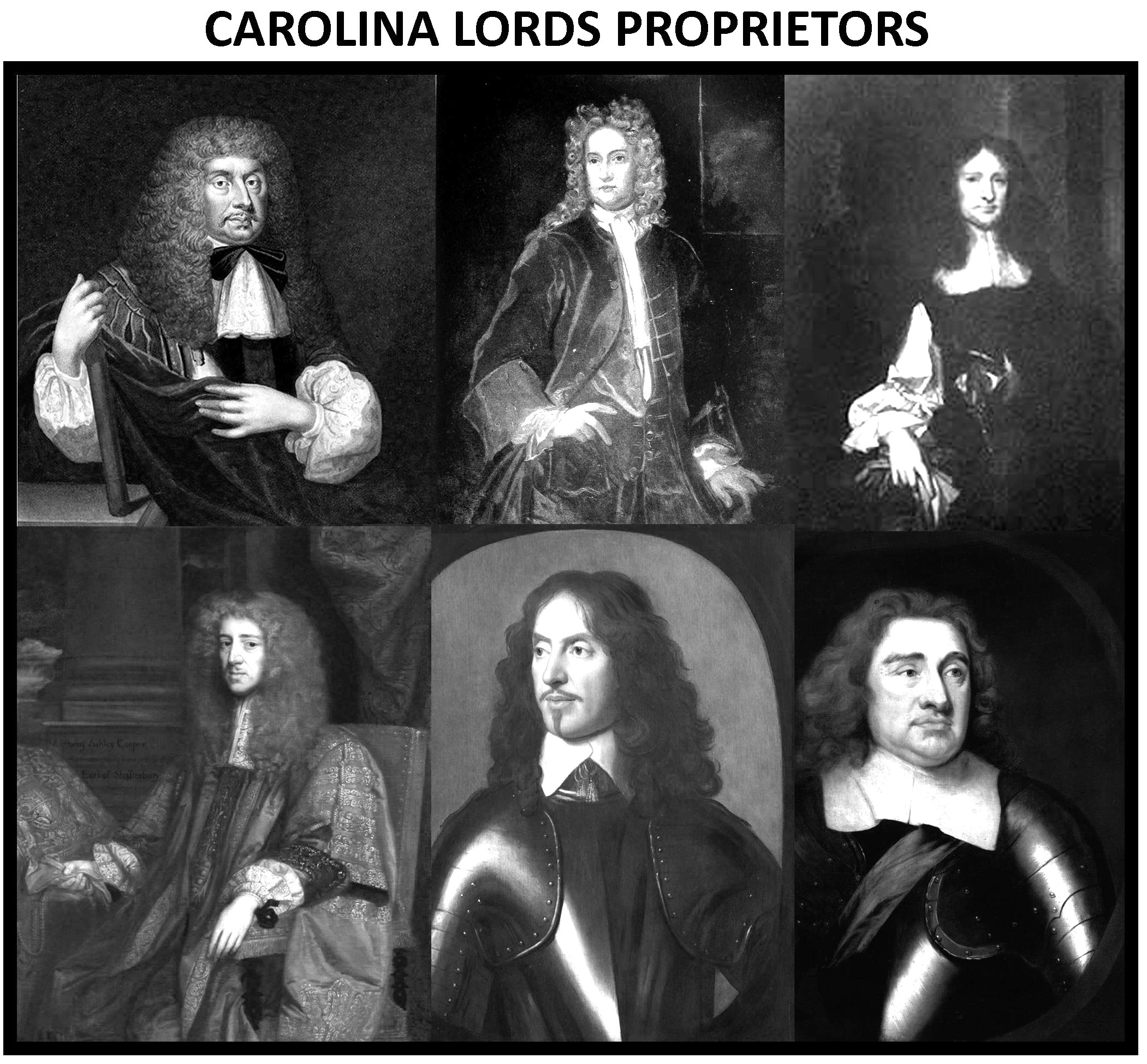
Charles II granted the territory called Carolana to the “true and absolute Lords and Proprietors.” The eight men were:

  • John Berkeley, Baron Berkeley of Stratton – Berkeley fought on the Royalist side during the Rebellion, general of the Royal forces in Devon. He also became a Proprietor for the Colony of New Jersey.
  • Sir William Berkeley – During the Rebellion, William served as Governor of Virginia and was a consistent supporter of Royal rule.
  • Sir George Carteret – Served as lt. governor of Jersey, the largest of the channel islands, fifteen miles off the French coast, which became a refuge for Royalists during the Rebellion. Carteret ran an active privateering campaign against Parliament, who branded him a pirate. After the execution of Charles I, Carteret had Charles II declared King  in Jersey,  even though the action forced  him  into  exile  for nine years.  He also became a Proprietor  of New Jersey. 
  • Sir John Colleton, 1st Baronet – Served in the infantry during the Rebellion and made heavy financial contributions to the Royal cause. After Charles’s execution, Colleton fled to Barbados where he acquired an extensive estate.
  • William Craven, Earl of Craven – Contributed substantial financing for the Royal cause during the Rebellion. Known for his “bawdy language,” Craven was one of the few noblemen who did not flee London during the Great Plague of 1665. He remained in the city to help keep order and donated property for mass grave sites.
  • Anthony Ashley Cooper, Baron Ashley of Wimborne St. Giles – A political opportunist who started the Rebellion as a Loyalist, then became a supporter of Cromwell after the War, but then devoted much of his energy for the Restoration of Charles II, for which he was well rewarded, becoming one of the most politically powerful men in England.
  • Edward Hyde, Earl of Clarendon – Maternal grandfather of two monarchs, Queen Mary II and Queen Anne, Hyde was one of Charles’ closest advisors during the nine-year exile. His daughter, Anne, married Charles’s younger brother, James, Duke of York. Later in life he authored the acclaimed “History of the Rebellion.”
  • George Monck, Duke of Albemarle – A brilliant military leader for Charles during the Rebellion, Monck was arrested and spent two years in the Tower of London. Accepting a commission as Major General he fought with Cromwell in Ireland and Scotland. After being elected to Parliament in 1660, Monck campaigned for the Restoration of Charles II. He was rewarded as Knight of the Most Noble Order of the Garter, the most prestigious honor in England.

Each Proprietor contributed £75 sterling to establish a fund for financing a colony in Carolina. They also agreed, if necessary, to contribute an additional £500 sterling each. The Proprietors, of course, hoped that no more money would be required. There was a strong consensus that the colony could be established by luring experienced settlers from established Caribbean colonies like Barbados and Bermuda, by offering large land grants in lieu of providing financing.

Six of the Lords Proprietors of the Carolina Colony

Six of the Lords Proprietors of the Carolina Colony

1804

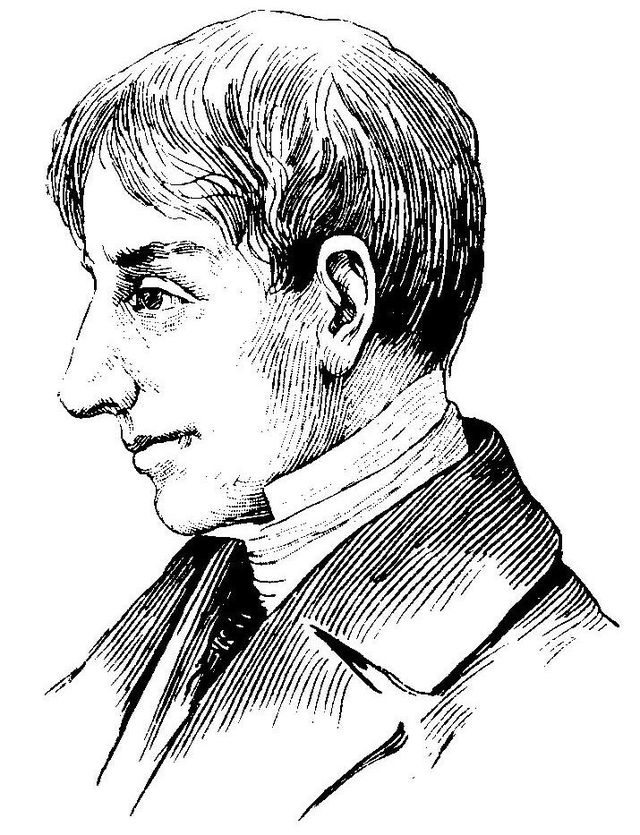
William Johnson of Charleston was appointed an Associate Justice of the Supreme Court. He was the first of Thomas Jefferson’s three appointments to the court, and is considered to have been selected for sharing many of Jefferson’s beliefs about the Constitution. Johnson was the first member of the U.S. Supreme Court that was not a member of the Federalist Party.

220px-WilliamJohnson

William Johnson

Born in Charleston on December 27, 1771, Johnson was the second son of blacksmith William Johnson and his wife Sarah Nightingale. Graduated first in his class from the College of New Jersey (Princeton) in 1790, Johnson went on to read law under attorney Charles Cotesworth Pinckney, The following year, on March 16, Johnson married Sarah C. Bennett, sister of future governor Thomas Bennett.

Today In Charleston History: March 19

1778 – Politics
Rawlins_Lowndes

Rawllins Lowndes

South Carolina President Rawlings Lowndes approved changes to the state constitution that changed the title of South Carolina’s chief executive’s office from president to governor, although he was called “president” until the end of his term. It also disestablished the Church of England in South Carolina.

1785 – Education

The Legislature granted a charter for College of Charleston to “encourage and institute youth in the several branches of liberal education.” The founders of the College include three signers of the Declaration of Independence (Edward Rutledge, Arthur Middleton and Thomas Heyward, Jr.) and three future signers of the United States Constitution (John Rutledge, Charles Pinckney and Charles Cotesworth Pinckney).

The Act also granted the college almost 9 acres of land bounded by present-day Calhoun, St. Philip, Coming and George streets; three-fourths of the land was soon sold to pay debts,  In 1837 CofC became America’s first municipal college in the country.

Randolph Hall, College of Charleston main campus

Randolph Hall, College of Charleston main campus

Today in Charleston History: March 18

1758

A report about British quartering (housing of troops) was presented to the Assembly. Prepared by Peter Manigault, Christopher Gadsden, Charles Pinckney, Henry Laurens and Rawlins Lowndes, the report stated:

Officers and Soldiers cannot, legally or constitutionally, be quarter’d in private Houses, without the special Consent of the Owners or Possessors of such Houses. 

1782 – Births.
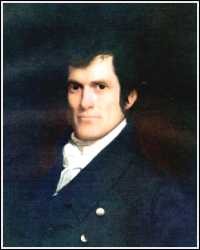
Calhoun as a young man

Calhoun as a young man

John Caldwell Calhoun was born in Abbeville, in the South Carolina backcountry. His mother was described as being “full of intelligence and energy … strong will and temper” – attributes her son would most definitely inherit.

During his life Calhoun became one of the most influential politicians of the 19th century. He was educated at Yale served in South Carolina’s legislature and was elected to the United States House of Representatives serving three terms. In 1812, Calhoun and Henry Clay, two famous “warhawks”, who preferred war to the “putrescent pool of ignominous peace”, convinced the House to declare war on Great Britain.

Calhoun was secretary of war under President James Monroe from 1817 to 1825 and ran for president in the 1824 election along with four others, John Q. Adams, Henry Clay, Crawford, and Andrew Jackson. However, Calhoun withdrew from the race, due to Jackson’s support, and ran for vice president unopposed. Calhoun was vice president of the United States in 1824 under John Quincy Adams and was re-elected in 1828 under Andrew Jackson.

Jackson was for the Tariff of 1828 (Tariff of Abominations) and caused Calhoun to be opposed to Jackson, which led to Calhoun’s resignation in 1832. Because he could not do anything about Jackson’s views toward tariffs, which benifitted only industrial North and hurt slaveholding South, John C. Calhoun became the first vice president to resign.

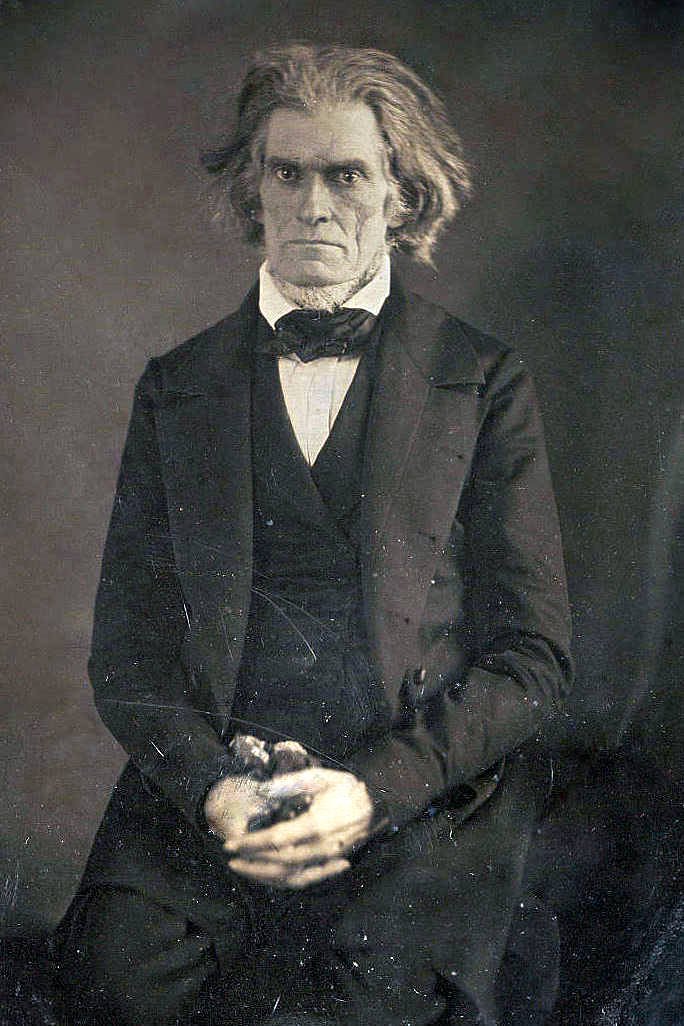
Calhoun as an elder statesman

Calhoun as an elder statesman

Calhoun wrote an essay about this conflict, “The South Carolina Exposition and Protest”, in which he asserted nullification of federal laws, and in 1832 the South Carolina legislature did just that. This gave Calhoun the nickname “the Great Nullifier.” 

The next year in the Senate Calhoun and Daniel Webster opposed each other over slavery and states’ rights in a famous debate. In 1844 President John Tyler appointed Calhoun secretary of state. In later years he was reelected to the Senate, where he supported the Texas Annexation and defeated the Wilmot Proviso.

John Caldwell Calhoun died in Washington, D.C. on March 31, 1850 and was buried in St. Phillips Churchyard in Charleston. In 1957, United States Senators honored Calhoun as one of the five greatest senators of all time.


Calhoun's tomb in St. Philip's cemetery

Calhoun’s tomb in St. Philip’s cemetery