Today In Charleston History: July 28

1746

Christopher Gadsden married Jenny Godfrey in Charlestown. During this time he also owned a store on Shute’s Wharf.

1769Slavery. Executions

Dolly, belonging to James Sands, and Liverpoole, a slave doctor belonging to William Price, were burned at the stake on the green in front of the workhouse. Dolly was convicted of poisoning her master and his child, while Liverpoole was convicted of providing the poison.

Dick, a former slave who had been freed, was “accused as instigator of these horrid crimes.” He initially escaped but was eventually retaken and given “twenty-five Lashes…at four different Corners and the same Number last Tuesday, in all 100 each Day, and to lose his Right Ear.”

1856 – Duelling

 Col. Cunningham and editor Hatch met on the Washington Race Course to settle their differences with a duel.

On July 21 the Charleston Evening News published an editorial by Col. John Cunningham, which prompted a response from L.M. Hatch, the editor of the Standard. Cunningham charged Hatch with a “studied and wanton personal insult” and demanded satisfaction. He appointed his friend William Taber, editor of the Charleston Mercury, as his second – to negotiate the details of the duel.

The two exchanged shots with no injury to either man.

Washington Race Track - 1857. A one-mile loop around what is present day Hampton Park. Library of Congress

Washington Race Track – 1857. A one-mile loop around what is present day Hampton Park. Library of Congress

Today In Charleston History: July 27

1669-Carolina Expedition

Mr. Joseph West was appointed Governor and Commander-in-chief of the Carolina expedition until its arrival at Barbados, or until another Governor was appointed.

1772 – American Revolution – Foundations

Governor Montagu, in attempt to break the stalemate in the Assembly over the Wilkes Fund appropriation, announced that in October, the Assembly would meet in Beaufort, not Charleston. He hoped that the distance might keep some of the more radical Charlestown members from attending, so some necessary legislation could be passed. He also hoped the implied threat of moving the capital from Charlestown would intimidate some of the members to moderate their views. It backfired.

1781-British Occupation – Issac Hayne

The British issued an official statement:

The adjutant of the town will be so good as to go to Colonel Hayne in Provost Prison and inform him that in consequence of the court of enquiry held yesterday and the preceding evening Lord Rawdon and the commandant Lieutenant Colonel Nisbet Balfour have resolved upon his execution on Tuesday the thirty-first instant at six o’clock, for having been found under arms raising a regiment to oppose the British government, though he had become a subject and had accepted the protection of that government after the reduction of Charleston.

1880-Births
Judge Waties Waring

Judge Waties Waring

 Waties Waring was born in Charleston. He was the scion of the prominent Waring and Waties families and a son of a Confederate veteran. he would later become a leader in Democrat politics and a Federal judge. He became a controversial figure in South Carolina when he divorced his Southern wife in 1945 and almost immediately married a twice-divorced “Northern” woman, Elizabeth. When Judge Waring began issuing court rulings against South Carolina’s segregationist policies, Waring and Elizabeth became hated figures in the state. Congressman Mendel Rivers (D-SC) led a campaign for Waring’s impeachment which was unsuccessful.   

Today In Charleston History: July 26

1822-Denmark Vesey Rebellion. Executions

denmark_veseyThis was one the largest days of executions in Charleston history – twenty-two more conspirators hanged just north of “The Lines.” The entire city turned out for the Friday morning spectacle. There was such a large crowd and so much excitement that a small black boy was trampled to death.

The bodies of the convicted were given to the Medical College of South Carolina for dissection. The executed were:

  • Smart Anderson: Smart was a drayman who stole two muskets, hiding them on his cart to be used when the occasion arose. He claimed he was in the rebellion “as much as possible.”
  • Charles Billings: Worked in a commercial stables and planned to steal horses on the night of the rebellion. Claimed that he was “ready and willing” to do what needed to be done.
  • Jemmy Clement: Member of the A. M. E. Church
  • Jerry Cohen: One of the last arrested but claimed that if everyone involved was killed, he was “still willing to go on.”
  • Polydore Faber: Good friend of Gullah Jack. Faber was convicted of hiding at least twenty pike poles which were to be fitted with blades and used as weapons on the night of rebellion.
  • Julius Forrest: Claimed to have been “charmed” by Gullah Jack into joining the rebellion.
  • Lot Forrester: One of the most active of Denmark’s recruits. Worked at the State Arsenal and was able to steal a slow fuse to be used in setting fires throughout the city.
  • Jack Glenn: Although he was lame in both feet, he told Vesey he would serve as a horseman on the night of rebellion. He collected money about town to finance the plot.
  • Bacchus Hammett: Stole a keg of black powder, a sword and pistol for the rebellion. ON his way to gallows he shocked the white crowd by laughing and shouting good-byes to his acquaintance. Upon his execution, the mechanism failed, and he did not drop. According to a witness, Bacchus “threw himself forward, and as he swung back he lifted his feet, so that his knees might not touch the Board.” He was shot with a pistol by Captain Dove because he was taking so long to die dangling from the gallows.
  • Mingo Harth: He was a skilled laborer and worked at a lumberyard. Mingo hosted Bible study classes in his quarters in order to discuss the rebellion.
  • Joe Jore: Considered an invalid, Joe pledged to take a sword and fight on the night of rebellion.
  • Dean Mitchell: Assisted in collecting money to make spears and pikes.
  • Jack Purcell: One of Denmark’s first recruits. However, on the gallows he stated that “if it had not been for the cunning of that old villain, Vesey, I should not now be in my present situation.”
  • Adam Robertson: Participated in the ceremony where a chicken was eaten bloody by all present as a sign of their commitment to the rebellion.
  • John Robertson: Also participated in the chicken ceremony.
  • Robert Robertson: Helped conceal pikes and spears. Also, stole a pistol from his master.
  • Tom Russell: A blacksmith who forged pikeheads and spears as long as the group took up a collection to pay for the materials. Russell was also trained by Gullah Jack to be a sorcerer.
  • Dick Simms: Property of the family William Gilmore Simms, famous novelist of the time. Dick stole a pistol from his master for use during the rebellion.
  • Pharo Thompson: Pharo possessed a sword fashioned out of a scythe.
  • Adam Yates: Adam had the responsibility of leading the rural blacks into the city on the night of rebellion.
  • Bellisle Yates: Responsible for hiding some of the plantation blacks in the city during the night of rebellion.
  • Naphur Yates: Yates took an oath and swore that his “heart was in this business.” He claimed that his name had ordained him to be part of the rebellion since the word naphur is defined in the Bible as “purification fire”.

Charleston City Council urged restraint from anymore executions, due to the expense. Constable Belknap complained the city had spent $2284 “confining the accused in the Workhouse, erecting a Gallows and obtaining carts to carry the criminals to the place of execution.”

James Louis Petigru, also advised restraint stating,

“I am afraid you will hang half the country. You must take care and save negroes enough for the Rice crop.”

1831-Nullification

John C. Calhoun wrote a letter to the Pendleton Messenger openly avowing his nullification philosophy. 

1864-Bombardment of Charleston
Gen. Samuel Jones

Gen. Samuel Jones

Gen. Samuel Jones received a telegram from General Winder at Andersonville Prison in Georgia that 600 Union officers and soldiers were being sent to Charleston and that it would “continue … to all are sent.”

Today In Charleston History: July 25

1780-British Occupation  

British military proclamation stated that mechanics and shopkeepers (mostly Patriots) must swear allegiance to Britain in order to sell property, collect debts or leave the city. One hundred sixty-three merchants swore allegiance in order to avoid financial ruin.

1833

 A notice in the Southern Patriot read:

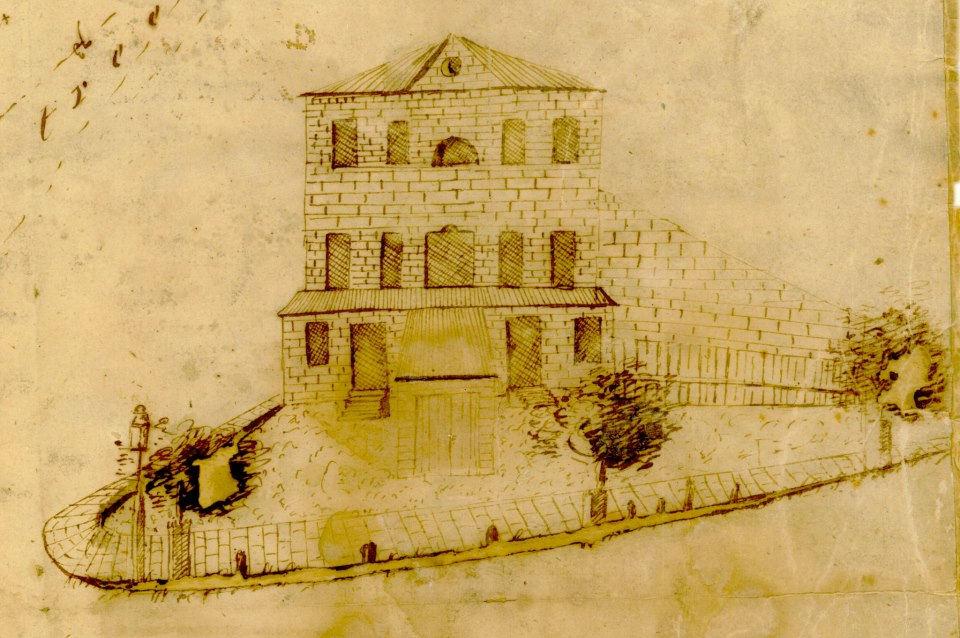
The building at the west end of Broad Street, called the Charleston Theatre, has been purchased by the faculty of the Medical College of the State of South Carolina for the sum of $12,000. It will be fitted up for the classes attached to this institution.

Theater (c. 1792) sat on the corner of Broad and New Streets. Designed by James Hoban.

Theater (c. 1792) sat on the corner of Broad and New Streets. Designed by James Hoban.

A rift developed between management and faculty of the Medical College of South Carolina, and the faculty organized an independent institution, The Medical College of the State of South Carolina. With an enrollment of 105, the new college opened in 1833 in the Broad Street theater.

1837-Slavery

Angelina Grimke wrote:

We have given great offense on account of our womanhood, which seems to be as objectionable as our abolitionism. The whole land seems aroused to discussion on the province of woman, and I am glad of it. We are willing to bear the brunt of the storm, if we can only be the means of making a break in that wall of public opinion which lies right in the way of woman’s rights, true dignity, honor and usefulness.

1861-Civil War

The CSS Gordon captured the American brig William McGilvery off Charleston on July 25, 1861. She was reported to have run the blockade out of Charleston twenty-seven times by October 1861.

At that time Gordon was under charter to the Confederate States for the daily reconnoiter of the Union warships off that port. She was of such light draft that she could slip over the bar without being confined to the channels.

1902

The city of Charleston purchased the grounds of the West Indian Exposition for $25,000 with the plan to build a public park on the site.

expo

Expo fair grounds, later purchased by the city of Charleston and turned into Hampton Park.

Today In Charleston History: July 24

1778-American Revolution

The Articles of Confederation were signed by the South Carolina delegation to the Continental Congress. South Carolina was now one of thirteen unified colonies. The South Carolina signers were:

  • Henry Laurens
  • William Henry Drayton
  • John Mathews
  • Richard Hutson
  • Thomas Heyward, Jr.
1804

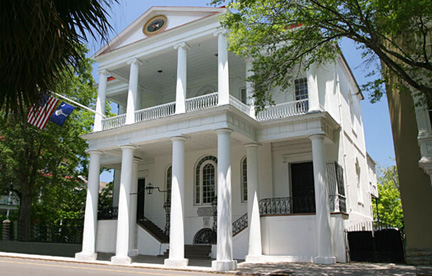
The South Carolina Society had their first meeting in their new building at 72 Meeting Street. The first floor was used to school female orphans and indigents, while the second floor was a ballroom for social purposes.

The Neoclassical building was designed by the gentleman architect, Gabriel Manigault, who was a member of the Society. 

South Carolina Society

South Carolina Society

Today In Charleston History: July 23

1775-American Revolution
Rev. Oliver Hart

Rev. Oliver Hart

Rev. Oliver Hart, of the First Baptist Church, and Rev. William Tennant were ardent supporters of the rebel cause and members of the “Association.” They accompanied William Henry Drayton into the backcountry in an effort to explain the causes of the dispute with England, and to build support for the cause.

Due to the effective pamphlet campaign by Royal Governor William Campbell, they were met with either indifference, or adamant opposition.

1822-Denmark Vesey Rebellion

In a letter Mary Lamboll Thomas Beach commented about the Denmark Vesey rebellion:

This business I fear is akin to the French Revolution to think that many of these people growing up like children … could be brought to such a fiend-like temper that they would commit to embrace their hands in the blood of their masters … Ah! Slavery is a hard business and I am afraid we shall in this country have it to our bitter cost some day or other.

1914-Jenkins Orphanage

 Rev. Daniel Jenkins, in London with the Jenkins Band, who were performing at the Anglo-American Expo, sent a letter on his orphanage stationary (deleting “Charleston, S.C.” and replacing it with a typed “London, England”) to South Carolina Governor Coleman Blease. Some of the text of the letter included:

… the salvation of the South between the white and the black man lies in the careful training of the little negro boys and girls to become honest, upright and industrious citizens … Teaching the Negro to read, to write and to work is not going to do the white man any harm … Nine of the Councilmen of London called on me yesterday and congratulated me on the work I am doing for my race. If were able to gain the respect of the people of England, how much more can be done if the Governor and Lawmakers of South Carolina would simply co-operate with me?

Coleman Blease

Coleman Blease

Blease had been elected governor in 1910, because he “knew how to play on race, religious, and class prejudices to obtain votes.”  He was one of the most racist politicians ever elected in South Carolina. He favored complete white supremacy in all matters, encouraged the practice of lynching, and was opposed to the education of blacks. He even once buried the severed finger of a black lynching victim in the South Carolina gubernatorial garden.

In light of Blease’s racist attitude, Jenkins’s letter to the governor is an indication of the reverend’s fierce determination to raise money, no matter how remote the success.

Today In Charleston History: July 22

1718-Bloodless Revolution

The Proprietors, with permission of the King, repealed the Assembly’s ten per cent duty upon goods of British manufacture imported into the colony. They also repealed several other Acts passed by the Assembly which inflamed the tension between the Assembly and the Proprietors.

  • The ten-year old power of the Assembly to nominate the Public Receiver was repealed.
  • Act for Elections calling it “contrary to the laws and customs of Parliament and Great Britain we therefore do declare the … Acts to be null and void …”
  • Yemassee Act for Settlement which provided 200 acres to each settler was repealed.
  • Indian Trade Act was repealed since London merchants saw it as a monopoly.
  • The Proprietors ordered the Governor to dissolve the Assembly.
Nicholas Trott

Nicholas Trott

Members of the Assembly were surprised and outraged, except for two, Nicholas Trott and William Rhett. It was discovered that Trott and Rhett had carried on a private correspondence with Mr. Shelton, the secretary of the Proprietors, encouraging the repeal of the Act for Elections, since it took control from their offices.

1769-American Revolution – Foundations

During a meeting at the Liberty Tree, both sides – 13 merchants and 13 mechanics & planters – accepted a unified Association. They encouraged American manufacturing and prohibited the importation of any European or East Indian goods, except a few necessary items which could not be produced in America. It was the most comprehensive protest in the American colonies. 

Slave importation from Africa was banned after January 1, 1770 and all signers pledged to boycott anyone who did not sign within a month. Anyone who broke the agreement was to “be treated with the utmost contempt.” The Association was to remain in effect until the Townsend Duties Act was repealed. Anyone who did not sign would have their names published in the Gazette as being against the Association.

Today In Charleston History: July 21

1669-Fundamental Constitutions of Carolina

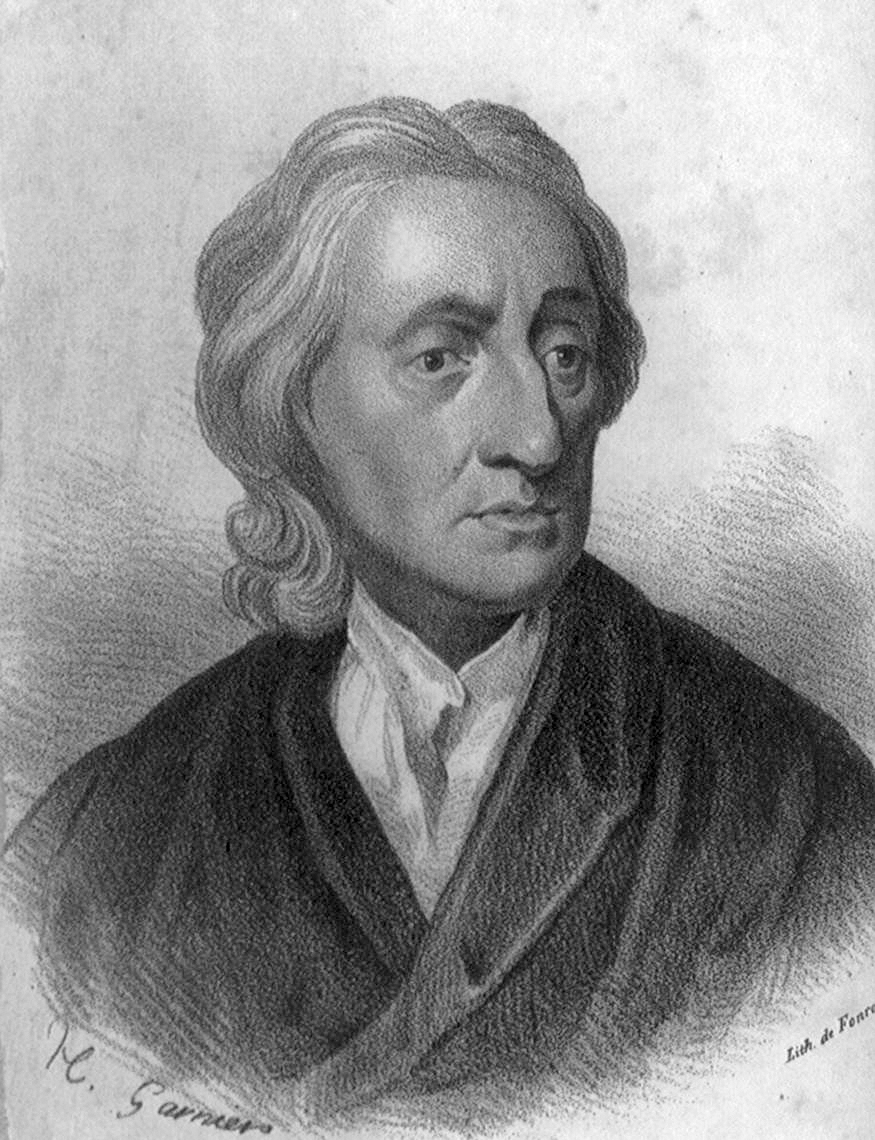
The Fundamental Constitution of Carolina, written by Anthony Ashley Cooper and John Locke, was adopted by the Proprietors. Even though the Fundamental Constitutions never became the official law of Carolina, a number of its provisions were implemented and accepted by the colonists. It was an extraordinary attempt to form an aristocratic government from a colony of adventurers, and also designed to attract settlers by offering religious tolerance, liberal land grants and property rights as well as “titles of honor.” 

Locke-John-LOC

John Locke, leader of the enlightenment movement, and co-author of The Fundamental Constitutions of Carolina.

The Constitution contained similar language of Locke’s famous 1689 A Letter Concerning Toleration, and granted the Carolina Colony religious freedom and a liberty of conscience to all settlers, expressly mentioning “Jews, heathens, and dissenters.” It would have a profound influence on Charleston society, leading to the immigration of the French Huguenots and Sephardic Jews from Portugal. Some of the religious provisions were:

  • Church of England established as the tax-supported church in the colony.
  • Religious freedom for anyone who believed in God.
  • Seven individuals could form a “church or profession” that would be officially recognized. “No person whatsoever shall disturb, molest or persecute another for his speculative opinions in religion, or his way of worship.”
  • Roman Catholicism was not tolerated

The Fundamental Constitution also set up a County Palatine, an official who could exercise powers normally reserved to the crown Palatine and established a system of government by the landed gentry. To vote a man must own 50 acres of property and to hold a seat in the elected legislature, he must own 500 acres. The nobility consisted of:

  • Landgraves (borrowed from German courts): Must possess 48,000 acres
  • Caciques (the title of Indian chiefs in America): must possess 24,000 acres.

The Proprietors promised 150 acres of land to all “free settlers over the age of sixteen” and an additional “100 acres for every able-bodied servant” in their employee. “Master” Stephen Bull had nine servants and received 1050 acres. Servants could include family members (children, cousins, nieces …) and “indentured servants” who signed a work contract for a specific period of time in exchange for their passage to the colony. If an individual acquired 3000 acres, the estate could be declared a manor and the owner would have all the rights of a lord of the manor established by English law.                   
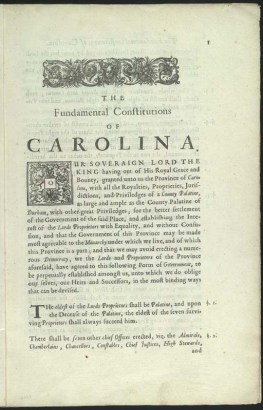
Fundamental_Constitutions_of_CarolinaThe Constitution established “that all subjects who should be transported into the province, and the children born there, should be denizens and lieges of the Kingdom of England.”

It also set out specific and strict laws for slavery, which would become one of the most important issues facing the colony during the next 200 years.  “Every freeman of Carolina shall have absolute power and authority over his negro slaves.”

The Proprietors also approved a “Grand Modell” for the planned colony, based on the grid pattern designed for the rebuilding of London after the Great Fire of 1666.

1856

The Charleston Evening News published an editorial by Col. John Cunningham, which prompted a response from L.M. Hatch, the editor of the Standard. Cunningham charged Hatch with a “studied and wanton personal insult” and demanded satisfaction. He appointed his friend William Taber, editor of the Charleston Mercury, as his second – to negotiate the details of the duel.

1861-Civil War
Pierre Gustave Toutant Beuaregard

Pierre Gustave Toutant Beuaregard

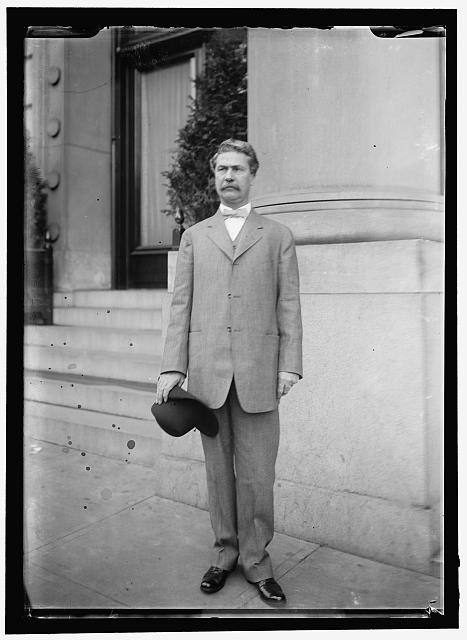
P.G.T. Beauregard  was promoted on July 21 to be one of the eventual seven full generals in the Confederate Army; his date of rank made him the fifth most senior general, behind Samuel CooperAlbert Sidney JohnstonRobert E. Lee, and Joseph E. Johnston.

1892-Jenkins Orphanage

Daniel Jenkins received a charter from the state of South Carolina to operate the Orphan Aid Society. At this point Jenkins and his wife Lena were taking care of several dozen black lambs. Jenkins knew he needed help; the Society needed a substantial and dependable source of money. He hoped the city of Charleston would be a significant benefactor. After all, city authorities and elite citizens had a 100-year history of generously supporting the Charleston Orphan House.

They gave him $50.

Today In Charleston History: July 20

1672 – Oyster Point

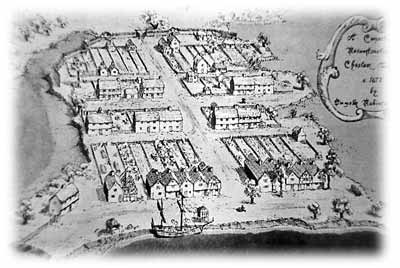
The surveyor general, John Culpepper of Barbados, was ordered to “admeasure and layout for a town on the Oyster Point.”

Most of the land on Oyster Point had been given as a grant to Henry Hughes and John Coming, first mate of the Carolina in 1670. Both men voluntarily surrendered half of their lands “to be employed in and toward the outlaying of a town and commons.” This made the original plan for Charles Town extending no farther west than present Meeting Street, no farther north than Broad Street and no farther south than Water Street. 

Early Charlestown

Early Charlestown

1773 

David Ramsay, an Irish immigrant and graduate of Princeton, was awarded a medical degree from the College of Philadelphia.

1776 – American Revolution

The Continental Congress issued the following proclamation:

“Resolved, That the thanks of the United States of America, be given to Maj. Gen. Lee, Col. William Moultrie, Col. William Thomson, and the officers and soldiers under their commands; who on the 28th day of June last, repulsed, with so much valor, the attack which was made on the State of South-Carolina, by the fleet and army of his British majesty.

That Mr. President transmits the foregoing resolution to Maj. Gen. Lee, Col. Moultrie, and Col. Thomson.

 By order of the Congress.

John Hancock, President.”

1863 – Civil War

Mayor Charles Macbeth and Gen. Beauregard urged “all women and children, and other non-combatants … leave the city as soon as possible.”   

1914 – Charleston Library Society

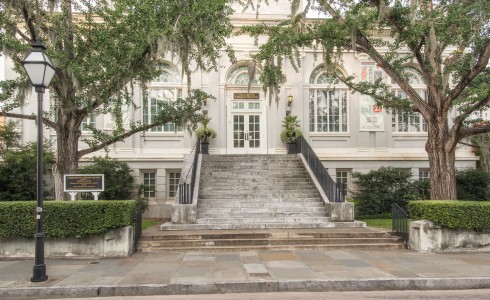
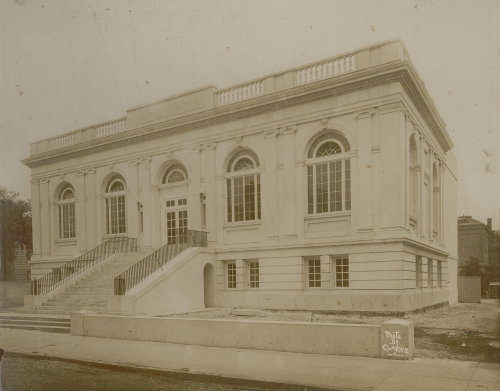
The new home of the Charleston Library Society opened, a Beaux Arts-style at 164 King building designed and constructed specifically for the society. During the opening day,  the public lined up the front steps to experience its light-filled rooms, fireproof structure, electric lamps, steam heat, and the vacuum system keeping it dust free.

The 60,000 books, pamphlets, and magazines were then accessible for $4 a year, and members such as DuBose Heyward, John Bennett, Albert Simons, and Josephine Pinckney came to read and write here.

Today, the society holds more than 110,000 volumes—from those dating to the medieval period to current best sellers—as well as an archive of rare Charleston imprints and manuscripts documenting the founders of our country, state, and city. In recent years, it has been hosting concerts, book signings, art installations, and lectures with renewed vigor, drawing a new generation of culture-seekers to propel the building into another century.

Charleston-Library-Society-4-490x300

164 King Street, Charleston Library Society, modern view

CLS_1914_medium

164 King Street, Charleston Library Society, 1914

Today In Charleston History: July 19

1863-Civil War. Battery Wagner

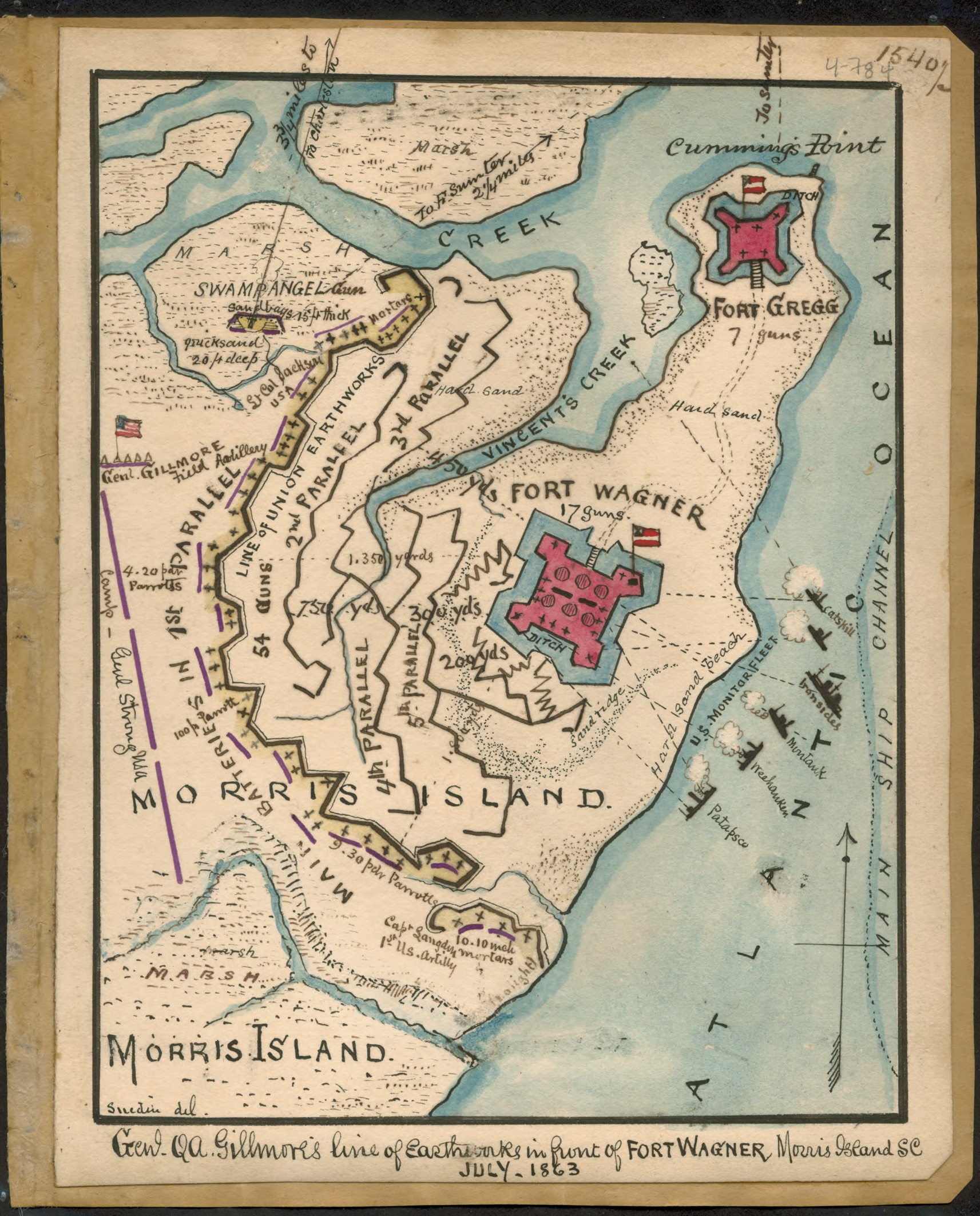
The morning after the assault of 54th Massachusetts, Gen. Beauregard instructed General Ripley to hold “Morris Island at all costs for the present.” General Gillmore (U.S. Army) resumed bombardment of Fort Wagner.

fort-wagner-sc-day-after-attack-by-union-jpg

Fort Wagner, the day after the assault by the 54th Massachusetts

Map of Morris Island

Map of Morris Island