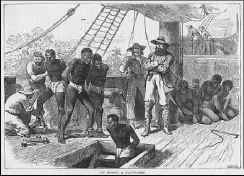
Today In Charleston History: February 21 – Charleston Firsts

1838-Slavery

 Angelina Grimke addressed a Committee of the Legislature of the State of Massachusetts, the first time a woman was invited to speak before a legislative body. She spoke against slavery, and also defended women’s petitioning both as a moral and religious duty and as a political right. Abolitionist Robert F. Wallcut stated that “Angelina Grimké’s serene, commanding eloquence enchained attention, disarmed prejudice and carried her hearers with her.”

By this time she was an accomplished orator, having spoken publicly eighty-eight times to an audience of approximately 40,000 people. Her appearance created a furor. Most people believed a women’s place was in the home, NOT in the public, and certainly not being a public speaker, and certainly not on such an inflaming topic – slavery. Angelina later wrote:

I never was so near fainting under the tremendous pressure of feeling. My heart almost died within me. The novelty of the scene, the weight of responsibility, the ceaseless exercise of the mind thro’ which I had passed for more than a week – all together sunk me to the earth. I well nigh despaired.

1865

The Fifty-fifth Massachusetts Volunteer Infantry, led by Col. Charles Fox, triumphantly marched into Charleston. The 55th was the sister regiment of the renowned Massachusetts 54th Volunteers. The enactment of the Emancipation Proclamation by United States President Lincoln on January 1, 1863 had opened the way for the enlistment of free men of color and newly liberated slaves to fight for their freedom within the Union Army. As the ranks of the 54th Massachusetts quickly reached its full complement of recruits, an overflow of colored volunteers continued to pour in from several other states outside Massachusetts-many of whom simply had not arrived in time-prompting Governor John Albion Andrew to authorize yet another regiment of colored soldiers sponsored by the Commonwealth. Thus, the 55th Massachusetts Volunteer Infantry came into being.

Colonel_Charles_Fox_Leads_the_Massachusetts_55th_Regiment_into_Charleston

Today In Charleston History: January 31

1780 – The Seige of Charlestown

Continental Army General Benjamin Lincoln requested that Governor John Rutledge “order 1500 Negroes to assemble in the vicinity of this town with the necessary tools for throwing up lines immediately.”

1800

Charles Pinckney delivered a speech in the U.S. Senate on the subject of trial by jury.

Viewing as I do impartial juries as among the most indispensable ingredients of a free government, it is my duty to declare … that in those states in which the federal marshals have a right to summon jurors as they please, the people are not free!

1863 – Civil War
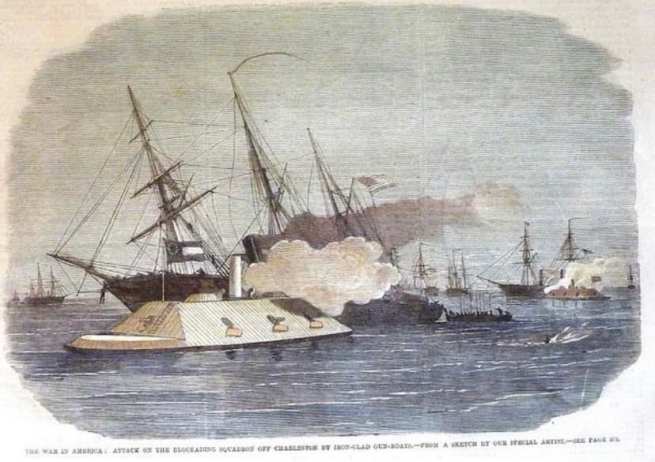
At about 5am, Confederate ironclads CSS Palmetto State and CSS Chicora attack the Union blockade outside of Charleston harbor. The Palmetto State rammed bow first into the Mercedita’s port quarter, ripping a hole in the ships keel. The Confederate crew fired its point blank into the Mercedita, bursting the ship’s boilers, immediately crippling the ship. The Chicora  and the USS Keystone State exchanged fire, with a Confederate shot hitting the steam drum on the Keystone State. The explosion killed 20 men. The Chicora signaled for the ships surrender but there was no reply.
Union ships began to arrive and both sides fired at one another until sunrise, when the wooden Union navy retreated, unable to inflict damage upon the iron side Confederate warships.

ironclad attack - 1863

 1864 – Civil War   

 Colonel W.W.H. Davis took in three Confederate Irish deserters from Charleston who complained they were “much pinched for food.” From the deserters accounts Davis reported that:

Our shells have done considerable damage in Charleston. Most of the shells explode, but as yet few people have been injured by them. Charleston is depopulated, except by the very poorest class of people, and they have moved as far uptown as they can get. Beauregard’s headquarters and all the public offices have been removed to the upper part of the city. 

meetingengraving

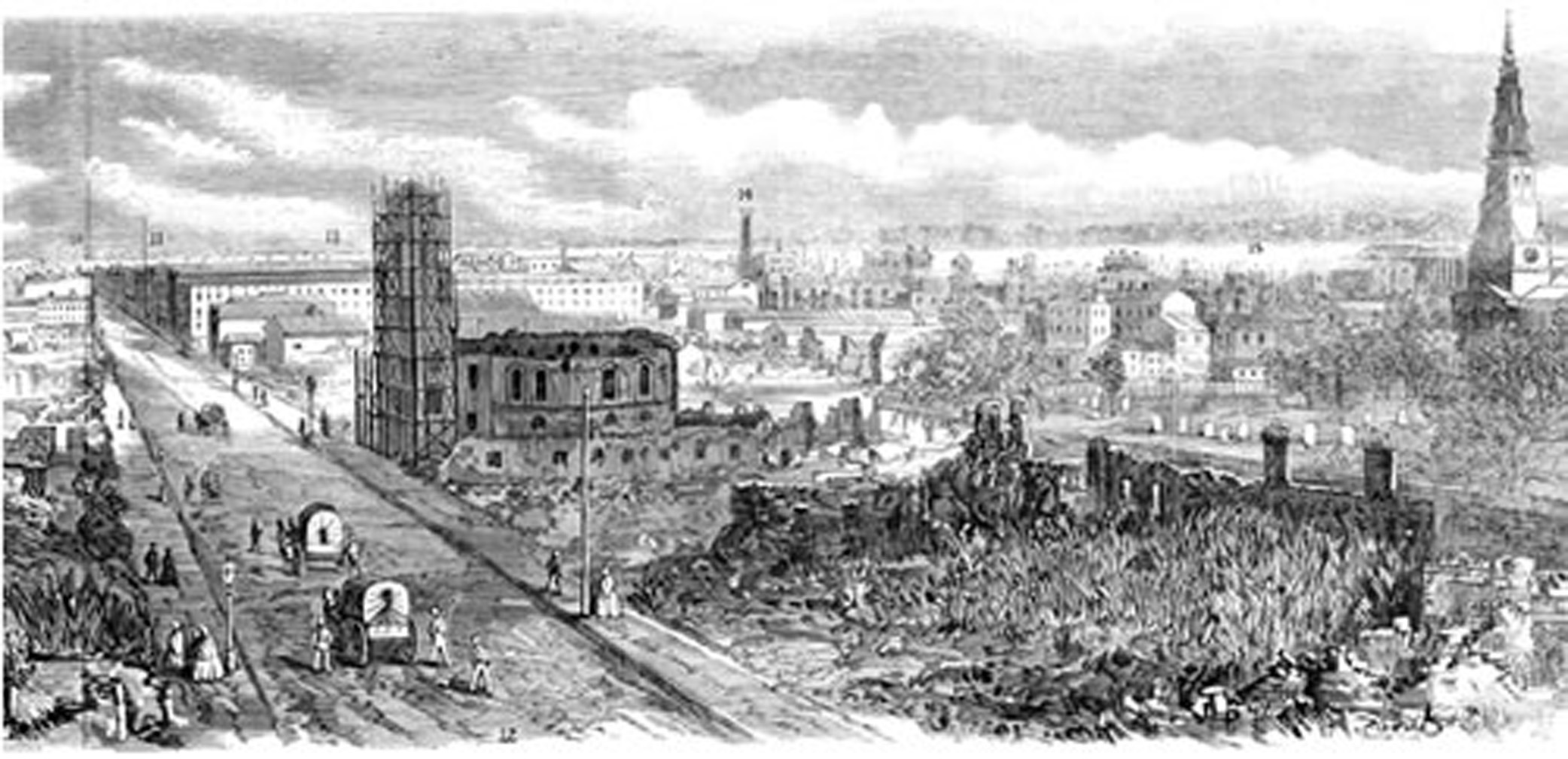
Charleston, Meeting Street, circa 1865 – Ruins of the Circular Church after the 1861 fire and Federal Bombardment.

Today In Charleston History: January 29

1737. Culture. Scandal

It was not unusual for husbands to place notices in the Gazette announcing their wayward wives, as a means of shaming them to society. However, Issac Simmons placed the following announcement in the Gazette about his wife, lured by the theater life:

This is to give notice to all people in Charles-town or elsewhere, not to credit harbor nor entertain Mary Simmons, the wife of Issac Simmons, which has made an elopement from her said husband especially to be employed in the Playhouse in Charles-Town, it being entirely against the said Mr. Simmons’ request. 

1751. Slavery

The Assembly received a petition of Thomas Miles for reimbursement for his slaves Venus and Kitt who “were tryed for Poisoning and condemned to be executed pursuant to the directions of the ‘Act for the better ordering and governing of Negroes and other Slaves in this Province.’” Kitt was executed but Venus was “pardoned, and was afterwards sent off the Province.” 

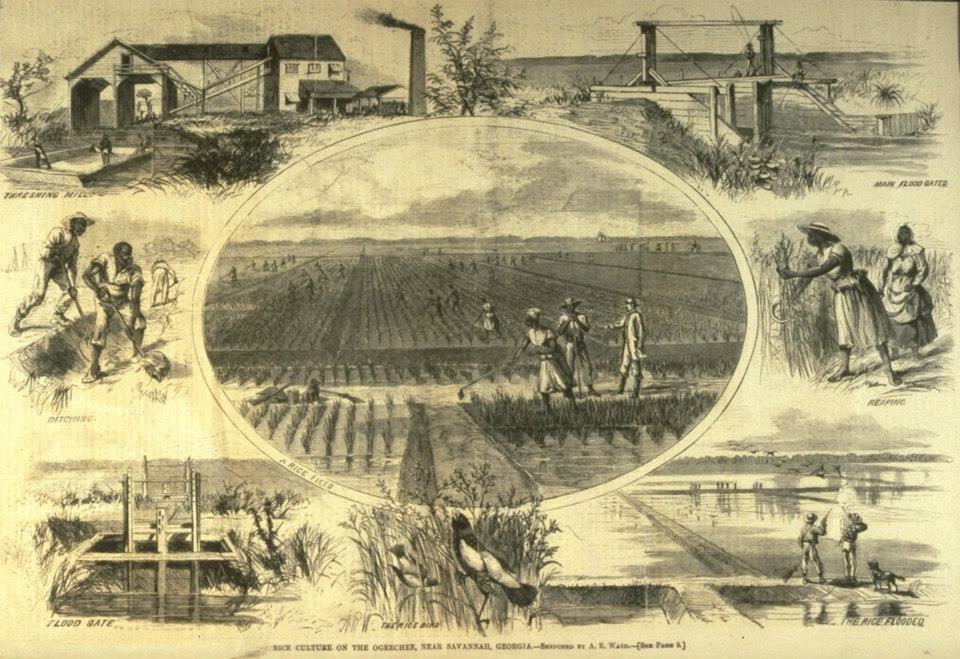
The most profitable commodity in the lowcountry was African slaves  – to work the rice fields, construct casks and barrels and build and maintain the boats that transported the rice down river from plantation to port.  Two skilled slaves represented a substantial financial investment for a planter. In present-day economics, their value would approximately be $15,000 – $20,000. The Carolina planters’ appetite for new slaves was so strong that one merchant wrote that “Negroes are the proper bait for Catching a Carolina Planter, as certain as Beef to catch a Shark.”

Lt. Governor Bull estimated there were 57,253 Negroes in South Carolina, about 15,000 adult males. He also noted that with only about 6000 white males this “must raise in our midst many melancholy reflections.”

rice production

Today In Charleston: January 25

1735

Andrew Rutledge married Sarah Hext, widow of Hugh Hext, one of the richest men in South Carolina. Hext left Sarah a plantation in Christ Church on the Wando Neck and twenty-three slaves. His other holdings were left as a legacy for his eight-year daughter, Sarah, to inherit when she turned twenty-one or upon her marriage, whichever came first. They included: two houses in Charlestown, a 550-acre plantation at Stono and a 640-acre plantation at St. Helena (Beaufort).

1771

Major Pierce Butler of the British Army married Mary Middleton. She was heiress to a vast fortune, the orphaned daughter of Thomas Middleton, a South Carolina planter and slave importer. Two years later Butler resigned his commission in the British Army and settled with Mary in South Carolina.

Pierce Butler

Pierce Butler

The War for Independence cost him much of his property, and his finances were so precarious for a time that he was forced to travel to Amsterdam to seek a personal loan. Butler won election to both the Continental Congress (1787-88) and the Constitutional Convention. In the latter assembly, he was an outspoken nationalist who attended practically every session and was a key spokesman for the Madison-Wilson caucus. Butler also supported the interests of southern slaveholders. He served on the Committee on Postponed Matters. He was one of the four signers of the Constitution from South Carolina. 

His later career was spent as a wealthy planter. In his last years, he moved to Philadelphia, apparently to be near a daughter who had married a local physician. Butler died there in 1822 at the age of 77 and was buried in the yard of Christ Church.


Today In Charleston History: January 22

1787

The Columbian Herald called for drastic measures to prevent burglaries and robberies:

The danger which threatens the inhabitants from a gang of villains who now actually invest this city [Charleston], calls loudly for an extraordinary exertion of the police, but also of the inhabitants themselves. – It were to be wished that voluntary associations might be entered into to patrol the streets, guard the property of citizens, detect the villains, and bring them to condign punishment.

1800 – Slavery.

 The newly freed slave, Telemaque, now called Denmark, chose his former owner’s surname as his own, Vesey. Most freedmen chose a name that cut their ties with their former owners. Denmark, however, knew that making his living in Charleston would be hard enough and the linguistic association with a prominent white man’s name would give him a better chance to make his way in the city. 

He was unable to purchase freedom for his wife, Beck and their three children. He was also not allowed as a free black to live in the home of his wife’s master. Due to Charleston’s growth, city expansion and ship building Denmark began to make his living as a carpenter in Charleston. A Freeman carpenter could earn a respectable $1.50 per day so Vesey apprenticed himself to a “free black” carpenter named Saby Gaillard, who lived at 2 Wentworth Street.

Vesey “soon became much respected and esteem’d by de white folks … distinguished for his great strength and activity.”

vesey statue copy

Denmark Vesey statue @ Hampton Park, Charleston


Today In Charleston History: January 16

1825 – Religion. Charleston First

Several members of Beth Elohim “withdrew from the congregation, and joining a larger number who were not members, establishing a new place of worship.” They called themselves the Reformed Society of Israelites. They met at Selye’s Masonic Hall on 209 Meeting Street. This was the first Reformed Jewish Society in America. 

1825 – Slavery.

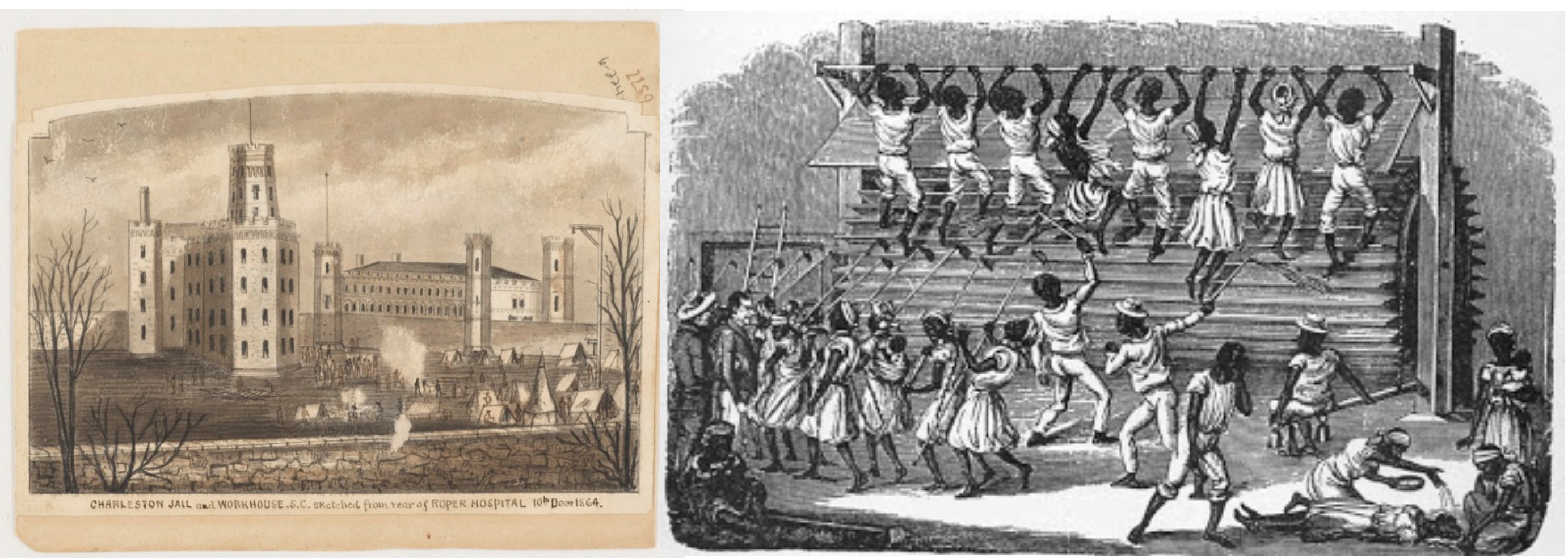
Charleston erected a treadmill in the city workhouse for the punishment of slaves, relieving white masters from the distasteful practice of whipping their slaves. For a fee, the master could send the slaves to the workhouse for punishment administered by city authorities. The slaves would walk on the treadmill in shifts, providing power for the grinding of corn. Overseers with rawhide whips maintained order.

jail and workhouse - illustration

LEFT: Jail & Workhouse, rear view, looking north from Roper Hospital on Queen Street. RIGHT: Traditional work treadmill.

Today In History: January 1

1787 – Deaths  
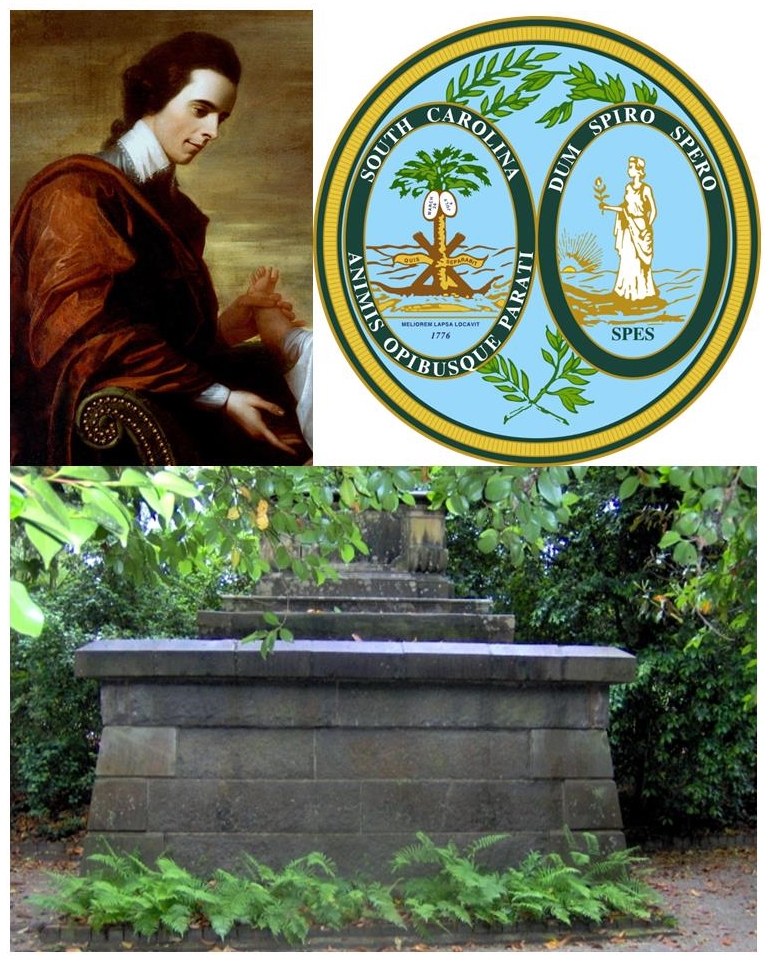
TOP: Arthur Middleton & the Great Seal of South Carolina BOTTOM: Middleton tomb at Middleton Place

TOP: Arthur Middleton & the Great Seal of South Carolina BOTTOM: Middleton tomb at Middleton Place

Arthur Middleton died and was buried at Middleton Plantation. The death notice from the State Gazette of South-Carolina described him as a “tender husband and parent, humane master, steady unshaken patriot, the gentleman, and the scholar.”

He was educated in Britain, at Westminster School, and Trinity Hall, Cambridge.He then studied law at the Middle Temple and traveled extensively in Europe where his taste in literature, music, and art was developed and refined. In 1764, Arthur and his bride Mary Izard settled at Middleton Place.

Arthur Middleton was one of the more radical thinkers in South Carolina politics – a leader of the American Party in Carolina and one of the boldest members of the Council of Safety and its Secret Committee. His attitude toward Loyalists was said to be ruthless. In 1776, Arthur signed the United States Declaration of Independence and designed the Great Seal of South Carolina with William Henry Drayton.  

During the American Revolutionary War, Arthur served in the defense of Charleston. After the city’s fall to the British in 1780, he was one of the 30+ Patriot leaders imprisoned in St. Augustine, Florida.

1788

The City Gazette reported that a man “was paraded through the streets, covered with feathers, stuck in a coat of tar, as a spectacle for the execration of others more honest than himself.

No, it was not a drunken New Years Eve celebration. Apparently, the man had gone “on board of a vessel, where he saw some goods so bewitching as to induce him to break at least one of the commandments, which says ‘Thou shalt not steal.’”

1808 – Slavery.

African American History Slave Ships The foreign slave trade ended by Federal law, as negotiated during the creation of the U.S. Constitution. When the US Constitution was written in 1787, a generally overlooked and peculiar provision was included in Article I, the part of the document dealing with the duties of the legislative branch:
Section 9. The migration or importation of such persons as any of the states now existing shall think proper to admit, shall not be prohibited by the Congress prior to the year one thousand eight hundred and eight, but a tax or duty may be imposed on such importation, not exceeding ten dollars for each person.

 In other words, the government could not ban the importation of enslaved people for 20 years after the adoption of the Constitution. And as the designated year 1808 approached, those opposed to enslavement began making plans for legislation that would outlaw the trans-Atlantic trade of enslaved people.

1865 – Civil War

Maj. John Johnson, a Confederate engineer wrote, “The first of January 1865, found Charleston gathered within her circle of defenses – Not invested, but much perplexed.”

Today In Charleston History: December 31

1738

By the end of the year the city had completed a hospital on “an acre of … Land called the old Burying Ground, lying on the back Part of Charles Town” – along Mazyck Street (now Logan). The hospital would also serve as a “Workhouse and House of Correction.”  

1781 –England, Tower of London

Henry Laurens was released from the Tower, in exchange for Lord Cornwallis and the payment of £12,000. Edward Rutledge had forcefully argued against Cornwallis’ release. Most South Carolina patriots blamed Cornwallis for the wholesale murder and plundering across the state. Rutledge wrote that Cornwallis should be “held a Prisoner for Life … because he was a Monster and an Enemy to Humanity.”

On the day of his release Laurens wrote:

On the 31st of December, being, as I had long been, in an extreme ill state of health, unable to rise from my bed, I was carried out of the Tower to the presence of the Lord Chief Justice of England, and admitted to bail “to appear at the court of king’s bench on the first day of Easter term, and not to depart thence without leave of the court.

Laurens immediately sent for his daughters to join him from France in London. He then went for several weeks to recuperate with the waters of Bath. 

Tower of London; Laurens marker. Photo by author.

Tower of London; Laurens marker. Photos by Mark R. Jones.

1799 – Slavery, Denmark Vesey Rebellion

On the last day of the 18th century, Denmark Vesey handed over one-third of his earnings from the lottery. In return he was handed his manumission papers, signed by Capt. Joseph Vesey. To Denmark the future looked bright. As Archibald Grimke, a Charleston mulatto and Denmark’s first biographer, wrote, Vesey was:

In possession of a fairly good education – was able to read and write, and to speak with fluency the French and English languages … [and had] obtained a wealth of valuable experience.  

At that time, the total free black population in South Carolina was 3,185, the majority of them being of mixed race ancestry – called Browns.  After being a dark-skinned slave for seventeen years in Charleston, Denmark, at thirty-three years of age, entered the 19th century as a free black man.

1864 – Civil War    
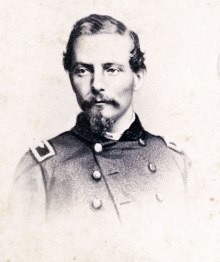
pgt beaureard

P.G.T. Beauregard

Gen. P.G.T. Beauregard left Charleston to inspect what was left of Gen. Hood’s army in Georgia. Gen. Hardee’s Georgia troops withdrew into South Carolina. Beauregard ordered:

You will apply to the defense of Charleston the same principle applied to that of Savannah – that is, defend it as long as compatible with the safety of your forces … The fall of Charleston would necessarily be a terrible blow to the Confederacy, but its fall with the loss of its brave garrison would be still more fatal to our cause.

      Gen. Willliam T. Sherman communicated with Admiral Porter off the North Carolina coast, “The President’s anxiety to take Charleston may induce Grant to order me to operate on Charleston.”


Today In Charleston History: December 24

1737 – Religion
John Wesley

John Wesley

John Wesley left Charlestown for England, ending his ministry in Georgia.

1825 – Fire

A fire destroyed parts of King Street with damages estimated to be at least $80,000. Authorities determined it was the work of arsonists. Over the next several weeks, more fires were set nightly. With the Denmark Vesey slave conspiracy still fresh in resident’s mind, it was thought the arsonists were slaves.

1830

The Charleston Courier reported:

The public are respectfully informed that the Rail Road Company has purchased from Mr. E.L. Miller his locomotive steam engine and that it will hereafter be constantly employed in the transportation of passengers. The time of leaving the station in Line Street will be 8 o’clock, at 10 a.m. at 1 and half past three o’ clock p.m.. Great punctuality will be observed in the time of starting.

Best Friend of Charleston

Best Friend of Charleston

1854 – Slavery

Robert Smalls, a slave harbor pilot married hotel maid Hannah Jones.

1860

South Carolina legislature published The Declaration of the Immediate Causes Which Induce and Justify the Secession of South Carolina from the Federal Union, also known as the South Carolina Declaration of Secession. Written mainly by Christopher Gustav Memminger, it explained the reasons for South Carolina’s secession from the Union. Memminger later served as first Secretary of Treasury for the Confederate Government.

FOR full text of the “Declaration”, CLICK HERE. 

Christopher G. Memminger

Today In Charleston History: December 18

1775 – American Revolution. Slavery.  

The South Carolina General Gazette reported that:

the Company of Foot Rangers…made a descent on that Island [Sullivan’s] burnt the House in which the Banditti were often lodged brought off four Negroes killed three or four & also took White prisoners four Men three Women & three Children destroyed many things which had been useful to those wretches.

1797 – Slavery.

Two slaves – Jean Louis and Figaro – and a free black were hanged, accused of planning “to set fire to the city as they had formerly done in St. Domingo.” They were “led to the place of execution at the bottom of Tradd Street facing the Lower Market between the Hours of Twelve and One o’Clock and hanged by the Neck.”

1860, December 18. Delegates Arrive.

In the late morning hours, the exhausted, red-eyed delegates arrived at the Charleston rail depot, greeted by the sound of drums, and a fifteen-gun salute from the Washington Light Infantry. They were led down Meeting Street into town by a military escort. Crowds lined the street, “ladies wore white cotton ‘secession bonnets’ with streamers decorated by … palmetto trees and a lone gold star.” The Palmetto Flag flew from almost every house and business. They marched past the Secession Pole in front of the Charleston Hotel. A “Secession Gun” had already been erected on East Bay, “to be fired on ratification of the ordinance. The gunpowder had been stored by a Charleston lady since the nullification crisis three decades before.”

Word passed through the city that the convention would reconvene at 4:00 p.m at Institute Hall, now being called by the locals as “Secession Hall.”

Institute-hall-secession

South Carolina Institute Hall, street view, (Harper’s Weekly)

With this festive atmosphere as the background, Rhett, Jr. paid a call to the British consul Robert Bunch to discuss how the English government would treat a Southern Confederacy. Bunch wondered if the confederacy would reopen the African slave trade which, he claimed, the English government “views with horror.” Rhett, Jr., filled with the powerful excitement of the moment, replied:

No Southern State or Confederacy will ever be brought to negotiate upon such a subject. To prohibit the Slave Trade would be virtually to admit the institution of slavery is an evil and a wrong, instead of, as the South believes, a blessing of the African Race and a system of labor appointed by God.

At 4:00 p.m., Rev. Richard Furman re-opened the convention with a prayer. The only business conducted that afternoon was a motion by Barnwell Rhett that “a committee be formed to prepare an address to the people of the Southern States.” The delegates, however, felt the hall was “too commodious … to debate intelligently.” The presence of several thousand rowdy spectators obviously changed the atmosphere of the hall from solemnity to celebratory. They decided to meet the next morning, delegates only, at St. Andrews Hall on Broad Street.