Today In Charleston History: December 26

1771

Henry Laurens, in a letter to Thomas Franklin, wrote:

I have always disliked those stupid Garnishings of No. 45, Wilkes and Liberty and drinking 45 Toasts to the Cause of true Liberty 450 Times unnecessarily.

1779 – The Seige of Charlestown.
Sirhenryclinton2

Sir Henry Clinton

Sir Henry Clinton, British commander, left New York City with a fleet of over 100 ships to transport 8700 men, horses and other supplies to attack Charlestown. Second in command of the force was Lt. General Charles Cornwallis.

1860 – Civil War 

At sundown, December 26, 1860, Major Anderson of the First U.S.  Artillery Regiment, in command of the U.S. garrison at Fort Moultrie in Charleston harbor, ordered his men to pack everything and prepare to move to Fort Sumter within half an hour. The 55-year-old Anderson had assumed command the previous month of two companies of the First Artillery and the regimental band, a total of 84 officers and men.
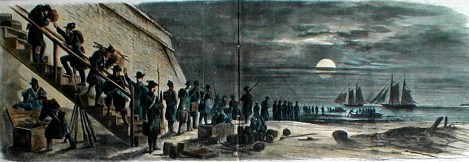
anderson moves to sumter - frank leslie

anderson-enters-fort-sumter - harpers weekly

Anderson enters Fort Sumter under cover of darkness. Harper’s Weekly illustrations, courtesy of Library of Congress.

 Three miles away in Charleston, Christmas celebrations were still taking place in many of the homes. Over the next hour, taking advantage of the holiday laxness and the cover of darkness, the entire garrison relocated from Ft. Moultrie across the narrow channel to Fort Sumter.

As they were leaving, a small detachment spiked the cannons, burned the gun carriages that faced Fort Sumter and cut down the flagstaff.   
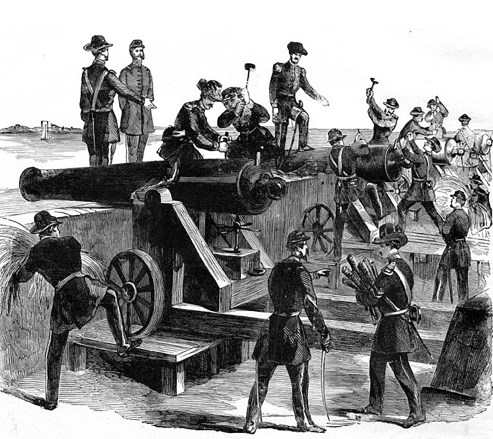
spiking the guns

Spiking the guns at Fort Moultrie. Harper’s Weekly illustration, courtesy of Library of Congress.

.
Today In Charleston History: December 23

1719 – Bloodless Revolution.

The Assembly pronounced it was convened as “a convention of the people,” seeking to become a royal colony. The legislature denounced the rule of the Lords Proprietors and officially petitioned King George I to purchase the Carolina colony from the Proprietors.

The Assembly voted unanimously for a new provisional government until his Majesty assumed control of the colony. The officers chosen were:

  • James Moore, Jr. (son of a former governor), Governor
  • Richard Allein, Chief Justice (Nicholas Trott was removed)
  • Francis Yonge, Surveyor General of the Province
  • William Rhett, Receiver of the Province
  • John Barnwell, Agent of the Province.

They sent Barnwell to England with instructions and a Declaration of Causes to present to the King which, in part, read:

Whereas the Proprietors of this province of late assumed to themselves an arbitrary and illegal power of repealing such laws as the General Assembly of the settlement have thought fit …and acted in many other things contrary to the laws of England and the charter to them and us freeman granted.

Whereby we are deprived for those measures we have taken for the defence of the settlement, being the south west frontier of his Majesty’s territories in America …

We therefore … the Representatives and delegates of this Majesty’s liege people and free born subjects of the said settlement now met in convention at Charles Town … do hereby declare … James Moore his Majesty’s Governor of this settlement, invested with all the powers and authorities belonging and appertaining to any of his Majesty’s governor in America till his Majesty’s pleasure herein shall be further known.

For all practical purposes, the citizens of South Carolina had overthrown the Proprietary government, America’s first Revolution. They had proven that, if need be, the citizens were willing to take matters into their own hands.

1765 – Stamp Act.

British Secretary of State Henry Seymour Conway informed Lt. Gov. Bull that further violence was “not suitable for either the safety or Dignity of the British Empire.” He instructed Bull to call upon British General Thomas Gage to combat the violence of the mobs.

In addition to the mobs, Bull was also concerned about the 1400 unemployed sailors who were stranded in Charlestown due to the closure of the port. The sailors spent most of their time in taverns and were increasingly disorderly. 

1824 -Religion.
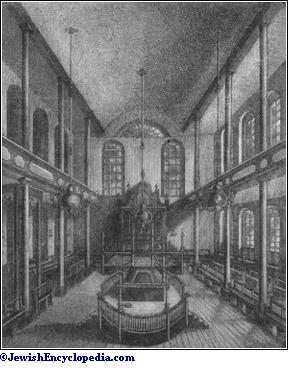
view of old synagogue

Interior of the Old Synagogue at Charleston, S. C., Destroyed by Fire April. 27, 1838. (From a drawing by Solomon N. Carvalho ).

A group of a dozen Jewish men, “A Convention of Israelites,” submitted a petition to the president of the congregation of Beth Elohim, urging reform of their worship services, including the introduction of English. They wrote they had “witnessed with deep regret, the apathy and neglect which have been manifested towards our holy religion.”

This was the beginning of the Reformed movement in America.


Today In Charleston History: December 22

1747 – Religion

Solomon DeCosta, a Jewish merchant who seems to be in partnership with James Peyne, attended a meeting of the Commissioners for Trade and Plantations in London for “the settlement of several of their poor in South Carolina.”

1773 – American Revolution – Foundations

In the pre-dawn hours, British custom officials off loaded the 257 chests of tea and stored them in the basement of the Exchange. They informed the public that the tea would remain locked away and any attempt to remove it would be met by force. 

Exchange1823_650x650

1775

Continental Congress creates a Continental Navy, naming Esek Hopkins, Esq., as commander in chief of the fleet. Christopher Gadsden of South Carolina designed Hopkins’ personal standard, which flew from the first navy fleet. The yellow flag bore the image of a coiled snake and the Patriot motto, Don’t Tread on Me.

Gadsden, famously skeptical of any government involvement in business affairs, once stated, in the aftermath of the Jay Treaty, “Better to send a virgin to a brothel than a man to England to sign a treaty.”

900px-Gadsden_flag.svg

1812   

From Georgetown, South Carolina, Dr. Greene wrote Aaron Burr:

I have engaged passage to New-York for your daughter[Theodosia Burr Alston] in a pilot-boat that has been out privateering, but has come in here, and is refitting merely to get to New-York. My only fears are that Governor Alston may think the mode of conveyance too undignified, and object to it; but Mrs. Alston is fully bent on going.

The ship Patriot was a private vessel authorized for military service. It had been fitted with less than five cannon and attacked several British merchant ships. It was being refitted in Georgetown, her guns dismounted and hidden below decks.

1822 – Slavery

In response to the Denmark Vesey slave plot, South Carolina legislature passed the Negro Seamen Acts. Any free Negro that came into the state on a vessel would be lodged in the jail during the stay of the vessel in port. If the captain would not pay for the cost of board and lodging, the Negro would be sold into slavery.

Today In Charleston History: December 14

1743

George Lucas was named Lt. Royal Governor of Antigua. He realized that he would never live in Carolina again. He sent his oldest son, George, to Carolina to bring his family back to the island. His daughter, Eliza, who was running her father’s plantation in his absence wrote to a friend, “We expect my brother George very shortly … His arrival will, I suppose, determine how long we shall continue here.”

Eliza was horrified about leaving Carolina. She had built a successful life and did not want to leave.

1782 – British Occupation.

The British Army evacuated Charlestown.

Wholesale looting by British troops began weeks before the withdrawal, private property from houses. More than 5000 slaves were taken by enterprising British officers, who contracted transport to the West Indies where the slaves were re-sold. Major Traile of the Royal Artillery, took down the church bells of St. Michael’s and carried them away as being British property.

As significant as the material losses were, perhaps the loss of people was more devastating in the long run. Approximately, 3800 whites and 5300 blacks joined the British exodus, resettling in Jamaica, Bermuda, England and St. Lucia. However, hundreds of British soldiers deserted and remained in South Carolina.

The Continental Army entered the city that afternoon. At Gov. Rutledge’s invitation, Gen. Green made his headquarters on Rutledge’s house on Broad Street. The thirty-month nightmare occupation was over, with bitterness lingering between both sides.

british evacuate

British evacuate Charlestown

1830

The Best Friend locomotive pulled two fourteen-foot coaches with forty men at twenty miles per hour.

Best Friend of Charleston

Best Friend of Charleston

1839 – Births.

Angelina Grimke Weld gave birth to a son, Charles Stuart.

Today In Charleston History: December 13

1770 – American Revolution – Foundations.

Henry Laurens and Charles Pinckney, Junior presided over a meeting at the Liberty Tree in which the continuation of the Association was discussed. Thomas Lynch: “rode fifty miles to Charles Town and exerted all his eloquence and even the trope of Rhetorical Tears for the expiring liberties of his dear country, which the Merchants would sell like any other merchandise.” They then voted to discontinue the boycott on all items except tea, and “send a bitter letter to the northern colonies” about their conduct in breaking the Association.

The non-importation crisis had a severe economic impact on the American colonies, with a dramatic drop in imports from 1768 to 1769.

  • New York: £490, 673 to £75,930
  • Philadelphia: £441,829 to £204,978
  • New England (Boston and Rhode Island): £430,806 to £223,694
  • Carolina: £306,600 to £146,273

The stage was now set for Charlestown, and the rest of the American colonies, to shrug off their ties with the British motherland.

1891

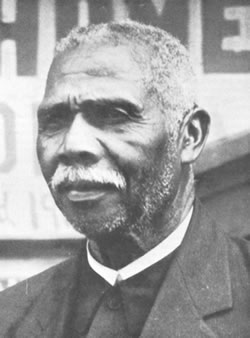
daniel_jenkinsDaniel Jenkins discovered four small black children huddled in a railroad box car. Despite the fact that he lived in a two-room house, with his wife and four children, Jenkins brought the orphaned children to his small home. This was the incident that led to the formation of the Orphan Aid Society of Charleston, the founding of the Jenkins Orphanage, the establishment of the Jenkins Orphanage Band. Within ten years, the Jenkins Band had performed in Europe and for Pres. Teddy Roosevelt’s inauguration. They later appeared on Broadway in Uncle Tom’s Cabin, and Porgy, performed for Pres. William Howard Taft and at the Anglo-American Expo in London. They also had a hand in introducing jazz music to small towns up and down the east coast and helping to popularize a dance that became known as “the Charleston.” 

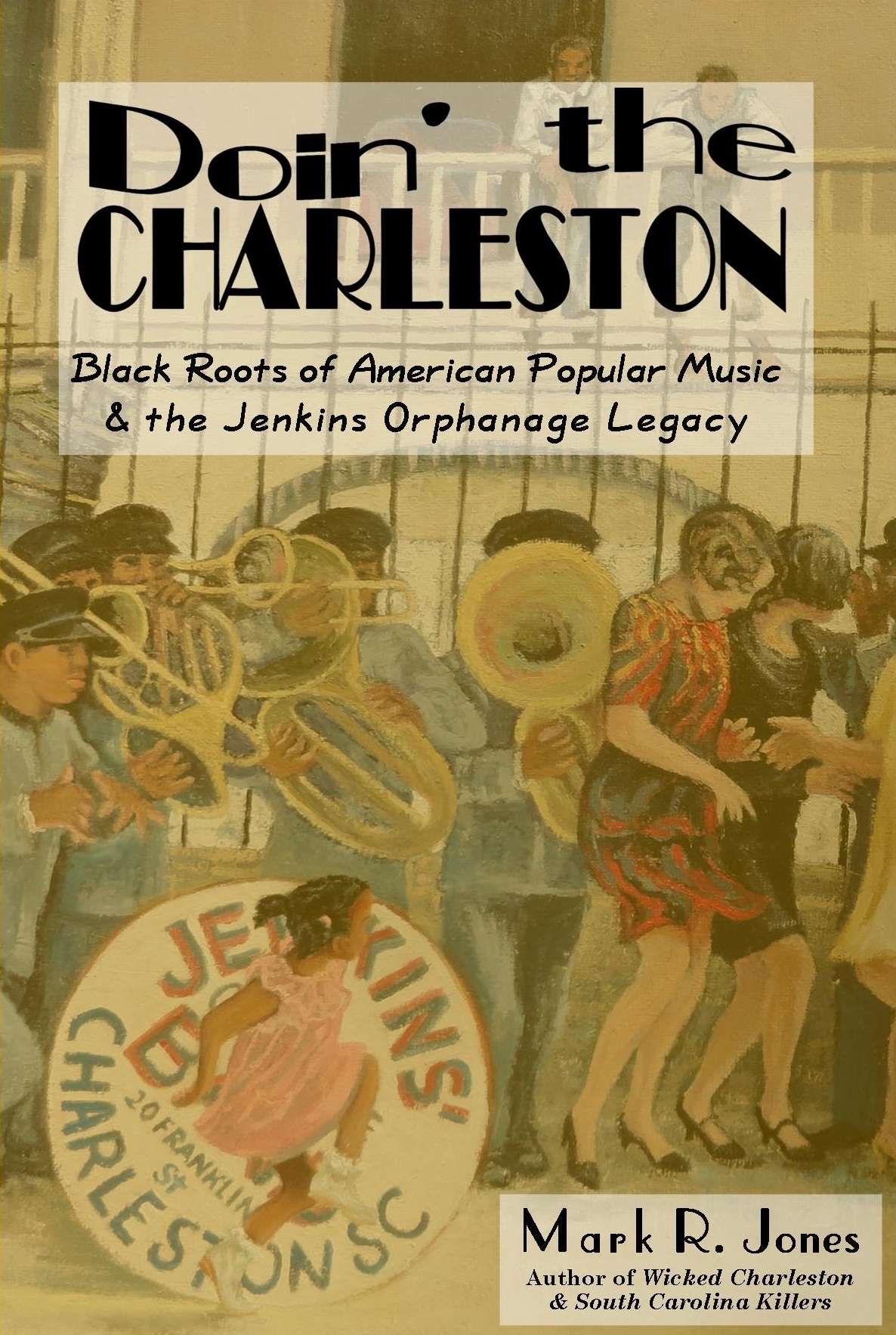
1. doin book cover (create space) official - frontFor the entire story, read my 2013 book, Doin the Charleston.

Today In Charleston History: December 9

1773 – Charleston Firsts. Chamber of Commerce

On December 9, 1773, the Charlestown Chamber of Commerce was organized at Mrs. Swallows’ Tavern on Broad Street.

The formation of the Chamber can be traced back to the economic stress the British Empire suffered after the Seven Years’ War (the French and Indian War). The victory over the French had come at a high cost, so Parliament passed the 1764 Sugar Acts and the 1765 Stamp Act in an attempt to pay the debt run up during the war. The Stamp Act required that most printed materials in the colonies be produced on “stamped paper” – an embossed revenue mark. Those included newspapers, legal documents, playing cards and magazines.

It was within this volatile atmosphere of political upheaval and business uncertainty that a group of Charleston businessmen met at Mrs. Swallows Tavern and organized the Chamber of Commerce. Today it is called the Charleston Metro Chamber of Commerce.

1777 – American Revolution.

Henry Laurens’ term as President of the Continental Congress ended. He was elected after John Hancock’s retirement due to ill health. During his term, Laurens dealt with the conspiracy to replace George Washington as commander-in-chief, perpetuated by several members of Congress and the military.

1806 – Elections

Charles Pinckney was elected to his third term as governor.

1911

John Olmsted delivered a set of plans for Hampton Park.

John Charles Olmsted was the nephew and adopted son of Frederick Law Olmsted, was an American landscape architect. With his brother, Frederick Law Olmsted, Jr., he founded Olmsted Brothers, a landscape design firm in Brookline, Massachusetts. The firm is famous for designing many urban parks, college campuses, and other public places. John Olmsted’s body of work from over 40 years

John Olmsted

John Olmsted

as a landscape architect has left its mark on the American urban landscape, carrying his design philosophy of integrated park systems into new cities such as Portland, Maine; Portland, Oregon; Seattle, Spokane, Dayton, and, f course, Charleston. In these cities, he pioneered his comprehensive planning philosophy of integrating civic buildings, roads, parks, and greenspaces into livable urban areas.

Olmsted also designed individual parks in New Orleans; Watertown, New York; and Chicago. His work in park design led to commissions for numerous institutions such as school campuses, civic buildings, and state capitols, as well as designs for large residential areas, including roads and schools. His work in comprehensive planning for the communities surrounding industrial plants and factories is considered especially noteworthy.

Today In Charleston History: December 7

1785
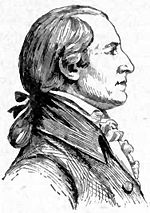
Dr. David Ramsay

Dr. David Ramsay

Dr. David Ramsay published his two-volume History of the Revolution of South Carolina. In an attempt to gain maximum profits, he paid for the printing himself – 3200 copies printed by Issac Collins of Trenton, New Jersey. It was also the first book to receive a copyright in the United States. 


1808
Charles Cotesworth Pinckney

Charles Cotesworth Pinckney

James Madison defeated the Federalist candidate Charles Cotesworth Pinckney for the Presidency of the United States. Madison received 122 electoral votes to Pinckney’s forty-seven. Once again, Pinckney did not carry his home state of South Carolina.

Today In Charleston History: December 5

1769 – Population.  

Lt. Gov. William Bull reported that there were 45,000 white inhabitants and 80,000 Negroes in South Carolina. Charlestown contained 5.030 whites and 5,831 Negroes. During the year 5,438 slaves were imported and sold for £200,000 sterling. Bull also reported:

We have thirty lawyers … several earned from £1000 to £1200 sterling annually. Literature is but in its infancy here. We have not one good grammar school … our gentlemen, who have anything of a learned education, have acquired it in England, and it is to be lamented they are not more numerous.

Exports were listed to value £402,000 sterling and included:

  • Hemp: 526,131 pounds
  • Rice: 123,317 barrels
  • Pork: 2170 barrels
  • Pitch & tar: 7752 barrels
  • Lumber: 678,350 feet
  • Shingles: 1,987,000
  • Bricks: 42,800
  • Indigo: 309,570
  • Tobacco: 214,210
  • Deerskins: 183,221
1775

The commander-in-chief of the Navy, Commodore Esek Hopkins, received a yellow rattlesnake flag from Christopher Gadsden to serve as the distinctive personal standard of his flagship. It was displayed at the mainmast. Gadsden, representing South Carolina in the Continental Congress, was one of seven members of the Marine Committee who were outfitting the first naval mission.

900px-Gadsden_flag.svg

The Gadsden Flag

The first American naval ships were used to intercept incoming British ships carrying war supplies to the British troops in the colonies. One ship captured had 30,000 pairs of shoes on it, but the admiralty agent demanded his 2 1/2 per cent commission before he would release the cargo for Washington’s army, so many soldiers marched barefoot in the snow. The Second Continental Congress authorized the mustering of five companies of Marines to accompany the Navy on their first mission. The first Marines enlisted in the city of Philadelphia, and they carried drums painted yellow, depicting a coiled rattlesnake with thirteen rattles, and the motto “Don’t Tread on Me.” This is the first recorded mention of the future Gadsden flag’s symbolism.

The timber rattlesnake and eastern diamondback rattlesnake both populate the geographical areas of the original thirteen colonies. Their use as a symbol of the American colonies can be traced back to the publications of Benjamin Franklin. In 1751, he made the first reference to the rattlesnake in a satirical commentary published in his Pennsylvania Gazette. It had been the policy of Britain to send convicted criminals to America, so Franklin suggested that they thank the British by sending rattlesnakes to England.

On Feb. 9, 1776, Gadsden presented a copy of this flag to the Congress of South Carolina in Charleston, South Carolina, as recorded in the South Carolina Congressional Journal:

Col. Gadsden presented to the Congress an elegant standard, such as is to be used by the commander in chief of the American Navy; being a yellow field, with a lively representation of a rattlesnake in the middle in the attitude of going to strike and these words underneath, “Don’t tread on me.

1829

Plans to build a fort in Charleston harbor were adopted by Congress. The fort was to be named “Sumter” in honor of South Carolina’s hero of the American Revolution, Thomas Sumter, who was still living at that time.

Today In Charleston History: December 3

1737

Samuel Dyssli, an immigrant from Switzerland wrote to his family and declared:

 I am over here, thank God, hale and hearty, and doing at present quite nicely. I am working with an English master. He gives me every week …. 50 shillings and … plentiful … food and drink.  Carolina looks more like a Negro Country than like a country settled by white people.

1744

The Gazette published a letter to Eliza Pinckney from a London merchant which read:

I have shown your Indigo to one of our most noted Brokers … who tried it against some of the Best French, and in his opinion is it as Good … when you can in some measure supply the British Demand, we are persuaded, that on proper Application to Parliament, a Duty will be laid on Foreign Growth, for I am informed we pay for Indigo to the French £200,000 per annum.

1772

American Revolution – Foundations. During a public meeting most of the people demanded the tea be sent back to England. They also resolved not to purchase any tea being taxed for raising revenue in America. They resolved:

That the tea ought not to be landed, received or vended in this colony, nor should any be imported while the law imposing this unconstitutional tax remained …

Christopher Gadsden was appointed chairman to the committee to secure signatures in support of this resolution. They also resolved to boycott the business of any non-signers. Anonymous letters arrived at the Exchange Building threatening the burning of the ship London and the wharf where it was docked.

1779

A grand jury complained about the “excessive number of Negro Wenches, suffered to buy and sell about the streets, corners, and markets.”

1886
Benjamin_Franklin_Perry

Benjamin Franklin Perry

Benjamin Perry died in Greenville on December 3, 1886 and was interred at Christ Church Episcopal Cemetery.

Benjamin F. Perry was appointed provisional Governor of South Carolina on June 30, 1865 by President Andrew Johnson – due to his strong unionist views. Perry was directed by the president to enroll voters and to lead the state in the writing of a new state constitution. The delegates at the constitutional convention largely followed Perry’s guidelines for the constitution, but they strayed by adopting the black codes to prevent black suffrage.

Despite his pro-Union views, Perry did not believe in racial equality.  In 1865 he said,

The African, has been in all ages, a savage or a slave. God created him inferior to the white man in form, color, and intellect, and no legislation or culture can make him his equal… His hair, his form and features will not compete with the Caucasian race, and it is in vain to think of elevating him to the dignity of the white man. God created differences between the two races, and nothing can make him equal.

Today In Charleston History: December 1

1773 – American Revolution – Foundations.

Two hundred and fifty-seven chests of tea arrived in Charlestown on the ship London. Consigned by the East India Company, the arrival of the tea set off a crisis. Handbills were passed out, calling for a mass meeting of all South Carolinians at the great hall in the Exchange Building.

1781 American Revolution

Henry Laurens, Charleston diplomat, and the first American imprisoned in the Tower of London, wrote a bitter note which was smuggled out of the Tower and sent to Congress:

Almost fifteen months I have been closely confined and inhumanely treated. The treaty for exchange is abortive. There has been languor, and there is neglect somewhere. If I merit your attention, you will not longer delay speedy and efficacious means for my deliverance.

laurens, tower

Tower of London; Henry Laurens’ cell. Photos by Mark R. Jones

1801
Tucker_Thomas_Tudor_-_St._George

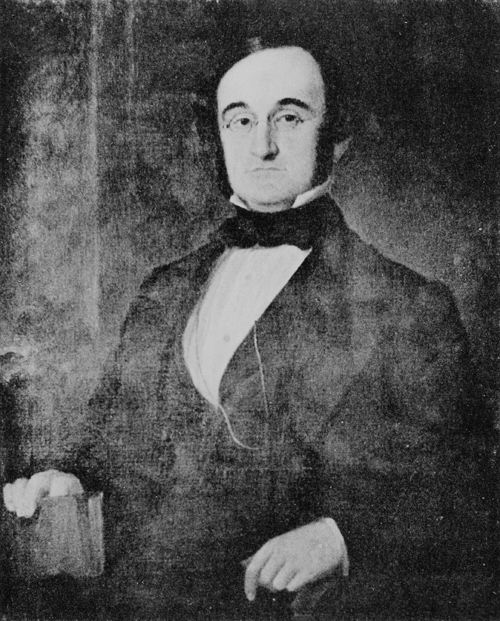
Dr. Thomas Tudor Tucker

Dr. Thomas Tudor Tucker of Charleston was appointed as Treasurer of the United States by President Thomas Jefferson. He would hold the position for twenty-six years under four different presidents: Jefferson, Madison, Monroe and John Quincy Adams, and died while holding the office in 1828. From 1809 to 1817, Tucker managed to hold the treasurer’s post while also serving as President James Madison’s personal physician.

Tucker was the longest serving Treasurer in American history.

1820

Thomas Bennett was elected governor of South Carolina.

1822 – Slavery

As a result of the Vesey Conspiracy, SC Legislature passed a law requiring all free black males over fifteen years old either take a white guardian, or be sold into slavery.  Any free black who left South Carolina and returned could be enslaved.

1832 – Nullification Crisis

In a coordinated effort with V-P Calhoun, Robert Hayne resigned his seat in the U.S. Senate.

1863

On December 1, the Planter was caught in a crossfire between Union and Confederate forces. The ship’s commander, Captain Nickerson, decided to surrender. The ship’s pilot, Robert Smalls refused, fearing that the black crewmen would not be treated as prisoners of war and might be summarily killed. The Planter was a former Confederate vessel that was piloted out of Charleston harbor by an enslaved pilot, Robert Smalls, who surrendered the vessel to the United States navy. Smalls and his family were given their freedom and Smalls later met with Pres. Lincoln. 

Taking command of the Planter from Nickerson, Smalls piloted the ship out of range of the Confederate guns. For his bravery, Smalls was named to replace Nickerson as the Planter’s captain – the first black captain of a vessel in the service of the United States.

planter-gun-boat

The Planter