Today In Charleston History: April 23

1672-England.

King Charles II bestowed upon Anthony Ashley Cooper the titles, Earl of Shaftesbury and Baron Cooper of Paulet.  

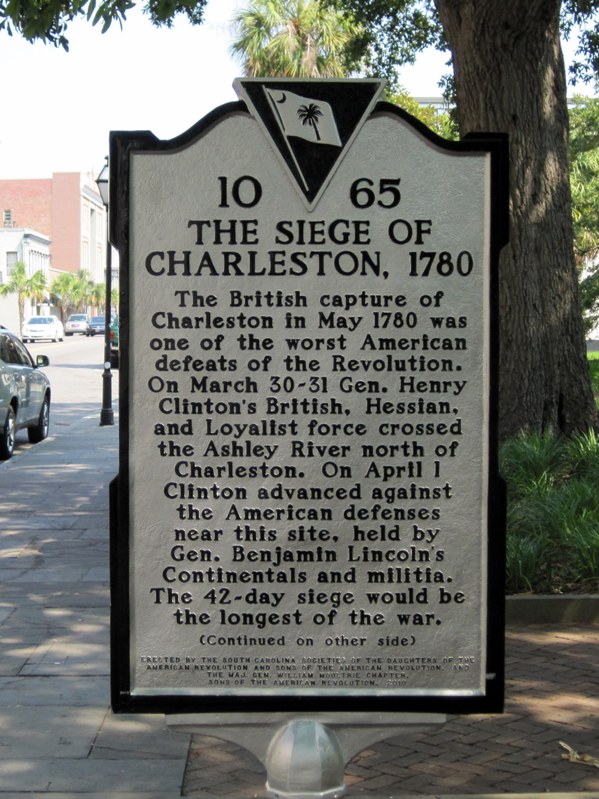
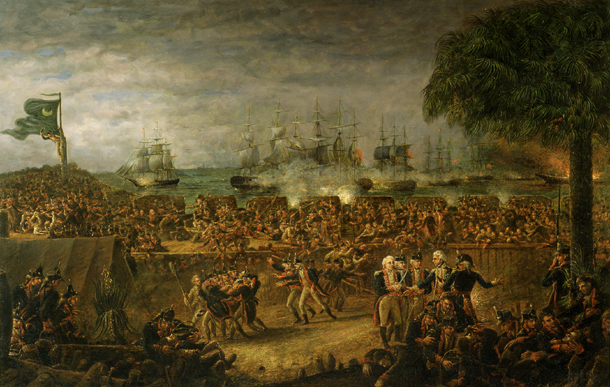
1780-The Siege of Charlestown.
Siege of Charlestown

Siege of Charlestown

The British were close enough to “easily throw a stone” into the American line trenches north of Boundary Street.  Rifle fire was added to siege, in addition to the artillery barrage. 

1782-Slavery

Capt. Joseph Vesey returned to Haiti with another cargo of slaves. He was informed that his former “pet”, Telemaque, was suffering from “epileptic fits” and a doctor had “certified that the lad was unwell.” His sale was “thereupon cancelled,” meaning that Vesey was forced to repurchase the boy, and was surprised to find that within a few months, the boy had become proficient in the French language.

Vesey put Telemaque back to work again as his cabin boy and miraculously, the epileptic fits ceased as soon as they sailed from Haiti. Vesey must have seen this as more proof of the boy’s intelligence and cleverness, and decided he would be more valuable as his personal servant.

1840 – Marriage

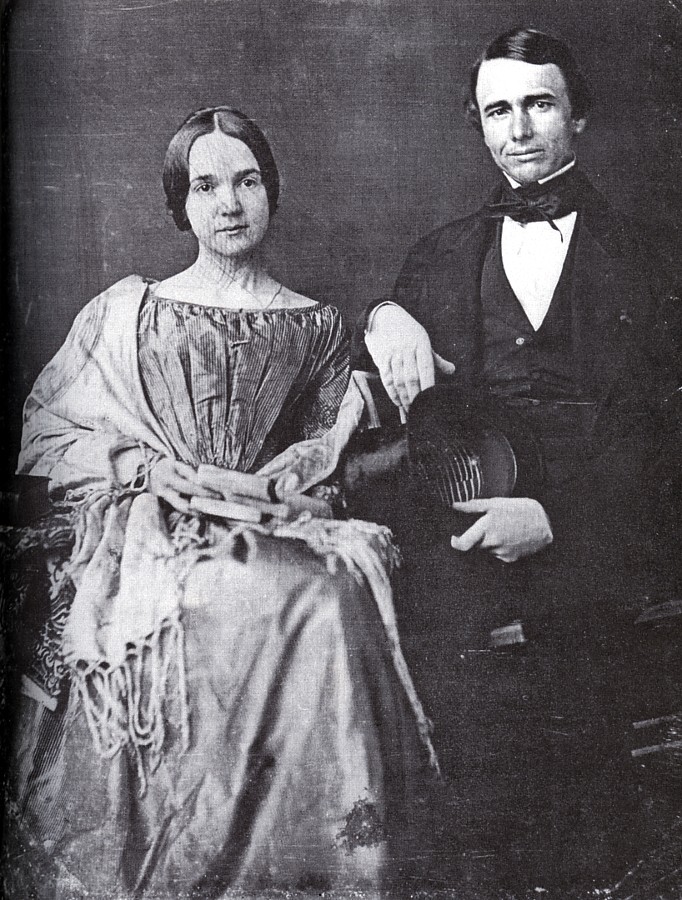
Mary Boykin Miller married James Chesnut, Jr., who was from one of the wealthiest families in the South. The Chesnut family owned 448 slaves and plantations totaling nearly five square miles.

james_mary_chesnut

Today In Charleston History: April 16

1766-Slavery

Christopher Gadsden wrote to William Samuel Johnson, a Connecticut lawyer, about his concerns over the large black population and the constant threat of a revolt.  Gadsden said he hoped that “in the case of South Carolina, the enslavement of blacks would not cause the enslavement of whites.”

1767
Irish architect James Hoban arrived in Charleston from Philadelphia. He was contracted to rebuild the a court house on the ruins of the old State House. President George Washington admired Hoban’s work on his Southern Tour, where he met the young architect in Charleston in May 1791. Washington summoned the architect to Philadelphia, in June 1792, where he was chosen to design and build the White House. 
Both the Charleston County Courthouse and the White House were modeled on Leinster House, the current Irish Parliament Building.
1780-The Siege of Charlestown
pitt statue

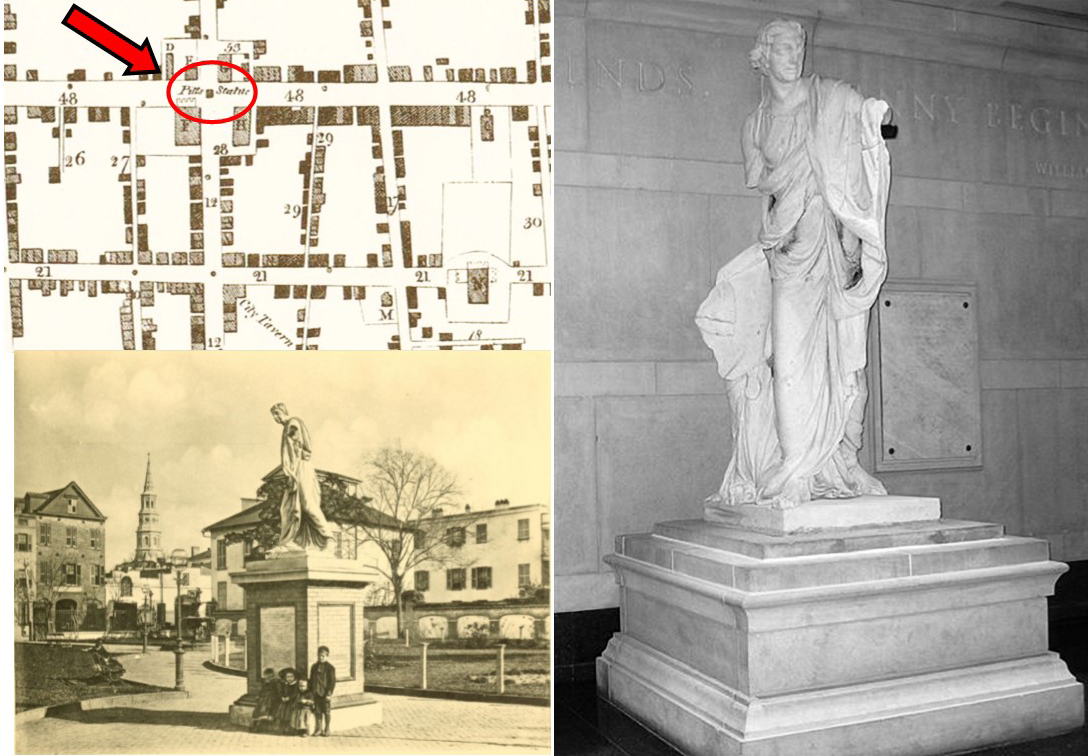
LEFT TOP: Map with Pitt statue location. LEFT BOTTOM: Pitt statue in Washington Park. RIGHT: Pitt statue at its present location – Charleston County Courthouse.

A British cannon, fired from the James Island battery, shot off the arm of the statue of William Pitt in the intersection of Broad and Meeting Streets. After the war, the statue was later moved to the Grimke house at 321 East Bay Street. In 1808 it was moved to the Charleston Orphan House and in 1881 moved again to Washington Park. Presently it stands inside the entrance of the new Charleston County Court House.

At this time, the Americans had 4200 men in Charlestown fit for duty while the British counted 8300.

1919 – First Air Show

The first air show was performed in Charleston. It was a promotional tour by the Victory Liberty Loan program that featured eleven planes that were shipped to Hampton Park in pieces. The wings were assembled to the plane’s fuselage in the park.  Most of the pilots were former World War I and thousands of people show up to watch the “thrilling stunts and turns … turning loops … and a daring nose spin.” It was called an “impressive demonstration of the battling power of the airplane.” The local newspapers also reported that:

Interest in the part of the spectators was by no means confined to the machines, the aviators coming in for their share of curiosity, especially by members of the fair sex.

air show

Today In Charleston History: April 14

1737-Religion

John Wesley arrived from Savannah for a second visit to Charlestown. He noted in his diary:

I had the pleasure of meeting with the clergy of South Carolina among whom in the afternoon there was such a conversation for several hours on ‘Christ our Righteousness’ as I had not heard at any visitation in England or hardly any other occasion.

During Wesley’s visit he arranged with Lewis Timothy to publish the Collection of Psalms and Hymns, the first Anglican hymnbook published in the American colonies.

Lewis Timothy print shop

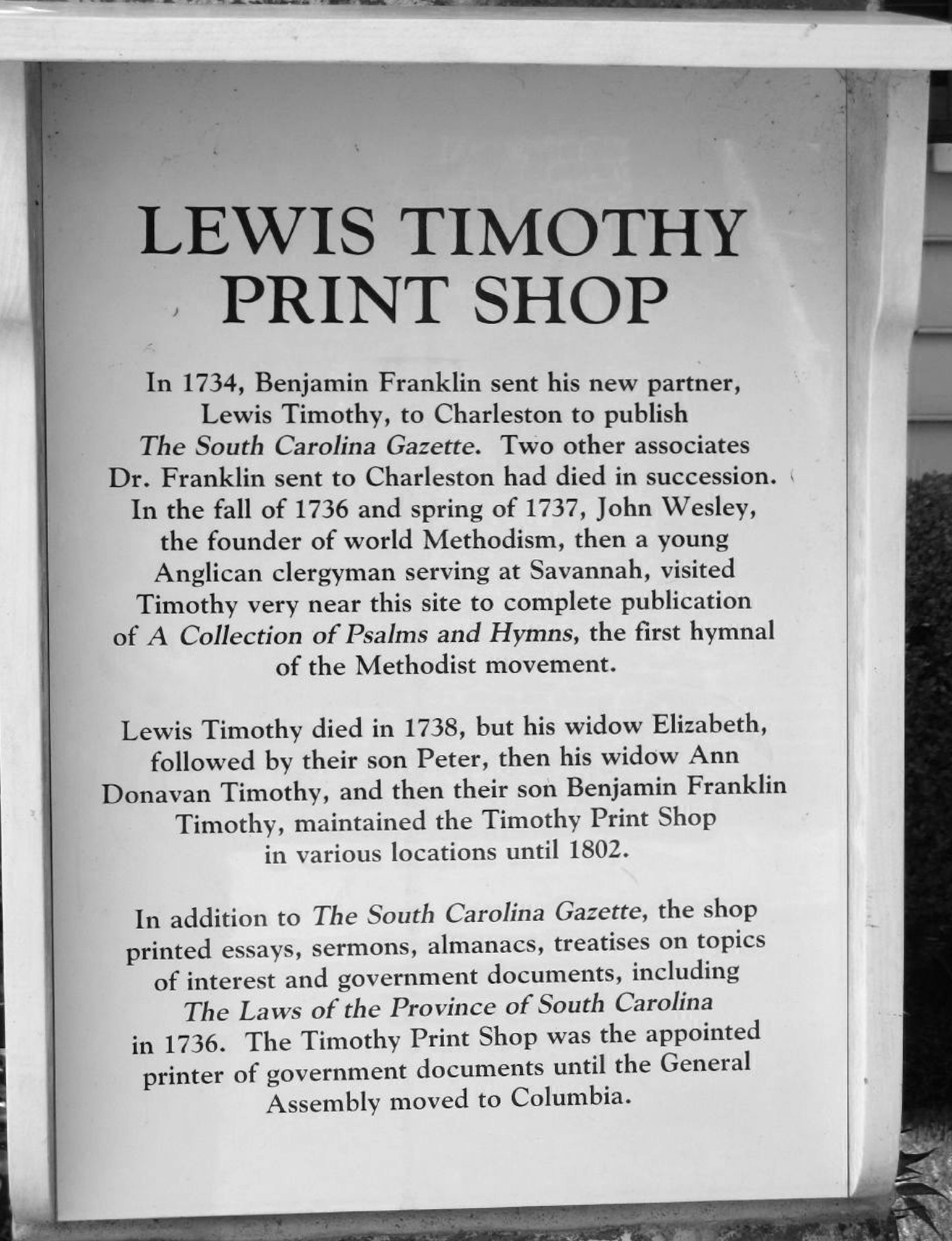
Lewis Timothy print shop marker on King Street, Charleston

1780-American Revolution 

Lt. Colonel Tarleton and his British dragoons took an American cavalry encampment commanded by General Issac Huger, at Middleton’s Plantation in Goose Creek. In a surprise attack Tarleton’s troops killed fifteen and captured eighteen. Tarleton noted that “Lt. Colonel Washington was Prisoner but afterward thro’ the Darkness of the Morn escaped on foot.”

This action effectively cut off Gen. Lincoln’s escape route from Charlestown. The Continental Army was now stuck in the city.

 1861 – Civil War

The Federal garrison at Sumter saluted the American flag with a fifty-gun salute.  The harbor was filled with thousands of Charlestonians, on every type of boat imaginable, to watch the surrender. Major Robert Anderson takes the Stars and Stripes with him when they evacuate the fort. 

The New York Times correspondent described the scene:

The bells have been chiming all day, guns firing, ladies waving handkerchiefs, people cheering and citizens making themselves generally demonstrative. It is regarded as the greatest day in the history of South Carolina.

1865 – Civil War

Maj. Gen. Robert Anderson, who surrendered Fort Sumter to the Confederates, came out of retirement to re-raise the same Stars and Stripes over Fort Sumter that he had lowered in surrender four years earlier. This flag is now on exhibit at the Fort Sumter Visitor Education Center.

Robert Smalls, the slave who had stolen his master’s boat, the Planter, and fled to freedom, returned with the Planter to Charleston harbor for the ceremonial raising of the American flag upon Ft. Sumter.

ft sumter flag raising

Flag Raising ceremony at Fort Sumter. Library of Congress

Today In Charleston History: April 13

1737-Epidemics

The London Frigate, a slave ship, arrived in Charleston from Guinea with small pox on board. It spread so extensively that there were not enough healthy people to take care of the ill.

1780-The Siege of Charlestown

The British had managed to mount seventeen 24-pound cannons, two 12-pounders, three 8-inch howitzers and nine mortars.  At 10:00 am the batteries in the neck, north of the American lines opened steady fire until midnight.

      Major William Croghan wrote:

The balls flew thro’ the streets & spent their fury on the houses; & those who were walking or visiting in the town, as was usual during the former quiet, now flew to their cellars, & others to their works, as the places of greatest safety.

The first day’s bombardment killed two soldiers, several women and children, two cannons were destroyed and two houses burned to the ground. 

During the day, Governor John Rutledge and a few members of privy council, including Charles Pinckney left the city, heading for the backcountry. Gen. Lincoln persuaded Rutledge to “Preserve the Executive Authority … give confidence to the people and throw in the necessary succours and supplies to garrison.” That left Lt. Governor Christopher Gadsden the leading civil authority in the city.

The governor’s entourage included a number of invalids, including Lt. Colonel Francis Marion and his broken ankle. At noon they crossed the Cooper River leaving behind the constant booming of artillery and a city covered with smoke and fire.

1830

At a Thomas Jefferson birthday celebration in Washington, DC, Pres. Andrew Jackson toasted: “Our Federal union – It must be preserved.” V-P John Calhoun replied, “The union – Next to our liberties the most dear.”

1832 – Passenger Train Wreck – Charleston First

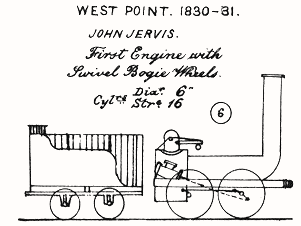
The first passenger train wreck in the United States occurred on the C&HRR. Pulled by the West Point, the axle of the lead car snapped and was destroyed, tossing passengers out of the open car into a “low swampy place filled with mud and water.” Five of the passengers were seriously injured, but recovered.

west point

1861 – Civil War

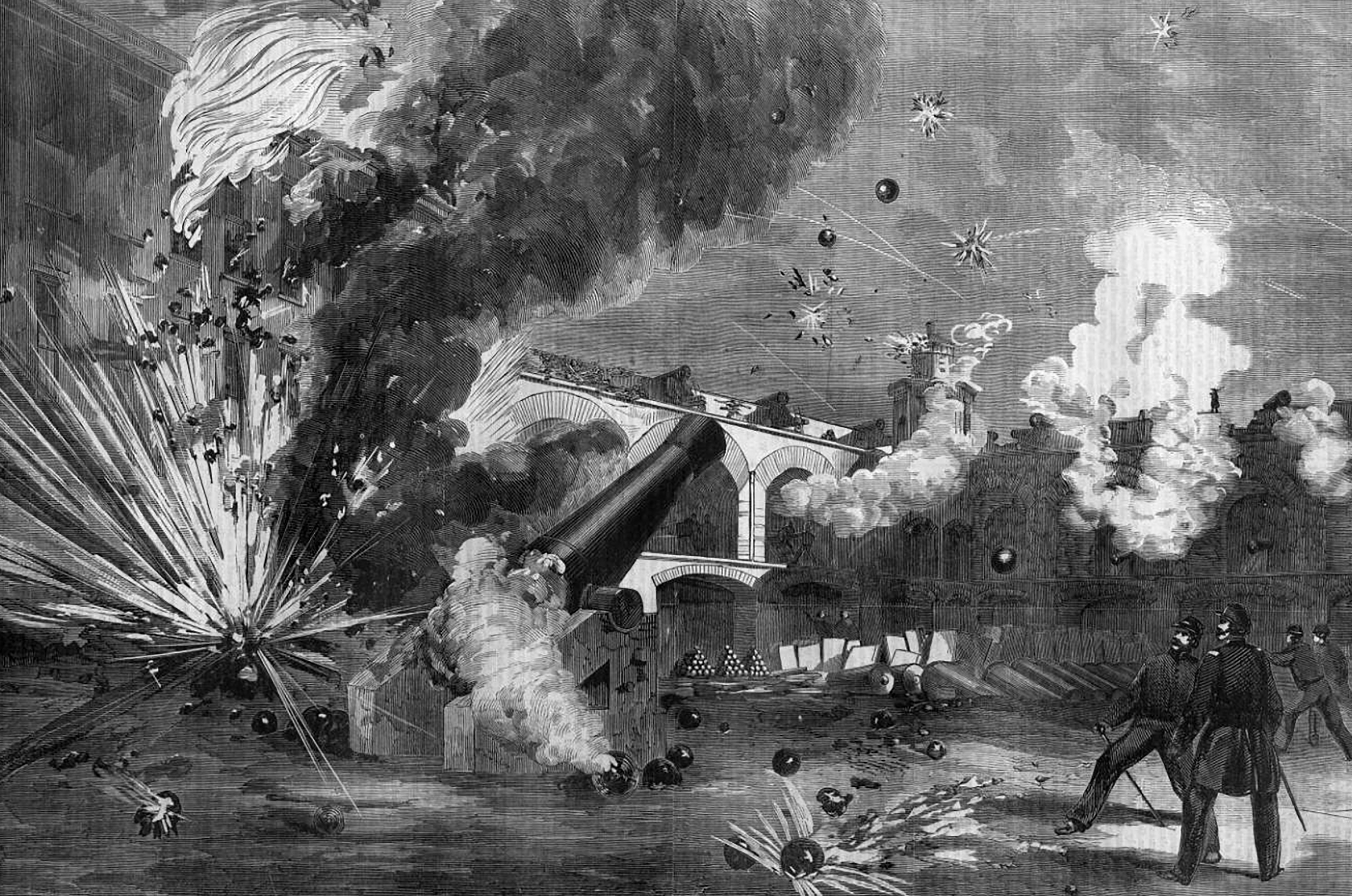
By 8:00 a.m. the upper story of the officer’s quarters at Sumter were burning. The most immediate danger was the 300 barrels of gunpowder stored in a magazine. At one o’clock the flagstaff at Fort Sumter was struck by a Confederate shell and crashed to the ground. The soldiers rushed to rehoist the flag before the Confederates assumed they had surrendered.

About this time, former Senator Louis Wigfall of Texas visited Fort Sumter. During the midst of the bombardment, Wigfall had himself rowed out by slaves. Soldiers at Sumter were perplexed by a man waving a white handkerchief from a sword. The Federals raised a flag of truce and Wigfall, although he had no authority to do so, told the first Federal officers he met, “Let us stop this firing. You are on fire, and your flag is down. Let us quit.”

Anderson arrived a moment later and Wigfall told him:

You have defended your flag nobly sir. You have done all that it is possible to do, and General Beauregard wants to stop this fight. On what terms, Major Anderson, will you evacuate this fort?

ft sumter - interior

Inside Fort Sumter during the bombardment. Courtesy Library of Congress

Anderson felt some relief. His soldiers were half-way starved, exhausted and down to their last three shots. The American flag was taken down and Wigfall’s white handkerchief was raised in its place. The firing from all batteries ceased – the battle over.

Church bells rang across the city. Men on horseback galloped across the city, shouting the news. Spectators on the Battery sea wall cheered hysterically, the sound carrying across the Charleston harbor to the exhausted soldiers into Fort Sumter.

Hermann Klatte, a partner in a local liquor outlet called “Lilienthal & Klatte” on East Bay Street, wrote: 

 Yesterday morning at 4:30 they began fighting at Fort Sumpter…the United States flag was not raised again….Somewhat after 2:00 Sumpter surrendered unconditionally to the southern Confederacy, and soldiers from the same government will take over soon, and the bells are playing…victory.

1865

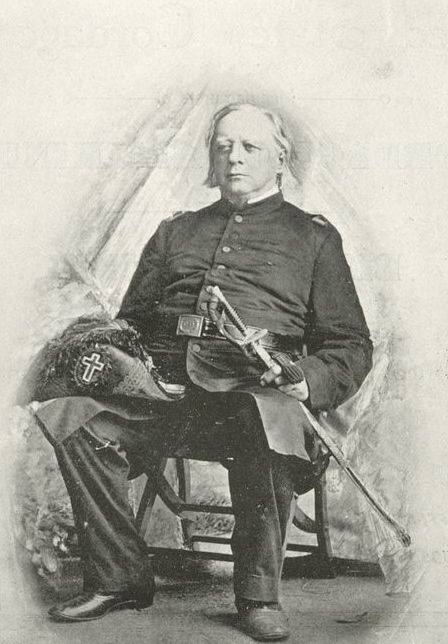
Henry Ward Beecher, a Northern Congregationalist minister and staunch abolitionist, arrived in Charleston to preach at Ft. Sumter. Beecher’s sister, Harriet Beecher Stowe had written the wildly popular (and universally hated in the South) Uncle Tom’s Cabin. President Lincoln had personally selected him, stating, “We had better send Beecher down to deliver the address on the occasion of raising the flag because if it had not been for Beecher there would have been no flag to raise.”

Henry Ward Beecher, Army Chaplain

Henry Ward Beecher, Army Chaplain

Today In Charleston History: April 8

1758 – Religion

Richard Clark, rector of St. Philip’s, grew a long beard and began to stroll the streets all day yelling, “Repent! Repent! The Kingdom of Heaven is at hand.” Some took him seriously as a prophet, but most found him amusing, or disturbed. He soon resigned and moved back to England.

1780 – The Siege of Charlestown

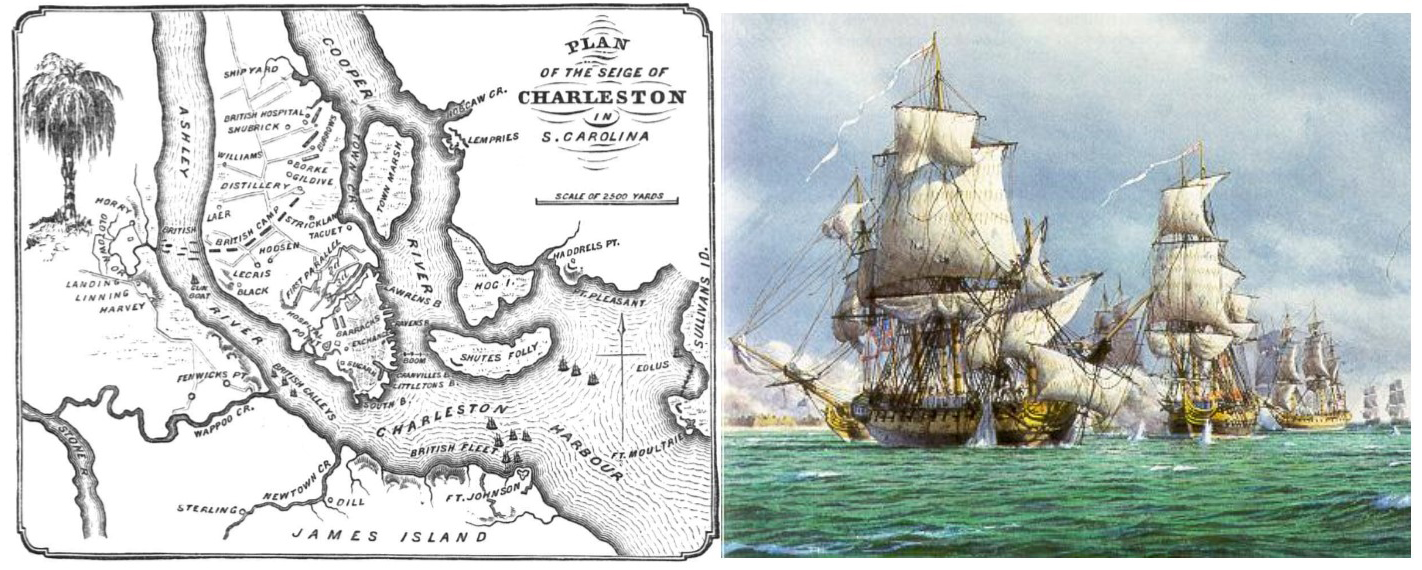
In the afternoon the British fleet weighed anchor and nine warships and three transports moved up the channel to Ft. Moultrie. At half past four Peter Timothy said that “the Admiral has received & returned the Fire of Fort Moultrie and passed it without any apparent Damage.” They landed at Fort Johnson on James Island. 

In less than ninety minutes eleven British ships had sailed past and were safely out of the range of Ft. Moultrie’s forty guns.

Left: Plan for the British Siege of Charlestown. Right: British fleet sails past Ft. Moultrie.

Left: Plan for the British Siege of Charlestown. Right: British fleet sails past Ft. Moultrie.

Today In Charleston History: April 5

1739

The South Carolina Gazette announced festivities to honor James Oglethorpe:

Tuesday last being the day appointed for the Review of the Troop and Regiment of St. Philips Charlestown, the two following commissions of his Majesty were published at Granville Bastion, under the discharge of the cannon both there and at Broughton Battery the one constituting and appointing the Hon. William Bull Lieutenant Governor in and over the province, and the other [for] his Excellency James Oglethorpe, General and Commanders of his Majesty’s Forces in the provinces of South Carolina and Georgia … In the evening his Excellency … made a general invitation to the ladies to an excellent supper and ball so the day concluded with much pleasure and satisfaction. 

1740 – Slavery
Stono Rebellion

Stono Rebellion

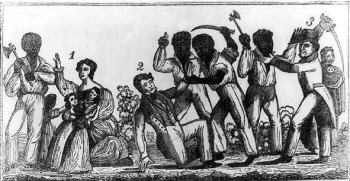
In response to the Stono Rebellion, the Assembly passed a new Negro Act – placing high import duty on slaves, which effectively cut off new slave trading. Its stated goal was “to ensure that slaves be kept in due subjection and obedience.”

No slave living in town was allowed to go beyond the city limits; the sale to alcohol was prohibited and teaching slaves to read and write was prohibited. Only the Assembly could grant a slave freedom. Any white person who “shall willfully cut out the tongue, put out the eye, castrate or cruelly scald” a slave was subject to a fine. 

1765 – American Revolution–The Sugar Act 

The Sugar Act was passed by Parliament. The British government had increased its debt during the French and Indian War, and was looking at various means to raise revenue. 

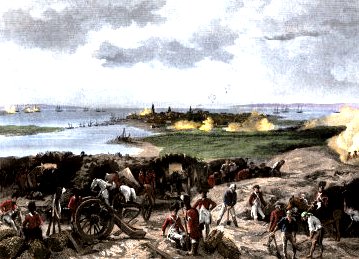
1780 – The Siege of Charlestown
Siege of Charlestown

Siege of Charlestown – British batteries outside the city.

After dark Gen. Clinton ordered the British battery at Fenwick’s Point and the Wappoo Cut, across the Ashley River, to fire upon Charlestown. The cannonballs whistling through the dark sky over the city created a “terrible clamor” with “the loud wailing of female voices.”

One of the British cannonballs struck Mr. Thomas Elfe’s house at 54 Queen Street and two damaged Governor John Rutledge’s house on Broad Street. Rutledge wrote that he was appalled at “the insulting Manner in which the Enemy’s Gallies have fired, with Impunity, on the Town.”

Also, the British galley Scourge fired eighty-five times with “every shot … into town.” During the night three British soldiers deserted to the American side. One of the soldiers “paddled himself over on a plank from James Island.”

Siege marker on King Street @ Marion Square

Siege marker on King Street @ Marion Square

1839

Robert Smalls was born behind his owner’s city house at 511 Prince Street in Beaufort, S.C. His mother, Lydia, served in the house but grew up in the fields, where, at the age of nine, she was taken from her own family on the Sea Islands.  The McKee family favored Robert Smalls over the other slave children, so much so that his mother worried he would reach manhood without grasping the horrors of the institution into which he was born. To educate him, she arranged for him to be sent into the fields to work and watch slaves at “the whipping post.”

By the time Smalls turned 19, he was working in Charleston. He was allowed to keep one dollar of his wages a week (his owner took the rest). Far more valuable was the education he received on the water; few knew Charleston harbor better than Robert Smalls.
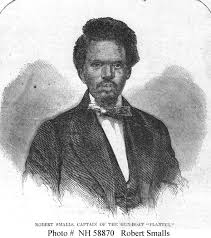
smalls

Robert Smalls

It’s where he earned his job on the Planter. It’s also where he met his wife, Hannah, a slave of the Kingman family working at a Charleston hotel. With their owners’ permission, the two moved into an apartment together and had two children: Elizabeth and Robert Jr. Well aware this was no guarantee of a permanent union, Smalls asked his wife’s owner if he could purchase his family outright; they agreed but at a steep price: $800. Smalls only had $100.

By 1862, Smalls viewed the Union blockade of the Charleston harbor as a tantalizing promise of freedom. Under orders from Secretary Gideon Welles in Washington, Navy commanders had been accepting runaways as contraband since the previous September. While Smalls couldn’t afford to buy his family on shore, he knew he could win their freedom by sea — and so he told his wife to be ready for whenever opportunity dawned.

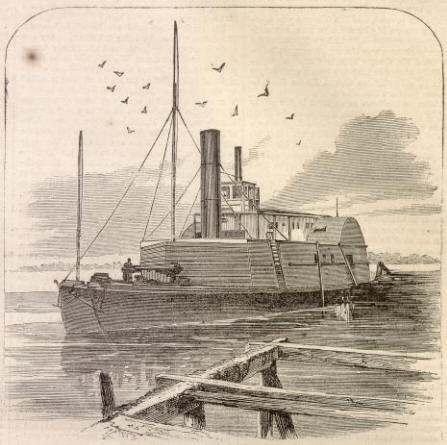
planter-gun-boat

The Planter

Just before dawn on May 13, 1862, Robert Smalls and a crew of fellow slaves, slipped a cotton steamer, Planter, off the dock, picked up family members at a rendezvous point, then slowly navigated their way through the harbor. Smalls, doubling as the captain donned the captain’s wide-brimmed straw hat to help to hide his face. As they sailed out of the harbor Smalls responded with the proper coded signals at two Confederate checkpoints and sailed into the open seas. Once outside of Confederate waters, he had his crew raise a white flag and surrendered his ship to the blockading Union fleet.

In less than four hours, Smalls had accomplished an amazing feat: commandeering a heavily armed Confederate ship and delivered its 17 black passengers (nine men, five women and three children) from slavery to freedom. “One of the most heroic and daring adventures since the war commenced was undertaken and successfully accomplished by a party of negroes in Charleston,” trumpeted the June 14, 1862, edition of Harper’s Weekly.

On May 30, 1862, the U.S. Congress, passed a private bill authorizing the Navy to appraise the Planter and award Smalls and his crew half the proceeds for “rescuing her from the enemies of the Government.” Smalls received $1,500 personally, enough to purchase his former owner’s house in Beaufort off the tax rolls following the war, though according to the later Naval Affairs Committee report, his pay should have been substantially higher.

In the North, Smalls was hailed as a hero. He lobbied Secretary of War Edwin Stanton to begin enlisting black soldiers and a few months later after President Lincoln ordered black troops raised, Smalls recruited 5,000 soldiers himself. In October 1862, he returned to the Planter as pilot as part of Admiral Du Pont’s South Atlantic Blockading Squadron. According to the 1883 Naval Affairs Committee report, Smalls was engaged in approximately 17 military actions, including the April 7, 1863, assault on Fort Sumter and the attack at Folly Island Creek, S.C.

Two months later he assumed command of the Planter when, under “very hot fire,” its white captain became so “demoralized” he hid in the “coal-bunker.” Smalls was promoted to the rank of captain, and starting in December 1863 on, he earned $150 a month, making him one of the highest paid black soldiers of the war. When the war ended in April 1865, Smalls was on board the Planter in a ceremony in Charleston Harbor at Fort Sumter.

Following the war, Smalls served in the South Carolina state assembly and senate, and for five nonconsecutive terms in the U.S. House of Representatives (1874-1886).He died in Beaufort on February 23 1915, in the same house behind which he had been born a slave and is buried behind a bust at the Tabernacle Baptist Church.

“My race needs no special defense for the past history of them and this country. It proves them to be equal of any people anywhere. All they need is an equal chance in the battle of life.” — Robert Smalls

Today In Charleston History: April 4

1764

The South Carolina Weekly Gazette is renamed South Carolina & American General Gazette by Robert Wells its publisher.

1780 – The Seige of Charlestown

John Lewis Gervais in Charlestown wrote that the American batteries “fired a great deal all night & threw Several shells at the Enemy’s Works” – a total of 573 cannonballs. Since the British were unable to return fire, they continued the construction of their fortifications.

1920 
Eamon De Valera arrives in Charleston

Eamon De Valera arrives in Charleston

Eamon De Valera arrived in Charleston. He was a leader of Ireland’s struggle for independence against Great Britain. He traveled to the United States from the newly proclaimed Republic of Ireland in an attempt to gain diplomatic recognition for and raise money to support his fledgling nation. Escorted by a select committee in a parade down King Street, he received a spectacular welcome led by Charleston’s first Irish Catholic mayor, John P. Grace, and most members of the city council which granted him “Freedom of the city.” He was celebrated at a sumptuous banquet at the grand Charleston Hotel, and applauded at speeches given to enthusiastic audiences at both the Garden Theater and the Academy of Music.

Albert Sottile recalled:

Mr. DeValera’s appearance at the Victory caused a great ovation. The applause from those in the balcony were so thunderous that it caused the balcony structure to sink several inches, causing a big bulge in the center. A near catastrophe was miraculously escaped.

chas_victory_02

Today In Charleston History: April 3

1736Arrivals.
Charles Pachelbel

Charles Theodore Pachelbel

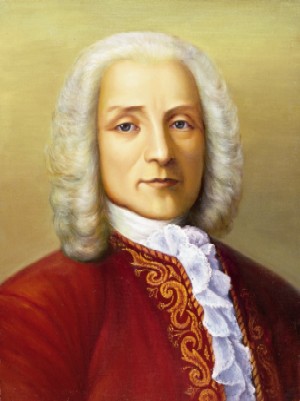
Charles Theodore Pachelbel (baptized Karl Theodorus) arrived in Charlestown. Born in Germany in 1690, he was the son of the famous Johann Pachelbel, composer of the popular Canon in D.

Pachelbel initially migrated to Providence, Rhode Island to install an organ in Trinity Church in 1733. Three years later he arrived in Charlestown and stayed until his death.

1758

Christopher Gadsden paid £6000 currency for fifteen acres of high land (and twenty-nine acres of marsh) in northeastern Charlestown, which became known as Gadsdenboro. Today it is approximately the area that encompasses the Maritime Center and Ansonborough Field.

1776- American Revolution

South Carolina legislature required all ministers and lay officials of each church to support the Patriot cause. President John Rutledge signed an act that prescribed the death penalty and confiscation of property for anyone who aided the British. Rutledge also appointed 46-year-old Col. William Moultrie, former militiaman and Indian fighter, in charge of preparing the city’s military defense.

Moultrie supervised the building of a “large fort” on Sullivan’s Island, considered to be the key to the geographically shielded harbor. A large vessel sailing into Charleston had to cross the Charleston Bar, a series of submerged sand banks lying about 8 miles southeast of the city. A half-dozen channels penetrated the bar, but only the southern pair could be navigated by deep-draft ships. A broad anchorage called Five Fathom Hole lay between the bar and Morris Island. Just a thousand yards north of that shoal loomed the newly constructed Fort Sullivan.

Battle of Ft. Sullivan

Battle of Ft. Sullivan

During the next weeks, Moultrie’s work gangs cut thousands of spongy palmetto logs and rafted them over from the other islands and the mainland. The fort’s design was described as “an immense pen 500 feet long and 16 feet wide, filled with sand to stop the shot.” The workers constructed gun platforms out of 2-inch planks and nailed them together with spikes.

 Fort Sullivan was intended was to make an invasion as costly as possible, or, to prevent an invader from landing at all. Since such a fixed defensive position could not reasonably be expected to annihilate the enemy, the fort would have to be backed up by inland troops and a well-armed city.

Today In Charleston History: April 1

1766-Stamp Act. 

South Carolina courts shut down, due to lack of stamped paper. Lawyers presented a petition to hold court without stamped paper. They stated:

We claim our rights under Magna Carter, the Petition of Rights, etc … We cannot think ourselves bound by the Stamp Act, which annihilates our natural as well as constitutional rights.

Chief Justice Skinner held that the court had no power to question the authority of an act of Parliament and the fact that there was no stamped paper because of unlawful demonstrations by the people was no excuse not to follow the law.

1780 –The Seige of Charlestown.

Under cover of darkness, 3000 men marched from the British camp at Gibb’s Landing toward Charlestown. – including 1500 laborers. They stopped 1000 yards from the city’s fortifications and began construction of their seigeworks. Due to the sandy soil “the work went quickly” and within one night Gen. Clinton was amazed they “completed 3 Redoubts and a communication without a single shot.”

The following morning, Samuel Baldwin of Charlestown wrote: “We were surprised … at the sight of the works thrown up by our neighbors during the night.”

1844 – Politics

John C. Calhoun became Secretary of State in John Tyler’s Cabinet.

1927 – Doin’ the Charleston

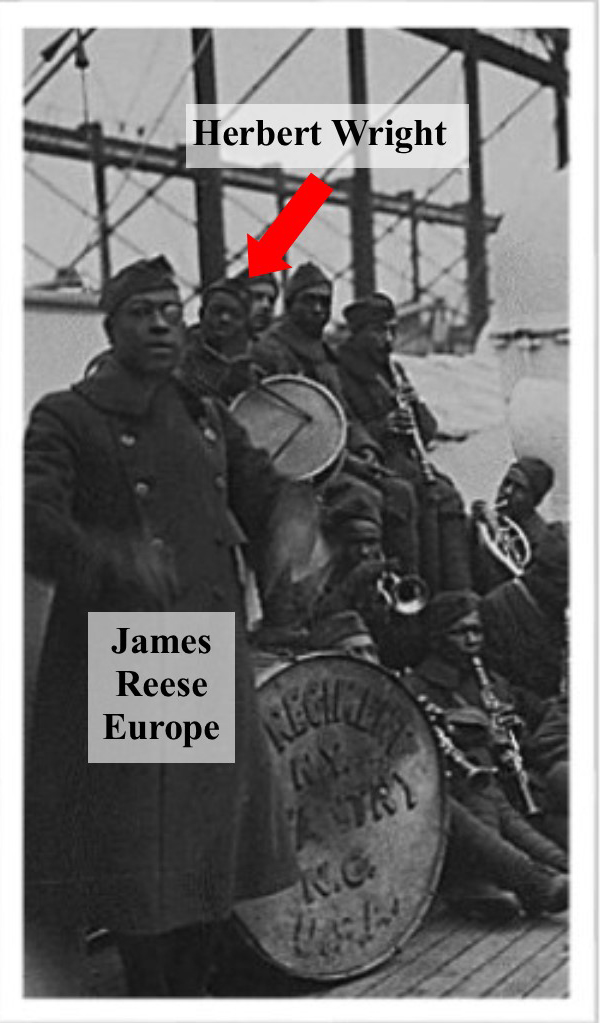
Herbert Wright of the Jenkins Orphanage was paroled on April, 1927. In 1919 he pled guilty to manslaughter and was sentenced to ten to fifteen years in the Massachusetts State Penitentiary.

Harlem Hellfighters Band

Harlem Hellfighters Band

Wright had committed a murder that shocked the nation. He had murdered band leader, James Reese Europe, backstage at Mechanics Hall in Boston. Europe was the leader of the Harlem Hellfighters Band, an outfit which had performed across Europe during World War I and has been credited in introducing jazz music to France. The Hellfighters Band was also the first black group to record music. The band included four members of the Jenkins Orphanage Band – Steve and Herbert Wright (the Percussive Twins), Amos Gaillard (trombone) and Gene Mikell (asst. director).

Read more about James Reese Europe’s life here. 

To learn the complete story of the Jenkins Orphanage Band, the Harlem Hellfighters and the murder of James Reese Europe, read Doin’ the Charleston.

doin' the charleston

Today In Charleston History: March 30

 1780 – The Siege of Charlestown.

John Laurens, 1780 (by Charles Willson Peale)

John Laurens, 1780 (by Charles Willson Peale)

First action that morning was led by Col. John Laurens’ unit against the advancing British light infantry. After several hours of scattered battle, Lauren’s men retreated back behind the city’s fortifications at dark. Laurens described it as “a frolicking skirmish for our young soldiers.” It was the first engagement fought within sight of the city, or as one officer noted, “in view of … many ladies.”

The British set up camp at Gibbes Landing (present-day Lownde’s Grove), which was a perfect staging area from which to lay siege to Charlestown.

Three principal types of artillery used during the Revolution: field guns, howitzers and mortars.

  • Field Guns: mounted on large-wheeled carriages and fixed to fire at low angles. Varied in size from three-pound (weight of solid shot fired) to forty-two pounds. Larger guns weighed appx. 5000 pounds (2½ tons).
  • Howizters: Similar to field guns, but with shorter and stockier barrels. Could be fired at a low or high angle. Range: 1300-2000 yards.
  • Mortars: a useful weapon because of its small size and ease of movement.  It usually had a fixed trajectory (around 45 degrees), and the distance the shot traveled was adjusted by varying the powder charge.  Just like the howitzer, the use of the exploding shell was popular to reach troops inside fortifications. Range: 2000 yards.

 1843 – Marriage.

Susan Petigru King Bowen, in later life

Susan Petigru King Bowen, in later life

Susan Petigru, 19, married Henry Campbell King, “short, stout, and physically unattractive.” Henry was the son of a prominent Charleston lawyer, Mitchell King, and friend of Susan’s father.  

Susan, the daughter of another prominent Charleston lawyer, James Petigru, was something of a rebel so the marriage to King was considered the best the Petigrus could do for her. Susan herself wrote that she would “probably get no better offer.” She had been a rambunctious child who grew to be a quick-tempered woman who never bothered to conform to the role of a society belle. She moved into her husband’s family mansion at 24 George Street.