Today In Charleston History: September 11

1700

The Council elected James Moore governor of Carolina in a power coup led by the Goose Creek men, usurping the senior Landgrave, Joseph Morton, Jr.  

Moore originally arrived in Carolina in 1675 from Barbados, married one of Sir John Yeaman’s daughters and became a member of the Goose Creek faction, opposed to the Fundamental Constitutions. The Dissenters contested Moore’s “unjust election,”but the Lords Proprietors saw to it that Moore remained governor, and they made it clear that the Dissenters were no longer in favor.

1024px-OcmulgeeRaid

Col. James Moore leading a raiding party against Native Americans.

Moore became the leading Indian trader in the colony. His father was Roger Moore (Rory O’More), one of the leaders of the 1641 Irish Rebellion against the anti-Catholic Puritan forces and evidently inherited his father’s rebellious nature.

On news of the outbreak of Queen Anne’s War in 1702, he led 500 colonists, 300 native allies, and 14 small ships on an invasion of Spanish Florida along the coast devastating the lands around St. Augustine. While the town of St. Augustine was razed, its central fortress, Castillo de San Marcos, where the Spanish and numerous allied Indians had taken refuge, resisted Moore’s siege. The 1702 campaign was viewed as a disaster due to the failure to take the fortress and the expenses incurred, and Moore resigned his post.

1826

James Petigru’s first born child, eight-year-old Albert, while playing inside the house, fell over the bannister thirty feet down the stairwell and was killed. His death devastated the family. Petigru’s wife, Amelia, deteriorated, suffering from severe headaches and became addicted to opiates.

Today In Charleston History: September 10

1785

Henry Laurens wrote about the wasteful use of live oak trees across South Carolina. The words come across as eerily prophetic in more ways than just environmental responsibility:

The day is not distant in the long tract of Time, when we shall be stripped of that essential article [live Oaks]. The Europeans will laugh at us, our Children will rue the folly of their Fathers.  For every live Oak you cut down you ought to Plant ten young trees … but few of us Southern Americans have patience to look forty years forward, we are for grasping all the golden Eggs at once. 

1860

Charleston Mercury: 
“A wife should be like a roasted lamb – tender and nicely dressed … And without sauce.”

1903

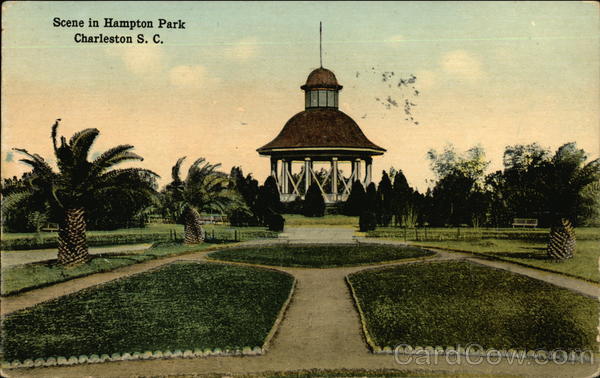
Scene in Hampton Park Charleston, SCTrolley cars made their first run on the new Hampton Park loop. Hampton Park had just opened to the public and was drawing huge crowds of people from downtown Charleston. At this point two Charleston trolley companies were operating 30 horse-drawn trolley cars daily.

Hampton Park was built on the site of (and out of the dismantling of) the Expo Grounds that had closed the year before. 

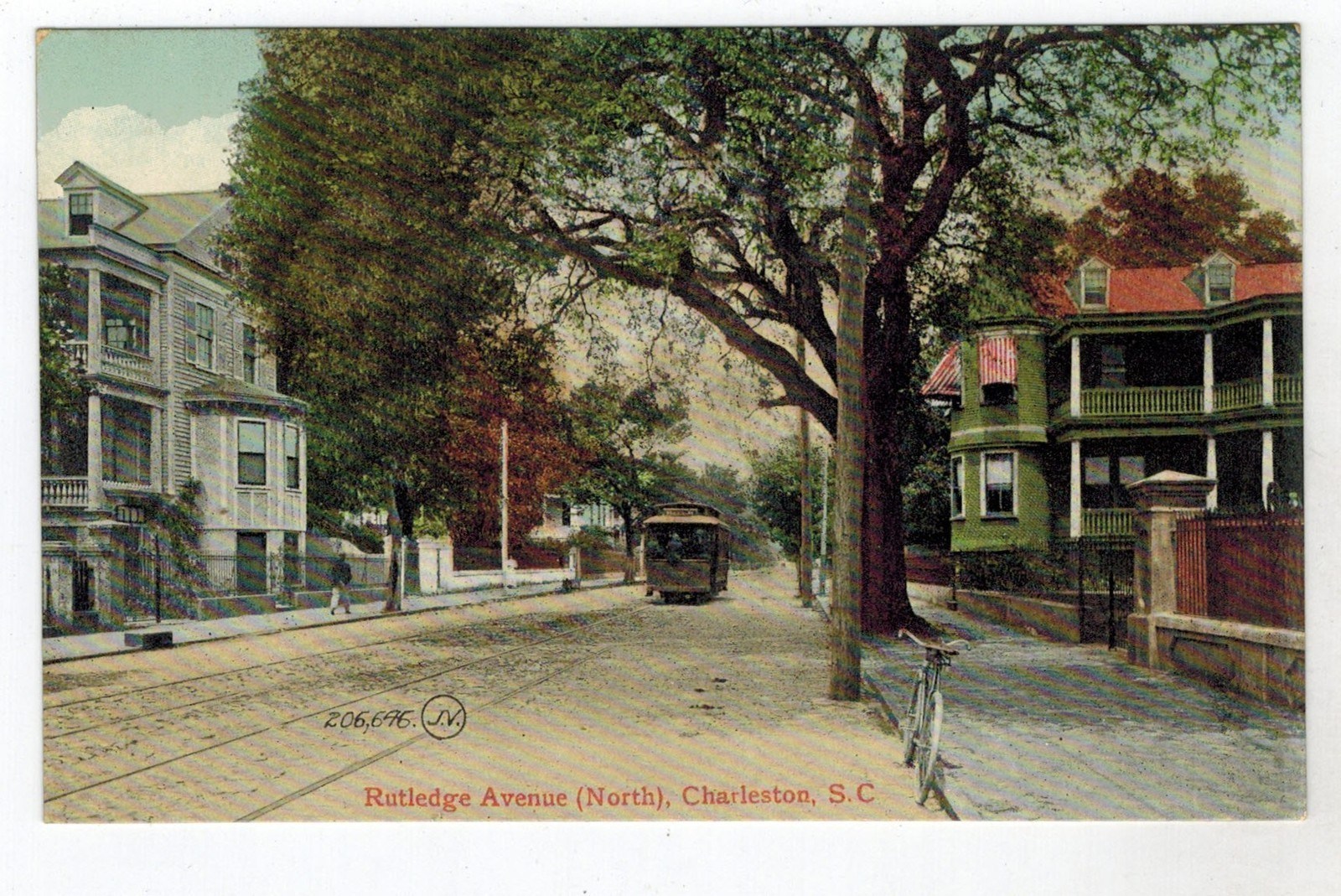
Trolley-On-Rutledge-Avenue-North

Trolley car on Rutledge Avenue. This route ran all the north to Hampton Park.

Today In Charleston History: September 9

1670 – Carolina Colony

The Carolina sailed to back to Barbados for passengers and supplies. A letter asking for a clergyman was written and signed by Florence O’Sullivan, Stephen Bull, Joseph West, William Scrivener, Ralph Marshall, Paul Smith, Samuel West, Joseph Dalton and Governor Sayle.

            Florence O’Sullivan also wrote a letter to Ashley Cooper:

… the country proves good beyond expectation, abounding in all things, as good oak, ash, deer, turkeys, partridges, rabbits, turtle and fish; and the land produces anything that is put into it – corn, cotton, tobacco … with many pleasant rivers … pray send us a minister qualified according to the Church of England and an able councellor [lawyer] to end controversies amongst us and put us in the right way of the managem’t…

            Joseph West wrote to Ashley Cooper, with a warning:

Our Governor … is very aged, and hath much lost himself in his government … I doubt he will not be so advantageous to a new colony as we did expect.

1739 – Slavery – The Stono Rebellion.

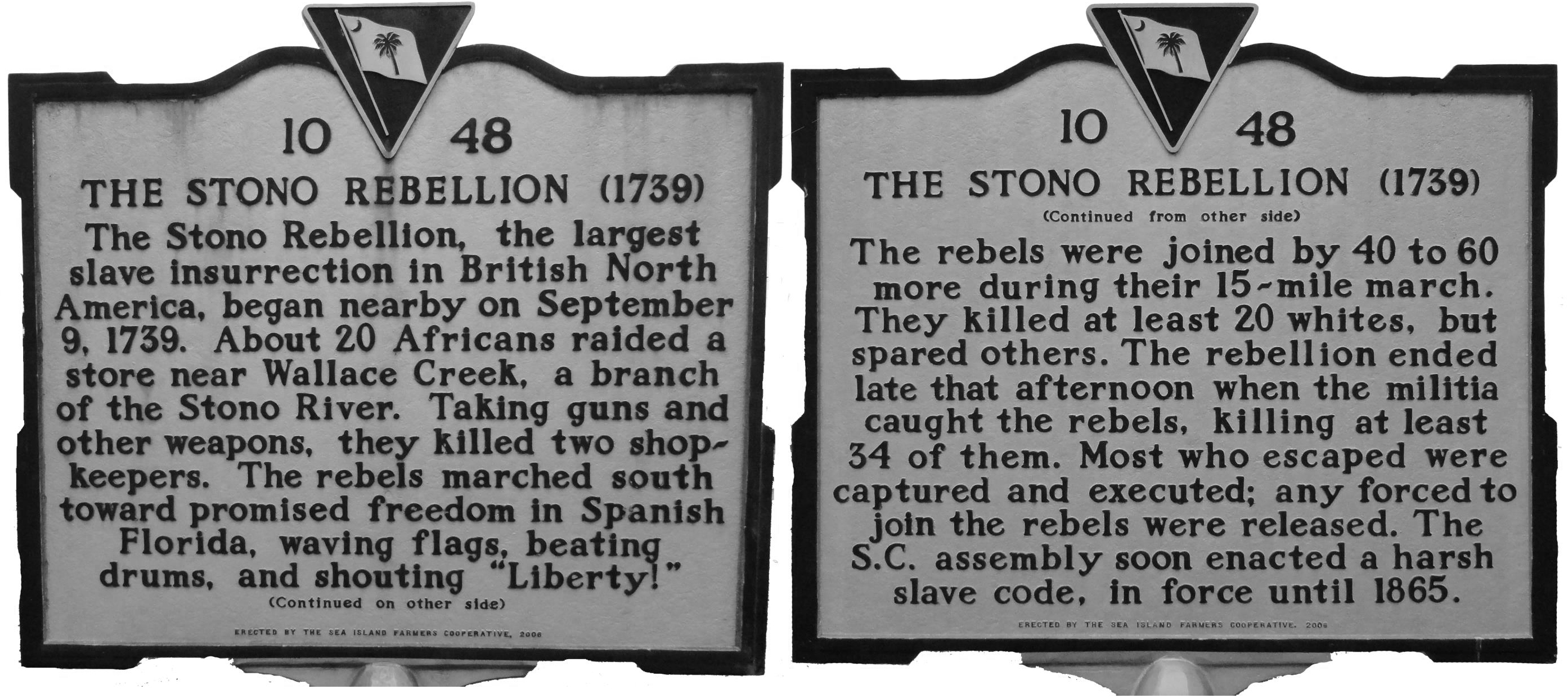
The largest slave revolt in the British colonies prior to the Revolution took place about 20 miles from Charleston.

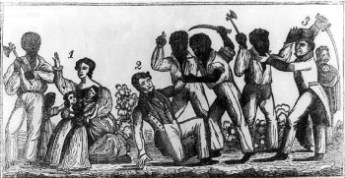
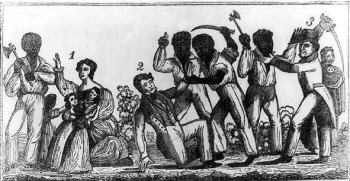
stono markersstono_rebellionLed by an Angolan named Jemmy, a band of twenty slaves organized a rebellion on the banks of the Stono River. After breaking into Hutchinson’s store the band, now armed with guns, called for their liberty.  As they marched, overseers were killed and reluctant slaves were forced to join the company. The band reached the Edisto River where white colonists descended upon them, killing most of the rebels.  The survivors were sold off to the West Indies. More than 40 blacks and 20 whites were killed during the insurrection. 

The revolt led to stricter slave codes with the Negro Act of 1740, dictating such things as how slaves were to be treated, punished, and dressed. It forbade them from assembling with one another or being taught to read or write. The 1740 slave codes were largely unaltered until emancipation in 1865.

      William Bull submitted his account of the Rebellion to the British authorities:

My Lords,                                                            
I beg leave to lay before your Lordships an account of our Affairs, first in regard to the Desertion of our Negroes. . . . On the 9th of September last at Night a great Number of Negroes Arose in Rebellion, broke open a Store where they got arms, killed twenty one White Persons, and were marching the next morning in a Daring manner out of the Province, killing all they met and burning several Houses as they passed along the Road. I was returning from Granville County with four Gentlemen and met these Rebels at eleven o’clock in the forenoon and fortunately deserned the approaching danger time enough to avoid it, and to give notice to the Militia who on the Occasion behaved with so much expedition and bravery, as by four a’Clock the same day to come up with them and killed and took so many as put a stop to any further mischief at that time, forty four of them have been killed and Executed; some few yet remain concealed in the Woods expecting the same fate, seem desperate . . .         

It was the Opinion of His Majesty’s Council with several other Gentlemen that one of the most effectual means that could be used at present to prevent such desertion of our Negroes is to encourage some Indians by a suitable reward to pursue and if possible to bring back the Deserters, and while the Indians are thus employed they would be in the way ready to intercept others that might attempt to follow and I have sent for the Chiefs of the Chickasaws living at New Windsor and the Catawbaw Indians for that purpose. . . . 

My Lords,

 Your Lordships Most Obedient and Most Humble Servant 
Wm Bull 

1776 

The Continental Congress formally declares the name of the new nation to be the “United States” of America. This replaced the term “United Colonies,” which had been in general use. The delegates wrote, “That in all continental commissions, and other instruments, where, heretofore, the words ‘United Colonies’ have been used, the stile be altered for the future to the “United States.”

1920 – Jenkins Orphanage
jenks001

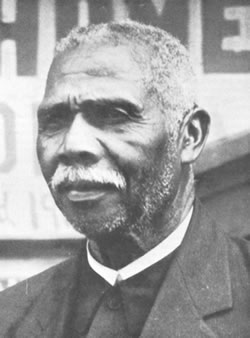
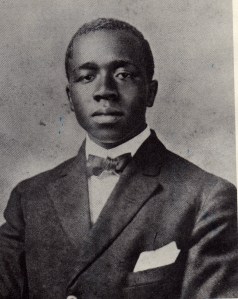
Edmund Thornton Jenkins … Jenks.

Edmund Thornton Jenkins performed a concert at his father’s church, the Fourth Tabernacle Baptist. Jenks (as he was called) grew up performing with the Jenkins Orphanage Band. His father, Daniel Jenkins, had established the Orphan Aid Society in 1891 for the “black lambs” of Charleston. Jenks attended the Royal Academy of Music for seven years in London and became an accomplished composer, pianist, and multi-instrumentalist. After graduation, he returned to visit his family in Charleston and discovered that, after years in Europe, he could no longer live in the South comfortably as a black man.  

Today In Charleston History: September 8

1714 – England.

After several meetings with Chief Justice Nicholas Trott, the Proprietors issued an order declaring him:

a permanent member of the Council without whose presence there should be no quorum for the transaction of business, and without whose consent practically no law should be passed.

Trott became the most powerful man in South Carolina: Attorney General, Chief Justice and without his presence, the Upon Trott’s return to Charles Town, Governor Craven and the Assembly were obviously distressed. They wrote: “A power in one man not heard of before … unheard of in any of the British dominions.”

 1782 – American Revolution – The Battle of Eutaw Springs.

This was the last major battle in the Carolinas, and Col. William Washington’s final action. Midway through the battle, Gen. Greene ordered Washington to charge a portion of the British line positioned in a thicket along Eutaw Creek. During the last charge, Washington’s mount was shot out from under him, and he was pinned beneath his horse. He was bayoneted, taken prisoner, and held under house arrest in the Charleston area for the remainder of the war.

1895 – Charleston minister appeared in a London court.
Rev. Daniel Jenkins

Rev. Daniel Jenkins

Reverend Daniel Jenkins appeared in the magistrate’s courtroom on Bow Street, followed by more than a dozen of his charges, all under the age of fourteen. The next day the London Daily Telegraph filed the following story:

Just before the rising of the court, a coloured man entered with a troupe of thirteen little Negro boys whose ages ranged from five to about fourteen years. The man in charge of the boys said he was the Reverend D. J. Jenkins, a Baptist Minister of Charlestown [sic], America, and he wished to make an application to the magistrate.

On entering the witness box, the appellant stated that he had come over to this country to raise funds for an Orphanage with which he was connected in Charlestown. He had brought with him his boys, who all played on brass instruments, and his object was to let the boys play their band in the public streets, after which he lectured and collected money for the Orphanage. He had been stopped that morning whilst thus engaged, and told that he was liable to be taken into custody for what he was doing, and he wished to be informed whether that was so.

Sir John Bridge told applicant that of course he must not cause an obstruction in the public thoroughfares or the police would interfere. Inspector Sara, who was on duty in the court, pointed out that under an Act of Parliament no child under the age of eleven years was allowed to sing, play or perform for profit in the public streets.

Applicant: But could not an exception be made in my case, seeing the object I have in view?

Sir John Bridges: Certainly not. The law makes no exceptions.

Applicant then said he was without money to take the children back to America. Sir John Bridge said he had no fund which was available for such a purpose, and advised applicant to apply to the American consulate. Inspector Sara said he would send an officer with the Applicant to the Society for the Prevention of Cruelty to Children where probably he could obtain assistance, and Sir John Bridges gave a sovereign to applicant for present necessities, for which he appeared very grateful.

This news item provoked an editorial on Page 4 of the same issue, which concluded:

Much may be done, no doubt, to raise money for an Orphanage; but to let loose a brass band of thirteen Negro children upon an urban population suffering from nerves is likely to create almost as many orphans as it would relieve.

After the court appearance and subsequent publicity, Jenkins was approached by the owner of a local London theater who offered to feature the Orphan Band on stage. Jenkins agreed, but then changed his mind once he appealed to local churches who eagerly invited him to speak during their services. From the pulpit of the Metropolitan Tabernacle, Jenkins pled for help and more than £100 was raised in a matter of moments. He repeated this successful appeal at several more churches before steaming back home to Charleston, where he paid off the debt.

Today In Charleston History: September 7

1774

Silas Deane, representing Connecticut in Congress wrote, “Mr. Gadsden leaves all N. England Sons of Liberty for behind, for he is for taking up his Firelock & marching direct to Boston.”

1796 – SLAVERY

A young slave named Molly was executed for arson, after being convicted of “robbing her master, and setting fire to capt. Vesey’s house at the Grove.” In her confession, Molly apparently not only admitted to “being guilty of these crimes, and also that she was the person who set fire to her master’s house at Belvedere.” 

Molly added to the terror by declaring that “she was persuaded to the commission of these atrocious acts by a Frenchman, named Renaud, her master’s gardener, formerly a servant to Mr. Michaud…belonging to the French Republic.”

1864 – BOMBARDMENT OF CHARLESTON

Gen. Foster ordered 600 Confederate prisoners to be placed on Morris Island “as an act of retaliation” for failing to remove the Federal prisoners from Charleston. Gus Smythe, from his look out perch in St. Michael’s steeple, could see, through his telescope the prisoners “in the morning getting their rations & also see the poor fellows looking thro’ the cracks of the fence.”

jail and workhouse, 1865

View of the yard behind the City Jail. To the right is visible the Work House and City Hospital.

By that time Gen. Jones was in charge of 6000 Federal prisoners within the city limits. Most of them were housed in the City Jail at the corner of Franklin and Magazine Streets. Others were housed around the corner in Roper Hospital at the corner of Queen and Logan Streets. The majority were held at the Charleston racecourse. Most of the Federal prisoners considered their imprisonment in Charleston to be a life-saving change, away from the hellish conditions of Andersonville. Lt. Benjamin Calef wrote:

We reached Charleston on the morning of August 13, and were kept waiting a long time in the Street, when I procured some fresh figs, bread and milk, and seated on the curb-stone, made an excellent breakfast … I should not omit to speak of the long piazza at the front [of Roper Hospital], on which I have spent so many hours with my pipe for my companion.

The Confederate prisoners on Morris Island slept beneath a canvas roof to shield them from the rain, and no shade trees. Their daily rations consisted of “three army crackers … and a half pint of soup.”

Today In Charleston History: September 6

1876 – Race Riots

During the evening six black Democrats who were supporting Gen. Wade Hampton’s campaign for South Carolina governor held a political rally in Archer’s Hall at the corner of King and George streets. They publicly called Republicans “thieves” for robbing the state of South Carolina. 

Marion Square, c. 1870

Marion Square, c. 1870

After the meeting a group of black Republicans attacked the Democrats and their white companions near the Citadel green (Marion Square). Several gun shots were fired, drawing more people to the park … during the night and the next day, a riot escalated until more than 1000 people were roaming the streets in mobs. The New York Times reported that

Blacks roamed upper King Street from midnight to sunrise, breaking windows, robbing stores, and attacking and beating indiscriminately every white man who showed his face.

More than 100 people were hurt – one white man was shot and killed, and a black man died of his injuries. 


Today In Charleston History: September 5

1713 – Disasters.

A hurricane hit Charles Town.  Rev. William Livingston, pastor of the White Meeting House, survived the storm from his house on White Point. He wrote that the storm “beat off the weatherboards of the house, carried away the book that contained the church records and the furniture of the rooms on the lower floor.”

Thomas Lamboll recorded:

On September 5 came on the great hurricane which was attended with such an Inundation from the sea and to such an unknown height that a great many lives were lost; all the vessels in Charleston harbor, except one, were drove ashore. The new Look-out on Sullivan’s Island, of wood, built eight square and eighty feet high, blown down; all the front wall and mud parapet before Charlestowne underminded and washed away.

1774

The Continental Congress opened in Philadelphia. John Adams wrote some observations about the South Carolina delegates in his diary:

  • John Rutledge: “No keenness in his Eye. No depth in his Countenance. Nothing of the profound, sagaciousness, brilliant or sparkling.”
  • Edward Rutledge: “a perfect Bob o’ Lincoln, a Swallow, a Sparrow, a Peacock, excessively vain, excessively weak.”
  • Christopher Gadsden: “Is violent against allowing Parliament any Power of regulating Trade, or allowing that they have any Thing to do with Us.”
1836
Robert_Y_Hayne

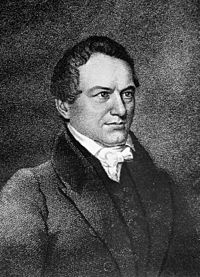
Robert Hayne, 1st mayor of Charleston

Robert Y. Hayne elected the first mayor of Charleston … previously, the office was called “the Intendent.”

Today In Charleston History: September 3

1700 – Religion.

The Rising Sun arrived from Scotland, with several hundred Presbyterians, led by Rev. Archibald Stobo. Members of the White Meeting House met Rev. Stobo and invited him ashore to preach the next day. Stobo, his family and twelve other passengers disembarked.

1749 – Religion.
KK BETH ELOHIM, 1812 John Reubens Smith

Kahal Kadosh Beth Elohim, c. 1812 by John Reubens Smith. Note: This building was destroyed by the 1838 fire but the smaller building pictured in the drawing survived and stands today on Hassel Street.

The first Jewish meeting in Charlestown took place. According to Jewish practice there must be a minyan, or ten males over the age of thirteen, for services to take place. They adopted the name Kahal Kadosh Beth Elohim – holy Congregation of the House of God. They used a small wooden house on Union Street (now State) for their worship services until 1750, when the purchased land on Hasell Street. 

1780 – Laurens Captured

During Henry Laurens’ return voyage from the Netherlands, the British frigate Vestal intercepted his ship, the continental packet Mercury, off the banks of Newfoundland. Laurens tossed his dispatches overboard, but they were retrieved by the British, who discovered the draft of a possible U.S.-Dutch treaty, prompting Britain to declare war on the Netherlands. The British charged Laurens with treason and transported him to England for trial.

1783 – Treaty of Paris

Treaty of Paris was signed by Benjamin Franklin, John Jay and John Adams. Henry Laurens of Charleston, who had participated in the negotiations for the Americans, left Paris before the signing ceremony. In a letter to his wife Abagail, John Adams stated:

I have the Satisfaction to inform you that the definitive Treaties were all Signed yesterday, and the Preliminaries with Holland were Signed the day before. Dr. Franklin has fallen down again with the Gout and Gravel … Mr. Laurens , has a Brother declining, so that he will go to the south of France, untill he knows his Brother’s Fates.

1820 – New Intendent

James Hamilton was elected Intendent (mayor) of Charleston.

Today In Charleston History: September 2

1706 – Queen Anne’s War

A joint French and Spanish attack upon Charles Town  is repulsed when English Colonial forces capture a French vessel. Governor Nathaniel Johnson and Lieutenant Colonel William Rhett lead the successful defense of Charles Town against a combined force of Spanish, French, and Native American combatants who sailed into Charleston harbor from St. Augustine..

1863 – Bombardment of Charleston

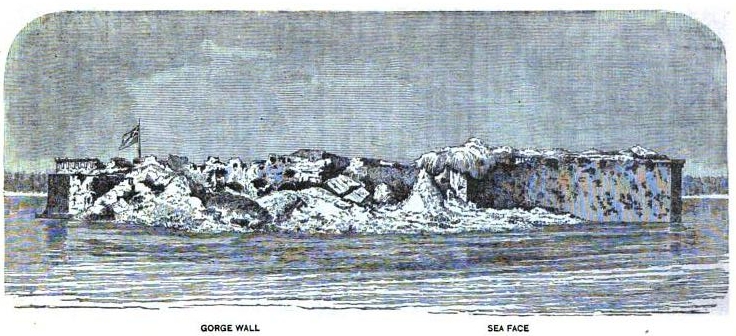
Ft. Sumter was demolished. John Johnson, a Confederate engineer, wrote:

The fort had now lost all offensive character, but it had been firmly decided by the [Confederate] general commanding to hold it in a defensive way to the last extremity.

aug24sumter21

Ft. Sumter

aug24sumter23

Ft. Sumter


Today In Charleston History: September 1

1734 

Jean Pierre Purry, wrote about South Carolina:

The Trade of Carolina is now so considerable that of late years there has sail’d from thence Annually above 200 ships … besides 3 ships of war … which had above 100 Men on Board. It appears from March 1730 to March 1731 that there sail’d rom Charles Town 207 ships … which carried … 41,957 barrels of rice about 500 Pounds Weight per barrel … besides a vast quantity of Indian corn, Pease, Beans, Beef, Pork and other salted Flesh … There were between 5(00) to 600 houses in Charles Town … most of which were very costly.

1737 – South Carolina Society
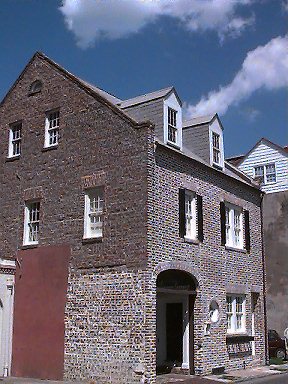
28elliott

Poinsett’s Tavern, 28 Elliott St.

The South Carolina Society was established.

Originally called the “Two-Bitt Club,” it was organized by French Huguenot artisans and forbade the use of English in the beginning. Their goal was to support indigent and widows and orphans. The met at Jacob Woolford’s Broad Street Tavern or at Poinsett’s Tavern on Elliott Street, opposite Bedon’s Alley.

The Society was incorporated by the Provincial General Assembly as the French Society on May 1, 1751, and King George II confirmed it at the Court of St. James on December 20, 1752. Soon afterward, the name was changed to the South Carolina Society and began including non-French members.

The Society purchased a block of land between George and Wentworth streets, cut a new street through it (the present Society Street), and built a school for orphan boys. 

182881_l

Society Hall, 72 Meeting St.

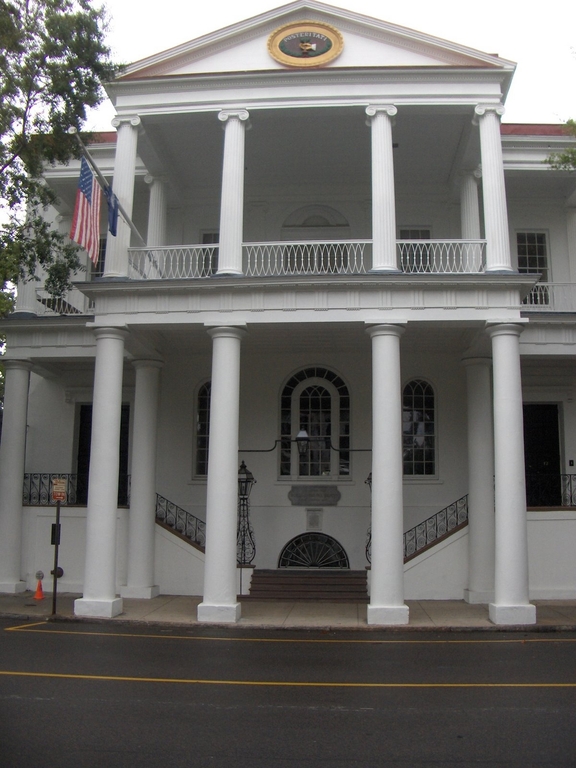
In 1804, the Society built the South Carolina Society Hall at 72 Meeting Street as a school for female orphans and indigents, and as a meeting place. The first floor was used to school orphans and indigents, while the second floor was a ballroom for social purposes.


1881 – Jenkins Orphanage

 Daniel Dickinson, a freed slave from Barnwell County (SC), chose the surname Jenkins to illustrate his freedom. He later moved to Charleston and established an orphanage house for “Black lambs.”