Today In Charleston History: March 19

1778 – Politics
Rawlins_Lowndes

Rawllins Lowndes

South Carolina President Rawlings Lowndes approved changes to the state constitution that changed the title of South Carolina’s chief executive’s office from president to governor, although he was called “president” until the end of his term. It also disestablished the Church of England in South Carolina.

1785 – Education

The Legislature granted a charter for College of Charleston to “encourage and institute youth in the several branches of liberal education.” The founders of the College include three signers of the Declaration of Independence (Edward Rutledge, Arthur Middleton and Thomas Heyward, Jr.) and three future signers of the United States Constitution (John Rutledge, Charles Pinckney and Charles Cotesworth Pinckney).

The Act also granted the college almost 9 acres of land bounded by present-day Calhoun, St. Philip, Coming and George streets; three-fourths of the land was soon sold to pay debts,  In 1837 CofC became America’s first municipal college in the country.

Randolph Hall, College of Charleston main campus

Randolph Hall, College of Charleston main campus

Today in Charleston History: March 18

1758

A report about British quartering (housing of troops) was presented to the Assembly. Prepared by Peter Manigault, Christopher Gadsden, Charles Pinckney, Henry Laurens and Rawlins Lowndes, the report stated:

Officers and Soldiers cannot, legally or constitutionally, be quarter’d in private Houses, without the special Consent of the Owners or Possessors of such Houses. 

1782 – Births.
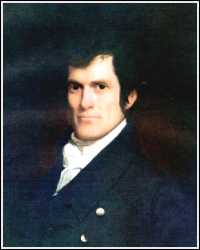
Calhoun as a young man

Calhoun as a young man

John Caldwell Calhoun was born in Abbeville, in the South Carolina backcountry. His mother was described as being “full of intelligence and energy … strong will and temper” – attributes her son would most definitely inherit.

During his life Calhoun became one of the most influential politicians of the 19th century. He was educated at Yale served in South Carolina’s legislature and was elected to the United States House of Representatives serving three terms. In 1812, Calhoun and Henry Clay, two famous “warhawks”, who preferred war to the “putrescent pool of ignominous peace”, convinced the House to declare war on Great Britain.

Calhoun was secretary of war under President James Monroe from 1817 to 1825 and ran for president in the 1824 election along with four others, John Q. Adams, Henry Clay, Crawford, and Andrew Jackson. However, Calhoun withdrew from the race, due to Jackson’s support, and ran for vice president unopposed. Calhoun was vice president of the United States in 1824 under John Quincy Adams and was re-elected in 1828 under Andrew Jackson.

Jackson was for the Tariff of 1828 (Tariff of Abominations) and caused Calhoun to be opposed to Jackson, which led to Calhoun’s resignation in 1832. Because he could not do anything about Jackson’s views toward tariffs, which benifitted only industrial North and hurt slaveholding South, John C. Calhoun became the first vice president to resign.

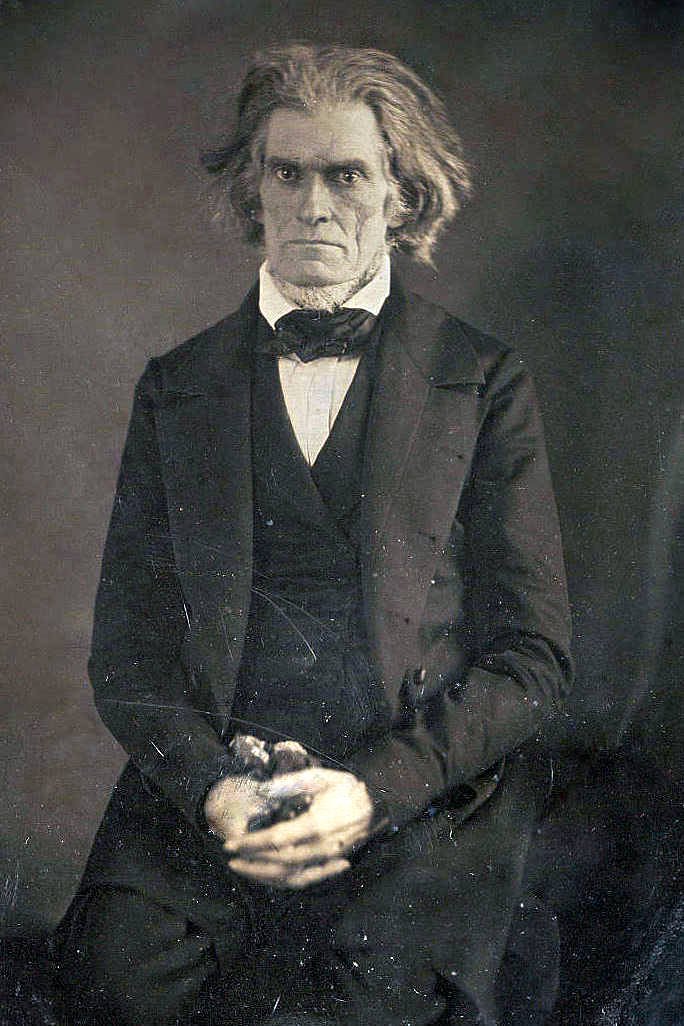
Calhoun as an elder statesman

Calhoun as an elder statesman

Calhoun wrote an essay about this conflict, “The South Carolina Exposition and Protest”, in which he asserted nullification of federal laws, and in 1832 the South Carolina legislature did just that. This gave Calhoun the nickname “the Great Nullifier.” 

The next year in the Senate Calhoun and Daniel Webster opposed each other over slavery and states’ rights in a famous debate. In 1844 President John Tyler appointed Calhoun secretary of state. In later years he was reelected to the Senate, where he supported the Texas Annexation and defeated the Wilmot Proviso.

John Caldwell Calhoun died in Washington, D.C. on March 31, 1850 and was buried in St. Phillips Churchyard in Charleston. In 1957, United States Senators honored Calhoun as one of the five greatest senators of all time.


Calhoun's tomb in St. Philip's cemetery

Calhoun’s tomb in St. Philip’s cemetery

Today In Charleston History: March 16

1699 – Piracy

Collector of Customs, Edward Randolph, arrived in Charles Town and announced that the royal government was tightening its grip on all the colonies and was considering voiding all Proprietary charters. Randolph also made it clear that the Royal Admiralty Courts believed the Proprietors allowed:

illicit trade … and sought to establish a sort of independence of the King … traded with the Dutch, welcomed pirates as free spenders and have no regard to the acts of trade.

Randolph also discovered that Governor Blake was “a notorious offender against the act.” He also accused Blake and his brother-in-law, Judge Joseph Morton, Jr. of:

fraudulently condemning vessels as contraband and then colluding to purchase, at auction, ships and cargoes at bargain prices … took bribes to ignore smuggling and traded with pirates and the Spanish in Florida.

1735_CHARLESTON

Charlestown, 1735

1773

Josiah Quincy, visiting Charlestown from Boston, wrote about race week:

spent this day in viewing horses, riding over the town … am now going to the famous races … well performed … Filmnap beat Little David (who had won the last sixteen races) out and out. The first four –mile heat was performed in eight minutes and seventeen seconds. I saw a fine collection of excellent, though very high-priced horses … Two thousand pounds were won and lost at this race and Filmnap sold at public vendue … for £300 sterling.

Today In Charleston History: March 15

1670 

The Carolina expedition arrived at Bull’s Island, 100 miles north of Port Royal (just north of present day Charleston). They were greeted onshore by the Cassique (chief / leader) of the Kiawah Tribe speaking bad Spanish, “Bony Conraro Angles!” (Good English comrades!) The Kiawah were a small tribe, approximately 160 members
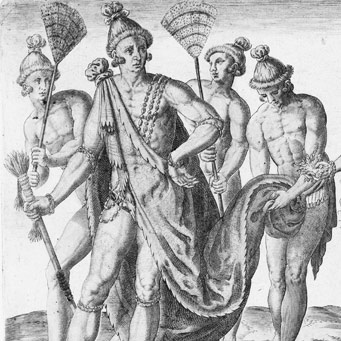
Cassique of the Kiawah tribe

Cassique of the Kiawah tribe – 1670

The Cassique was a young man (nephew of the Cassique at Port Royal) who had traveled to England four years before with Captain Sanford during the expedition to explore the coast. He informed Sayle that a tribe called Westoes had destroyed everything from St. Helena (Port Royal) north to the Kiawha River (Ashley River). 

He tried to convince Sayle they should settle in the Bull’s Island/Kiawha (Ashley) River area. Sayle, however, was determined to go south. The young Indian agreed to join the expedition and guide them to Port Royal. Having spent several years in England, he was a firm friend of the English and during the journey he continued to encourage them away from Port Royal, which was closer to Spanish Florida. Most native tribes of the Carolina coast had been attacked and enslaved by the Spanish for over one hundred years. The Cassique believed the English would be better neighbors and partners.

During their short stay at Port Royal, Governor Sayle summoned the passengers and they elected five men “to be of the council” – Paul Smith, Robert Donne, Ralph Marshall, Samuel West and Joseph Dalton. This was the first election in South Carolina. The council voted to return to the Kiawha area to settle. 

1813. Privateering.

 The Defiance, under Jean Pierre Chazal, battled with the British brig, Nimrod. When Defiance’s main boom was damaged, Chazal was unable to run a full speed. During the battle five of his crew were killed, and ten more wounded. Defiance was captured and taken to Port Royal, Jamaica. Chazal and two of his officers were exchanged.

1813

An advertisement in the City Gazette read:

AT THE AMPHITHEATRE:

Mr. Langley has the honor to inform the Ladies and Gentlemen of Charleston and its vicinity that his Benefit is fixed for THIS EVENING, when every exertion on the part of the Managers, himself, and the whole Company will be made to give general satisfaction. He hopes to meet the approbation of a generous audience. To commence by the Grand Entry and Military Manoeuvres.

Master Charles will perform a variety of Feats of Activity, will jump his whip, etc. Mr. Langley will perform, on one Horse, several Steps and Attitudes – he will also dance a HORNPIPE, his horses in full speed.

Mr. Codet will exert himself to please the spectators by performing numerous Feats of Agility, &c. Master Parfee will exert his utmost endeavors to please. Mr. Langley will also execute the laughable scene of the METAMORPHOSE, or the SAILOR’S VOYAGE, A FOX HUNTING. 

ACT II: GROUND AND LOFTY TUMBLING, By the Company, in which Mr. Laenia will throw a row of FLIP FLAPS across the Circus, and conclude by a lofty back Somerset. Mr. Langley, on two Horses, will execute the feat of Apples, Forks, Bottle, &c, also, the difficult feat of the Hoop, and Leap over the Ribbands.

Mr. Pepin will perform a variety of feats of Horsemanship, in which he will execute the Leap over four Ribbands and over four Illuminated Galleries.

STILL VAULTING by the Company, in which Mr. Langley will perform that unparalleled feat of balancing his body, extending in the air, on one hand.

Mr. Cayetano will perform the admired scene of the INTOXICATED OFFICER.

The whole of this brilliant representation to conclude with the pleasing scene of BILLY BUTTON, or the TAYLOR’S JOURNEY TO BRENTFORD.

Doors to be open at 6, and performance to commence precisely at 7 o’clock. For sale, a full blooded Spanish Stud HORSE.

1825

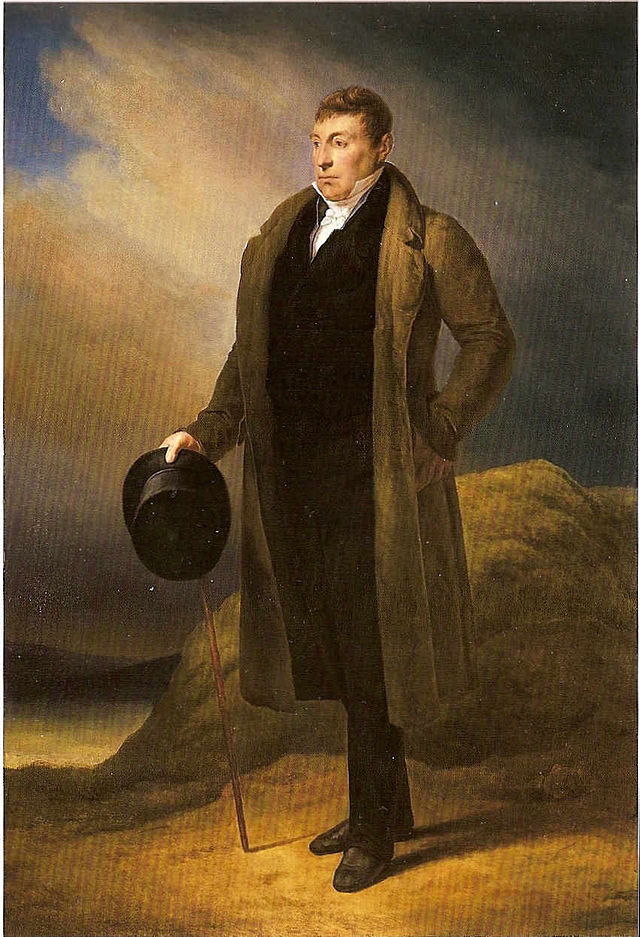
Marquis de Lafayette, arrived in Charleston and enjoyed three days of balls and reunions while here.
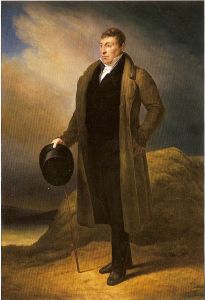
Lafayette portrait, 1824, which hangs in the U.S. House of Representatives

1824 Lafayette portrait, which hangs in the U.S. House of Representatives

William Seabrook, an Edisto plantation owner and planter, invited him to be his guest on Edisto. Lafayette accepted his invitation. William Seabrook met the steamboat that brought Lafayette from the city at the mouth of the creek leading to his plantation. He carried him the rest of the way in his personal smaller steamboat. The slaves rolled out a red carpet for Lafayette to walk ashore upon his arrival at the dock.

That evening they had a lavish dinner. While waiting in the ballroom for other guests to arrive William Seabrook placed his infant daughter in the arms of Lafayette and requested that he name her. Lafayette said that he would call her “Carolina” for the state, and said he would consider it an honor to add Lafayette for himself. The reverend in attendance christened the baby “Carolina Lafayette.”

Today In Charleston History: March 9

1686-Arrivals.  

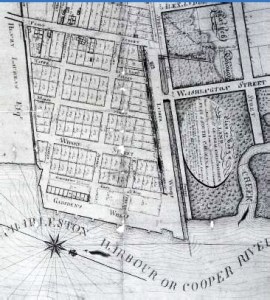
Jean Boyd, a well-educated Huguenot merchant, arrived in Charles Towne and penned a lengthy letter to his sister back in London. He described various aspects of life and culture, and sketched a map of the town.

Here we are at last landed in this much longed-for country. In truth, I had imagined that I would find the town of Charlestown built differently and much larger than it is … The temperature of the air is here the same as in the southern provinces of France.  The English, in truth, who are not accustomed to hearing large claps of thunder in England exclaim in surprise at those in Carolina, but they would never scare a French person.

boyd map - 1687

Jean Boyd’s map of Charles Towne

The head of the rivers & principally the creeks are full of crocodiles so monstrous that we saw some that were 22 feet long. They do not hurt anyone and people fear them so little that several people who were bathing went swimming after them.

When one sells something here one must specify if it will be paid for in silver; otherwise they will pay you in silver of the country, which means in corn or animals & there is a great difference, least 25% for cattle to silver. Sometimes when silver is plentiful, that is to say when the buccaneers have come, livestock is worth a lot.

Aside from game one sees many wild beasts but a  little higher up in the  country, like wolves, wildcats, leopards,  tigers, bears, foxes, raccoons,  badgers, otters, beavers & a type of black and white cat which for its only  defense (urinates)  on people who pursue it, but its urine is so foul that it is  capable  of making one feel sick. The stench does not go away for two or three months even though one washes.

1738 – Slavery.

A writer in the Gazette addressed his concerns about the issue of Negro population:

I cannot avoid observing that altho’h a few Negroes annually imported into the province might be of advantage to most People, yet such a large importation of 2600 or 2800 every year is not only a loss to many, but in the end may prove the Ruin of the Province, as it most certainly does that of many industrious Planters who unwarily engage in buying more than they have occasion or able to pay for.

1779

Andrew Groundwater and William Tweed were hanged for treason. Both men had refused to take the oath of fidelity to the Patriot cause, and were arrested for carrying a message from a British prisoner of war to Colonel Archibald Campbell. According to Charles Pinckney:

some interest was made for Groundwater … he had been captain of a small vessel, and had been of service in the bringing in to us stores and many necessary articles which we were in want of … [but also] strongly suspected of being concerned with Tweed in setting fire to the town on Trott’s point … the inhabitants were so incensed against him, that he suffered, to appease the people.

Today In Charleston History: March 6

1724 – Births.
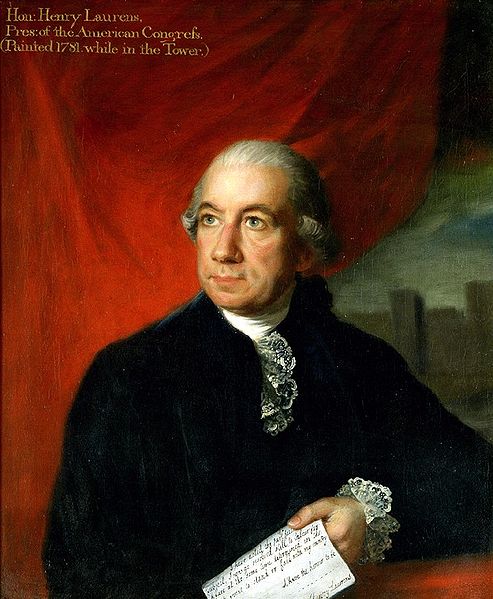
Henry Laurens

Henry Laurens

Henry Laurens was born in Charlestown, son of John Laurens a French Huguenot. The young Henry became friends with Christopher Gadsden during childhood, creating an alliance between two powerful men during the Revolution. Lauren’s son-in-law, Dr. David Ramsay wrote that they were:

…. Attached in their early youth to each other by the strongest ties of ardent friendship. They made a common cause to support and encourage each other in every virtuous pursuit, to shun every path of vice and folly, to leave company whenever it tended to licentiousness … and acquired an energy of character which fitted them for acting a distinguished part in the trying scenes of a revolution …

1837

Senate confirmed the appointment of Joel R. Poinsett as Secretary of War by President Martin Van Buren, and presided over the continuing removal of Indians west of the Mississippi and over the Seminole War.

To read more about Poinsett’s life … click here. 

Today In Charleston History: March 5

1773 – Commerce

Using slave labor, Christopher Gadsden finally completed his 840-foot long wharf at the north end of town on the Cooper River (at the foot of present-day Calhoun Street). It was described as “one of the most extensive of the kind ever undertaken in America.”

Gadsden Wharf on the Cooper River

Gadsden Wharf on the Cooper River

In the late 1760s, Gadsden began the construction of a large wharf on today’s Concord Street between Calhoun and Laurens Street. In January 1767 Gadsden advertised in the South Carolina Gazette for, “Pine logs 16 to18 feet long and from 10 to 12 inches thick.” Work progressed so that in nine months Gadsden announced that he had framed the wharf and had space for two ships that could be loaded and unloaded simultaneously. Gadsden also announced that planters could store their rice at his wharf for a week without charge provided that he was the factor selling the rice. Over the next seven years Gadsden continued expanding the wharf.

 In March 7, 1774 the South Carolina Gazette reported that the,
“Stupendous work was nearly completed and was believe to be the most extensive of its kind ever undertaken by any one man in America.”
In May Gadsden wrote his friend Samuel Adams describing his
“seven years of hard labor to build the wharf, extending 840 feet that included warehouses that could hold 10,000 barrels of rice.”
1778 – American Revolution

The new Constitution of South Carolina was given a third reading and approved. It deprived the President of the state of his veto. It also stated that only Protestants could be legislators or governor. The Anglican Church, was disestablished, but retained all its property.

President John Rutledge resigned his office because he felt this document surrendered all hope of reunion with Britain. Arthur Middleton was elected to succeed Rutledge but he declined. Rawlins Lowndes was then elected and served until Rutledge replaced him in January 1779. Christopher Gadsden was chosen as Vice-President. 

Today In Charleston History: March 4

1788 – City Market

old market stalls - postcardPlans for a “City Market” began to take shape when six prominent citizens donated land to the city to build the new street. Much of the property was a canal created by building up the banks of a tidal creek that ran from the Cooper River to Meeting Street. The donors gave the city four years to fill the canal property from Meeting to Church Street and six additional years to fill it from Church to East Bay. The donors were:

  • Charles Cotesworth Pinckney
  • John Deas
  • Thomas Jones
  • Sims White
  • John Wyatt
  • Mary Lingard

The canal was to be filled to make the street 33 feet wide and divided into what is now North and South Market Streets, with spaces along each side of the canal about 33 feet wide as well.

1825 – Presidential election

John Quincy Adams took the oath of office as President of the United States. John C. Calhoun was sworn in as Vice President of the United States.

1829 –  Presidential election

Andrew Jackson took the oath of office as President of the United States and John C. Calhoun was sworn in as Vice-President. Calhoun was only one of two men to serve two consecutive terms as VP for two different presidents. Two times a bridesmaid, never a bride. The other was George Clinton who served as V-P for Thomas Jefferson and then a term for James Madison. 

Vice President John C. Calhoun

Vice President John C. Calhoun

Today In Charleston History: March 3

1763

Peter Timothy announced he was suspending publication of the South Carolina Gazette because he was unable to procure a printing assistant, his paper stock was depleted and he had been too busy to collect bills due to him. 

1781 – British Occupation

The South Carolina Gazette resumed publication as the Royal Gazette.  The Tory publisher John Wells made sure the paper reflected the British perspective.

1853

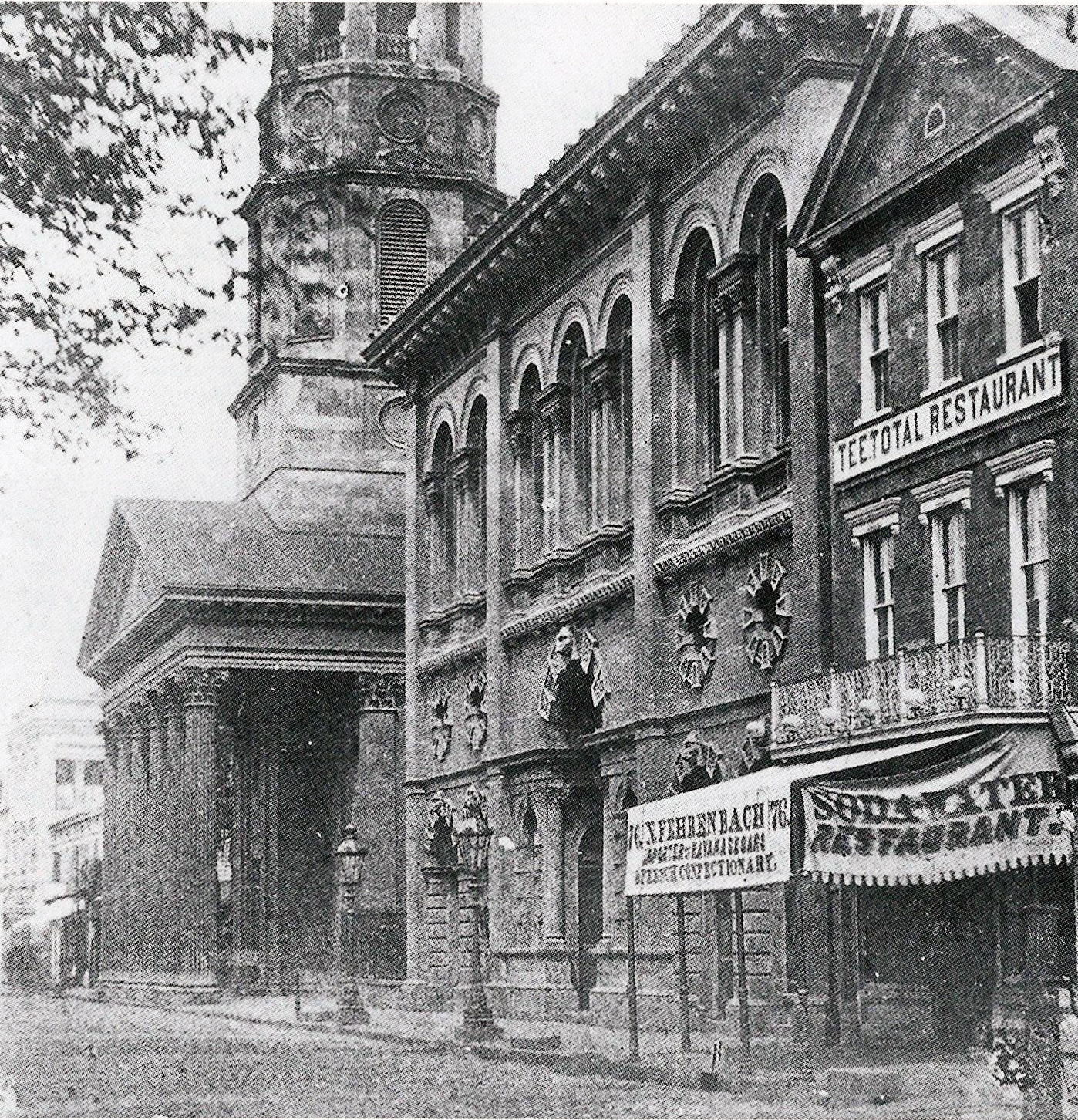
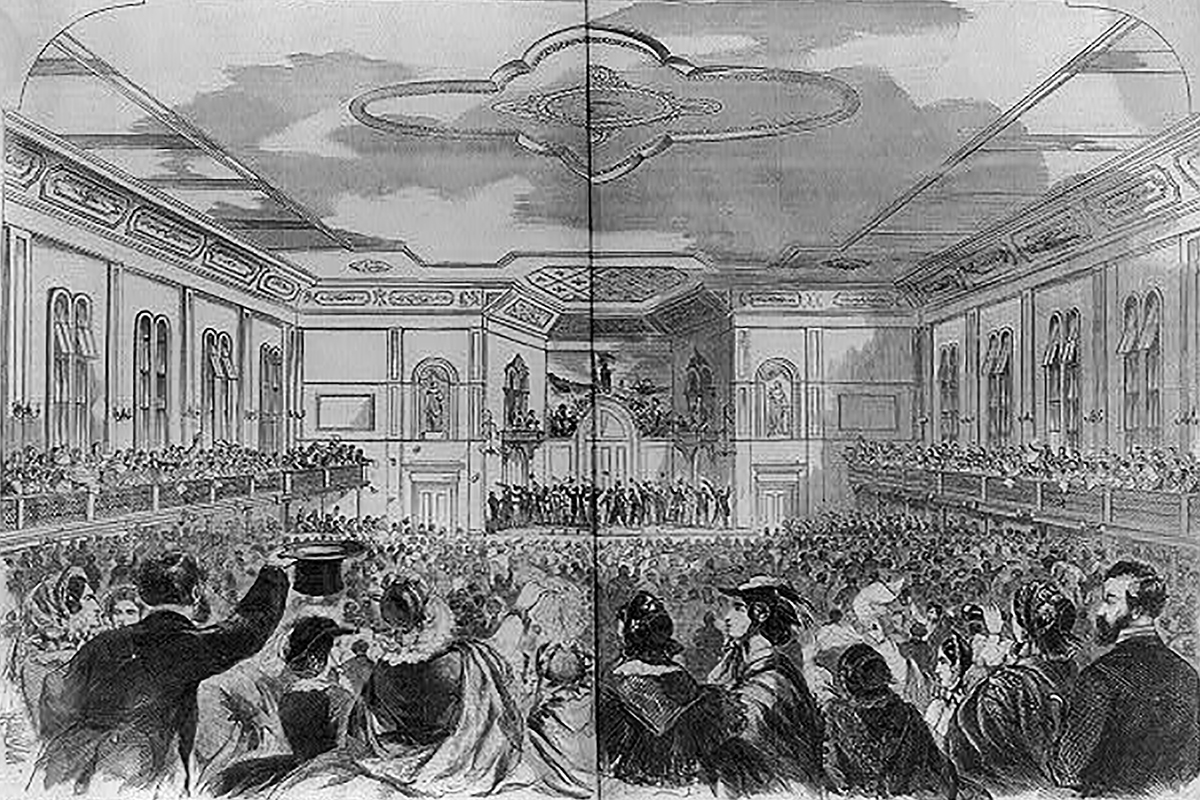
Construction of South Carolina Institute Hall began – for the purpose of hosting agricultural and industrial fairs. In 1860 it was the site of two events which changed American history: the Democrat National Convention, and the signing of the Ordinance of Secession. 

South Carolina Institute Hall on Meeting Street. Harper's Weekly illustration

South Carolina Institute Hall on Meeting Street. Harper’s Weekly illustration

circular church - teetotal

Photo of Meeting Street with 1806 version of Circular Church steeple and portico and SC Institute Hall, c 1860.

secession

Inside South Carolina Institute (Secession) Hall. From Frank Leslie’s Newspaper. Courtesy of the Library of Congress

Today In Charleston History: March 2

1696 – Fortifications.

The Assembly passed a second act appropriating money for the construction of a brick wall along Charles Town’s eastern edge. It became known as the “wharf wall,” or the “curtain line upon the Bay.” The legislature also considered plans for building a brick “fort” at the east end of Broad Street.

1779 – Births.

Joel Roberts Poinsett, future American statesman and botanist, was born in Charleston. As the American minister to Mexico in 1828 Poinsett discovered a beautiful shrub which the locals called “Flor de Noche Buena” (Christmas Eve flower). Poinsett sent samples of the plant home to his plantations in Charleston and Greenville.  

Most botanists dismissed the plant as nothing more that a weed, but Poinsett shared the plant with friends and other horticulturists whose enthusiasm for its beauty led to it being called the “Mexican fire plant.” In 1836 the plant was officially renamed the “poinsettia”, following the 19th century convention of naming things after their “discoverers.” It is now the #1 selling potted plant in the world. 

greenhouse full of bright red poinsettia

Poinsettias in a warehouse.

1833 – Nullification Crisis

The Force Bill was passed by Congress at the urging of President Andrew Jackson. It consisted of eight sections expanding presidential power and was designed to compel the state of South Carolina’s compliance with a series of federal tariffs, opposed by John C. Calhoun and other leading South Carolinians. Among other things, the legislation stipulated that the president could, if he deemed it necessary, deploy the U.S. Army to force South Carolina to comply with the law.