Today In Charleston History: October 20

1730 – Religion

Rev. Alexander Garden held the first convention of South Carolina clergy at Charlestown.

St. Philips Church, 1723

St. Philips Church, 1723

Garden was educated at the University of Aberdeen and in 1719 he went to South Carolina as the Bishop of London’s Commissary, and became rector of  St. Philip’s Church. Garden became renowned for his efforts to censor the evangelist George Whitefield and prevent his “enthusiastic” type of religious meetings from being held in Charles Town, SC.

As well as supervising other clergymen in the area he took an interest in the Charleston Free School, and established the so-called “Negro School” which was supported by the Church of England’s Society for the Propagation of the Gospel. In the spring of 1754 he retired and went to live in England, but soon went back to the warmer climate of South Carolina and died there in 1756

Today In Charleston History: October 19

1781 – American Revolution

Lord Cornwallis surrendered 8000 British troops to George Washington. Victory was assured by the arrival of the French fleet, secured by Col. John Laurens, which cut off Cornwallis’ retreat by sea. Laurens commanded the troops which blocked the path for a British retreat, ultimately leading to them having to surrender. Laurens also represented Washington at the surrender negotiations.

When word of Cornwallis’ surrender reached Charlestown, Lord Rawdon was so concerned about an American attack he ordered forces from Wilmington, North Carolina relocated to Charlestown, constructed new fortifications across the Neck and enlisted Negroes as soldiers.

Publication1

Today In Charleston History: October 18

1765 – American Revolution -The Stamp Act

The Planter’s Adventure arrived in Charlestown, carrying the hated British stamps, in preparation of the Act taking effect in November. Lt. Gov. Bull first placed the stamped paper in the warship Speedwell but feared it might be attacked while docked. He secretly transferred the stamps to Ft. Johnson for nine days.

 A forty-foot high gallows was erected at Broad and Church Streets in front of Dillon’s Tavern with three effigies: that of a stamp distributor hung between a Devil on one side and a boot on the other. On the front of the gallows was a sign which read – “LIBERTY and no STAMP ACT.” On the back of the gallows was another sign which read:

Whoever shall dare attempt to pull down these effigies had better been born with a mill stone about his neck, and cast into the sea.

 Two thousand people paraded the streets looking for the stamps. The home of the stamp officer, George Saxby (53 Tradd Street), was searched and ransacked. Many in the crowd were part of Christopher Gadsden’s artillery company – labor-class artisans.The mob marched to the “New Barracks” (present-day location of the College of Charleston) and burned an effigy of Saxby and buried a coffin labeled ÁMERICAN LIBERTY.”

1794 – Charleston Orphan House Opens

The Charleston Orphan House opened to 115 children at 160 Boundary Street (present-day Calhoun Street) on the outskirts of the city. Designed by Thomas Bennett the center structure was 40×40 feet, with two wings 65 by 30 feet each. Brickwork was done by Anthony Toomer. It cost $11,000 to construct and was the first public orphanage house in America.

orphan house postcard

Today In Charleston History: October 16

1651 – English Roots of Charles Town

Charles II and James, sons of the Charles I, fled England to escape Cromwell’s army. Landing in Normandy, France they would live in exile for nine years.

1864 – Bombardment of Charleston 

Gus Smythe wrote to his sister Sarah Annie:

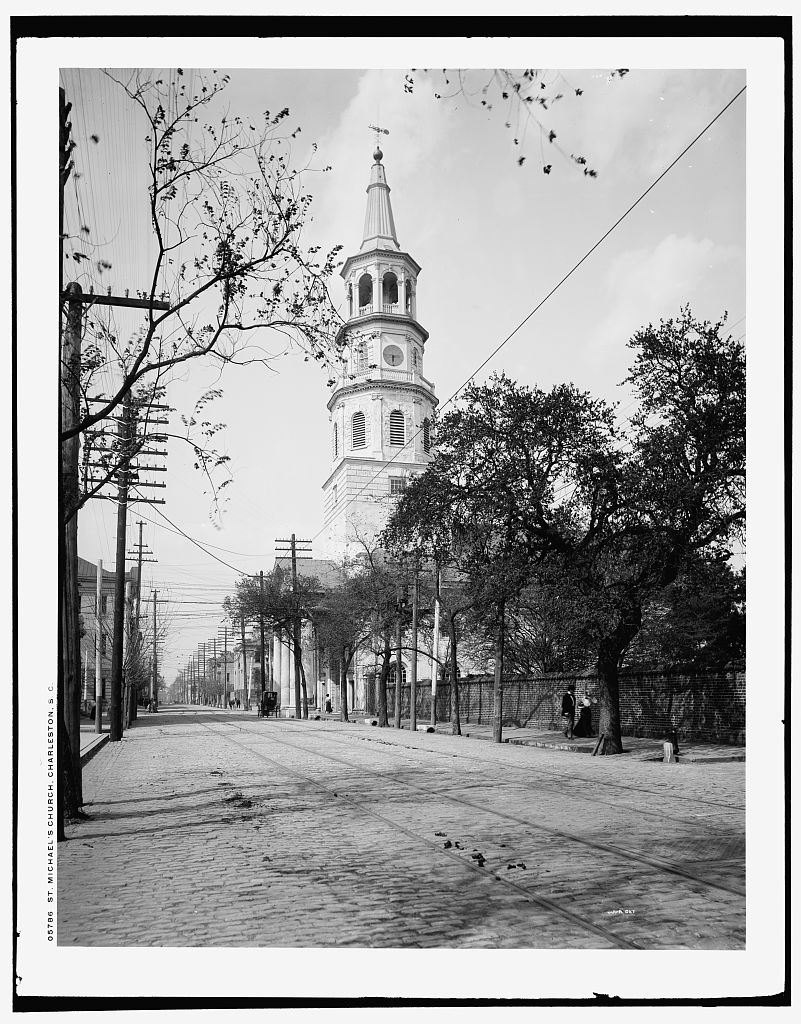
I am sorry to tell you that St. Michael’s steeple has been struck as last, this morning at 10 o’c., a shell entering and bursting in it. Fortunately it came in just by a window, so the wall is little injured, not at all of any account. The just before that one, entered the church, going through the south east corner of the roof, but not bursting. This church … has had now two shells in it, besides one in the steeple, & has been hit several times by fragments.

St. Michael's Church

St. Michael’s Church

1876 – Reconstruction

A joint political meeting took place near Cainhoy, South Carolina, a small town located approximately nine miles northeast of Charleston.  A group of about one-hundred and fifty Democrats traveled to the site by steamboat “Pocosin” and met their political opponents at “Brick Church.”  The leadership from both sides had agreed beforehand that participants would not bear arms at the meeting, but many of the Republicans, mindful of the sort of violence that had occurred previously in places like Hamburg, arrived to the meeting with their personal firearms.  Other black Republicans had hidden weapons in the surrounding woods and swamps.  

brick church

Brick Church at Cainhoy.

During a speech by Republican W.J. McKinlay,  the hidden weapons were discovered. A riot broke out when the black Republicans heard that the whites had seized their weapons and that a white man had drawn a pistol in self-defense. The blacks rushed from the swamps with their guns and pursued the Democrats into the church., where they were held at bay, with a gun battle between the Democrats and Republicans lasting several hours.  Members of Democratic controlled rifle clubs from Charleston quickly organized and arrived on the scene in force within a few hours, Tensions remained high, but no more organized fighting took place.

The “Pocosin” was quickly loaded with the wounded and returned from Charleston with 100 armed men of the Palmetto Guard to provide protection for the white citizens of Cainhoy.  A small detachment of U.S. military forces arrived a few days later in order to maintain the tenuous peace.  

The massacre at Cainhoy resulted in the deaths of six white men and wounding sixteen while only one black man was killed.

Today In Charleston History: October 15

1764

Peter Timothy of the Gazette requested that all people who owed him money pay their debts as soon as possible. He pointed out that in thirty-three years he had never resorted to a summons or an attorney to collect a bill, but such measures may be forthcoming.

1863 – Civil War. H.L. Hunley sinks

Horace Hunley and seven crew members boarded the submarine, H.L. Hunley, at Adger’s Wharf. There was a small crowd assembled on the dock to watch a demonstration of the Hunley’s capabilities, a dress rehearsal for an actual attack.  They were to submerge beneath the Confederate ship Indian Chief and surface on the other side.

The crowd watched the Hunley cruise away from the dock, submerge but … it never resurfaced. The next day, the Charleston Daily Courier posted this notice:

Melancholy Occurrence – On Thursday morning an accident occurred to a small boat in Cooper River, containing eight persons, all of whom drowned.

General P.G.T. Beauregard ordered that the submarine be raised and then grounded. So far, the Hunley had killed thirteen Confederate volunteers and not a single Yankee. “It is more dangerous to those who use it than the enemy,” he said.

Due to weather conditions in Charleston harbor, it took more than a month for the recovery. It was 60-feet below the surface, its nose buried in silt. On Saturday, November 7, several divers, including Angus Smith who had worked on the first recovery, managed to wrap enough chains around the vessel to raise it. When the Hunley was finally on the dock at Mt. Pleasant, the grim task of removing the eight corpses was begun.

Beauregard wrote, “It was indescribably ghastly. The unfortunate men were contorted into all kinds of horrible attitudes.”

1866

Several different companies started horse-drawn streetcar services in Charleston. No one from the Charleston Animal Society complained about the abuse of horses being forced to carry people around the streets. chas trolly cars

Today In Charleston History: October 14

1735 – Religion

At the request of James Oglethorpe and through the offices of the Society for the Propagation of the Gospel, John Wesley and his brother Charles sailed from Kent, England on the Simmonds to Savannah, as minister to the new settlers.

1776 – American Revolution

The Legislature announced the sale of several hundred chests of tea, which had been stored in the Exchange basement for three years. The tea had been seized from the ship Magna Carta in June 1774. The money from the sale of the tea was used in support of the Patriot cause in South Carolina.

The besement, or "dun

The basement, or “dungeon” of the Exchange.

Today In Charleston History: October 13

1758 –Deaths 

Charles Pinckney died of malaria in Charlestown. His wife, Eliza, was nearly overcome with her grief. She wrote to her sons:

How shall I write to you! What shall I say to you! You have met with the greatest loss … Your dear, dear father, the best and most valuable of parents, is no more! He met the king of terrors without the least terror … and without agony, and went like a Lamb into eternity, into a blessed Eternity! where I have not the least doubt he will reap immortal joy for Ever and Ever.

1807
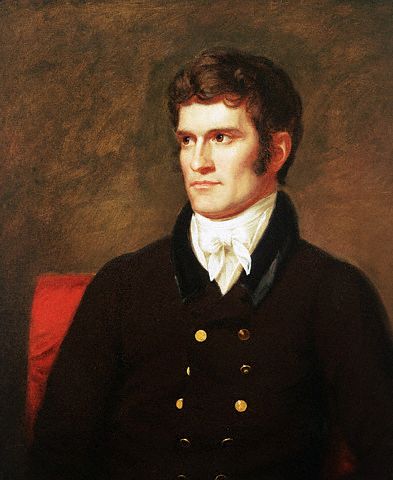
1822 portrait of John C. Calhoun ... before he became so scary-looking.

1822 portrait of John C. Calhoun … before he became so scary-looking.

John C. Calhoun was elected to the South Carolina general assembly from his home town Abbeville, SC.

Today In Charleston History: October 12

1492 – The Roots of America

Christopher Columbus’ Spanish-financed expedition landed on what is now The Bahamas. This discovery attracted the attention of Europe to the riches available in the New World, inspiring France, Portugal, Spain, England, and the Dutch to send explorers. Without this successful expedition, the history of the founding of North America would be completely different. 

1833   

Thomas Grimke died after a visit to his sisters Sarah and Angelina Grimke in Philadelphia. He was their last close tie to Charleston. They were now completely cut off from their hometown.grimke sisters

1861

A blockade-running ship, Theodora, left Charleston under the command of Captain Thomas Lockwood. On board were the two Confederate European representative, James Mason and John Slidell. The ship was owned by a syndicate headed by F. T. Porcher. George A. Trenholm, officer for Fraser, Trenholm and Company, put up half the money to supply the ship for voyage, in return for a handsome profit. Mason and Slidell were taken to Havana, Cuba to catch passage to England. They were captured by the USS San Jancinto and arrested.

She was built as Carolina at Greenpoint, N.Y., in 1852 for service as a coastal packet out of Charleston, S.C., occasionally crossing to Havana, Cuba. Upon outbreak of Civil War she was strengthened and refitted as the Gordon, under Capt. T. J. Lockwood, and placed in commission as a privateer at Charleston on 15 July 1861.

Today In Charleston History: October 11

1803

 Capt. Joseph Vesey married his fourth wife, Maria Blair, a wealthy Charleston widow. He moved back into town and purchased a house at 41 Anson Street, which was destroyed by the 1838 fire. His man servant, Denmark, lived in the house with the couple. 

Currently the location is a private home, constructed in 1840.

Today In Charleston History: October 10

1765 – Elections

The people of the back country of South Carolina decided to show their unhappiness with the Charlestown politicians during the election. Many rode more than 100 miles to vote. The voters of St. Paul’s parish (Colleton County) arrived to discover that the election had been held ten days before the announced date. They were told by Charlestown officials that was due to an error by the printer, which no one believed.

1935
p&b6

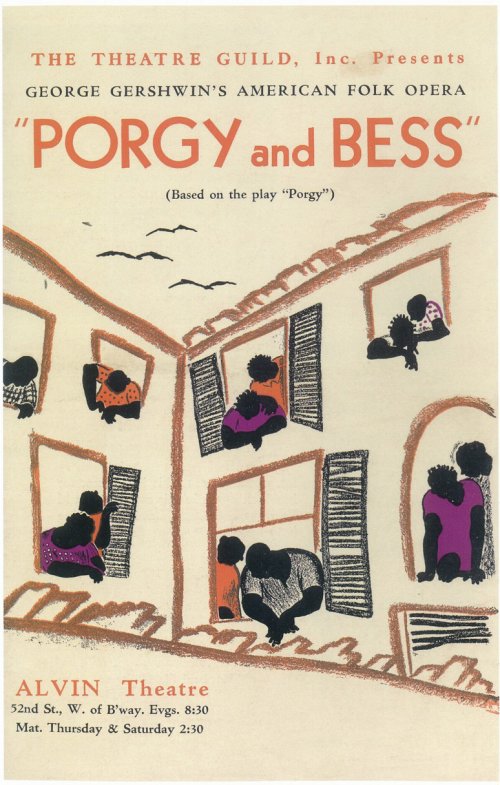
Original playbill

The New York opening of Porgy and Bess took place at the Alvin Theatre in New York City and ran for 124 performances, impressive for an opera, and but woefully short for a musical. The reviews were decidedly mixed. Brooks Atkinson wrote in the New York Times, October 9, 1935:

After eight years of savory memories, Porgy has acquired a score, a band, a choir of singers and a new title, Porgy and Bess, which the Theatre Guild put on at the Alvin last evening … Although Mr. Heyward is the author of the libretto and shares with Ira Gershwin the credit for the lyrics, and although Mr. Mamoulian has again mounted the director’s box, the evening is unmistakably George Gershwin’s personal holiday … Let it be said at once that Mr. Gershwin has contributed something glorious to the spirit of the Heywards’ community legend.

Composer/critic Virgil Thomson, writing for the New York Herald-Tribune, was less kind, calling Gershwin’s incorporation of blues and jazz influences into a “serious” operatic score to be “falsely conceived and rather clumsily executed…crooked folklore and half-way opera.”

17b. porgy and bess (loc) blank pg. 170

Porgy and Bess, original cast