Today In Charleston History: November 19

1755 – Deaths.

Andrew Rutledge died. The childless attorney left his estate – a house and plantation valued at £12,000 in trust for his brother’s oldest children, John, Thomas, Andrew and Sarah. John Rutledge  was serving a five-year apprenticeship in the Charlestown law office of James Parsons, along with another local young man, Thomas Bee.

1779 – American Revolution – Arrivals.
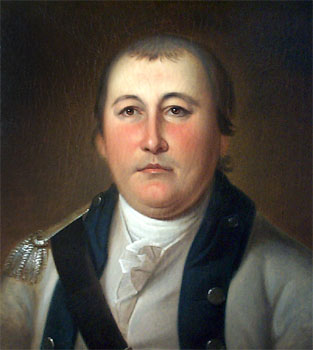
William Washington by Rembrandt Peale

Lt. Col. William Washington, second cousin to George Washington, was transferred from New Jersey to the Southern theatre of war, to join the army of Major General Benjamin Lincoln in Charlestown.

1832 – Nullification Crisis

South Carolina called for a convention. By a vote of 136 to 26, the convention overwhelmingly adopted an ordinance of nullification drawn by Chancellor William Harper. It declared that the tariffs of both 1828 and 1832 were unconstitutional and unenforceable in South Carolina. While the Nullification Crisis would be resolved in early 1833, tariff policy would continue to be a national political issue between the Democratic Party and the newly emerged Whig Party for the next twenty years.

1863 – Bombardment of Charleston.

During a special Thanksgiving service a Union shell exploded near the church door as the congregation was exiting. It was the last service held in St. Michael’s during the war.

 During their service at St. Philip’s a shell passed over the church and landed half a block away at the corner of Church and Cumberland Streets. Rev. Howe continued his sermon and finished the service before dismissing the congregation. It was the last service held at St. Philip’s during the war. Both congregations (St. Michael’s and St. Philip’s) continued to worship at St. Paul’s Episcopal (present-day Cathedral of St. Luke and St. Paul) on Coming Street, north of Calhoun Street, out of the range of the Federal guns.

For the remainder of the year 283 shells landed in Charleston. Many of the shells were filled with “Greek Fire” – an incendiary mixture of turpentine and petroleum. As the shell exploded pieces of fire were thrown great distances in the air and catch buildings on fire. 

st. mikes - wordpress

1863 – Bombardment of Charleston.  

George Trenholm purchased the abandoned Lagare’s Female Academy in Orangeburg for the removal of the children from the Charleston Orphanage House.

1929

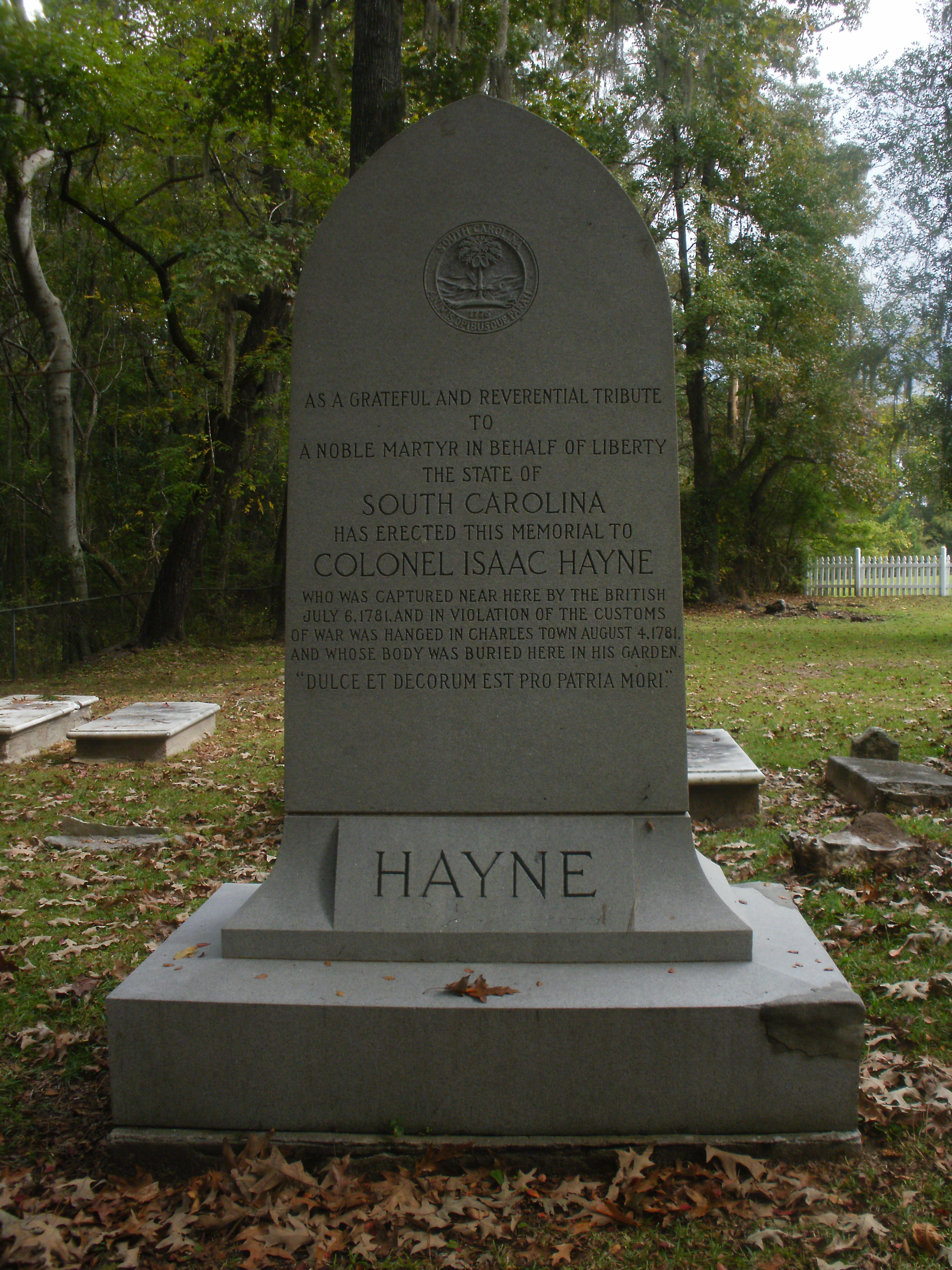
By resolution of the SC House a monument was erected for Issac Hayne at his burial site near Jacksonboro.
OLYMPUS DIGITAL CAMERA

Today In Charleston History: October 22

1774

Henry Middleton served as second president of the Continental Congress.

1862 – Civil War

Gus Smythe enlisted in the Signal Corps in Charleston and reported to Capt. Joseph Manigault. He wrote to his Aunt Janey:

I have not yet been assigned to any station, but trust to be kept at the Bathing House [South Battery] … As to accommodations, they are MUCH better than in camp, as we (in town) all stay in houses …


View of Charleston from Ft. Wagner

View of Charleston from Ft. Wagner

1925 – Doin’ the Charleston

One of the clubs that challenged the Cotton Club in popularity was Small’s Paradise. Ed Smalls was born in Charleston and moved to New York as a young man. Charleston legend claims that he was kin to the legendary Robert Smalls, an African slave who, during the Civil War, stole a steamer in Charleston harbor and delivered it to the Union navy. Untrue.

Another legend states that Ed Smalls was also related to the notorious Sammy Smalls, “Goat Cart Sam,” a crippled beggar who was often seen drunk on the streets of Charleston being pulled around in a goat cart. Sam usually frequented gambling saloons and whorehouses. “Goat Cart Sam” was about to become a legendary and universal character known as Porgy, the title character of Dubose Heyward’s lyrical novel of black life in Charleston. Also untrue.

Ed Smalls opened Small’s Paradise on October 22, 1925. It was housed in a large basement at 2294½ Seventh Avenue at 135th Street and could accommodate 1500 patrons. It offered extravagant floor shows and the Charlie Johnson Orchestra played the hottest jazz music in Harlem. The Paradise also featured a slew of flamboyant, Charleston-dancing gay waiters who served Chinese food and bootleg liquor to the small tables. During those early years, the Charlie Johnson Orchestra featured two former Jenkins Orphanage trumpet players: Gus Aiken and Jabbo Smith, who had just recently “escaped” from the orphanage.

smalls

Smalls Paradise, New York City. Author’s Collection

Today In Charleston History: September 2

1706 – Queen Anne’s War

A joint French and Spanish attack upon Charles Town  is repulsed when English Colonial forces capture a French vessel. Governor Nathaniel Johnson and Lieutenant Colonel William Rhett lead the successful defense of Charles Town against a combined force of Spanish, French, and Native American combatants who sailed into Charleston harbor from St. Augustine..

1863 – Bombardment of Charleston

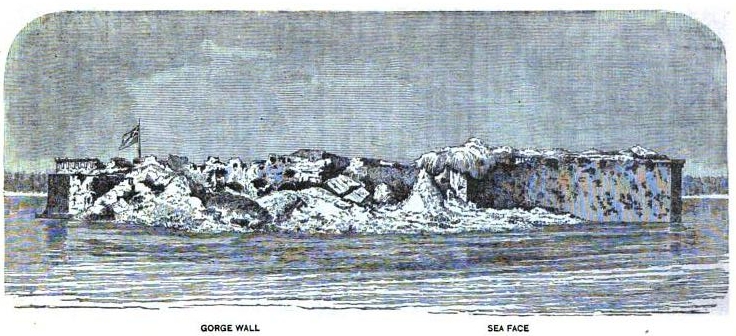
Ft. Sumter was demolished. John Johnson, a Confederate engineer, wrote:

The fort had now lost all offensive character, but it had been firmly decided by the [Confederate] general commanding to hold it in a defensive way to the last extremity.

aug24sumter21

Ft. Sumter

aug24sumter23

Ft. Sumter