Today In Charleston History: January 9

 1803 – Births.
memminger

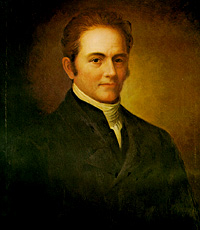
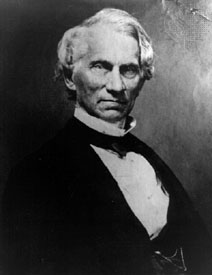
Christopher Memminger

Christopher Gustavus Memminger was born in Vaihingen an der Enz, Germany. His father, Gottfried Memminger, a military officer, died in combat a month after his son’s birth. Eberhardina Kohler Memminger, and her son Christopher immigrated to Charleston. He was placed in the Charleston Orphan House at age five after his mother died of yellow fever. It was noted by the Orphan officials that Christopher showed “a great native genius, particularly in mathematics.”

 At age ten, Memminger was taken in by Thomas Bennett, Jr.and two years later, he enrolled in South Carolina College (University of South Carolina) and graduated second in his class at age sixteen. He became a prominent lawyer and politician. He served as the first Treasurer of the Confederacy.

1861 – Secession.

The Union merchant ship, Star of the West, was fired upon as it tried to deliver supplies to Fort Sumter in Charleston Harbor. The Star, built by Cornelius Vanderbilt, was a 1,172 ton, two-deck steamship, a length of 228.3 feet (69.6 m) and a beam of 32.7 feet (10.0 m) and with wooden hullside paddle wheels and two masts.
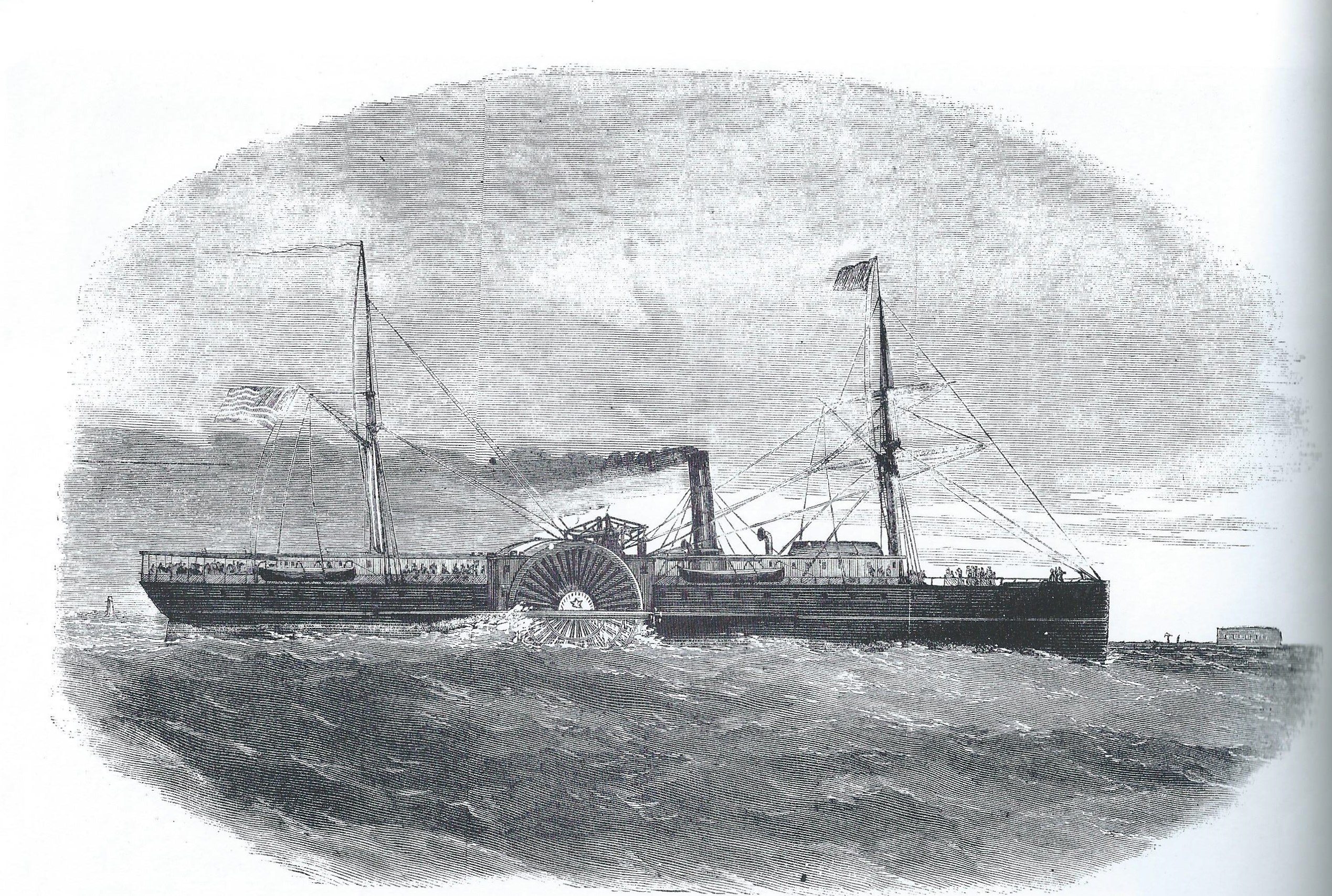
star of the west

Star of the West

When South Carolina seceded on December 20, 1860, it demanded the immediate withdrawal of the Federal garrison at Fort Sumter. President James Buchanan refused to comply with this demand, but was also careful not to make any provocative move. Inside the fort, Major Robert Anderson and his 80 soldiers needed supplies so Buchanan decided, in order to keep tensions from erupting even more, to dispatch an unarmed civilian ship, Star of the West, instead of a military transport.

The Star left New York on January 5, 1861. After the ship was en route, Secretary of War Joseph Holt received a dispatch from Anderson saying supplies were not needed immediately. Holt realized that the ship may be in danger and war might erupt. He tried in vain to recall the Star of the West, and Anderson was not aware that the ship continued on its way.

The Charleston Mercury newspaper wrote on January 6:

Despatches from New York say that the steamer Star of the West of the Panama line, coaled up yesterday with unusual celerity. The rumor is that she is to carry troops to Charleston, but this is ridiculed at the Steamship Company’s Office.

On January 8 the Mercury reported, in all capital letters:

UNITED STATES TROOPS HASTENING FROM ALL POINTS SOUTHWARD. THE STAR OF THE WEST, WITH REINFORCEMENT FOR ANDERSON, DUE HERE TODAY.

The people of Charleston were feverish with excitement. They spent the afternoon sitting on the roofs of mansions with spyglasses staring out at sea.

A few minutes past six in the morning of January 9, Star of the West captain John McGowan steered the ship into the channel near the fort, passing Morris Island.  A week before, South Carolina governor Francis Pickens had ordered a hastily-built battery on the island, on the site of an abandoned hospital. Manned by about 200 infantrymen and about fifty Citadel cadets, trained in artillery usage. During that frantic week, the cadets had managed to build a battery of 24-pounders, facing east, hidden behind sand dunes and sand bags.

It was just after Reveille when the sentries on Morris Island spied the Star of the West . Major Peter F. Stevens gave the order, “Commence firing.” Two cannon shots roared from a South Carolina battery on Morris Island. the shots skipped in front of the Star and splashed harmlessly into the water. They came from cadet gunner George E. Haynsworth.  In all, seventeen shots were fired and the Star suffered a minor hit. Not being a military vessel and never before been engaged in battle, Capt. John McGowan decided to turn around and exit the harbor. From the beginning to end the entire episode had lasted forty-five minutes.
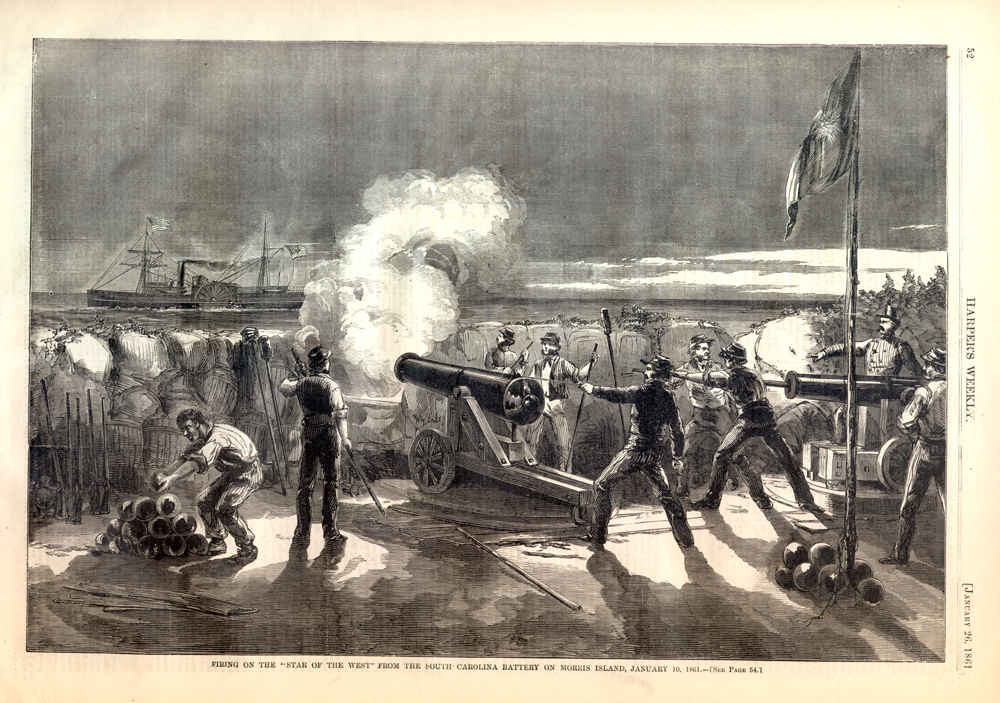
Firing on the Star of the West - Harper's Weekly.

Firing on the Star of the West – Harper’s Weekly.

 The next day the Charleston Mercury crowed: 

Yesterday will be remembered in history. The expulsion of the Star of the West from Charleston Harbor yesterday morning was the opening ball of the Revolution. We are proud that our harbor has been so honored. The State of South Carolina, so long and so bitterly reviled and scoffed at has thrown back her enemies.

Lt. Smith on the Star of the West humorously wrote:

The people of Charleston pride themselves on their hospitality, but it exceeded my expectations. They gave us several balls before we landed.

Today In Charleston History: November 23

1730 – Births

wm moultrieWilliam Moultrie born in St. John’s Berkeley Parish.

1749 – Births.

Edward Rutledge, last child of Dr. John and Sarah Rutledge was born.

1814
LangdonCheves

Langdon Cheves

Vice President Elbridge Gerry died. The office of President pro tempore of the Senate was vacant which meant Charleston’s Langdon Cheves, Speaker of the U.S. House Representatives was next in line for the Presidency. This ended two days later, when Senator John Gaillard was chosen President pro tempore.

1864 – Bombardment of Charleston.  

Army chief of staff, Gen. Halleck, ordered the suspension of the Charleston bombardment.

“This is not to prohibit the throwing of occasional shell into Charleston, if circumstances should require. The object is to economize ordinance stores.”

Today In Charleston History: October 23

1704 – Religion

 Francis Simonds, a widow, donated a plot of land for the construction of a dissenting church building, the White Meeting House – the site of the current Circular Church on Meeting Street.

1754 – Births

t. pinckneyThomas Pinckney born in Charleston, second son of Charles and Eliza Pinckney.

1764 – Stamp Act

 A masked and armed mob (probably members of the Sons of Liberty) of “about 60 to 80” marched on Henry Laurens’ house at midnight, suspecting that he held the stamps. Lauren’s coolness toward the Patriot cause made him suspicious in the eyes of the public. The mob held “a brace of cutlasses across my breast” and for the next hour the house was searched.  Laurens was amazed by the lack of damage to his house:

Is it not amazing that such a number of Men many of them heated with Liquor & all armed with Cutlasses & Clubbs did not do one penny damage to my Garden not even not even to walk over a Bed & not damage to my Fence, gate or House?

1830

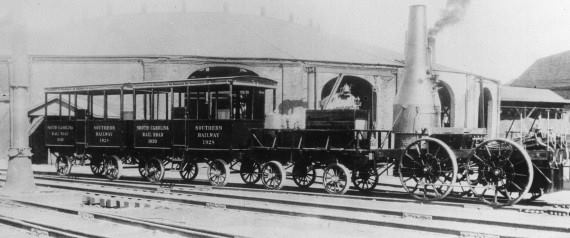
 The Best Friend arrived in Charleston on the freighter Niagra, in parts, and was taken to the shop of Thomas Dotterer where it was reassembled.

best friend

The Best Friend

Today In Charleston History: September 16

1706 – Queen Anne’s War.

A joint French and Spanish attack upon Charles Town during Queen Anne’s War was repulsed when Colonial forces capture a French vessel and it crew. Governor Nathaniel Johnson and Lieutenant Colonel William Rhett lead the successful defense of Charles Town against a combined force of Spanish, French, and Native American combatants who sailed into Charleston harbor from St. Augustine.

1781 – Slavery. Denmark Vesey.

Capt. Joseph Vesey of Charles Town purchased 390 slaves in St. Domingue. One of the slaves he purchased was a young boy “about 14 years old” named Telemaque. Vesey also noted the boy had a “beauty, alertness and intelligence.”  Instead of keeping the boy chained below decks Vesey”adopted the boy as the “ship’s pet and plaything.” Vesey gave the boy a new set of clothes and used him as his cabin boy.

vesey statue copyWhen the ship arrived at Cap Francois, Haiti, Vesey decided he “had no use of the boy” and turned him over to the slave agents Lory, Plomard and Compagnie. Little did he know that young boy would become a constant feature of his life for the next 30 years, and ultimately … for the next 200 years. 


Born Today: John Locke

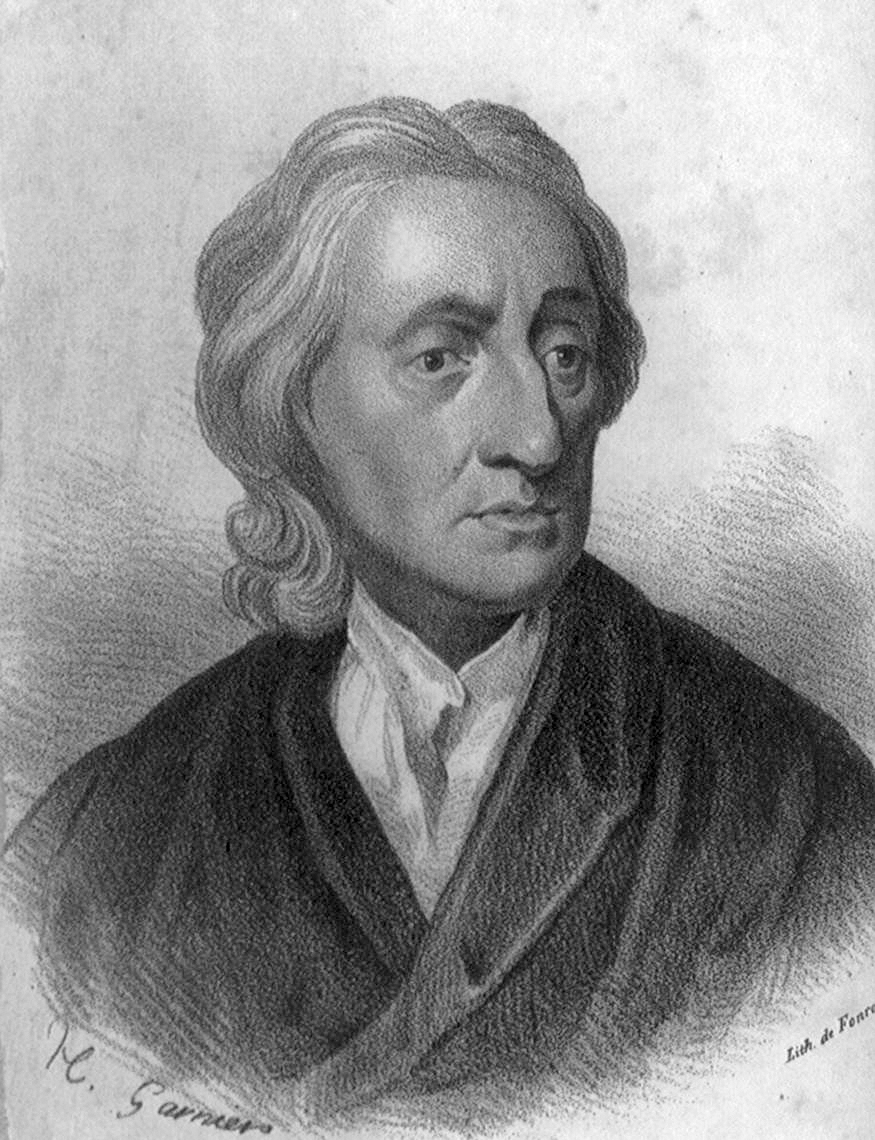
John Locke, born in Wrington, Somerset, England, He became a highly influential philosopher, writing about such topics as political philosophy, epistemology, and education. Considered one of the first of the British empiricists, his writings influenced Voltaire and Rousseau, many Enlightenment thinkers, as well as the American revolutionaries. His contributions to classical republicanism and liberal theory are reflected in the United States Declaration of Independence. Detractors note that (in 1671) he was a major investor in the English slave-trade through the Royal African Company. In addition, he participated in drafting the Fundamental Constitutions of Carolina which established a feudal aristocracy and gave a master absolute power over his slaves.

Locke-John-LOC

John Locke

Locke’s father was a country lawyer and military man who had served as a captain during the English civil war. Both his parents were Puritans and Locke was raised that way. In 1647 he enrolled at Westminster School in London, where Locke was named a King’s Scholar, a privilege that went to only select number of boys and paved the way for Locke to attend Christ Church, Oxford in 1652.

At Christ Church, Oxford’s most prestigious school, Locke immersed himself in logic and metaphysics, as well as the classical languages. After graduating in 1656, he returned to Christ Church two years later for a Master of Arts, which led in just a few short years to Locke taking on tutorial work at the college. In 1668 he was elected a fellow of the Royal Society in 1668. He graduated with a bachelor’s of medicine in 1674.

Early in his medical studies, Locke met Lord Anthony Ashley Cooper, who was to become Earl of Shaftsbury. The two grew close and Shaftsbury eventually persuaded Locke to move to London and become his personal physician. As Shaftsbury’s stature grew, so did Locke’s responsibilities. He assisted in his business and political matters, and after Shaftsbury was made chancellor, Locke became his secretary of presentations.

Shaftsbury became one of the Proprietors of the Carolina Colony and Locke assisted in writing the Fundamental Constitutions of the Carolina, an intriguing mixture of liberal and feudalistic ideas, spanning from then modern concepts of representative government and partial religious freedom to preservation of pre-Enlightenment institutions of serfdom and slavery.

Fundamental_Constitutions_of_CarolinaOne of the goals of the Fundamental Constitutions was to create an orderly society controlled by a titled, landed gentry in Carolina and ultimately by the Lords Proprietor in England. The two major ranks in the Carolina nobility would be the Landgraves, with 48,000 acres, and the caciques with 24,000 acres . The Fundamental Constitutions envisioned a society that would also include both serfs (called “leetmen”) and slaves. The unicameral parliament would be permitted to debate only those measures that had previously been approved by the Lords Proprietors, thus ensuring that the proprietors maintained control over colonial affairs.

Locke also wrote Article 97 of the Constitutions which established the most radical form of religious freedom in the 17th century – “any seven or more persons agreeing in any religion, shall constitute a church or profession, to which they shall give some name, to distinguish it from others.”

Lordashley

Lord Ashley Cooper, Earl of Shaftsbury

Shaftsbury’s influence on Locke’s professional career and his political thoughts cannot be understated. As one of the founders of the Whig party, which pushed for constitutional monarchism and stood in opposition to the dominant Tories, Shaftsbury imparted an outlook on rule and government that never left Locke. In Locke’s landmark, Two Treatises of Government, he put forth his revolutionary ideas concerning the natural rights of man and the social contract. Both concepts not only stirred waves in England, but also impacted the intellectual underpinnings that formed the later American and French revolutions.

In 1679 Shaftsbury was tried for treason and cleared, but the Earl decided to flee England anyway to escape further persecution. He fled to Holland where William and Mary ruled but had some claim to the English throne. Owing to his close association withShaftesbury, Locke also fled fled to Holland in 1683.  Locke composed “An Essay Concerning Human Understanding,” another ground breaking work of intellectual might that spanned four books and took on the task of examining the nature of human knowledge.

He returned to England in about 1688 when William and Mary were invited to retake the reign of England in what historians call the Bloodless Revolution. Eventually Locke returned to Oates in Essex where he retired. He lived there until his death in 1704.

Natural Rights

Locke wrote and developed the philosophy that there was no legitimate government under the divine right of kings theory. The Divine Right of Kings theory, as it was called, asserted that God chose some people to rule on earth in his will. Therefore, whatever the monarch decided was the will of God. When you criticized the ruler, you were in effect challenging God.

Locke disagreed. He believed the power to govern was obtained from the permission of the people and that purpose of government was to protect the natural rights of its citizens – that natural rights were life, liberty  and property, and that all people automatically earned these simply by being born. When a government did not protect those rights, the citizen had the right and maybe even the obligation of overthrowing the government.

All of these ideas were incorporated into the Declaration of Independence by Thomas Jefferson. 

Today In Charleston History: August 16

1736- Religion

Charles Wesley sailed back to England. John Wesley returned to Savannah to continue his ministry.

1763-College of Charleston

The Assembly established a committee to make plans for a public college for the young men of the province. It would be seven years before any action was taken and the College of Charleston would be established.

1771 – Dueling 

In a duel that took place in the long room of a tavern, Dr. John Haley, a Charlestown Whig physician, killed Mr. Delancy, a Tory from New York and brother of Mrs. Ralph Izard. Since the duel took place without the presence of seconds, Dr. Haley was charged with murder. At his trial he was defended by Thomas Heyward, Jr. and acquitted which “was considered a great triumph by the Whigs.”

1780 – American Revolution – The Battle of Camden.  
Thomas Pinckney

Thomas Pinckney

This was another major defeat for the Americans. A new Southern Army, commanded by Major General Horatio Gates, was roundly defeated by Cornwallis. With more than 1000 casualties it was the worst American battlefield defeat of the entire Revolution. Thomas Pinckney of Charleston an aide-de-camp to General Gates, and was captured on the battlefield.

1825-DEATHS

Charles Cotesworth Pinckney, eldest son of a politically prominent planter and Eliza Lucas Pinckney, died today.

At age 7, Charles accompanied his father, who had been appointed colonial agent for South Carolina, to England. Pinckney received tutoring in London, attended several preparatory schools, and went on to Christ Church College, Oxford, and graduated in 1764. Pinckney next pursued legal training at London’s Middle Temple and was accepted for admission into the English bar in 1769. He then spent part of a year touring Europe and studying chemistry, military science, and botany under leading authorities.

Charles Cotesworth Pinckney

Charles Cotesworth Pinckney

Late in 1769, Pinckney sailed home and the next year entered practice in South Carolina. In 1773 he acted as attorney general for several towns in the colony. By 1775 he had identified with the patriot cause and that year sat in the provincial congress.

When hostilities broke out, Pinckney, pursued a full-time military calling. When South Carolina organized its forces in 1775, he joined the First South Carolina Regiment as a captain. He soon rose to the rank of colonel and fought in the South in defense of Charleston and in the North at the Battles of Brandywine, PA, and Germantown, PA. He commanded a regiment in the campaign against the British in the Floridas in 1778 and at the siege of Savannah. When Charleston fell in 1780, he was taken prisoner and held until 1782. The following year, he was discharged as a brevet brigadier general.

Pinckney was one of the leaders at the Constitutional Convention. Present at all the sessions, he strongly advocated a powerful national government. His proposal that senators should serve without pay was not adopted, but he exerted influence in such matters as the power of the Senate to ratify treaties and the compromise that was reached concerning abolition of the international slave trade. After the convention, he defended the Constitution in South Carolina.

Under the new government, Pinckney became a devoted Federalist. Between 1789 and 1795 he declined presidential offers to command the U.S. Army and to serve on the Supreme Court and as Secretary of War and Secretary of State. In 1796, however, he accepted the post of Minister to France, but the revolutionary regime there refused to receive him and he was forced to proceed to the Netherlands. The next year, though, he returned to France when he was appointed to a special mission to restore relations with that country. During the ensuing XYZ affair, refusing to pay a bribe suggested by a French agent to facilitate negotiations, he was said to have replied “No! No! Not a sixpence!”

When Pinckney arrived back in the United States in 1798, he found the country preparing for war with France. That year, he was appointed as a major general in command of American forces in the South and served in that capacity until 1800, when represented the Federalists as Vice-Presidential candidate, and in 1804 and 1808 as the Presidential nominee but was defeated on all three occasions.

He was a charter member of the board of trustees of South Carolina College (later the University of South Carolina), first president of the Charleston Bible Society, and chief executive of the Charleston Library Society. .Survived by three daughters, he died in Charleston at the age of 79 and interred  in the cemetery at St. Michael’s Episcopal Church.

Today In Charleston History: August 15

1739

The Security Act was passed by the Assembly in response to white fears about the majority Negro population. The Act required that all white men carry firearms to church on Sunday. Anyone not in compliance of the law by September 29 would be subjected to a fine.

1779 – Births.
Joseph Alston

Joseph Alston

Joseph Alston was born in Charleston. He was a future governor of South Carolina and inherited one of the state’s largest fortunes. He would later marry Theodosia Burr, daughter of vice-president Aaron Burr.  

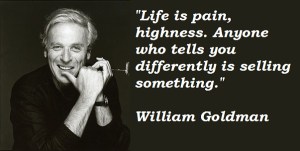
Happy Birthday, William Goldman

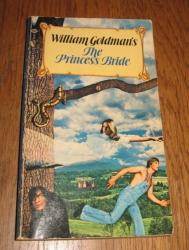
William-GoldmanMr. Goldman, you were my first favorite author. In 1974 I was 14 years old and I purchased a paperback novel titled The Princess Bride and I never looked at fiction ever the same again.

I remember walking around saying “Hello, my name is Inigo Montoya, you killed my father. Prepare to die!’ And everyone looked at me like I was an idiot. But I didn’t care. After I read the book three times in a row, I went and found paperback copies of everything you had written up to then. The Temple of Gold (1957); Your Turn To Curtsy; My Turn To Bow (1958); Soldier In The Rain (1960); Boys and Girls Together (1964); No Way To Treat A LadyI (1964); The Thing Of It Is … (1967). I was hooked! 

princesspb

First edition copy of The Princess Bride, 1974.

And then I discovered you had also written one of the coolest movies ever – Butch Cassidy and the Sundance Kid, and won an Academy Award for Best Screenplay. Then came the novels (and screenplays) for Marathon Man (“Is it safe?”)and Magic (a perfectly creepy book and a disturbing movie with Anthony Hopkins.)   

All told, 16 novels, 9 books of non-fiction, 38 screenplays and two Academy Awards (Butch and All The President’s Men). And  of course, the best book about Hollywood, Adventures in the Screen Trade, hands down the funniest book every written, in which you shared Hollywood’s greatest unspoken secret (until then)  … goldman, nobody knows anything

And of course, your heroic effort to get The Princess Bride made into a movie that reflected what your readers expected of that special book may be your greatest contribution to cinematic history. When it was released in 1987, I was suddenly confronted with everyone walking around saying “Hello, my name is Inigo Montoya, you killed my father. Prepare to die!'”  All I could do was smile, happy that millions more people (who would never read a book) had finally
discovered the quirky joys of Bride.William-Goldman-Quotes-1

Mr. Goldman, you have been a major part of my life for 40 years, and even though I would have appreciated a few more novels …  I cannot say “thank you”  enough.

download

Born Today: August 7

1560 – Elizabeth Báthory, Nyírbátor, Hungarian countess and serial killer.

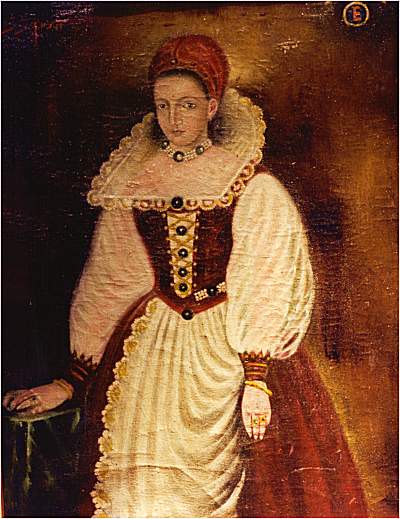
During the Christmas season in 1609 (or 1610), King Mathias II of Hungary�sent a party of men to the massive Castle Csejthe. He had heard rumors that several young women from the area were being held in the castle against their will, if not actually killed. In haste, he sent the team to investigate. what they discovered was beyond their imagination. 

Bathory was already infamous in the area for her torture and murder of servants and peasants, but her title and high-ranking relatives had made her untouchable. 

One of her uncles instructed her in Satanism, while her aunt taught her all about sadomasochism. At the age of 15, Bathory was married to Count Nadady, and the couple settled into Csejthe Castle. To please his wife, her husband built a torture chamber to her specifications.

Elisabeth Bathory, the Bloody Countess

Elisabeth Bathory, the Bloody Countess

Bathory’s torture included jamming pins and needles under the fingernails of her servant girls, and tying them down, smearing them with honey, and leaving them to be attacked by bees and ants. Although the count participated in his wife’s cruelties, he may have also restrained her impulses; when he died in the early 1600s, she became much worse. With the help of her former nurse, Ilona Joo, and local witch Dorotta Szentes, Bathory began abducting peasant girls to torture and kill. She often bit chunks of flesh from her victims, and one unfortunate girl was even forced to cook and eat her own flesh. Bathory reportedly believed that human blood would keep her looking young and healthy.


1950 – Rodney Crowell, Houston Texas, singer/songwriter.

rodney-crowell-456-012811One of the best songwriters of the past forty years, Crowell has had a long career, starting in the 1970s as part of Emmylou Harris’s Hot Band. He then began to record his own solo LPs, and became the hottest songwriter / producer in Nashville. His marriage to Rosanne Cash made them one of the royal couples of country music during the 70s and 80s. Between them, they wrote and recorded together dozens of Top Ten country songs and won several Grammy Awards. In 1988 Crowell managed to have five #1 songs off his LP Diamonds and Dirt. 

During the 21st century Crowell has retreated from mainstream country music and has released a series of brilliant CDs and has become the elder statesman for the Americana music genre.