Ashley Cooper wrote to Captain West and Governor Sayle ordering that the settlement, Albemarle Point, be renamed “Charles Town.”
1765 – Stamp Act.
The Stamp Act went to effect. Ships could not get clearances to leave Charlestown harbor and courts could not conduct any legal business without stamped paper.
1773
Jacob Ramos was convicted of inciting a slave to commit a robbery of Mr. William Sommerfall. The Negro slave was hanged, and Ramos was sentenced to “stand in the pillory for an hour, pay a fine of $350, and receive 39 lashes.” During the time in the pillory Ramos was “most severel & incessantly pelted by an enraged Populace; who nevertheless were so orderly, as to not use any other Materials than rotten eggs, Apples & Onions.”
1775 – American Revolution.
Second Provisional Congress was hastily called into session in to deal with the threat the two British war ships in Charlestown harbor. William Henry Drayton was voted President of the Congress. In anticipation of Lord Campbell sailing up the Cooper River to meet with Loyalists living in the back country, Drayton ordered the blocking of Hog Island Channel by the sinking of four hulks.
1777 – American Revolution
Upon John Hancock’s retirement due to ill health, Henry Laurens was elected President of the Congress and served until December 9, 1778. During his term, Laurens dealt with the conspiracy to replace George Washington as commander-in-chief, perpetuated by several members of Congress and the military.
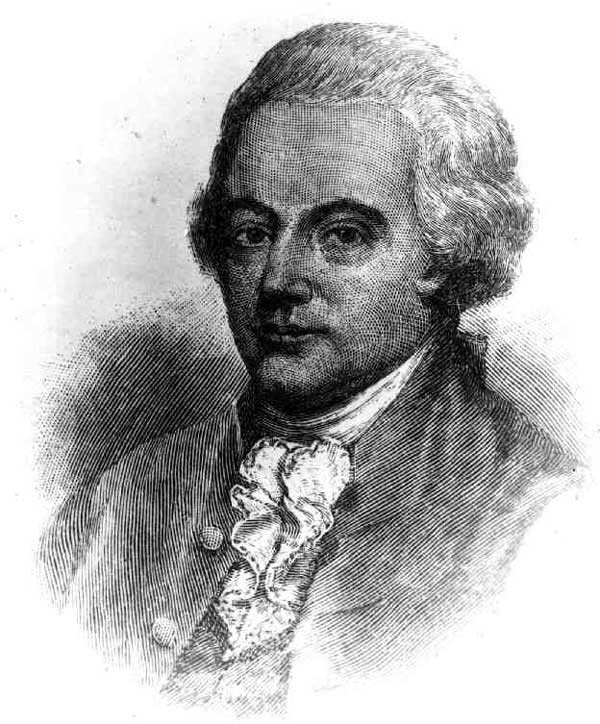
William Henry Drayton and Henry Laurens
1870
The South Carolina Institute Fair opened. It was open to all – white and black – from 9:00 a.m. to 5:00 p.m. Tickets were twenty-five cents, with more than 12,000 visitors in one day. Inside the hall visitors could see exhibits featuring the most modern agricultural equipment, sewing machines and steam engines. The main building for the South Carolina Institute Fair was on the site of the present day Citadel softball stadium. The building was 300 feet long by 80 feet wide by forty feet tall, had 154 windows and fourteen doors.The Charleston Daily News wrote:
Charleston will do her part in the grand work of building up South Carolina, and extends a cordial welcome to all her visitors, whether they come from North or West or South. There is no sectionalism in commerce, and we can promise to all who now pay our city a visit a hearty and generous reception.
The Sally brought slaves to Charlestown. Henry Laurens wrote:
A third poor pining creature hanged herself with a piece of small vine which shows her carcass was not very weighty … who that views the above Picture can love the African trade?
Laurens rationalized his role as a slave trader using what was to become a tried and true Charleston excuse – tradition.
These Negroes were first enslaved by the English … I was born in a Country where Slavery had been established by the British Kings & Parliaments … I found the Christian Religion & Slavery growing under the same authority … I am not the Man who enslaved them, they are indebted to English men for that …
Governor Robert Johnson met with the Assembly for the first time. As the representative of the Proprietors, he was not warmly received. The lack of assistance the Proprietors offered during the Yemassee War had soured the people’s opinion. Judge Nicholas Trott and Col. William Rhett, Speaker of the Assembly, were the two most powerful men in colony, more respected than the Proprietors. Johnson, however, knew that former Governor Craven was in London seeking a path to make South Carolina a Royal Colony. During his address to the Assembly Johnson said:
I am obliged for your sakes to give you my opinion touching the disrespectful behavior that has of late been shown to the Lords Proprietors … very unjustifiable and impolitic. If it be supposed their character is a bar to your relief, it is a mistake. His Majesty and his Parliament are too just to divest their Lordships of their properties without a valuable consideration.
1824 – Deaths
Charles Pinckney died. In his will, Pinckney stated that his body be laid out until decomposition began – a common practice to avoid the possibility of being buried alive. However, against his wishes, the funeral was held the next day and he was buried at St. Philip’s graveyard.
His will also freed eight slaves, Primus, Cate, Betty, and Dinah, as well as Dinah’s children –Anthony, John, Peneta and Carlos. He directed that the four children be “suitably maintained and bound out for trades.” Dinah was a “washerwoman” who seemed special to Pinckney. It was openly speculated that the freed children were Pinckney’s own with Dinah. Particularly in the light of Pinckney’s service in Spain and two of the children having Spanish names, including one named Carlos, the Spanish version of Charles, that speculation seems likely.
1924 – The “Charleston” Debuts on Broadway
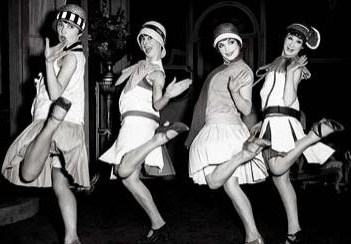
Flournoy Miller and Aubrey Lyles introduced their second Broadway show Runnin’ Wild with songs by James P. Johnson and Cecil Mack. The choreographer, Elida Webb, later falsely claimed to have invented the “Charleston” dance. Yet, the first act of Runnin’ Wild ended with the “Charleston” performed by Elizabeth Welsh, backed by a group of chorus boys called the “Dancing Redcaps.”
James Weldon Johnson wrote when the dance was introduced in Runnin’ Wild:
They did not wholly depend upon the orchestra – an extraordinary jazz band – but had the major part of the chorus supplement it with hand and foot patting. The effect was electrical and contagious. It was the best demonstrating of beating out complex rhythms I have ever witnessed; and, I do not believe New York ever before witnessed anything of just its sort.
Roger Pryor Dodge, in his book Hot Jazz and Jazz Dance says:
The famous single-step, the Charleston, suggests the rhythm 4/4 but does not explicitly state it. The Charleston rhythm … pervades all music, and for our purposes is predominant in ragtime. Nevertheless the Charleston rhythm had not, up to the time of James P. Johnson’s composition “Charleston” become unmistakably identified. While ragtime sheet music and piano rolls are records of the past, the elusive elements of the dance are lost. Whether the dancers actually used a Charleston rhythm before James P.’s piece I do not know. Since that time and with the help of a music strongly accenting this rhythm, the dancers still do not actually follow it, but give the impression that they do only because we associate the step with a music having this rhythm. Maybe James P. made point of constantly holding to this rhythm because of the impression he got from the dancers, or very likely with the music in a slower tempo some dancers did more than just give an impression of the rhythm and did accent it. Certainly the dance was not evolved to fit James P.’s composition; rather, James P. derived his music from his impression of the dancers, with the possibility that some of them actually may have followed the musical rhythm. Thus our visual impression of the step is influenced by the Charleston rhythm in the music so that whatever the dancer is doing we assume he is still following the musical rhythm.
The Charleston dance step may have a longer history than most think. The Branle of 1520 is presumed by most dance scholars to be similar to the Charleston. Dance historians speculate the Ashanti People of Africa were the originators since some of their tribal dances incorporated what could be viewed as Charleston-style steps and movements.
But Willie “the Lion” Smith in his autobiography mentions a black Charleston dancer named Russell Brown:
His dance was a Geechie step like those I had seen in “The Jungles” [a name often used in the 1910s for the San Juan Hill District of New York]. He was given a nickname by the people of Harlem . . . they would holler at him, “Hey Charleston, do your Geechie dance!” Some folks say that is how the dance known as the Charleston got its name. I’m a tough man for facts, and I say the Geechie dance had been around New York for many years before Brown showed up. The kids from the Jenkins Orphanage Band of Charleston used to do Geechie steps when they were in New York on their yearly tour.
It can safely be accepted that the origins of “the Charleston” are most likely a combination of all of the above, particularly the line that runs from the Ashanti African tribal dances directly to the southern plantations of the 18th and 19th centuries. What cannot be denied is that by the end of 1923, everybody in the country was doin’ the Charleston.
Nothing else epitomizes the spirit and joyous exuberance of one the most tumultuous decades in American history as the Charleston dance. Other dance crazes have had their fifteen minutes of fame: the Waltz, Tango, Hokey-pokey, Twist, Hustle, Macarena, and Breakdancing. None of them, however, managed to influence and infect an entire generation so thoroughly the way the Charleston did. Almost 100 years later, the image of the Jazz Age is always a Flapper doing the Charleston. No other American decade can be so neatly summed up in one simple image.
From the book Doin’ the Charleston: Black Roots of American Popular Music & the Jenkins Orphanage Legacy
Henry Middleton served as second president of the Continental Congress.
1862 – Civil War
Gus Smythe enlisted in the Signal Corps in Charleston and reported to Capt. Joseph Manigault. He wrote to his Aunt Janey:
I have not yet been assigned to any station, but trust to be kept at the Bathing House [South Battery] … As to accommodations, they are MUCH better than in camp, as we (in town) all stay in houses …
View of Charleston from Ft. Wagner
1925 – Doin’ the Charleston
One of the clubs that challenged the Cotton Club in popularity was Small’s Paradise. Ed Smalls was born in Charleston and moved to New York as a young man. Charleston legend claims that he was kin to the legendary Robert Smalls, an African slave who, during the Civil War, stole a steamer in Charleston harbor and delivered it to the Union navy. Untrue.
Another legend states that Ed Smalls was also related to the notorious Sammy Smalls, “Goat Cart Sam,” a crippled beggar who was often seen drunk on the streets of Charleston being pulled around in a goat cart. Sam usually frequented gambling saloons and whorehouses. “Goat Cart Sam” was about to become a legendary and universal character known as Porgy, the title character of Dubose Heyward’s lyrical novel of black life in Charleston. Also untrue.
Ed Smalls opened Small’s Paradise on October 22, 1925. It was housed in a large basement at 2294½ Seventh Avenue at 135th Street and could accommodate 1500 patrons. It offered extravagant floor shows and the Charlie Johnson Orchestra played the hottest jazz music in Harlem. The Paradise also featured a slew of flamboyant, Charleston-dancing gay waiters who served Chinese food and bootleg liquor to the small tables. During those early years, the Charlie Johnson Orchestra featured two former Jenkins Orphanage trumpet players: Gus Aiken and Jabbo Smith, who had just recently “escaped” from the orphanage.
Smalls Paradise, New York City. Author’s Collection
Slavery. Governor Moultrie issued a proclamation, ordering:
all free foreign blacks who had arrived in the state less than a year before to leave the state, [as there are] many characters amongst them, which are dangerous to welfare and peace of the state.
1971
According to a birth certificate on file at the Department of Health Vital Statistics in the commonwealth of Pennsylvania, Natasha Marginell Manugault Paul Simmons was born, the daughter of Dawn Langley Hall and John-Paul Simmons. Problem was: Dawn was the former Gordon Langley Hall who, on September 23, 1968, went through a sex change operation at Johns Hopkins Hospital in Baltimore.
John-Paul Simmons and Dawn Langley Hall Simmons, in front of Washington Park, Charleston.
After her return to Charleston, Dawn pushed Natasha up and down the streets in an old-fashioned British baby carrier just like the one the Queen had for Prince Charles. She kept Natasha’s birth certificate handy to flash at everyone who doubted that this was her daughter. Many were not convinced, particularly the father John-Paul. He knew exactly where Natasha came from – one of his girlfriends. He recalled:
I’d been going with her for eight months –constantly had sex, sex, sex, all the time with this girl. She was about twenty-three. She got pregnant.
John-Paul claimed that the girl’s daddy knew Dawn wanted a baby, and the daddy didn’t want his daughter to have an illegitimate daughter with a black man., not in Charleston in 1971. When the girl went into labor, the girl checked into Roper Hospital as “Mrs. Simmons” at Dawn’s direction. Dawn gave the daddy one thousand dollars for the baby. Dawn flew to Philadelphia with the South Carolina birth certificate listing “Mrs. John-Paul Simmons” as mother of the child. Dawn showed up at the Pennsylvania vital statistics office with the infant in her arms and paperwork in her hand bearing her name.
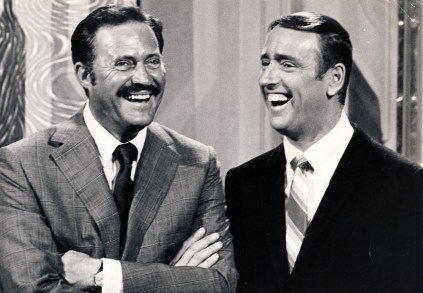
Dawn’s announcement of the birth of her daughter became the fodder for TV comedians Dan Rowan and Dick Martin, hosts of the wildly popular Rowan & Martin’s Laugh-In, a show with more than forty million viewers. The opening monologue contained the following exchange:
Dan Rowan: News flash: Charleston, South Carolina. Noted transsexual Dawn Simmons has just given birth to a daughter.
Dick Martin: We can only hope she grows up to be half the man her mother was.
The people of the back country of South Carolina decided to show their unhappiness with the Charlestown politicians during the election. Many rode more than 100 miles to vote. The voters of St. Paul’s parish (Colleton County) arrived to discover that the election had been held ten days beforethe announced date. They were told by Charlestown officials that was due to an error by the printer, which no one believed.
1935
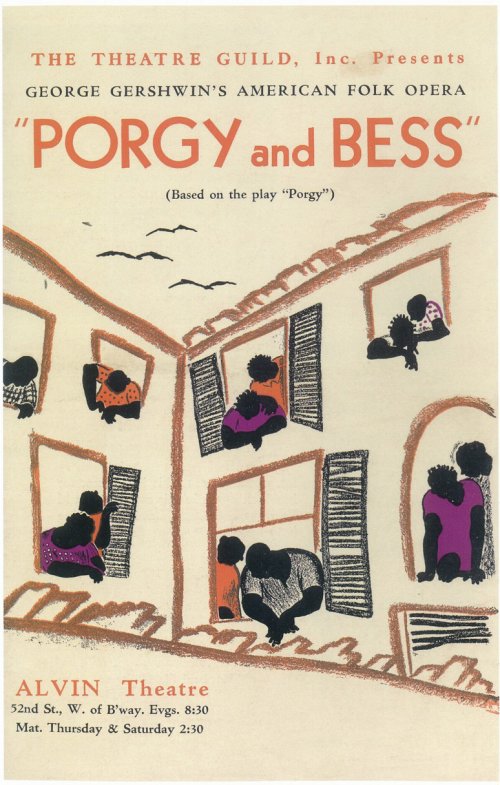
Original playbill
The New York opening of Porgy and Bess took place at the Alvin Theatre in New York City and ran for 124 performances, impressive for an opera, and but woefully short for a musical. The reviews were decidedly mixed. Brooks Atkinson wrote in the New York Times, October 9, 1935:
After eight years of savory memories, Porgy has acquired a score, a band, a choir of singers and a new title, Porgy and Bess, which the Theatre Guild put on at the Alvin last evening … Although Mr. Heyward is the author of the libretto and shares with Ira Gershwin the credit for the lyrics, and although Mr. Mamoulian has again mounted the director’s box, the evening is unmistakably George Gershwin’s personal holiday … Let it be said at once that Mr. Gershwin has contributed something glorious to the spirit of the Heywards’ community legend.
Composer/critic Virgil Thomson, writing for the New York Herald-Tribune,was less kind, calling Gershwin’s incorporation of blues and jazz influences into a “serious” operatic score to be “falsely conceived and rather clumsily executed…crooked folklore and half-way opera.”
Capt. Joseph Vesey imported “3000 Gallons of rum and 1 Negroe Woman from Guadaloupe on the brig Le Vigilant.”
By this time Vesey’s manservant, Telemaque, as he was known in the African population, had been taught to read by his master and was an important part of Vesey’s business. Telemaque realized city slaves had larger freedom of movement than those living on plantations. More than half of Telemaque days were spent apart from his Master’s house and business, a freedom of movement enjoyed by a majority of the slaves in Charlestown. As Frederick Douglass wrote, “A city slave is almost a freeman, compared with a slave on the plantation.”
Through the years Telemaque became fluent in French, English, and Gullah, the common language among the slaves, born out of a diverse linguistic pool. His formal name was difficult for most Africans to pronounce, so it had been simply shortened to a nickname, “Telmak.”
1886, Natural Disaster – Charleston Earthquake
Forty days after the earthquake, mass food distribution by the Earthquake Relief Committee (ERC) to the citizens of Charleston ended. There were less than 300 people in need, who were cared for by other charities.
Harper’s Weekly – images of Charleston relief efforts
Captain Florence O’ Sullivan claimed two town lots on Oyster Point.
1698 – Slavery
The Assembly passed “An Act for the Encouragement of the Importation of White Servants.” Afraid of the growing number of blacks who had been imported as slaves, the South Carolina Assembly passed a law granting £13 to anyone who would bring a white male servant into the province as “…the great number of negroes which of late have been imported into this Colony may endanger the safety thereof.”
The Act also set out terms of indenture service: those over sixteen years old should serve at least four years, those under sixteen no less than seven years.
1817
John C. Calhoun was appointed Secretary of War by Pres. James Monroe. He would hold the position for eight years.
Dr. John Lining noted in a letter that “in the summer the shaded air of about 2 or 3 in the afternoon is frequently between 90 and 95 degrees.”
1799 – Slavery
Capt. Joseph Vesey’s manservant Telemaque (Telmak, or “Denmark” as he now preferred to be called) purchased an East Bay Lottery ticket #1884.
1926 – Deaths
The funeral for Edmund Thornton Jenkins was held in Charleston on a Thursday at the New Tabernacle Fourth Baptist Church on Palmetto Street. The Jenkins Orphanage Band marched through the Humane Friendly Cemetery and played a dirge at the gravesite. Jenks was buried next to his mother, Lena Jenkins.
In July Jenks had undergone surgery for appendicitis. After being returned to his bed he fell onto the floor sometime during the night where he remained undiscovered for several hours. He contracted pneumonia and his condition worsened. For some reason he had been released from the hospital and died at home on September 12. The American consul in Paris cabled Rev. Jenkins to inform him of his son’s death. The six hundred dollar cost of having his body embalmed and shipped to America was paid by Rev. Jenkins.
1935
The world premiere performance Porgy and Bess took place at the Colonial Theatre in Boston. This was the traditional out-of-town performance for any show headed for Broadway.
Capt. Joseph Vesey placed an advertisement in the South Carolina Gazette as “J. Vesey & Co.” which offered more than “100 Prime slaves from Tortola for sale every fair day except Sunday.”
1828 – Slavery
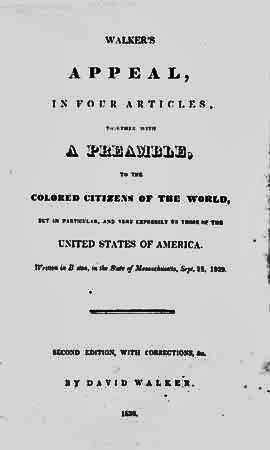
David Walker, the free black from Charleston living in Boston, and former member of the AME Church with Denmark Vesey, published his Appeal to the Coloured Citizens of the World. It became one of the most important documents in the abolitionist movement.
White reaction in the south was immediate, and harsh. Blacks in Charleston were arrested for distributing the pamphlet. The Georgia legislature announced reward of $10,000 to anyone who could hand over Walker alive, and $1,000 to anyone who would murder him.
1864
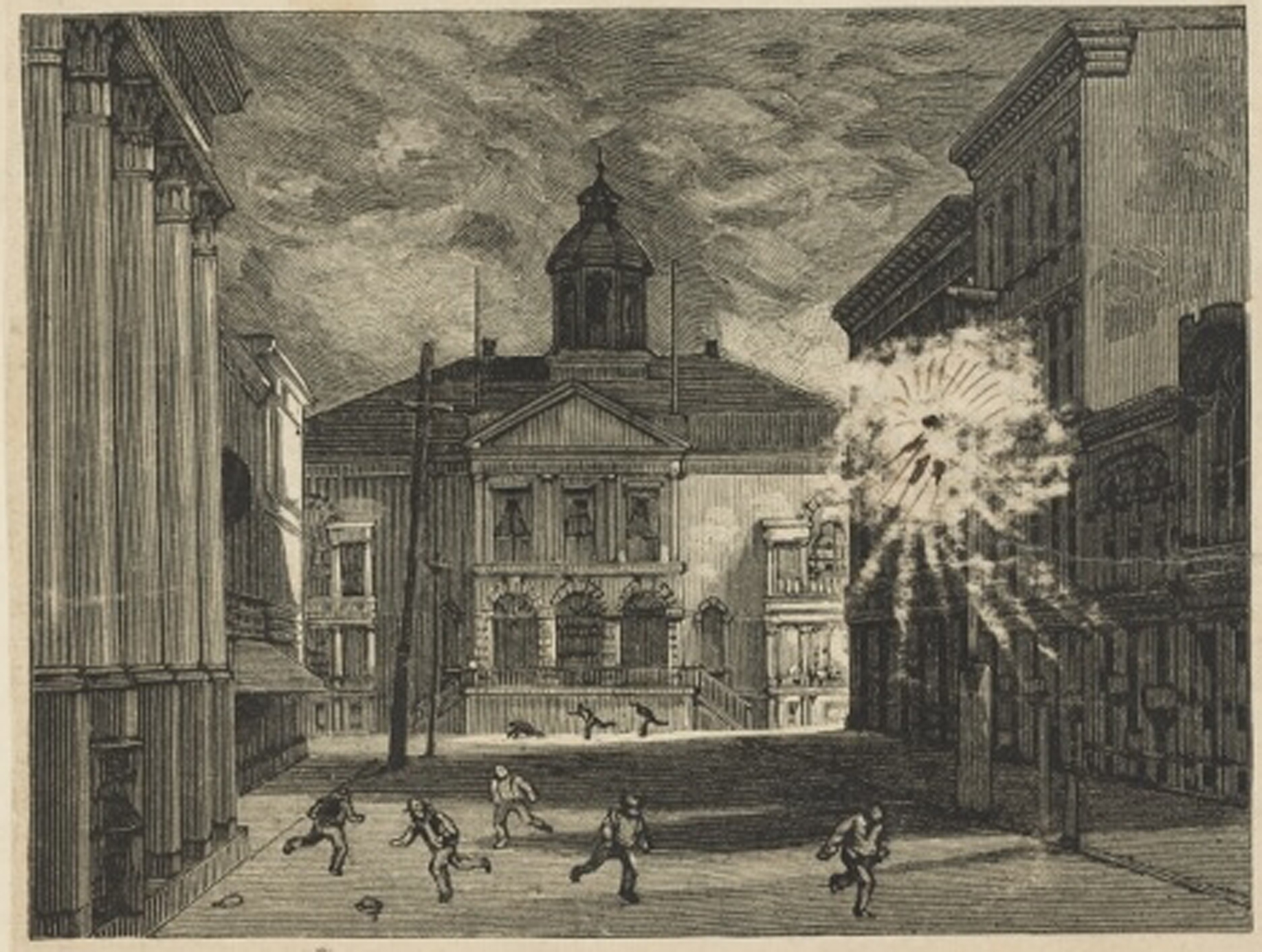
Gus Smythe, from his Confederate look-out post in the steeple of St. Michael’s wrote:
The Yankees are throwing in their shells at a tremendous rate, one every two or three minutes since 5o’c, now it is 10 p.m. … Since 8 a.m. they have thrown 114 shells.







 MarkJonesBooks